Kitchari
Servings: 6 servings
Calories: 232kcal
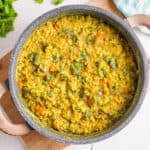
My great grandmother's kitchari is easy, vegan, and gluten-free. This one-pot Indian rice-lentil porridge needs just 45 minutes!
Print Recipe
Add to Collection
Ingredients
- 1 tablespoon coconut oil substitute ghee if not vegan
- 1 teaspoon mustard seeds
- 1 teaspoon cumin seeds
- 1 teaspoon ground coriander
- 1 inch fresh ginger grated, substitute 1 teaspoon ginger paste
- 1 teaspoon ground turmeric
- 1½ cups mixed vegetables I used beans, carrots, and peas.
- ½ cup rice see notes
- 1 cup moong dal substitute split mung beans
- 5 cups water see notes for adjustment
- 1 teaspoon salt adjust to taste
- 1 tablespoon chopped cilantro for garnish
Instructions
- Rinse the rice and moong dal separately 2 to 3 times, until the water runs mostly clear.
- In a medium pot or deep skillet, heat the coconut oil over medium heat. Add mustard seeds (if using), cumin seeds, and ground coriander. Cook for 30 seconds, stirring often, until fragrant.
- Stir in grated ginger and turmeric, and cook for another 30 seconds. Add the mixed vegetables and cook for 1 to 2 minutes.
- Add the rinsed rice and moong dal to the pot along with 5 cups of water and 1 teaspoon salt. Bring to a boil, then reduce heat to low, cover, and simmer for about 30 minutes.
- Check the consistency (see Notes). The kitchari should be soft and porridge-like. Season to taste with more salt if needed. Garnish with chopped cilantro and serve warm.
Video
Notes
- Rice: Traditional kitchari uses non-polished rice like Sona Masoori, which is less processed. If unavailable, basmati rice is a good substitute.
- Consistency: This recipe yields a soft, spoonable porridge. For a thicker version, reduce the water to 4½ cups. For soupier kitchari, increase to 5½ cups. Avoid stirring too often during simmering to maintain texture.
- Vegetables: Use any mix of vegetables, or leave them out for a simpler version.
- Aromatics: Ayurvedic kitchari traditionally excludes onion and garlic, but you may sauté them before adding vegetables if you prefer a more savory depth.
- Instant Pot: Sauté spices, add rice, dal, vegetables, salt, and 3½ to 4 cups water. Pressure cook on High for 8 minutes; quick release after 5 minutes.
Nutrition
Calories: 232kcal | Carbohydrates: 40g | Protein: 12g | Fat: 3g | Saturated Fat: 2g | Polyunsaturated Fat: 0.3g | Monounsaturated Fat: 0.4g | Sodium: 431mg | Potassium: 142mg | Fiber: 6g | Sugar: 1g | Vitamin A: 2386IU | Vitamin C: 5mg | Calcium: 43mg | Iron: 2mg
