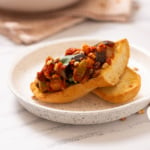
Sicilian Caponata (Palermo-Style)
Servings: 6 servings
Calories: 343kcal
Traditional Sicilian caponata, Palermo-style — fried eggplant, celery, olives, capers, and sweet-sour agrodolce. No bell peppers, better overnight.
Print Recipe
Add to Collection
Equipment
- 1 Large colander
- 1 Large heavy skillet or Dutch oven (12-inch)
- 1 Small saucepan for blanching
Ingredients
For the eggplant:
- 1½ pounds globe eggplant about 2 medium, cut into ¾-inch cubes
- 1½ teaspoons kosher salt for drawing out moisture
- ½ cup extra-virgin olive oil for frying (more as needed)
For the caponata base:
- 2 inner celery stalks strings removed, cut into ¼-inch slices (about 1 cup)
- 3 tablespoons extra-virgin olive oil
- 1 medium yellow onion finely diced
- 2 cloves garlic thinly sliced
- 2 tablespoons tomato paste
- 1 pound ripe tomatoes peeled, seeded, and chopped (about 1½ cups) — or 1 (14-oz) can crushed tomatoes
- ¾ teaspoon kosher salt
- black pepper freshly ground
- ¼ cup green olives Castelvetrano or Cerignola, pitted and halved
- 2 tablespoons capers rinsed and drained
- 3 tablespoons golden raisins
For the agrodolce:
- 3 tablespoons red wine vinegar
- 1½ tablespoons granulated sugar
For serving:
- 2 tablespoons pine nuts toasted
- fresh basil leaves torn
- extra-virgin olive oil for drizzling
- grilled crusty bread or toasted
Instructions
- Salt and drain the eggplant. Place the cubed eggplant in a large colander set over a bowl or in the sink. Sprinkle with 1½ teaspoons kosher salt and toss to coat. Let sit for 30–45 minutes — the eggplant will release dark beads of moisture. Transfer the eggplant to a clean kitchen towel and pat dry firmly. This step is what gives fried eggplant its silky interior, don't skip it.
- Par-blanch the celery. While the eggplant drains, bring a small saucepan of water to a boil. Add the sliced celery and blanch for 2 minutes. Drain and rinse under cold water to stop the cooking. Set aside.
- Fry the eggplant. Heat ½ cup olive oil in a large heavy skillet or Dutch oven over medium-high heat until shimmering — about 3 minutes. Working in batches (don't crowd the pan), add the eggplant in a single layer and fry 4–5 minutes per batch, turning occasionally, until deeply golden on all sides and tender when pierced. Transfer each batch to a paper-towel-lined plate. Add more oil to the pan between batches if it runs dry.
- Start the base. Pour off all but 3 tablespoons of oil from the pan (or wipe clean and add 3 fresh tablespoons). Reduce heat to medium. Add the diced onion and cook, stirring occasionally, for 5–6 minutes until soft and translucent but not browned. Add the garlic and cook for 30 seconds until fragrant.
- Build the tomato base. Add the tomato paste and stir it into the onions for 1 minute to toast it. Add the chopped tomatoes (or crushed canned), blanched celery, ¾ teaspoon kosher salt, and a few grinds of black pepper. Stir to combine and bring to a gentle simmer. Cook for 8–10 minutes, stirring occasionally, until the tomatoes break down and the celery is tender.
- Add the agrodolce. In a small bowl, whisk together the red wine vinegar and sugar until the sugar dissolves. Pour into the pan and stir. Simmer for 2 minutes to let the vinegar's sharpness cook off.
- Fold in everything else. Add the fried eggplant, olives, capers, and raisins. Gently fold together — don't stir aggressively or the eggplant will break down into mush. Simmer for 5 minutes, stirring gently once or twice, until everything is coated and the flavors have started to meld. Taste and adjust — more vinegar for brightness, more sugar for sweetness, more salt if needed.
- Rest. Remove from heat and let the caponata cool to room temperature. It's ready to eat now, but the flavor deepens dramatically overnight in the fridge. If you can, make it a day ahead.
- Serve. Stir in the toasted pine nuts just before serving (adding them earlier turns them soggy). Spoon the caponata into a serving bowl, scatter with torn basil, and drizzle with good olive oil. Serve at room temperature with grilled or toasted crusty bread.
Notes
- Caponata is better the next day. Every component — the eggplant, the tomato, the agrodolce — deepens and melds after resting. Make it the day before if you can.
- Serve at room temperature, not hot. Hot caponata tastes flat. Cold-from-the-fridge caponata tastes dulled. Room temperature is the sweet spot — pull it out of the fridge 30 minutes before serving.
- Don't skip the salt-and-drain. Modern eggplant isn't bitter enough to need this for bitterness, but it still matters for texture — unsalted eggplant absorbs more oil and turns greasy instead of silky.
- Don't stir the pine nuts in early. Pine nuts turn soggy and lose their crunch if they sit in the warm caponata. Toast them separately and fold in at the very end, or sprinkle on top at serving.
- Palermo-style has no bell peppers. Catania-style versions include them, and both are legitimate — but traditional Palermo caponata is onion, celery, tomato, and eggplant only. Keep it pure.
- Olive choice matters. Castelvetrano (buttery, mild) or Cerignola (large, meaty) olives are right for caponata. Avoid kalamata — they're too briny and overpower the agrodolce.
- Refrigerate in an airtight container for up to 5 days. The flavor peaks around day 2–3. Serve at room temperature. Caponata also freezes well for up to 2 months — thaw overnight in the fridge.
Nutrition
Calories: 343kcal | Carbohydrates: 22g | Protein: 3g | Fat: 29g | Saturated Fat: 4g | Polyunsaturated Fat: 4g | Monounsaturated Fat: 20g | Sodium: 1086mg | Potassium: 610mg | Fiber: 6g | Sugar: 15g | Vitamin A: 770IU | Vitamin C: 16mg | Calcium: 36mg | Iron: 1mg
