
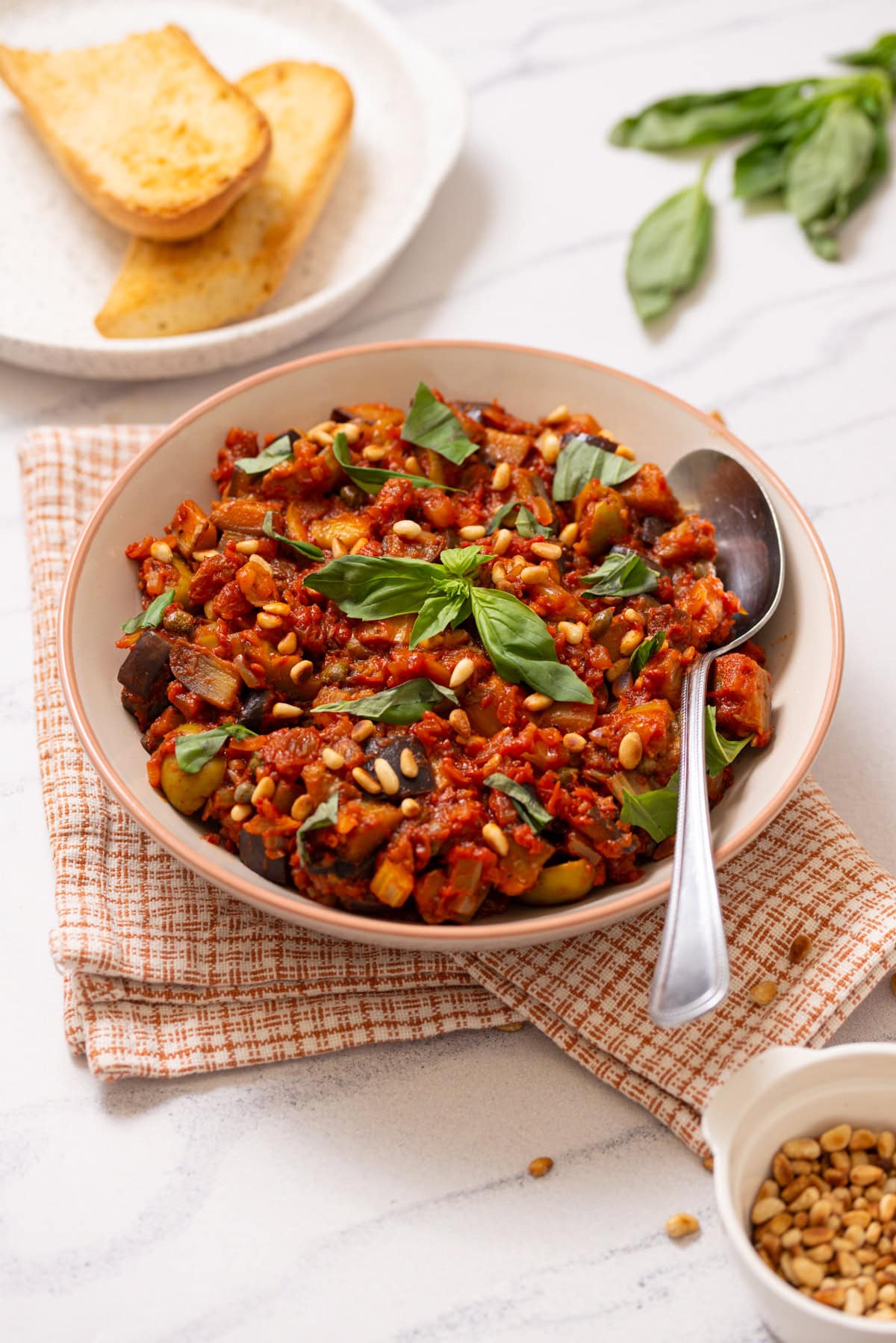
My Sicilian caponata is the Palermo version, aka no bell peppers, just eggplant, celery, tomato, olives, capers, and a sweet-sour agrodolce that deepens overnight. I commit to the traditional technique by salting and draining the eggplant, shallow-frying it (vs. roasting), par-blanching the celery, and folding the pine nuts in at the end so they stay crunchy. Vegan, gluten-free, better the next day!
Why this is the Palermo version (and why that matters)

Sicily has something like 36 documented regional variations of caponata. The two most famous are Palermo-style and Catania-style. Catania uses bell peppers alongside the eggplant. Palermo doesn’t. Both are real, both are legitimate, and I prefer the Palermo version because the ingredient list is tighter and the agrodolce has nothing competing with it. A lot of online recipes call themselves “Sicilian” and quietly include bell peppers, which is actually Catania. If you’ve been wondering why your caponata doesn’t taste like the one you had in Italy, that might be why.
The second commitment is the traditional technique. Most American adaptations shortcut the eggplant by roasting it on a sheet pan, which is easier and cleaner but produces a different texture — drier, more browned, less silky. The traditional Palermo method shallow-fries the eggplant in olive oil after a salt-and-drain. Slightly more work, more oil, silky tender interior. I’d rather do it right once than cut corners twice.

Ingredients worth discussing
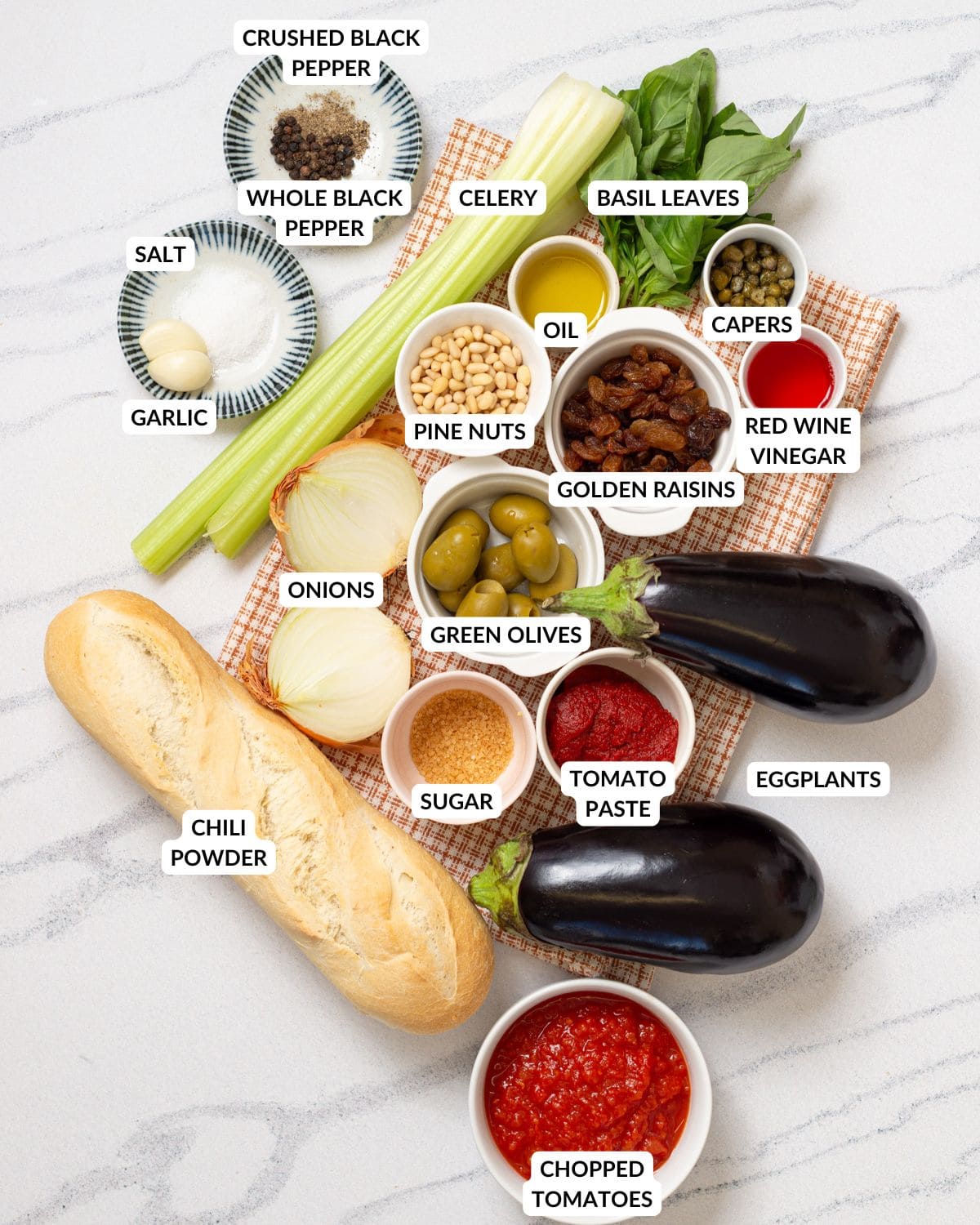
Full ingredient list and detailed instructions in the recipe card.
- Globe eggplant, the standard American purple variety. 1½ pounds, about two medium. Avoid small pale Japanese or Chinese varieties — too delicate for frying.
- Inner celery stalks, strings removed. Outer stalks stay fibrous even after blanching. Use the pale inner stalks and peel off any strings before slicing.
- Fresh ripe tomatoes for peak summer, peeled and seeded. Canned crushed tomatoes are fine for year-round.
- Castelvetrano or Cerignola olives. Buttery, mild, meaty. Avoid kalamata — too briny, overpowers the agrodolce.
- Golden raisins, more subtle and traditional Sicilian than dark raisins. Dark raisins push the flavor toward molasses.
- Red wine vinegar for the agrodolce. Not balsamic (too sweet), not white wine vinegar (too sharp).
Shruthi’s Top Tips
The four techniques that matter
I’ve tested this recipe many, many times in the last 10 years and I really think each of these is just as critical as the other:
- Salt and drain the eggplant (30–45 minutes). Modern eggplant isn’t bitter enough to need salting for bitterness, but salting still pulls excess moisture out of the cells. Unsalted eggplant absorbs more oil and turns greasy instead of silky.
- Shallow-fry, don’t roast. Roasted eggplant is drier and more browned. Shallow-fried is tender and silky, which is what traditional caponata is built around. If you only have one caponata in you, fry it.
- Par-blanch the celery. Two minutes in boiling water takes the raw squeak off without going mushy. Without this step, celery fights the tender eggplant for attention. Nobody wants to do it and most recipes skip it. Don’t skip it.
- Fold the pine nuts in at serving, not during cooking. Pine nuts turn soggy the second they sit in warm, vinegary sauce. Toast separately and fold in at the very end.
How to make Sicilian caponata
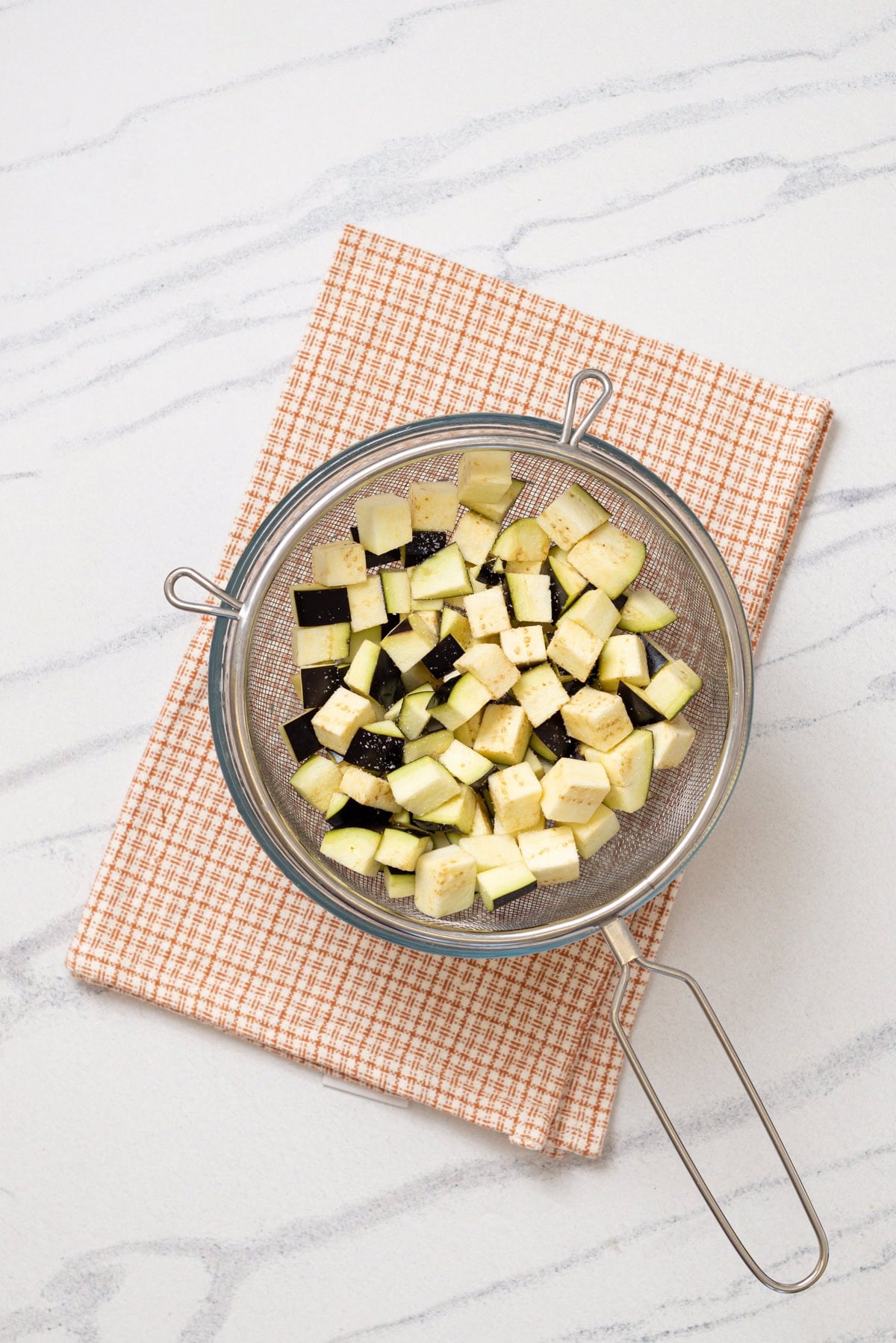
- Place the cubed eggplant in a colander over a bowl. Sprinkle with salt and toss. Let it sit 30–45 minutes until dark beads of moisture appear. Pat dry firmly with a clean kitchen towel.
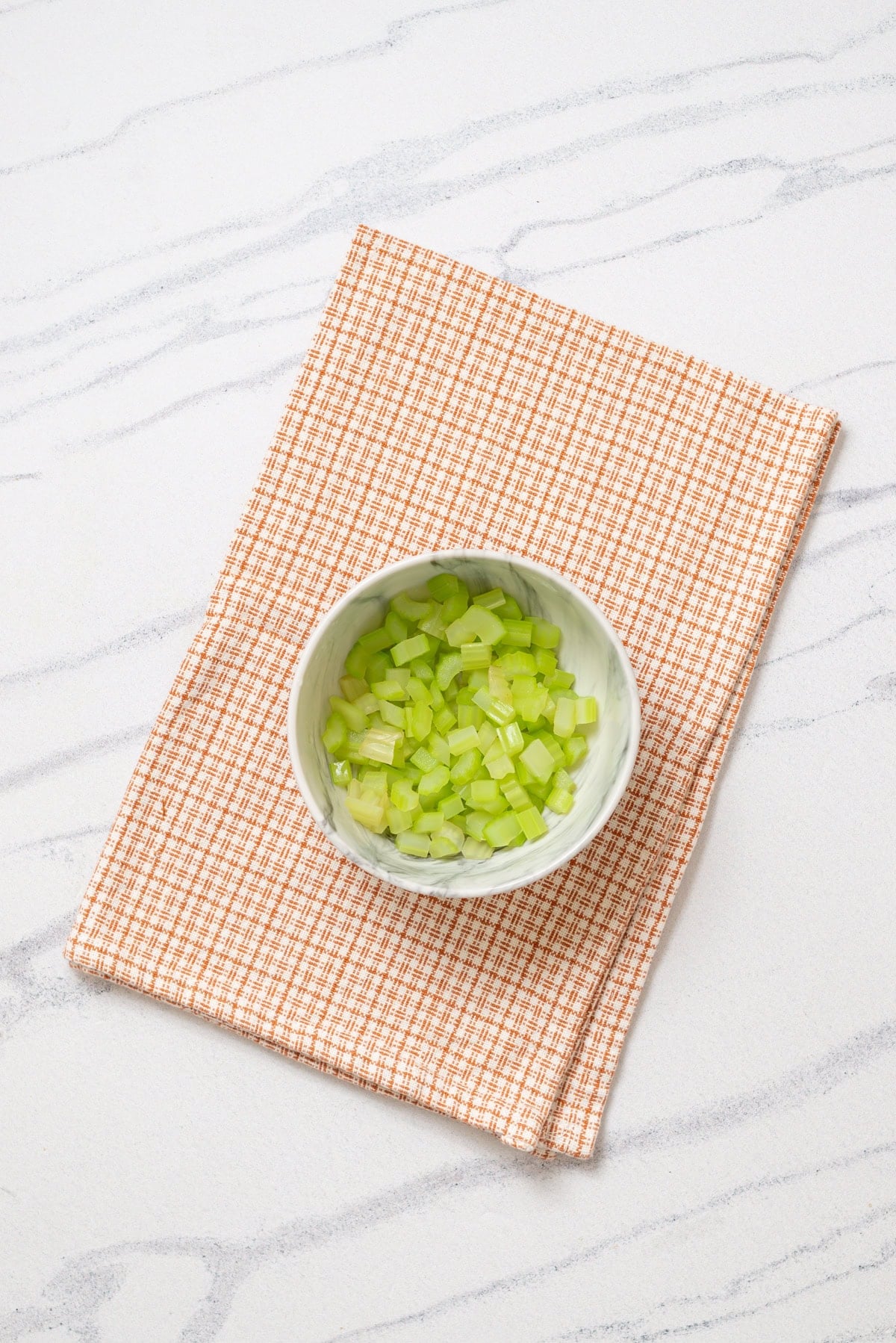
- Bring a small saucepan of water to a boil. Blanch the sliced celery for 2 minutes, then drain and rinse under cold water.
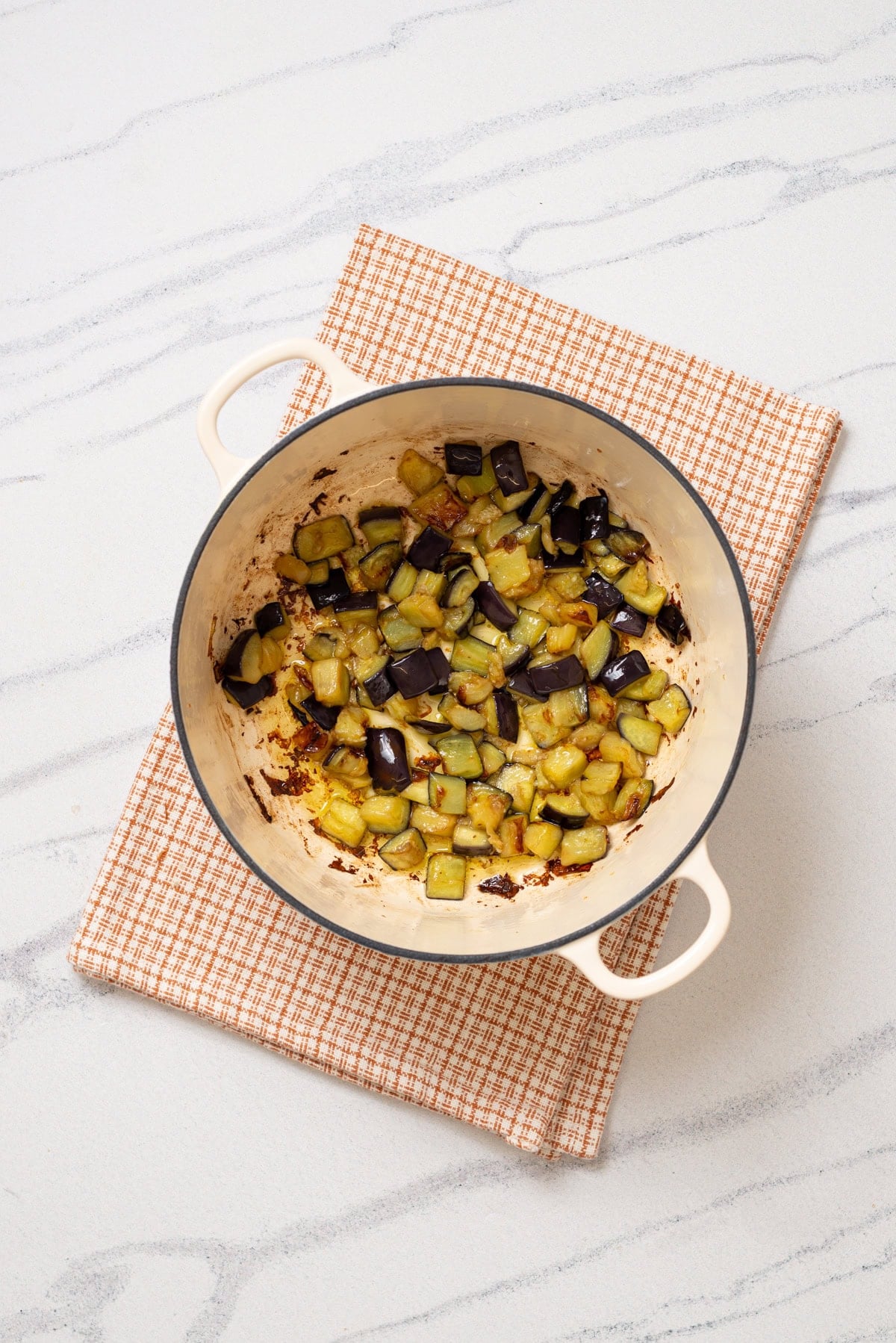
- Heat olive oil in a large heavy skillet over medium-high heat until shimmering. Working in batches, fry the eggplant until deeply golden on all sides and tender. Transfer to a paper-towel-lined plate.
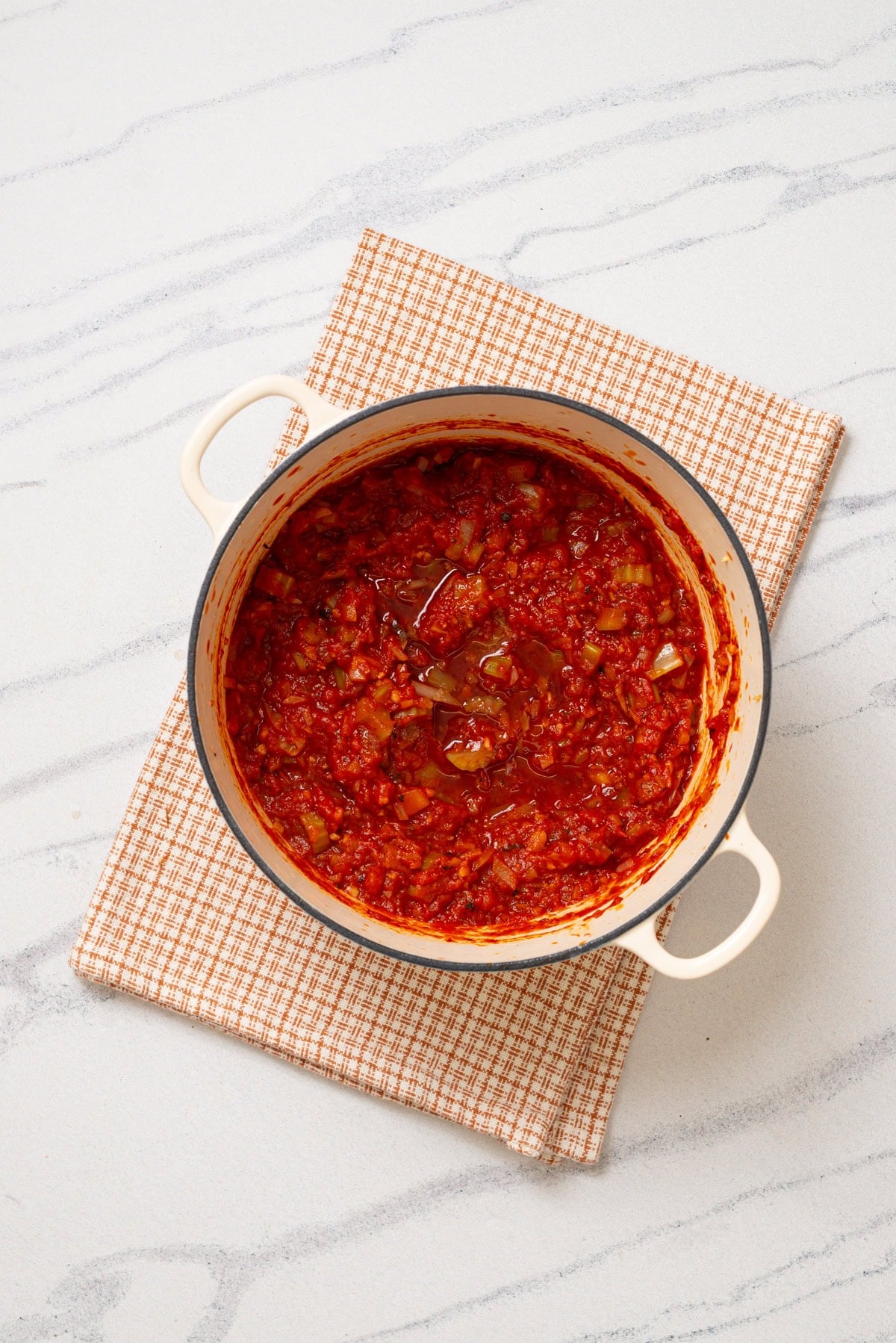
- Pour off all but 3 tablespoons of oil. Reduce heat to medium. Add the onion and cook until soft, then add the garlic. Stir in the tomato paste, tomatoes, blanched celery, salt, and pepper, and simmer until the tomatoes break down. Whisk the vinegar and sugar together, then pour them into the pan and simmer briefly.
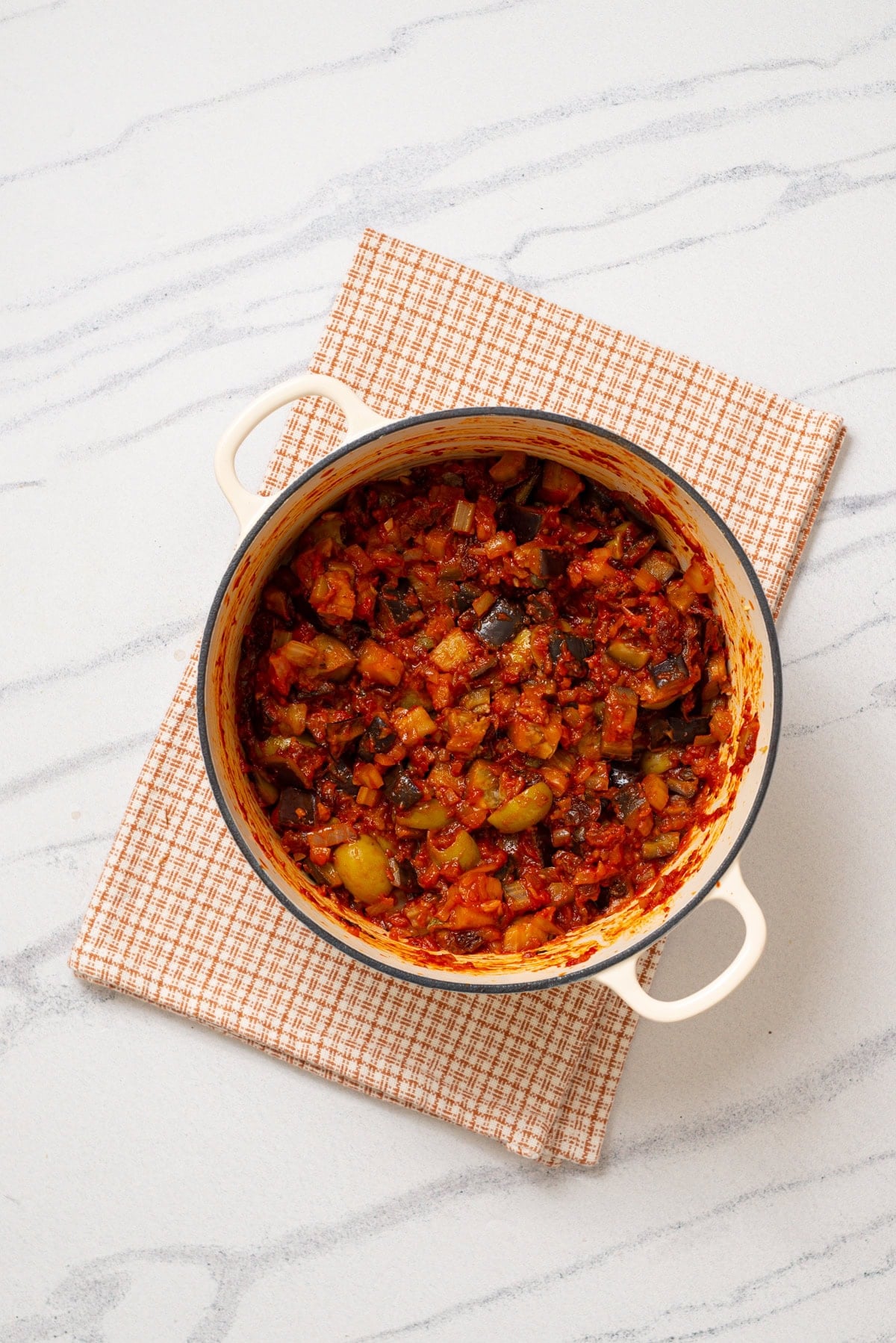
- Add the fried eggplant, olives, capers, and raisins. Fold gently — don’t stir aggressively or the eggplant will break down. Simmer until everything is coated and the flavors have started to meld. Taste and adjust as needed.
- Let the caponata cool to room temperature. It’s even better the next day. Stir in the toasted pine nuts just before serving, then finish with basil and a drizzle of olive oil. Serve at room temperature with crusty bread.
How to serve Palermo-style caponata
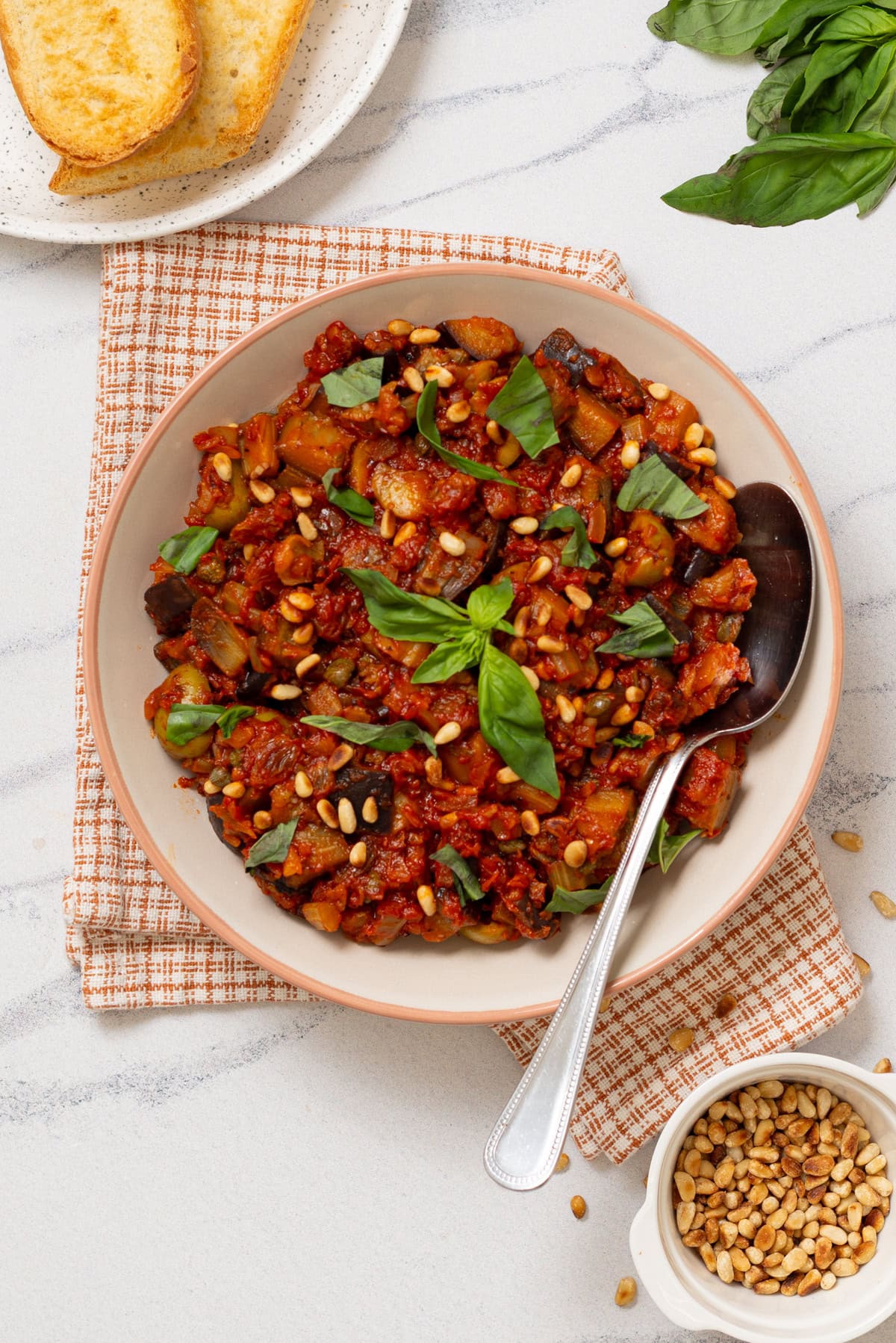
My Sicilian caponata recipe is just perfect served with grilled crusty bread (ciabatta or sourdough), no-cook zucchini ribbon salad as a sibling Italian dish, or as part of an aperitivo spread with cheese, olives, and chilled white wine.
Variations
- Catania-style (with bell peppers). Add one medium red bell pepper, cored and cut into ½-inch pieces, to the pan with the onion. Equally traditional, just from a different region.
- Richer Palermitan version. Add 2 tablespoons grated toasted almonds and ¼ teaspoon unsweetened cocoa powder with the agrodolce. Sounds strange, deepens the color and adds subtle complexity.
- As a pasta sauce. Toss warm caponata with cooked penne and a splash of pasta water. Top with shaved ricotta salata.
Storage and reheating suggestions
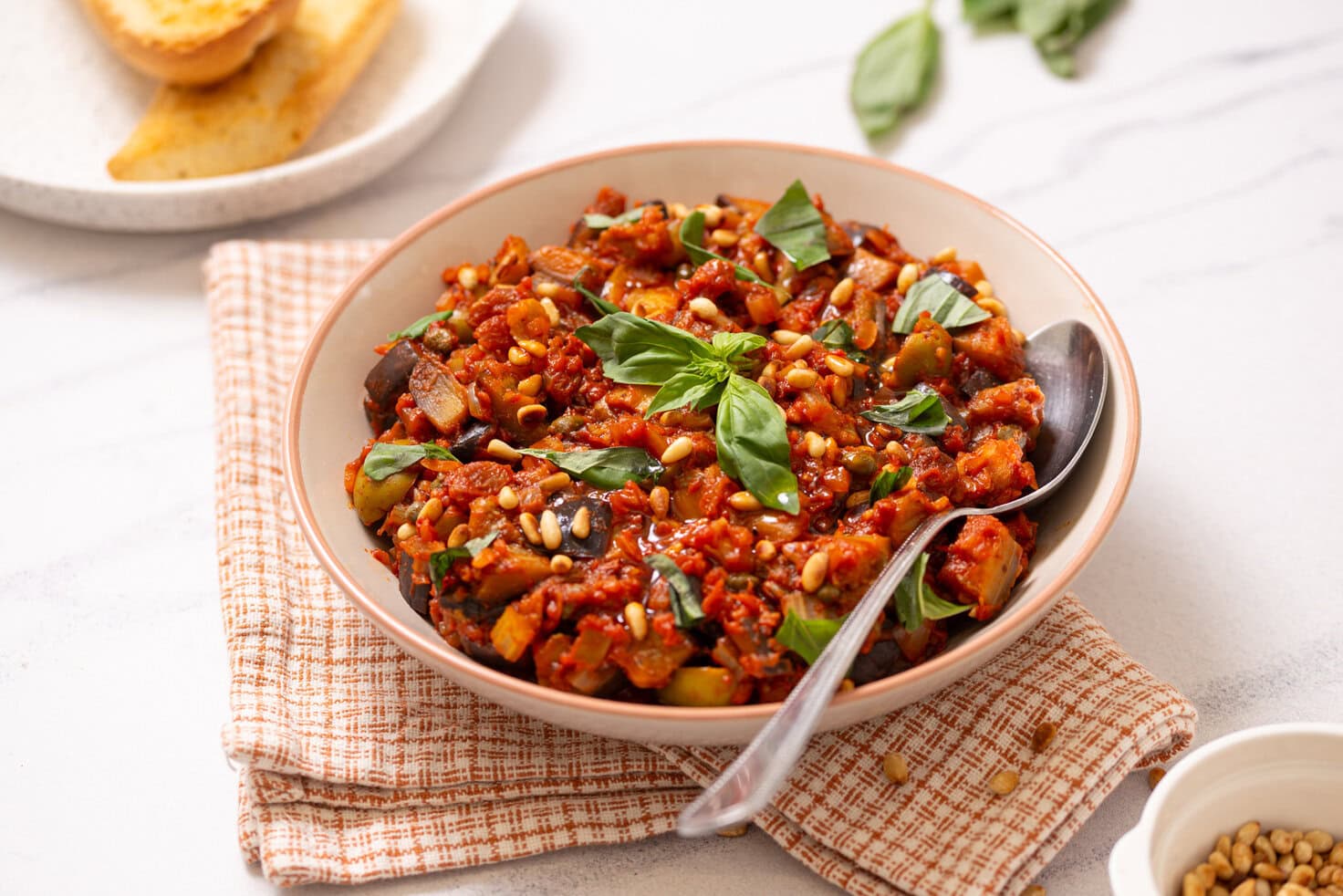
The caponata keeps in the fridge for up to 5 days, with flavor peaking around day 2–3. Always serve at room temperature. It also freezes well for up to 2 months — thaw overnight in the fridge, then bring to room temperature before serving.
Sicilian Caponata (Palermo-Style)
Equipment
- 1 Large colander
- 1 Large heavy skillet or Dutch oven (12-inch)
- 1 Small saucepan for blanching
Ingredients
For the eggplant:
- 1½ pounds globe eggplant, about 2 medium, cut into ¾-inch cubes
- 1½ teaspoons kosher salt, for drawing out moisture
- ½ cup extra-virgin olive oil, for frying (more as needed)
For the caponata base:
- 2 inner celery stalks, strings removed, cut into ¼-inch slices (about 1 cup)
- 3 tablespoons extra-virgin olive oil
- 1 medium yellow onion, finely diced
- 2 cloves garlic , thinly sliced
- 2 tablespoons tomato paste
- 1 pound ripe tomatoes, peeled, seeded, and chopped (about 1½ cups) — or 1 (14-oz) can crushed tomatoes
- ¾ teaspoon kosher salt
- black pepper, freshly ground
- ¼ cup green olives, Castelvetrano or Cerignola, pitted and halved
- 2 tablespoons capers, rinsed and drained
- 3 tablespoons golden raisins
For the agrodolce:
- 3 tablespoons red wine vinegar
- 1½ tablespoons granulated sugar
For serving:
- 2 tablespoons pine nuts, toasted
- fresh basil leaves, torn
- extra-virgin olive oil, for drizzling
- grilled crusty bread, or toasted
Instructions
- Salt and drain the eggplant. Place the cubed eggplant in a large colander set over a bowl or in the sink. Sprinkle with 1½ teaspoons kosher salt and toss to coat. Let sit for 30–45 minutes — the eggplant will release dark beads of moisture. Transfer the eggplant to a clean kitchen towel and pat dry firmly. This step is what gives fried eggplant its silky interior, don’t skip it.
- Par-blanch the celery. While the eggplant drains, bring a small saucepan of water to a boil. Add the sliced celery and blanch for 2 minutes. Drain and rinse under cold water to stop the cooking. Set aside.
- Fry the eggplant. Heat ½ cup olive oil in a large heavy skillet or Dutch oven over medium-high heat until shimmering — about 3 minutes. Working in batches (don’t crowd the pan), add the eggplant in a single layer and fry 4–5 minutes per batch, turning occasionally, until deeply golden on all sides and tender when pierced. Transfer each batch to a paper-towel-lined plate. Add more oil to the pan between batches if it runs dry.
- Start the base. Pour off all but 3 tablespoons of oil from the pan (or wipe clean and add 3 fresh tablespoons). Reduce heat to medium. Add the diced onion and cook, stirring occasionally, for 5–6 minutes until soft and translucent but not browned. Add the garlic and cook for 30 seconds until fragrant.
- Build the tomato base. Add the tomato paste and stir it into the onions for 1 minute to toast it. Add the chopped tomatoes (or crushed canned), blanched celery, ¾ teaspoon kosher salt, and a few grinds of black pepper. Stir to combine and bring to a gentle simmer. Cook for 8–10 minutes, stirring occasionally, until the tomatoes break down and the celery is tender.
- Add the agrodolce. In a small bowl, whisk together the red wine vinegar and sugar until the sugar dissolves. Pour into the pan and stir. Simmer for 2 minutes to let the vinegar’s sharpness cook off.
- Fold in everything else. Add the fried eggplant, olives, capers, and raisins. Gently fold together — don’t stir aggressively or the eggplant will break down into mush. Simmer for 5 minutes, stirring gently once or twice, until everything is coated and the flavors have started to meld. Taste and adjust — more vinegar for brightness, more sugar for sweetness, more salt if needed.
- Rest. Remove from heat and let the caponata cool to room temperature. It’s ready to eat now, but the flavor deepens dramatically overnight in the fridge. If you can, make it a day ahead.
- Serve. Stir in the toasted pine nuts just before serving (adding them earlier turns them soggy). Spoon the caponata into a serving bowl, scatter with torn basil, and drizzle with good olive oil. Serve at room temperature with grilled or toasted crusty bread.
Notes
- Caponata is better the next day. Every component — the eggplant, the tomato, the agrodolce — deepens and melds after resting. Make it the day before if you can.
- Serve at room temperature, not hot. Hot caponata tastes flat. Cold-from-the-fridge caponata tastes dulled. Room temperature is the sweet spot — pull it out of the fridge 30 minutes before serving.
- Don’t skip the salt-and-drain. Modern eggplant isn’t bitter enough to need this for bitterness, but it still matters for texture — unsalted eggplant absorbs more oil and turns greasy instead of silky.
- Don’t stir the pine nuts in early. Pine nuts turn soggy and lose their crunch if they sit in the warm caponata. Toast them separately and fold in at the very end, or sprinkle on top at serving.
- Palermo-style has no bell peppers. Catania-style versions include them, and both are legitimate — but traditional Palermo caponata is onion, celery, tomato, and eggplant only. Keep it pure.
- Olive choice matters. Castelvetrano (buttery, mild) or Cerignola (large, meaty) olives are right for caponata. Avoid kalamata — they’re too briny and overpower the agrodolce.
- Refrigerate in an airtight container for up to 5 days. The flavor peaks around day 2–3. Serve at room temperature. Caponata also freezes well for up to 2 months — thaw overnight in the fridge.
Nutrition
Nutrition information is automatically calculated, so should only be used as an approximation.


