
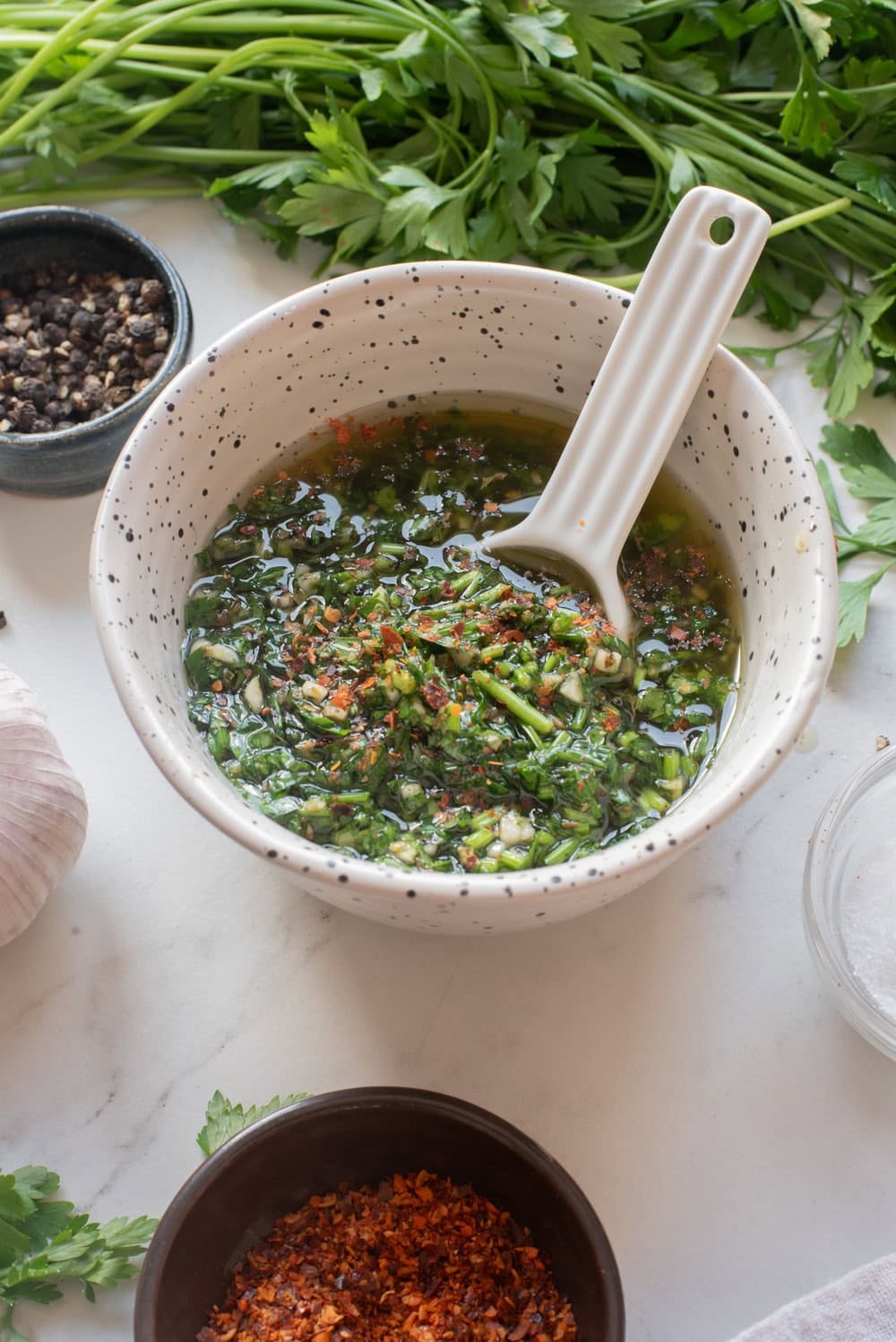
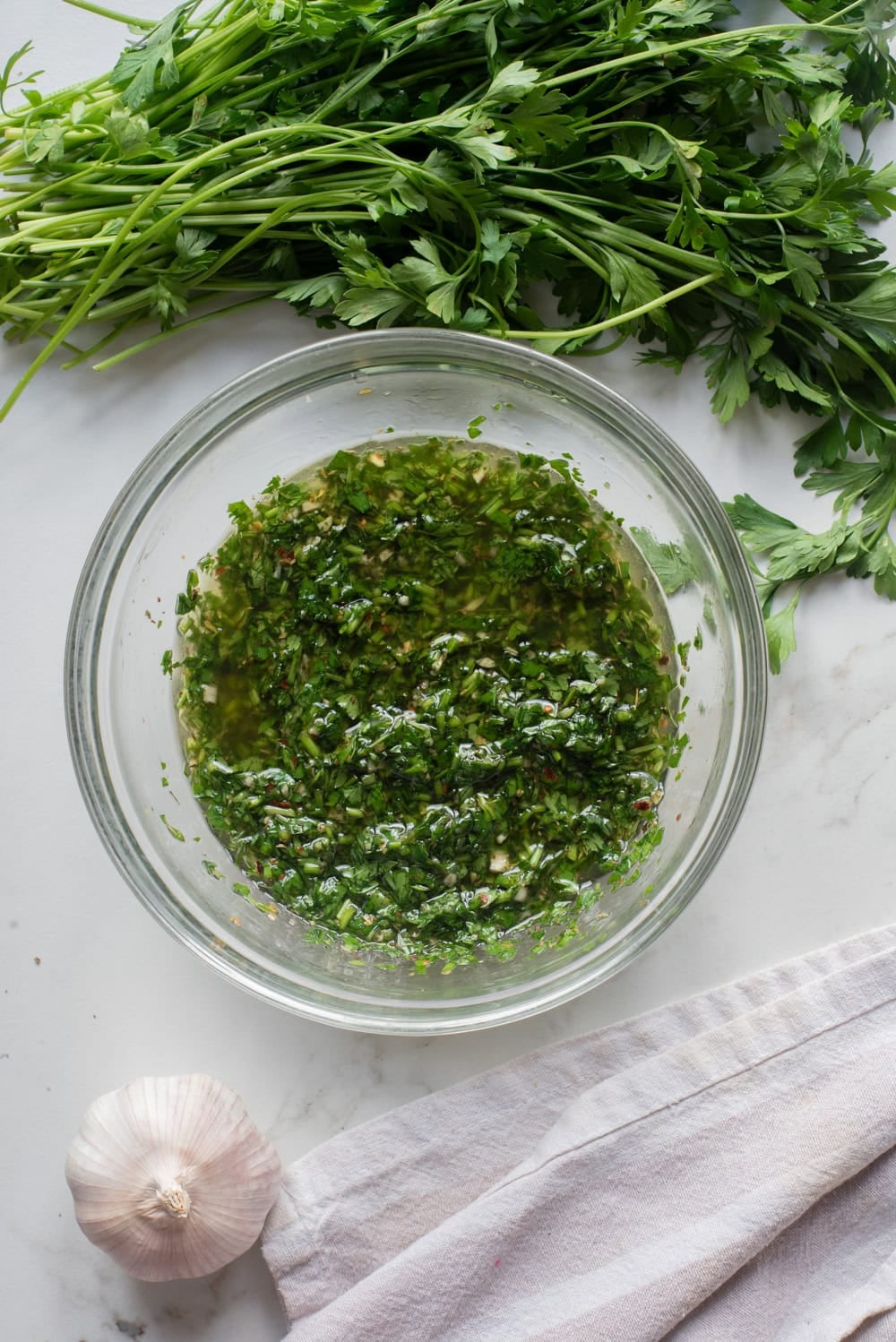
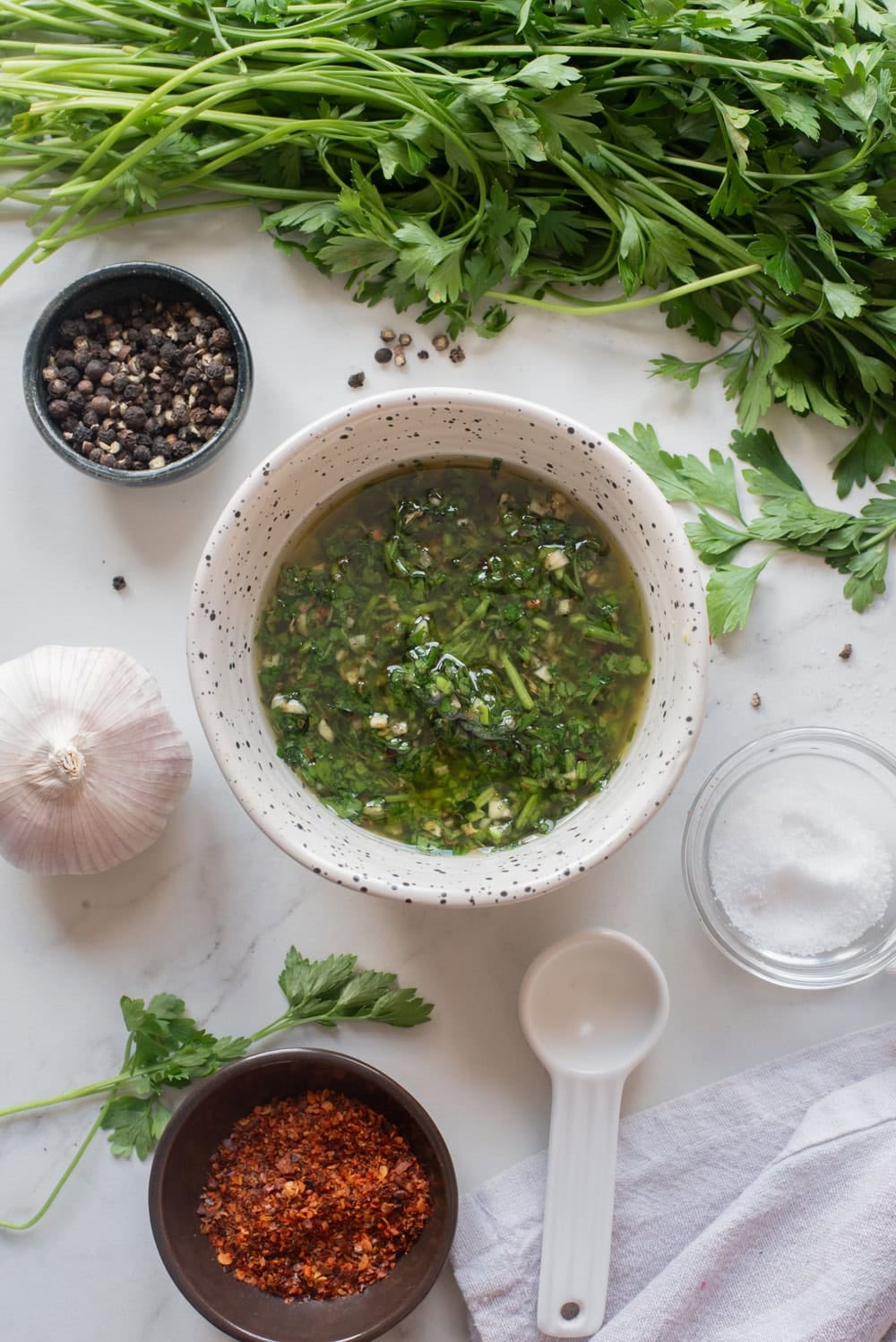
My chimichurri is chopped entirely by hand, never blended, so it stays loose and bright with flecks of parsley suspended in the oil. I make the real Argentine version with flat-leaf parsley, garlic, dried oregano, and red wine vinegar, and it comes together in 15 minutes plus a 2-hour rest. It is naturally vegan, gluten-free, and nut-free.
Authentic chimichurri learned in Argentina

I learned to make chimichurri in Argentina. Watching it done there, what surprised me was how it gets built: everything finely chopped by hand on a board, never blitzed. It tastes sharp and green and a little peppery, parsley and garlic up front, with red wine vinegar cutting through the olive oil.
The secret is your knife! Chop everything by hand and skip the blender: a food processor bruises the parsley, whips the oil into a dark pesto-like paste, and oxidizes the herbs to a dull green. Chopped by hand, the sauce stays loose and spoonable, the flecks of herb floating in the oil. I use dried oregano for a slightly musky depth, red wine vinegar for the bite, and a mild-to-medium olive oil so its fruitiness does not fight the herbs. Then I rest it at least 2 hours, which is when the garlic and oregano settle into the oil.
I reach for it all week. It goes on roasted vegetables and grains when I want something green and bright, over eggs when breakfast feels flat, and spooned across anything off the grill. If you keep a fresh herb sauce in rotation the way I keep my kale pesto going, this one earns the same shelf in the fridge.

Ingredients worth discussing
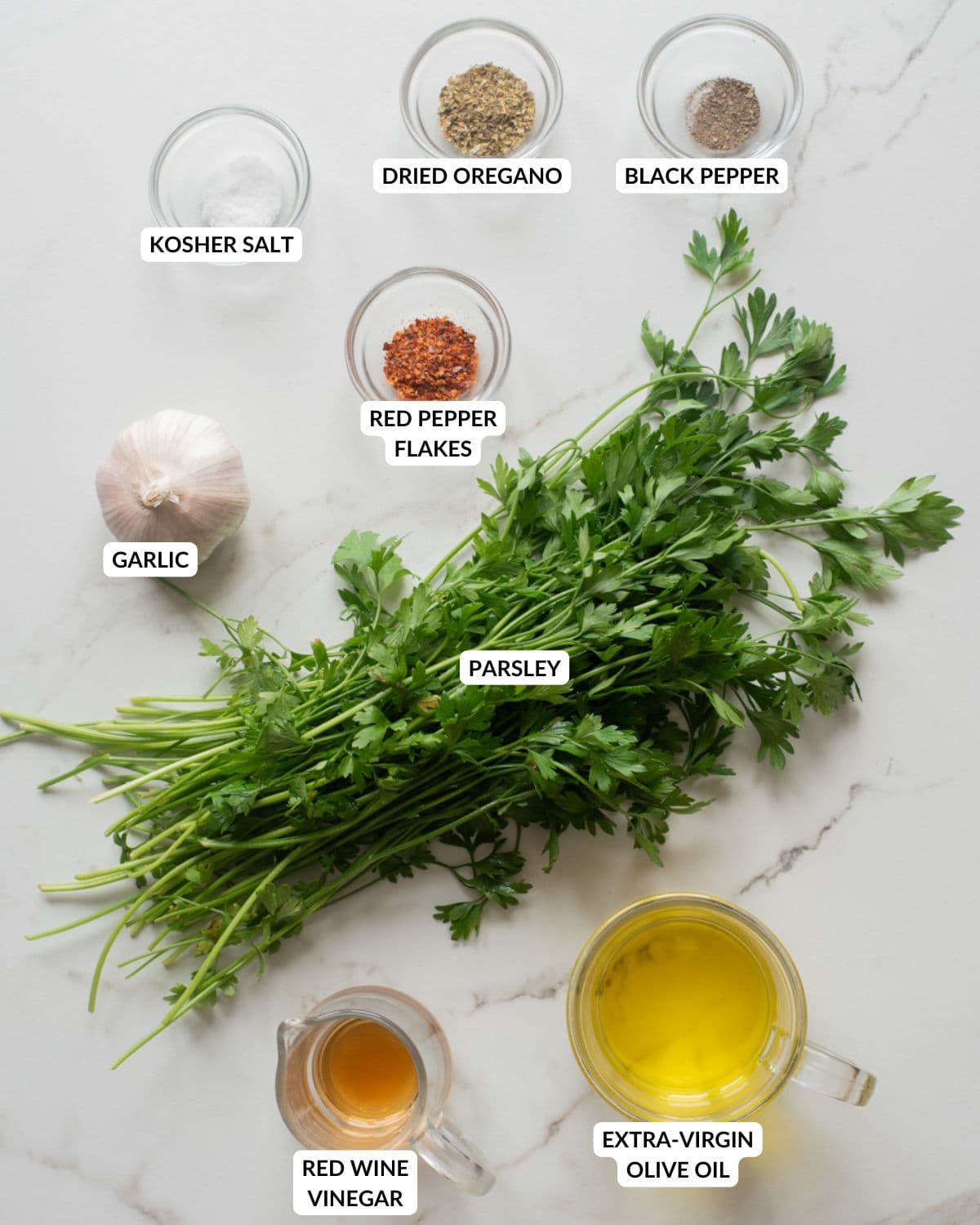
Full ingredient list and detailed instructions in the recipe card.
- Flat-leaf parsley is the backbone, so reach for it over curly parsley, which reads grassy and carries less flavor. Chop it just before you build the sauce so it does not oxidize on the board.
- For the olive oil for chimichurri, pick something mild-to-medium rather than a big peppery finishing oil. A loud oil competes with the herbs; a gentler one lets the parsley and garlic lead.
- Dried oregano is traditional and gives a slightly musky, settled depth. Fresh oregano works too (use 2 tablespoons), though the sauce reads greener and brighter.
- Garlic goes in minced, not crushed to a paste, so it stays distinct in the loose sauce. Four cloves is balanced; go up to six if you want it sharper.
- Red wine vinegar does the sharpening. Stir it into the herbs first and give it 5 minutes before the oil goes in, so the garlic mellows a little instead of hitting raw.
Shruthi’s Top Tips
The rules for good chimichurri
A few things I picked up testing this against the food-processor shortcut.
- Chop by hand and resist the food processor. If you must use one, pulse 2 to 3 times only and never let it run, or you will get a dark, emulsified paste instead of a loose sauce. Expect coarser results either way.
- Give it the full 2-hour rest if you can. Straight out of the bowl it tastes raw and sharp; after resting, the garlic and oregano round out and settle into the oil.
- Chimichurri is not really spicy, just gently warm from the red pepper flakes (ají molido in Argentina). I keep it kid-friendly at 1/2 teaspoon; add more a pinch at a time if you want real heat.
- Taste and adjust vinegar and salt before serving. The oil firms and the flavors mute in the fridge, so a cold sauce almost always needs a touch more of both once it comes back to room temperature.
How to make chimichurri sauce
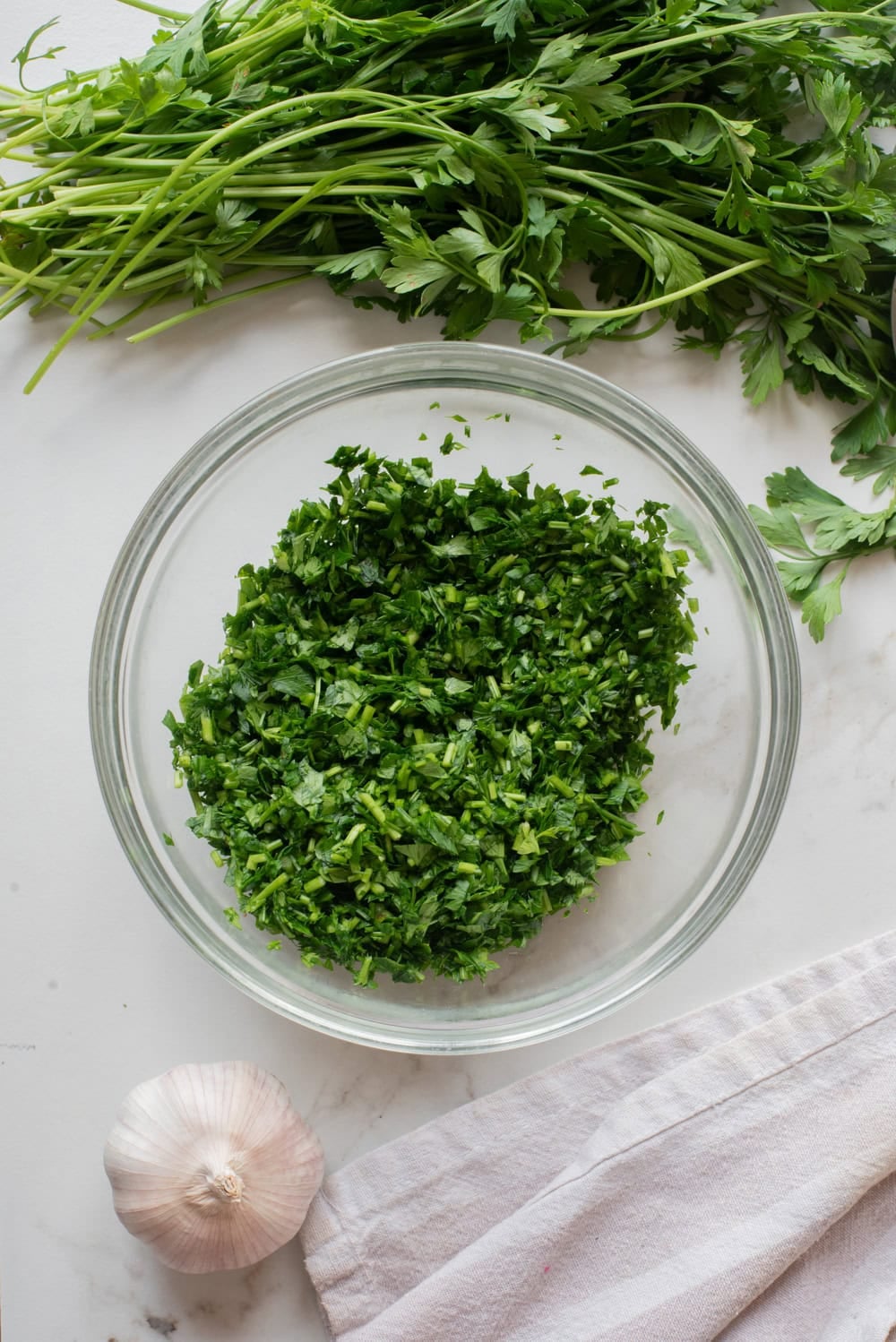
- Finely chop the parsley, garlic, and oregano together by hand on a board. No blender and no food processor. Chopping by hand keeps the sauce loose, not a paste.
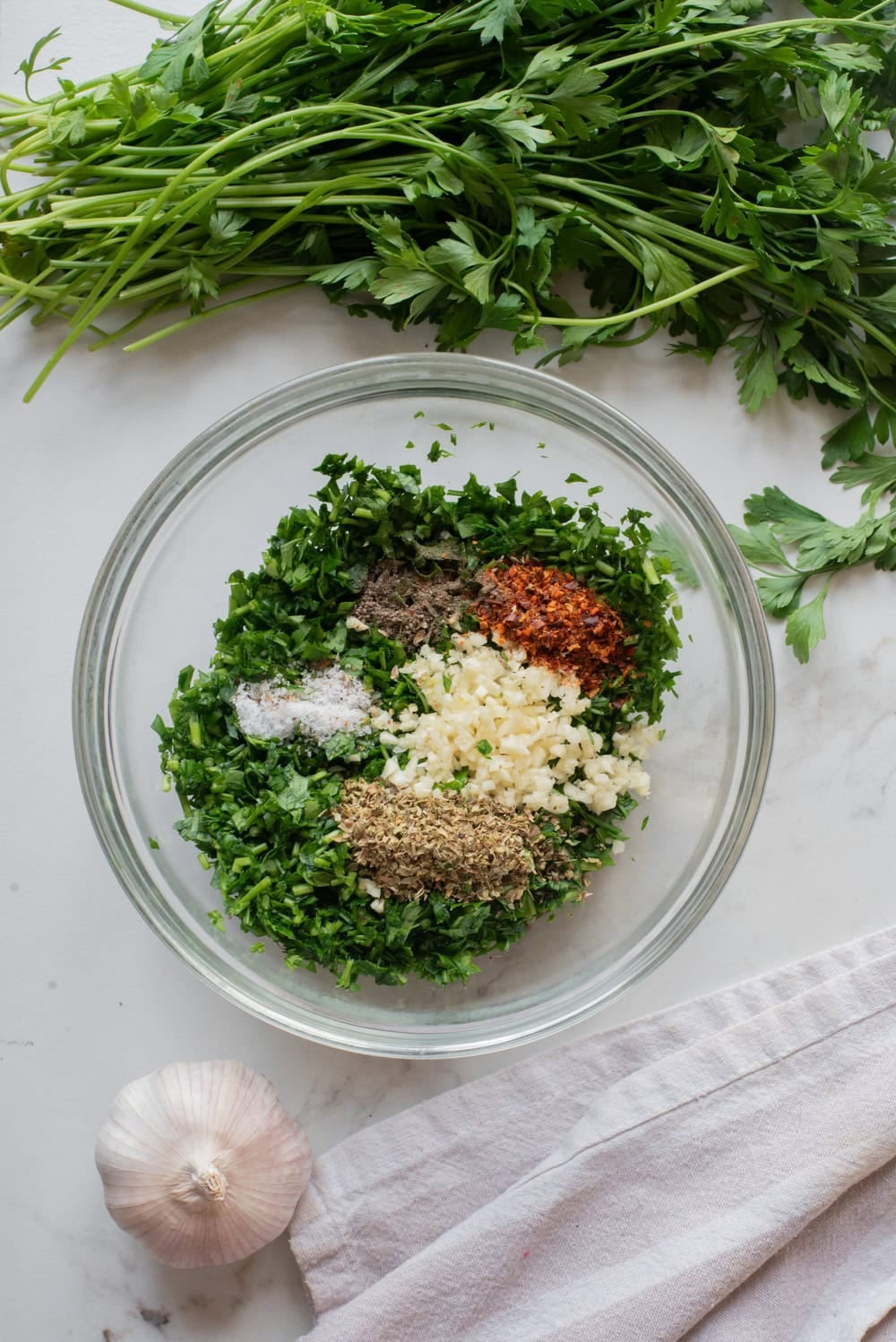
- Scrape the herbs and garlic into a bowl and add the red pepper flakes and salt. Stir in the red wine vinegar and let it sit 5 minutes.
- Pour in the mild-to-medium olive oil and stir until it looks loose and spoonable, with the herb flecks suspended in the oil.
- Cover and rest at room temperature at least 2 hours before serving. If it has been refrigerated, bring it back to room temperature first.
Chimichurri Sauce
Equipment
- Sharp chef's knife
- Cutting board
Ingredients
- 1 1 large bunch fresh flat-leaf parsley, (2 cups) finely chopped
- 4 cloves garlic, minced (up to 6 for a sharper sauce)
- 2 teaspoons dried oregano
- ½ teaspoon red pepper flakes, plus more to taste
- ½ teaspoon kosher salt
- 3 tablespoons red wine vinegar
- ½ cup extra-virgin olive oil, mild-to-medium
Instructions
- On a cutting board, finely chop the parsley, garlic, and oregano by hand. Do not use a blender or food processor. Chopping by hand keeps the sauce loose and bright instead of a dark paste. If you must, pulse a processor 2 to 3 times only.
- Combine the chopped herbs and garlic in a bowl with the red pepper flakes and salt. Stir in the red wine vinegar and let sit 5 minutes.
- Pour in the olive oil and stir until combined. It should look loose and spoonable, with the herbs suspended in the oil, not emulsified.
- Cover and rest at room temperature at least 2 hours, or refrigerate overnight, before serving. Bring refrigerated chimichurri back to room temperature before serving.
Notes
- Keeps 1 to 2 weeks refrigerated in an airtight container. The oil firms in the fridge, so let it come to room temperature before serving.
- Freezes up to 3 months in a jar or ice-cube tray.
- For a cilantro version, swap half the parsley for fresh cilantro.
- Fresh oregano works in place of dried, use 2 tablespoons; the flavor reads greener.
- Naturally vegan, gluten-free, and nut-free.
Nutrition
Nutrition information is automatically calculated, so should only be used as an approximation.


