
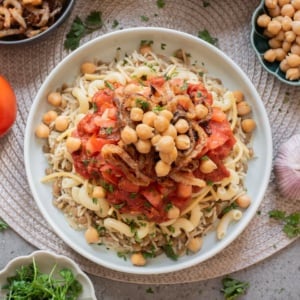
This koshari is my from-scratch take on Egypt’s national dish, the Cairo street food bowl of spiced lentil rice, two pastas, chickpeas, and crispy fried onions under two tomato sauces. It has a few moving parts that overlap, and you build each bowl at the table, one cooked sauce for depth and one fresh sauce for brightness. Vegan, serves 6.
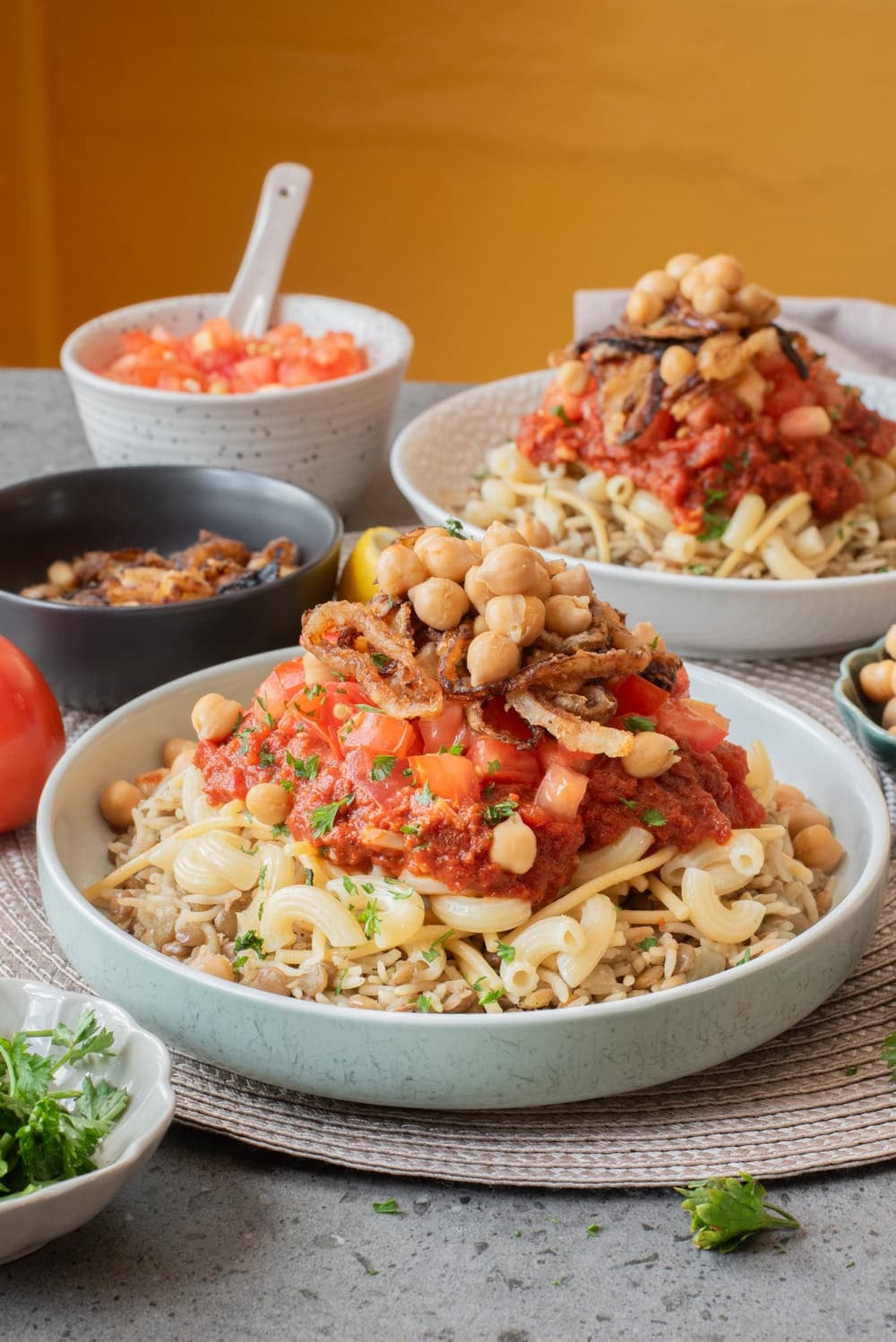
The Egyptian street food bowl I’ve been making since Cairo

Koshari is sold from carts on street corners across Egypt for less than a dollar, with rice, lentils, pasta, chickpeas, crispy onions, and two tomato sauces piled into one bowl. It’s one of the most complete vegan meals I’ve eaten. I had my first bowl in Cairo and spent the rest of the trip eating it whenever I could.
What separates a good koshari from a great one is the dual sauce. I make both: the cooked tomato-vinegar sauce gives depth and warmth, and the fresh da’ah, a raw garlic-vinegar sauce, gives brightness and acid. Together they are the reason koshari tastes layered and complex, and the fresh sauce takes five minutes. If you love this lentil-and-rice family, my mujaddara shares the same crispy-onion base, and my Misir Wot sits in the same spiced African territory.
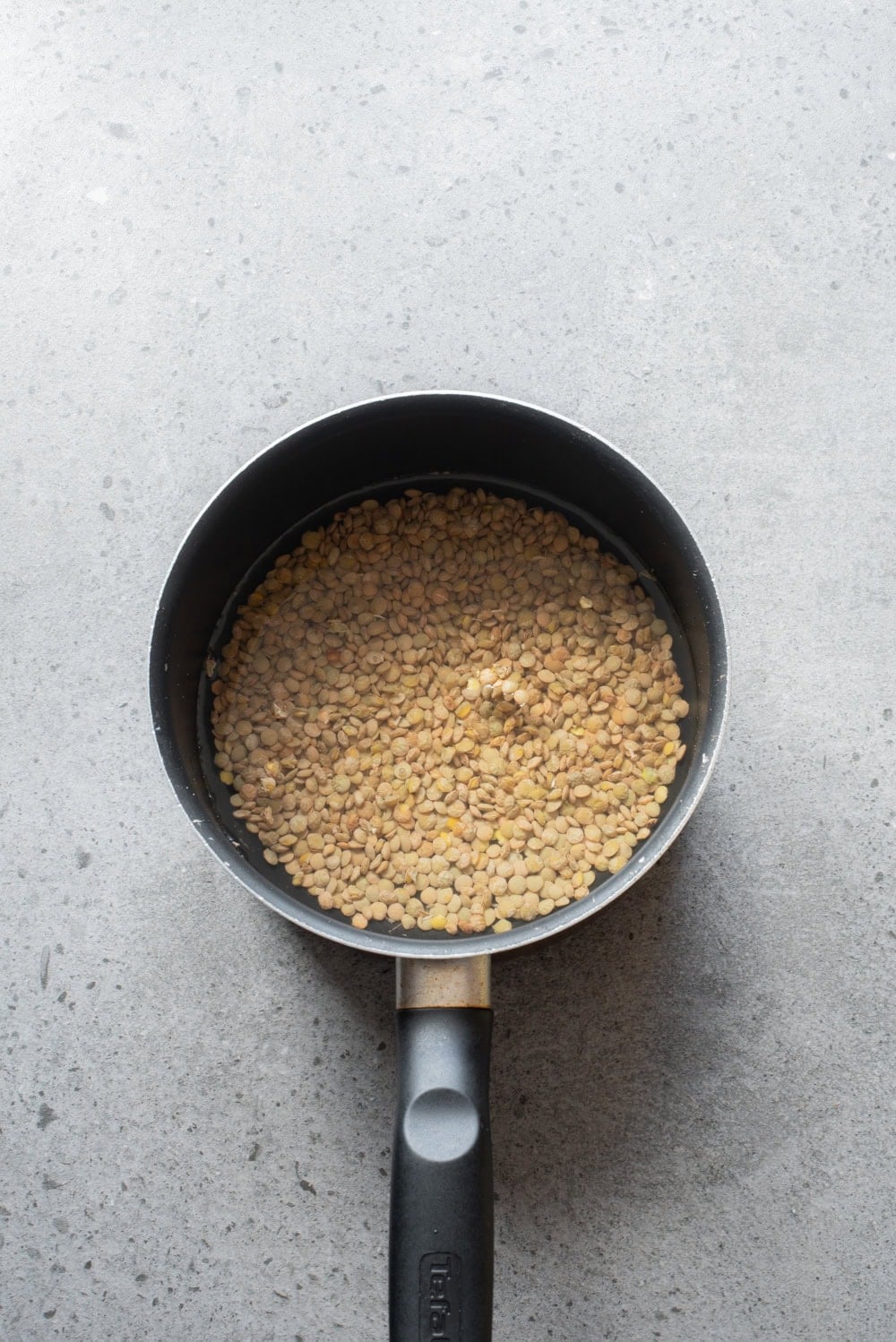
The technique that makes the base work is par-cooking the lentils before they go in with the rice. Raw lentils added directly produce either crunchy lentils with perfect rice or mushy rice with tender lentils, and you can’t get both right at the same time. Fifteen minutes of par-cooking brings everything to the same finish line.
Oh, and reserve the onion-frying oil and use it as the cooking fat for the rice base! That caramelized onion flavor carries through the entire dish.

Key ingredients and why they matter
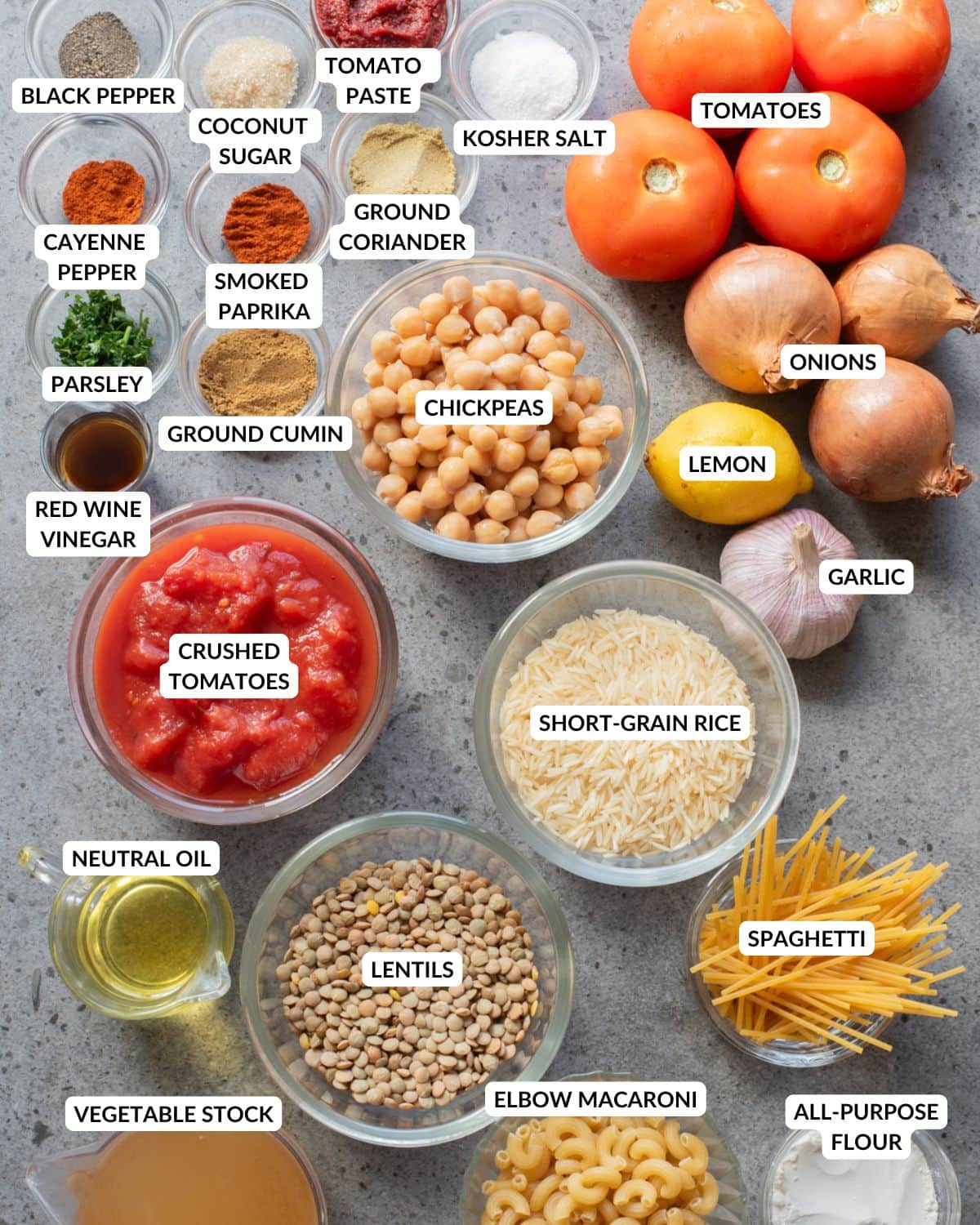
A few components carry koshari, and a couple of small choices are the difference between a good bowl and a great one. Full quantities are in the recipe card below.
- Green or brown lentils, par-cooked for 15 minutes before going in with the rice. Don’t skip this step; it’s what guarantees both finish at the same time.
- Egyptian short-grain rice (Calrose) gives the lentil rice a slightly stickier, more cohesive texture. Basmati works and is more widely available; reduce water to 1¾ cups since basmati absorbs slightly less.
- Two pasta shapes, elbow macaroni and broken spaghetti cooked together. The combination is how street vendors in Cairo serve it; the different shapes catch the sauce differently and give every bite a slightly different texture.
- Two large yellow onions, thinly sliced, dredged in flour and shallow-fried, the technique that produces deeply golden, crispy rings without a deep fryer. Reserve the onion-infused oil for the rice.
- Crushed tomatoes and tomato paste form the base of the cooked sauce. Red wine vinegar is what makes it specifically koshari sauce rather than a generic tomato base, so don’t substitute it out.
- Fresh ripe tomatoes for the da’ah, finely diced and dressed with garlic, vinegar, lemon juice, and cumin. This sauce is served raw; it needs ripe tomatoes to work.
- Chickpeas from a can, warmed with a pinch of cumin and salt before serving. No soaking required, the same shortcut I use for my chickpea buddha bowl.
SHRUTHI’S TOP TIPS
Tips for the best Egyptian koshari
- Reserve the onion frying oil. Don’t wipe the pan. That caramelized fat is the flavor base for the rice and carries through the whole dish. If the onions absorb most of it, add a splash of fresh oil to supplement.
- Par-cook the lentils for exactly 15 minutes, just barely tender with some resistance. They finish cooking with the rice; fully cooked lentils going in will turn to mush.
- Cook the pasta 1 minute less than package directions. It sits in warm sauce after draining and will continue to soften.
- Crispy onions don’t refrigerate well. Store at room temperature in an airtight container. Re-crisp in a dry skillet over medium heat for 2 to 3 minutes.
- Assemble to order if you’re feeding a crowd or meal prepping. The components keep separately for up to 4 days. Set both sauces on the table and let everyone build their own bowl.
How to make koshari
- Par-cook the lentils in boiling water for 15 minutes, until just barely tender with some resistance. Drain and set aside; they finish cooking with the rice.
- Toss sliced onions with flour and salt, then fry until deeply golden and crisp. Set aside and reserve the flavored oil.
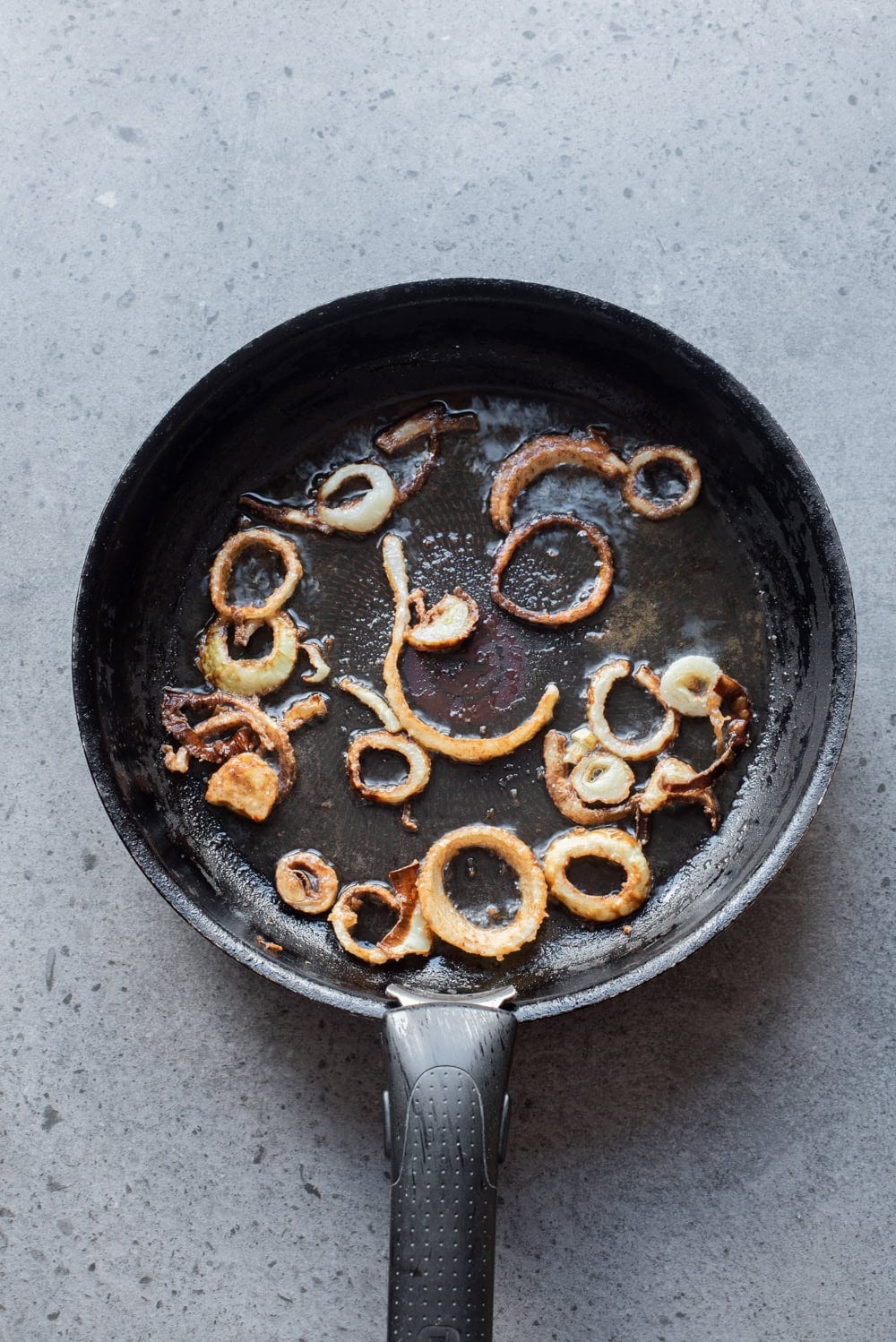
- In a saucepan, cook the garlic until fragrant, then add tomato paste and cook briefly. Stir in crushed tomatoes, red wine vinegar, cumin, coriander, smoked paprika, cayenne, salt, black pepper, and sugar. Simmer until thick and rich. Keep warm.
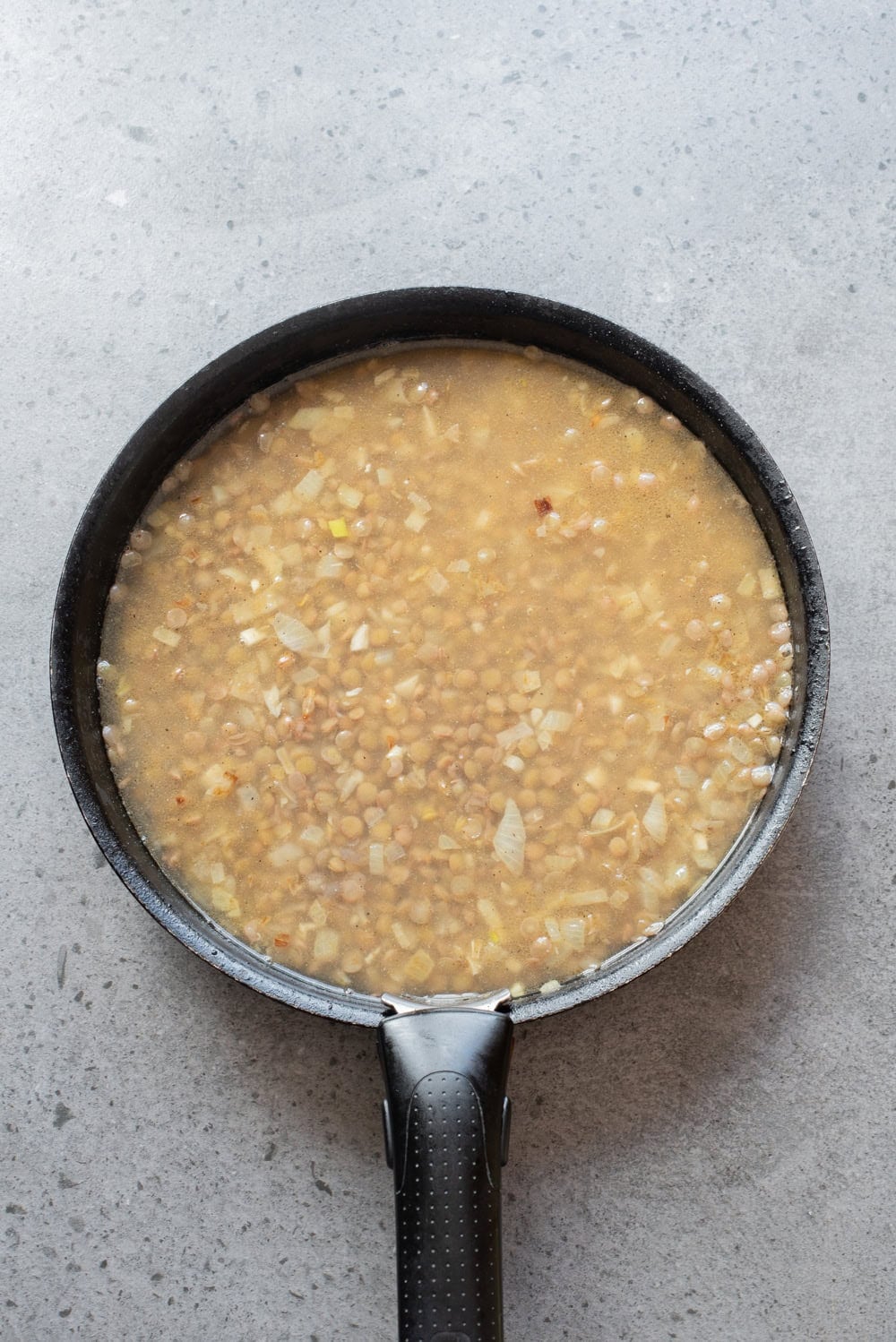
- In a large pot, cook diced onion in the reserved oil until soft and lightly golden. Stir in garlic, cumin, and coriander. Add the drained lentils and rinsed rice, stirring to coat everything in the spiced oil. Then pour in vegetable stock, salt, and pepper. Cook until the rice and lentils are tender and fluffy. Let rest, then fluff.
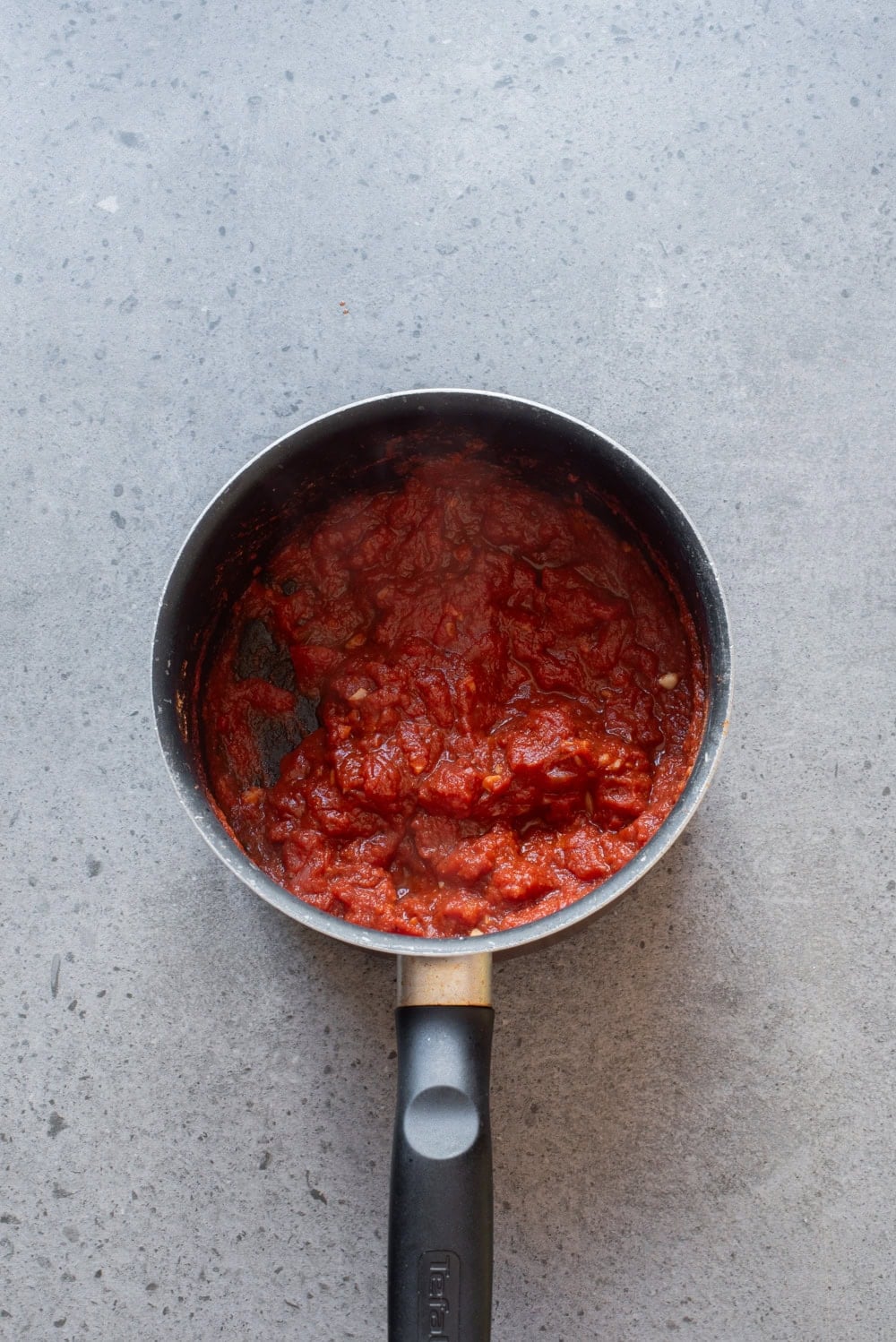
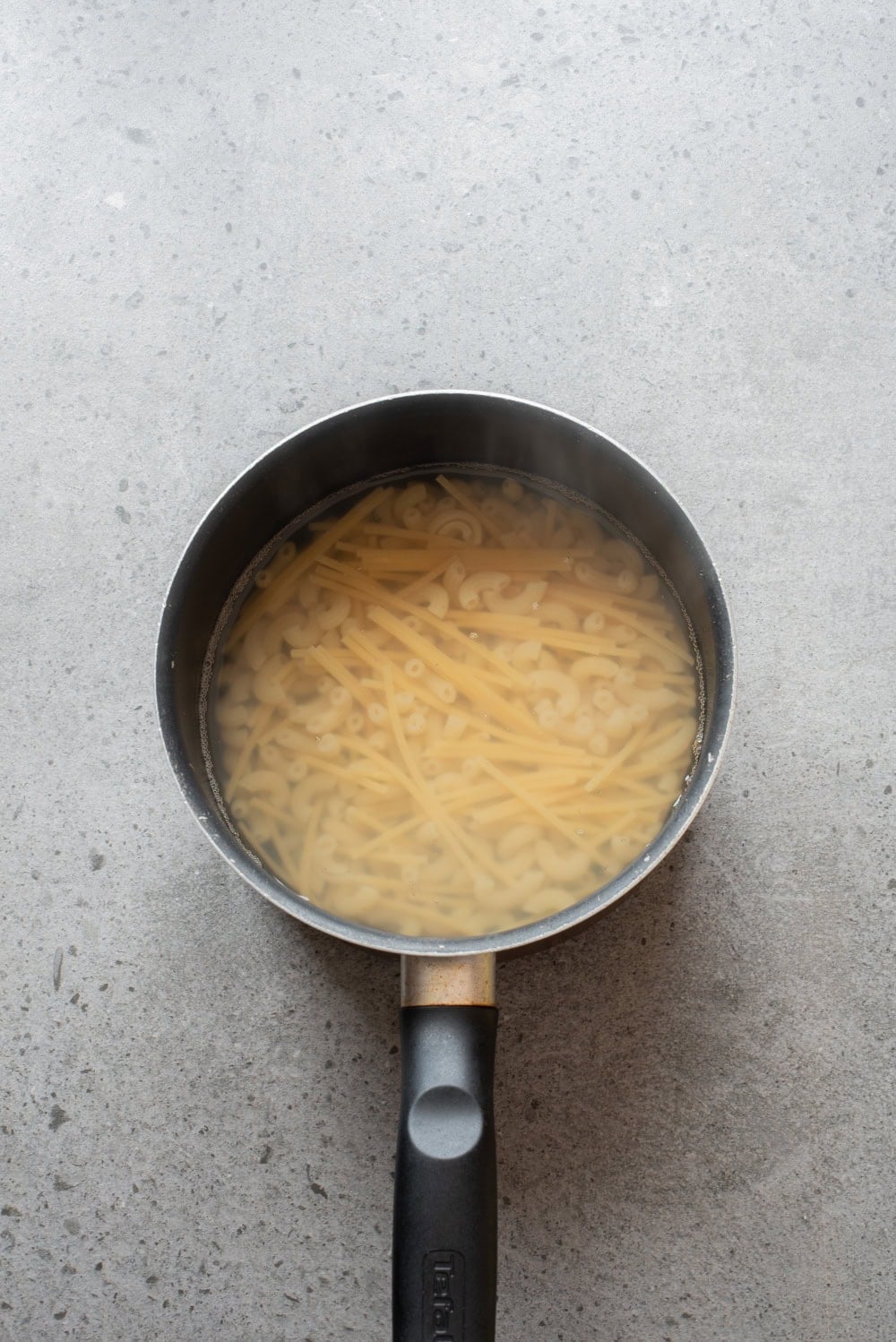
- Break the spaghetti into roughly 2-inch pieces and cook it with the elbow macaroni until just al dente. Drain and lightly coat with oil to prevent sticking.
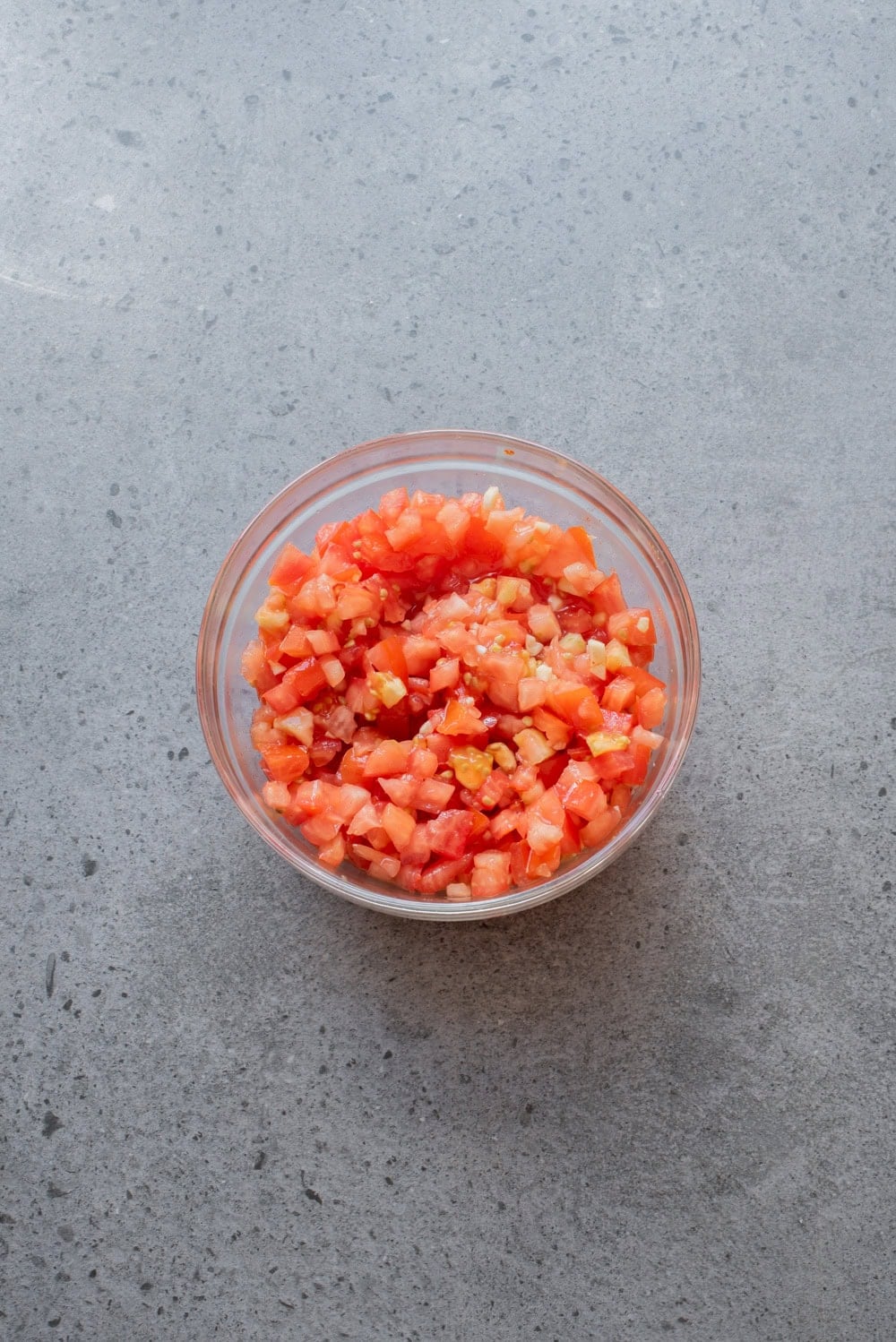
- Combine diced tomatoes, garlic, red wine vinegar, lemon juice, cumin, salt, and cayenne in a bowl. Stir and let sit so the flavors come together.
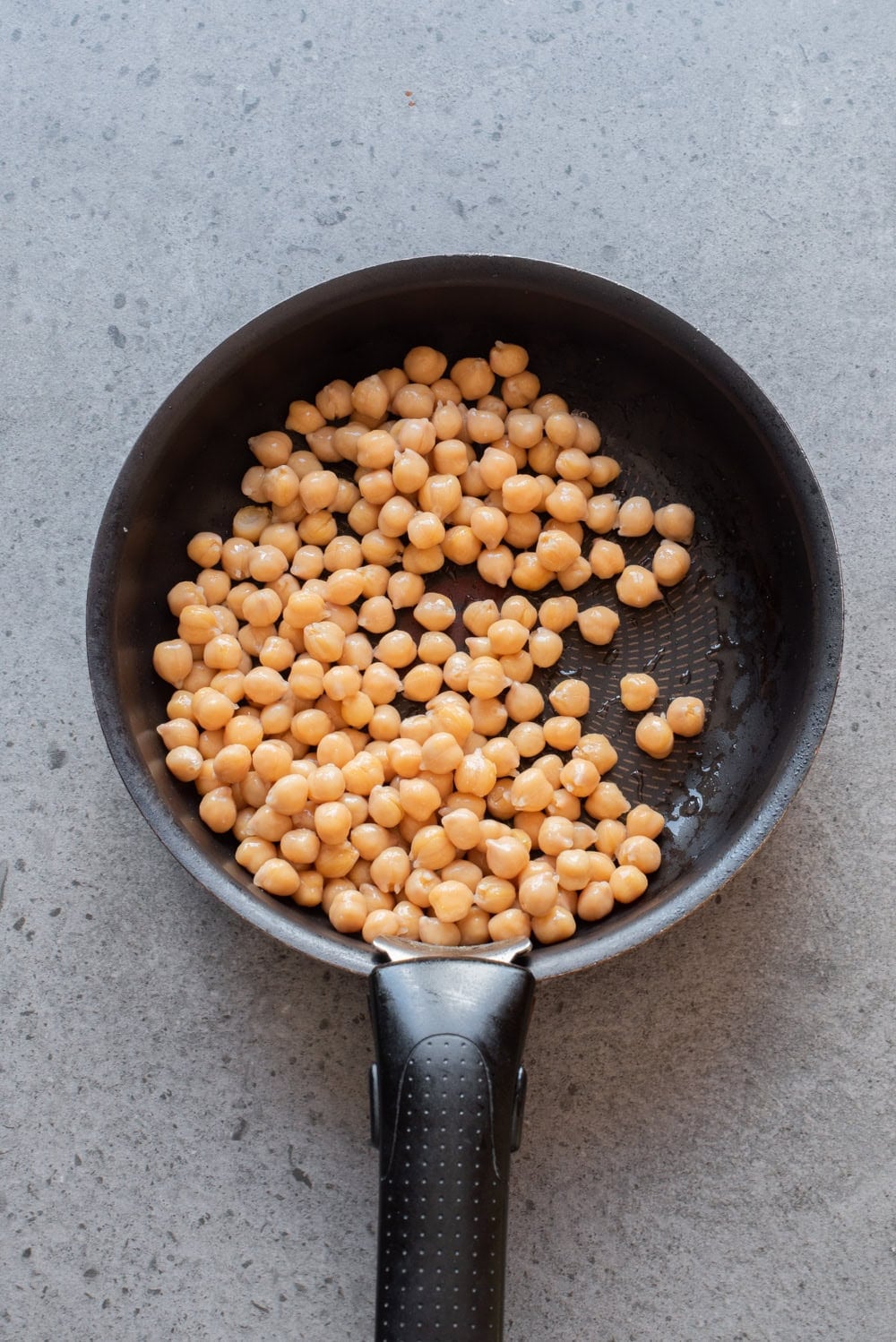
- Warm the chickpeas with a pinch of cumin and salt.
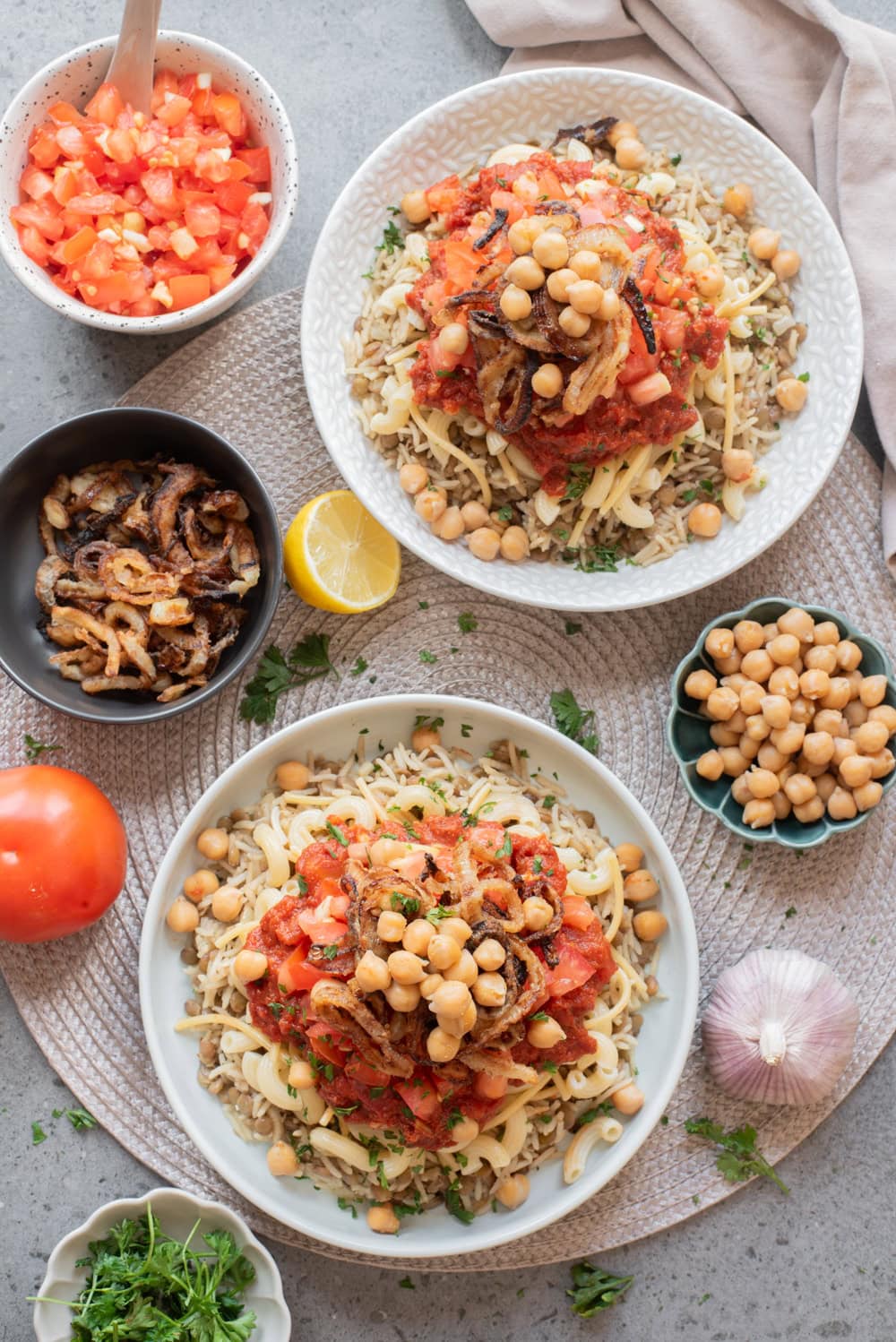
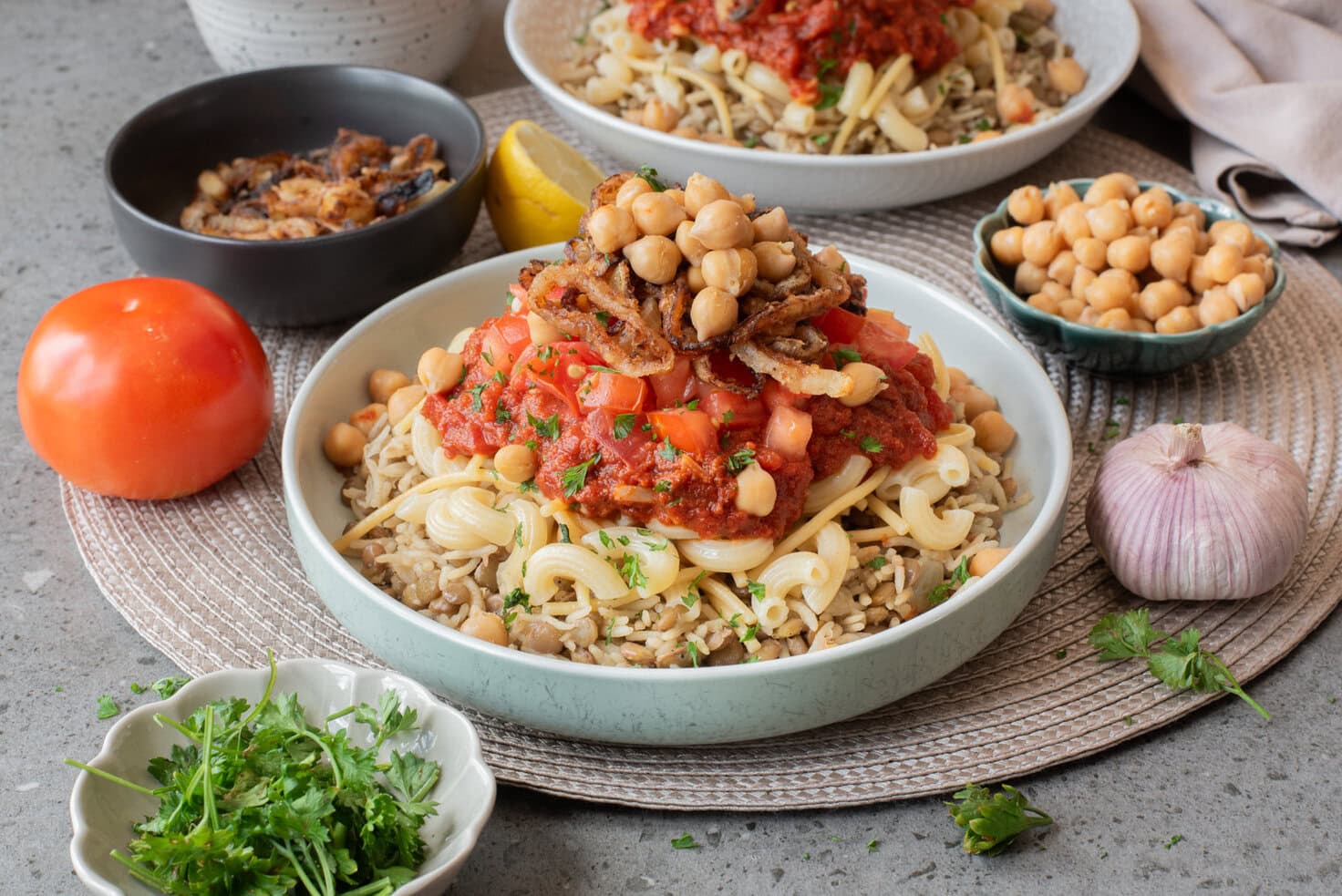
- To serve, add lentil rice and pasta to bowls, then spoon over the cooked tomato-vinegar sauce, followed by the fresh tomato sauce. Top with chickpeas, crispy onions, and fresh parsley. Serve immediately.
How to serve koshari
Koshari is built to be mixed at the table. Keep every component separate, add the crispy onions right before eating so they stay crunchy, and set both sauces on the side so people can go as tangy as they like. It is meant to be stirred together as you eat, not kept neat.
If you want to make it more filling, add a fried or jammy egg on top, or a spoon of garlicky yogurt or a tahini drizzle for a creamy contrast against the sauces. A side of warm pita or a simple salad rounds it into a full spread.
Koshari is also the easiest dish I know for a split table, because everyone builds their own bowl. Put the lentil rice, pasta, chickpeas, onions, and both sauces out in separate bowls and let people assemble. Meat-eaters can add shredded roast chicken or browned spiced ground beef on top. For kids, hold the cayenne sauce and lean on the crispy onions and chickpeas. The components keep separately up to 4 days, so it makes a strong make-ahead for a crowd.
Variations
- For gluten-free, use GF elbow pasta and swap cornstarch for the flour on the onions. Same dredge technique, equally crispy.
- For spice, the cayenne in both sauces is fully adjustable. Traditional Egyptian street koshari runs quite spicy, so start there and pull back if needed.
Storage and reheating
Refrigerate the components separately for up to 4 days. Reheat the rice gently with a splash of water or stock, and crisp the onions in a dry skillet for 2 to 3 minutes or in a 350°F oven for 5 minutes to bring them back. Don’t store fully assembled bowls, since the onions lose their crunch and the pasta soaks up the sauce.
Egyptian Koshari
Equipment
- Large heavy-bottomed pot
Ingredients
For the crispy onions
- 2 large yellow onions, thinly sliced into rings
- 3 tablespoons all-purpose flour
- ½ teaspoon kosher salt
- 4 tablespoons neutral oil, such as vegetable or canola
For the lentil rice
- 1 cup green lentils, or brown lentils, rinsed
- 2 tablespoons neutral oil, reserved onion oil — see Notes
- 1 medium yellow onion, finely diced
- 3 cloves garlic, minced
- 1 teaspoon ground cumin
- ½ teaspoon ground coriander
- 1 cup Egyptian short-grain rice, Calrose, rinsed, can basmati, rinsed (see Notes)
- 2 cups vegetable stock
- ½ teaspoon kosher salt
- ¼ teaspoon black pepper
For the pasta
- 1 teaspoon kosher salt, for pasta water
- 4 oz elbow macaroni, about 1 cup
- 2 oz spaghetti, broken into 2-inch pieces, about a handful
For the cooked tomato-vinegar sauce (salsa)
- 2 tablespoons neutral oil, such as vegetable or canola
- 6 cloves garlic, minced
- 2 tablespoons tomato paste
- 1 28-oz can crushed tomatoes
- 2 tablespoons red wine vinegar
- 1 teaspoon ground cumin
- 1 teaspoon ground coriander
- ½ teaspoon smoked paprika
- ½ teaspoon cayenne pepper, adjust to heat preference
- 1 teaspoon kosher salt
- ½ teaspoon black pepper
- ½ teaspoon coconut sugar, or granulated sugar
For the fresh sauce (da'ah)
- 4 medium ripe tomatoes, finely diced, about 2 cups
- 4 cloves garlic, minced
- 2 tablespoons red wine vinegar
- 1 medium lemon, juiced, 1 tablespoon
- ½ teaspoon ground cumin
- ½ teaspoon kosher salt
- ¼ teaspoon cayenne pepper
For serving
- 1 15-oz can chickpeas, drained and rinsed
- fresh flat-leaf parsley, roughly chopped
Instructions
Start the lentils (they take longest)
- Rinse the lentils and place them in a medium saucepan with 3 cups cold water. Bring to a boil over high heat, then reduce to a steady simmer.
- Simmer uncovered for 15 minutes, until the lentils are just barely tender with some resistance, not fully cooked. They finish cooking with the rice.
- Drain the lentils and set aside.
Fry the onions
- While the lentils simmer, toss the sliced onions with the flour and salt in a large bowl until evenly coated.
- Heat 4 tablespoons neutral oil in a large skillet over medium-high heat until shimmering.
- Add the onions in a single layer, working in two batches to avoid crowding. Fry 8 to 10 minutes per batch, stirring occasionally, until deeply golden and crisp.
- Transfer to a paper-towel-lined plate and season with a pinch of salt. Reserve the onion-infused oil in the pan for the rice.
Make the cooked tomato-vinegar sauce
- Heat 2 tablespoons neutral oil in a medium saucepan over medium heat. Add the garlic and cook 1 minute, until fragrant but not browned.
- Add the tomato paste and stir constantly for 1 minute, until it deepens in color.
- Add the crushed tomatoes, red wine vinegar, cumin, coriander, smoked paprika, cayenne, salt, pepper, and sugar. Stir to combine and bring to a gentle boil.
- Reduce the heat and simmer uncovered 15 to 20 minutes, stirring occasionally, until thickened and the raw tomato smell has cooked off.
- Taste and adjust, more vinegar for brightness or cayenne for heat. Keep warm on low.
Make the lentil rice
- Return the reserved onion oil to the same large pot over medium heat, adding a splash more oil if needed. Add the diced onion and cook 5 to 6 minutes, until soft and golden.
- Stir in the garlic, cumin, and coriander and cook 1 minute, until fragrant.
- Add the drained par-cooked lentils and the rinsed rice. Stir to coat everything in the spiced oil.
- Pour in the vegetable stock, salt, and pepper. Bring to a boil, then reduce to low, cover tightly, and cook 15 minutes.
- Remove from the heat and let rest, still covered, for 5 minutes. Fluff gently with a fork; the rice and lentils should be tender and nutty, not mushy.
Cook the pasta
- While the rice rests, bring a medium pot of heavily salted water to a boil. Break the spaghetti into roughly 2-inch pieces and add it with the elbow macaroni.
- Cook 1 minute less than package directions, until just al dente, since the pasta sits in warm sauce. Drain and toss with a drizzle of oil to prevent sticking.
Make the fresh da’ah sauce
- Combine the diced tomatoes, garlic, red wine vinegar, lemon juice, cumin, salt, and cayenne in a bowl.
- Stir and let sit at least 5 minutes for the flavors to come together. Taste and adjust; it should be bright, tangy, and a little spicy.
Assemble
- Warm the chickpeas in a small pan with a pinch of cumin and salt, just enough to take the chill off.
- Build each bowl with a layer of lentil rice, then pasta, then a ladle of the cooked tomato sauce.
- Spoon the fresh da’ah sauce alongside or on top, then finish with crispy onions, chickpeas, and a scatter of parsley. Serve immediately with both sauces on the table.
Notes
- Reserve the onion-infused oil after frying the onions, since it adds essential caramelized onion flavor to the rice. If needed, supplement with 1 to 2 tablespoons neutral oil.
- Par-cook the lentils for 15 minutes before combining with the rice so both finish cooking at the same time.
- Egyptian short-grain rice (Calrose) gives the most authentic texture. If using basmati, reduce the stock to 1¾ cups.
- The cooked sauce provides depth while the fresh sauce adds brightness, and using both creates the layered flavor typical of koshari.
- Components can be prepared up to 4 days ahead and stored separately. Keep crispy onions at room temperature in an airtight container.
- Reheat the rice with a splash of water or stock. Re-crisp onions in a dry skillet for 2 to 3 minutes or in a 350°F oven for about 5 minutes.
Nutrition
Nutrition information is automatically calculated, so should only be used as an approximation.


