
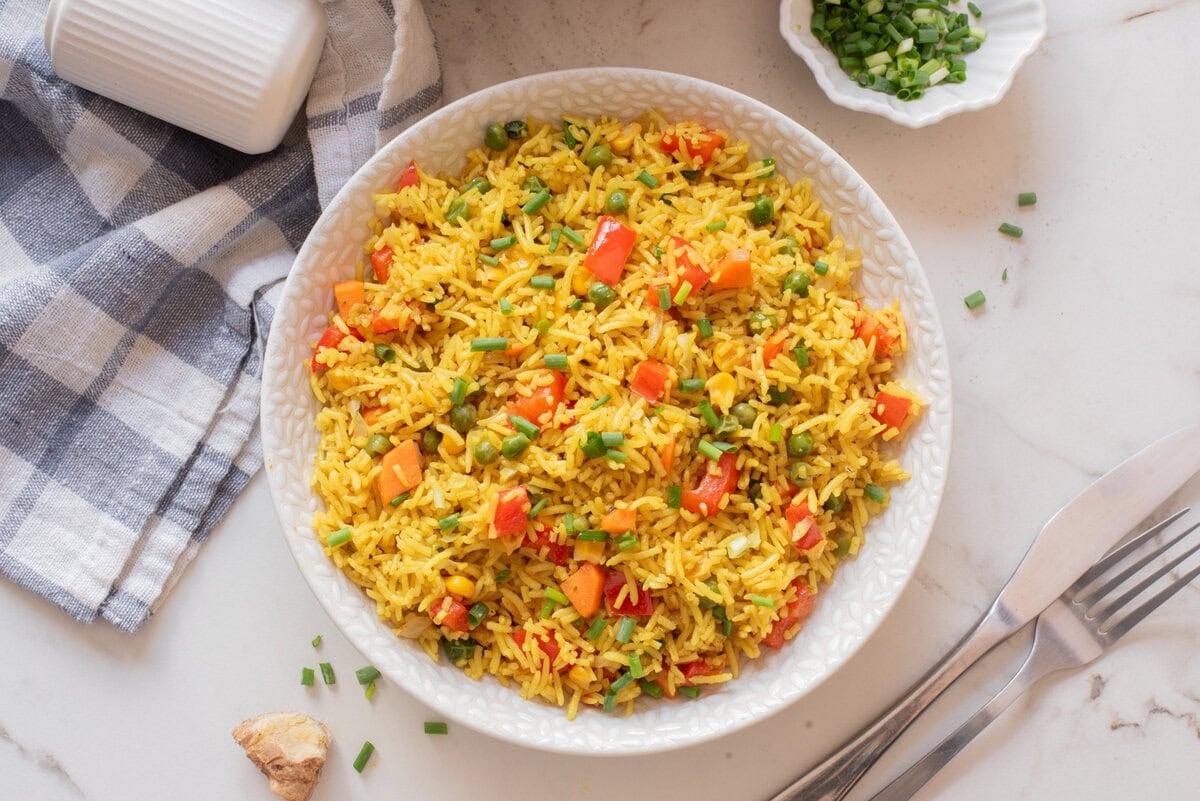
My Nigerian fried rice uses parboiled rice, a screaming-hot wok, and a cooling step many recipes skip — and that’s what makes it taste like party rice instead of weeknight fried rice! It’s vegan, gluten-free, and the dish I make when jollof isn’t quite right for the occasion.
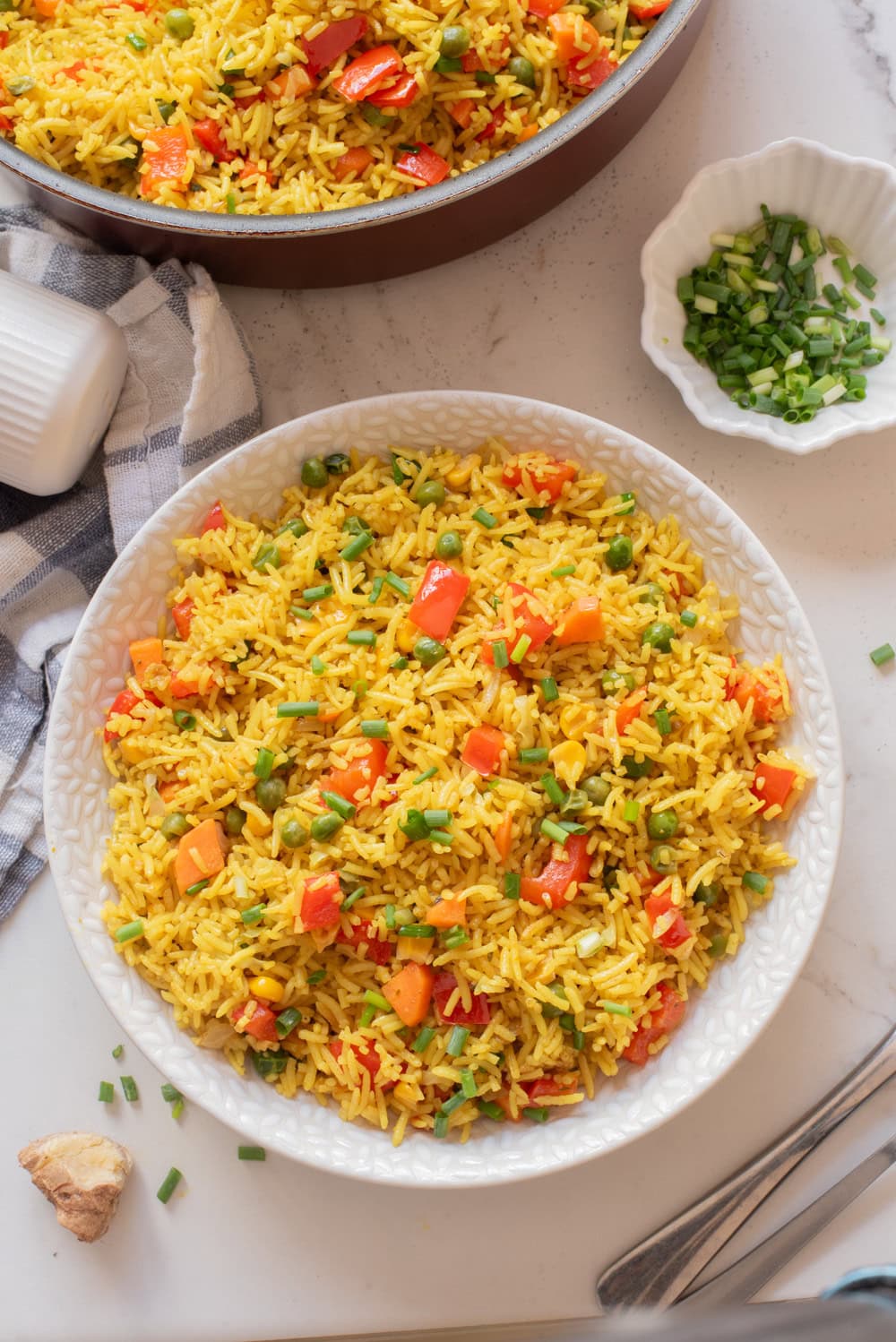
With my Nigerian fried rice, the technique is everything!

Huge thanks to my friend Dami for helping me troubleshoot and perfect this recipe. If you’ve made fried rice at home and it came out soft or clumpy, the rice is almost certainly the problem — either the wrong type or added to the pan too warm.
Parboiled rice is pretty non-negotiable here. As an Indian, I feel obliged to admit I’ve tried this with basmati — and sadly, it’s still not as good. Parboiled rice (Golden Sella for instance) has already been partially cooked under pressure before milling, which means the starches have gelled and the grains stay firm and separate no matter what you do to them. That’s the texture you see at Nigerian parties and in good West African restaurants. Jasmine is too starchy and clumps the moment it hits the wok.
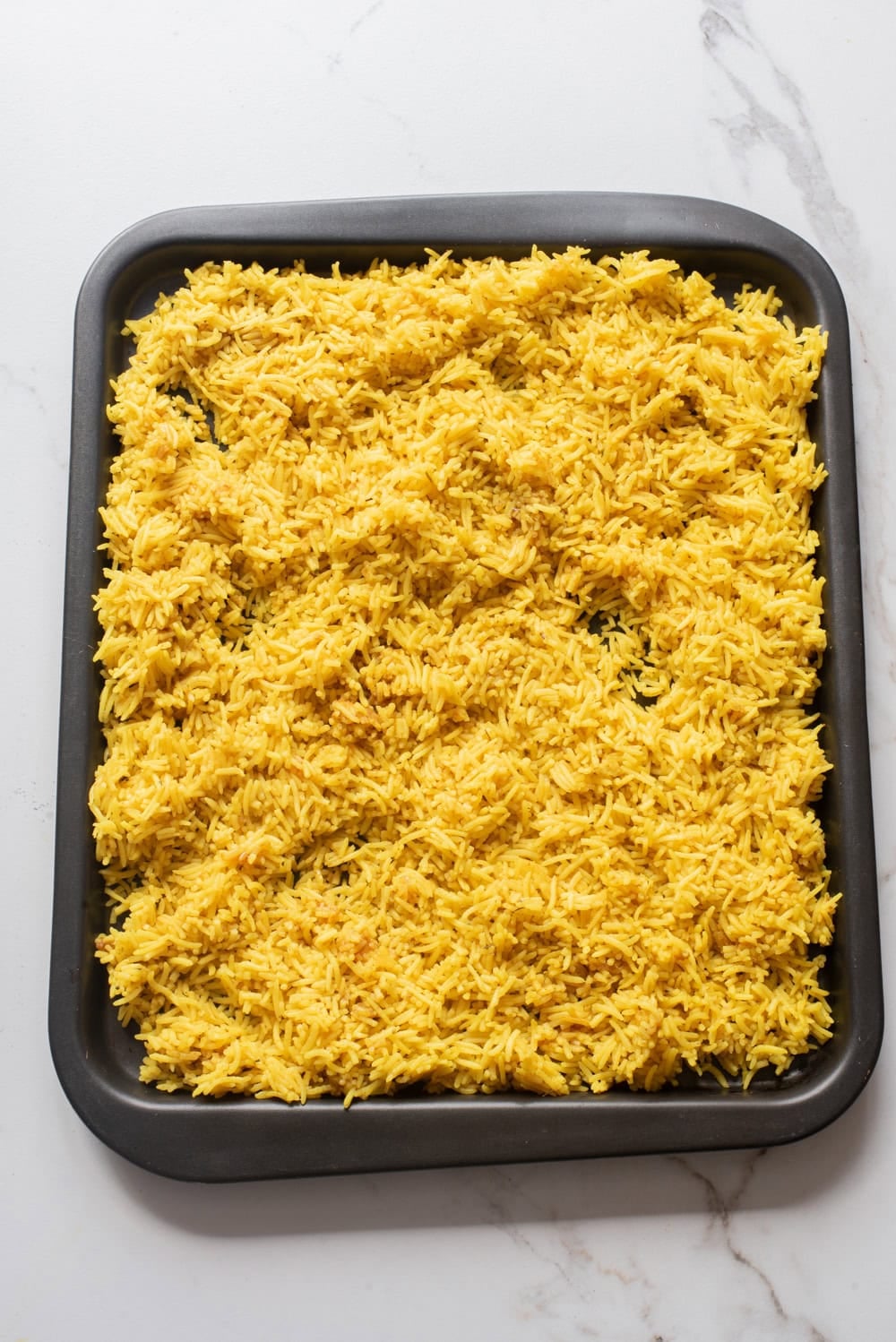
The second variable is temperature. Warm rice steams in the pan instead of frying — the grains stick together and you end up closer to porridge. Day-old refrigerated rice is ideal. Same-day works if you spread the rice thin on a baking sheet and give it a full 30–45 minutes to cool. I’ve tested both, and the difference is visible before you even start the stir-fry.
Finally, the seasoning is built into the rice, not added after. Curry powder and thyme go into the cooking liquid, which means every grain is flavored from the inside. This is what separates Nigerian fried rice from takeout-style fried rice.

Key ingredients and why they matter
To make vegetarian Nigerian fried rice, you’ll need long-grain parboiled rice, vegetable stock, mixed vegetables like carrots, peas, and sweetcorn, bell pepper, yellow onion, green onions, Scotch bonnet or habanero pepper, curry powder, dried thyme, vegetable oil, and salt.
Full ingredient list and detailed instructions in the recipe card.
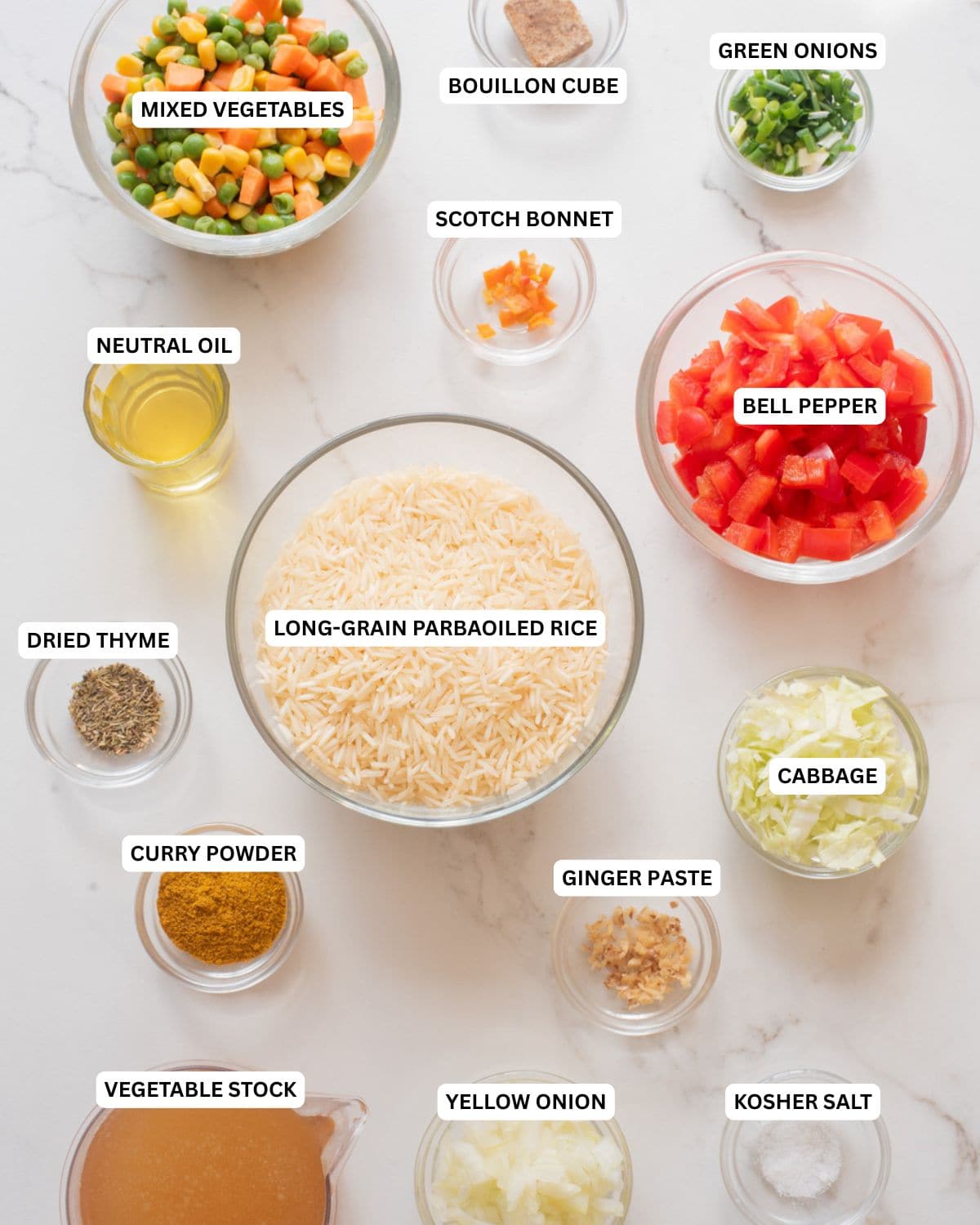
- Parboiled rice (Golden Sella or similar) is the foundation. Its pre-gelatinized starch keeps grains separate under high heat. Find it at African or South Asian grocery stores. Don’t sub jasmine or basmati — I’ve tried both.
- Curry powder and dried thyme go into the cooking liquid, not the stir-fry. This is what separates Nigerian fried rice from takeout-style — the spice gets into the grain itself, not just on the outside. Every single grain comes out seasoned.
- Scotch bonnet or habanero is the heat source and a flavor element, not just spice. One whole pepper minced gives moderate heat; half for milder, skip entirely for kid-friendly.
TIPS & TRICKS
Shruthi’s top tips
- Break the cooled rice into loose individual grains with your hands before it goes into the pan. Cold rice clumps, and adding a block to the wok means the bottom fries while the top steams — you’ll end up with uneven texture throughout.
- Keep the heat high the whole way through. Nigerian fried rice gets its flavor from the slight toast on the grains, not from the seasoning alone. If the pan isn’t smoking when the rice goes in, turn it up.
- Keep the vegetable quantity restrained. More vegetables sounds better but they release moisture and trap steam — the result is softer rice and less wok flavor. The recipe quantity is calibrated; don’t double it.
- If the rice seems chalky at the 15-minute mark but the liquid is gone, add a small splash and cover for 2 more minutes. Different brands absorb differently — this is a one-time calibration for your pantry.
How to make Nigerian fried rice
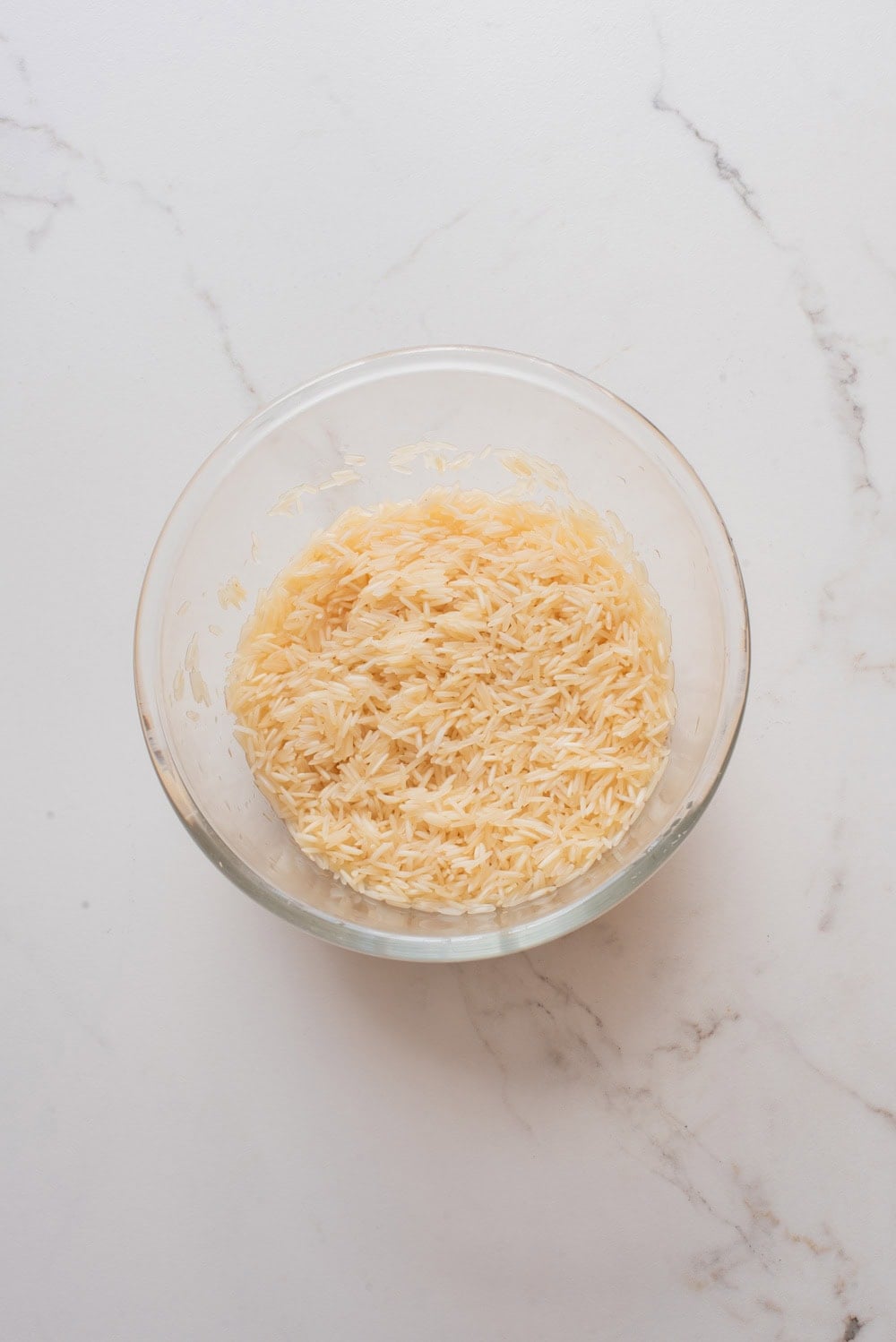
- Rinse rice until the water runs clear. Drain well.
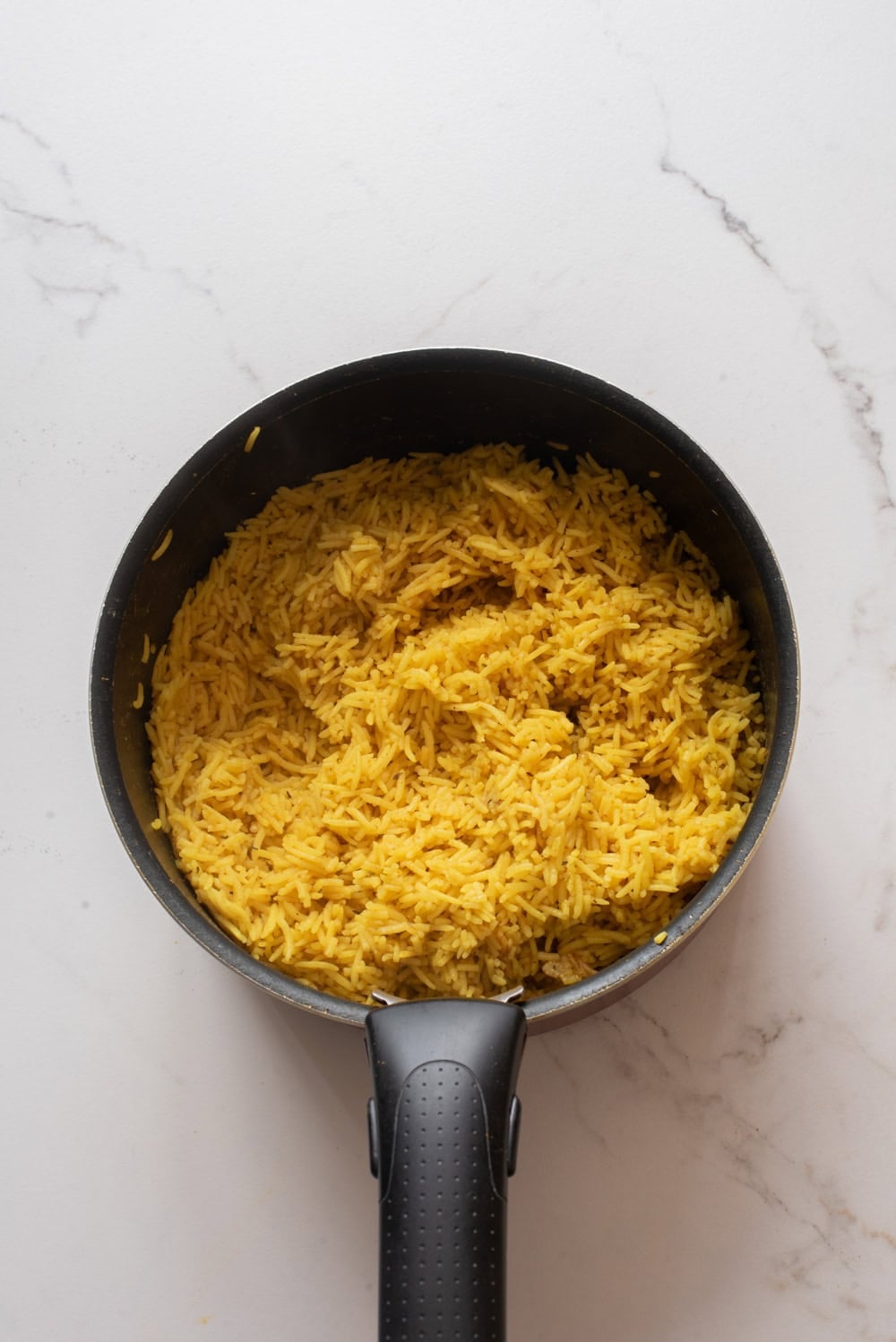
- Add rice, vegetable stock, curry powder, thyme, bouillon cube (if using), and a pinch of salt to a pot. Stir to combine. Bring to a boil over high heat, then reduce the heat to low. Cover and cook until rice is just done and all liquid is absorbed. Do not overcook—grains should be firm, not mushy.
- Spread the cooked rice on a large baking sheet or tray in a thin layer and cool completely. For best results, refrigerate uncovered for several hours or use day-old rice. While the rice cools, chop all vegetables into very small, uniform pieces so they cook quickly and stay crisp.
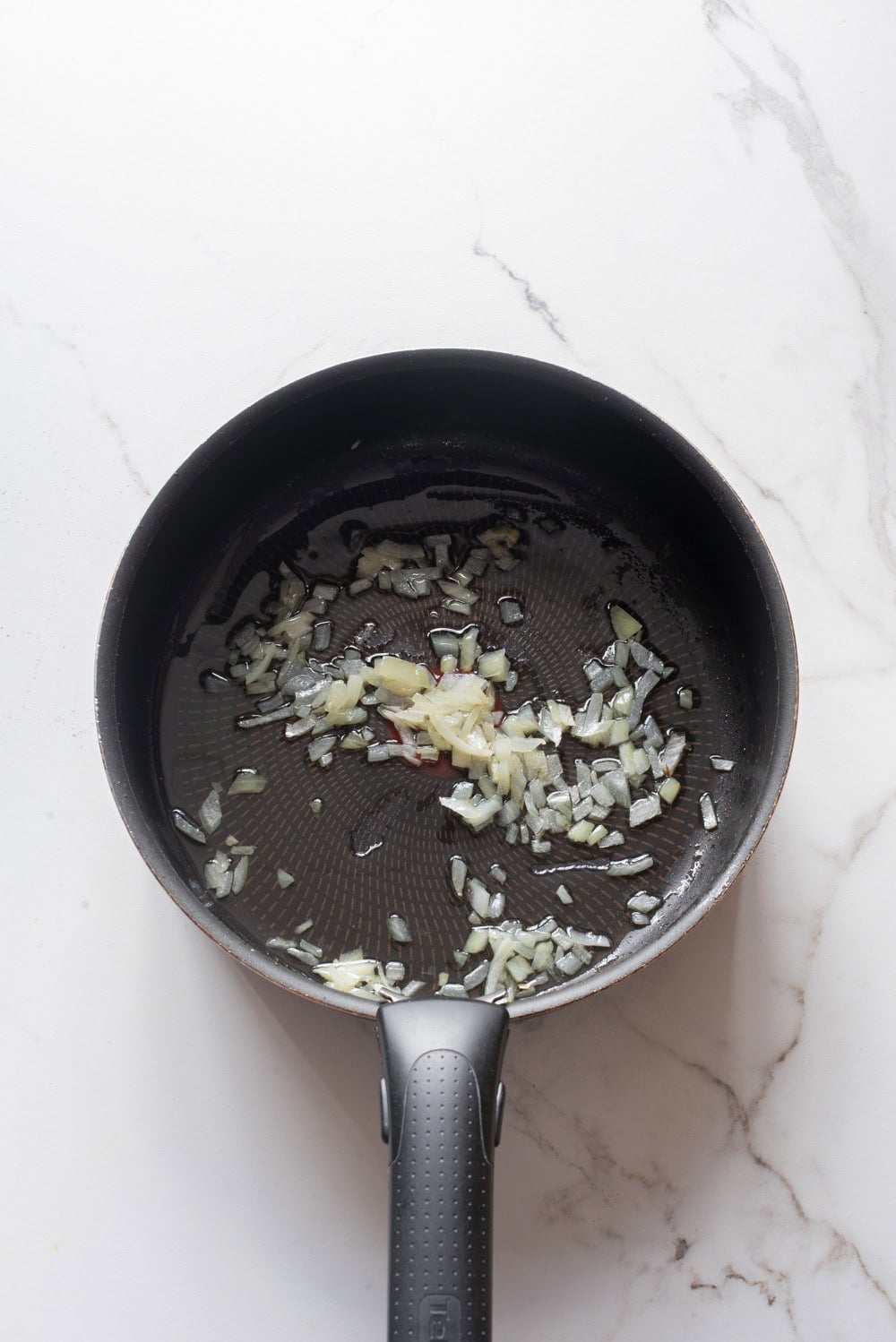
- Heat oil in a large wok or wide skillet over high heat until it shimmers and just starts to smoke. Add onion and sauté until slightly softened.
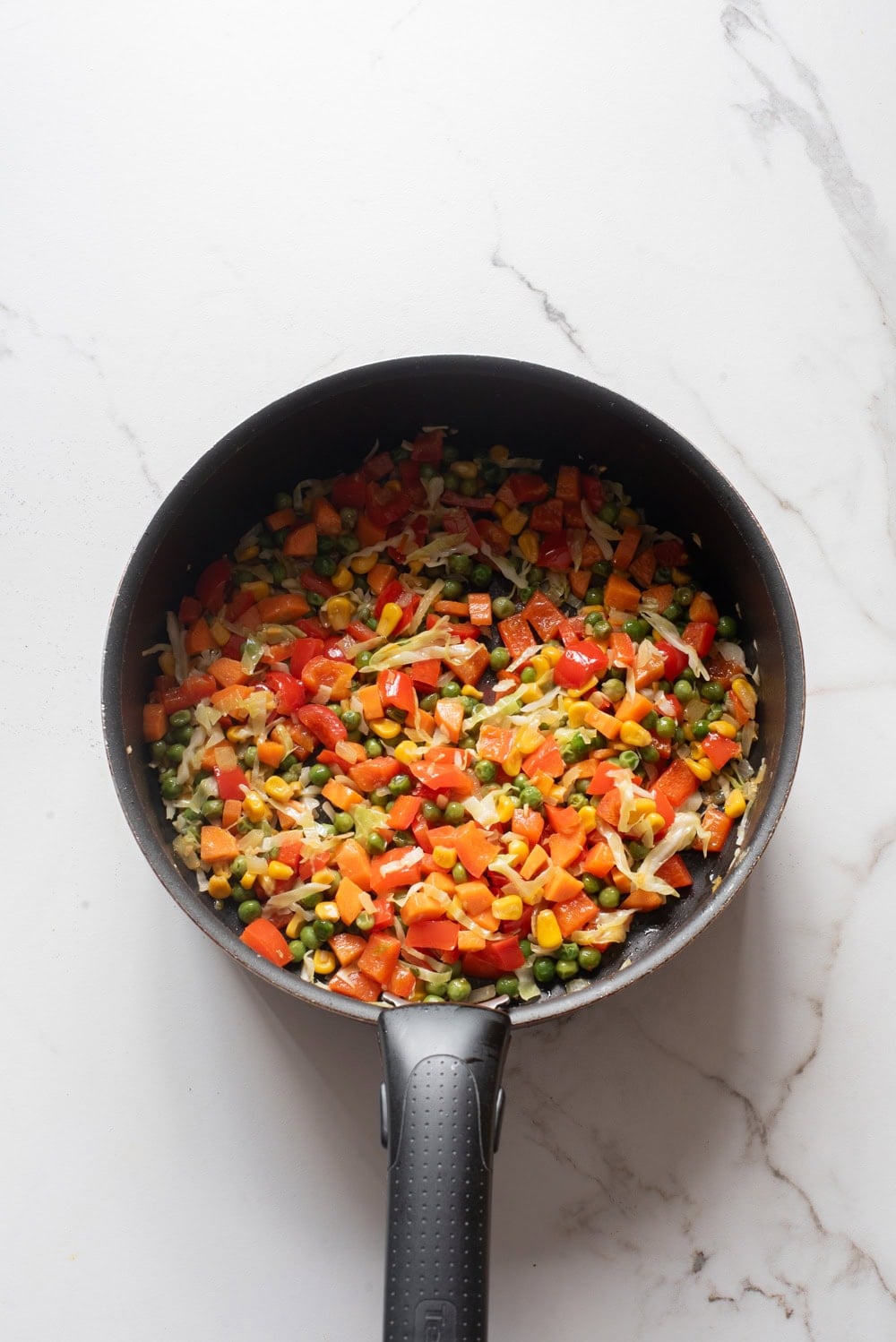
- Add carrots, peas, sweetcorn, bell pepper, and Scotch bonnet (if using). Stir-fry, tossing constantly. Vegetables should remain bright and crisp, not soft or stewed. If using ginger paste, add it now and cook until fragrant.
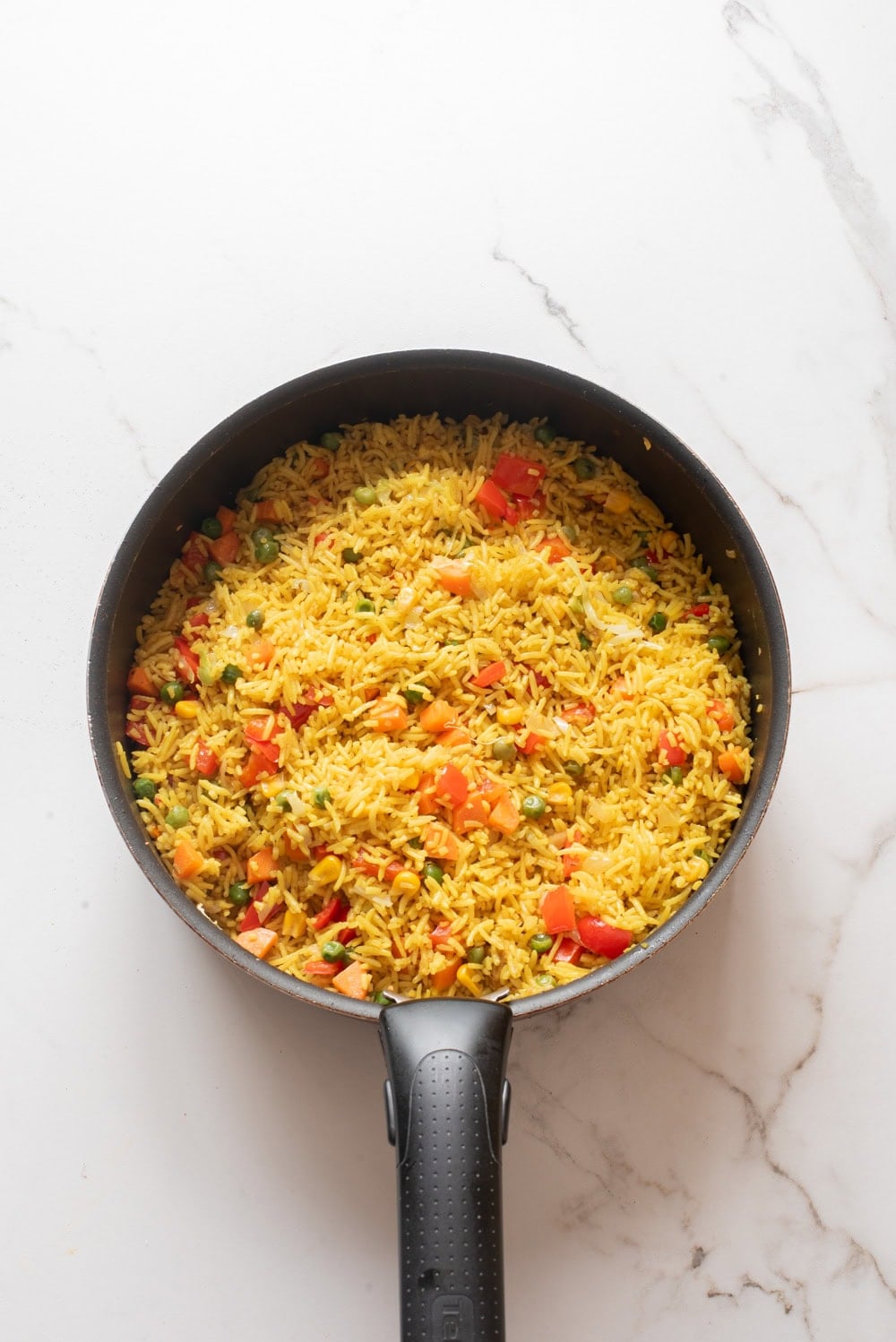
- Push the vegetables to one side of the pan. Add the remaining oil to the empty side, then add the cooled rice. Stir-fry on high heat, tossing continuously, until the grains are separate, lightly toasted, and any clumps are broken up. Toss everything together, stir in the green onions, adjust the seasoning if needed, and serve immediately.
How to serve West African fried rice
Serve Nigerian fried rice with fried plantains for a classic West African plate. A fried egg on top is an easy way to turn it into a quick weeknight dinner. If you’re hosting, add Nigerian jollof rice — the two dishes are different enough to serve together on the same table.
Variations:
- More protein: Top with a fried egg, or serve alongside a black-eyed pea stew or moi moi.
- Spice level: Omit the Scotch bonnet entirely for kid-friendly; leave the seeds in for genuine heat.
- Vegetable swaps: Green beans, diced zucchini, or finely chopped broccoli — keep the same ¼-inch dice rule.
Storage and reheating suggestions
Fridge: Airtight container, up to 3 days.
Freezer: Individual portions, up to 1 month. Thaw overnight before reheating.
Reheating: Hot skillet with a small drizzle of oil, tossing 3–4 minutes to bring back the slightly crisp texture. Microwave works (90 seconds, damp paper towel over the top) but the rice will be softer.
Meal prep tip: Cook and cool the rice up to 2 days ahead, then stir-fry with vegetables the day you plan to serve. Best texture that way.
More African recipes
Check out some of these other Nigerian / African recipes to round out your meal:

Nigerian Jollof Rice

Vegan Efo Riro (Nigerian Spinach Stew)


Ethiopian Cabbage
Nigerian Fried Rice
Equipment
- Large wok or wide skillet
Ingredients
For the rice:
- 2 cups long-grain parboiled rice, Golden Sella or similar
- 2½ cups vegetable stock
- 1½ teaspoons curry powder
- 1 teaspoon dried thyme
- 1 vegetable bouillon cube, optional but recommended
- ¼ teaspoon kosher salt
For the stir-fry:
- 3 tablespoons neutral oil, such as sunflower or vegetable, divided
- 1 medium yellow onion, finely diced
- 1 cup mixed vegetables, carrots, peas, and sweetcorn, fresh or thawed if frozen, diced small
- 1 medium bell pepper, diced small
- 1 Scotch bonnet , or habanero pepper, minced (use half for less heat, omit for mild)
- 3 green onions, chopped
Optional additions:
- ½ teaspoon ginger paste
- ¼ cup green cabbage, finely chopped
Instructions
Cook the rice:
- Rinse rice until the water runs clear. Drain well.
- Add rice, vegetable stock, curry powder, thyme, bouillon cube (if using), and kosher salt to a medium pot. Stir to combine.
- Bring to a boil over high heat, then reduce to low. Cover and cook until rice is just done and all liquid is absorbed, 15–20 minutes. The grains should be firm — pull it off heat the moment the liquid is gone. Do not let it sit and steam soft.
- Spread the cooked rice onto a large baking sheet in a thin, even layer. Cool completely, at least 30 minutes. For best results, refrigerate uncovered for several hours or use day-old rice. This step is not optional — warm rice will turn mushy in the wok.
Stir-fry:
- Once rice is fully cooled, break it into loose individual grains with your hands before it goes into the pan. Cold rice clumps, and adding a block to the wok steams instead of fries.
- Chop all vegetables into uniform ¼-inch pieces — small pieces cook quickly and stay crisp.
- Heat 2 tablespoons of oil in a large wok or wide skillet over high heat until shimmering and just starting to smoke.
- Add the onion and stir-fry for 1 minute until slightly softened.
- Add the carrots, peas, sweetcorn, bell pepper, and Scotch bonnet (if using). Stir-fry for 2–3 minutes, tossing constantly. Vegetables should stay bright and crisp, not soft.
- If using ginger paste, add now and cook for 15–20 seconds until fragrant.
- Push vegetables to one side of the pan. Add the remaining 1 tablespoon of oil to the empty side.
- Add the broken-up rice. Stir-fry on high heat for 3–5 minutes, tossing continuously, until grains are separate, lightly toasted, and any remaining clumps are broken up.
- Toss rice and vegetables together. Stir in green onions. Taste and adjust salt, curry powder, or thyme as needed. Serve immediately.
Notes
- Parboiled rice is non-negotiable for authentic texture — jasmine or basmati won’t give you the same firm, separate grains.
- The cooling step is the difference between fried rice and rice porridge. Day-old refrigerated rice is ideal; if cooking same-day, spread it thin and give it a full 30–45 minutes.
- Break rice into loose grains with your hands before it hits the pan — this one step prevents the clumping that makes rice steam instead of fry.
- Keep vegetables small and minimal. Too many vegetables trap steam and you lose the wok char.
- High heat the whole way through — Nigerian fried rice gets its flavor from the slight toast on the grains, not from seasoning alone.
- For more vibrant color, add an extra ½ teaspoon curry powder directly to the rice while stir-frying.
- Adjust stock if using older rice or a different brand — 2½ cups usually works; add a splash if grains are still chalky at 15 minutes.
- Refrigerate in an airtight container for up to 3 days.
- Reheat in a hot skillet with a splash of oil for 3–4 minutes to revive the texture. Microwave works but loses the crispness.
Nutrition
Nutrition information is automatically calculated, so should only be used as an approximation.


