
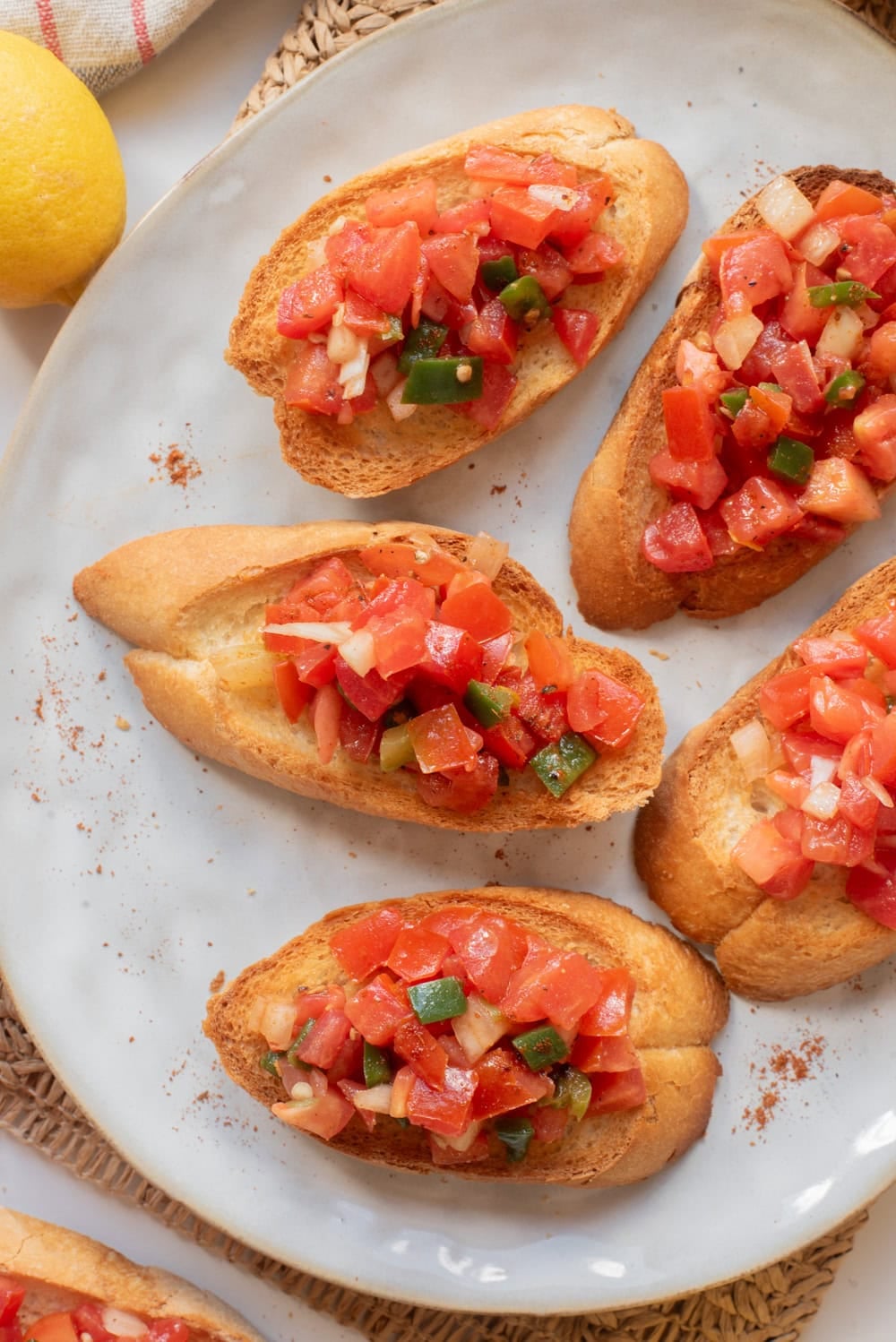
My timatim is an Ethiopian tomato salad with plum tomatoes, red onion, jalapeño, and a berbere-spiked dressing. I soak the onion first to pull the sharp bite out and save the juice the salad releases as it chills. Vegan, gluten-free, and ready in 10 minutes but I suggest chilling for 30 for the best effect!
Why timatim tastes different from every other tomato salad

I’ve had timatim in Addis and Nairobi in the summer, usually eaten from a communal plate before the lentils arrive, sometimes just standing at a market stall. It doesn’t taste like pico de gallo, even though the ingredient list looks similar!
The berbere changes the flavor entirely — warm and a little sweet underneath the acid — and the chunky ½-inch cut, what Ethiopians call the kurt cut, gives it a texture that bruschetta and salsa don’t have.
Two things separate a good timatim from a forgettable one.
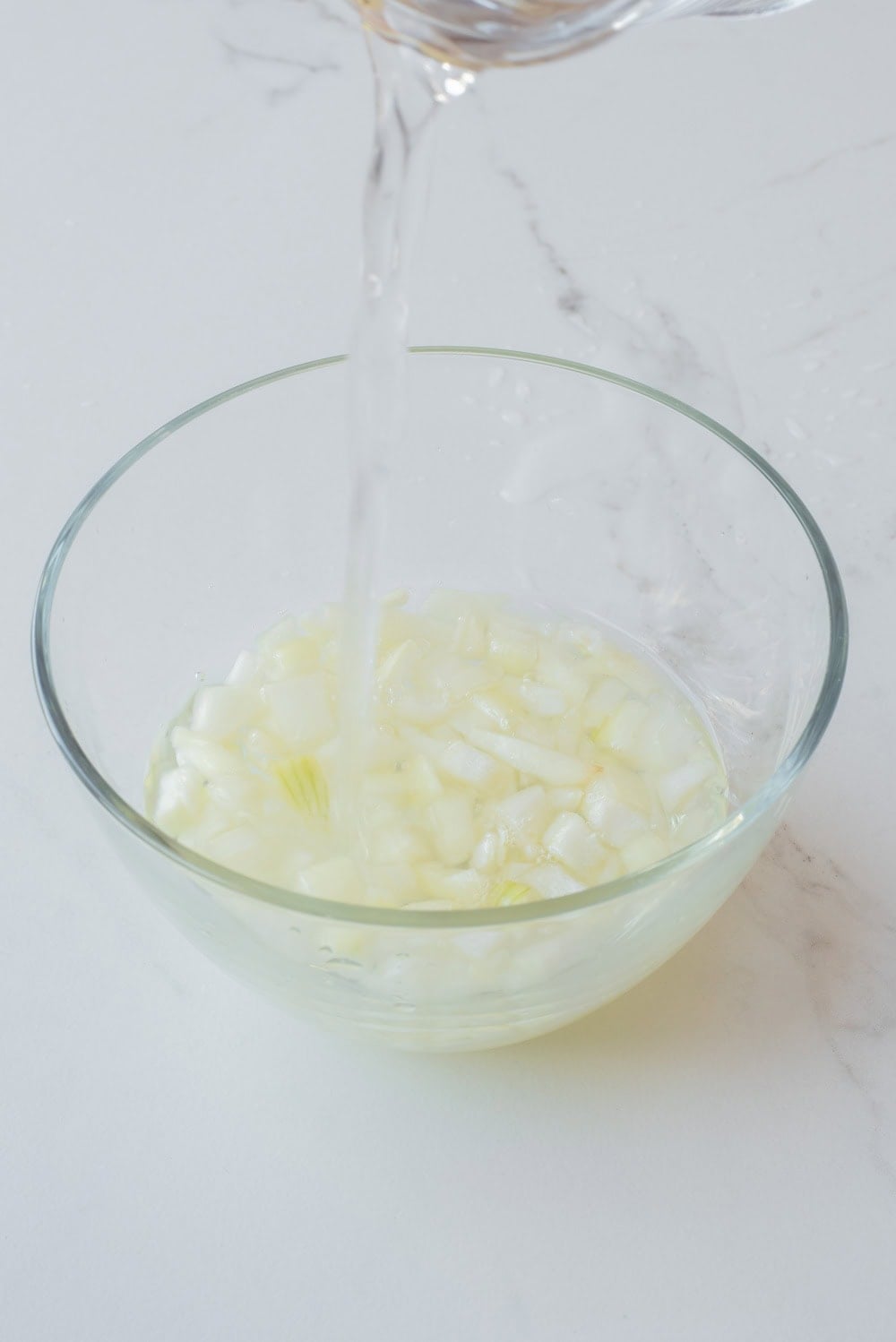
First, soak the chopped onion in cold water for five minutes before it goes anywhere near the tomatoes. It draws out the harsh sulphur compounds and leaves you with crunch and mild sweetness instead of that raw-onion bite.
Second, don’t drain the juice the salad releases as it chills and throw it away. It’s bright, slightly spicy from the jalapeño, acidic from the lemon and balsamic, and savory from the berbere. Ethiopian cookbook authors write about people drinking it as a small treat. They’re right.
It also works mixed into a vinaigrette, spooned over rice, or added to a Bloody Mary, because why not?

Ingredients worth discussing
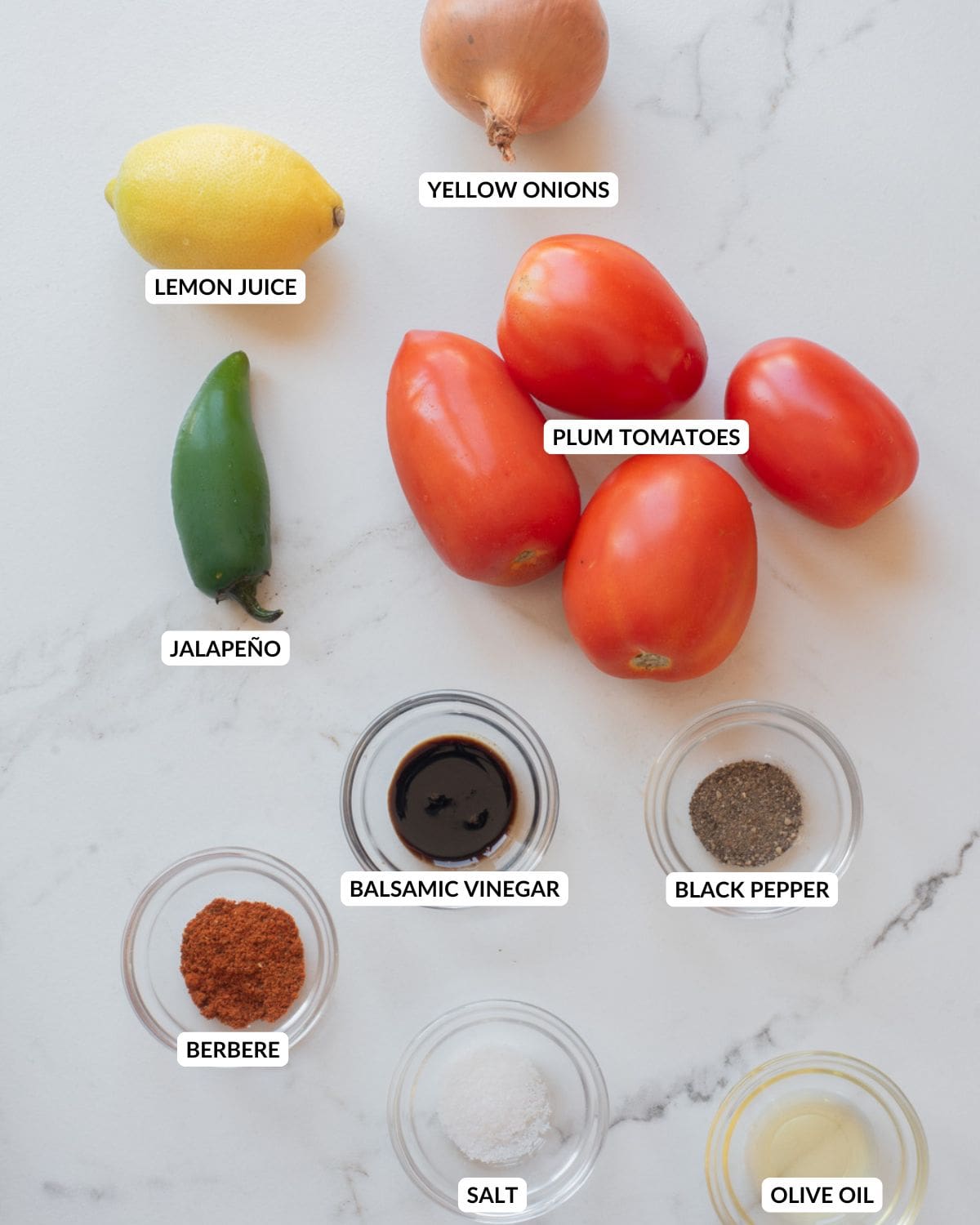
Full ingredient list and detailed instructions in the recipe card.
Plum tomatoes have less water and firmer flesh than beefsteak or globe varieties, which means the salad holds its shape and doesn’t turn soupy. Roma works just as well. Ripe is non-negotiable — an underripe tomato makes a sad timatim.
Jalapeño with seeds in gives you the traditional Ethiopian heat level: warm but not punishing. Seeds out for mild. If you want more fire, use a serrano.
Berbere adds the distinctively Ethiopian spice layer — warm, slightly sweet, complex from the blend of chili, fenugreek, coriander, and other spices. Half a teaspoon is enough to tint the dressing and flavor the salad without overwhelming the fresh tomato. Without it, the salad is still good, but it won’t taste Ethiopian.
If you’re looking for a high quality berbere, I highly recommend this one. It’s what I use when I don’t grind my own, and it’s as close to the authentic versions you get in the spice markets of Addis.
Balsamic vinegar plus lemon juice is a double-acid approach that gives you depth from the balsamic and brightness from the lemon. Some recipes use only lemon; the balsamic rounds out the jalapeño heat in a way lemon alone doesn’t.
Shruthi’s Top Tips
How to avoid a soggy salad
- Don’t skip the onion soak. Five minutes in cold water, then drain and pat dry. It transforms raw onion from something aggressive into a crisp, mild complement to the tomatoes.
- Cut chunky, not fine. Half-inch pieces, like the traditional kurt cut. Too small and the salad turns mushy within an hour.
- Save the reserved juice. It’s a byproduct worth keeping — bright, spicy, and genuinely useful. Don’t pour it down the drain.
- This is a same-day salad. Beyond one day refrigerated, the tomatoes get watery and the texture suffers.
How to make timatim
- Soak the chopped onion in cold water for 5 minutes while you prep everything else. Drain well and pat dry.
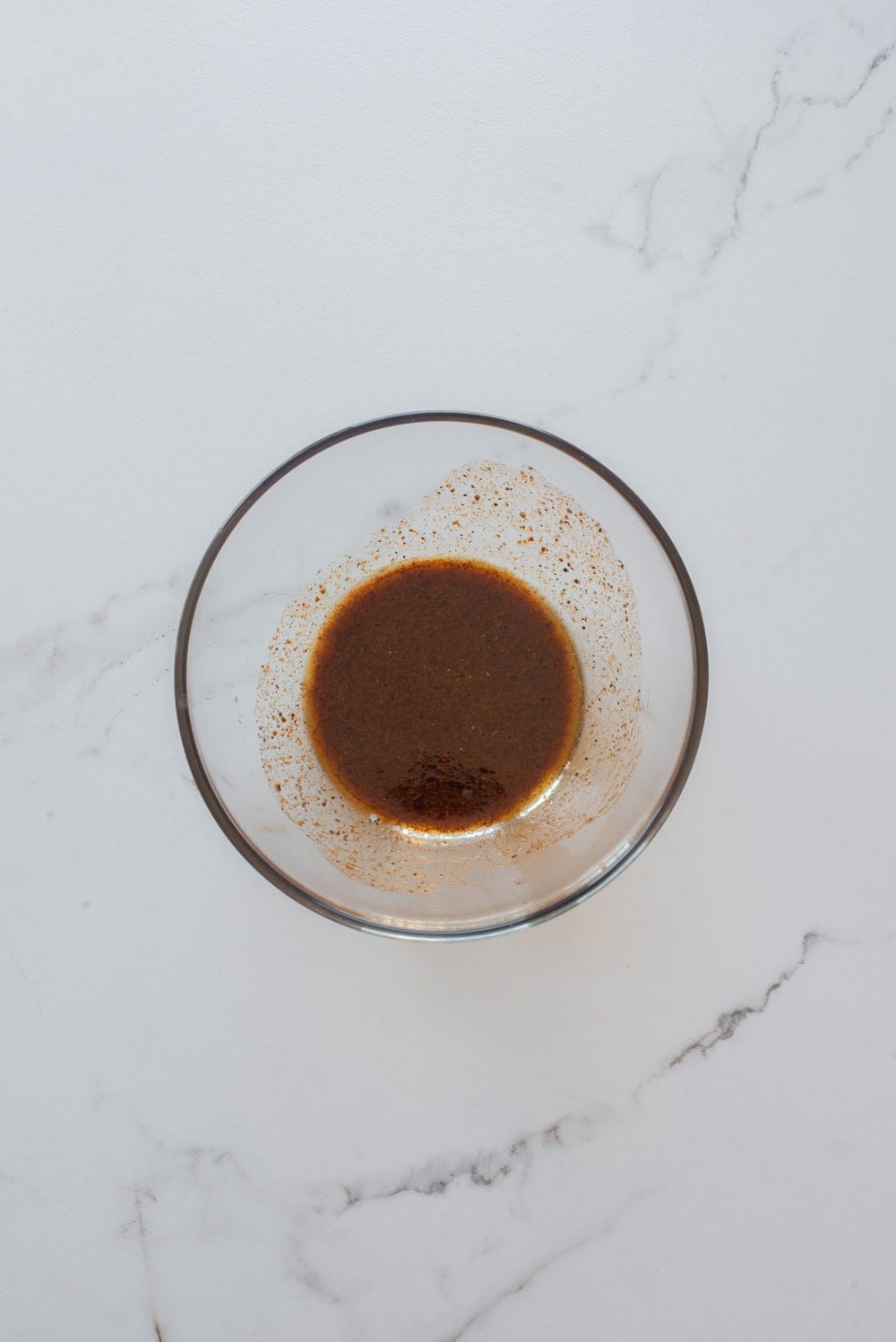
- Whisk together the olive oil, balsamic vinegar, lemon juice, salt, pepper, and berbere until emulsified.
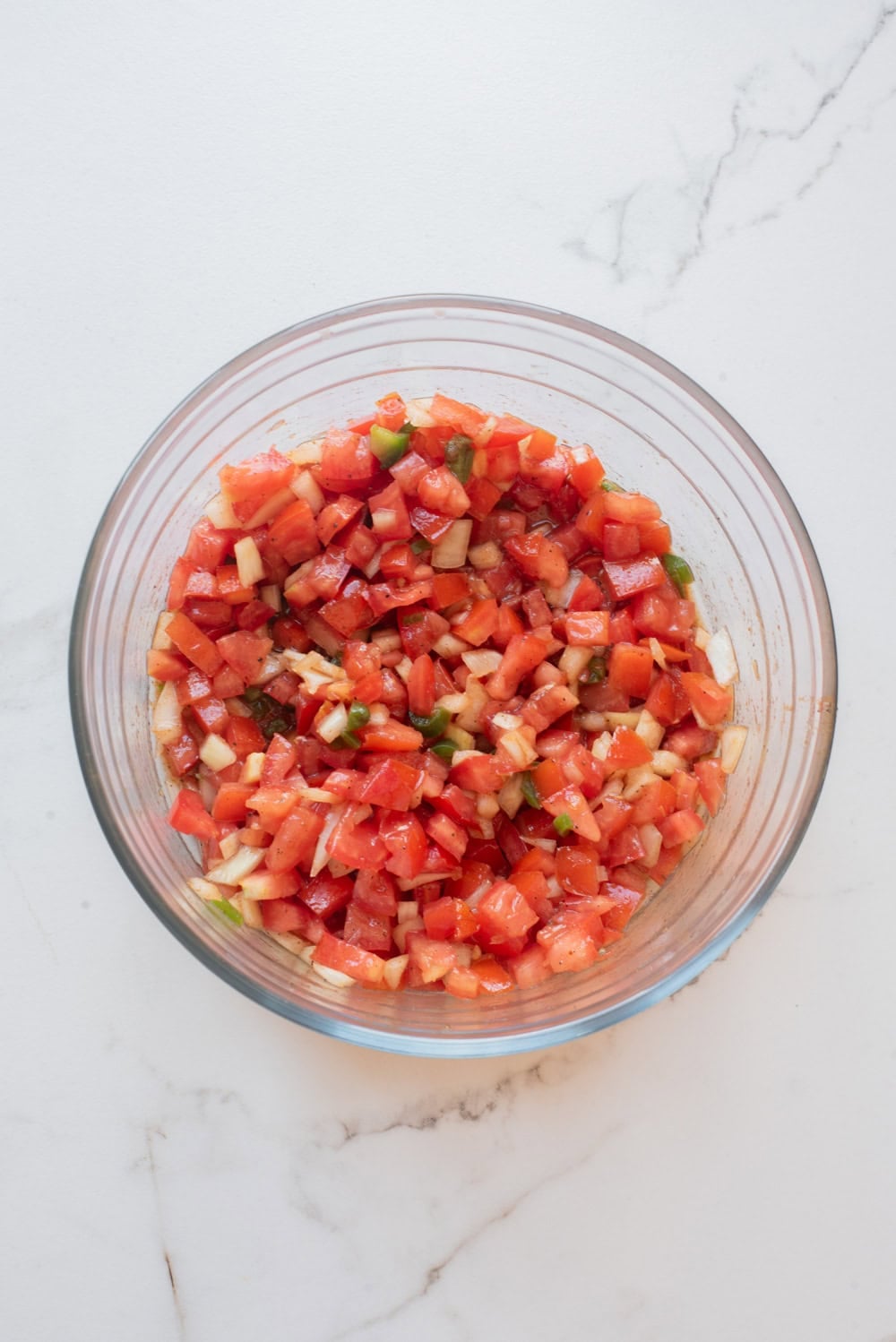
- In a large bowl, toss the tomatoes, drained onion, and jalapeño. Pour the dressing over and toss gently.
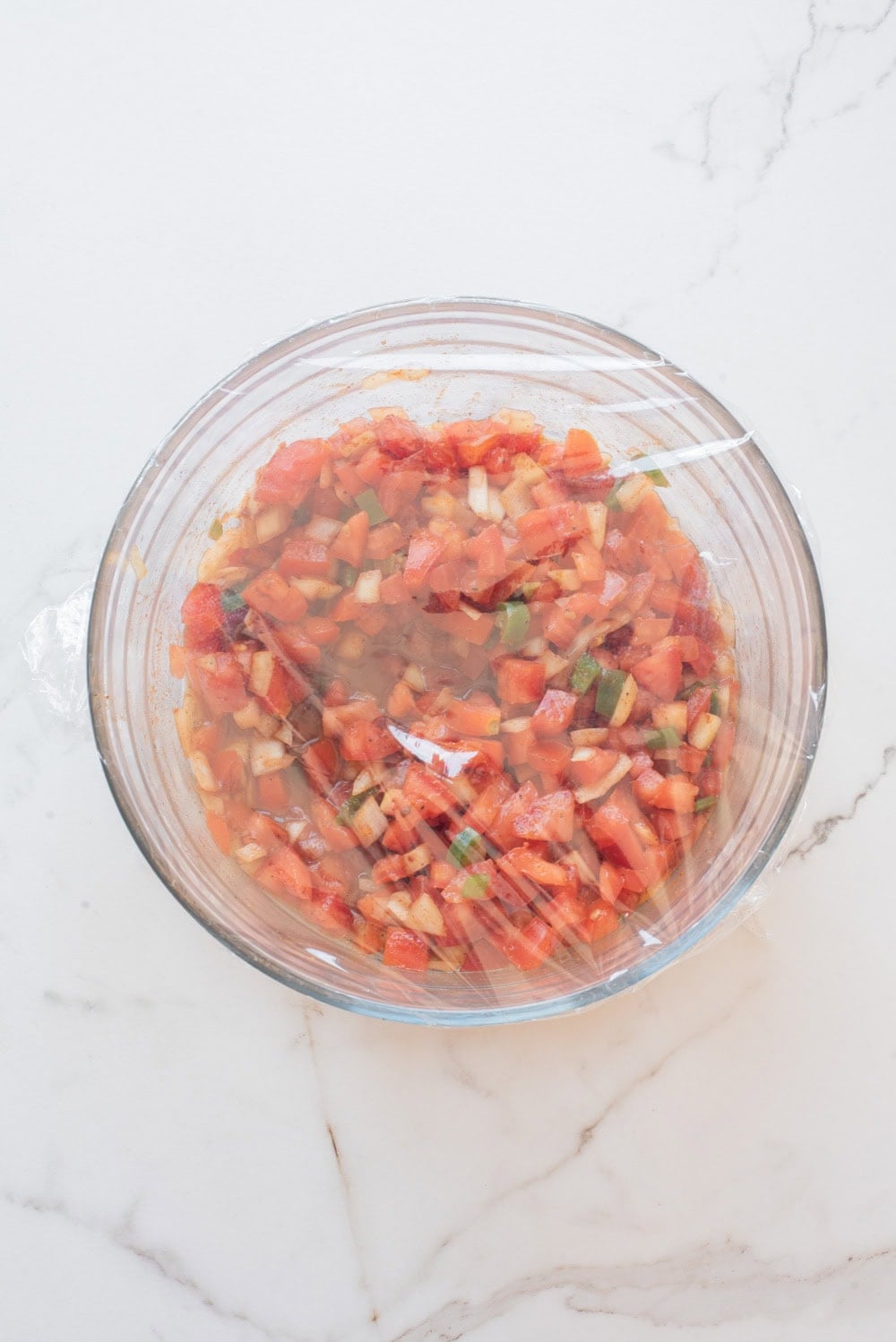
- Cover and refrigerate at least 30 minutes. The salad will release juice as it sits and this is good.
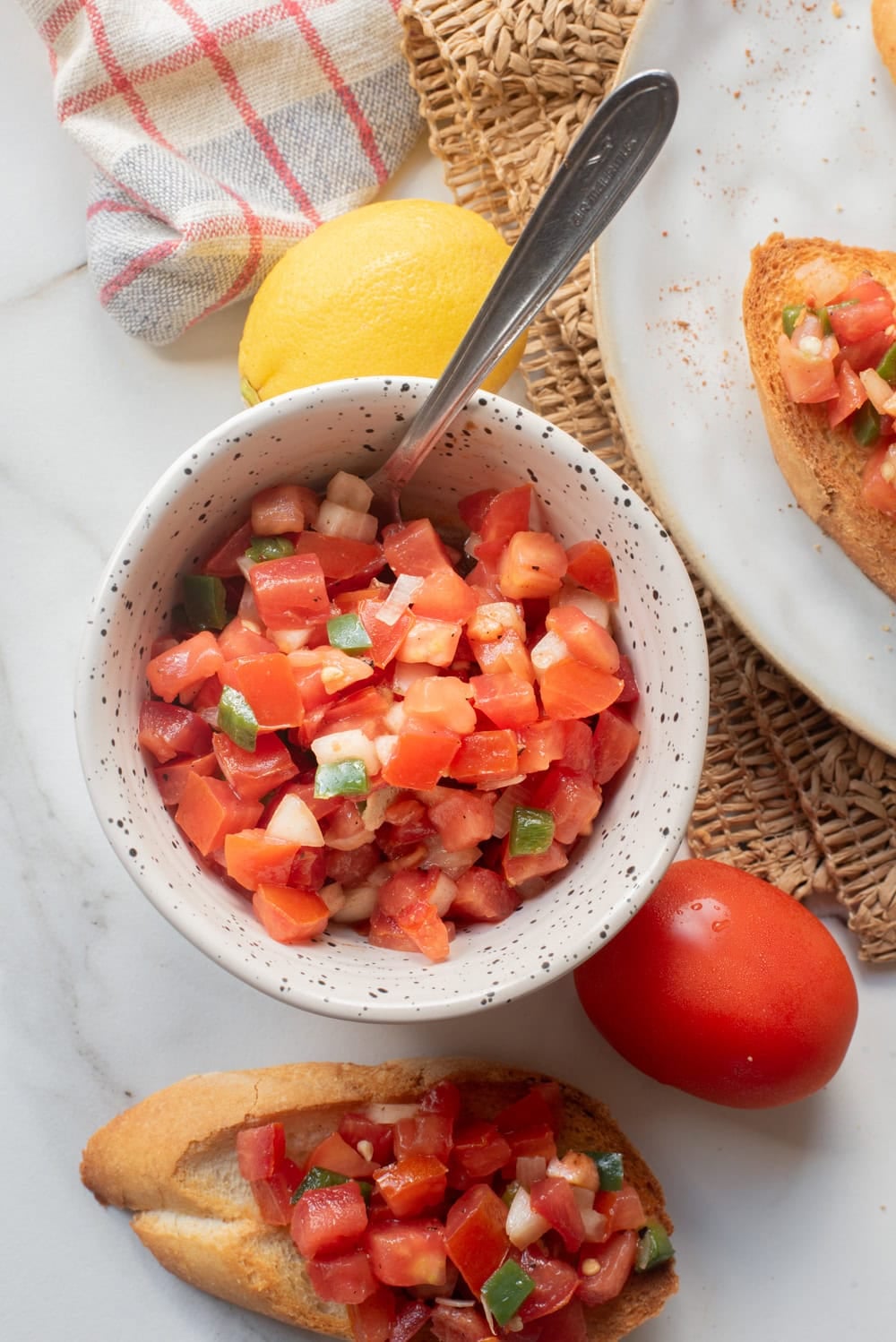
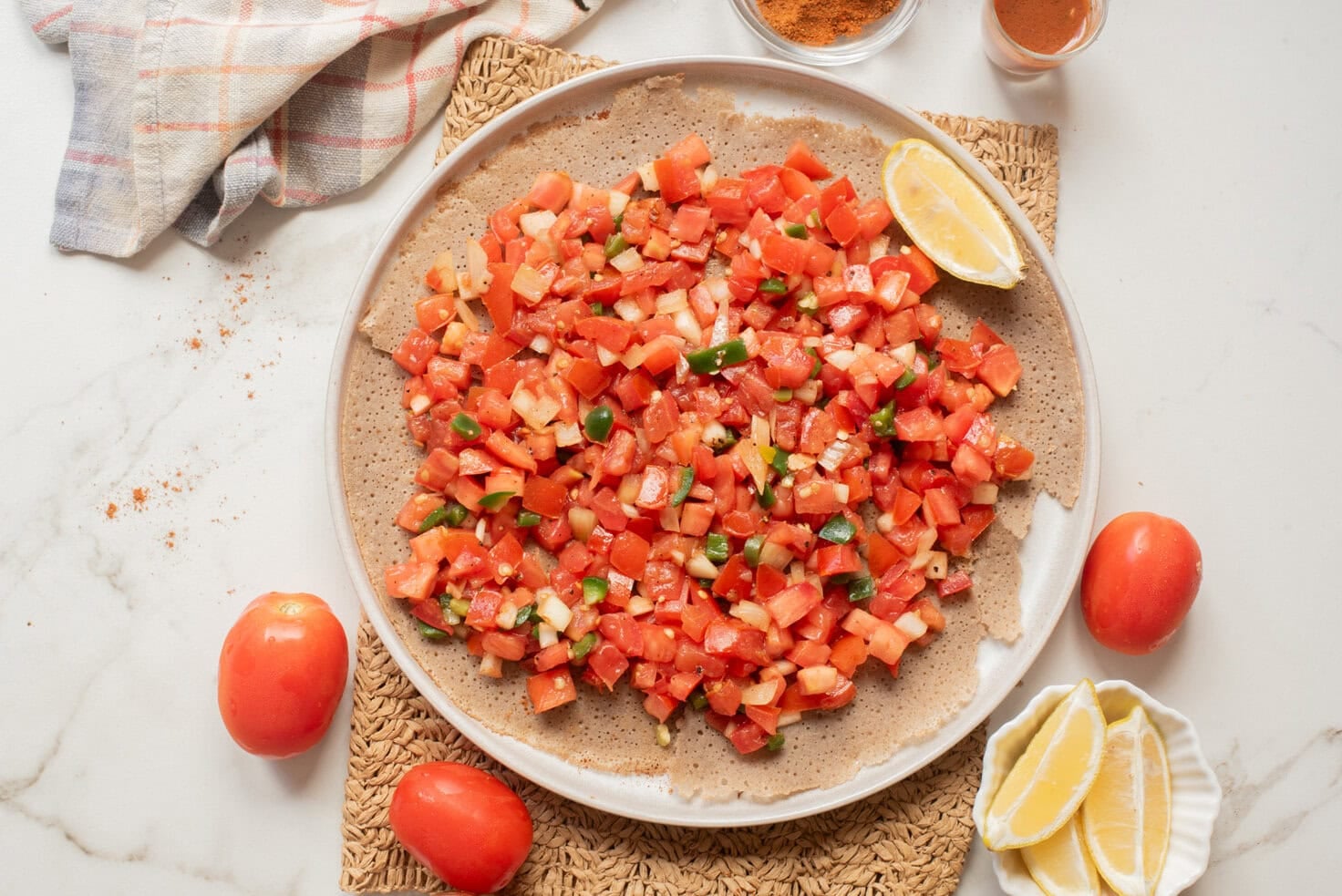
- Drain off the accumulated juice into a small bowl. Toss once more and serve chilled alongside injera. Without injera, spoon it over toasted crusty bread — almost like a bruschetta.
How to serve timatim kurt
Spoon timatim over warm injera alongside misir wot and shiro wat for a full Ethiopian spread. It also works next to gomen wat if you want greens on the plate. For a lighter meal, spoon it over toasted crusty bread — the berbere dressing soaks in the same way it does with injera, and it eats almost like a bruschetta.
Storage and reheating suggestions
Best within a few hours of making. Refrigerate leftovers up to 1 day. Before serving again, toss with a fresh drizzle of olive oil and a squeeze of lemon. Serve cold or at room temperature. Do not reheat.
Timatim (Ethiopian Tomato Salad)
Ingredients
- 4 medium plum tomatoes, about 1 lb, cut into ½-inch pieces
- 1 medium red onion, finely chopped
- 1 medium jalapeño, thinly sliced (seeds in for traditional heat; seeds out for mild)
- ½ teaspoon berbere
- 2 tablespoons extra-virgin olive oil
- 1 tablespoon balsamic vinegar
- 1 tablespoon fresh lemon juice, about ½ lemon
- ½ teaspoon kosher salt
- ¼ teaspoon black pepper
Instructions
- Place the chopped onion in a small bowl and cover with cold water. Soak for 5 minutes while you prep everything else. Drain well and pat dry.
- In a small bowl, whisk together the olive oil, balsamic vinegar, lemon juice, salt, pepper, and berbere until emulsified.
- In a large bowl, combine the tomatoes, drained onion, and jalapeño. Pour the dressing over and toss gently.
- Cover and refrigerate for at least 30 minutes. The salad will release juice as it sits — this is correct.
- Drain the accumulated juice into a small bowl and set aside (see Notes). Toss once more and serve chilled.
Notes
- If you’re looking for a high quality berbere, I highly recommend this one. It’s what I use when I don’t grind my own, and it’s as close to the authentic versions you get in the spice markets of Addis.
- The reserved juice is worth keeping. Drink it straight, mix into a vinaigrette, spoon over rice, or add to a Bloody Mary.
- Timatim kurt refers to the chunky ½-inch cut — don’t fine-dice or the salad turns mushy.
- Roma tomatoes work as well as plum. Ripe tomatoes are non-negotiable.
- Best within a few hours of making. Refrigerate leftovers up to 1 day.
- Serve cold or at room temperature. Do not reheat
Nutrition
Nutrition information is automatically calculated, so should only be used as an approximation.


