
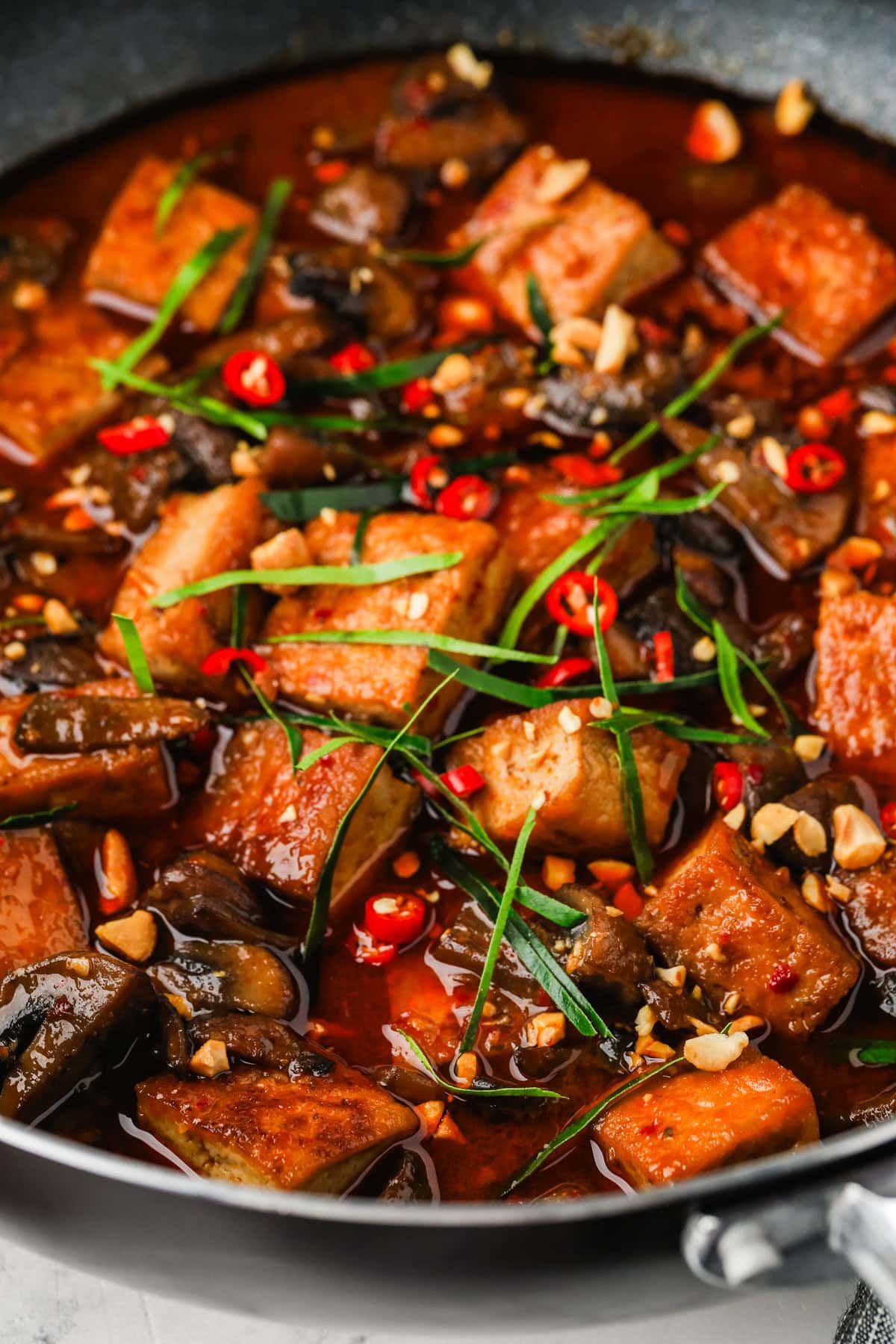
My vegetarian panang curry is a thick, nutty coconut curry with tofu and seared cremini mushrooms, warm from toasted cumin and coriander and rich from ground peanuts folded right into the sauce. I make it with red curry paste plus a toasted spice-peanut blend that gives panang its identity — ready in about 75 minutes.
The one trick that makes panang its own curry

I took a cooking class in Thailand and we were halfway through grinding red curry paste when the instructor stopped us and said: panang is just red curry paste plus toasted cumin, coriander, and ground peanuts folded in at the end.
That’s why a jarred shortcut works here (though if you have 15 extra minutes, I highly recommend making my vegetarian red curry paste from scratch for maximum flavor). Toast and grind the three additions that make it panang. Four extra minutes of work. The difference in depth is not subtle!
One thing to flag before you start. Sear the mushrooms before they go into the curry. I skipped this step once and learned the hard way that the creminis release so much water that the sauce goes from spoon-coating to soup in four minutes.

Key ingredients and why they matter
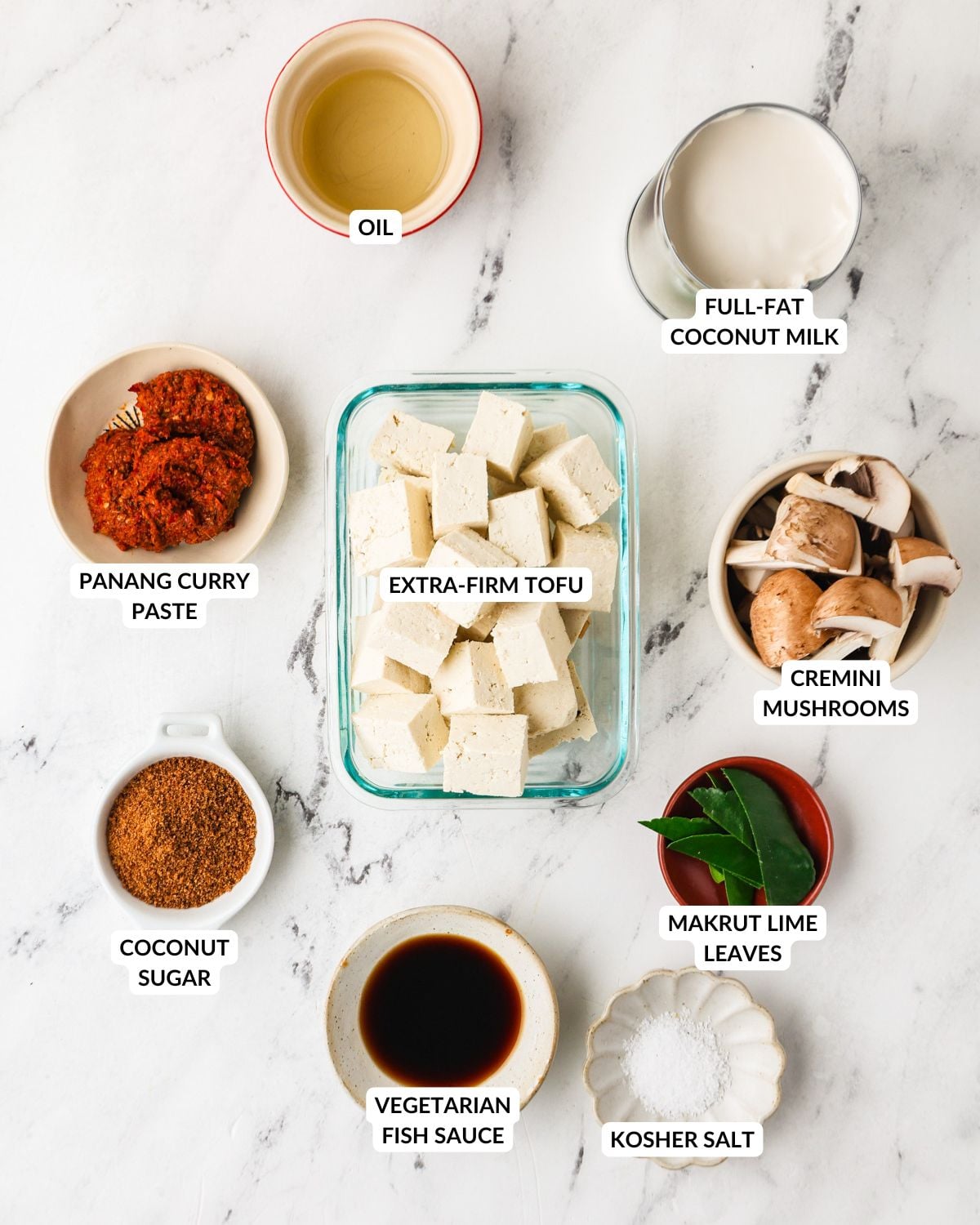
Full ingredient list and detailed instructions in the recipe card.
I use the Mekhala brand red curry paste since it’s vegan and the flavor is the closest to homemade among the jarred pastes I’ve tried.
Whole cumin seeds, coriander seeds, and roasted peanuts are toasted in a dry skillet until fragrant and lightly smoky, then ground to a coarse, sandy texture. Pre-ground spices work in a pinch, but whole toasted spices are worth the extra four minutes.
Makrut lime leaves go in twice, simmered whole in the sauce and julienned raw as garnish. Find them at Asian grocery stores or order dried online.
Full-fat coconut milk, unshaken, so the thick cream stays separate at the top of the can for the bloom step.
Vegetarian fish sauce (Ocean’s Halo or Tiparos) for salty-savory depth. Double-check the label to make sure that it doesn’t contain shrimp.
Shruthi’s Top TIPS
Two quick testing notes
- Panang should coat a spoon, not run off it. If the sauce looks thin after the coconut liquid goes in, keep reducing before the tofu and mushrooms join. Thinning it later is easy; thickening once everything is in is much harder.
- The mushroom sear is the most important move. High heat, single layer, don’t touch for two minutes. Skip it and the creminis water down the sauce in minutes.
How to make panang curry with tofu
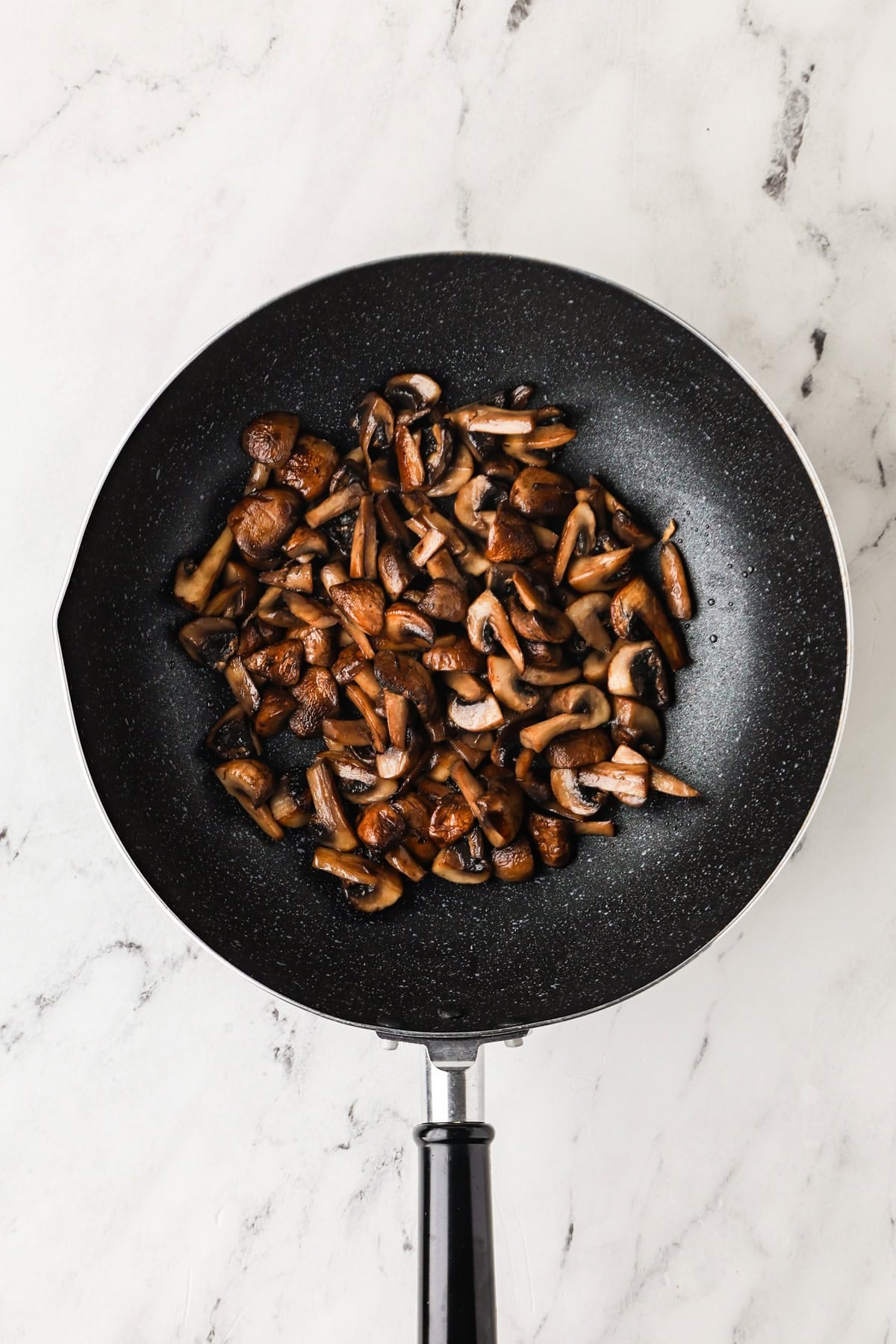
- Sear the mushrooms in hot oil without stirring at first until deeply golden and caramelized. Season with salt and set aside — properly browning them keeps the sauce from turning watery.
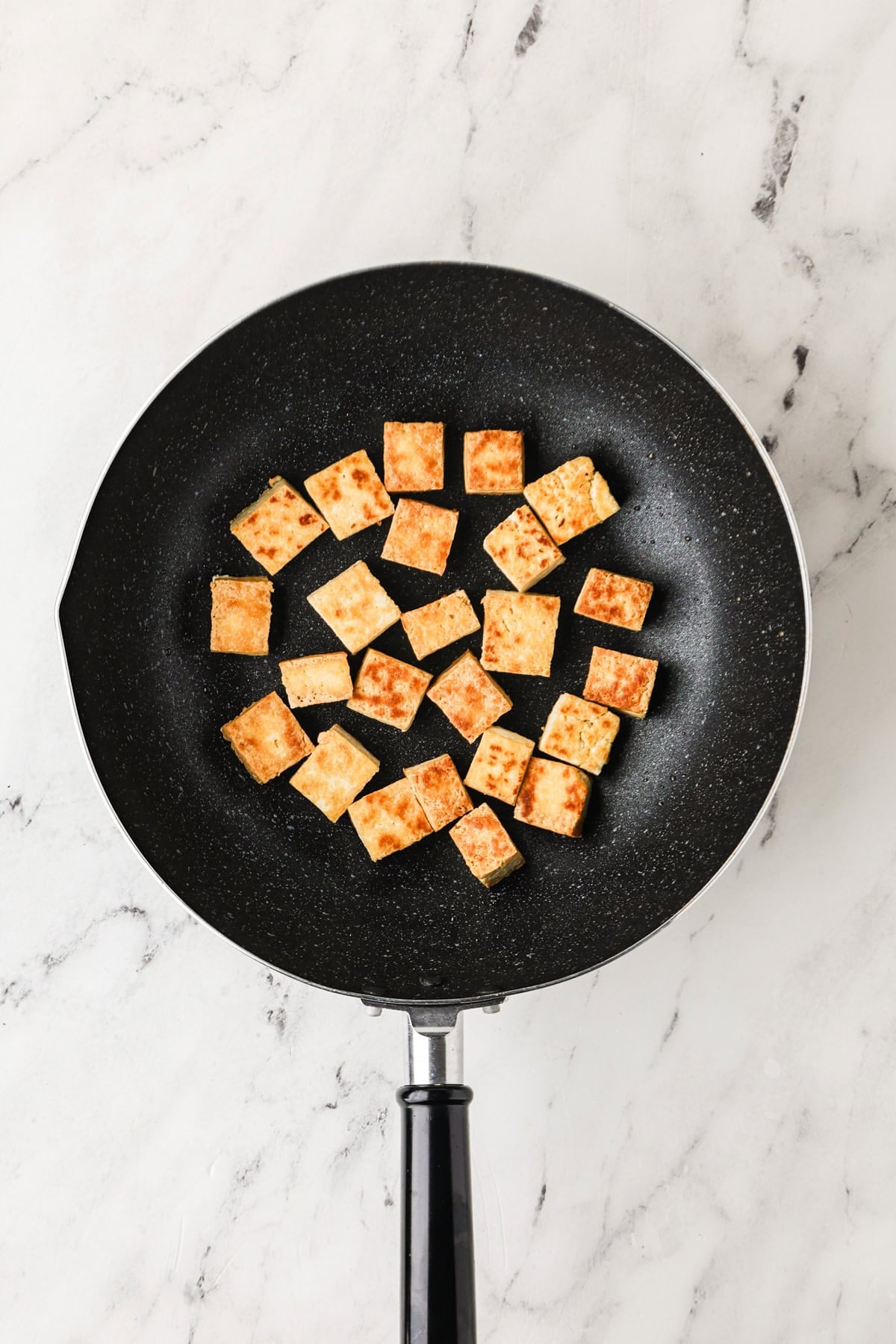
- In the same pan, sear the tofu until golden and crisp on both sides, then transfer to the plate with the mushrooms.
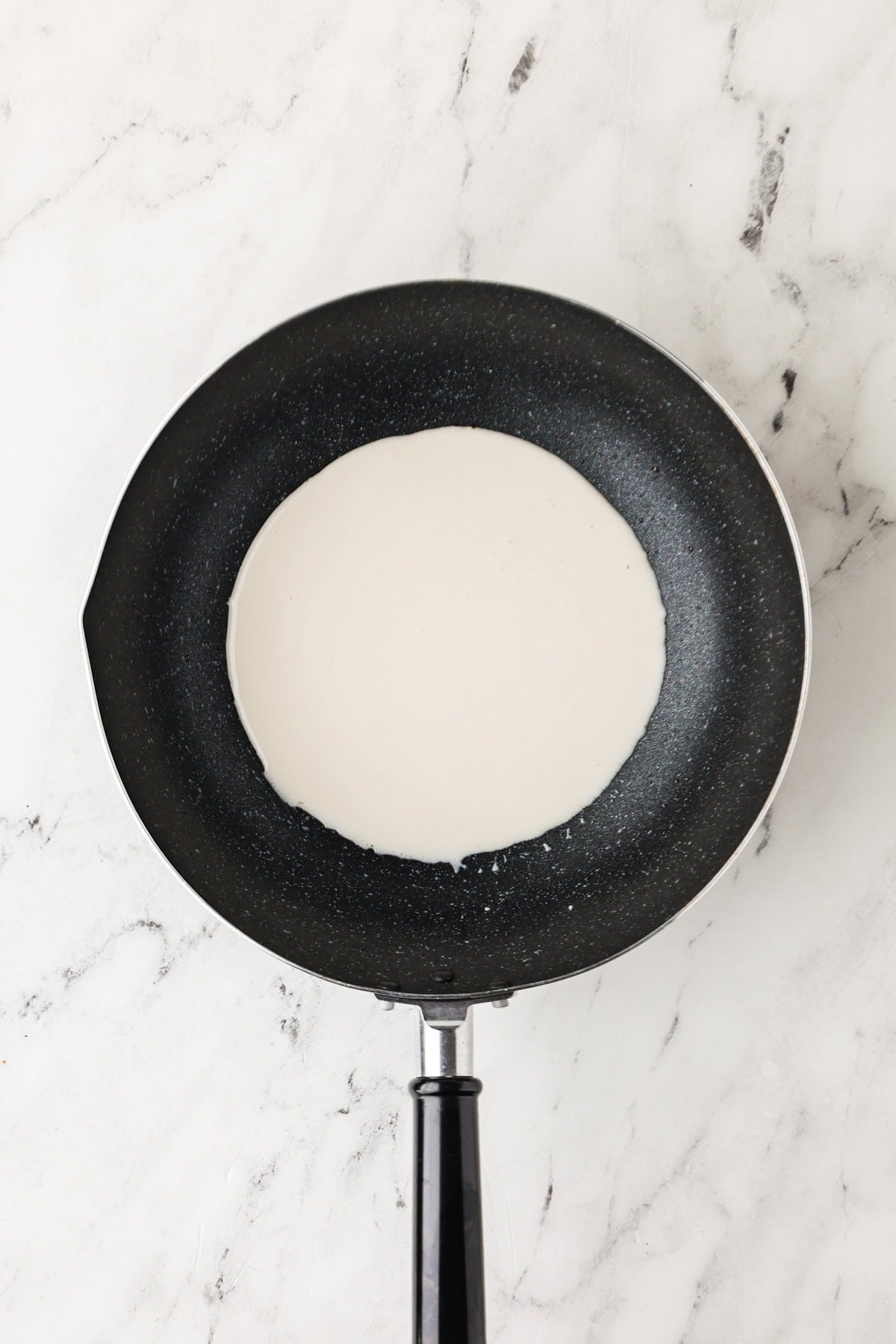
- Heat the coconut cream until bubbling and the oil visibly separates at the edges — this blooming step builds the curry’s flavor base.
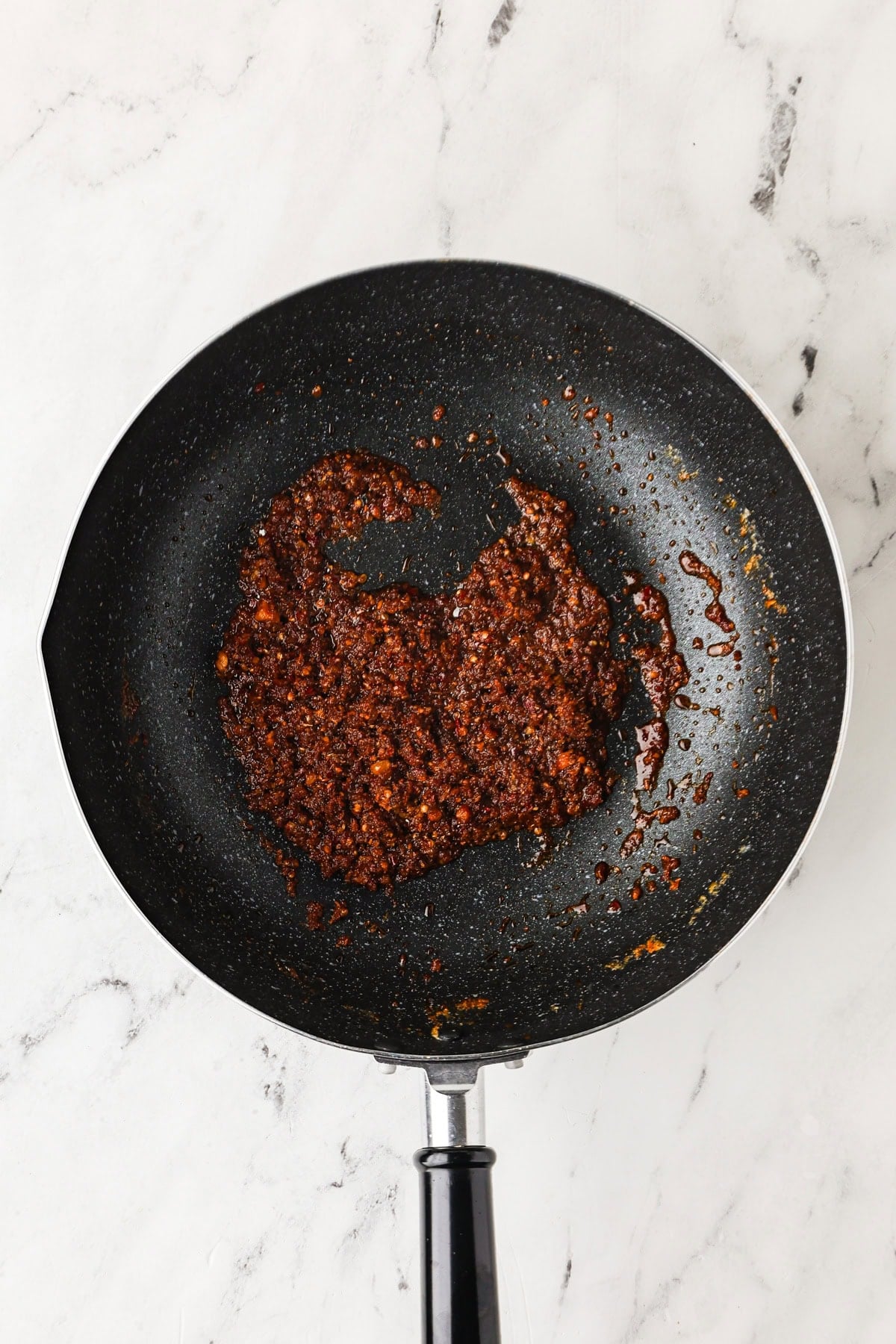
- Add the panang curry paste and fry until darkened, fragrant, and slightly dry-looking.
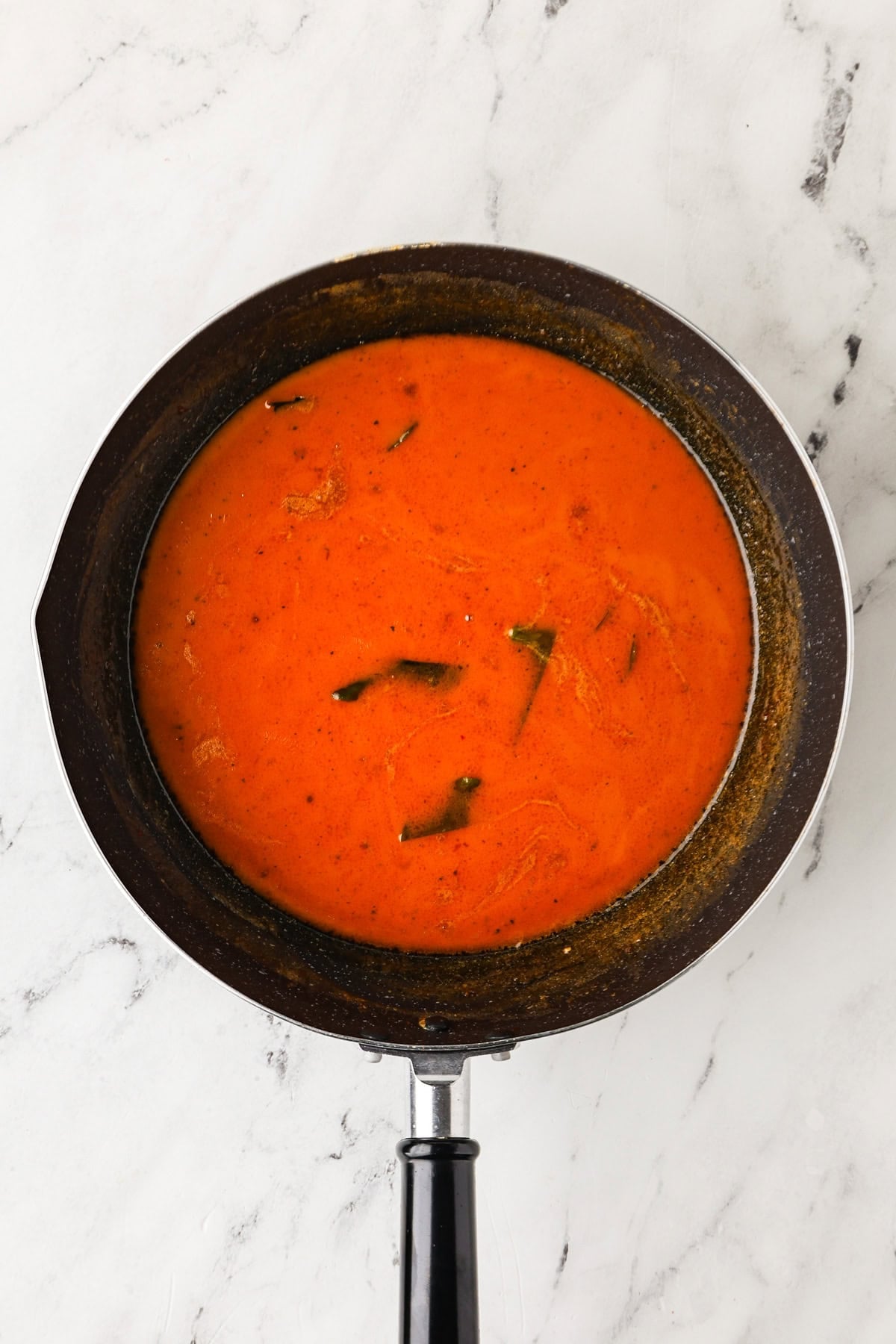
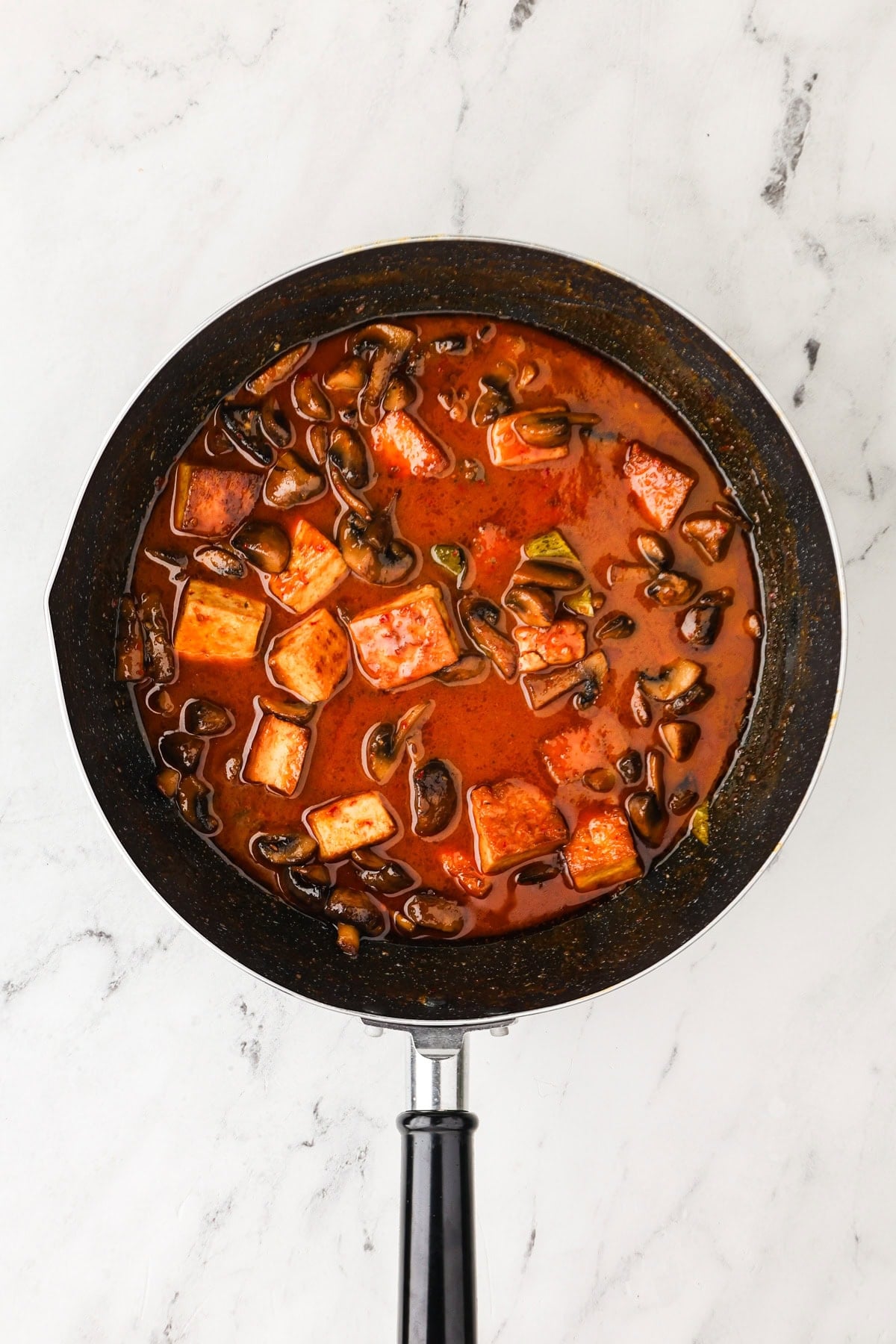
- Stir in the reserved coconut liquid, vegetarian fish sauce, coconut sugar, and makrut lime leaves. Simmer until thickened enough to coat the back of a spoon.
- Return the tofu and mushrooms to the pan and simmer until everything is coated and heated through. Adjust seasoning to taste.
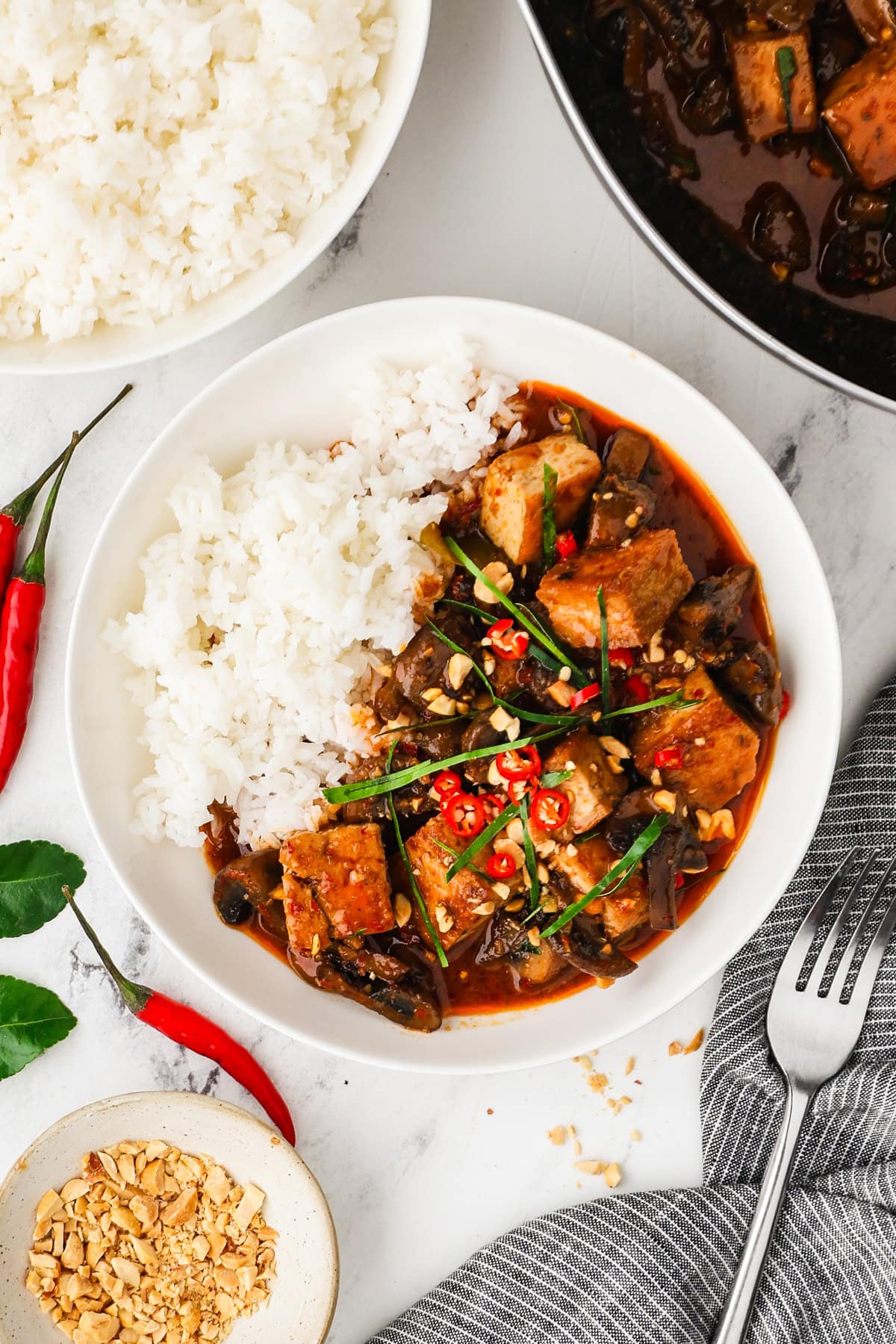
- Serve over jasmine rice and garnish with makrut lime leaves, sliced red chili, lime juice, and chopped peanuts.
How to serve Thai panang curry recipe
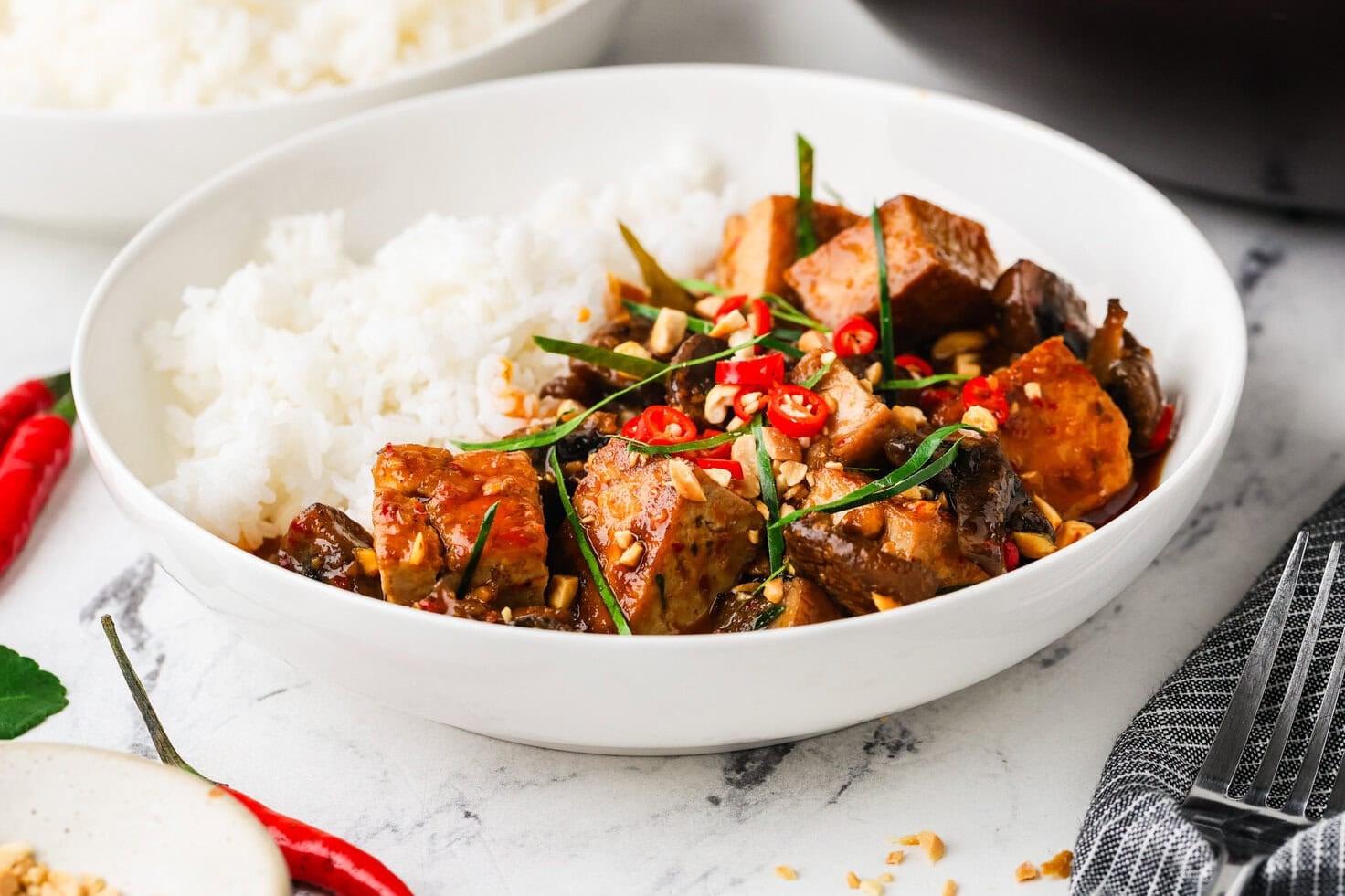
Serve this creamy curry over jasmine rice — the slightly sticky texture is perfect for soaking up the rich, creamy sauce. If you want to turn it into a full Thai-inspired dinner, start with tofu satay and peanut sauce on the side. For an extra protein boost, edamame pairs especially well here.
Variations
- More vegetables: Add 1 red bell pepper, sliced thin, with the tofu in the final simmer for extra color.
- Extra heat: Add 1–2 more fresh red chilies to the paste, or serve with chili crisp on the side to amplify the spicy flavors.
- Gluten-free: Swap soy sauce for tamari when choosing your vegetarian fish sauce brand.
Storage and reheating suggestions
Leftovers keep 4 days in the fridge and freeze well for up to 2 months. The sauce thickens as it sits, which honestly makes day-two panang even better.
Reheat gently on the stovetop with a splash of coconut milk or water. The microwave works, but the tofu softens.
Vegetarian Panang Curry
Equipment
- 1 Blender or food processor (for the paste)
- 1 Large wok or 12-inch skillet
Ingredients
Panang curry paste
- 1 teaspoon cumin seeds
- 1 tablespoon coriander seeds
- 3 tablespoons roasted peanuts
- 3 tablespoons red curry paste, Mekhala brand, or homemade version
For the curry
- 2 tablespoons neutral oil, divided
- 16 oz cremini mushrooms, quartered
- ½ teaspoon kosher salt
- 1 14-oz block extra-firm tofu, pressed and cut into 1-inch cubes
- 3 13.5-oz cans full-fat coconut milk, unshaken
- 2 tablespoons vegetarian fish sauce, Ocean’s Halo or Tiparos
- 1 tablespoon coconut sugar
- 4 makrut lime leaves, whole, center rib removed
For garnish
- 4 makrut lime leaves, very thinly julienned
- 1 Fresno chili, thinly sliced
- 2 tablespoons roasted peanuts, roughly chopped
Instructions
- Remove the tofu from the package, drain the liquid, and press using a tofu press or a heavy object while you prepare the rest of the ingredients.
Make the panang curry paste
- In a dry skillet over medium heat, toast cumin seeds and coriander seeds together, stirring constantly, until fragrant and just starting to darken, about 2–3 minutes.
- Grind the toasted spices to a coarse powder in a spice grinder or mortar and pestle. Add roasted peanuts and grind until the mixture resembles coarse sand. Set aside.
Prepare the tofu and mushrooms
- Heat 1 tablespoon neutral oil in a large wok or skillet over high heat until shimmering.
- Add the cremini mushrooms in a single layer. Do not stir for 2 minutes. Let them sear hard until deeply golden on one side, then toss and cook 2–3 minutes more until moisture has fully evaporated and the edges are caramelized.
- Season with ¼ teaspoon kosher salt, transfer to a plate, and set aside.
- In the same pan, heat remaining 1 tablespoon oil over high heat.
- Add tofu cubes in a single layer and sear without moving for 3 minutes, until a golden crust forms. Flip and sear 2–3 minutes more on the second side. Transfer to the plate with the mushrooms.
Build the curry
- Open the coconut milk cans without shaking. Spoon the thick coconut cream from the top of both cans into the wok. You should have about ¾ to 1 cup of thick cream. Reserve the remaining coconut liquid.
- Heat the coconut cream over medium-high heat, stirring occasionally, until it begins to bubble and the oil visibly separates and pools at the edges, about 5–6 minutes. Don't rush this step!
- Add the panang curry paste to the bloomed cream. Fry, stirring constantly, until the paste darkens slightly and becomes very fragrant, about 3–4 minutes. The paste should look dry and clumpy before the liquid goes in.
- Pour in the reserved coconut liquid and stir to combine.
- Add vegetarian fish sauce, coconut sugar, and makrut lime leaves. Bring to a gentle simmer and reduce for 5 minutes.
- Fold in the seared tofu and mushrooms. Simmer gently for 3–4 minutes until everything is coated and heated through.
- Ladle over jasmine rice. Garnish with julienned makrut lime leaves, sliced red chili, and chopped peanuts. Serve immediately.
Notes
- Sear the mushrooms well before adding them to the curry or the sauce can turn watery.
- Freeze extra curry paste in tablespoon portions for up to 3 months. Mekhala is gluten-free, I believe, and my homemade red curry paste uses white miso that is rice-based and also gluten-free, but if you use another brand, double check if you are gluten intolerant.
- Panang curry should be thick, not brothy. Reduce the sauce longer if needed before adding the tofu and mushrooms.
- Substitute fresh ginger for galangal if needed.
- Store leftovers in the fridge for up to 4 days. The sauce thickens as it sits.
- Reheat gently with a splash of coconut milk or water to loosen the sauce. Microwave reheating softens the tofu slightly.
Nutrition
Nutrition information is automatically calculated, so should only be used as an approximation.


