
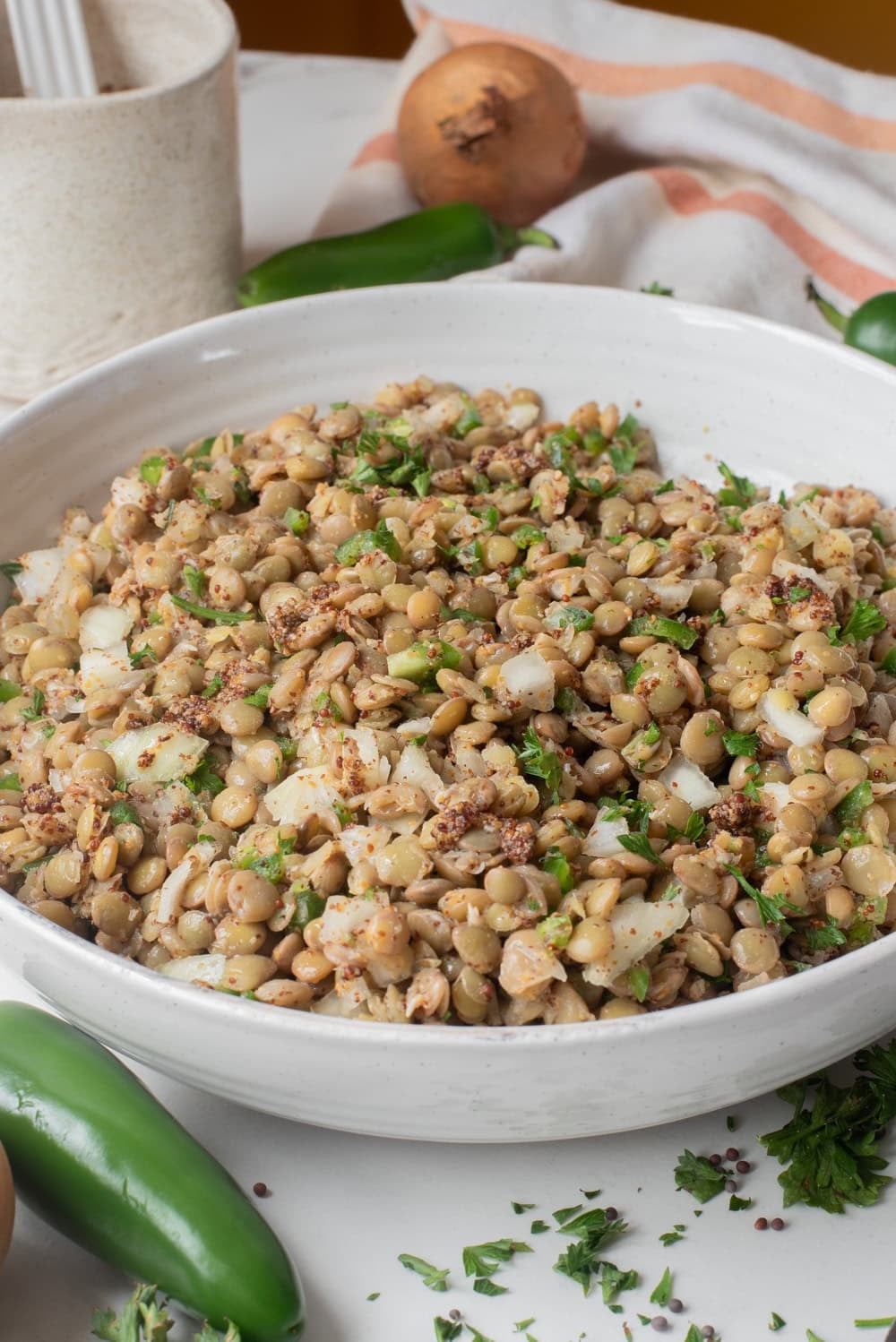
My azifa is an Ethiopian green lentil salad dressed with senafich, the homemade brown mustard sauce I make from scratch from whole brown mustard seeds. Lentils boil 25 minutes, chill an hour, and toss with raw onion, jalapeño, and lemon. The senafich rests overnight, which is the part you plan for. Vegan, gluten-free, served cold.
About this Ethiopian lentil salad

Azifa is an Ethiopian green lentil salad served cold, dressed with senafich, a homemade brown mustard sauce. Eaten during fasting and at meals year-round, the salad combines chilled lentils with raw onion, jalapeño, lemon, and olive oil. The senafich rests at least two hours before serving.
I first ate azifa at a fasting meal in Addis Ababa, where it showed up alongside misir wot and gomen as part of a vegan platter. Every Ethiopian restaurant I’ve been to in DC since serves it the same way: cold lentils with a sharp green-flecked sauce on top, scooped with injera. Building the senafich at home took the most testing rounds. Fresh-ground mustard tastes one-note sharp. Resting it for two hours in the fridge transforms the flavor into something complex and rounded, with heat that builds slowly instead of hitting you up front.
It’s one of the fasting dishes in Ethiopian Orthodox tradition, vegan by lineage rather than adaptation. That’s why it works so well as a weeknight side: built around lentils you already cook, dressed with a sauce you can make ahead, served cold so you don’t have to time it with anything else hot.
This is the latest addition to the Ethiopian cluster on the site, alongside Ethiopian cabbage and shiro wat. Azifa is one of the fasting dishes — vegan by tradition, not by adaptation — and it’s served cold, which makes it a natural warm-weather addition to the cluster.

Ingredients worth discussing
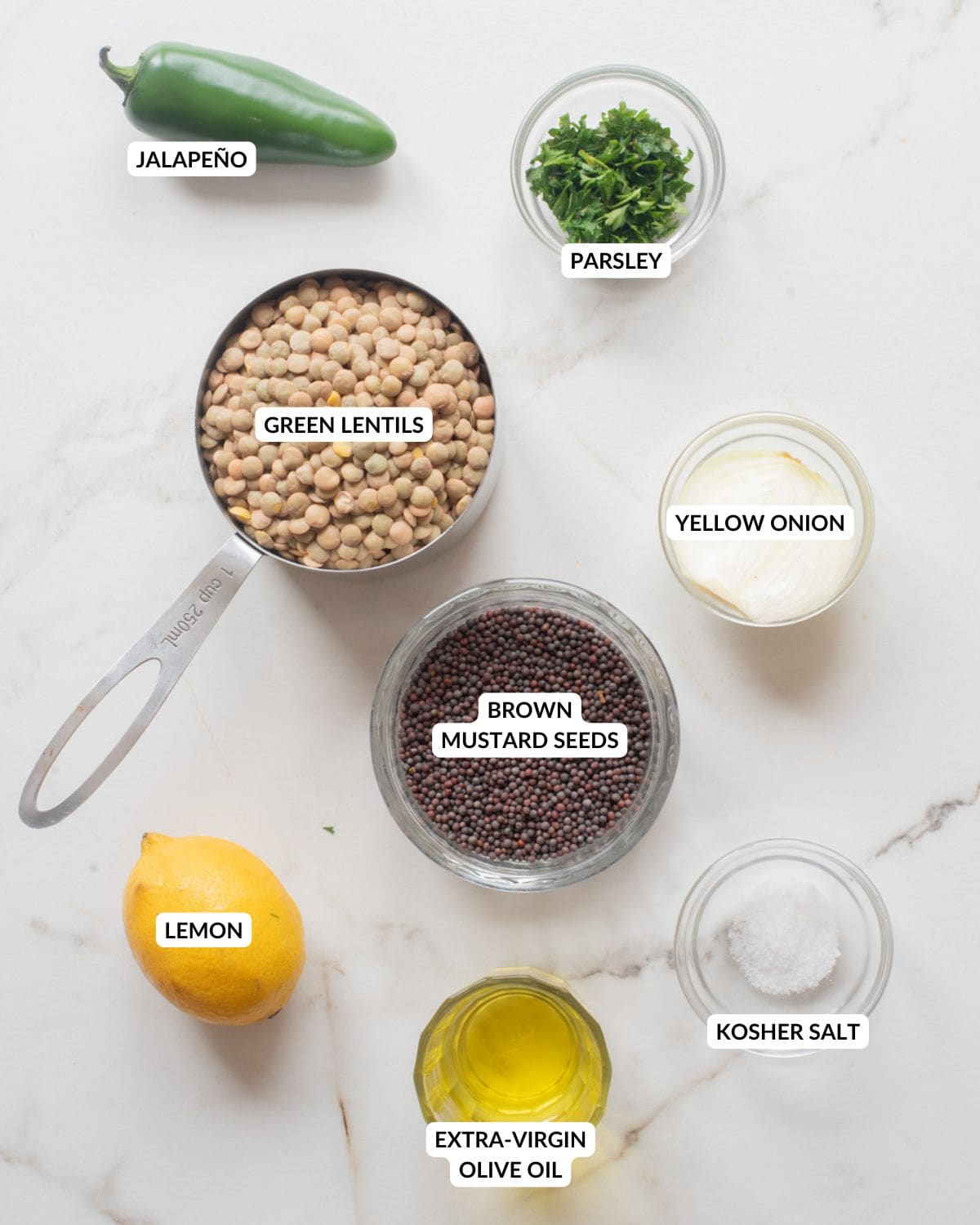
Full ingredient list and detailed instructions in the recipe card.
Brown mustard seeds, ground fresh. Senafich is built from whole seeds, salt, oil, and water. The seeds bloom in just-boiled water and rest at least two hours, which is what gives the sauce its rounded heat instead of one-note sharpness. Yellow mustard seeds work as a substitute and produce a milder version. The Indian spice aisle is the cheapest source if you don’t already have them. Whole green lentils, not red or split.
Green lentils hold their shape through cooking and chilling. Red lentils dissolve into mush and won’t work for a cold salad. Small brown lentils like French du Puy are the next best option. Cook them like pasta in plenty of water, drain at 22 to 25 minutes when they’re just tender but still have bite.
Jalapeño, seeded for moderate heat. The traditional Ethiopian green chilies are hard to source outside Ethiopian grocery stores; jalapeño is the standard American substitute. Leave a few seeds in for more heat.
Lemon, not lime. Some traditional preparations use lime; lemon is more common and gives a cleaner, brighter acid than lime’s sweeter, rounder profile.
TIPS & TRICKS
Shruthi’s top tips
- The senafich rest is the variable that changed everything during testing. Two hours minimum, overnight is better. Fresh-ground mustard goes from horseradish-level sharp to something rounded and complex.
- Don’t overcook the lentils. Pull them while they still have bite. Cold salad means the lentils get tossed and chilled and need to keep their shape; mushy lentils turn this into a paste.
- Start conservative with the senafich. Two teaspoons for the whole salad is a starting point, not a final amount. The mustard should be present, not overwhelming. You can always pass extra at the table.
- Brown mustard seeds are the same ones Indian cooks use for tempering, the seeds I reach for in dal tadka. If you cook Indian food, you already have these. This is an easily accessible brand you can try.
- Make-ahead friendly. Senafich keeps 3 days. Cooked lentils keep 3 days undressed. Dress just before serving for best texture.
How to make azifa
Make the senafich (at least 2 hours ahead, ideally overnight):
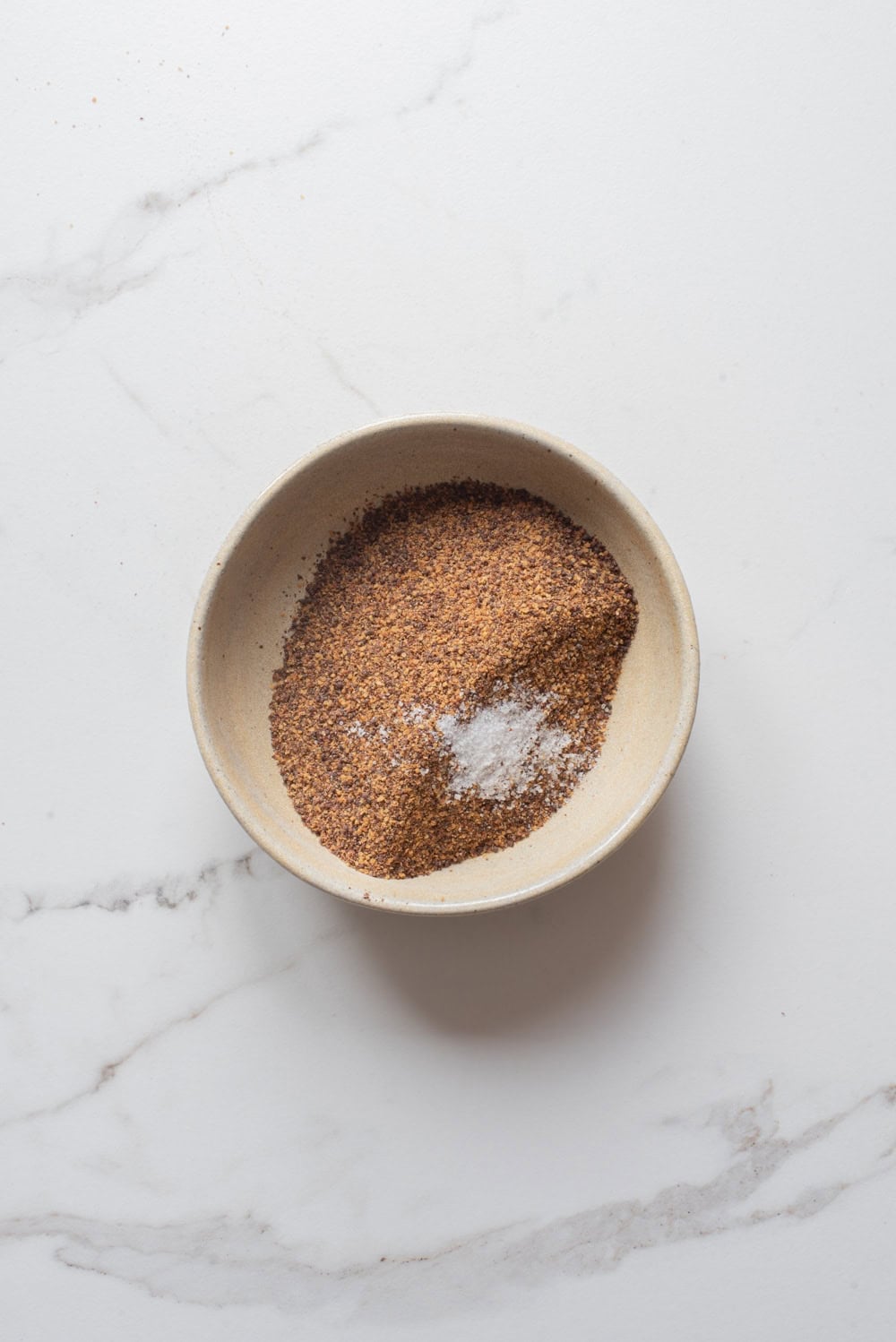
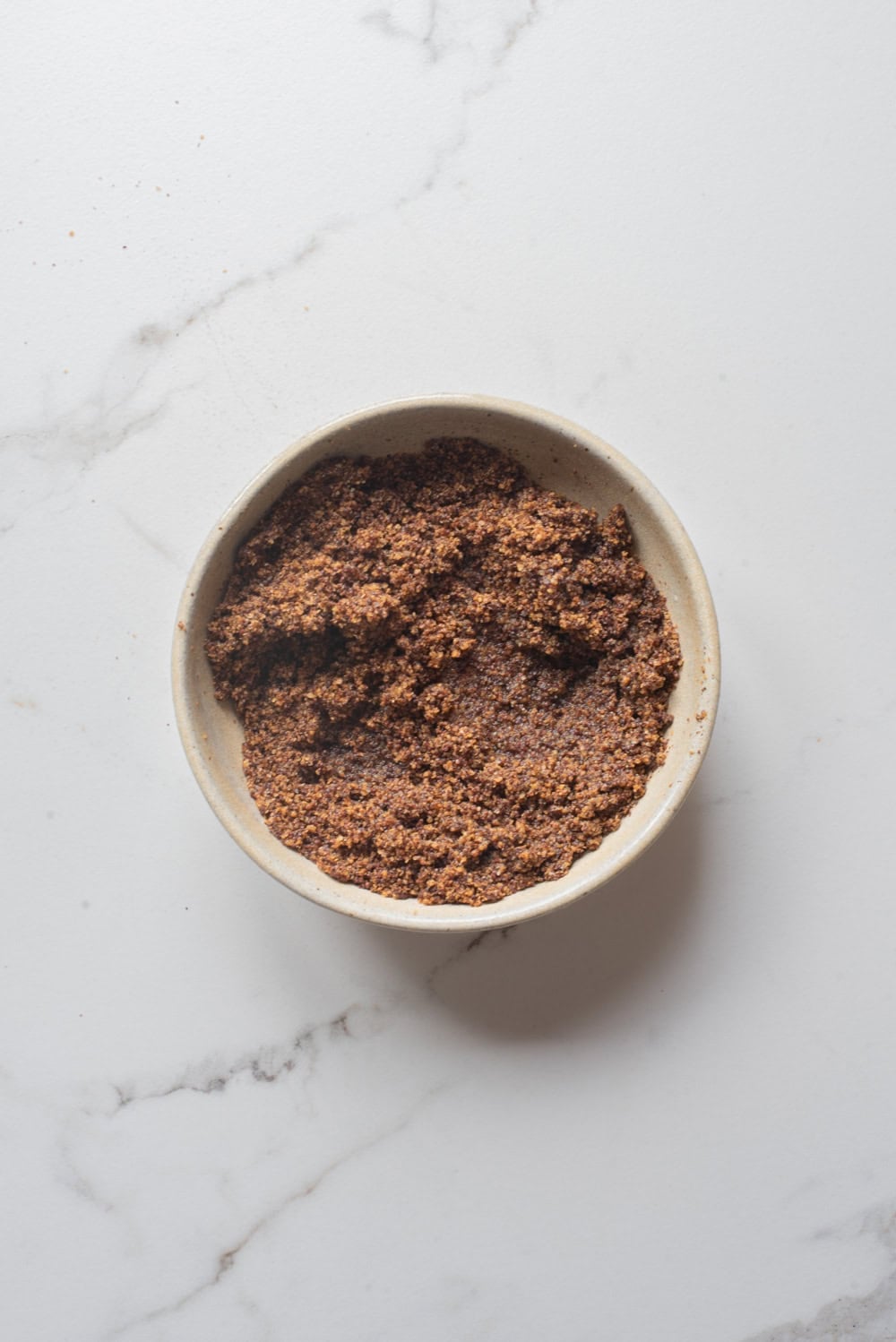
- Grind the brown mustard seeds to a fine powder — 1 minute in a spice grinder, 3–4 minutes by mortar and pestle. Transfer to a small bowl and add salt.
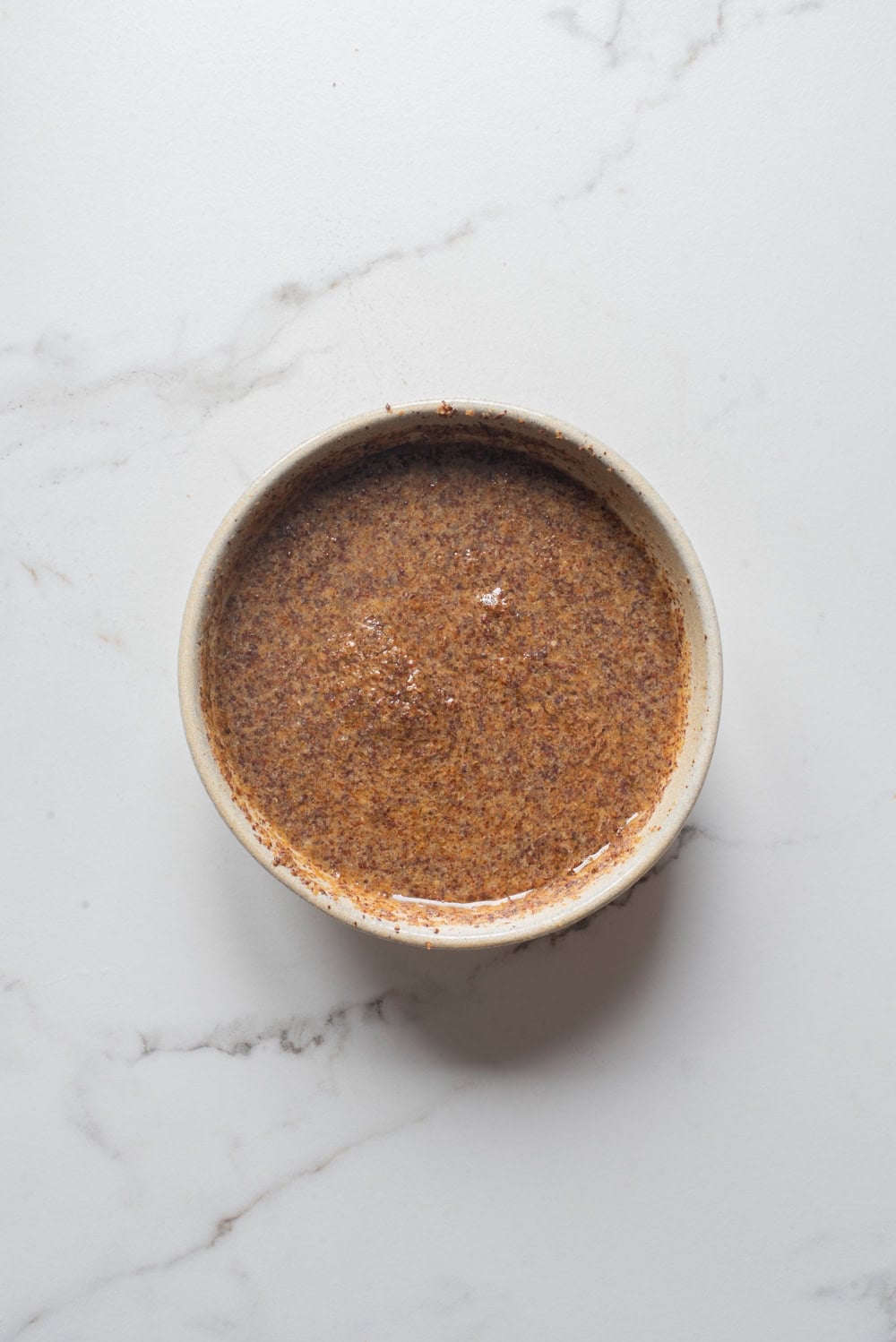
- Add the olive oil and stir. Whisk in 3 tablespoons of just-boiled water and let sit 2 minutes — the mixture will thicken and the sharp bitterness will mellow slightly. Whisk in 1 more tablespoon of hot water until you have a saucy, pourable consistency — looser than Western mustard, more like a thin dip.
- Cover and refrigerate at least 2 hours, ideally overnight. This is not optional.
Cook the lentils:
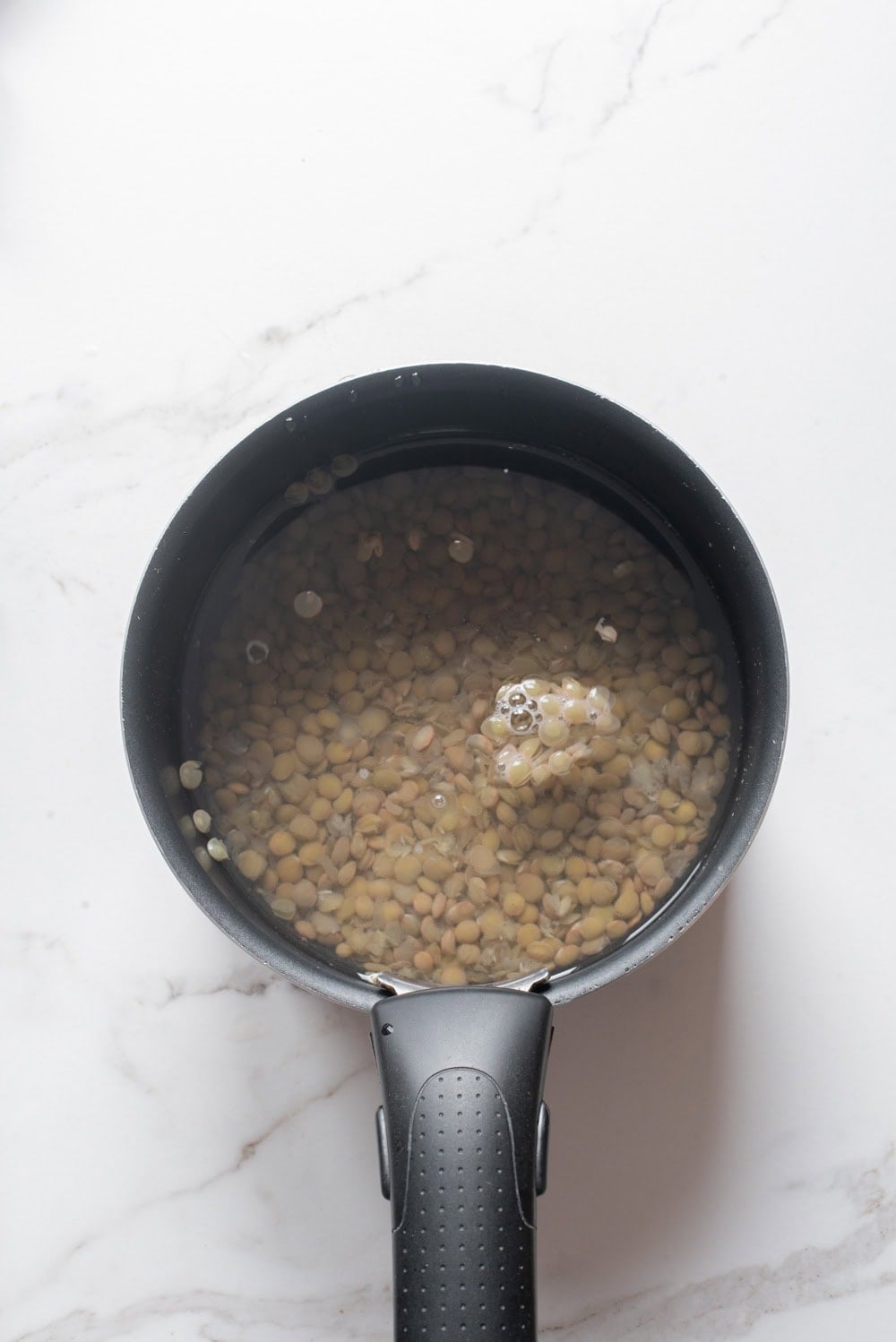
- Pick over the lentils and rinse well. Bring a large saucepan of water to a boil — use plenty of water, like pasta. Cook 25–30 minutes until just tender but holding their shape. Taste at 22 minutes. Drain immediately.
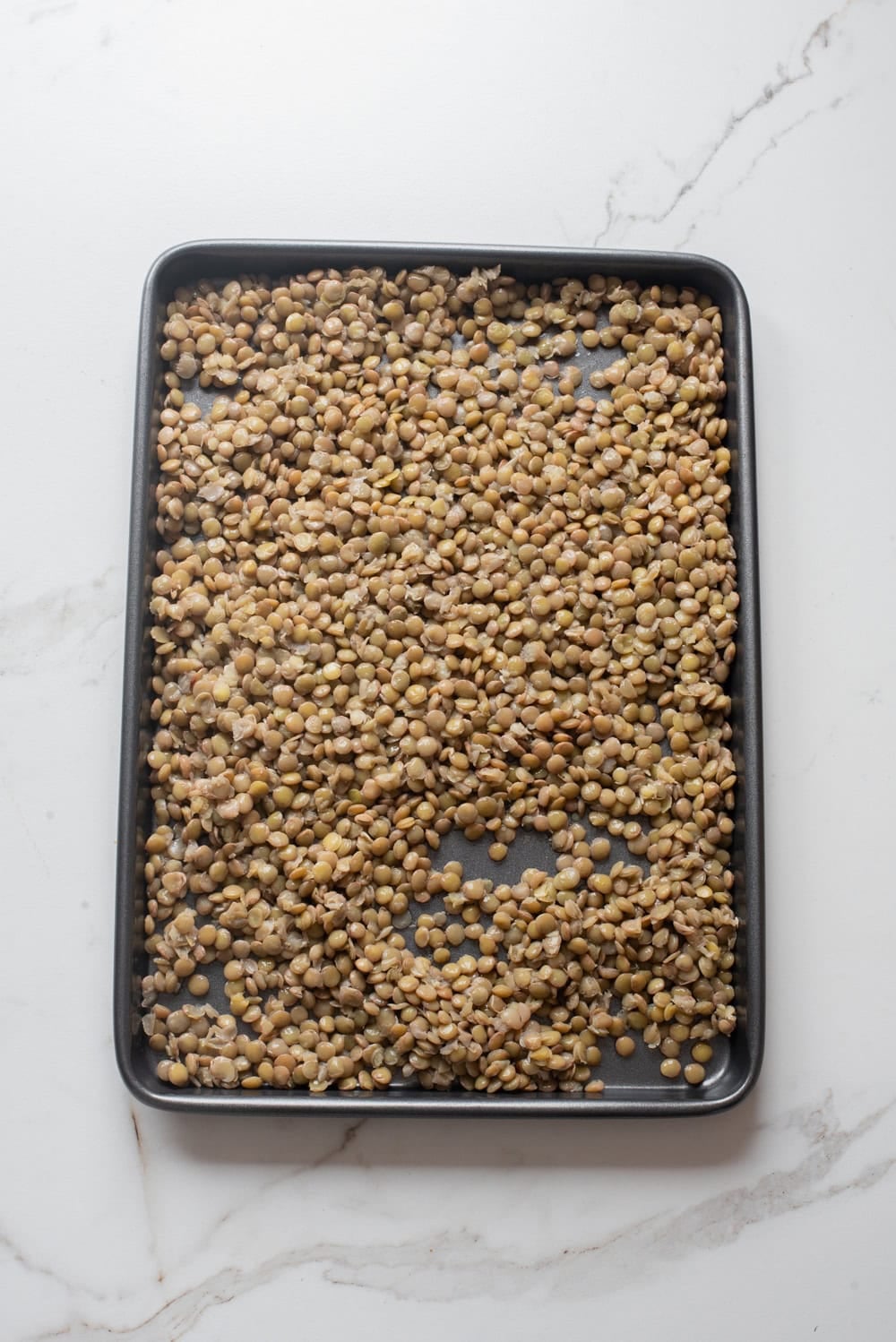
- Spread on a sheet pan to cool quickly, then refrigerate until fully chilled, at least 1 hour.
Assemble:
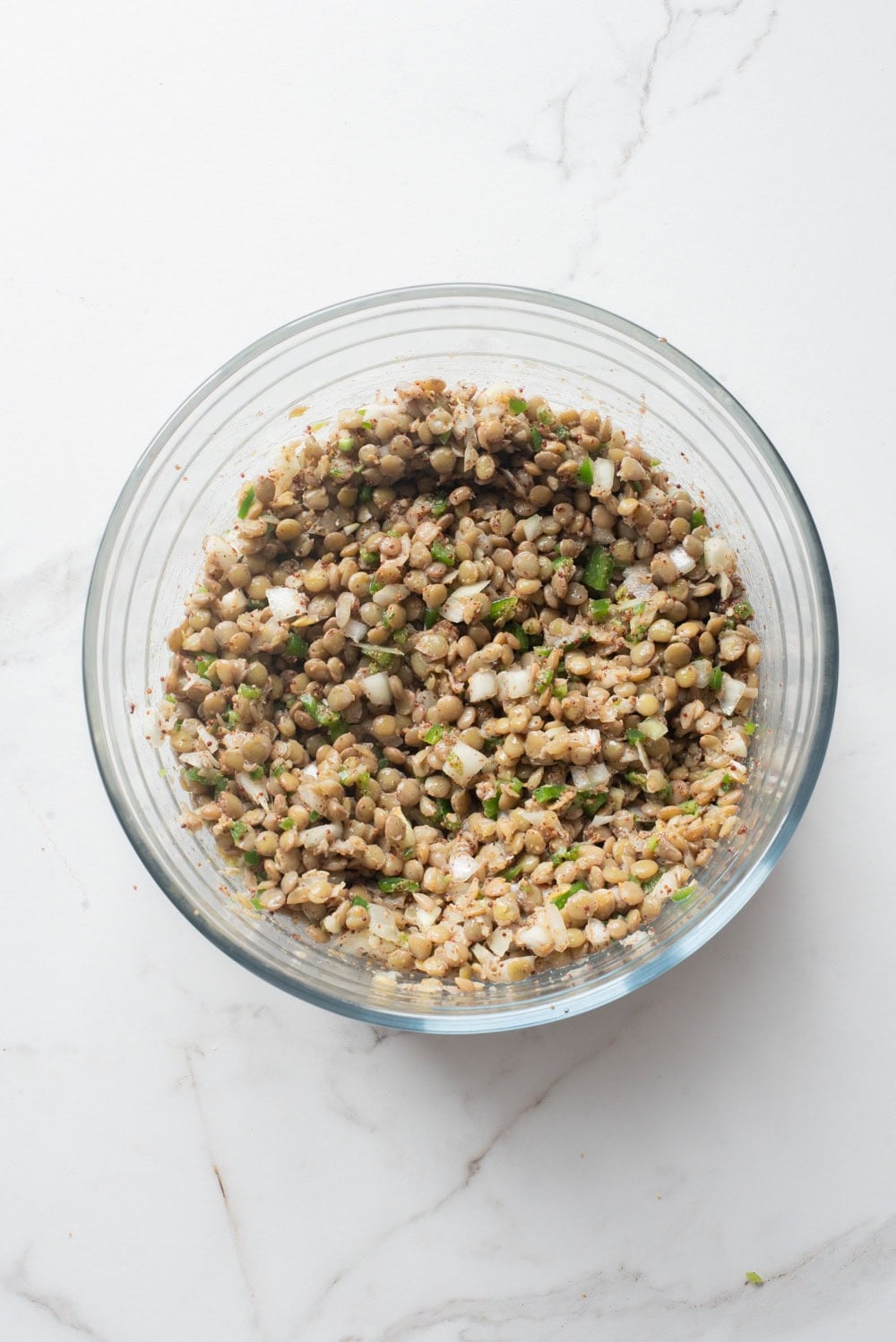
- Toss the chilled lentils with the onion, jalapeño, olive oil, lemon juice, and 2 teaspoons of the senafich. Taste — add more senafich for sharpness, more lemon for brightness, more salt as needed. Start conservative with the mustard and build up.
- Serve cold, garnished with parsley. Pass extra senafich at the table.
How to serve Ethiopian lentil salad
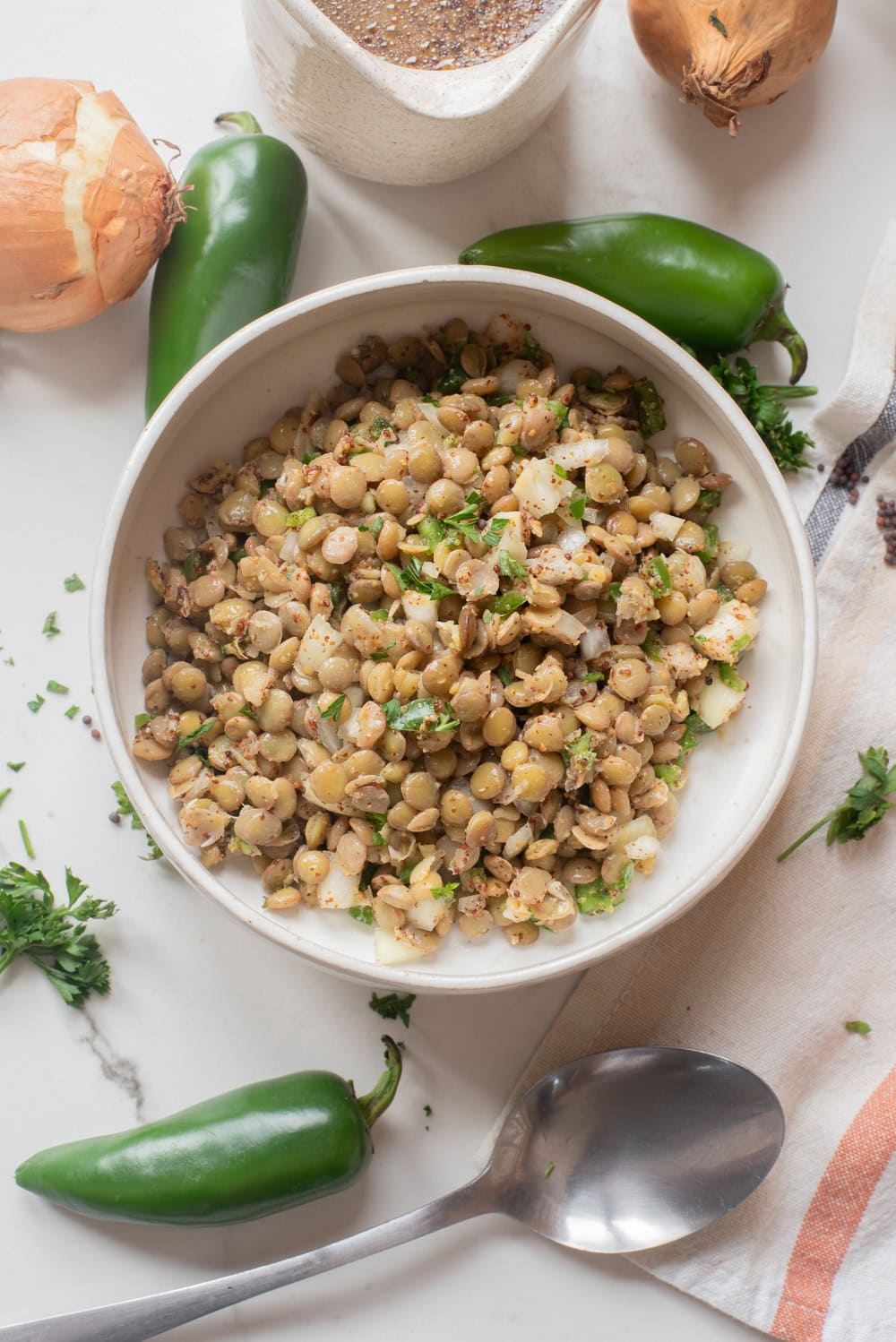
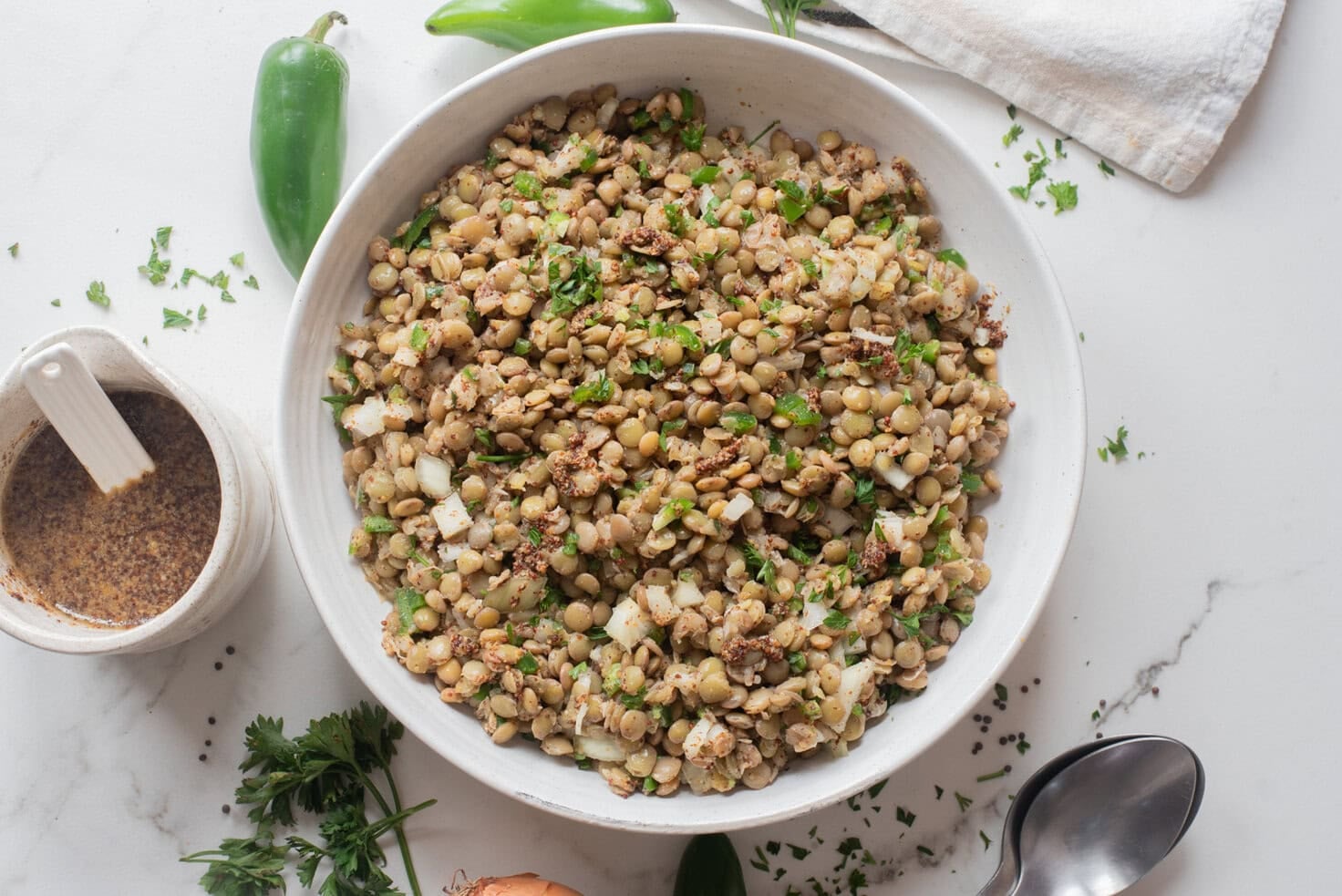
Serve cold or at room temperature with flatbread or crusty bread for scooping. It’s most at home on an Ethiopian platter, paired with shiro wat and injera, with a side of Ethiopian cabbage if you’re going full spread. It also works as a side at any meal, where the sharp mustard-and-lemon dressing cuts through richer mains. Add lemon wedges and extra senafich on the side at the table.
Variations
- Swap yellow mustard seeds for brown if that’s what’s on hand. The senafich will be milder and less pungent. Useful if you want a gentler version for people new to mustard-forward sauces.
- Add a small handful of chopped tomato or finely diced shallot for a fresher, brighter version. Common in some regional preparations.
- For a heartier light meal, double the lentils to 2½ cups dried and serve with bread. Pushes the protein to the 25g range without changing the dressing.
Storage and reheating suggestions
Store dressed salad in an airtight container in the fridge for up to 2 days. The lentils absorb the dressing as they sit, so refresh with a drizzle of olive oil and a squeeze of lemon before serving leftovers. Serve cold or at room temperature. Do not reheat; this is a cold salad and warming it changes both texture and flavor.
The senafich keeps separately for 3 days in a covered jar. Cooked, undressed lentils keep 3 days. Make both ahead and toss the salad together when you need it.
Azifa (Ethiopian Lentil Salad)
Equipment
- Spice Grinder or mortar and pestle (for senafich)
Ingredients
For the senafich:
- 5 tablespoons brown mustard seeds
- ¼ teaspoon kosher salt
- 2 tablespoons extra-virgin olive oil
- 4 tablespoons just-boiled water, divided
For the salad:
- 1¼ cups dried whole green lentils, or small brown lentils like French du Puy
- ½ medium yellow onion, finely chopped
- 1 medium jalapeño, seeded and finely chopped
- 3 tablespoons extra-virgin olive oil
- 1 medium lemon, juiced (about 3 tablespoons)
- ½ teaspoon kosher salt, plus more to taste
- 2 tablespoons fresh parsley, chopped (for garnish)
Instructions
Make the senafich:
- Grind the brown mustard seeds to a fine powder in a spice grinder or mortar and pestle. About 1 minute in a grinder, or 3 to 4 minutes by hand. Transfer to a small bowl and add the salt.
- Stir in the olive oil. Whisk in 3 tablespoons of just-boiled water and let sit for 2 minutes. The mixture will thicken and the sharp raw bitterness will mellow slightly. Whisk in 1 more tablespoon of hot water until you have a saucy, pourable consistency. It should be looser than Western mustard, more like a thin dip than a spread.
- Cover and refrigerate at least 2 hours, ideally overnight. Fresh-ground senafich tastes one-note sharp; after a night in the fridge it tastes complex and rounded. The rest is the part you plan for. Senafich keeps 3 days refrigerated.
Cook the lentils:
- Pick over the lentils and discard any debris. Rinse well under cold water. Bring a large saucepan of water to a boil, plenty of water like pasta. Add the lentils and cook 25 to 30 minutes until just tender but still holding their shape. Taste at 22 minutes; you want them to have a little resistance, not be mushy. Drain immediately in a colander.
- Spread the lentils on a sheet pan or transfer to a wide bowl to cool quickly. Once at room temperature, cover and refrigerate until fully chilled, at least 1 hour.
Assemble:
- Transfer the chilled lentils to a large bowl. Add the onion, jalapeño, olive oil, lemon juice, and 2 teaspoons of the senafich. Toss gently to combine. Taste; add more senafich for sharpness, more lemon for brightness, more salt as needed. Start conservative with the senafich and build up.
- Serve cold, garnished with fresh parsley. Pass extra senafich at the table for anyone who wants more sharpness.
Notes
- The senafich needs time. Make it at least 2 hours ahead, preferably the night before. Fresh-ground mustard tastes one-note sharp; rested mustard tastes complex and rounded.
- Senafich yields about ¾ cup. The salad uses 2 to 3 teaspoons. Save the rest for the table or for future batches.
- Brown mustard seeds are the same seeds Indian cooks use for tempering. The Indian spice aisle at any mainstream grocery store, Whole Foods, or an Indian grocery is the cheapest source. Yellow mustard seeds work as a substitute and produce a milder, less pungent senafich.
- Don’t overcook the lentils. Cold salad means the lentils need to hold their shape through chilling and tossing. Pull them while they have a little bite.
- Make-ahead friendly. The senafich keeps 3 days. The cooked lentils keep 3 days undressed. Dress just before serving for best texture.
- Dressed salad keeps refrigerated up to 2 days. The lentils absorb the dressing as it sits, so toss with a drizzle of olive oil and a squeeze of lemon before serving leftovers. Serve cold or at room temperature; do not reheat.
Nutrition
Nutrition information is automatically calculated, so should only be used as an approximation.


This gives a whole new meaning to “a little goes a long way”! I’ve never used mustard seed this way before. It clears out the sinuses almost like Chinese mustard! I think I like it!
Haha, thank you Twinkle – it is a bit of an acquired taste but works so well in the salad.