
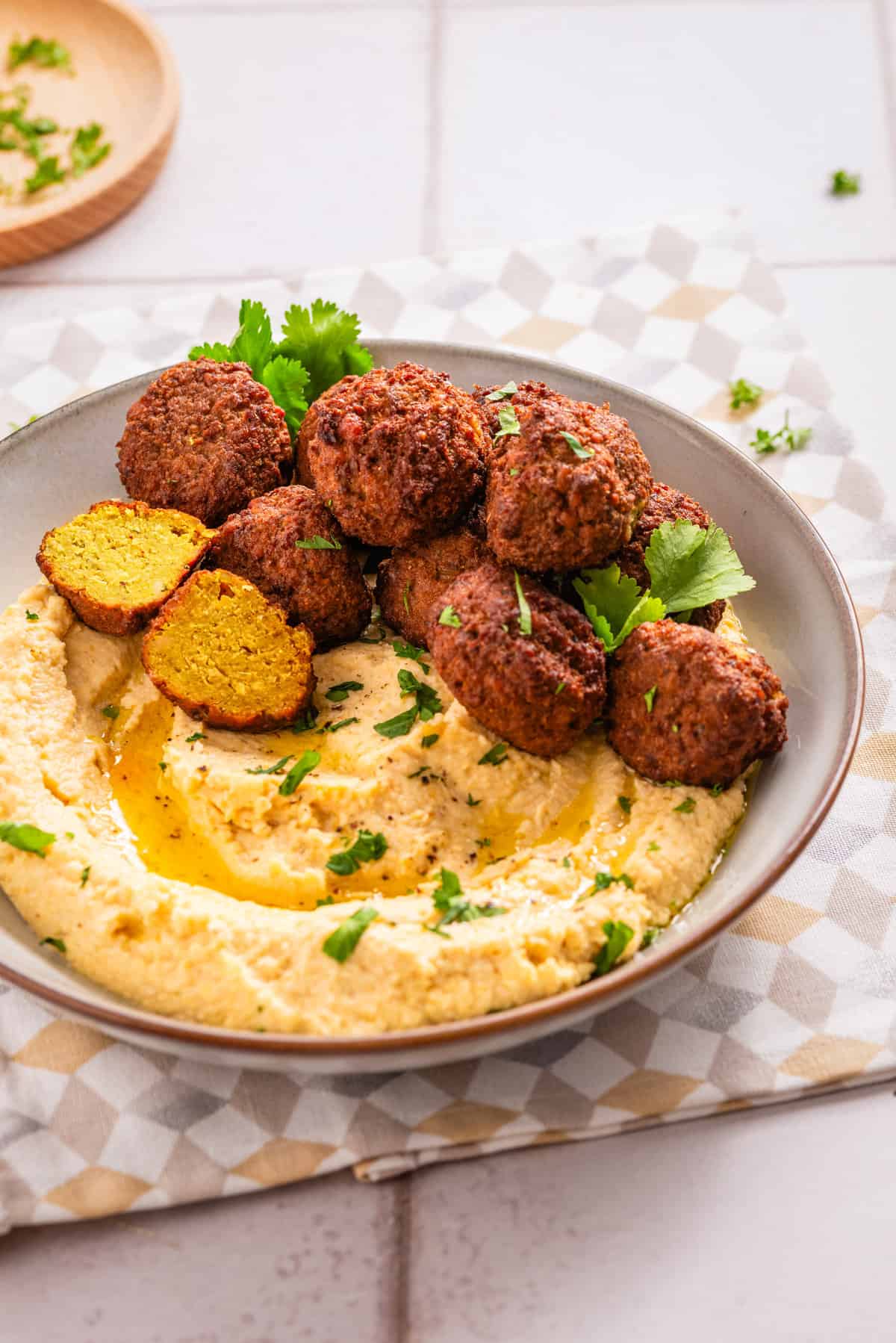
Hummus and falafel is a combination made in heaven. This vegan recipe has been a weekly staple for over 10 years, and is based on an original recipe from my time in Jordan. The creamy, herby hummus with crispy, golden brown falafels is perfect for a protein-packed snack or meal. Better yet, it’s easy to make, and ready in less than an hour!
Why you’ll love this recipe
- Authentic Middle Eastern flavors. I first learned this recipe when I was in Jordan, and have since adapted it to make it easy to get it right each time.
- Versatile. Serve hummus and falafel on their own or pair it with pita bread, fresh tomato and cucumber salad, or make a loaded hummus and falafel bowl and add olives, pickles, and olive oil!
Ingredients and notes
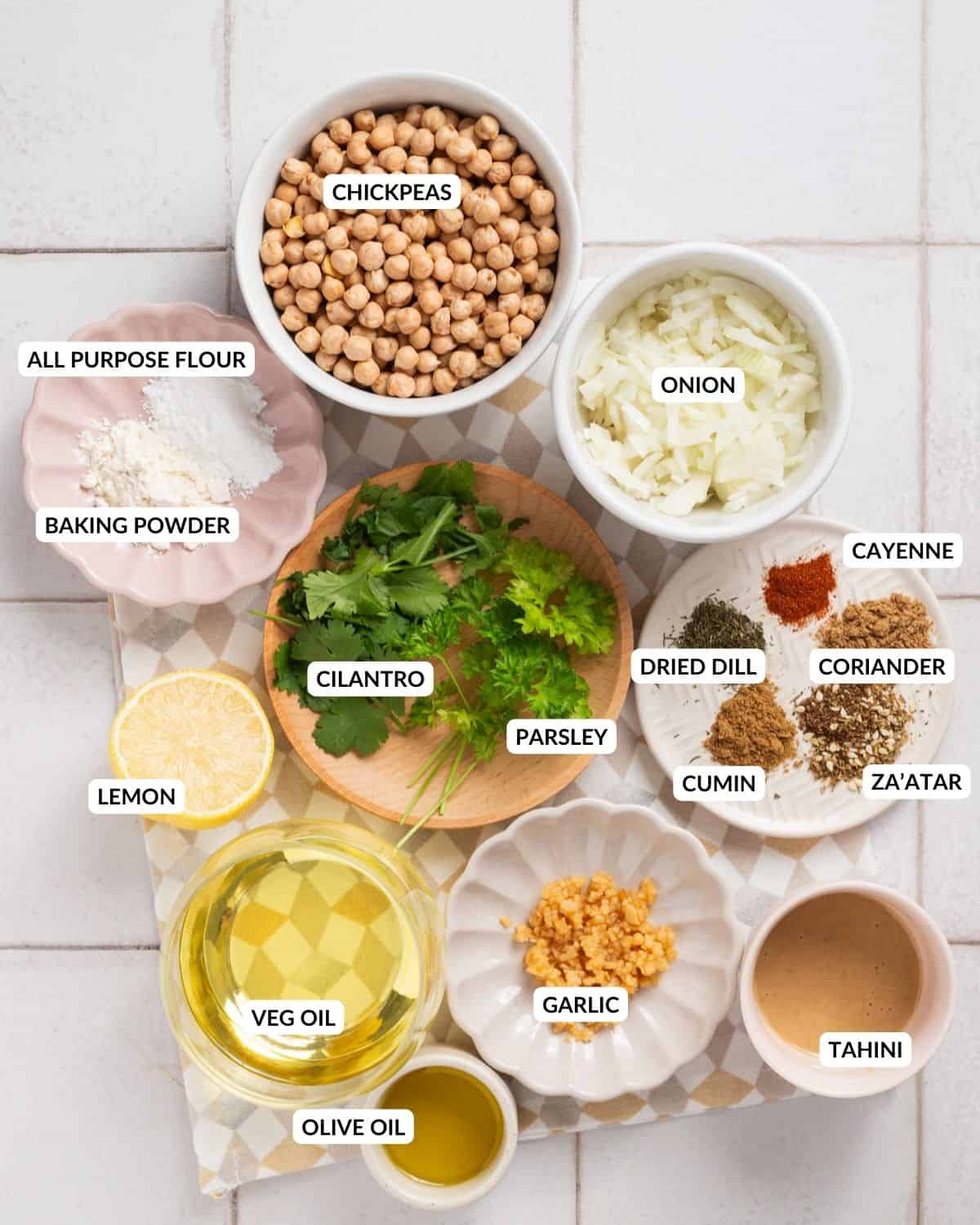
To make hummus and falafel, you’ll need dried chickpeas, tahini, lemon juice, extra virgin olive oil, garlic cloves, onion, parsley, fresh coriander, dried dill, ground coriander, cumin, cayenne pepper, za’atar (optional), baking powder, all-purpose flour, vegetable oil, and salt.
Notes and variations
- Dried chickpeas. Soak dried chickpeas overnight, or for at least eight hours before cooking. Alternatively, you can use canned chickpeas, and skip the soaking part. But I highly recommend dried chickpeas, if you can!
- Tahini. If you don’t have tahini, you can make a tahini substitute by blending roasted sesame seeds with olive oil until smooth.
- Lemon juice. Use freshly squeezed lemon juice to get the best flavor for your hummus.
- Baking powder and all-purpose flour. Baking powder helps give falafel a light and fluffy texture. All purpose flour helps make it crispy, but you can also use a 1:1 gluten-free baking mix instead.
- Vegetable oil. Use vegetable oil for frying falafel. Canola oil, peanut oil, or sunflower oil are suitable alternatives for frying.
How to make hummus and falafel
Step 1: Prep the chickpeas.
Start by placing the chickpeas in a large bowl and ensure they are completely submerged in cold water, with at least twice the amount of water compared to the volume of the chickpeas. Allow the chickpeas to soak undisturbed overnight. If using canned chickpeas, skip this step.
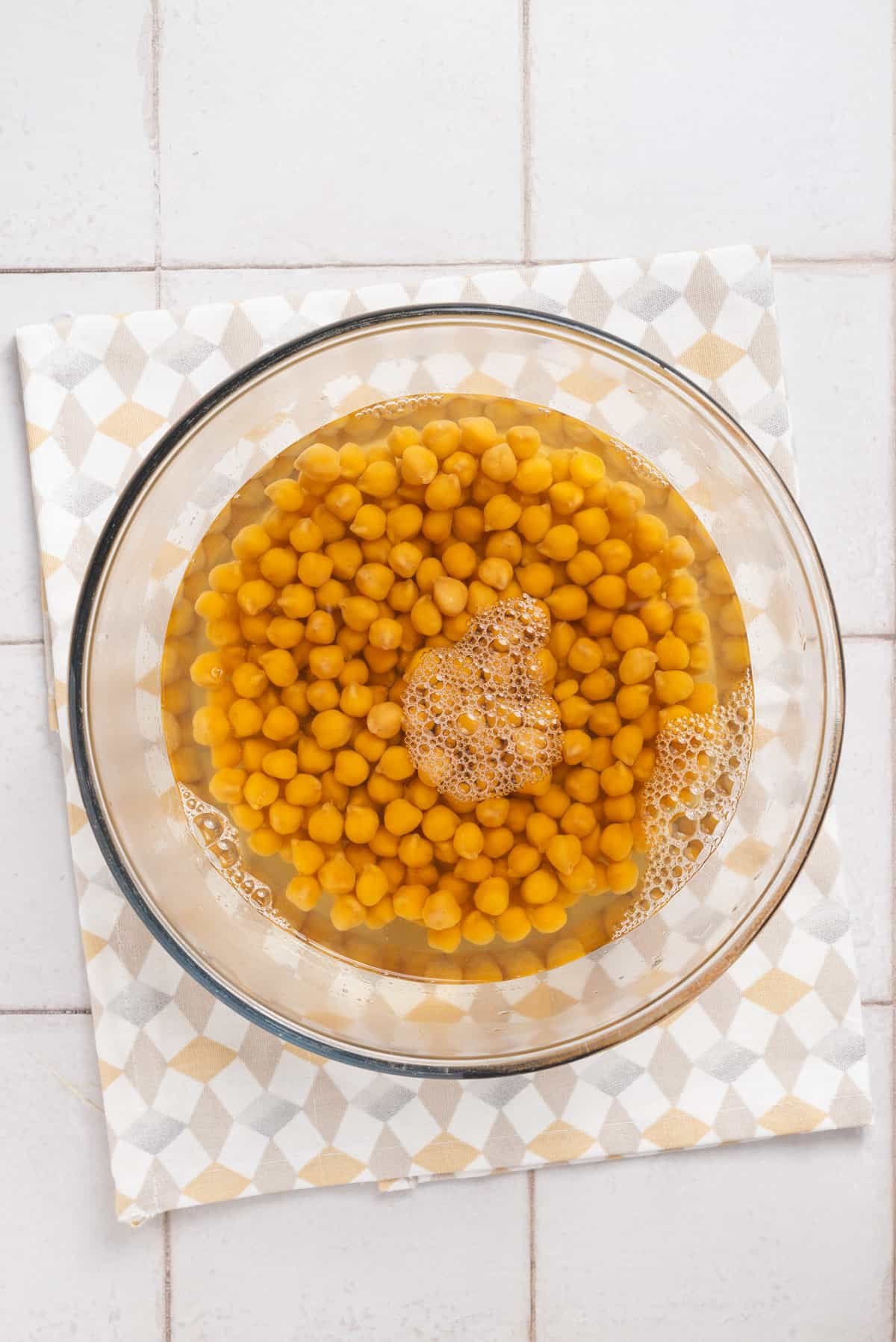
Drain well and prepare to use.
After soaking, you will have around 1 pound of soaked chickpeas. Divide into ½ pound each for the hummus and the falafels recipes.
Step 2: Make the hummus
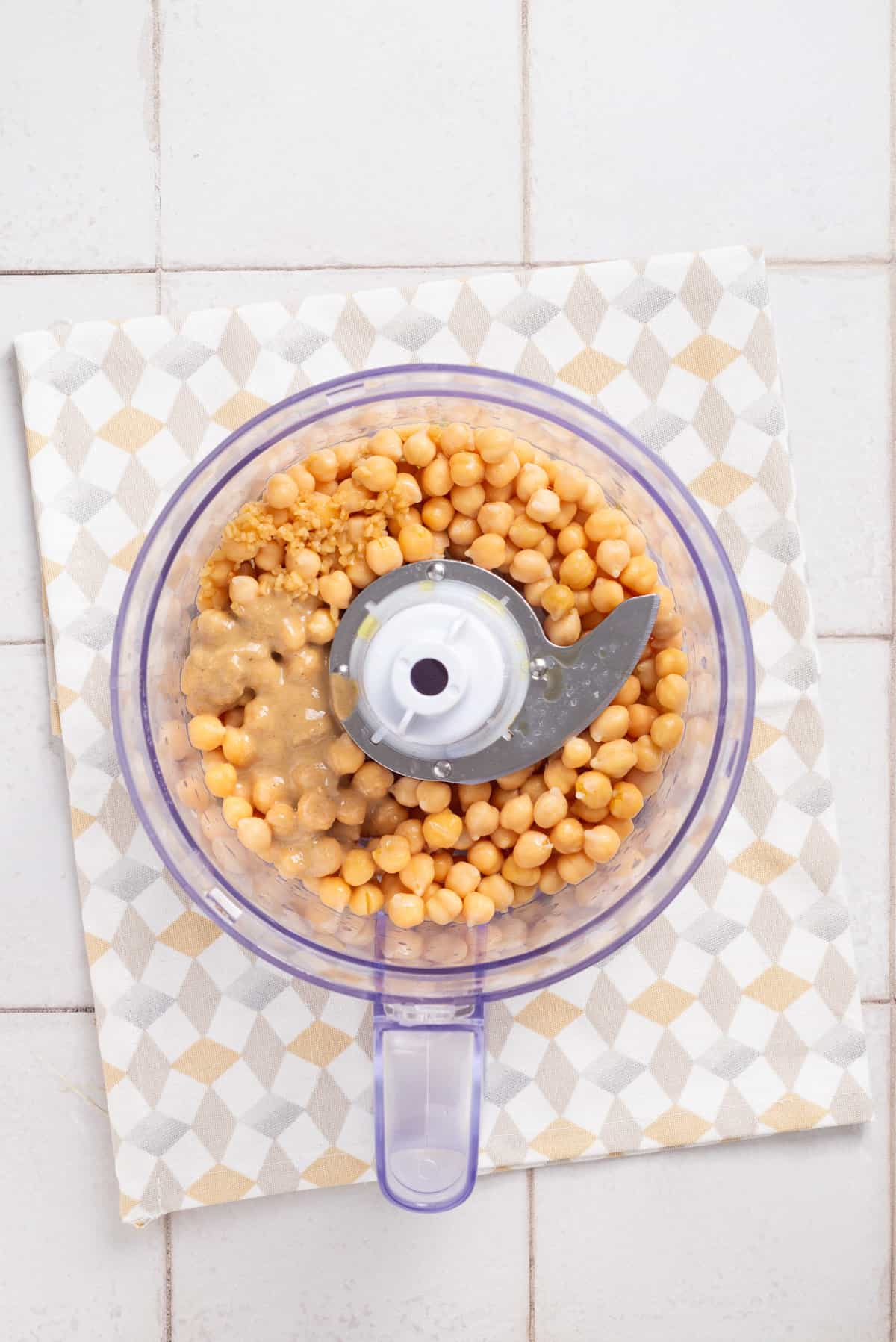
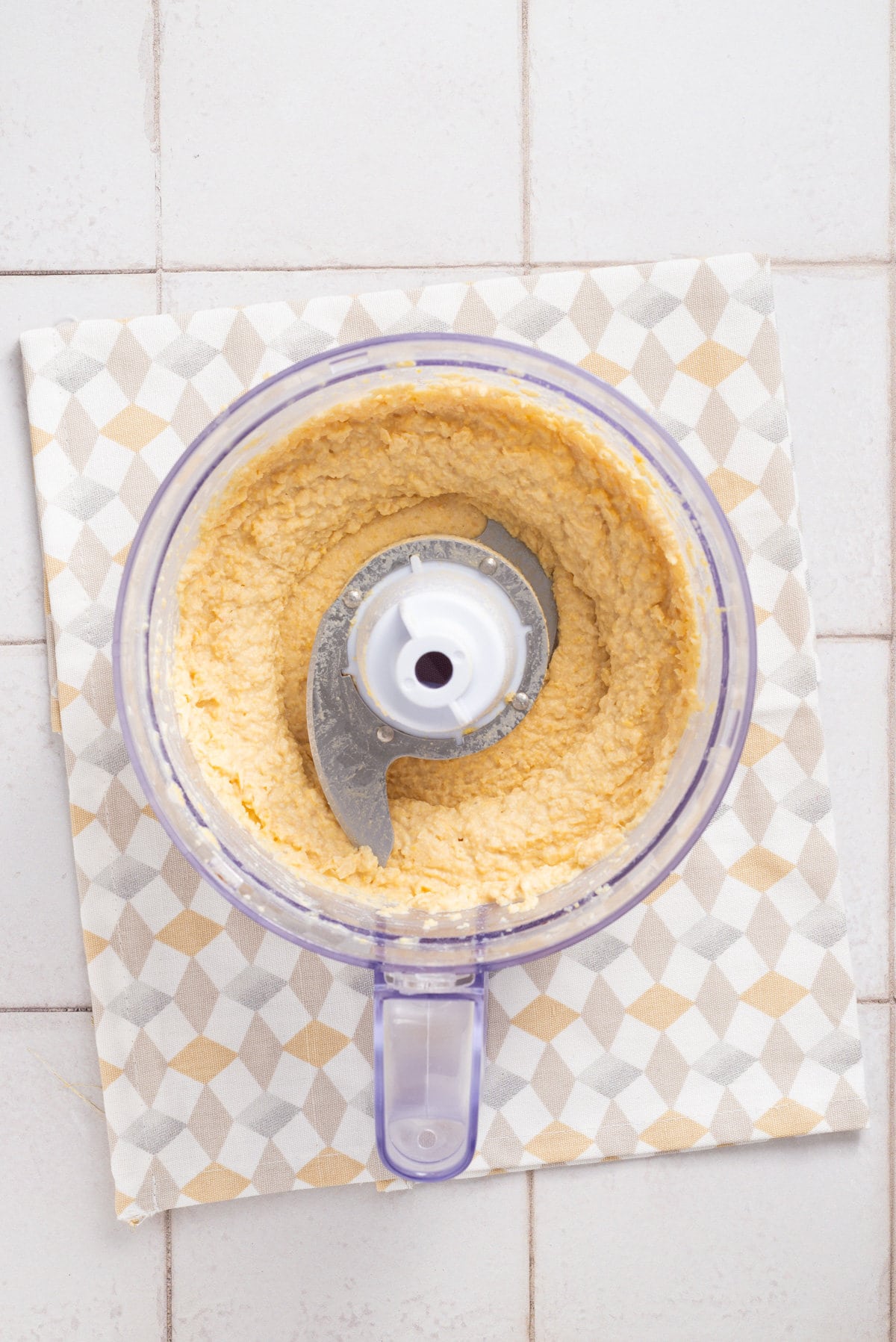
Take half of the soaked chickpeas (½ lb) and place along crushed garlic clove, tahini, lemon juice and ½ tablespoon of extra virgin olive oil. Process or blend until smooth (about 5 minutes). Scrape the bowl once or twice to make sure you grab the chickpeas that might stick to the sides. Set aside.
Step 3: Make falafels
1: Make the batter.
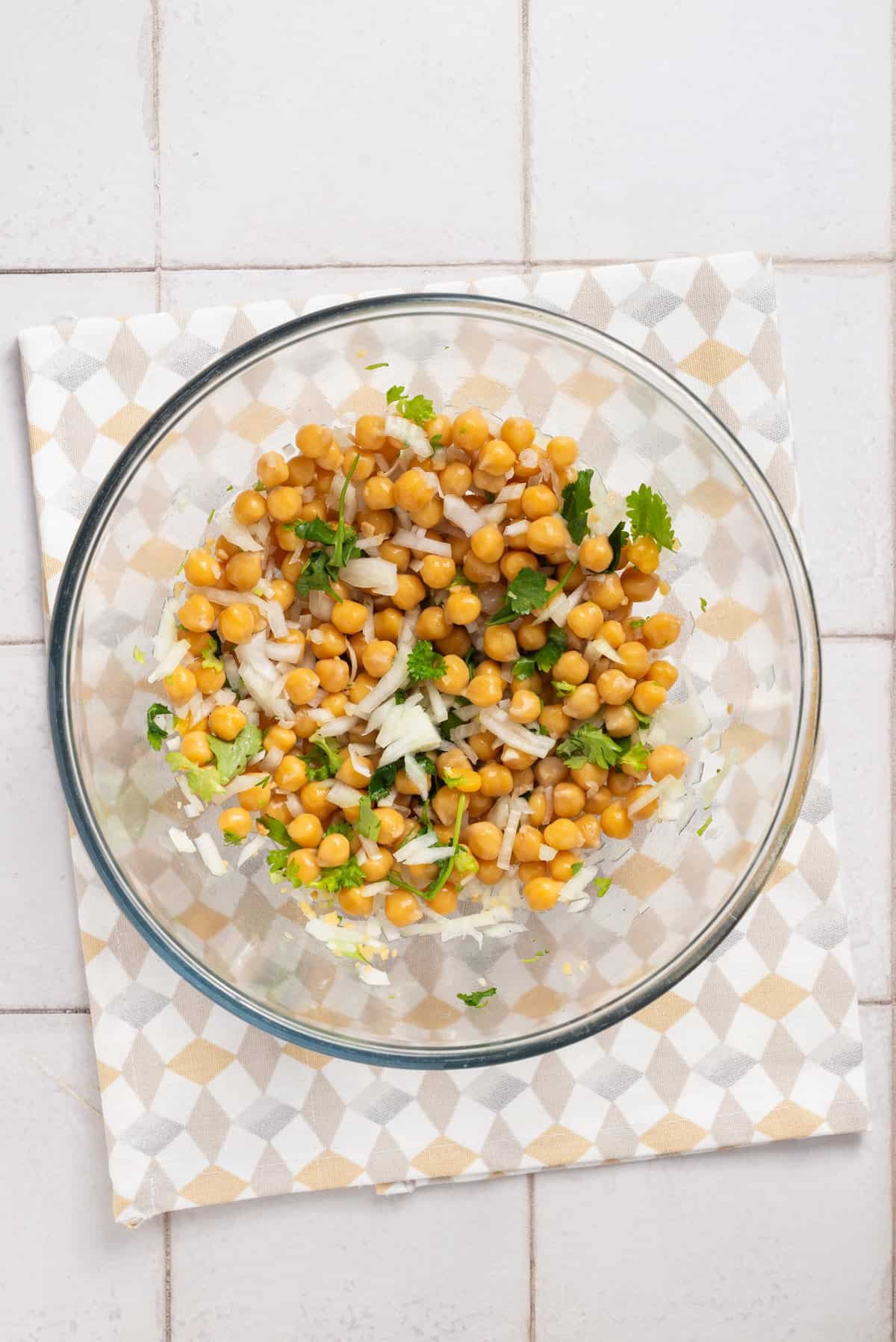
Combine the remaining ½ lb of soaked chickpeas, onion, garlic, parsley, and cilantro in a mixing bowl. Add half of the mixture to a food processor.
Process the mixture in batches, pulsing each batch for 30-40 seconds until finely chopped, ensuring it keeps its texture and doesn’t become mushy or pasty. The mixture should hold together when shaped. Don’t pulse too fine.

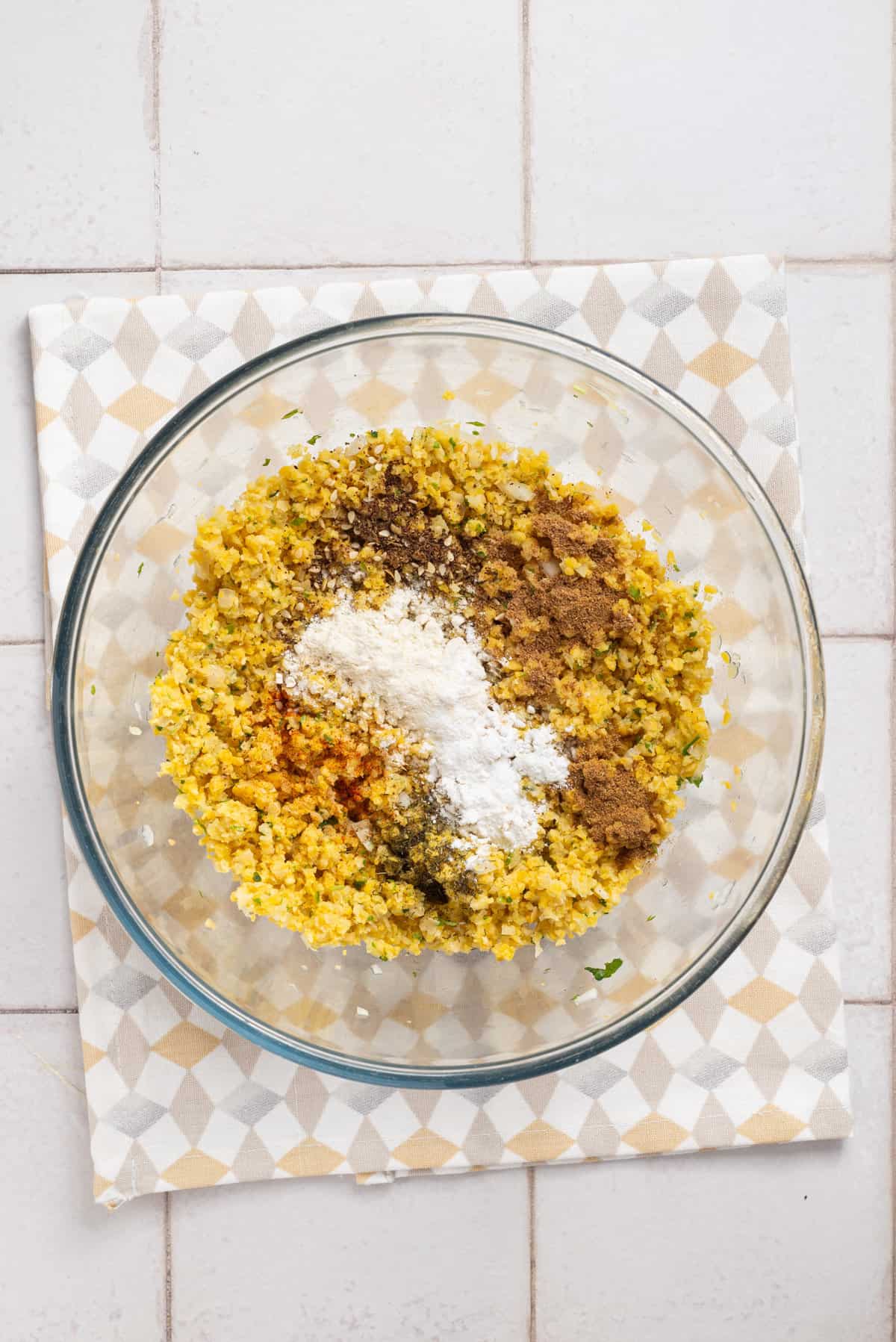
2: Once processed, add the spices (dried dill, ground coriander, cumin, cayenne, za’tar) baking powder, salt, flour, and 3 tablespoons of water to the mixture.
3: Mix thoroughly by hand until the mixture becomes smooth and uniform. Cover the mixture and refrigerate it for 1 hour or until ready to use.
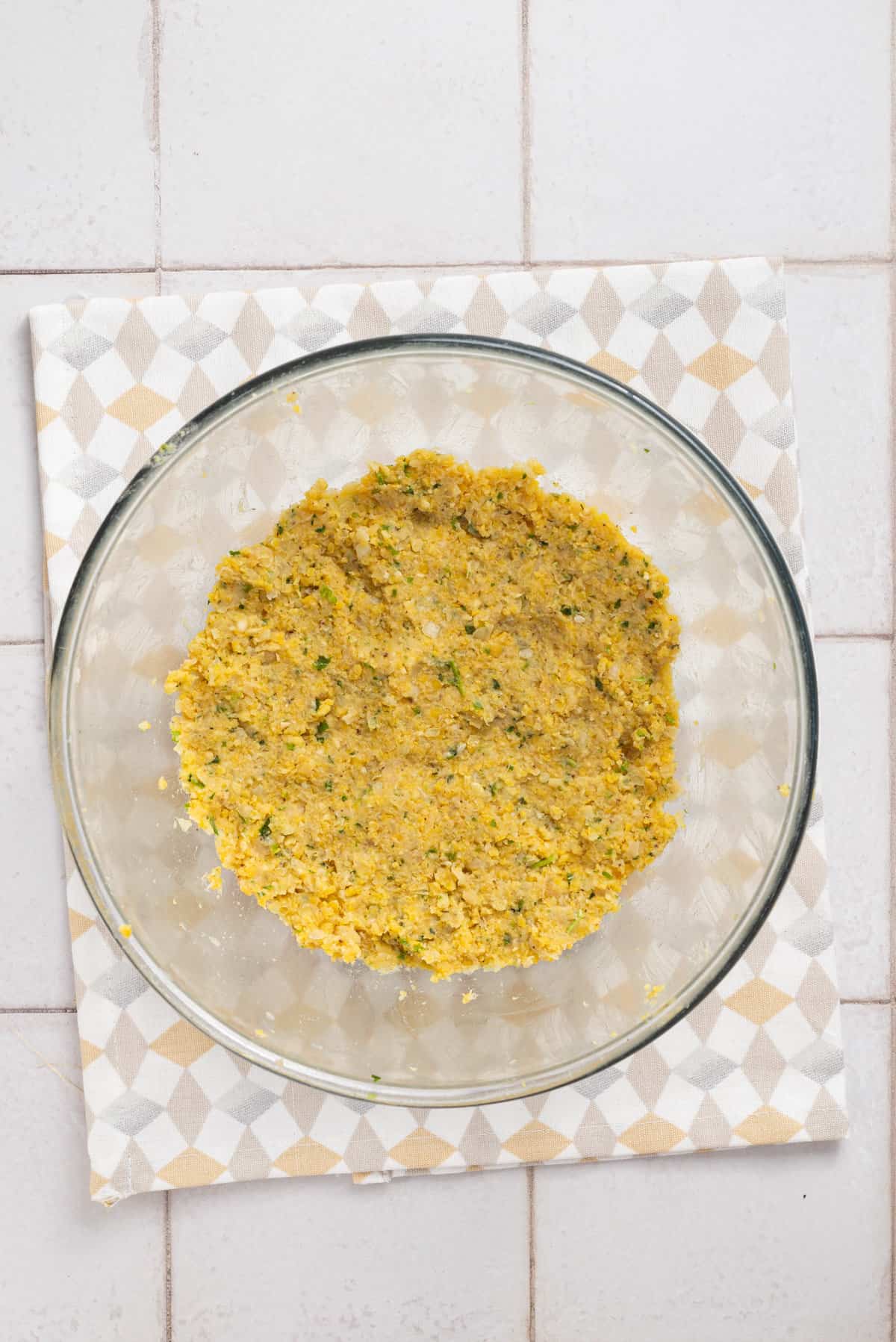
4: Prep frying pan and shape falafels. Take a medium saucepan with a deep and heavy base (or a cast iron skillet) and fill it with enough oil to reach 2 inches up the sides of the pan. Heat the oil to a temperature of 360°F / 180°C.
With wet hands, take approximately 1 tablespoon of the mixture and shape it into a patty or a small walnut-sized ball. It’s important to press the falafel patties firmly to prevent crumbling or breaking during the frying process.

4: Fry falafels. Deep-fry them in batches for about 4 minutes, or until they are well-browned and fully cooked. It’s crucial to ensure they are sufficiently cooked inside, so they may require enough time in the oil.
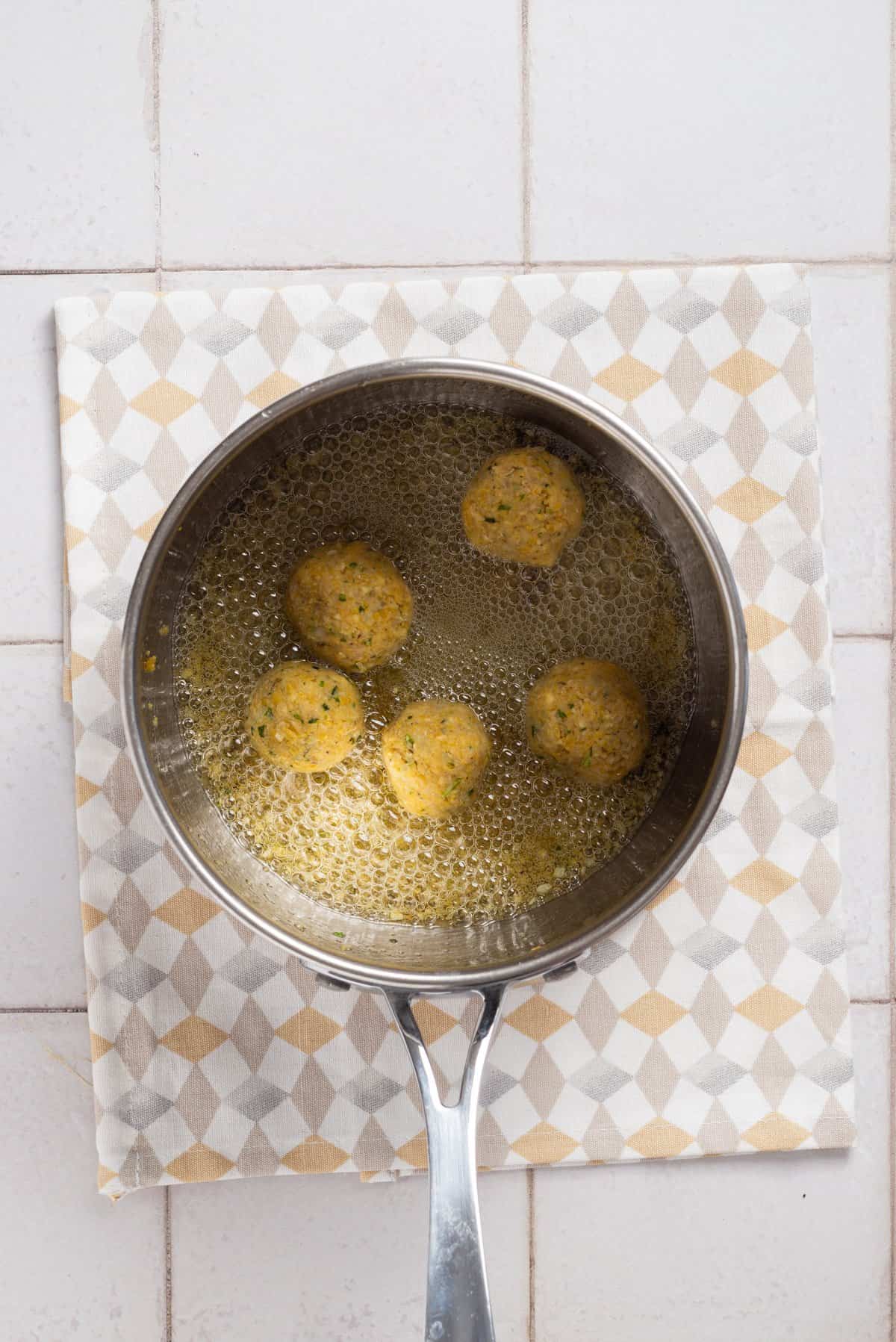
Place on a large plate lined with kitchen paper to remove excess oil.

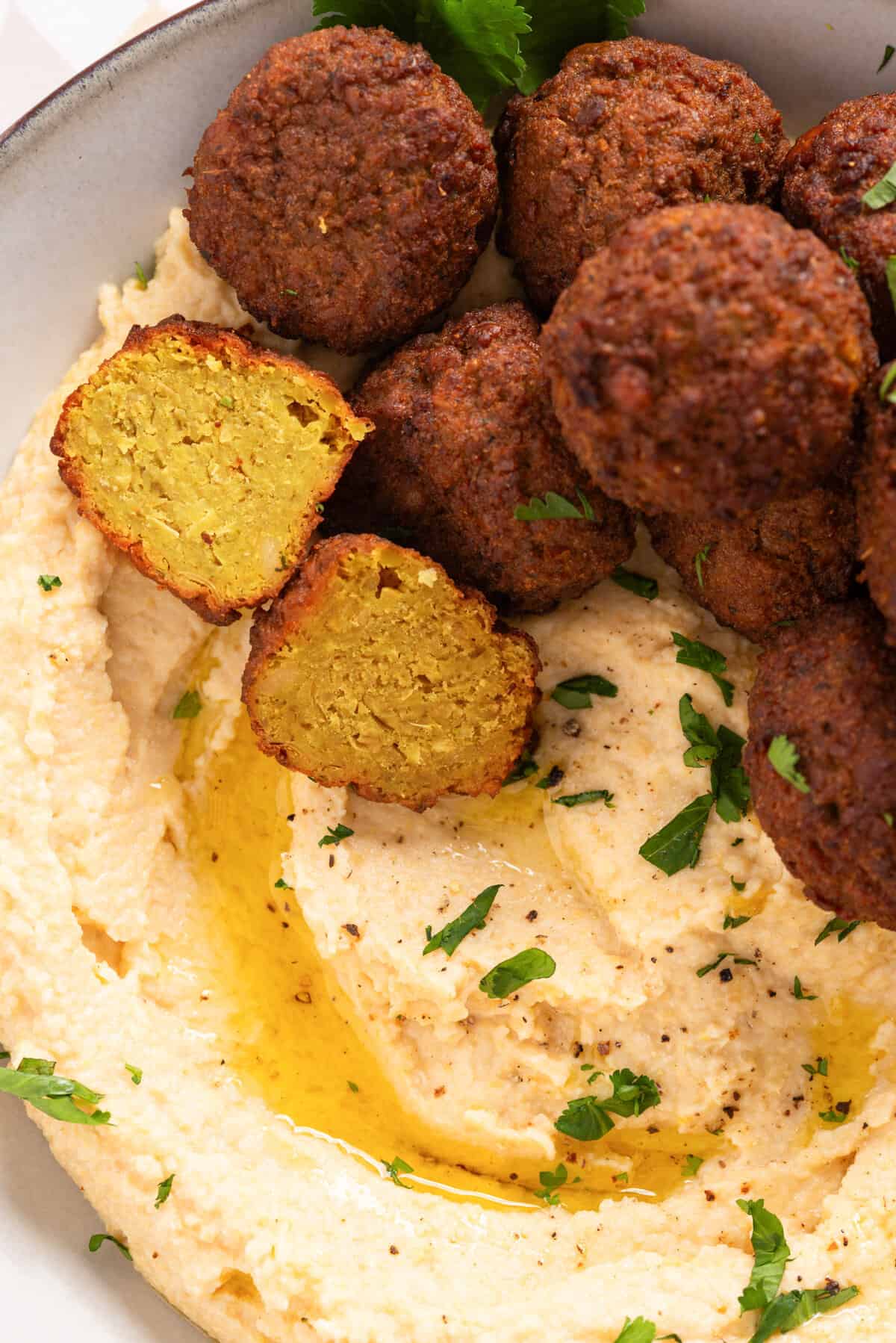
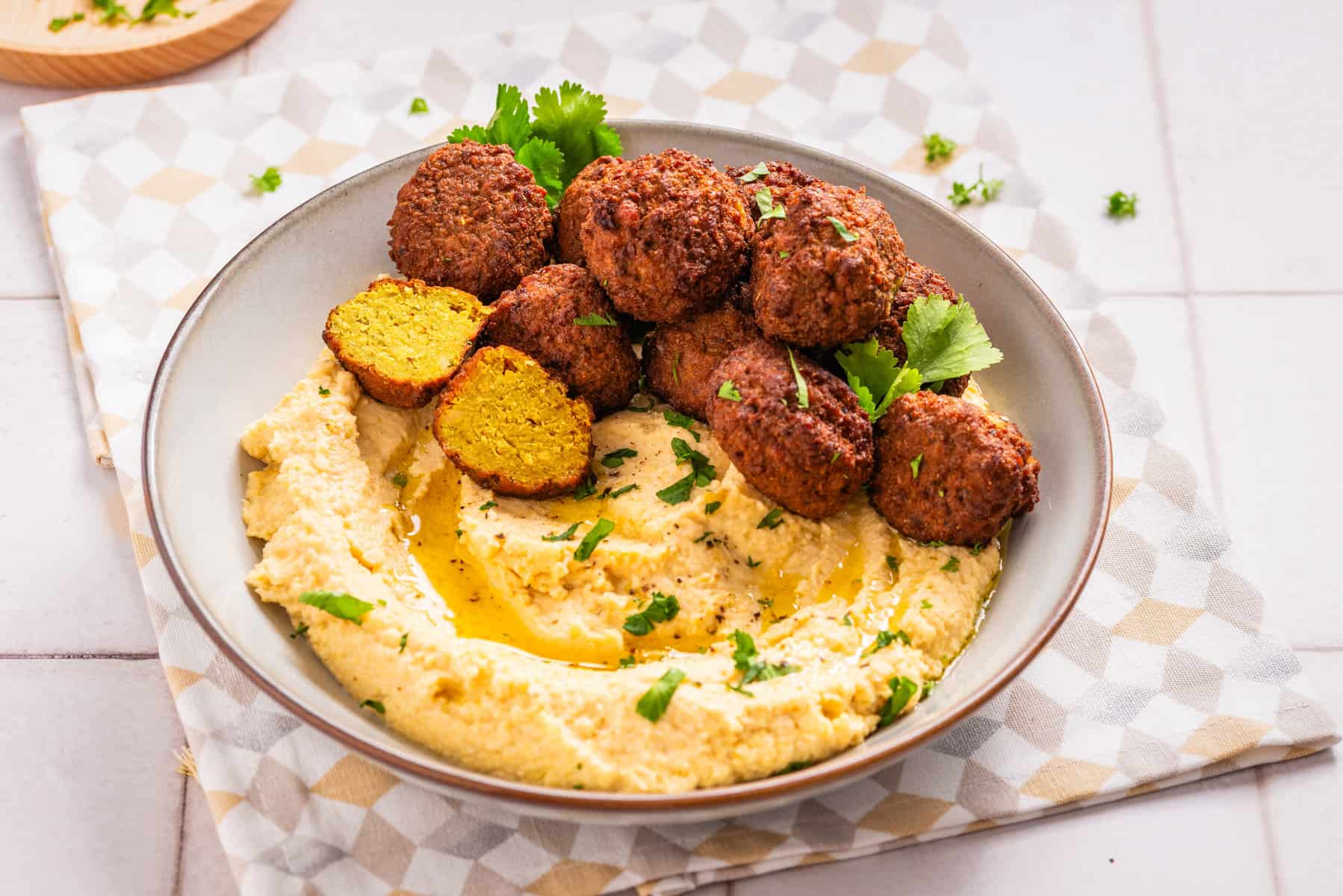
Spread the hummus in a bowl and add the falafels. Drizzle some extra virgin olive oil and serve!
Tips to make the best hummus and falafel
⭐ Use dried chickpeas for falafels, either works for hummus! Dried chickpeas in falafels offers a better texture, with a crispy exterior and moist interior. While canned chickpeas are convenient, they may lead to a less desirable texture due to excess moisture. Drain the water, pat and dry the chickpeas after soakig.
- Process in batches. When processing the falafel mixture, pulse in batches for 30-40 seconds to finely chop without becoming mushy. The mixture should hold together when shaped.
- Do the ice water trick. For an extra smooth texture in your hummus, add a couple of ice cubes to the blender or food processor. The coldness of the ice helps emulsify the ingredients.
- To have a thinner consistency. If you think your hummus is too thick, try adding a tablespoon of cold water to the food processor to thin a little.
- Test oil temperature. Before frying the falafels, make sure the oil is hot enough (around 350°F or 175°C) by dropping a small piece of the mixture into the oil. If it sizzles and floats, it means the oil is hot enough.
- Form into evenly-sized shapes. Form your falafels into equal sizes, whether balls or patties, for consistent cooking.
What to serve with hummus and falafel
Hummus and falafel are a delicious combination, often served together as part of a meal. Falafel is traditionally served warm, and it is best served right after frying to maintain its crispiness. To make your mealtime even better:
- Serve it alongside pita bread to make falafel wraps, or add a simple tomato and cucumber salad.
- Make a loaded hummus and falafel bowl and add olives, pickles, and olive oil. Drizzle tahini sauce on falafels for a finishing touch!
Storage and reheating instructions
To store leftover hummus and falafel, place them (separately!) in airtight containers and store them in the fridge for up to 10 days for the hummus and up to 3 days for the falafel.
To freeze uncooked falafel mixture or patties, store them in a freezer bag and keep them for up to six months. You can also freeze cooked falafels for up to three months.
When ready to eat, reheat falafel in an oven, toaster oven, or air fryer to restore the crispiness. You can reheat the hummus in the microwave for one to two minutes or until heated through.
If you tried this recipe, don’t forget to comment and rate! ⭐⭐⭐⭐⭐

Hummus Bowl with Falafels
Ingredients
Hummus
- 4 oz dried chickpeas
- 1 clove garlic, crushed
- 1 tablespoon tahini
- ½ medium lemon juice
- ½ tablespoon extra virgin olive oil, plus more to drizzle
Falafels
- 4 oz dried chickpeas
- ½ onion, medium, chopped
- 1 clove garlic, crushed
- 1 tablespoon parsley, finely chopped
- 2 tablespoons cilantro, finely chopped
- 1 teaspoon dried dill
- 1 tablespoon ground coriander
- ½ teaspoon cumin
- ¼ teaspoon cayenne pepper
- 1 teaspoon za'atar, optional
- ½ teaspoon baking powder
- ¾ teaspoon salt, to taste
- 1 tablespoon all-purpose flour
- 3 tablespoons water
- 500 ml vegetable oil, for deep frying
Instructions
Prep Chickpeas
- Place the dried chickpeas in a large bowl and completely submerge them in cold water (at least twice the amount of water compared to the volume of the chickpeas). Allow the chickpeas to soak undisturbed overnight. Drain well, pat dry. If using canned chickpeas, skip this step. Note: After soaking, 8 oz of dried chickpeas produces 1 pound of soaked chickpeas. Divide into ½ pound each for the hummus and the falafels recipes.
Hummus
- Take half of the soaked chickpeas and place along with crushed garlic clove, tahini, lemon juice and ½ tablespoon of extra virgin olive oil.
- Process until smooth for about 5 minutes. Scrape the bowl once or twice when processing. Set aside.
Falafels
- Combine the remaining soaked chickpeas, onion, garlic, parsley, and cilantro in a mixing bowl. Add half of the mixture to a food processor.
- Process the mixture in batches, pulsing each batch for 30-40 seconds until finely chopped, ensuring it keeps its texture and doesn't become mushy or pasty. The mixture should hold together when shaped.
- Once processed, add the spices (dried dill, ground coriander, cumin, cayenne, za’tar) baking powder, 3/4 teaspoon of salt, flour, and 3 tablespoons of water to the mixture.
- Mix thoroughly by hand until the mixture becomes smooth and uniform. Cover the mixture and refrigerate it for 1 hour or until ready to use.
- Next, take a medium saucepan with a deep and heavy base and fill it with enough oil to reach 2 inches up the sides of the pan. Heat the oil to a temperature of 360℉ / 180°C.
- With wet hands, take approximately 1 tablespoon of the mixture and shape it into a patty or a small walnut-sized ball. It's important to press them firmly to prevent crumbling or breaking during the frying process.
- Deep-fry them in batches for about 4 minutes, or until they are well-browned and fully cooked. It's crucial to ensure they are sufficiently cooked inside, so they may require enough time in the oil.
- Once cooked, place in a large plate lined with kitchen paper to remove excess oil.
- Spread the hummus in a bowl and add the falafels. Drizzle some extra virgin olive oil and serve.
Notes
- To have a thinner consistency: If you think your hummus is too thick, try adding a tablespoon of cold water to the food processor to thin a little.
- Use dried chickpeas: Opt for dried chickpeas instead of canned ones. Soak the chickpeas overnight in plenty of water to ensure they soften properly.
- Properly drain and dry the chickpeas: After soaking, drain the chickpeas well and pat them dry using a clean kitchen towel. Excess moisture can affect the texture of the falafels.
Nutrition
Nutrition information is automatically calculated, so should only be used as an approximation.


