

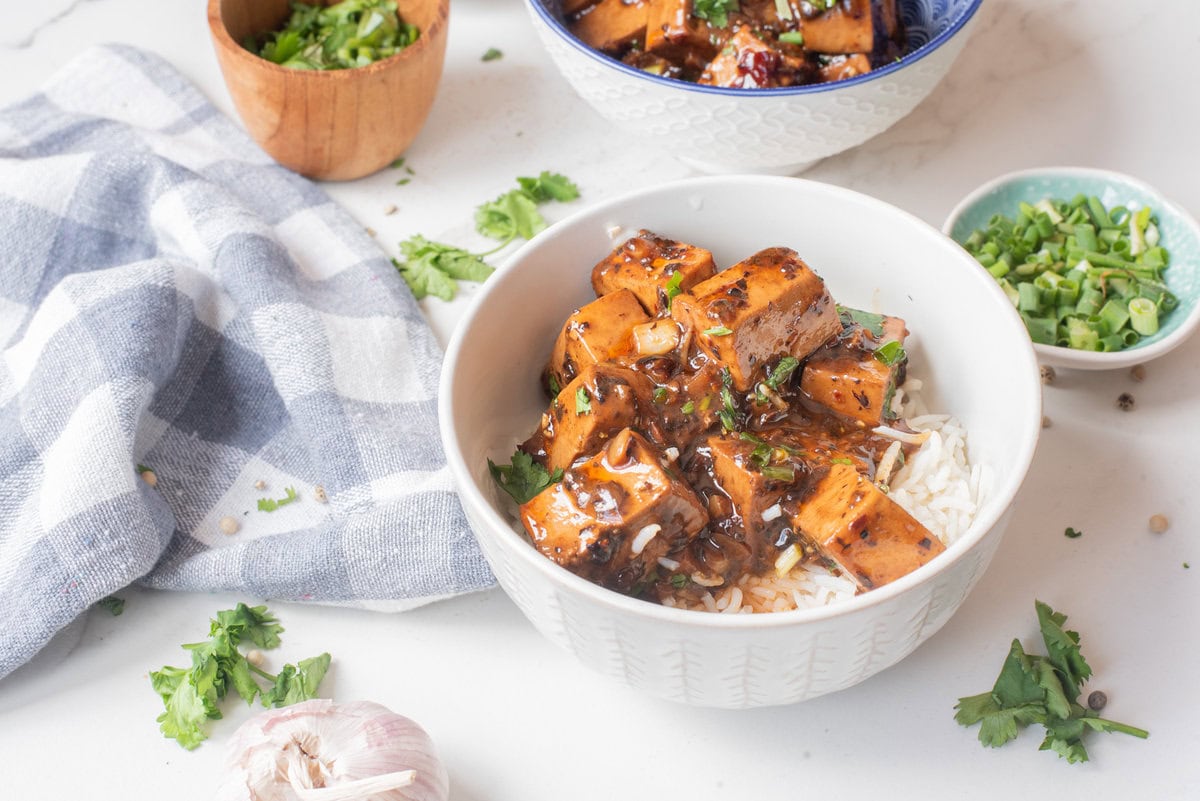
My vegetarian mapo tofu simmers custardy silken tofu in a fiery, numbing Sichuan sauce made with doubanjiang, garlic, ginger, and chili oil. Thirty minutes, no meat, all the bold flavor of the original. I eat this over rice when I want something that warms me from the inside out.
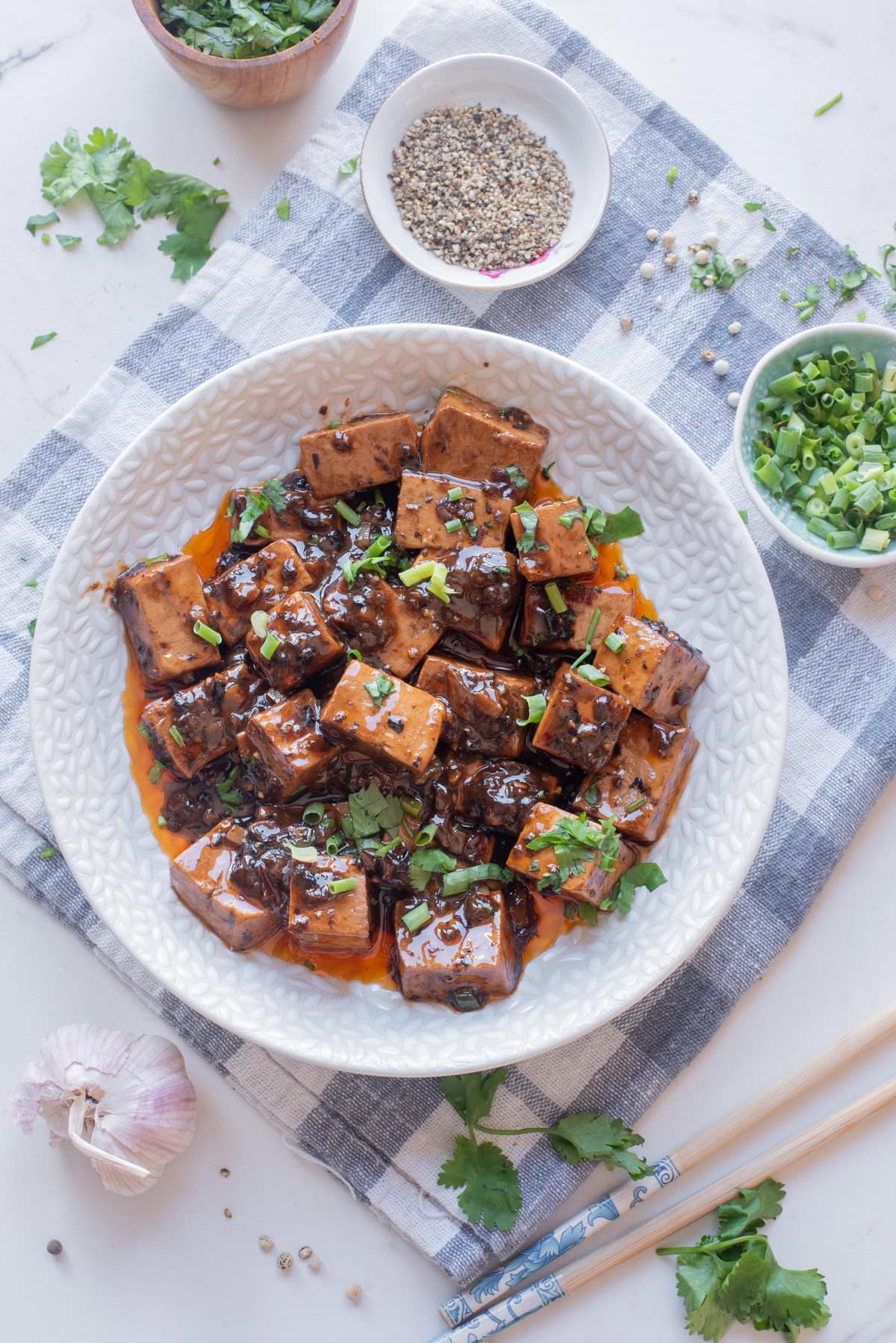
Why this vegetarian mapo tofu doesn’t fall apart

Most mapo tofu recipes jump straight to simmering, but then the tofu turns to mush. The secret is blanching — two minutes in gently simmering water firms up the exterior just enough that it survives stirring. It also removes that faint raw soy taste.
Doubanjiang is the soul of this dish — a fermented bean paste from Sichuan that’s salty, deeply savory, and spicy in a way that builds as you eat. I’ve linked to the brand that I use above. Frying it in oil for a full minute blooms the flavors. Rushing this step makes the whole sauce taste flat.
Sichuan peppercorns are optional but worth seeking out. They create a tingling, numbing sensation called “má” that’s different from heat — almost electric on your tongue. Toast them in a dry pan until fragrant, then grind before adding. Between testing my chili garlic silken tofu and this recipe, I’ve learned that silken tofu absolutely works for weeknight dinners when you handle it right.

Key ingredients and why they matter
To make my mapo tofu recipe, you’ll need silken tofu, garlic, ginger, doubanjiang, soy sauce or tamari, vegetable broth, cornstarch, chili oil, sugar, and water.
Full ingredient list and detailed instructions in the recipe card.
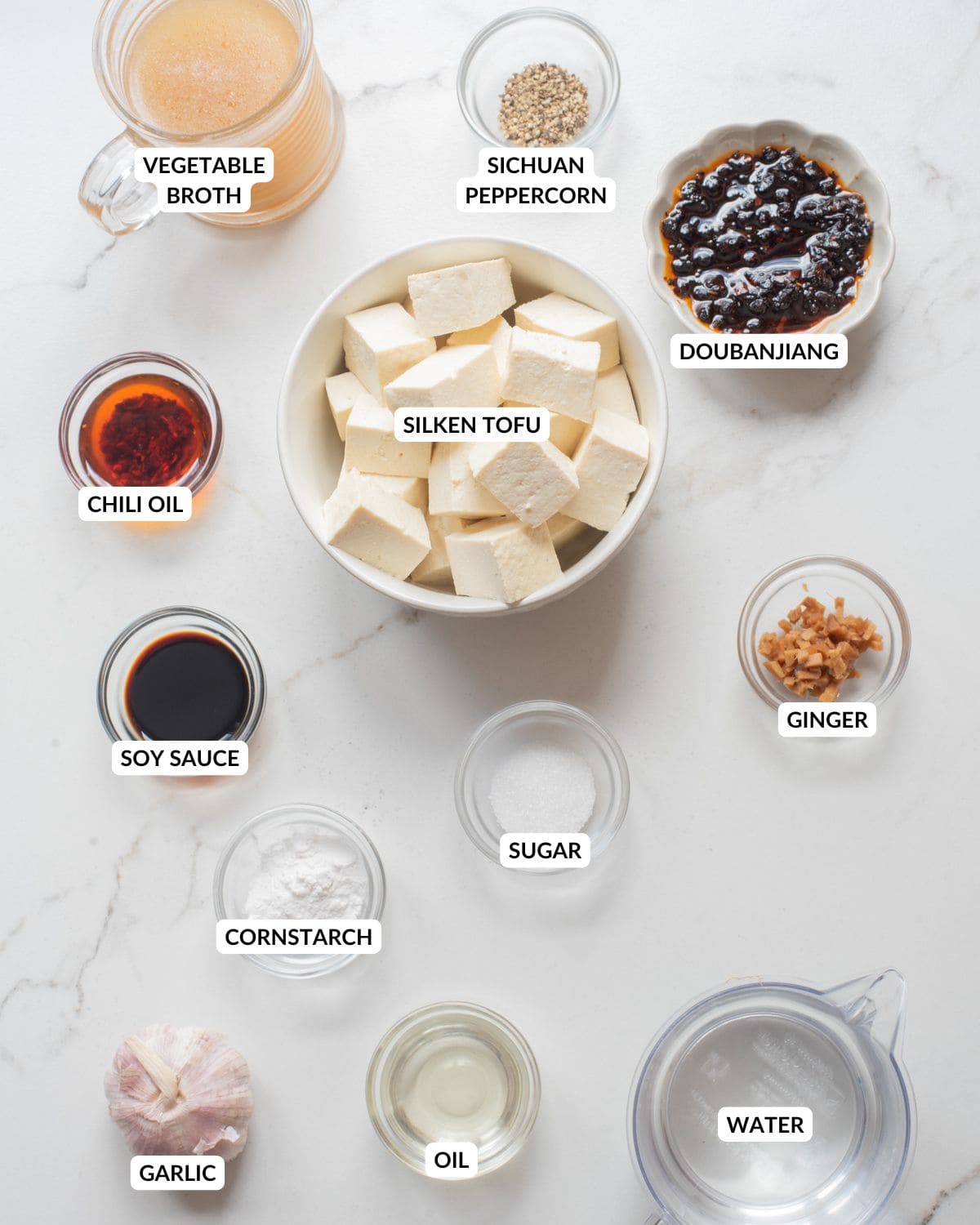
- Silken tofu (16 oz, soft or medium): This isn’t the place for firm or extra-firm — you want that custardy, melt-in-your-mouth texture. Run a knife around the package edges before inverting to release it cleanly.
- Doubanjiang (2 tablespoons): The fermented bean paste that defines Sichuan cooking. Start with 2 tablespoons and add more at the end if you want it spicier.
- Garlic and ginger (3 cloves + 1 tablespoon): Both minced, cooked just until fragrant — about 30 seconds. Don’t let them brown.
- Sauce base: Low-sodium soy sauce adds depth, a teaspoon of sugar balances the salt, and vegetable broth gives enough liquid to simmer properly.
- Cornstarch slurry (1 tablespoon + 2 tablespoons water): Thickens the sauce so it clings glossily to the tofu. Re-stir before adding — it settles fast.
- Chili oil and Sichuan peppercorns: Added off heat so their flavors stay bright. The peppercorns are optional but give mapo tofu its signature numbing quality.
- For serving: Steamed rice (essential), sliced green onions, fresh cilantro.
TIPS & TRICKS
Shruthi’s top tips
- Blanch the tofu first. Two minutes in simmering water firms the exterior so it doesn’t fall apart. Don’t skip this.
- Fry the doubanjiang for a full minute. This blooms the spices and deepens the flavor. Rushing it makes the sauce taste flat.
- Stir gently. Use a wooden spoon or silicone spatula. Silken tofu will break if you’re aggressive.
- Re-stir the cornstarch slurry before adding. It settles quickly — pour it in without stirring and you’ll get lumps.
- Add heat gradually. Start with 2 tablespoons doubanjiang, taste after simmering, add more at the end if needed.
How to make Sichuan tofu
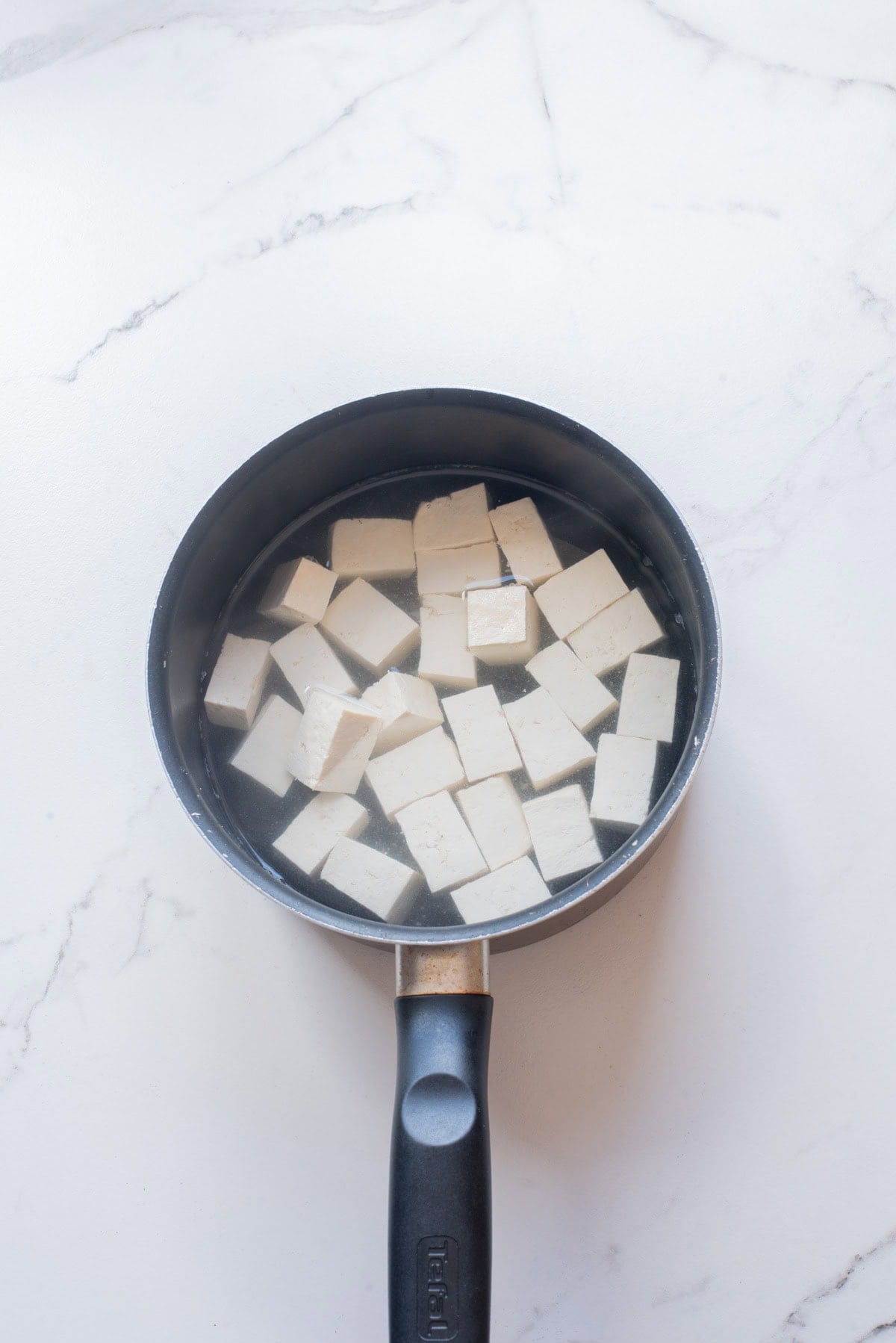
- Bring 2 cups of water to a gentle simmer in a medium saucepan. Carefully add tofu cubes and simmer for 2 minutes—this helps the tofu hold its shape and removes any raw soy flavor. Drain gently using a slotted spoon and set aside.
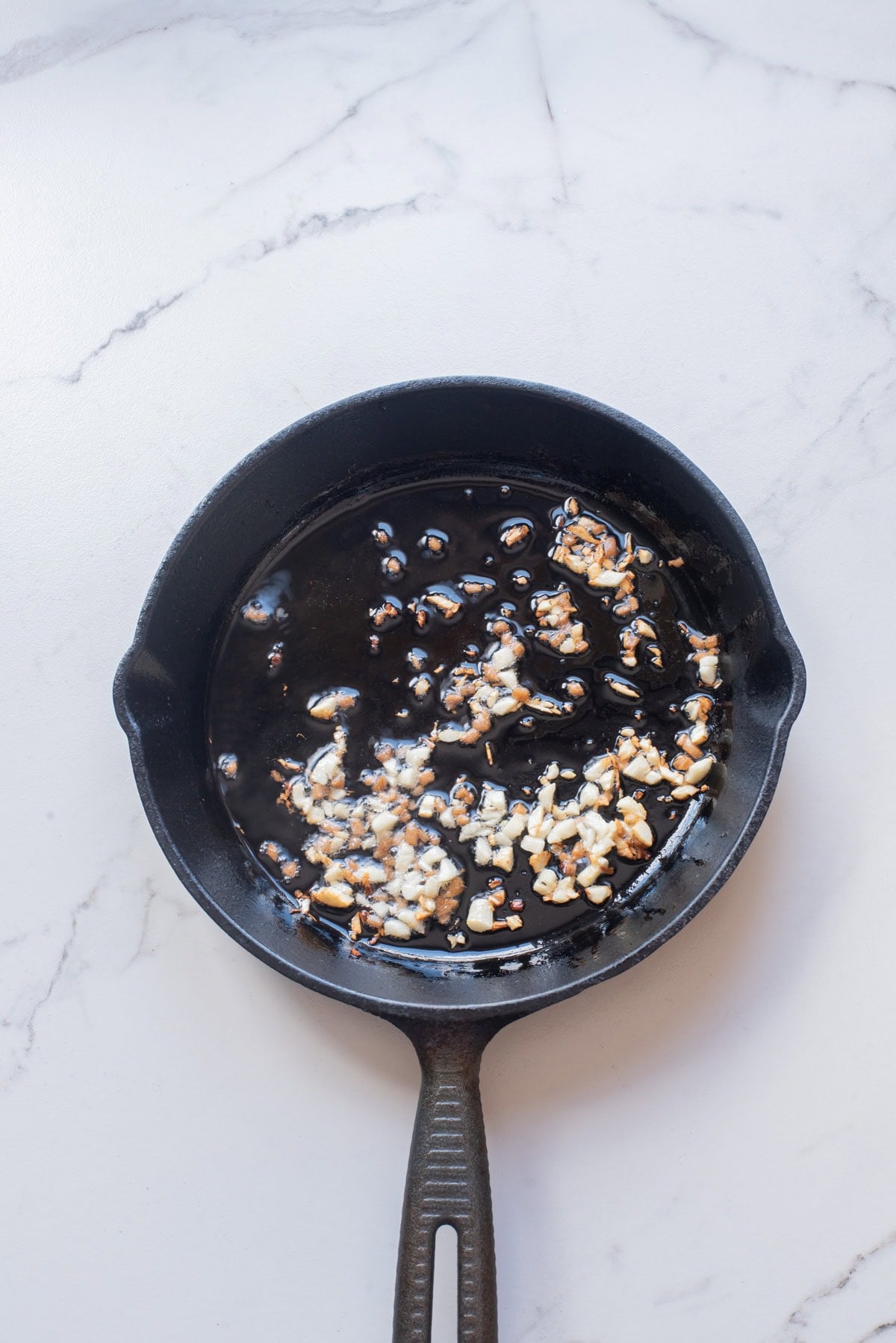
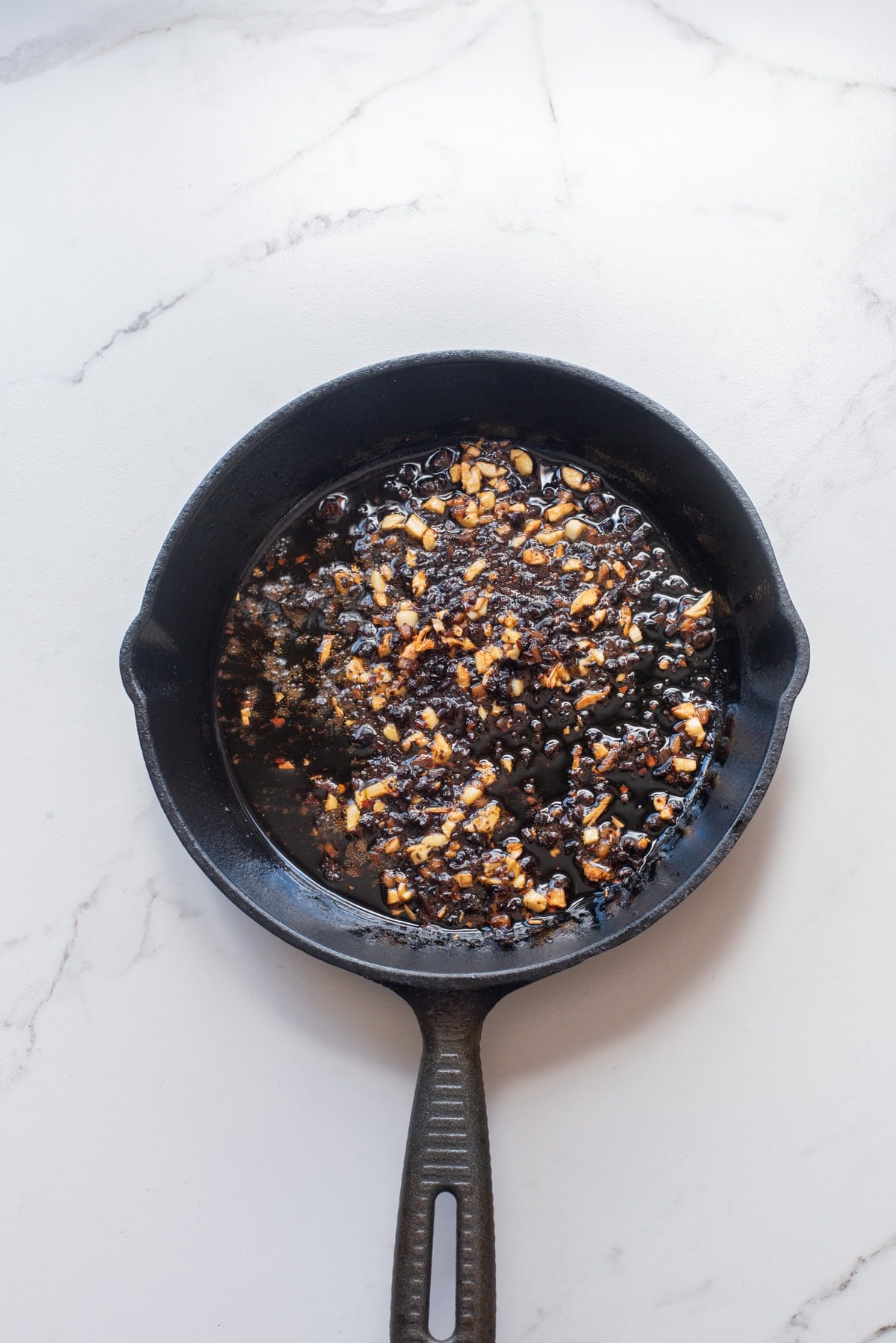
- Heat oil in a large skillet or wok over medium-high heat until shimmering. Add garlic and ginger, stirring constantly for 30 seconds until fragrant (don’t let it burn—reduce heat if it starts to brown).
- Add the doubanjiang and stir for 1 minute to release its flavors and oils. The mixture will become deeply fragrant and slightly darker.
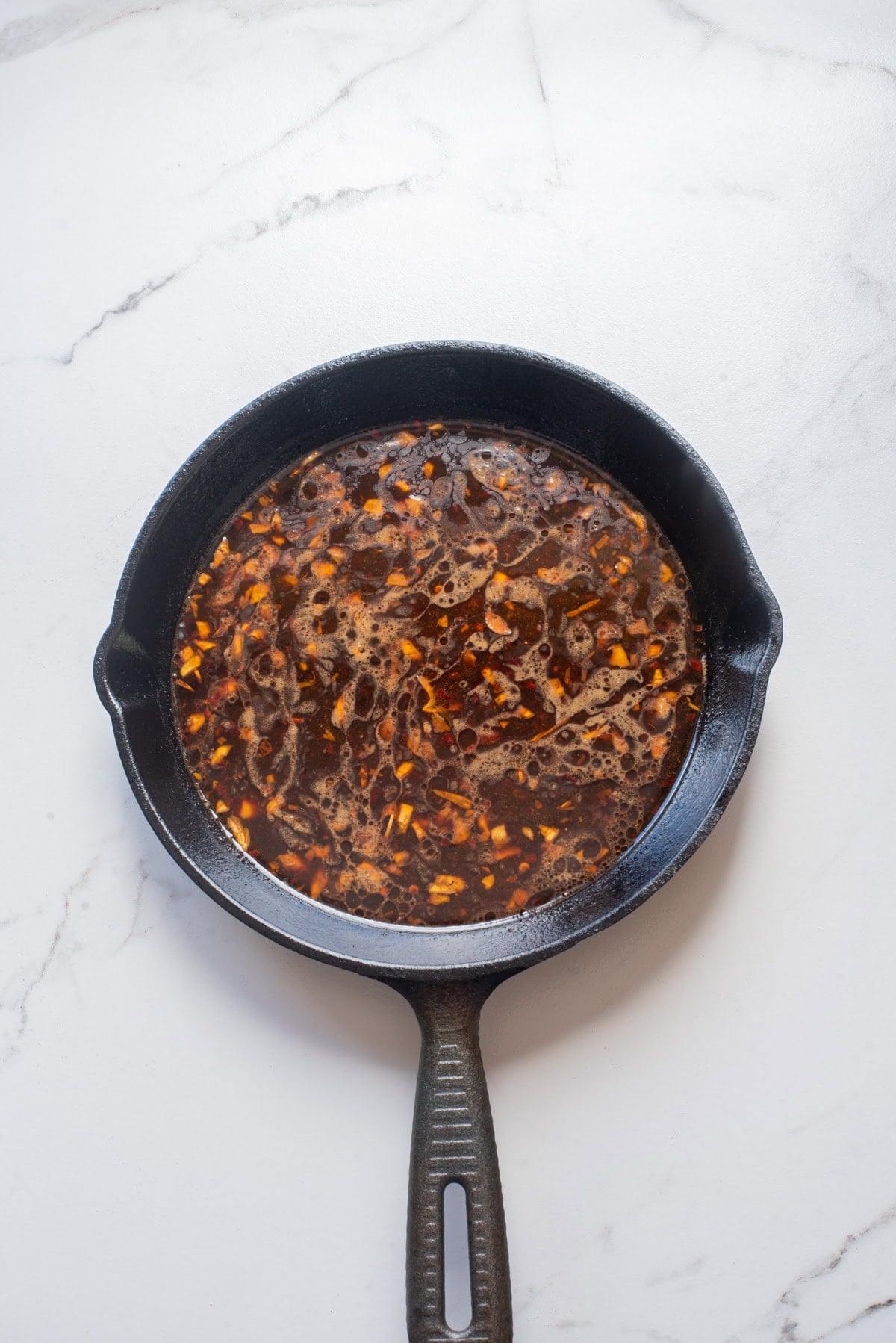
- Add soy sauce, sugar, and vegetable broth. Stir to combine and bring to a simmer (small bubbles around the edges, about 2 minutes).
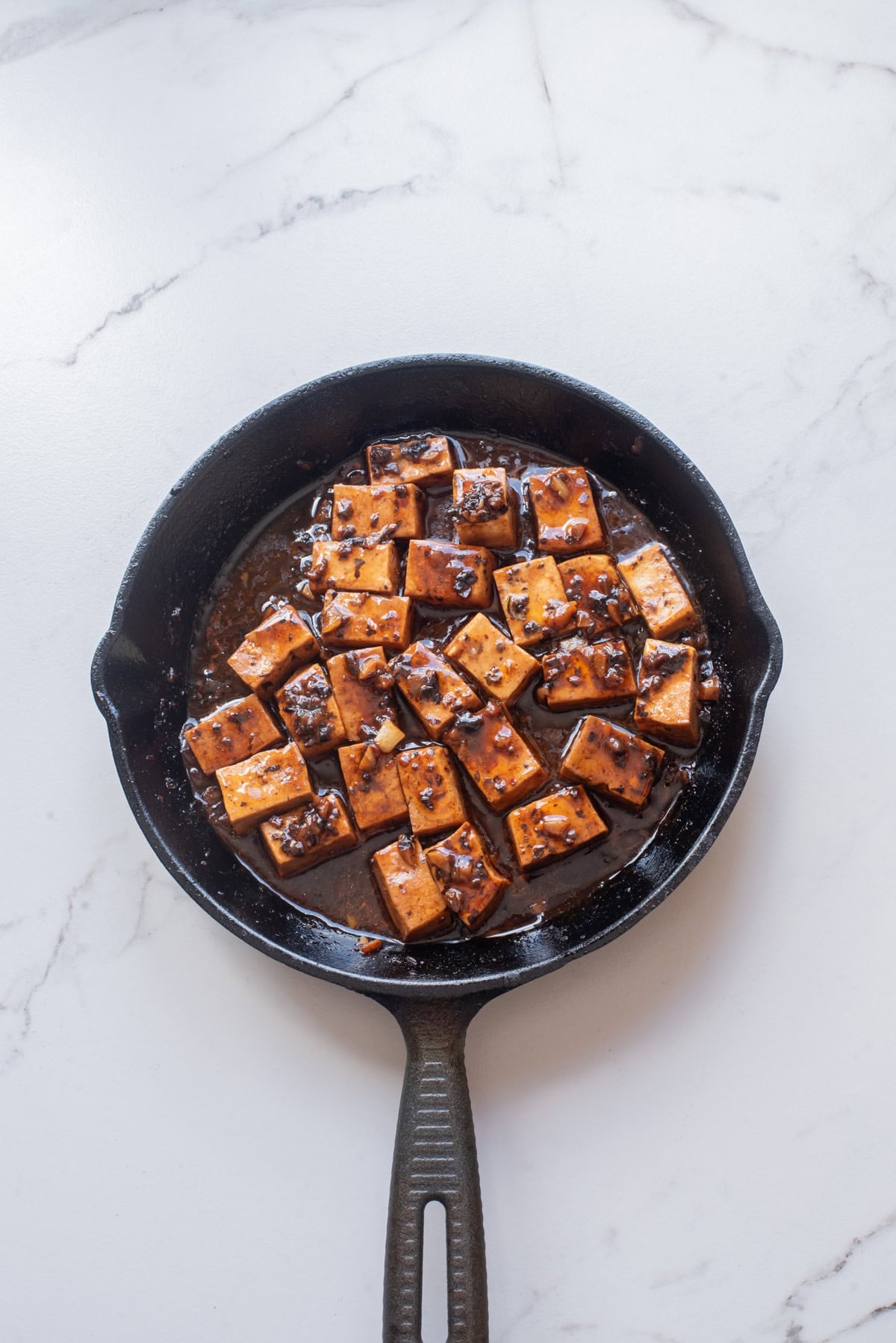
- Using a slotted spoon or spatula, gently slide the tofu cubes into the sauce. Reduce heat to medium-low and simmer for 3-4 minutes, stirring very gently to avoid breaking the delicate tofu. The tofu should absorb the sauce flavors. Stir the cornstarch mixture to recombine, then pour it into the pan while gently stirring.
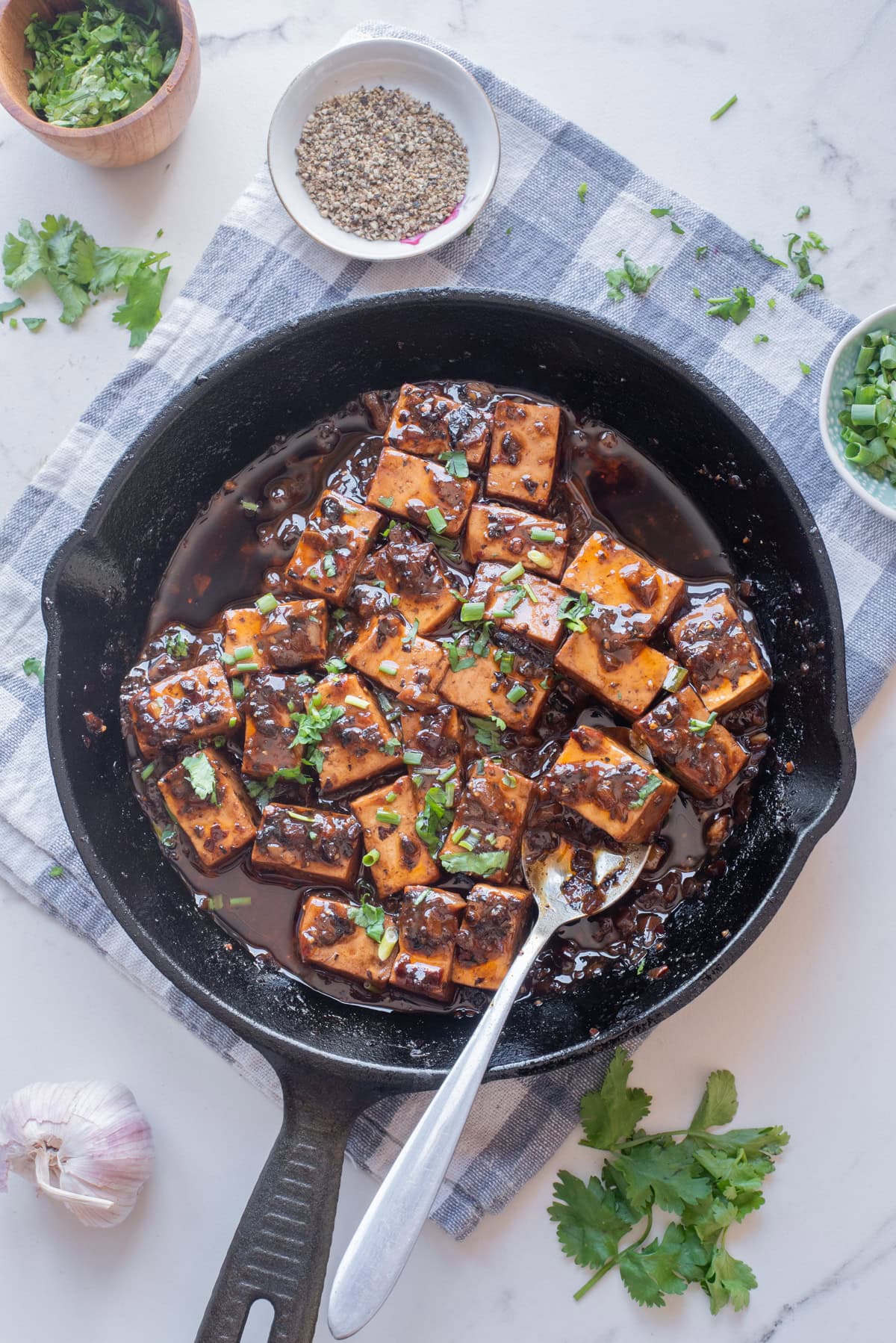
- Simmer for 1-2 minutes until the sauce thickens and clings glossily to the tofu. Remove from heat. Stir in chili oil and ground Sichuan peppercorns, if using. Sprinkle with sliced scallions and cilantro.
How to serve spicy silken tofu
Serve over steamed jasmine or short-grain rice. For a full Chinese meal, pair with Kung Pao tofu or a simple stir-fried green beans.
Variations
- Firmer texture: Use medium-firm silken tofu instead of soft
- Extra protein: Top with a fried egg or serve alongside edamame
- Milder version: Use 1 tablespoon doubanjiang plus 1 tablespoon regular bean paste
- More vegetables: Add 1 cup sliced mushrooms with the garlic and ginger
- Gluten-free: Use tamari and verify your doubanjiang is wheat-free
Storage and reheating suggestions
Store leftovers in an airtight container in the fridge for up to 3 days. Sauce may thin as tofu releases moisture. Don’t freeze, the silken tofu becomes spongy.
To reheat, gently over medium-low heat, adding a splash of broth if sauce has thickened.
You can make the spicy sauce 1-2 days ahead. Then add tofu fresh when serving.
More tofu recipes
If you’re looking for more flavorful tofu recipes, here are my top picks!

General Tso’s Tofu
Tofu Bowl

Suya Tofu Skewers

Korean Tofu Soup
Mapo Tofu
Ingredients
For the tofu:
- 1 16-oz package silken tofu, soft or medium
- 2 cups water
For the sauce:
- 1 tablespoon cornstarch
- 2 tablespoons water
- 2 tablespoons neutral oil, such as vegetable or canola
- 3 cloves garlic, minced
- 1 tablespoon fresh ginger, minced
- 2 tablespoons doubanjiang, spicy fermented bean paste, plus more to taste
- 1 tablespoon low-sodium soy sauce
- 1 teaspoon granulated sugar
- 1 cup vegetable broth
- 2 teaspoons chili oil
- 1 teaspoon Sichuan peppercorns, toasted and ground (optional, for authentic numbing spice)
For serving:
- steamed rice
- 2 green onions, sliced
- 2 tablespoons fresh cilantro, chopped
Instructions
Prepare the tofu:
- Open the tofu package and run a knife around the edges to loosen. Gently invert onto a cutting board. Using a sharp knife with minimal pressure, cut into ¾-inch cubes.
- Bring 2 cups of water to a gentle simmer in a medium saucepan. Carefully add tofu cubes and simmer for 2 minutes—this helps the tofu hold its shape and removes any raw soy flavor. Drain gently using a slotted spoon and set aside.
Make the sauce:
- In a small bowl, stir together the cornstarch and 2 tablespoons water until smooth. Set aside.
- Heat oil in a large skillet or wok over medium-high heat until shimmering. Add garlic and ginger, stirring constantly for 30 seconds until fragrant (don’t let it burn—reduce heat if it starts to brown).
- Add the doubanjiang and stir for 1 minute to release its flavors and oils. The mixture will become deeply fragrant and slightly darker.
- Add soy sauce, sugar, and vegetable broth. Stir to combine and bring to a simmer (small bubbles around the edges, about 2 minutes).
- Using a slotted spoon or spatula, gently slide the tofu cubes into the sauce. Reduce heat to medium-low and simmer for 3-4 minutes, stirring very gently to avoid breaking the delicate tofu. The tofu should absorb the sauce flavors.
- Stir the cornstarch slurry to recombine, then pour it into the pan while gently stirring. Simmer for 1-2 minutes until the sauce thickens and clings glossily to the tofu.
- Remove from heat. Stir in chili oil and ground Sichuan peppercorns, if using.
Serve:
- Transfer to serving bowls over steamed rice. Garnish with sliced green onions and cilantro.
Notes
- Silken tofu is traditional and gives mapo tofu its signature custardy texture. Handle it gently—use a wooden spoon or silicone spatula and stir with care.
- Doubanjiang (fermented bean paste) is the soul of this dish. Find it at Asian grocery stores or online—Pixian brand is excellent. Don’t skip it.
- For authentic Sichuan flavor, toast the peppercorns in a dry pan for 2 minutes until fragrant, then grind in a spice grinder or mortar and pestle. They create a unique numbing, tingling sensation.
- Start with 2 tablespoons doubanjiang and add more at the end if you want it spicier.
- Store leftovers in the fridge up to 3 days; sauce may thin slightly when reheated.
- Reheat gently over medium-low heat, adding a splash of broth if sauce has thickened.
Nutrition
Nutrition information is automatically calculated, so should only be used as an approximation.


