
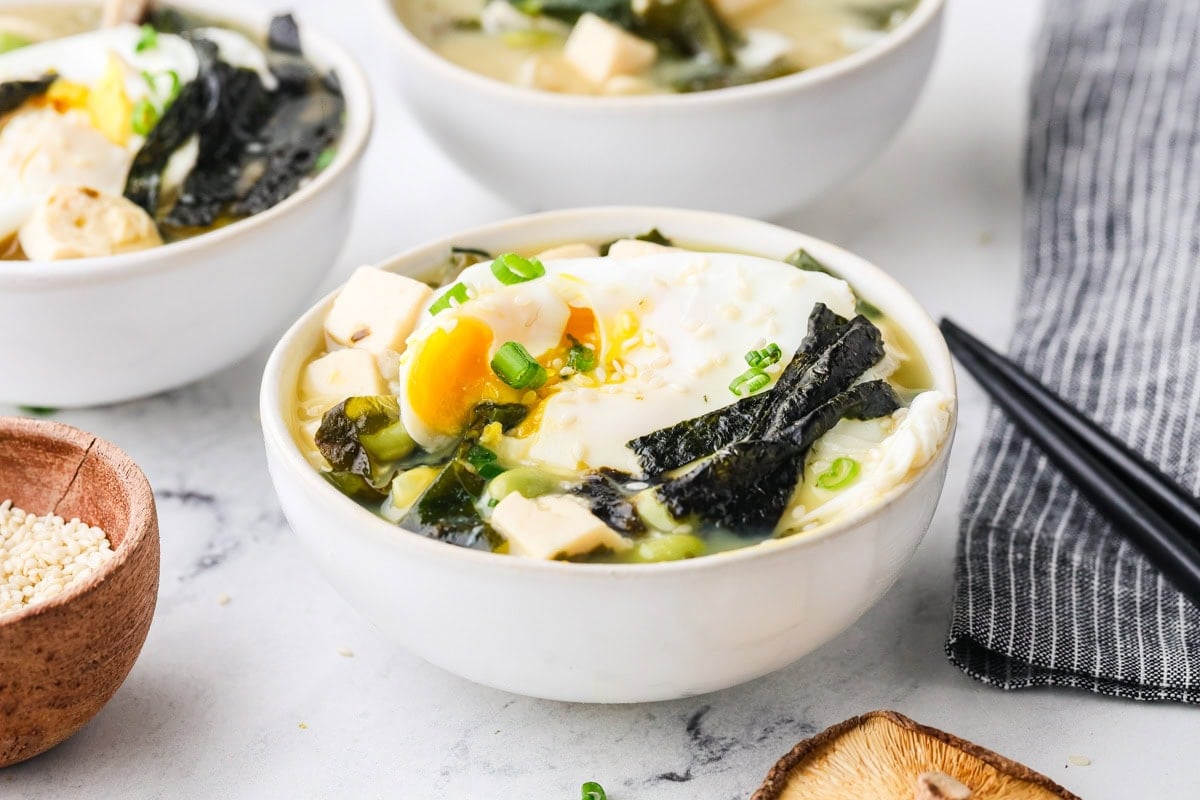
My miso soup with poached eggs is a traditional Japanese breakfast in a bowl — silken tofu, soft-poached eggs with runny yolks, bok choy, spinach, and edamame in a homemade kombu-shiitake dashi. Break the yolk and it enriches the broth, turning every spoonful richer and silkier. This keeps me full until lunch!
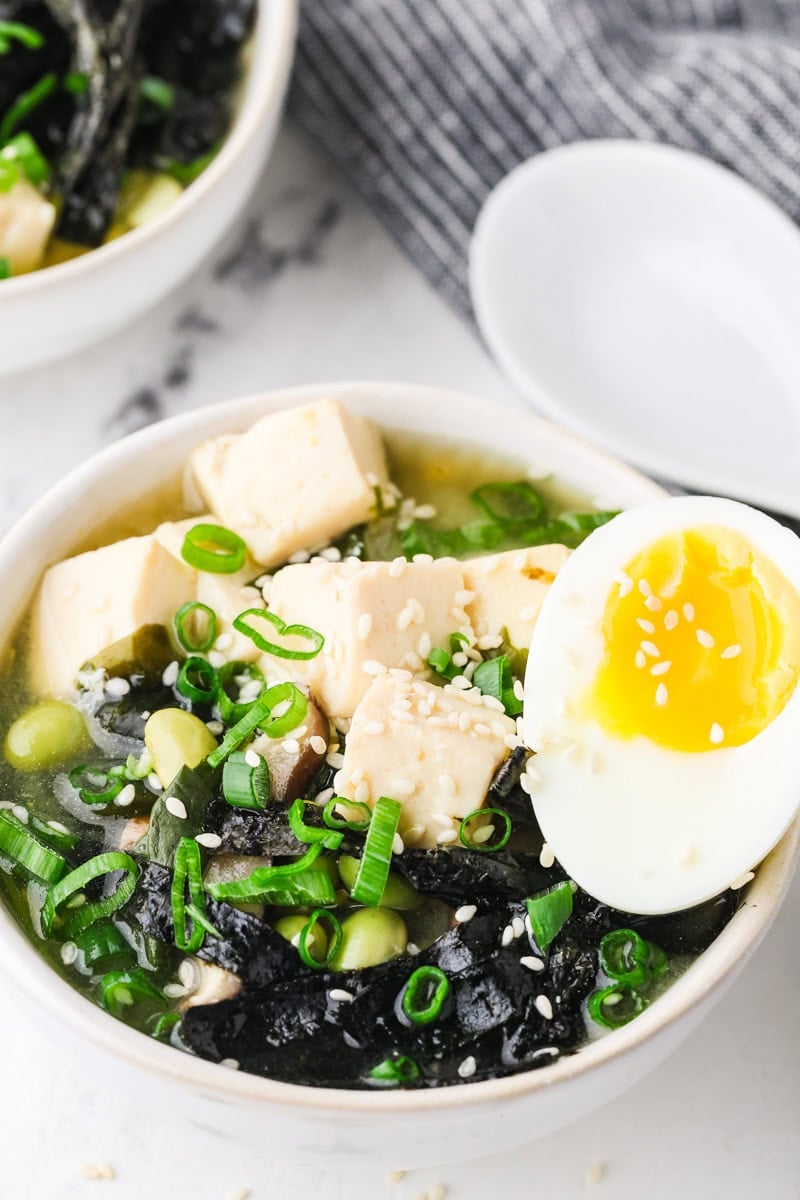
Homemade dashi makes this Japanese breakfast soup worth the extra 15 minutes!

Instant dashi packets work in a pinch, but homemade dashi from kombu and dried shiitakes has a depth that’s hard to replicate. The technique is simple: steep kombu and mushrooms in water over medium heat, pulling the kombu just before the water boils. Boiling kombu makes it bitter and slimy — watch for small bubbles around the edges and remove it right before it crosses into a full boil.
The miso goes in at the very end, off the heat. Boiling miso kills the beneficial bacteria and turns the flavor harsh and one-dimensional. Whisk it with a little hot broth first to dissolve it completely, then stir that slurry into the pot. This prevents those stubborn miso clumps that sink to the bottom.
Poaching eggs directly in the soup sounds fussy but works beautifully. Push the ingredients aside to create little wells, crack the eggs in, cover, and let them set for 3-4 minutes. The whites firm up while the yolks stay runny. When you break the yolk with your spoon, it swirls into the broth and makes everything more luxurious.
Handle the silken tofu like it’s fragile — because it is. Add it near the end and stir gently. It will break if you’re aggressive, but even broken tofu tastes good. Have extra miso? Try one of these other flavorful tofu marinades that use miso with firm tofu if you want something sturdier.

Key ingredients and why they matter
This high-protein miso soup comes together with silken tofu, shiitake mushrooms, kombu, bok choy, edamame, spinach, soy sauce or tamari, white or yellow miso paste, nori strips, toasted sesame oil, sesame seeds, large eggs, dried wakame seaweed, and a sprinkle of fresh green onions.
Full ingredient list and detailed instructions in the recipe card.
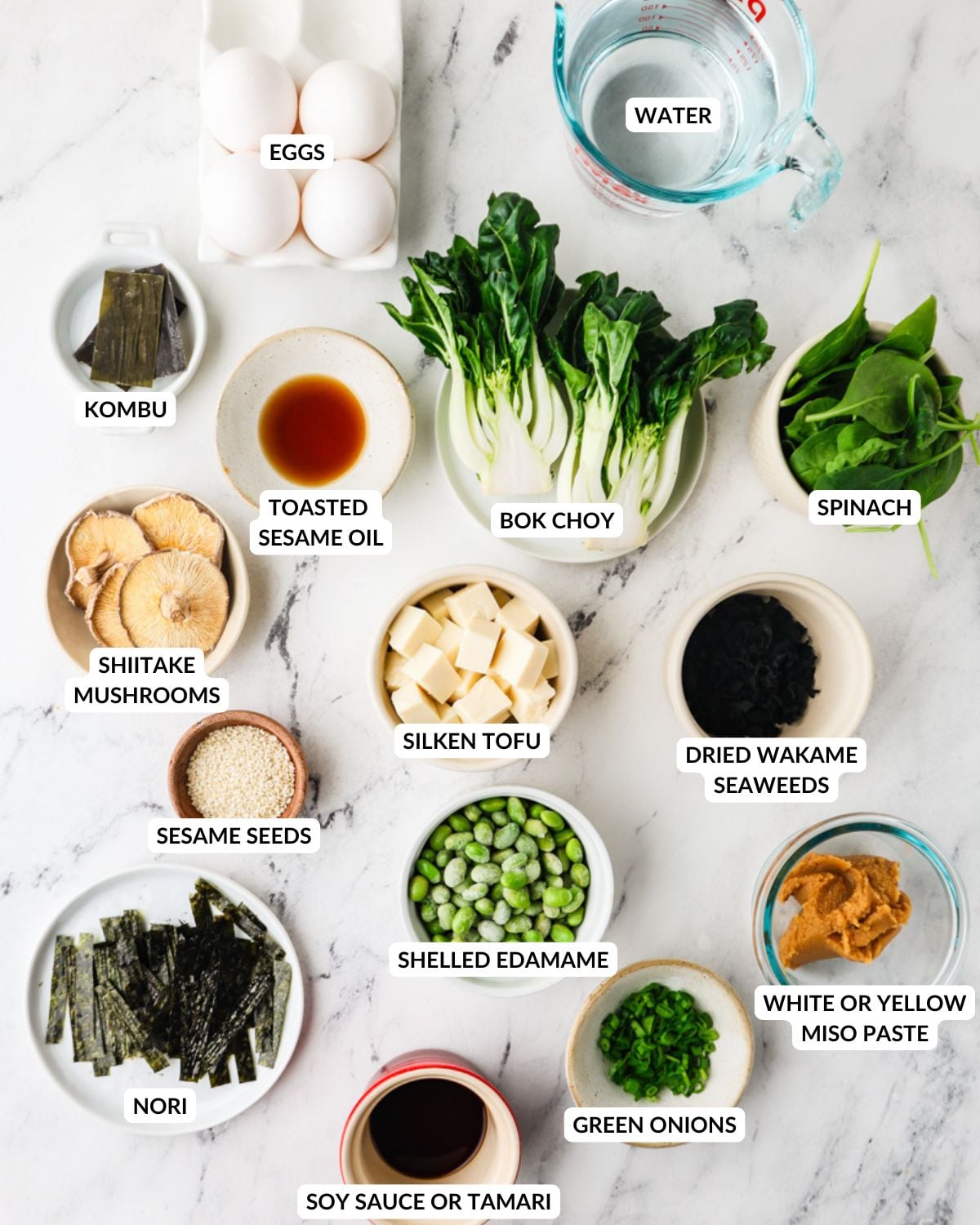
- Kombu is dried kelp that forms the base of dashi. A 4-inch piece is enough for 6 cups of water. Pull it before the water boils — boiled kombu turns bitter and slimy.
- Dried shiitake mushrooms add earthy depth to the dashi. After simmering, slice them thin and return them to the pot so nothing goes to waste.
- White or yellow miso paste is milder than red miso — better for a breakfast soup. Whisk it with hot broth before adding to prevent clumps. Never boil miso.
- Silken tofu has a custard-like texture that works perfectly in soup. Handle it gently — it breaks easily. Cut into ½-inch cubes so each spoonful gets some.
- Edamame adds protein and a pop of green. Frozen works perfectly — it thaws quickly in the hot broth.
- Baby bok choy cooks in 3-4 minutes and adds crunch. Quarter it lengthwise so each piece fits in a spoon.
- Eggs get poached right in the soup. Create wells by pushing ingredients aside, crack the eggs in, cover, and cook until whites set but yolks stay runny — about 3-4 minutes.
- Nori strips stirred in at the end add briny flavor and visual appeal. Cut a sheet into thin strips with kitchen scissors.
TIPS & TRICKS
Shruthi’s top tips
- Pull the kombu before the water boils. Watch for small bubbles around the edges — that’s your cue. Boiled kombu turns bitter.
- Whisk miso with hot broth separately. This dissolves it completely and prevents clumps. Stir the slurry in off the heat.
- Never boil miso. Add it after removing the pot from heat. Boiling destroys the flavor and beneficial bacteria.
- Handle silken tofu gently. It breaks apart easily. Add it near the end and stir softly.
- Create wells for the eggs. Push ingredients aside with a spoon to make space. Crack eggs directly into the wells, cover, and cook 3-4 minutes. Note, you can also top with a soft boiled egg if you don’t want to go this route.
How to make Japanese miso soup
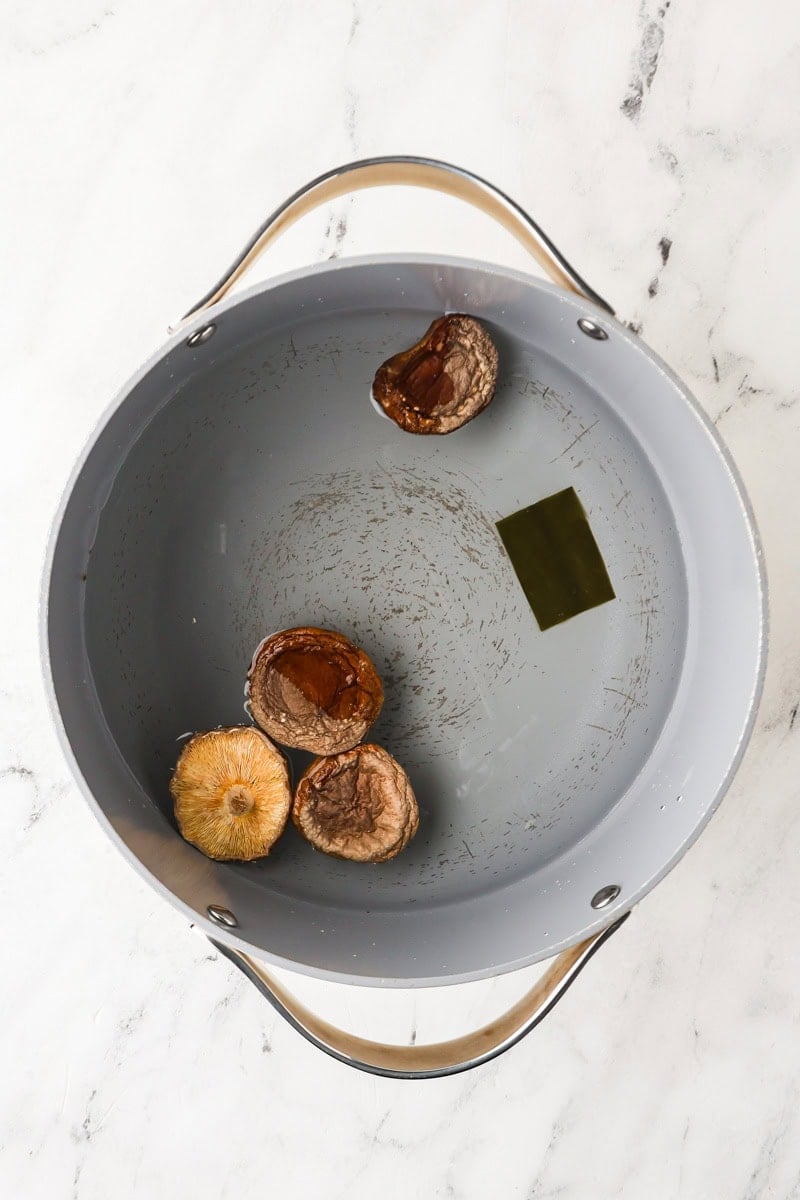
- Combine water, kombu, and dried shiitakes in a medium pot and bring to just below a boil. Remove the kombu before it boils, then let the shiitakes simmer a few more minutes. Remove shiitakes, slice thinly, and return to pot.
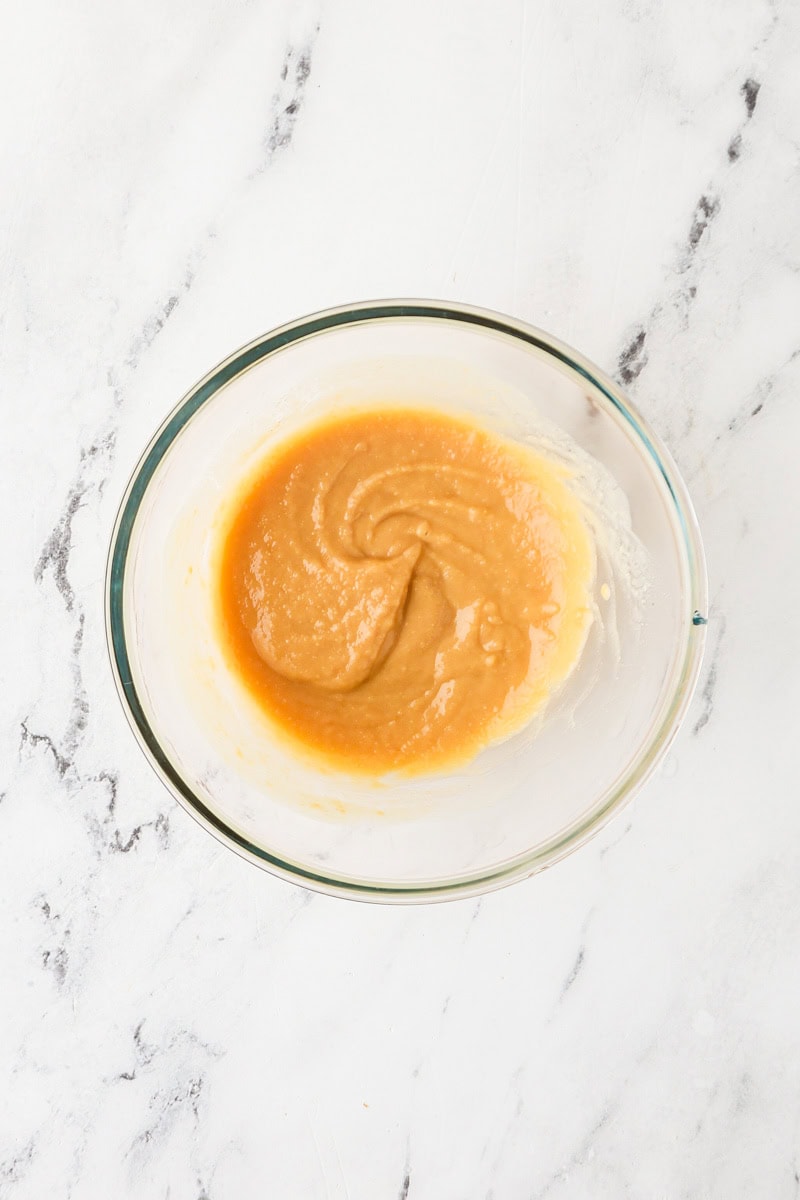
- In a small bowl, whisk miso paste with hot broth until completely smooth. Set aside.
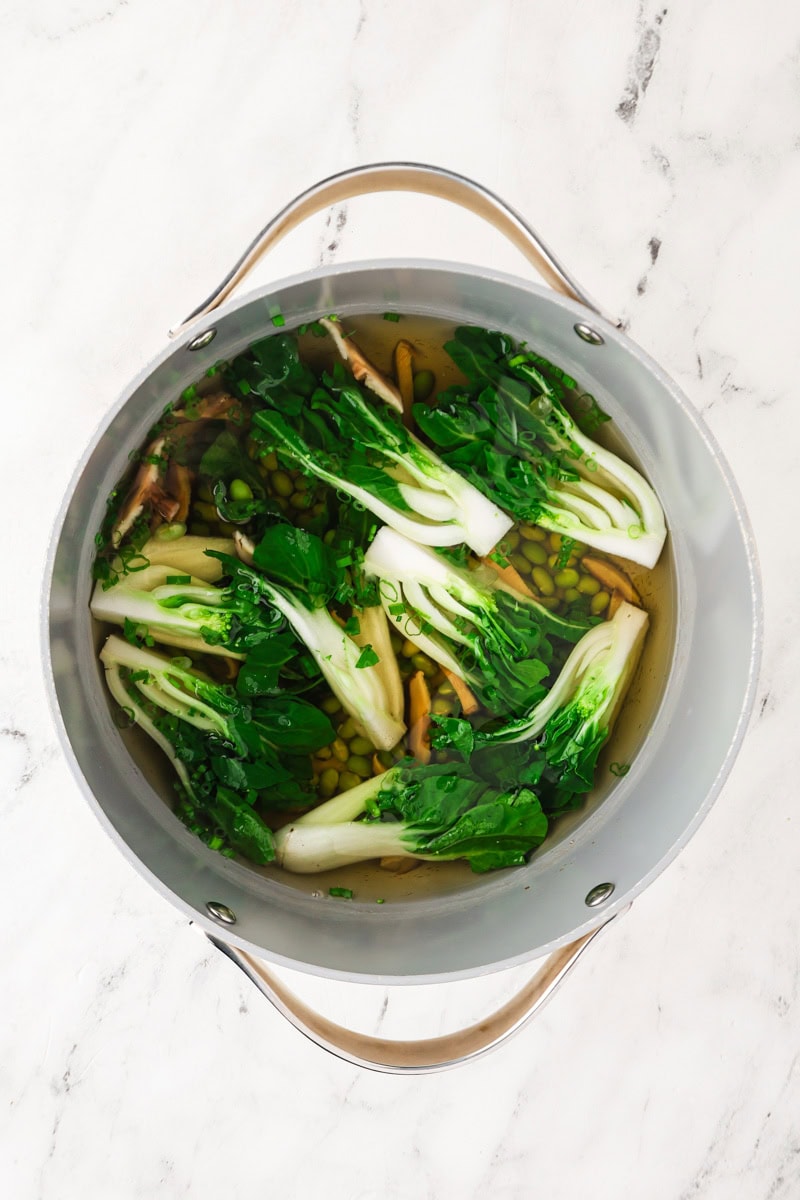
- Add edamame, bok choy, and green onion whites to the simmering broth. Add tamari if using. Cook until bok choy is just tender.
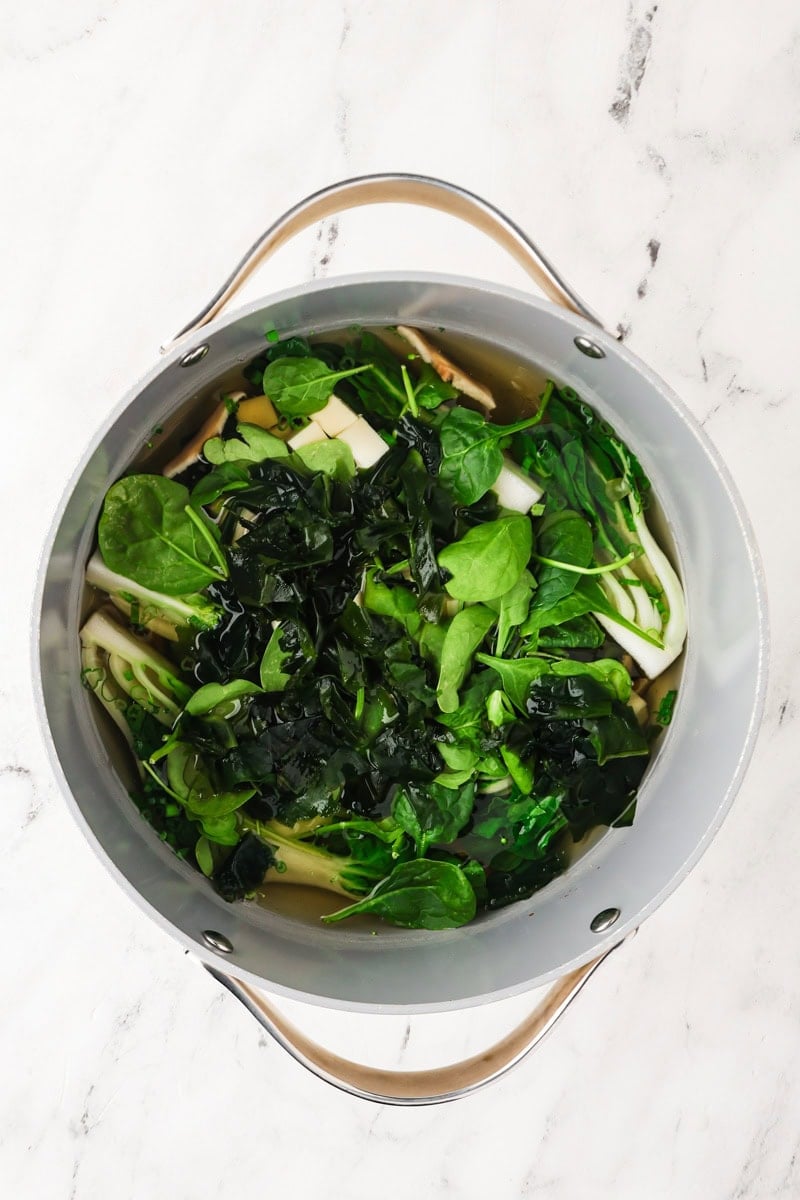
- Add spinach, wakame (if using), and tofu. Stir very gently—silken tofu breaks easily. Cook until spinach wilts and tofu is warmed through.
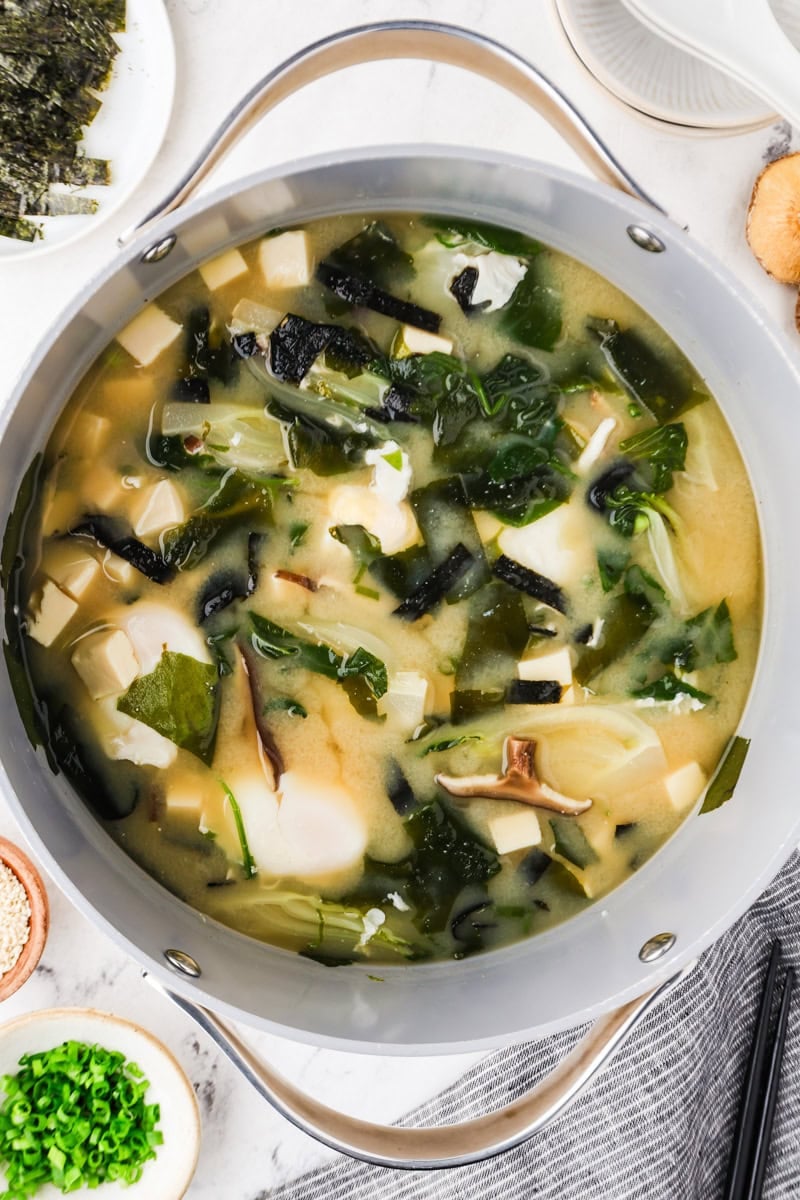
- Reduce heat to low. Create small wells in the soup by gently pushing ingredients aside. Crack egg into each well. Cover and cook until the whites are set but the yolks are still runny. Remove pot from heat. Gently stir in miso mixture and nori strips. Do not boil after adding miso.
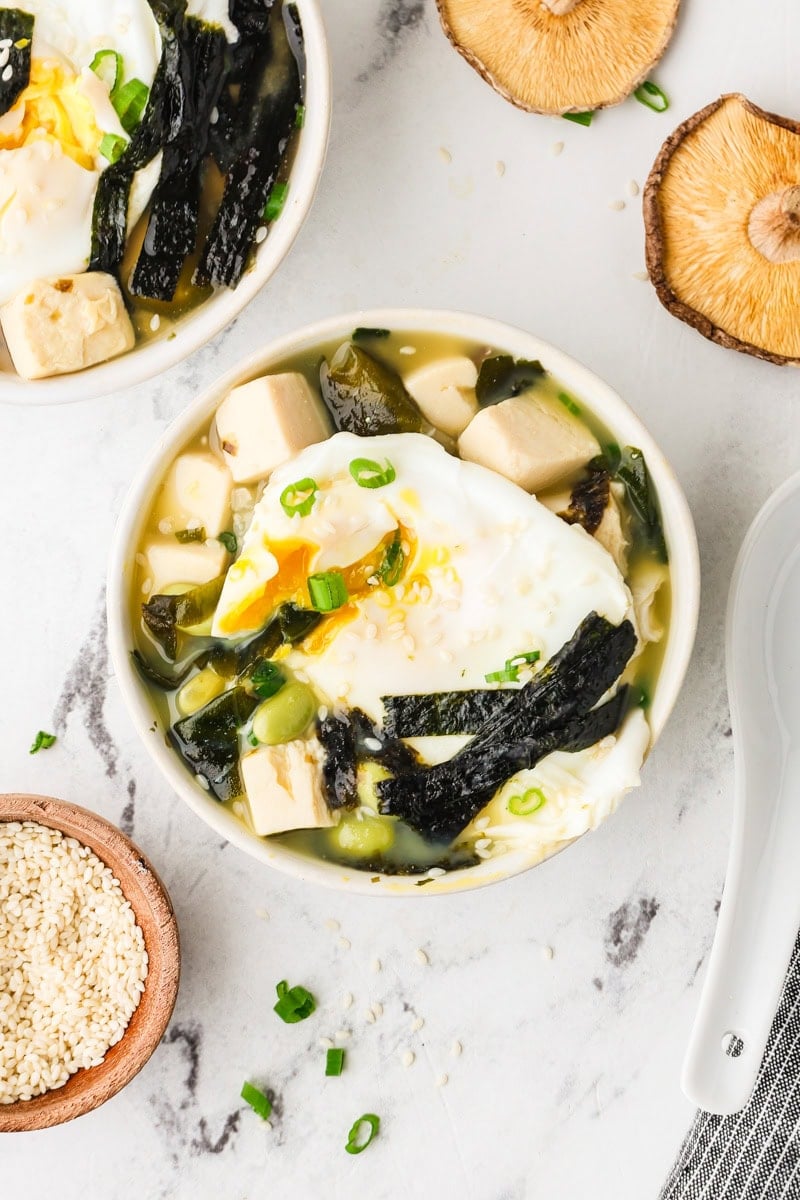
- Carefully ladle soup into bowls, ensuring each bowl gets egg, plenty of tofu, and greens. Drizzle with sesame oil and sprinkle with green onion greens and sesame seeds.
How to serve miso soup with tofu
This is a complete breakfast on its own, but serve with steamed rice and pickled vegetables (like my pickled daikon) for a traditional Japanese morning spread.
Variations:
- Vegan: Omit eggs. Increase tofu to 16 oz and edamame to ¾ cup for protein.
- Richer: Swirl in 1 tablespoon white miso butter at the end for extra richness.
- More vegetables: Add sliced mushrooms, snap peas, or shredded cabbage with the bok choy.
- Different greens: Swiss chard or kale work instead of spinach — add earlier since they take longer to wilt.
- Spicy: Add a drizzle of chili oil or a pinch of shichimi togarashi when serving.
Storage and reheating suggestions
Don’t store the assembled soup with eggs or miso. The eggs will overcook, and the miso loses its flavor. Store the broth and vegetables (through step 5) in the refrigerator for up to 3 days. Keep the miso and tofu separate.
When you’re ready to eat, reheat one portion of the broth and vegetables, add fresh tofu cubes, stir in a tablespoon of miso, and poach a fresh egg directly in the soup. It’s ready in under 10 minutes.
For meal prep, make the dashi and cook the vegetables ahead of time. In the morning, reheat a portion and finish it fresh with tofu, miso, and an egg.
More soup recipes
If you love hearty soups, here are some of my favorite recipes!

Korean Tofu Soup

Vegan Cabbage Soup (Easy, One Pot)

Kabocha Squash Soup

Authentic Mulligatawny Soup (Vegan)

Miso Soup with Eggs
Ingredients
- 2 tablespoons dried wakame seaweed, optional
- 6 cups water
- 1 4-inch piece kombu
- 4 dried shiitake mushrooms
- ¼ cup white miso paste, or yellow miso paste
- ½ cup frozen shelled edamame
- 2 baby bok choy, quartered lengthwise
- 3 green onions, thinly sliced
- 1 teaspoon tamari, or soy sauce, optional
- 5 oz baby spinach, ~1 cup
- 14 oz silken tofu, cut into ½-inch cubes
- 4 large eggs
- 1 sheet nori, cut into thin strips
- 1 teaspoon toasted sesame oil
- toasted sesame seeds, for garnish
Instructions
- If using wakame, soak in a small bowl of warm water for 5 minutes until rehydrated. Drain and set aside.
- Combine water, kombu, and dried shiitakes in a medium pot. Place over medium heat and slowly bring to just below a boil, about 10-12 minutes. Small bubbles should form around edges but water should not rapidly boil.
- Remove kombu just before water boils. Continue simmering shiitakes 5 more minutes. Remove shiitakes, slice thinly, and return to pot.
- In a small bowl, whisk miso paste with ¼ cup of the hot broth until completely smooth. Set aside.
- Add edamame, bok choy, and green onion whites to the simmering broth. Add tamari if using. Cook 3-4 minutes until bok choy is just tender.
- Add spinach, wakame (if using), and tofu. Stir very gently—silken tofu breaks easily. Cook 1-2 minutes until spinach wilts and tofu is warmed through.
- Reduce heat to low. Create 4 small wells in the soup by gently pushing ingredients aside. Crack one egg into each well. Cover and cook 3-4 minutes until egg whites are set but yolks are still runny.
- Remove pot from heat. Gently stir in miso mixture and nori strips. Do not boil after adding miso.
- Carefully ladle soup into 4 bowls, ensuring each bowl gets one egg, plenty of tofu, and greens. Drizzle with sesame oil and sprinkle with green onion greens and sesame seeds.
Notes
- Don’t boil kombu or miso—both turn bitter.
- Whisk miso separately to prevent clumping.
- Handle silken tofu very gently—it breaks easily.
- Add tofu near the end of cooking so it stays intact.
- Runny yolk enriches the broth when broken.
- For vegan version, omit eggs, increase tofu to 16 oz and edamame to ¾ cup.
- For meal prep, make soup through step 5 on Sunday, store without miso or tofu. Each morning, reheat one portion, add fresh silken tofu cubes, stir in 1 tablespoon miso, poach one egg. Ready in under 10 minutes.
- Store broth and vegetables without miso or eggs in the fridge for up to 3 days.
- Add miso and poach egg fresh when reheating.
- Silken tofu is delicate—it may break apart when reheating, but still tastes good.
Nutrition
Nutrition information is automatically calculated, so should only be used as an approximation.


