

My kabocha squash soup is silky, naturally sweet, and rich without any cream. My secret is leaving the peel on — it softens completely during cooking and blends into the soup, adding body without extra work. I make this throughout fall and winter when kabocha is everywhere at the farmers market.

The peel stays on — and that’s the whole point

Kabocha squash has notoriously tough skin, and most recipes tell you to peel it before cooking. That’s a lot of knife work for a squash that fights back. I skip it entirely — the peel softens after 20-25 minutes of simmering and blends completely smooth.
I tested this both ways. Peeled kabocha made a slightly paler soup with a more delicate texture. Unpeeled kabocha produced a deeper color, silkier body, and richer flavor — plus I saved 10 minutes of wrestling with a knife.
The microwave trick in the first step is optional but worth it if your squash is rock-hard. Two to three minutes softens the skin just enough to make cutting safer without actually cooking the flesh.
Coconut milk adds richness without dairy, and the lemon juice at the end brightens everything — don’t skip the acid. It balances the natural sweetness and keeps the soup from tasting flat.

Key ingredients and why they matter
To make my creamy vegan Japanese pumpkin soup, you’ll need kabocha squash, vegetable broth, coconut milk, garlic, ginger, onion, avocado oil, lemon juice, ground turmeric, salt, and black pepper. It’s honestly so simple to make, yet turns into a rich, hearty, and comforting soup that’s filling and perfect for everyone.
Full ingredient list and detailed instructions in the recipe card.
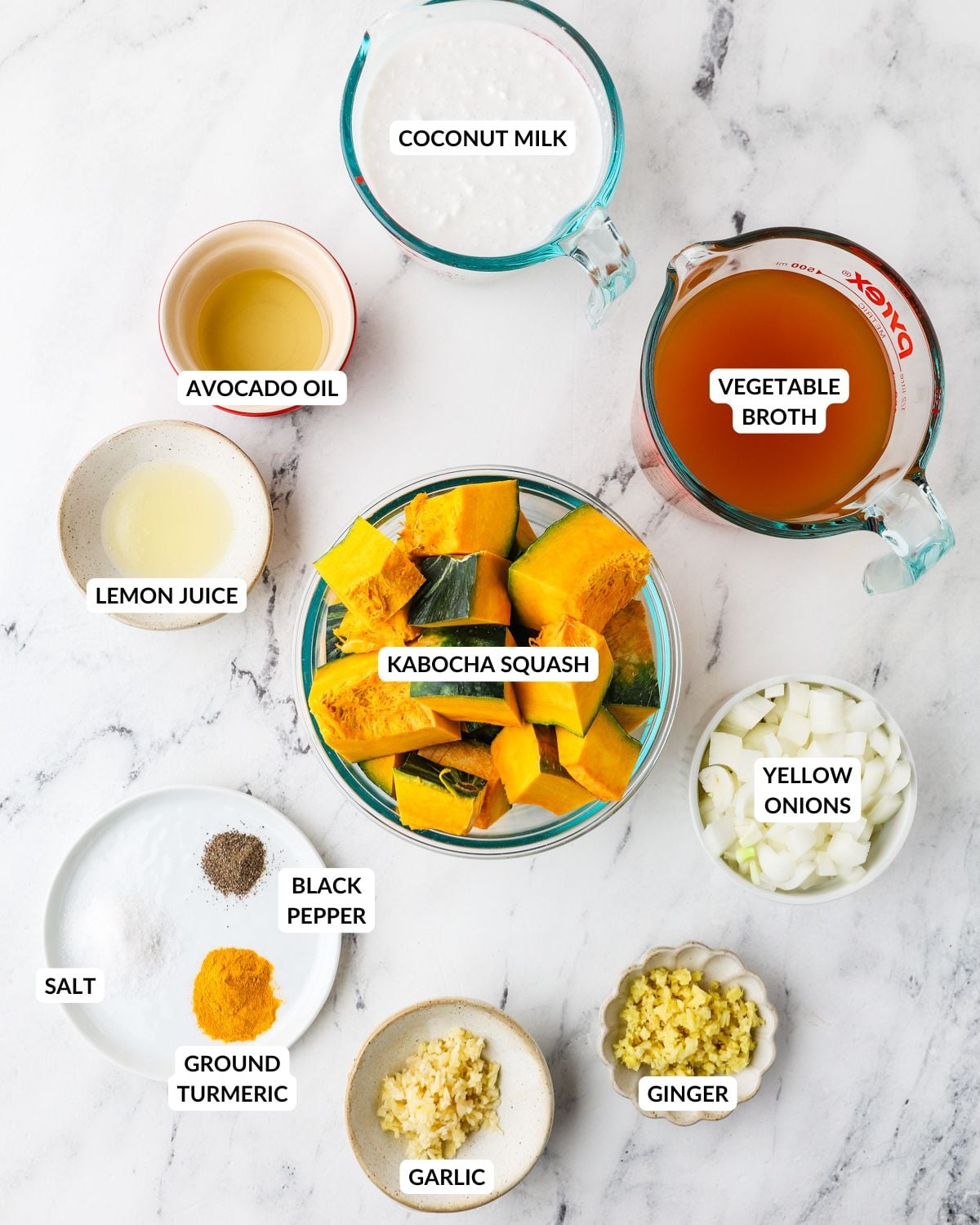
- Kabocha squash is a Japanese pumpkin with dense, sweet flesh and dark green skin. Look for one that feels heavy for its size with a dull, matte finish — shiny skin means it’s underripe. Leave the peel on; it softens completely during cooking. Want to roast it instead? Try my roasted kabocha squash recipe.
- Yellow onion builds the savory base. A full large onion (about 2 cups chopped) balances the squash’s sweetness.
- Fresh ginger adds brightness and warmth. Use fresh, not powdered — the flavor is completely different. Grate it on a microplane for the smoothest texture.
- Vegetable broth is the liquid base. Low-sodium lets you control the salt. If you only have regular, reduce the added salt.
- Coconut milk makes the soup creamy without dairy. Start with half a cup and add more if you want it richer. Full-fat coconut milk works best.
- Lemon juice at the end is essential — it brightens the soup and balances the sweetness. Rice vinegar works too if you want to keep it more Japanese-leaning.
TIPS & TRICKS
Shruthi’s top tips
- What could go wrong: Not cooking the squash long enough. It should be completely tender and falling apart — if there’s any resistance when you pierce it with a fork, keep simmering. Undercooked squash won’t blend smooth.
- Microwave trick for hard squash. If your kabocha is rock-solid, microwave it whole for 2-3 minutes before cutting. This softens the skin just enough to make it safer to slice.
- Blend thoroughly. The peel needs a full 1-2 minutes of blending to become completely smooth. If using a regular blender, work in batches and vent the lid to avoid hot soup erupting.
- Add acid at the end. The lemon juice goes in after blending — it brightens the flavor and keeps the soup from tasting one-note sweet.
How to make kabocha squash soup
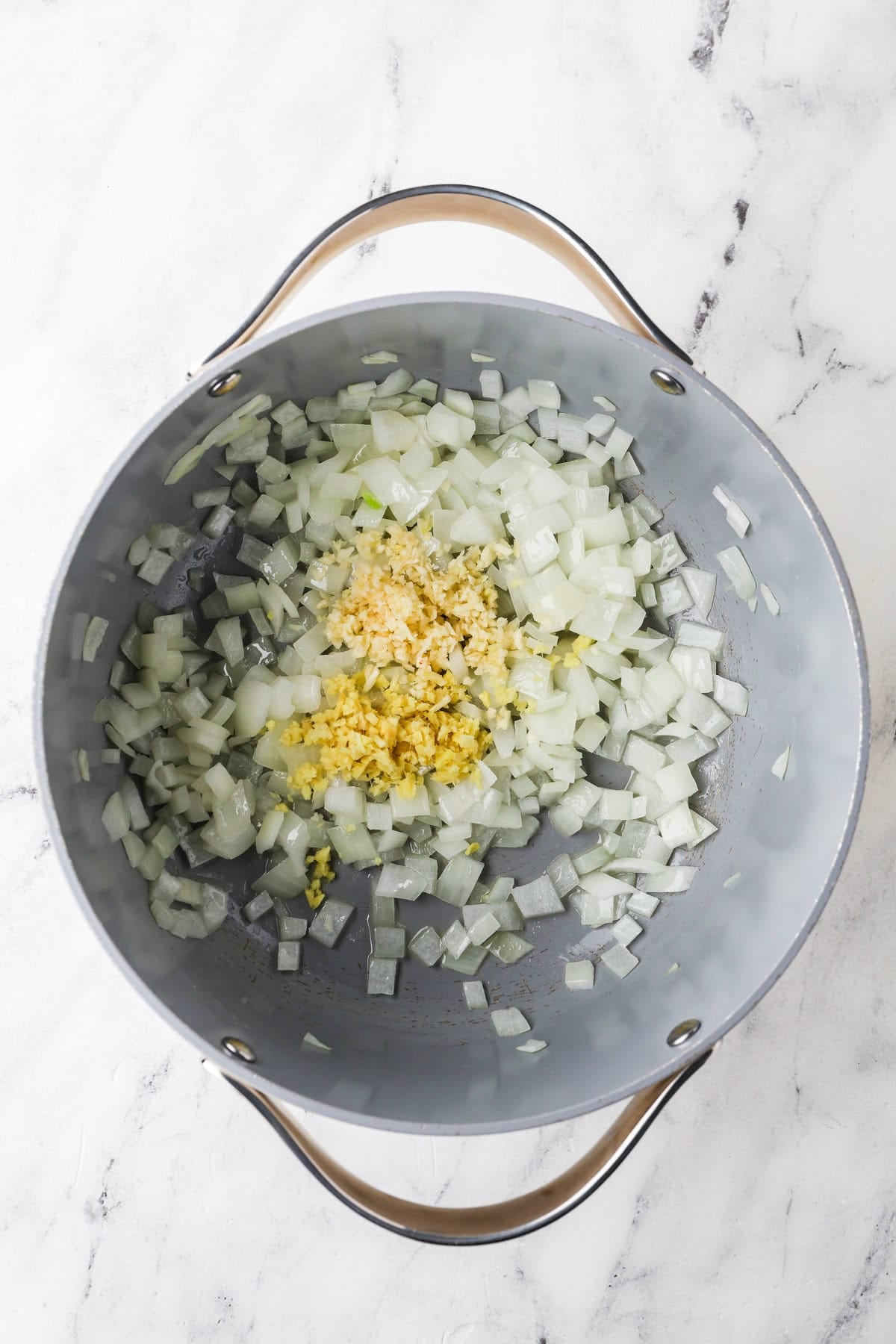
- Heat oil in a large pot or Dutch oven over medium heat. Add onion and cook, stirring occasionally, until softened. Add garlic and ginger. Cook, stirring constantly, until fragrant.
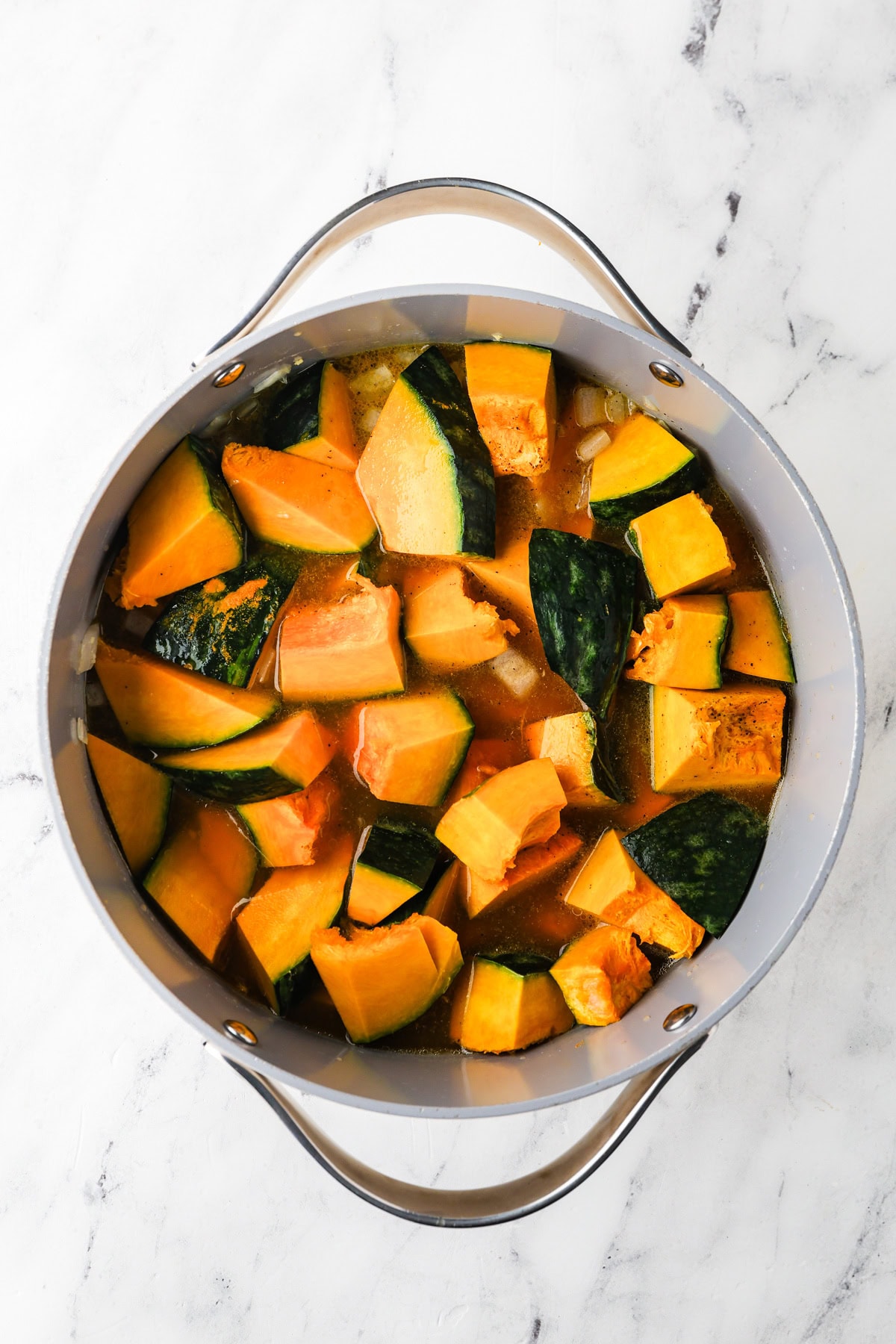
- Add squash pieces (with peel on), broth, salt, pepper, and turmeric if using. Stir to combine. Bring to a boil over high heat, then reduce heat to medium-low. Simmer uncovered until squash is very tender and easily pierced with a fork.
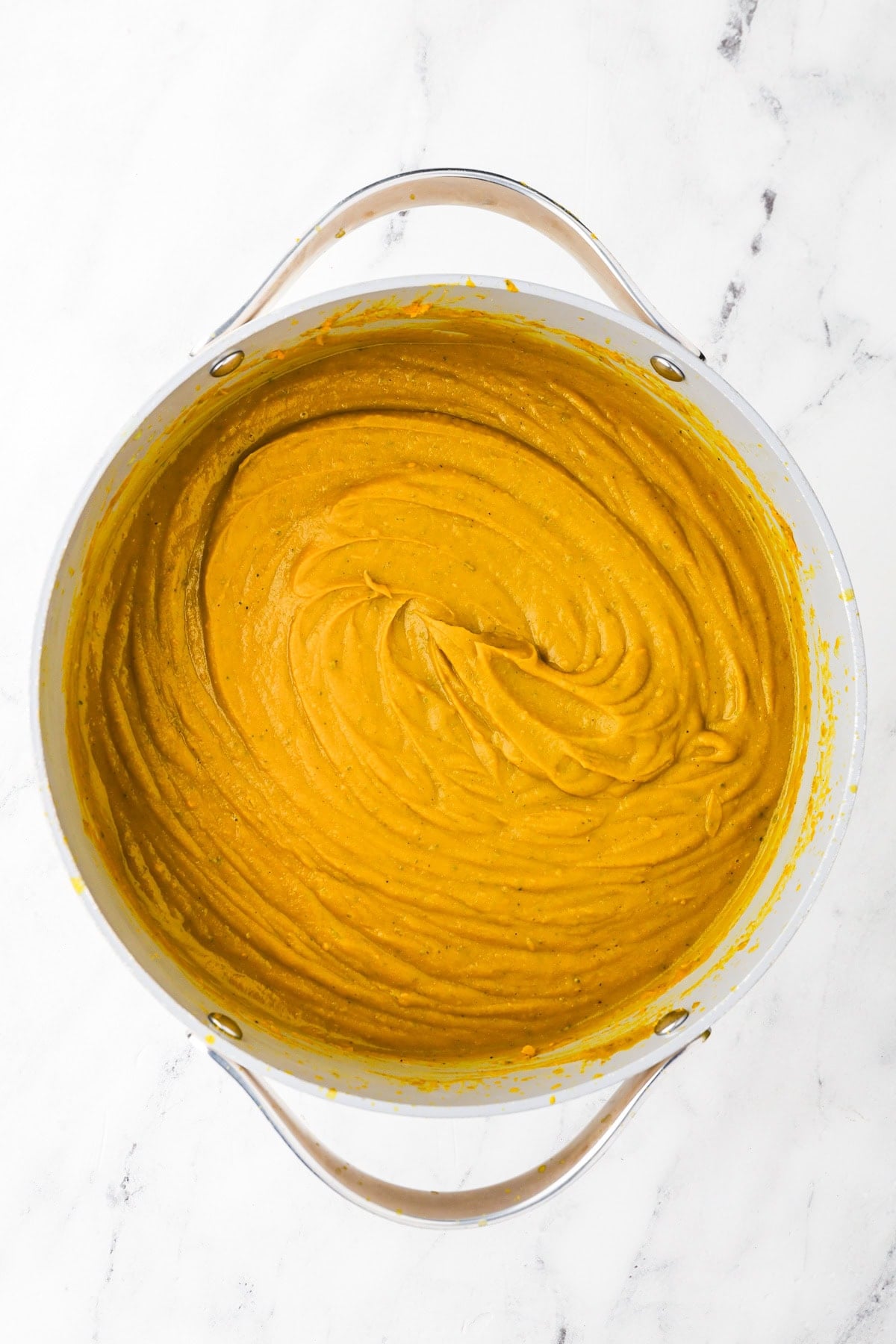
- Remove from heat. Use an immersion blender to blend soup directly in pot until completely smooth. If using a regular blender, work in batches: fill blender only halfway, remove center cap from lid, cover opening with a folded towel, and start on low speed to prevent hot liquid from erupting. Blend until smooth and return to pot.
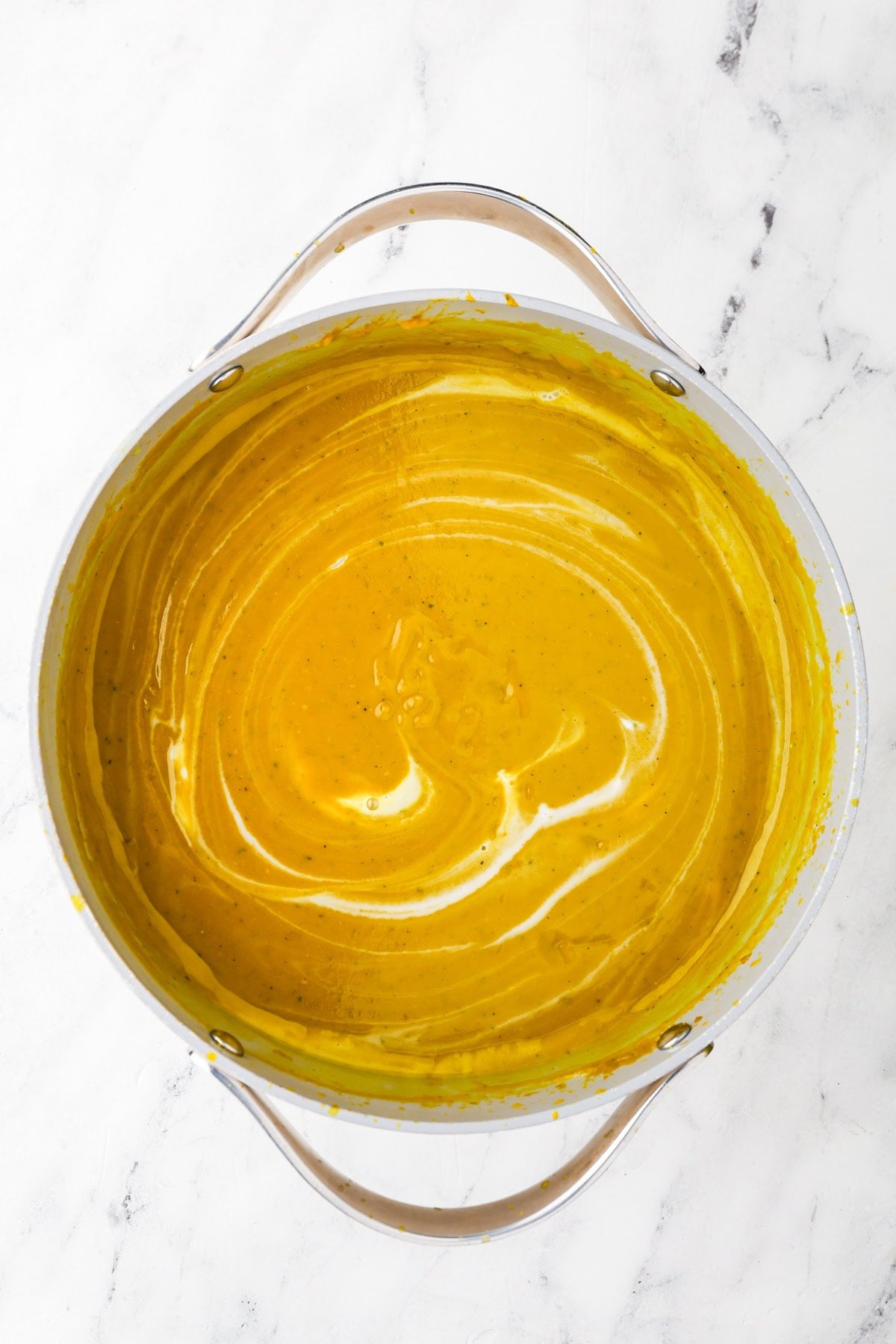
- Stir in coconut milk (start with ½ cup, add more for richer soup) and lemon juice or vinegar.
- Taste and adjust seasoning with additional salt, pepper, or acid as needed. Warm gently over low heat before serving. Serve in bowls, drizzle more coconut milk, and garnish with fresh cilantro.

How to serve Japanese pumpkin soup
Serve with crusty bread for dipping, or along with my tofu katsu, rice and a simple green salad with sesame dressing for a Japanese-inspired meal
Variations:
- Roasted version: For deeper, more caramelized flavor, roast the squash pieces at 400°F for 25-30 minutes before adding to the pot. Adds time but intensifies the sweetness.
- Spiced version: Add ½ teaspoon curry powder or a pinch of cayenne with the turmeric for warmth.
- Thai-inspired: Use a tablespoon of red curry paste instead of turmeric, and finish with lime juice instead of lemon. Similar to my Thai curried butternut squash soup.
- Richer soup: Increase coconut milk to ¾ cup, or stir in a tablespoon of white miso paste at the end (no longer gluten-free).

Storage and reheating suggestions
Refrigerate in an airtight container up to 5 days. Freeze up to 3 months in freezer-safe containers or bags. Coconut milk may separate slightly when thawed—whisk to recombine.
Reheat gently on the stovetop over low heat, stirring occasionally. Add a splash of broth if too thick.
More squash recipes
Looking for more ways to use squash? Here are some more delicious recipes just for you!


Spicy Pumpkin Soup

Vegetarian Stuffed Acorn Squash with Quinoa and Crispy Mushrooms

Spaghetti Squash Soup

Kabocha Squash Soup
Ingredients
Vegetables & aromatics
- 1 medium kabocha squash, seeds removed, cut into 2–3 inch pieces (peel on) (~3 lb)
- 1 large yellow onion, chopped (~2 cups)
- 3 cloves garlic, minced
- 1 tablespoon fresh ginger, grated
Cooking base
- 2 tablespoons avocado oil, substitute other neutral oil
- 4 cups vegetable broth, low-sodium preferred
- 1 teaspoon kosher salt, plus more to taste
- ½ teaspoon black pepper
- ½ teaspoon ground turmeric, optional, for color
Finishing
- ½ cup coconut milk
- 1 medium lemon, juiced (~1 tbsp)
Instructions
- If squash is very hard to cut, microwave whole squash 2–3 minutes to soften. Cut in half, scoop out seeds, then cut into 2–3 inch pieces. Leave peel on—it softens completely during cooking.
- Heat oil in a large pot or Dutch oven over medium heat.
- Add onion and cook, stirring occasionally, until softened, about 5 minutes.
- Add garlic and ginger. Cook, stirring constantly, until fragrant, about 1 minute.
- Add squash pieces (with peel on), broth, salt, pepper, and turmeric if using. Stir to combine.
- Bring to a boil over high heat, then reduce heat to medium-low. Simmer uncovered until squash is very tender and easily pierced with a fork, 20–25 minutes.
- Remove from heat. Use an immersion blender to blend soup directly in pot until completely smooth, 1–2 minutes. If using a regular blender, work in batches: fill blender only halfway, remove center cap from lid, cover opening with a folded towel, and start on low speed to prevent hot liquid from erupting. Blend until smooth and return to pot.
- Stir in coconut milk (start with ½ cup, add more for richer soup) and lemon juice or vinegar.
- Taste and adjust seasoning with additional salt, pepper, or acid as needed. Warm gently over low heat for 2–3 minutes before serving.
Notes
- Leave peel on squash—it softens completely during cooking and blends smoothly
- Use fresh ginger, not powdered, for best flavor and brightness
- Start with ½ cup coconut milk; add more for creamier texture
- Add acid (lemon/vinegar) at the end to brighten and balance richness
- If soup is too thick, thin with additional broth or coconut milk
- For deeper flavor, roast squash at 400°F for 25–30 minutes before adding to pot
Nutrition
Nutrition information is automatically calculated, so should only be used as an approximation.


