
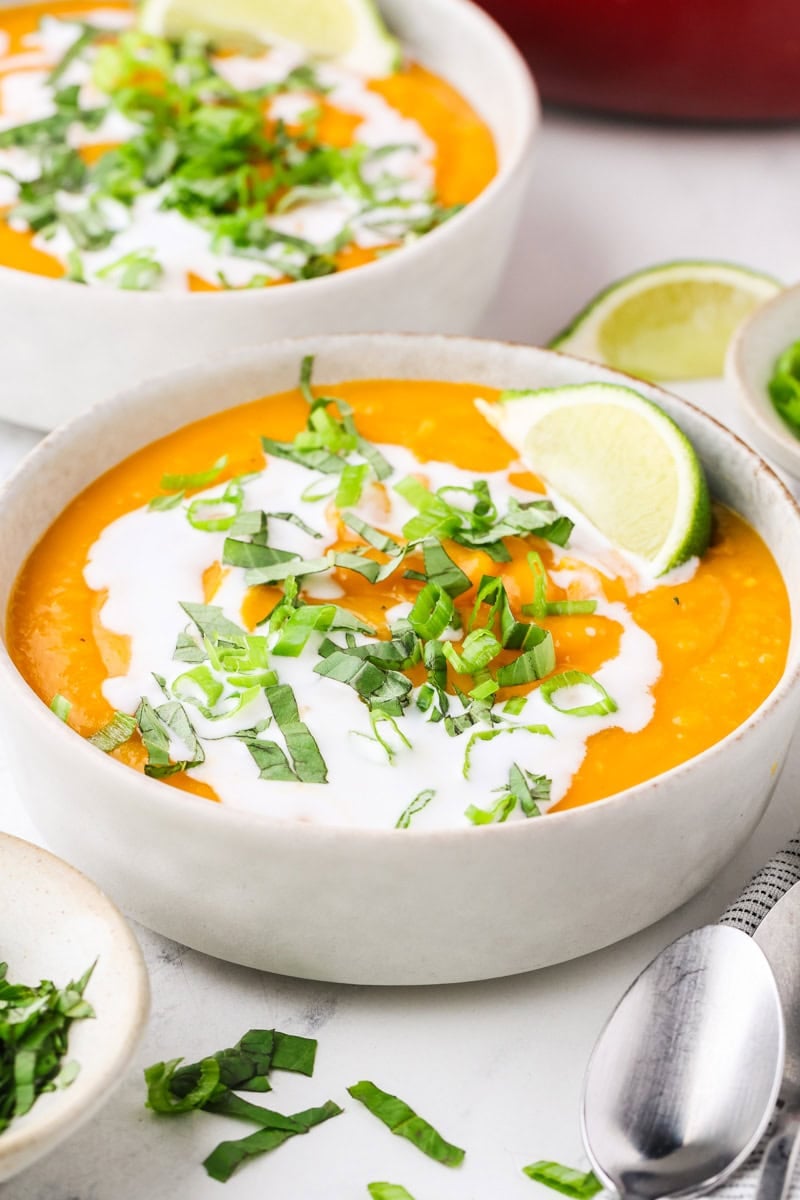
My Thai butternut squash soup starts with the squash roasted skin on, so there’s no peeling, just scooping. I fry the red curry paste until the oil runs red, then simmer coconut milk with lemongrass, galangal, and makrut lime leaves. It takes 75 minutes, and the squash spends 45 of them in the oven.
Just made this over the weekend for a group of 9 international friends and it was a HIT!! Everyone loved the dish and it was very easy to make. I used a blender and was very grateful for the tip to leave the vent open and cover with a towel due to the hot contents. Probably saved me from a last minute dinner party disaster!
A butternut squash soup with coconut milk that leans savory

It only rains in Seattle twice a year, once from October to March and once from March to June. And when it rains in Seattle, it’s always time for butternut squash soup. I’ve been making this Thai version for a long time. Butternut squash goes really well with Thai flavors, and I was looking for a savory complement to it.
Two things make it work. The curry paste fries in oil until the oil runs red and the paste smells cooked rather than sharp, the same start as my Thai red curry with tofu. The lime goes in off the heat, because sustained heat turns it bitter and flat. There’s no traditional blended squash soup in Thai cooking. The closest dish is red curry with pumpkin (kaeng phet fak thong), served chunky over rice, and this soup borrows its method of frying the paste in fat.
Kabocha is the squash Thai cooks use, and swapped in, it makes a fuller, drier soup. It’s also the star of my kabocha squash soup. The curry paste brand sets the heat, so check the paste note below before you shop.

Picking the paste, the coconut milk, and the aromatics
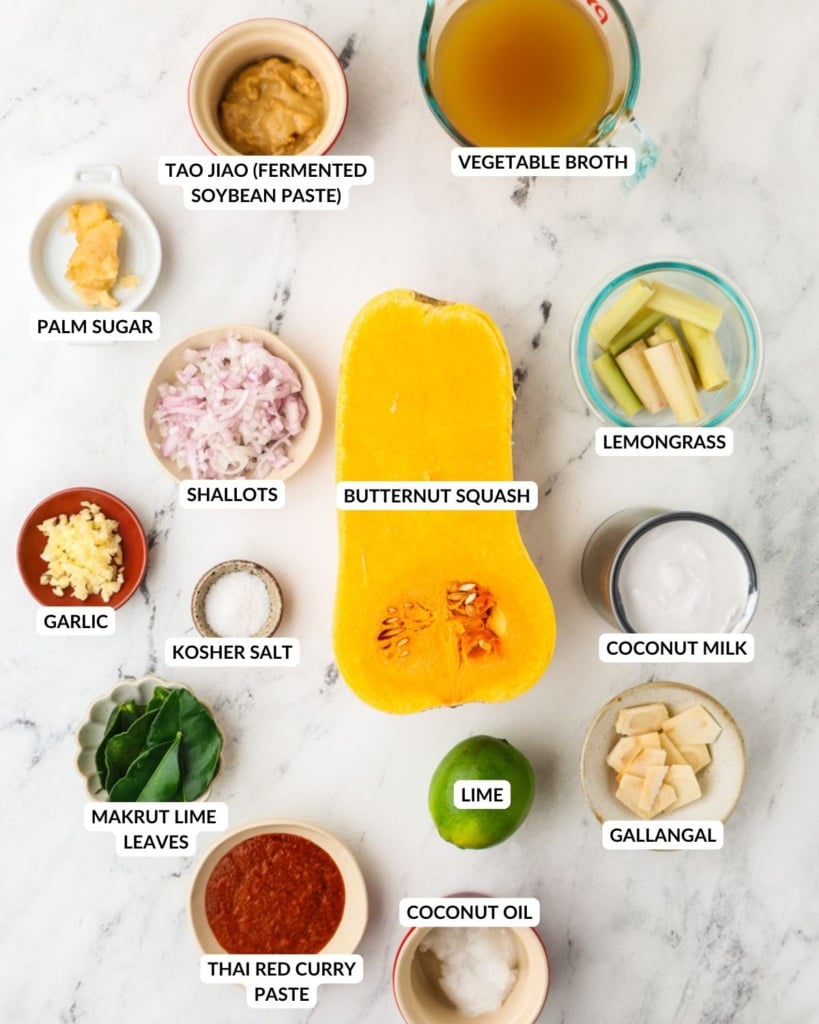
Full ingredient list and detailed instructions in the recipe card.
- A medium butternut squash of about 3 pounds matches one can of coconut milk. Pick one that feels heavy for its size with a long neck, since the neck is all flesh.
- Thai red curry paste sets the heat, and brands vary widely. Thai Kitchen at 3 tablespoons is mild enough for kids; start at 2 tablespoons with Mae Ploy. Most commercial pastes contain shrimp paste, so check the label or make my Thai red curry paste without shrimp.
- Full-fat coconut milk gives the paste fat to fry in and the soup its body. To crack the cream (see Variations), buy a brand without gums, such as Aroy-D or Chaokoh, since stabilized brands will not split.
- Fresh galangal tastes piney and citrusy without ginger’s heat, so ginger isn’t a true swap. Frozen galangal works, but dried doesn’t. Asian grocery stores usually stock it near the lemongrass.
- Makrut lime leaves should be fresh or frozen, because dried ones contribute almost nothing. The rest of the pack, plus any leftover galangal and lemongrass, keep in the freezer for the next curry.
- Tao jiao, Thai fermented soybean paste, adds salty, savory depth against the squash and palm sugar. Look for it in the sauce aisle of an Asian grocery.
Shruthi’s Top Tips
Before you blend this squash soup
Most of this recipe is waiting on the oven. Here’s where it can still go wrong.
- Skip the peeler. I love soup, but I hate the work, and peeling is the worst part of squash season. The easiest way to prepare butternut squash for soup is to roast it skin on until a knife meets no resistance, since firm spots won’t blend smooth.
- Fish out every lemongrass piece, lime leaf, and galangal coin before blending. They’re too fibrous to blend and leave stringy bits.
- Fill the blender only halfway, open the steam vent, and hold a towel over the lid, because steam from hot soup can push the lid off.
- Taste after the tao jiao goes in, before adding salt. It’s already salty.
How to make Thai butternut squash soup
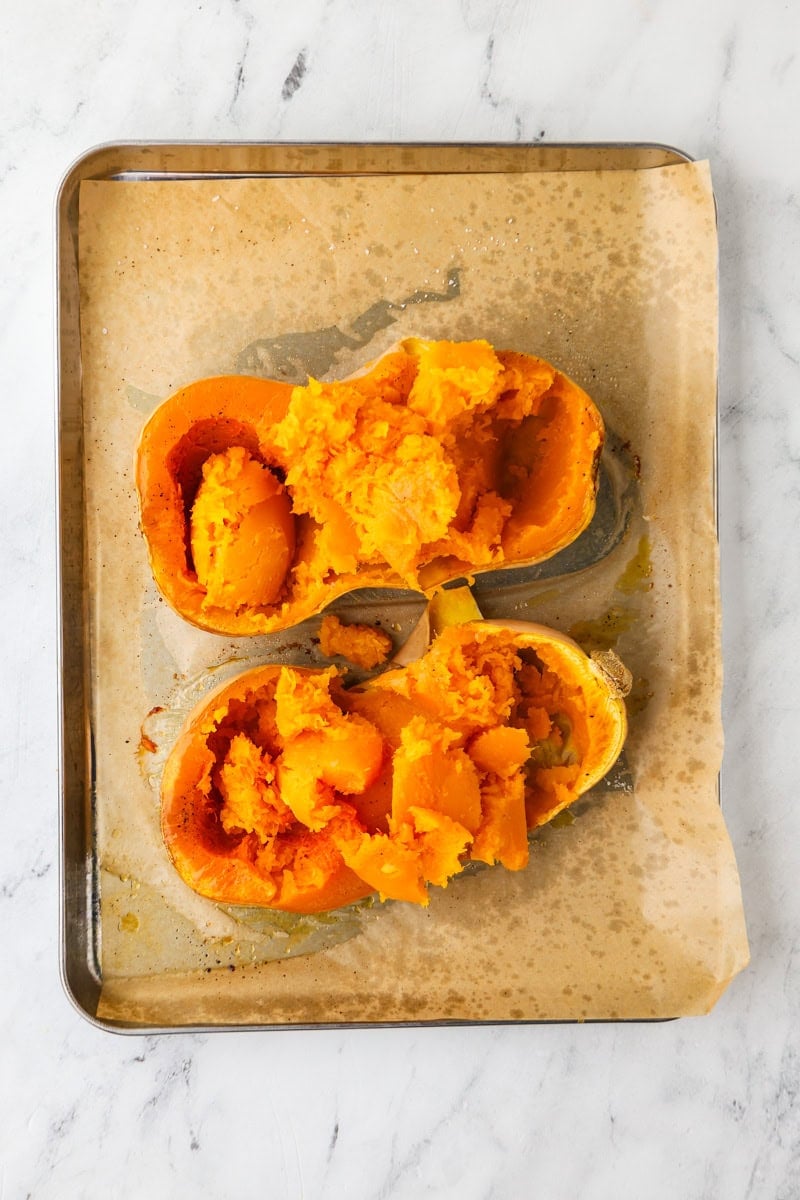
- Roast the squash halves cut side down at 400°F for 45 minutes, until a knife slides in with no resistance.
- Scoop the flesh from the skin once it’s cool enough to handle.
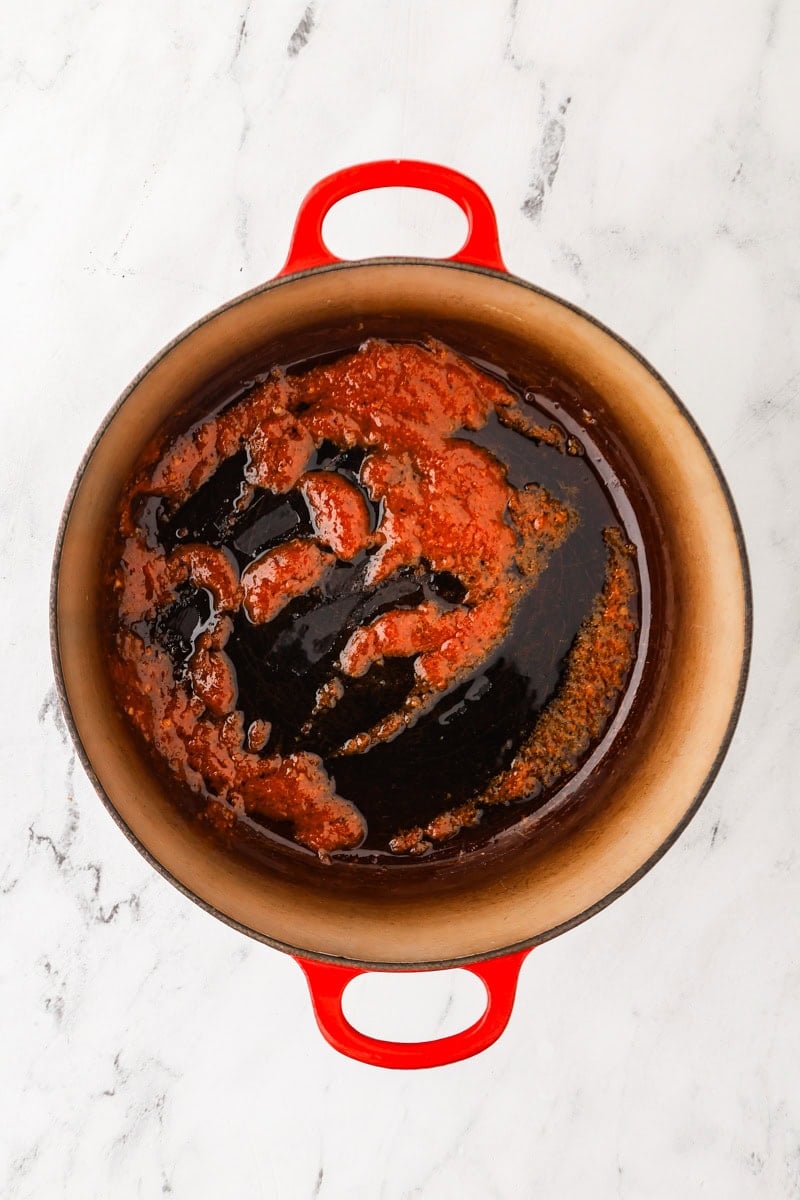
- Fry the curry paste in coconut oil for 3 to 4 minutes, pressing it into the pan, until the oil runs red.

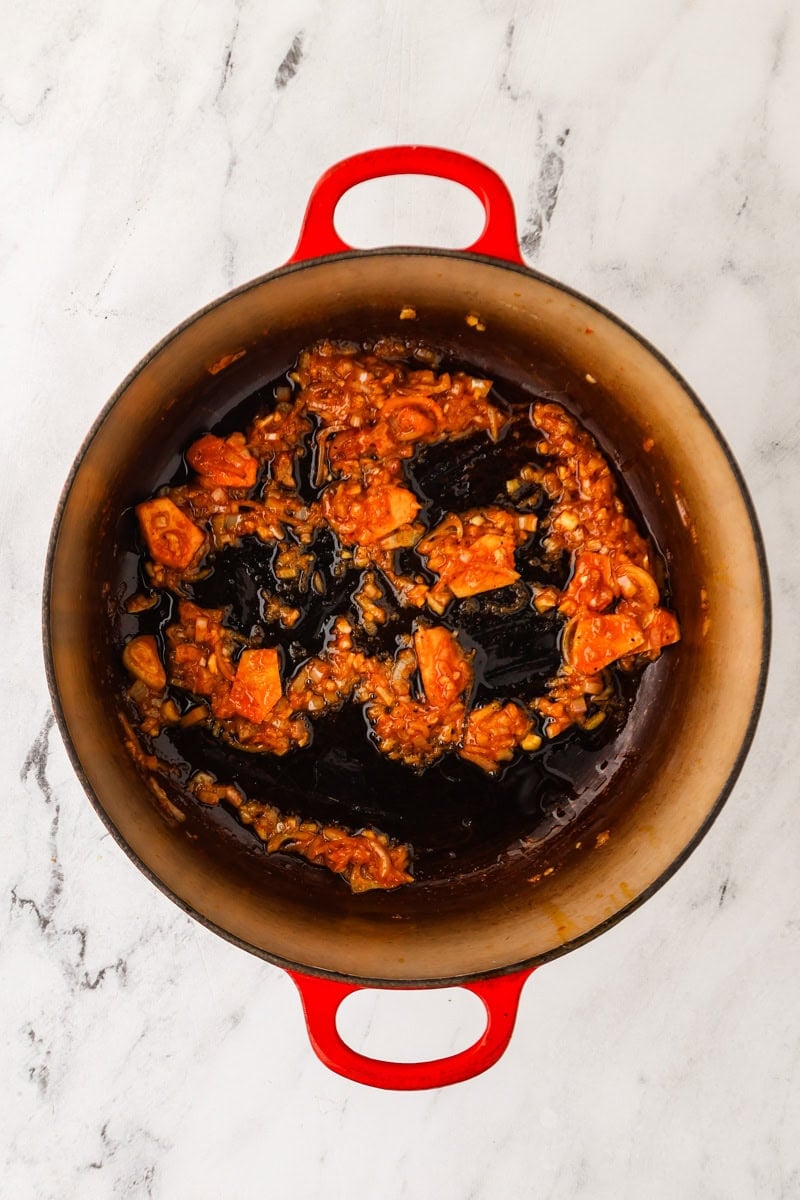
- Fry the shallots, garlic, and galangal for 2 minutes, until fragrant.
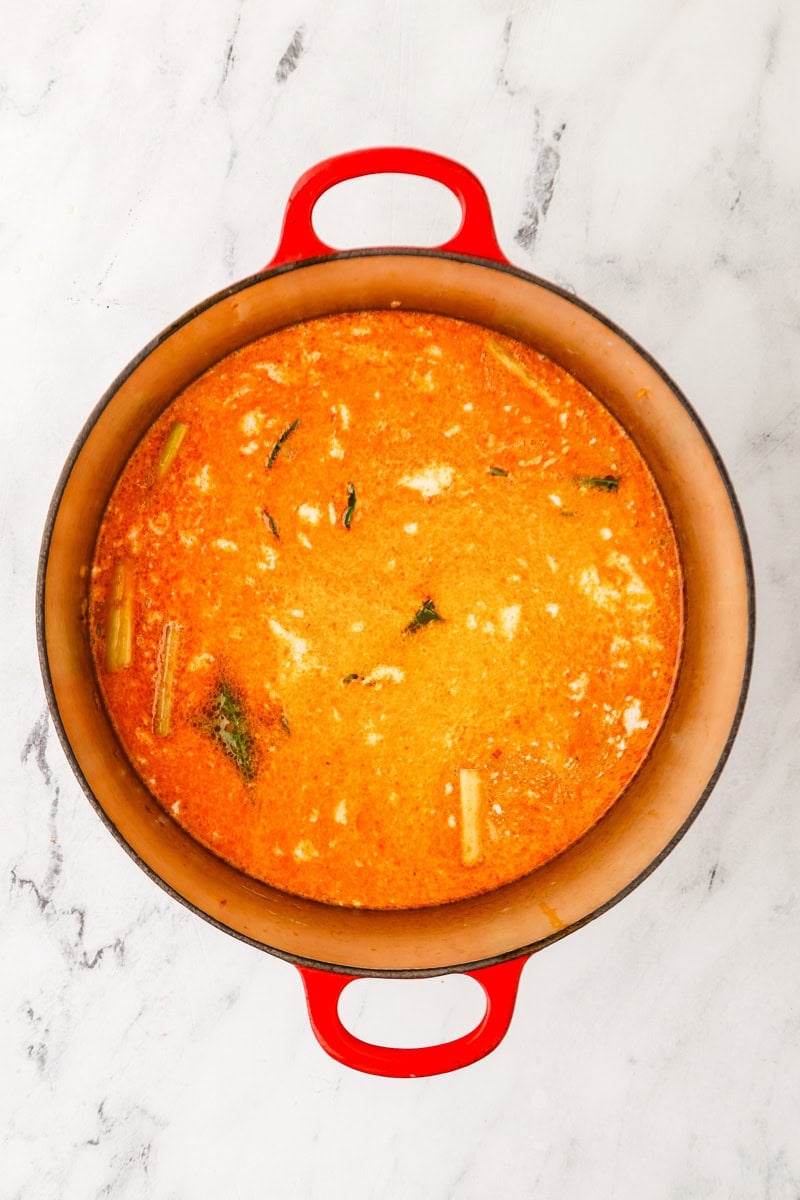
- Add the coconut milk, broth, lemongrass, and lime leaves and simmer for 10 minutes.
- Fish out the lemongrass, lime leaves, and galangal, then add the roasted squash and soup base to the blender.
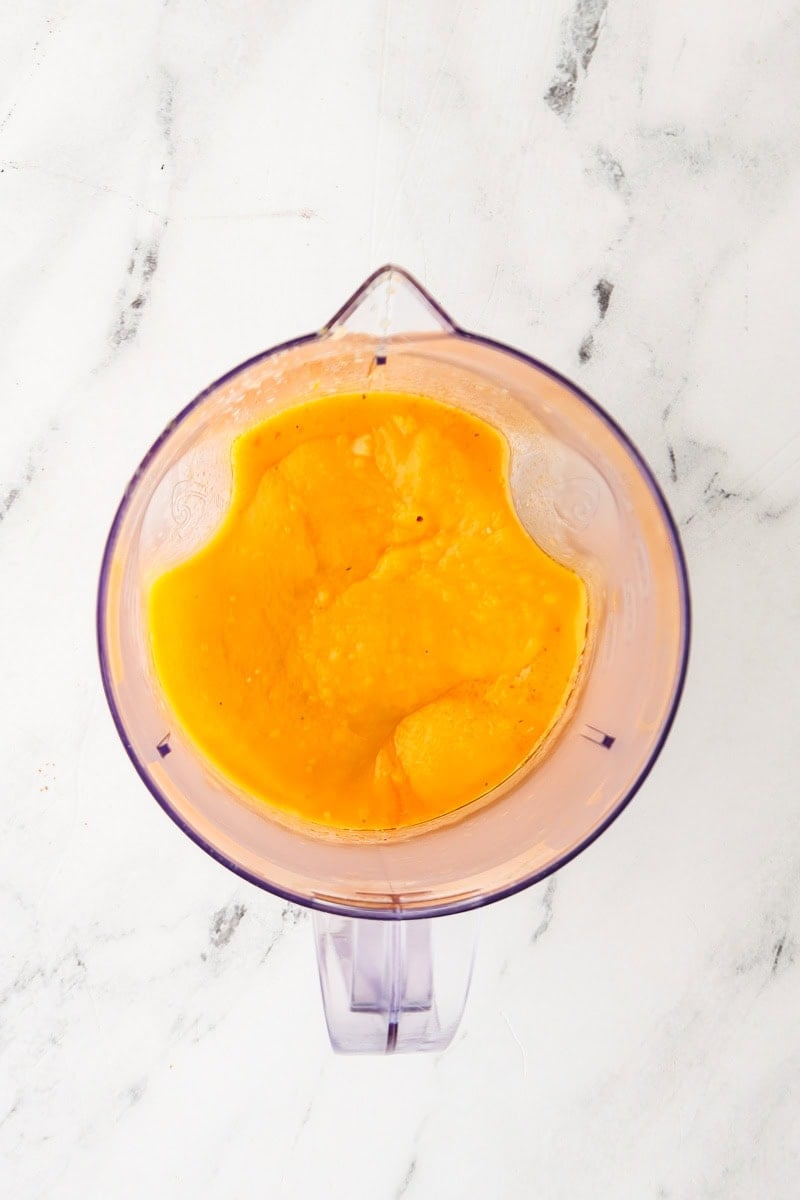
- Blend in vented batches until smooth.
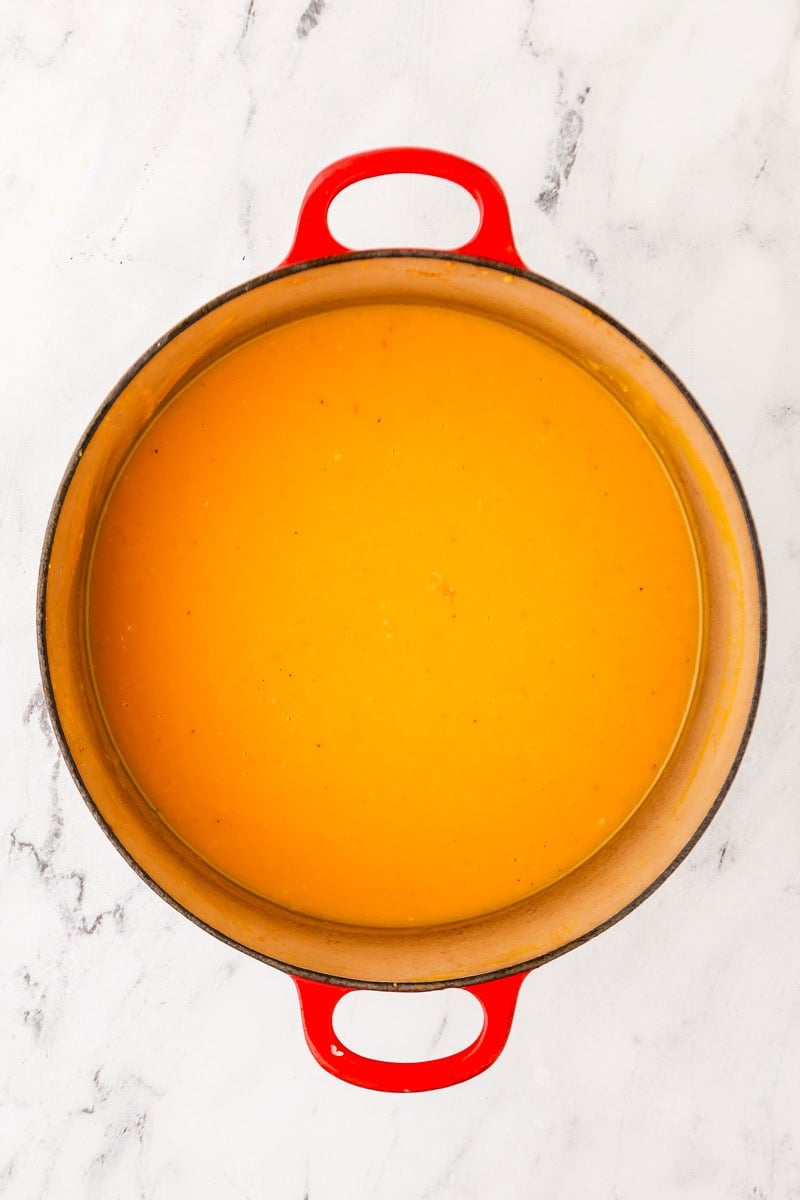
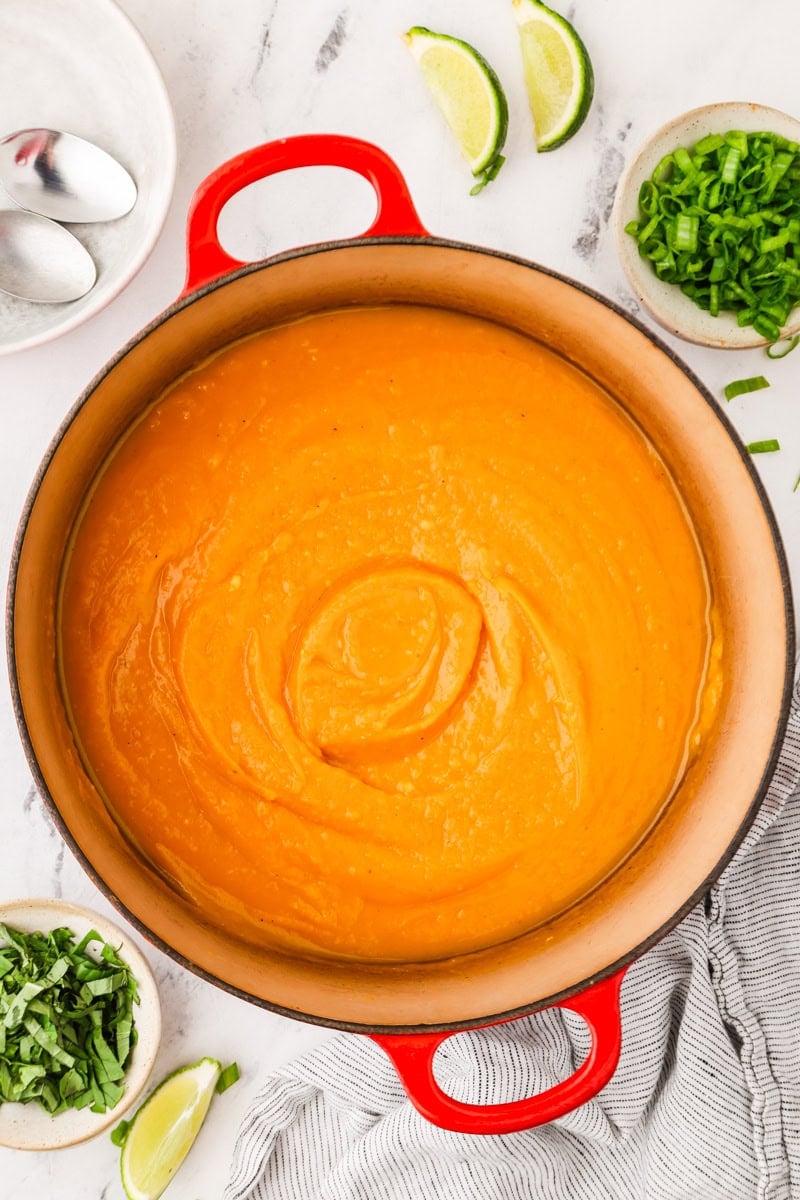
- Return the soup to the pot, stir in the tao jiao and palm sugar, and salt to taste. Stir in the lime off the heat.
How to serve Thai butternut squash soup
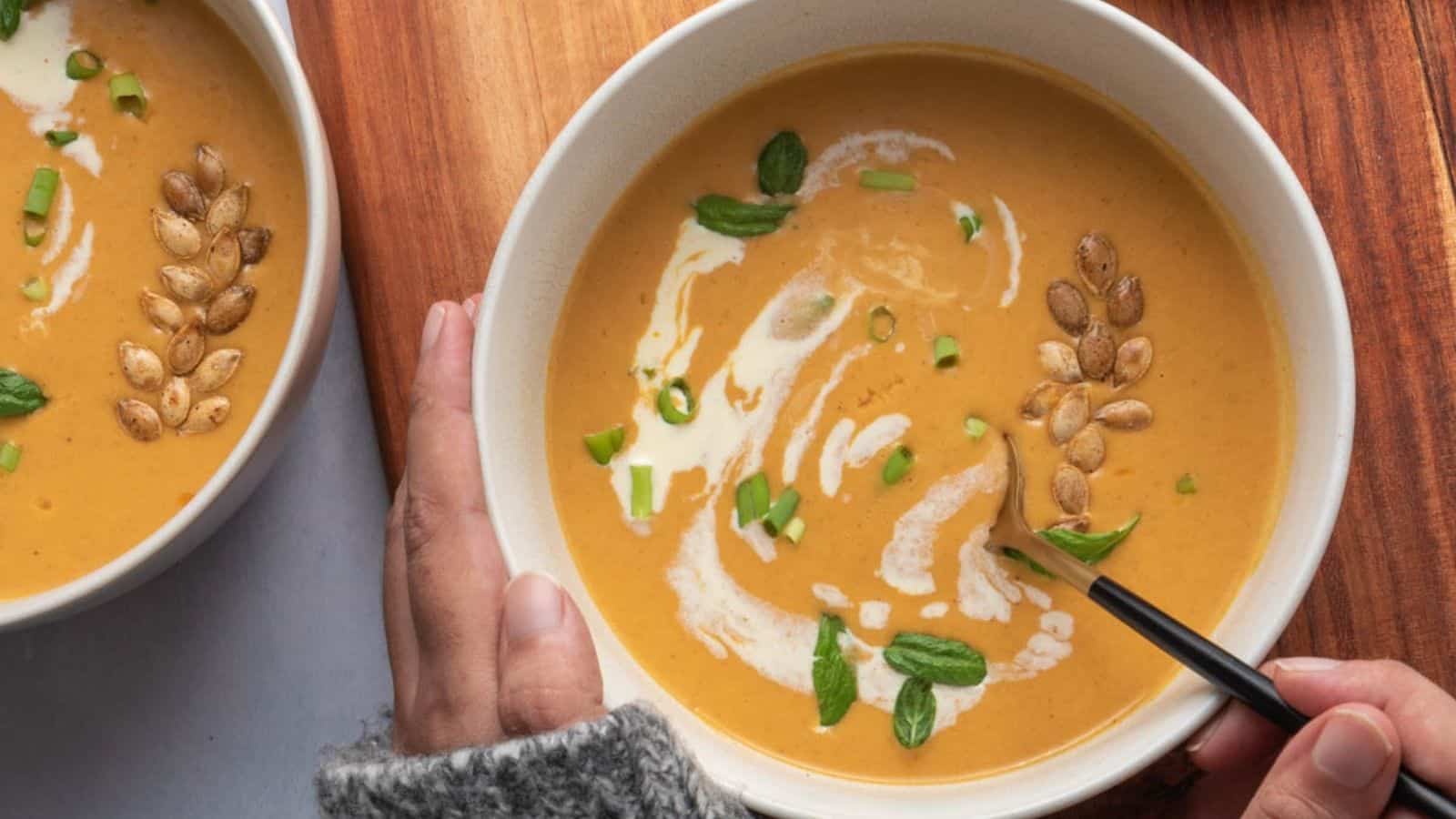
This squash soup with coconut milk works as a starter, or as dinner with a scoop of soft fluffy jasmine rice in the bowl and tofu satay with peanut sauce on the side. Top each bowl with Thai basil, scallions, and a swirl of coconut milk.
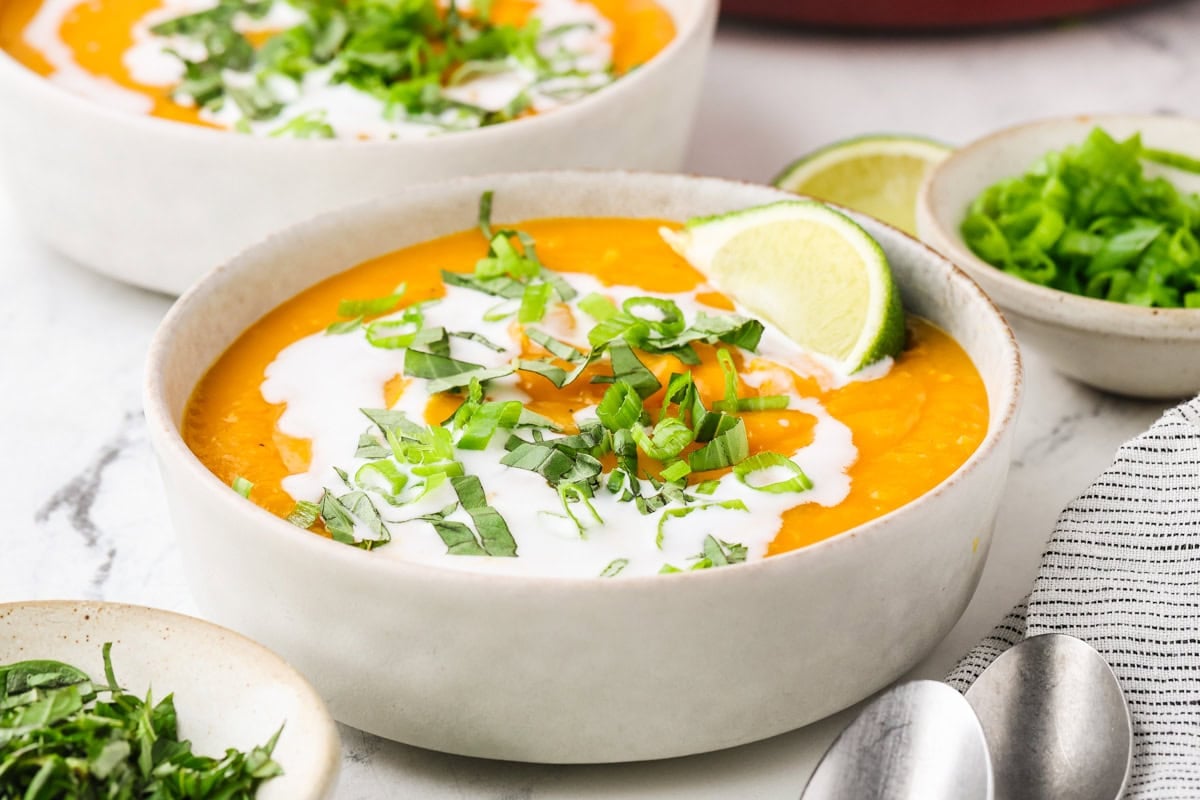
On a lighter night, a crisp green salad or crusty bread is all it needs, and crushed roasted peanuts on top add crunch. For a full Thai menu, start with my vegetarian Thai recipes.
Variations
- For a deeper version, crack the coconut cream instead of using oil. Simmer the thick cream from the top of an unshaken can 5 to 8 minutes, until clear oil pools and the cream turns grainy, then fry the paste in that.
- For more heat, pass sliced Thai chiles or chili oil at the table so milder bowls stay mild.
Storage and reheating
Store leftovers airtight in the fridge up to 4 days, or freeze up to 3 months. Reheat gently over low heat, stirring, so the coconut milk doesn’t separate, and add the basil and scallions after reheating.

Thai Butternut Squash Soup with Coconut Milk
Equipment
- Wide heavy-bottomed pot
- Blender An immersion blender works but will not get it as smooth.
Ingredients
For the squash:
- 1 medium butternut squash, about 3 lbs, halved and seeded
- 2 tablespoons neutral oil, such as vegetable or canola
- 1 teaspoon kosher salt, Diamond Crystal
For the soup:
- 2 tablespoons coconut oil, or neutral oil
- 3 tablespoons Thai red curry paste
- 3 medium shallots, sliced
- 3 cloves garlic, sliced
- 2 tablespoons fresh galangal, sliced into coins
- 1 13.5-oz can full-fat coconut milk
- 2 cups vegetable broth, low-sodium preferred
- 2 stalks lemongrass, bruised and cut into 3-inch lengths
- 4 makrut lime leaves, fresh or frozen
- 1½ tablespoons tao jiao, fermented soybean paste
- 1 tablespoon palm sugar, chopped
- 2 tablespoons fresh lime juice
For serving:
- ½ cup Thai basil leaves
- 3 scallions, thinly sliced
- coconut milk, for swirling
Instructions
- Heat the oven to 400°F. Rub the cut sides of the squash with the neutral oil and salt, place cut side down on a lined sheet pan, and roast 45 minutes, until a knife slides into the thickest part with no resistance.
- Cool the squash until you can handle it, then scoop the flesh away from the skin. There is no need to peel it.
- Heat the coconut oil in a wide heavy pot over medium. Add the curry paste and fry 3 to 4 minutes, pressing it against the pan, until the oil runs red and the paste smells cooked rather than sharp.
- Add the shallots, garlic and galangal and fry 2 minutes, until fragrant.
- Pour in the coconut milk and broth, add the lemongrass and makrut lime leaves, and simmer 10 minutes to infuse.
- Fish out and discard the lemongrass, lime leaves and galangal coins.
- Add the roasted squash and blend until smooth, working in batches with the blender lid vented and a towel over the top. Never fill past the maximum line.
- Return the soup to the pot and stir in the tao jiao and palm sugar. Taste and add salt.
- Take the pot off the heat and stir in the lime juice. Serve topped with Thai basil, scallions and a swirl of coconut milk.
Notes
- Curry paste heat varies widely by brand. Thai Kitchen at 3 tablespoons is mild enough for kids; start at 2 tablespoons with Mae Ploy. Check the curry paste label for shrimp paste, since most commercial brands contain it.
- Salt amounts are for Diamond Crystal kosher salt. Use about half as much Morton.
- Add the lime off the heat. Sustained heat turns it bitter and flat.
- Use fresh or frozen makrut lime leaves. Dried ones contribute almost nothing here.
- Swap kabocha for the butternut for a fuller, drier soup. It is the squash Thai cooks actually use.
- For a deeper version, skip the oil and crack the coconut cream instead. Spoon the thick cream off the top of an unshaken can, simmer it 5 to 8 minutes until clear oil pools and the cream turns grainy, then fry the paste in that. Use a brand without gums or emulsifiers, such as Aroy-D or Chaokoh, since stabilized brands will not split.
- Store leftovers airtight in the fridge up to 4 days, or freeze up to 3 months.
- Reheat gently over low heat, stirring, to keep the coconut milk from separating.
Nutrition
Nutrition information is automatically calculated, so should only be used as an approximation.


So good, love the spiciness.
Excellent recipe. I will make again and again.
Just made this over the weekend for a group of 9 international friends and it was a HIT!! Everyone loved the dish and it was very easy to make. I used a blender and was very grateful for the tip to leave the vent open and cover with a towel due to the hot contents. Probably saved me from a last minute dinner party disaster 🙂
Does red curry paste not contain shrimp paste. This could mean the recipe is not vegan friendly. Having said that, the butternut soup was delicious.
Hey David – thanks for the comment! I use vegan red curry paste – the Thai Kitchen brand if you’re interested! The ingredients are – spices, garlic, lemongrass, salt, shallots, coriander roots, and kaffir lime peel. It’s also labeled as dairy-free, gluten-free and vegan! However, you’re right that red curry paste could contain shrimp! I’ll add an ingredient note in the recipe card to highlight the brand I use – thanks for the catch!!
this butternut squash soup seriously calling me. made puree today, I have a can of coconut milk. Surely making it tomorrow. such a gorgeous soup for comforting meal.
Thank you so much Bhawana!
Hi Shruthi-
I hope you are doing great! Love this recipe and the rest of the blog for that matter! I’m looking forward to trying more of your recipes.
Stay safe & well.
Your ELDM classmate,
Meg
Hey Meg! Long time – thank you so much for stopping and checking out the blog, and super glad that you loved the recipe. 🙂