

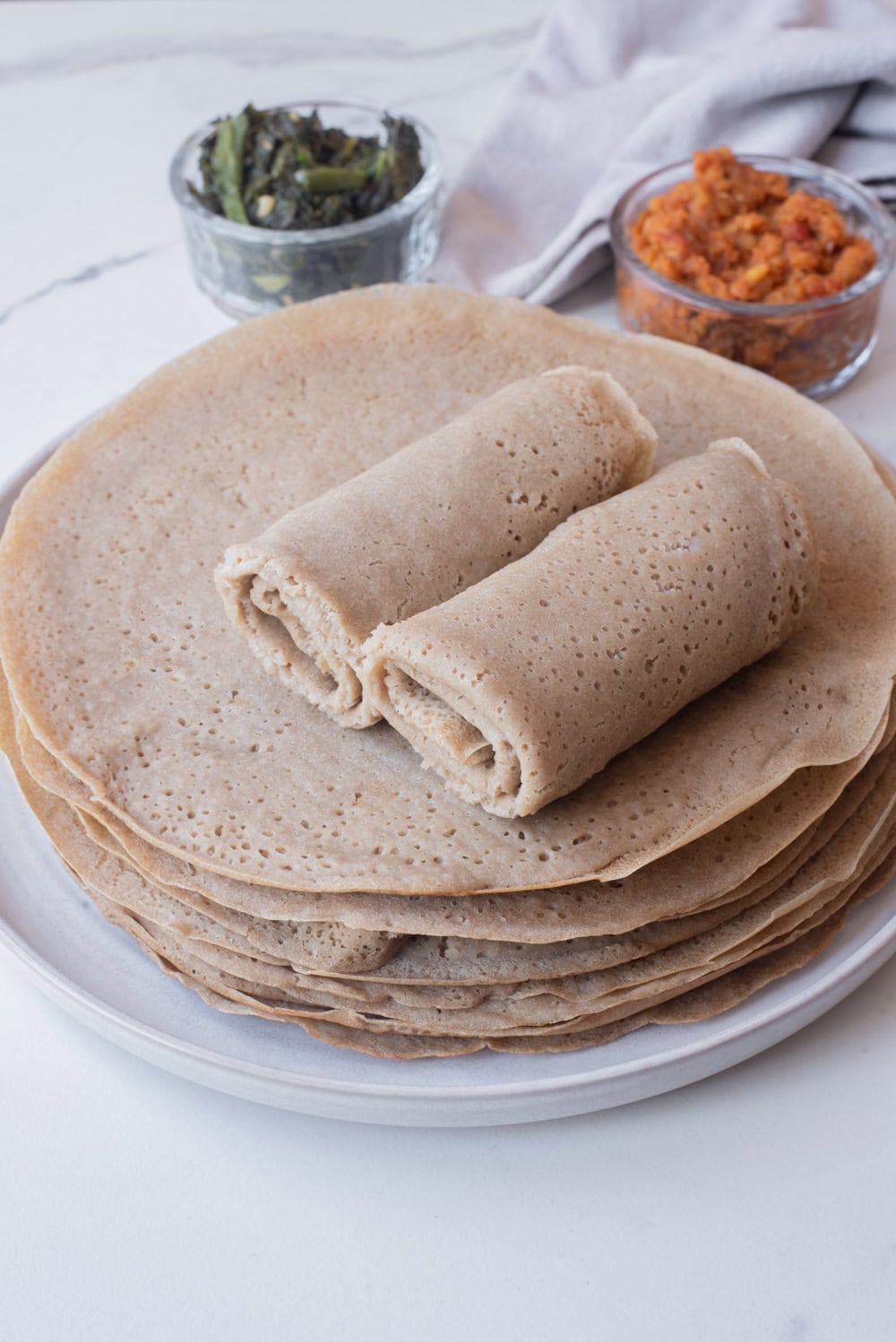
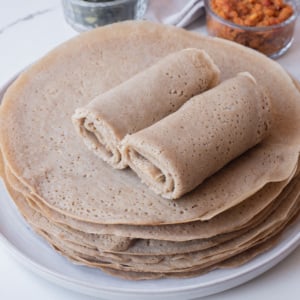
I make my quick injera recipe with 100% teff flour and one 24-hour rest on the counter, so it gets its sour tang without a starter or a ferment that runs for days. The next day, baking powder and chilled sparkling water give it the spongy, hole-covered top that soaks up the stew.
Injera without a starter, after eight years of trying

I’ve been trying to perfect injera at home for eight years now. Injera is the spongy, slightly sour Ethiopian flatbread made from teff, and it’s your plate and your spoon at the same time. Most traditional recipes need a starter and a ferment that runs for several days, which is harder to pull off in most parts of the US. So I wanted a quicker recipe, and I’ve been testing this one since 2024.
Two things make it work. Teff and plain water sit on the counter for a day, and that’s where the sour flavor comes from. Then the baking powder and sparkling water go in right before you cook, so their bubbles end up in the pan instead of escaping from the bowl.
The tang is milder than a multi-day injera, and the baking powder does some of the lifting a long ferment would do, which is the trade for skipping the starter.
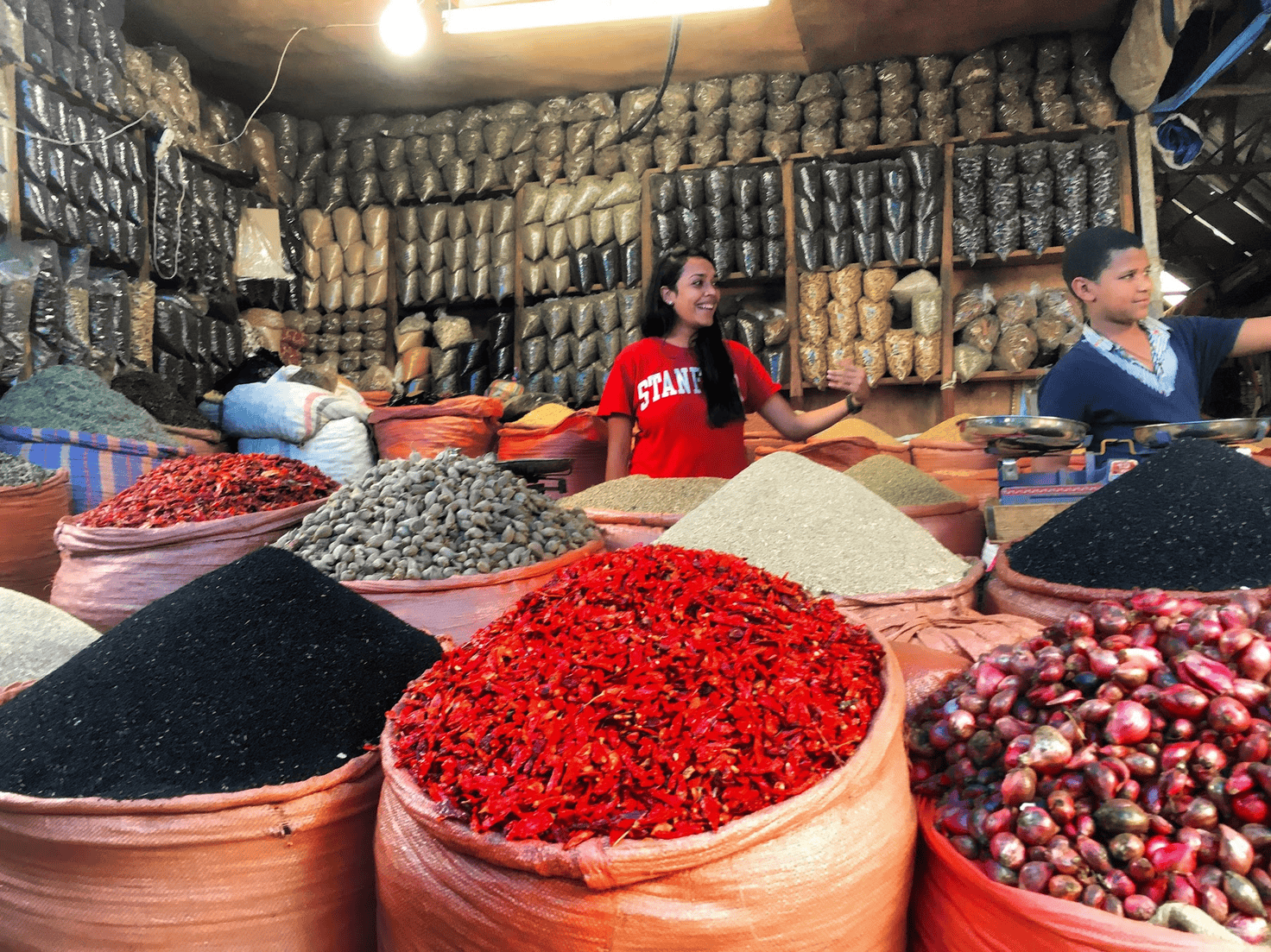

What goes into one-day teff injera
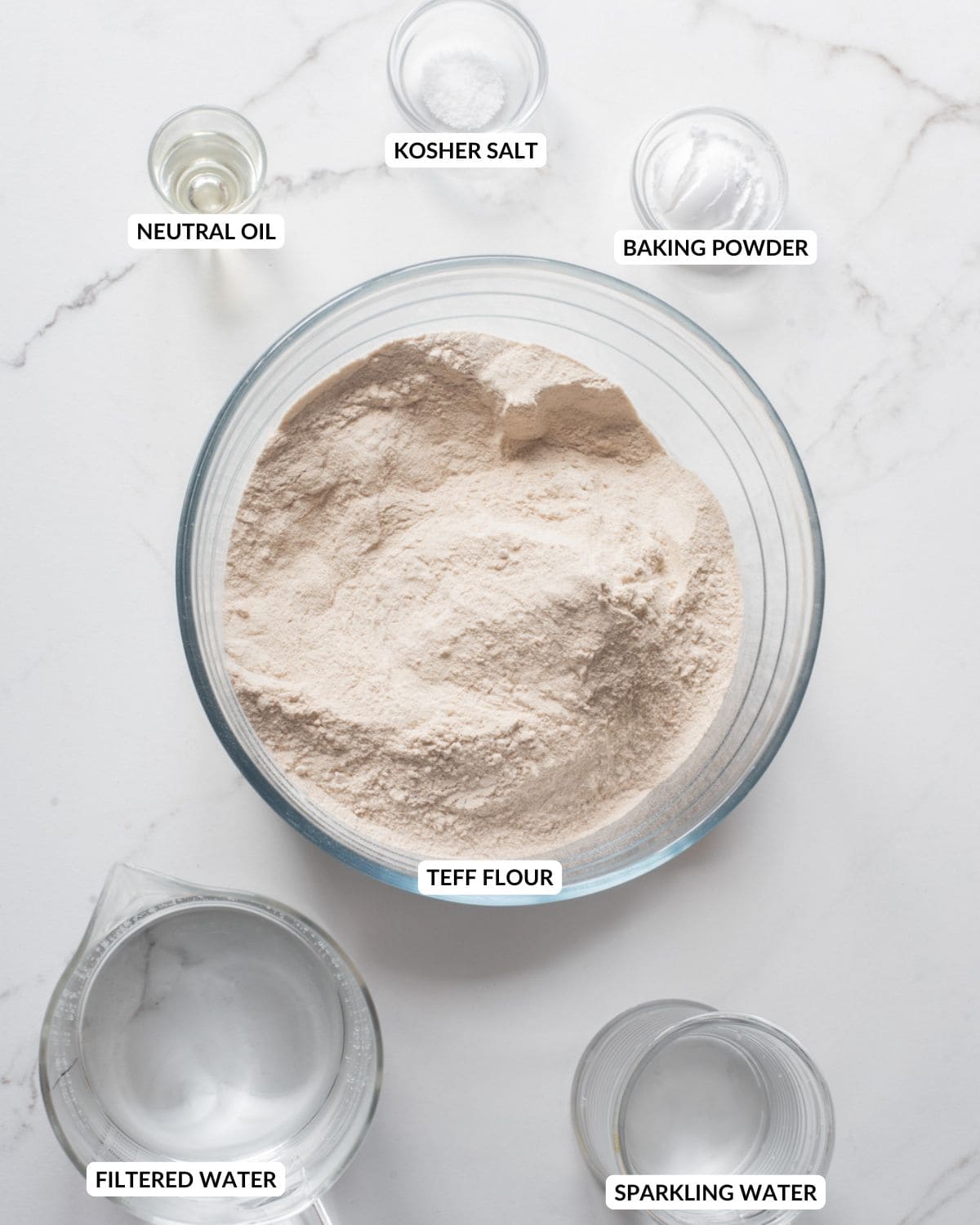
Full ingredient list and detailed instructions in the recipe card.
- Teff flour is the only flour here, so this injera is naturally gluten free. Brown teff is nuttier and looks more traditional, ivory is milder. Weigh it if you can, since teff packs differently from wheat flour. If you’re cooking for someone with celiac disease, buy a bag labeled certified gluten free.
- Filtered water gives the day-one ferment a clean start. Chlorine in tap water can slow it down.
- Chilled sparkling water thins the batter on day two and adds bubbles for the holes. If you can find Ambo, the Ethiopian sparkling mineral water, even better. Topo Chico, San Pellegrino or Perrier work too.
- Diamond Crystal kosher salt is what I measure with. If you have Morton or table salt, use half as much.
Shruthi’s Top Tips
How to get quick injera full of holes
Most problems show up in the first injera, so that’s where to fix them.
- Cook a small test injera first, about ¼ cup of batter. Eyes (the little holes) should open across the top within 30 to 60 seconds. No eyes means turn the heat up a little or thin the batter with a splash more sparkling water, then test again.
- Thin the batter a splash at a time. Once it’s too thin, you can’t bring it back.
- Add the baking powder on day two, right before cooking. Stirred in on day one, it spends its bubbles in the bowl.
- Never flip it. The lid traps steam that cooks the top. If it sticks, it isn’t done yet, so keep cooking until the edges curl and lift.
- If the first few come out thick with only a few holes, pour a little less than ¾ cup for each one.
How to make quick injera
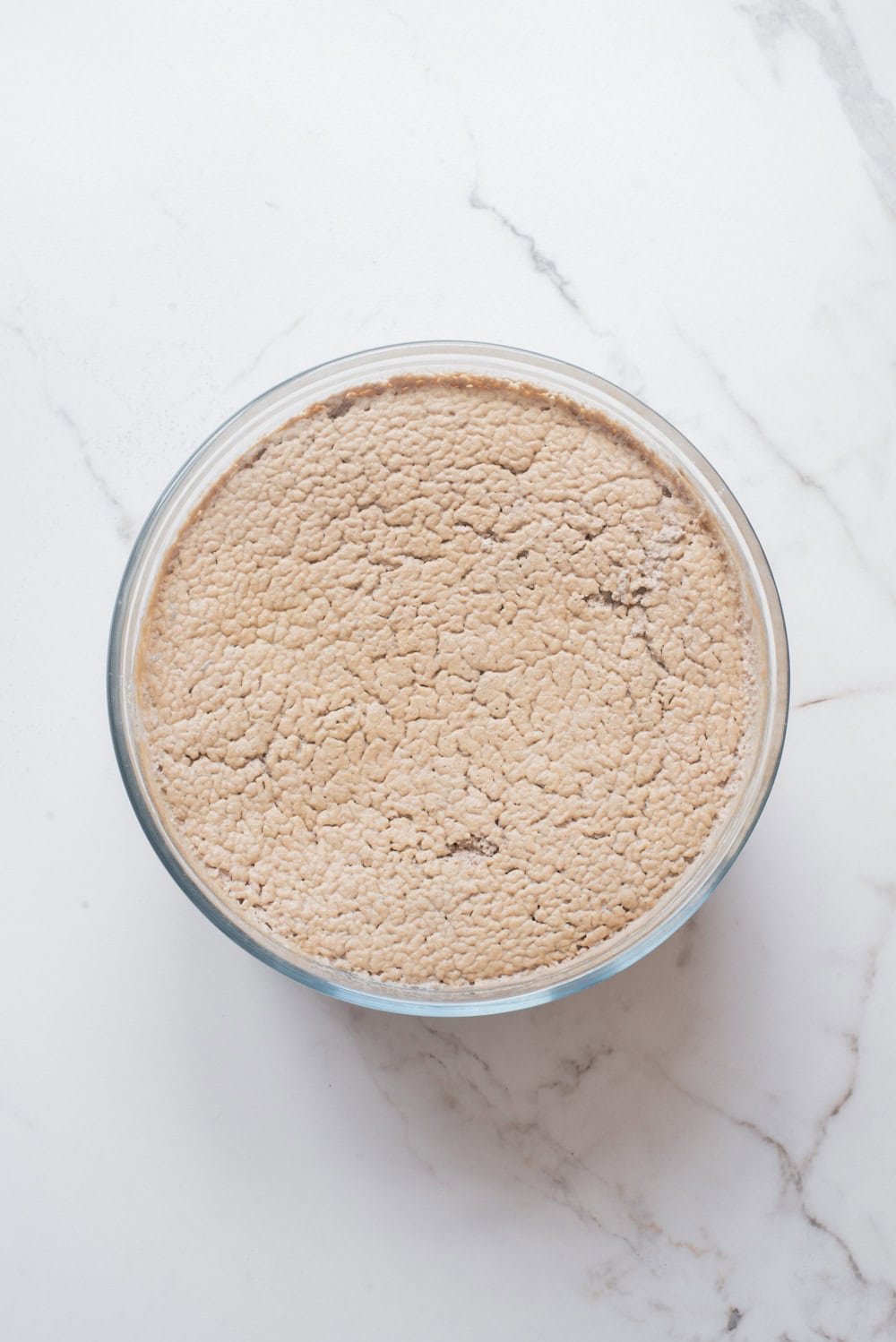
- On Day 1, whisk the teff flour and filtered water until completely smooth. Cover with a towel and leave on the counter for 24 hours. On Day 2, the batter should look a little foamy and smell faintly sour. Whisk in the salt and baking powder. It will deflate, which is normal.
- Whisk in chilled sparkling water a splash at a time until the batter coats a spoon but still drips off it, somewhere between crepe and pancake batter.
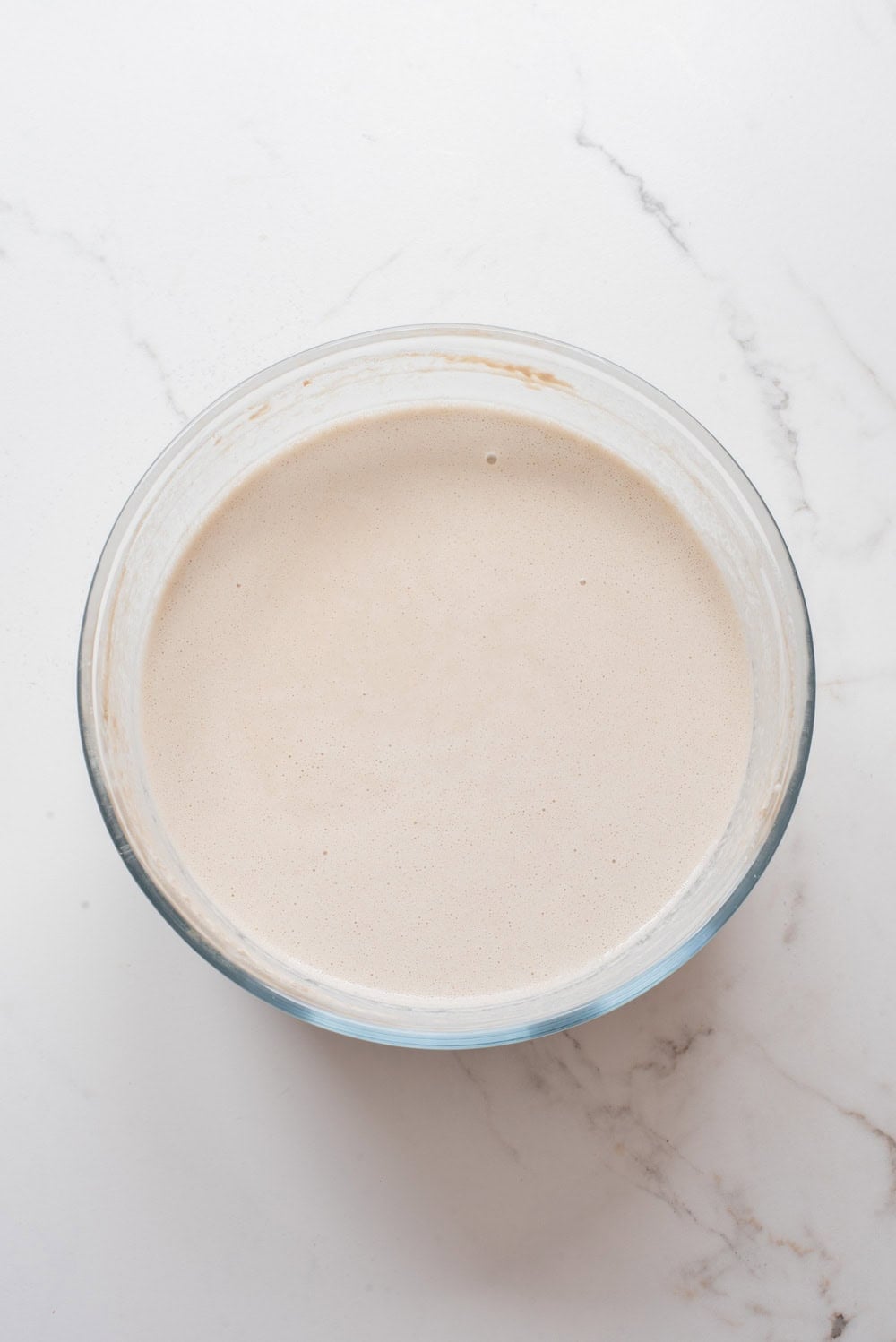
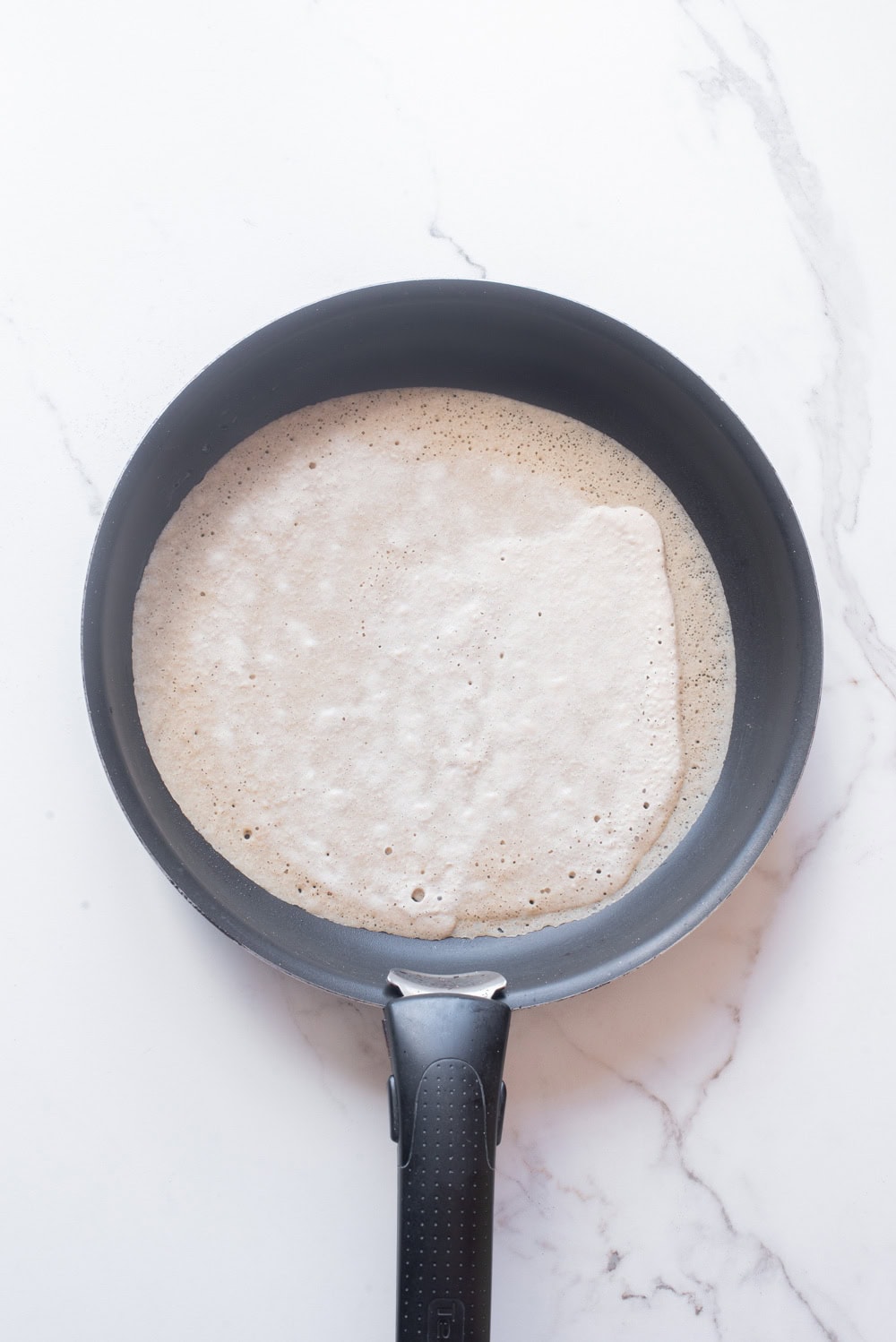
- Heat a nonstick pan over medium heat and wipe it with an oiled paper towel. Cook a ¼ cup test injera and check for eyes within 30 to 60 seconds. If this works, then pour ~¾ cup batter in a thin spiral from the outside edge to the center. Cook uncovered until about three quarters of the eyes have opened and set, 45 to 90 seconds.
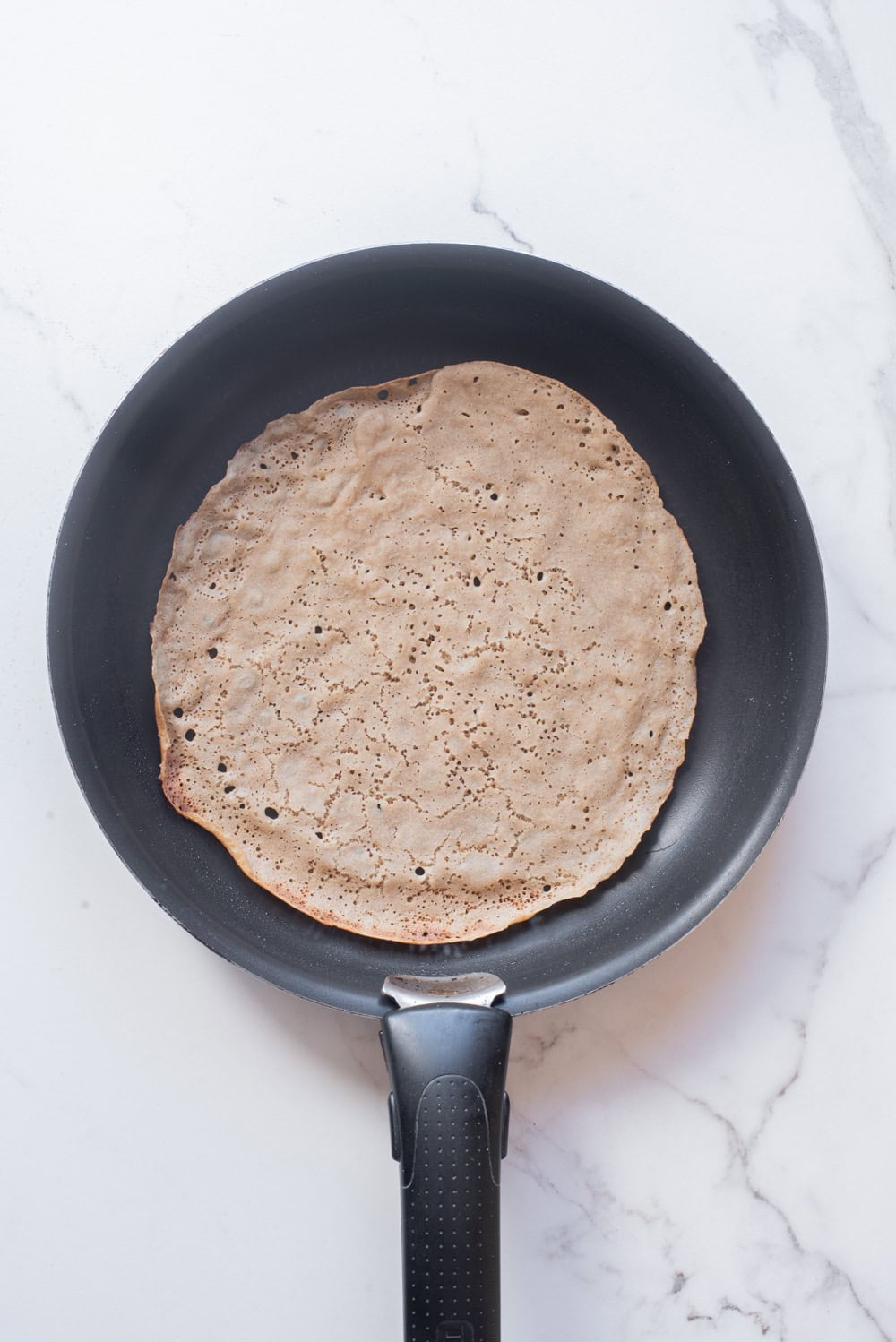
- Cover and steam 1 to 2 minutes, until the top is dry and the edges curl and release. Slide it onto a towel-lined plate and keep going, re-oiling the pan lightly each time.
How to serve quick injera
Lay one injera flat on a big platter and spoon the stews right on top, then fold or roll the rest on the side for tearing and scooping. Here it’s topped with Ethiopian red lentil stew and Ethiopian collard greens.
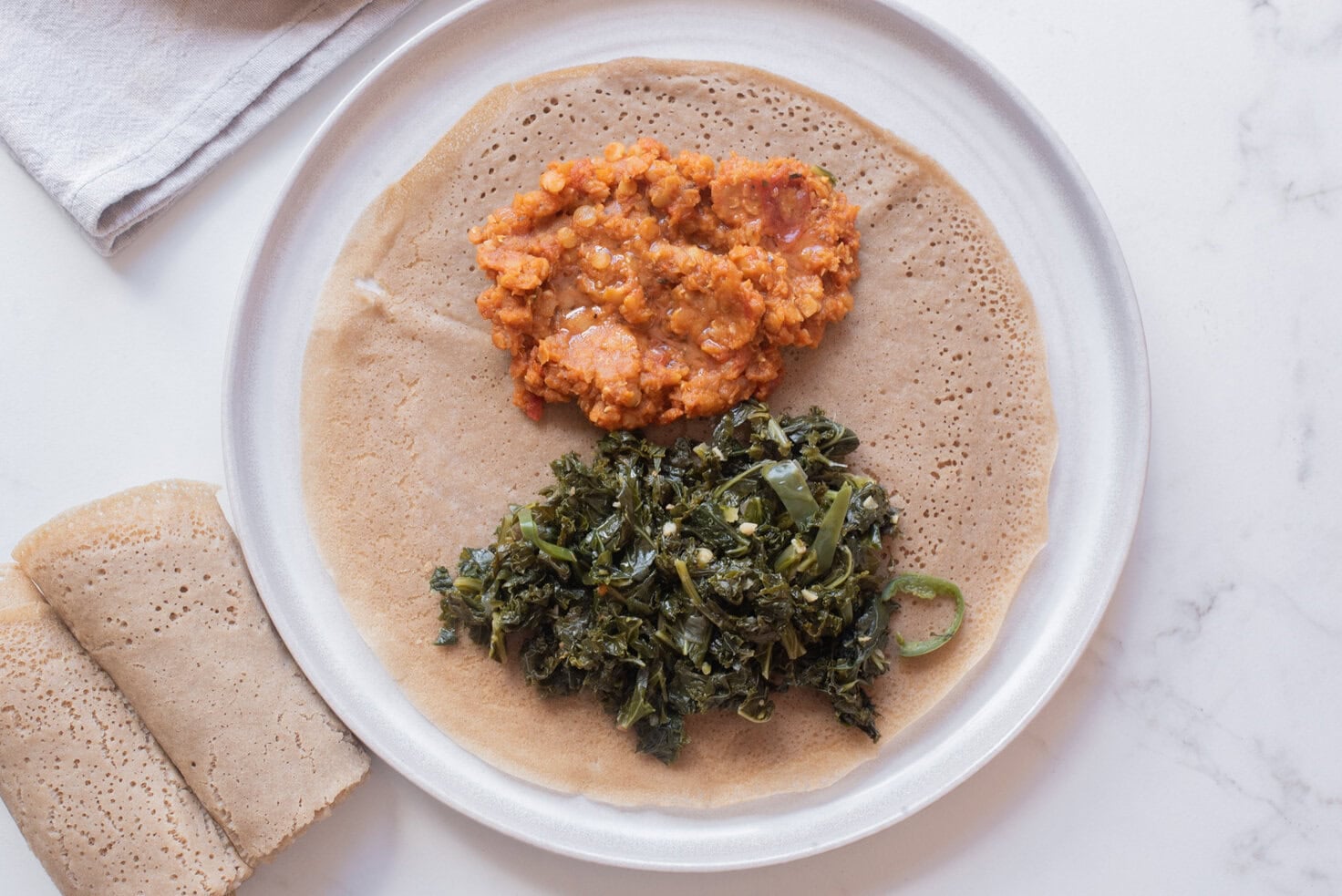
For a bigger spread, add Ethiopian chickpea stew, Ethiopian cabbage and carrots, a mild Ethiopian split pea stew for anyone who doesn’t want heat, and an Ethiopian tomato salad for something fresh.
Variations
- Use brown teff for a darker, nuttier injera, or ivory for a milder one.
- Let the batter sit up to 48 hours instead of 24 for a more sour tang.
Storage and reheating
Let each injera cool a few minutes before you stack them, and only touch them with dry hands. Wet hands invite mold in storage. Injera freezes well. Rewarm it in a dry nonstick pan.
One-Day Quick Injera with 100% Teff
Equipment
- 10 to 12 inch nonstick skillet or crepe pan with a lid (glass is ideal)
- Kitchen scale
Ingredients
- 480 g teff flour, about 4 cups, brown or ivory
- 3 cups filtered water, 720ml, room temperature
- ¾ teaspoon kosher salt
- 1 tablespoon baking powder
- ¾ cup chilled sparkling water, 180 to 240ml, as needed
- 1 teaspoon neutral oil, for wiping the pan
Instructions
Day 1
- Whisk the teff flour and filtered water in a large bowl until completely smooth, with no lumps. Cover with a dish towel and leave on the counter for 24 hours, or up to 48 for more tang.
Day 2
- Check the batter. It should look slightly foamy on top and smell faintly sour. Whisk in the salt and baking powder. The batter will deflate as you stir, which is normal.
- Whisk in the chilled sparkling water a splash at a time until the batter is midway between crepe and pancake batter, thick enough to coat a spoon and thin enough to drip off it. Cook right away while the bubbles are working.
- Heat a 10 to 12 inch nonstick pan over medium heat. Wipe it with a paper towel moistened with neutral oil.
- Cook a small test injera with about ¼ cup batter. Eyes should appear across the surface within 30 to 60 seconds. If they don’t, turn the heat up slightly or thin the batter a little, then test again.
- For each injera, pour about ¾ cup batter in a thin stream, spiraling from the outside edge to the center. Swirl the pan to fill any gaps. Cook uncovered until eyes form across the surface and about 75 percent have opened and set, 45 to 90 seconds.
- Cover and steam for 1 to 2 minutes, until the top is dry, the edges curl and lift, and the injera releases from the pan. Never flip it.
- Slide onto a towel-lined plate and let it cool a few minutes before stacking. Re-oil the pan lightly between injera, and drop the heat to medium-low after the first few.
Notes
- If the first few come out thick with few holes, pour a little less than ¾ cup per injera.
- Once the batter is too thin, it can’t be fixed, so always thin gradually.
- Sticking on a nonstick pan means it’s undercooked. Keep cooking until the edges release.
- Using Morton or table salt, use half the amount. Topo Chico, San Pellegrino or Perrier all work as the sparkling water. Ambo is the Ethiopian sparkling water.
- Keeps loosely covered at room temperature up to 2 days, or in an airtight bag in the fridge 3 to 4 days. Freezes well. Rewarm in a dry nonstick pan.
Nutrition
Nutrition information is automatically calculated, so should only be used as an approximation.


