

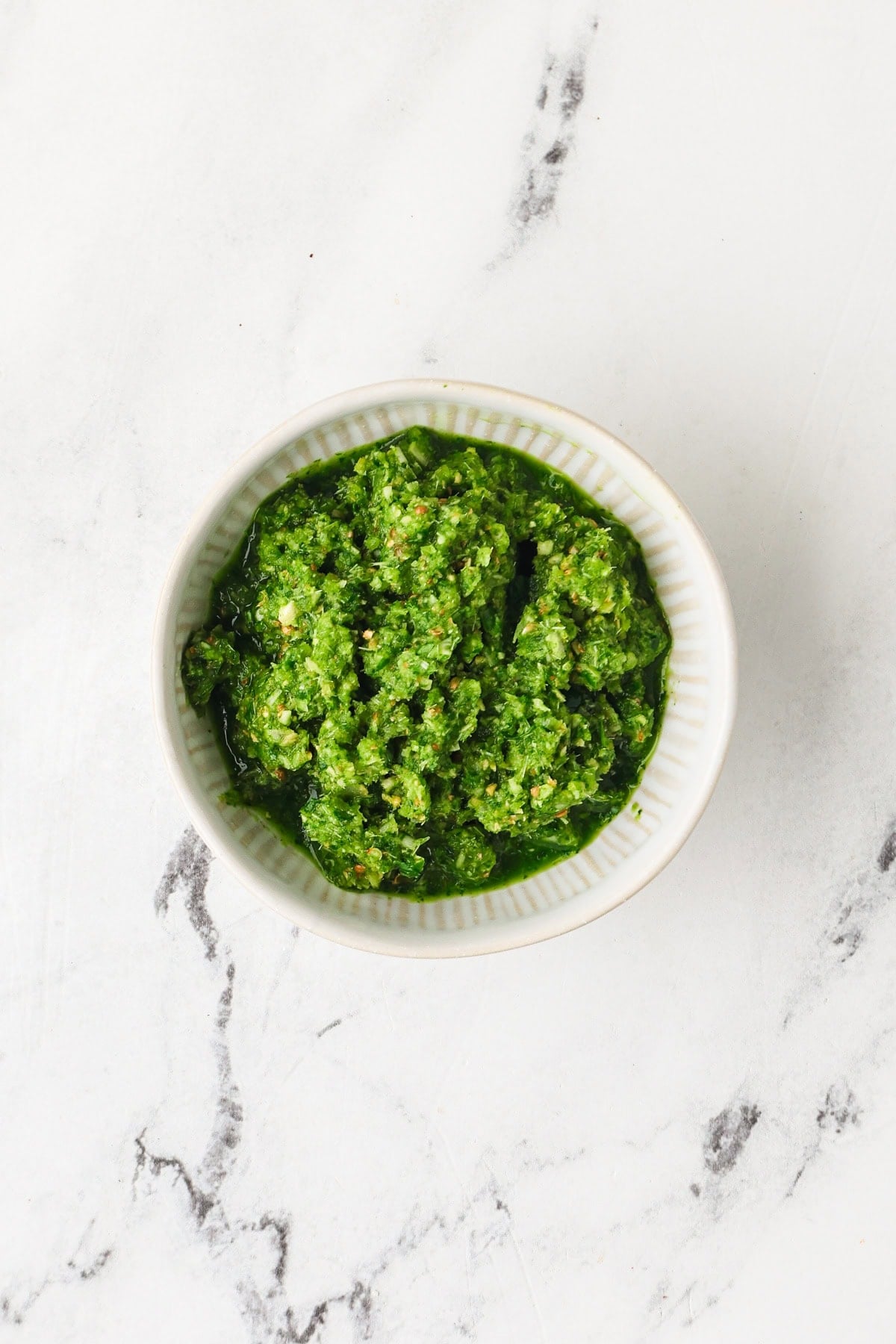
My homemade Thai green curry paste is built from fresh lemongrass, galangal, makrut lime leaves, and Thai green chilies. It doesn’t have shrimp paste or fish sauce, so it’s vegetarian. Fifteen minutes in a food processor, freezes in ice cube trays for up to 3 months, and one batch is enough for a full pot of Thai green curry with tofu!
What a cooking class in Thailand taught me about curry paste

I learned to make this paste in a cooking class in Koh Samui. The instructor was from Isan, and while the paste itself is Central/Northern Thai, her approach to building flavor from whole spices and fresh aromatics applied across every curry we made that week.
The single biggest thing she taught me: the aromatics in a jar of store-bought paste have already lost most of their volatile oils. Fresh lemongrass and makrut lime leaves smell completely different from their jarred versions — sharper, more citrusy, more alive. That freshness is what you’re paying for with the 15 minutes of work, and it’s the reason this paste produces a green curry with noticeably more depth than even a good store-bought brand.
This green curry paste, my red curry paste without shrimp, and even the tofu satay all came from the same trip and the same notebook.

Key ingredients and why they matter
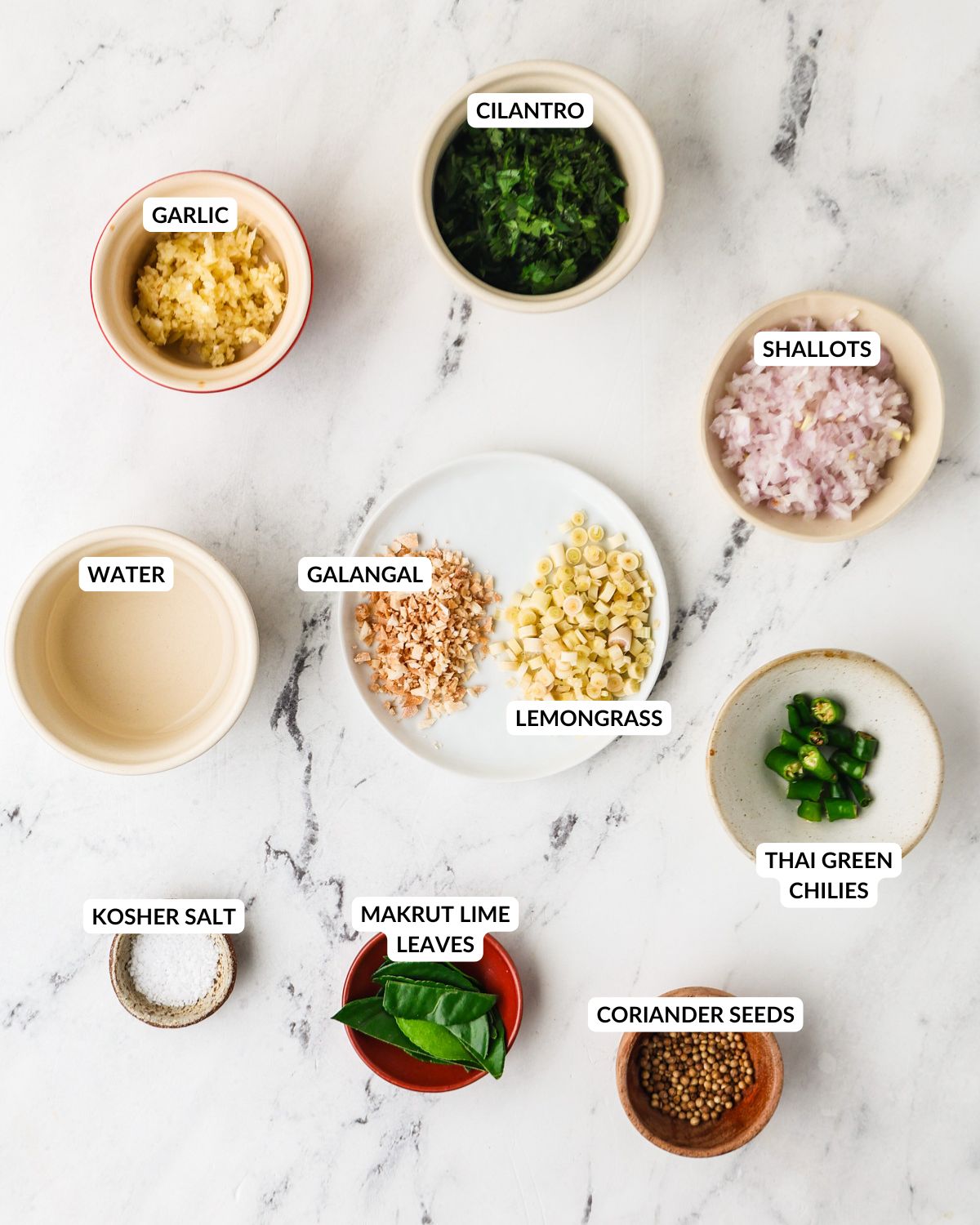
Full ingredient list and detailed instructions in the recipe card.
- Thai green chilies are the heat and color base. Four chilies with seeds removed gives moderate heat. Leave seeds in two for more fire, or cut to two chilies for mild. These are significantly hotter than jalapeños — start conservative.
- Lemongrass — use the bottom third only, outer layers peeled away, roughly chopped. This is where the citrus fragrance lives. If the pieces feel woody or fibrous, you haven’t peeled enough layers off.
- Galangal goes in roughly chopped. It’s not ginger — woodsier, more medicinal, faintly citrusy. Fresh ginger works if you genuinely can’t find galangal, but the paste will taste warmer and less distinctly Thai.
- Makrut lime leaves — remove the center stems before blending. The stems are too fibrous and make the paste gritty. Fresh or frozen from any Asian grocery; frozen keeps for months and works just as well.
- Toasted coriander seeds — toast in a dry pan for 1–2 minutes until fragrant before adding to the blender. This step deepens the spice and takes almost no time. Pre-ground coriander is a substitute but the flavor is noticeably flatter.
- Shallots, garlic, cilantro stems — the aromatic base. Cilantro roots are traditional and even better if you can find them; stems are more accessible and work well.
Shruthi’s Top Tips
Getting the paste right
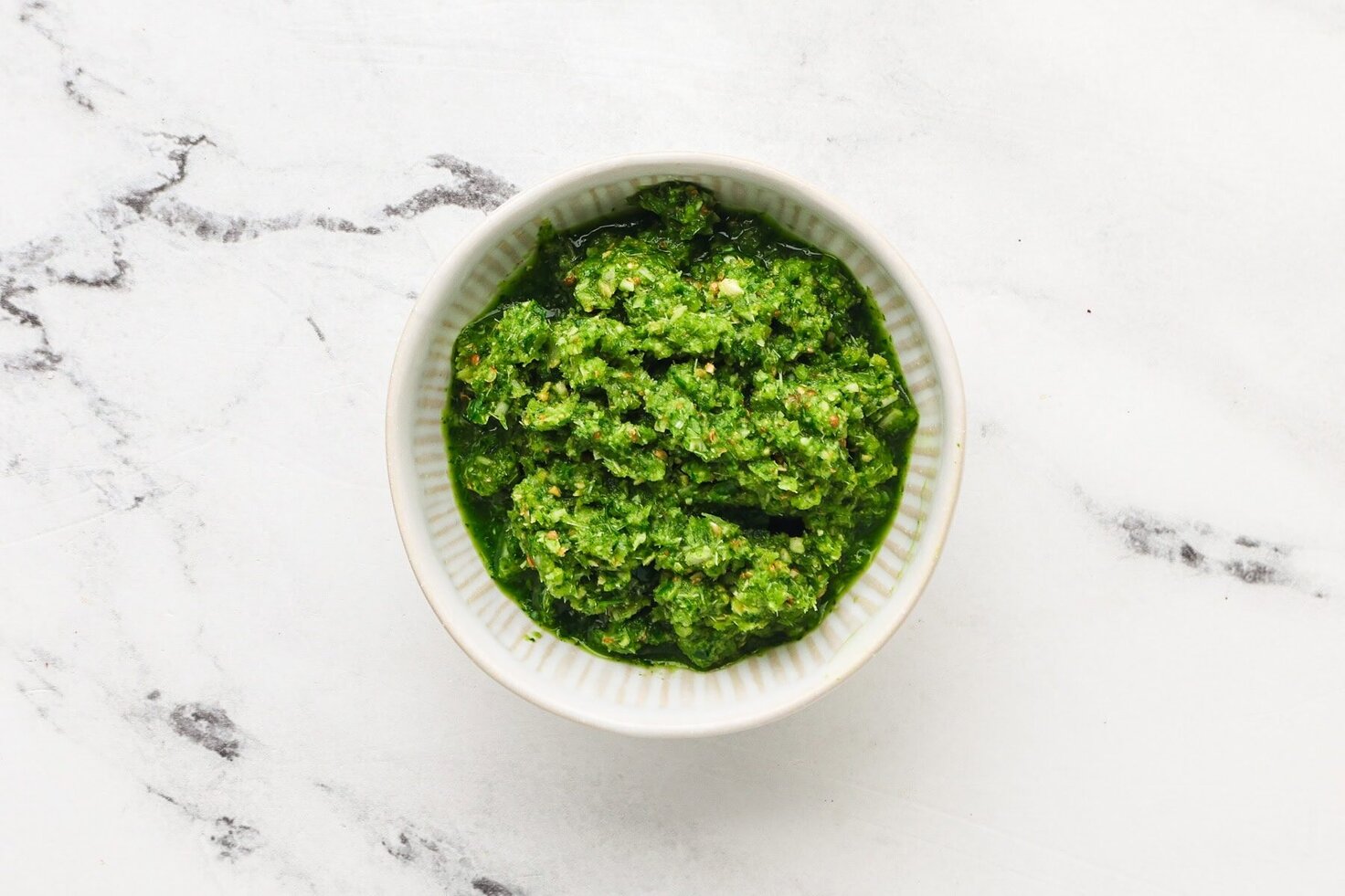
- Don’t add too much water. The paste should be thick enough to hold its shape on a spoon. Watery paste dilutes the curry.
- A food processor works better than a full-size blender for this volume. A blender needs more liquid to catch, which thins the paste. A small blender (like a Nutribullet) works if you scrape down frequently.
- The paste won’t be perfectly smooth and that’s fine. A slightly rough texture is normal for a food processor paste. Mortar and pestle produces the smoothest result but takes 45+ minutes of pounding.
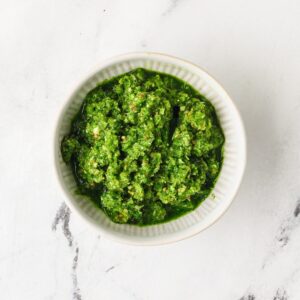
- Taste the paste before using it. It should smell intensely aromatic — citrusy from the lemongrass and lime leaves, warm from the coriander, with a clear chili heat underneath. If it smells flat, blend longer.
- Use the entire batch for one pot of green curry (6 servings). This isn’t a concentrated paste like store-bought — it’s designed to go all in.
How to make Thai green curry paste
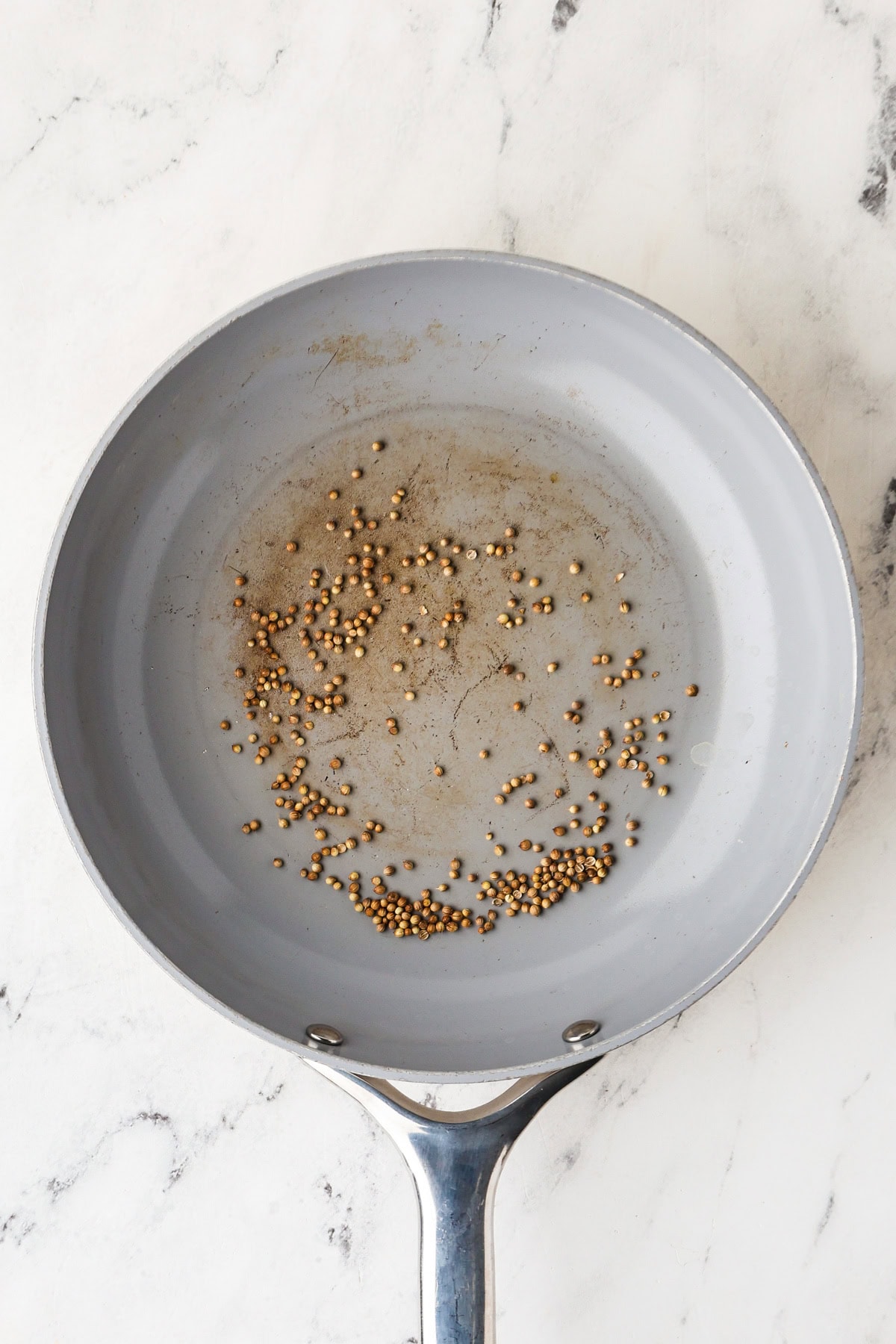
- Toast the coriander seeds. Dry pan, medium heat, 1–2 minutes until fragrant. Let cool.
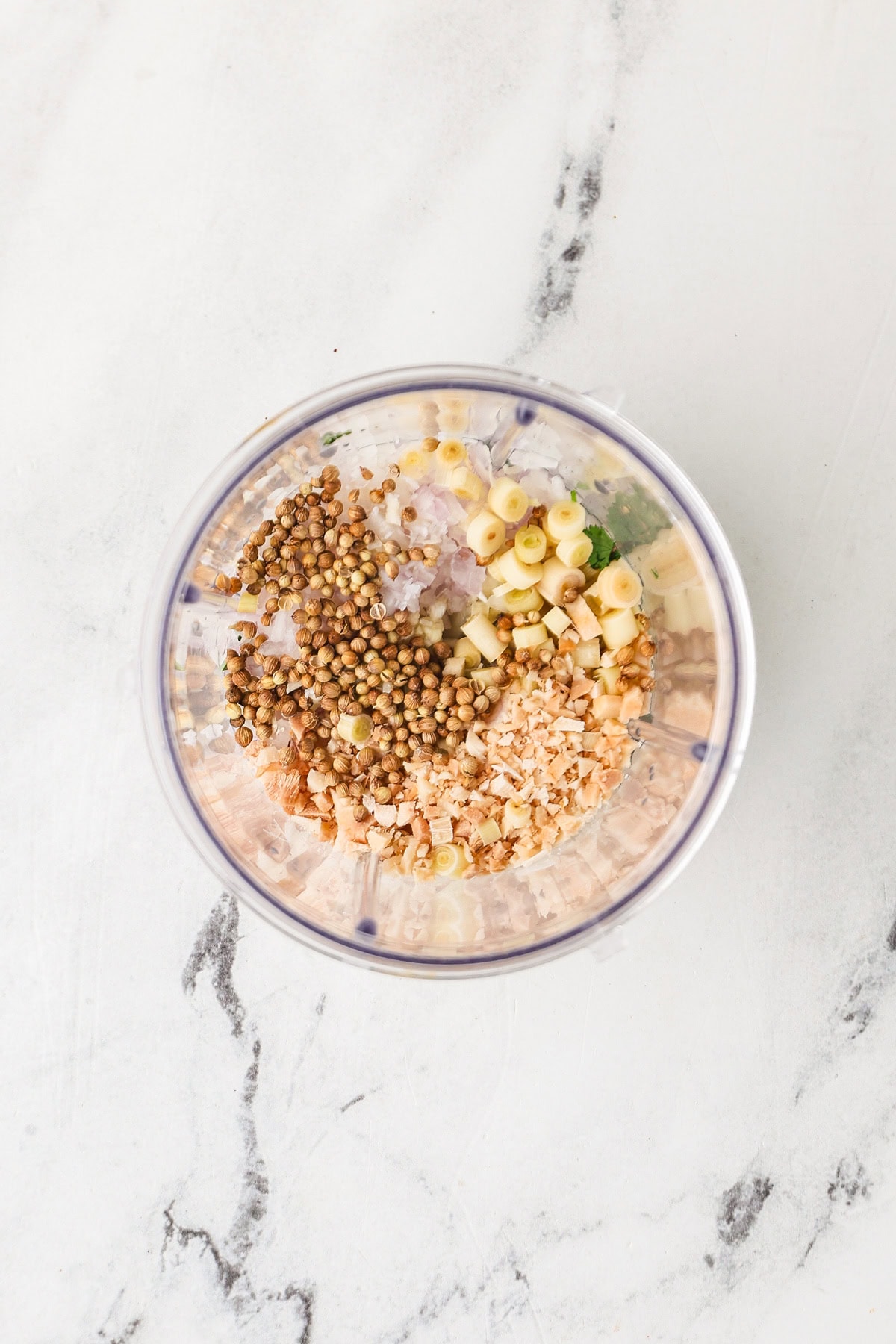
- Blend everything. Add chilies, shallots, garlic, galangal, lemongrass, makrut lime leaves, cilantro stems, toasted coriander, and salt to a food processor. Add 2 tablespoons of water and blend into a rough paste, scraping down sides as needed. Add a third tablespoon only if the blade is spinning without catching. The paste should be thick and fragrant, not watery.
What to make with this paste
This paste is designed for my Thai green curry with tofu — one batch makes a full pot for 6 servings. It also works in green curry fried rice (fry a couple of tablespoons in oil before adding the rice) or stirred into coconut curry as a quick broth base.
How to store and freeze
The paste keeps refrigerated in an airtight container up to 3 days. For longer storage, spoon into ice cube trays, freeze solid, then transfer to a freezer bag — keeps up to 3 months. Each cube is roughly 1–2 tablespoons. Press plastic wrap directly onto the surface before sealing to preserve the green color.
More authentic Thai curry recipes
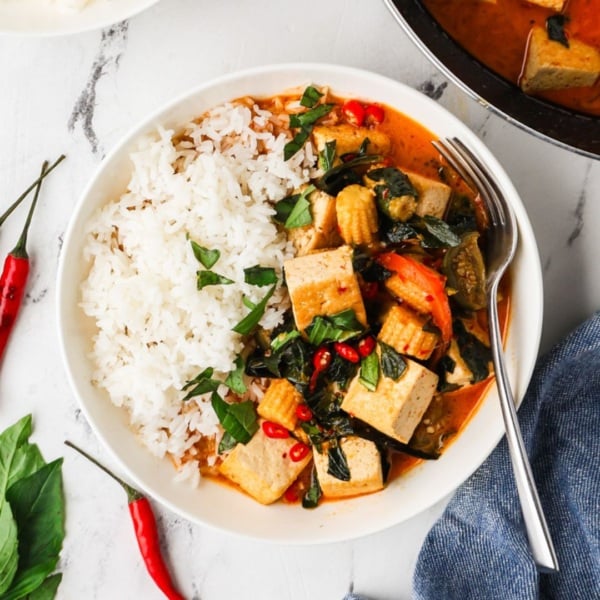
Thai Red Curry with Tofu
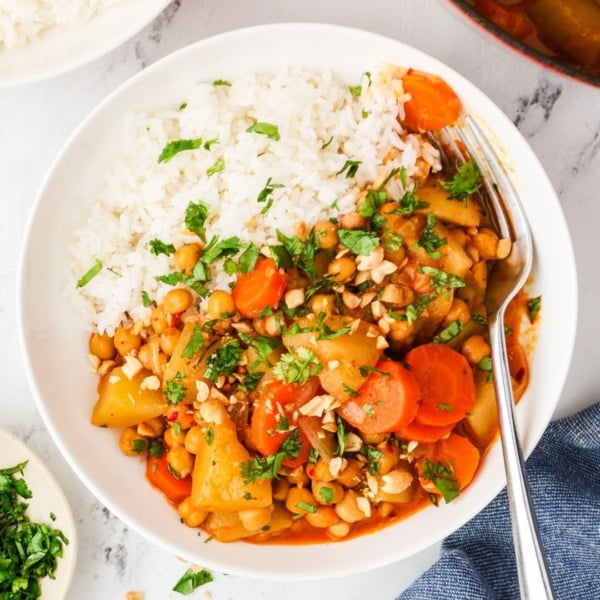
Massaman Curry (with Chickpeas)
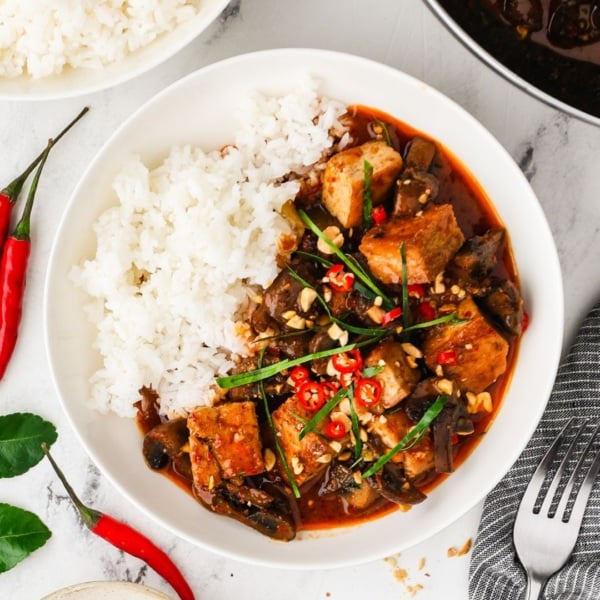
Vegetarian Panang Curry with Tofu and Mushrooms
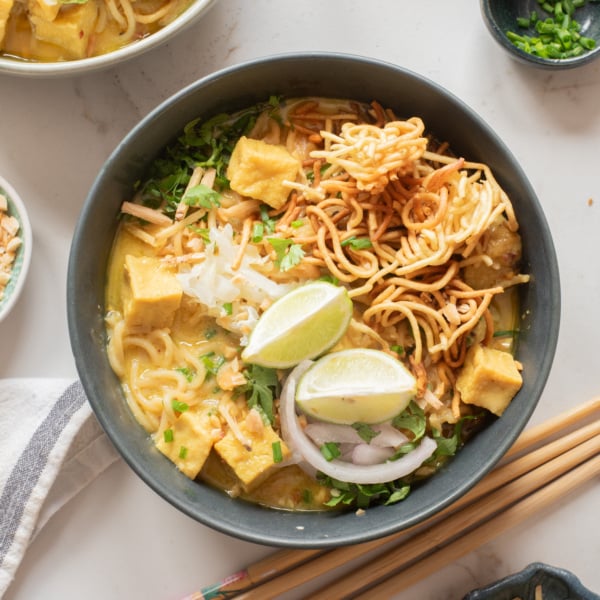
Vegetarian Khao Soi (Northern Thai Curry Noodle Soup)
Vegan Thai Green Curry Paste
Ingredients
- 1 teaspoon coriander seeds, toasted
- 4 Thai green chilies, roughly chopped (seeds removed for less heat)
- 3 medium shallots, roughly chopped
- 6 cloves garlic
- 1 tablespoon fresh galangal, roughly chopped
- 2 stalks lemongrass, bottom third only, outer layers removed, roughly chopped
- 4 kaffir lime leaves, center stems removed
- 2 tablespoons fresh cilantro stems, roughly chopped
- ½ teaspoon kosher salt
- 2–3 tablespoons water, to blend
Instructions
- Toast the coriander seeds in a dry pan over medium heat for 1–2 minutes until fragrant and just starting to darken. Let cool.
- Add all paste ingredients — Thai green chilies, shallots, garlic, chopped galangal, lemongrass, kaffir lime leaves, cilantro stems, toasted coriander seeds, and salt — to a blender or food processor.
- Add 2 tablespoons of water and blend into a rough paste, scraping down the sides as needed.
- Add the third tablespoon of water only if needed to get things moving. The paste should be thick and fragrant, not watery.
Nutrition
Nutrition information is automatically calculated, so should only be used as an approximation.


