
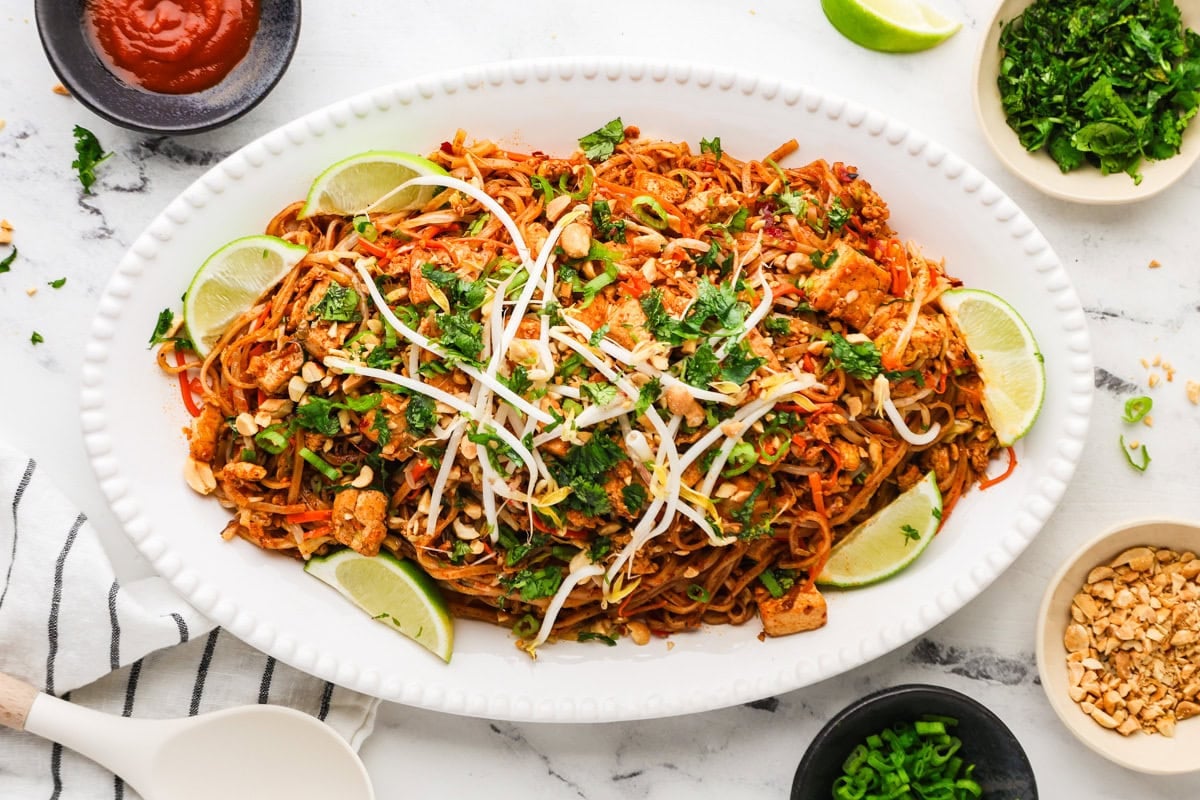
My tofu pad thai without tamarind combines tomato ketchup (yes, really), sriracha, vegetarian Thai roasted chili paste (nam prik pao), mushroom soy sauce, and a slowly caramelized onion. The caramelized onion does the flavor work tamarind normally does, adding sweet-savory roundness without the specialty ingredient. I learned this in Koh Samui from a Thai instructor who also taught me to add the egg to the garlic before it burns. Vegetarian, and ready in 55 minutes.
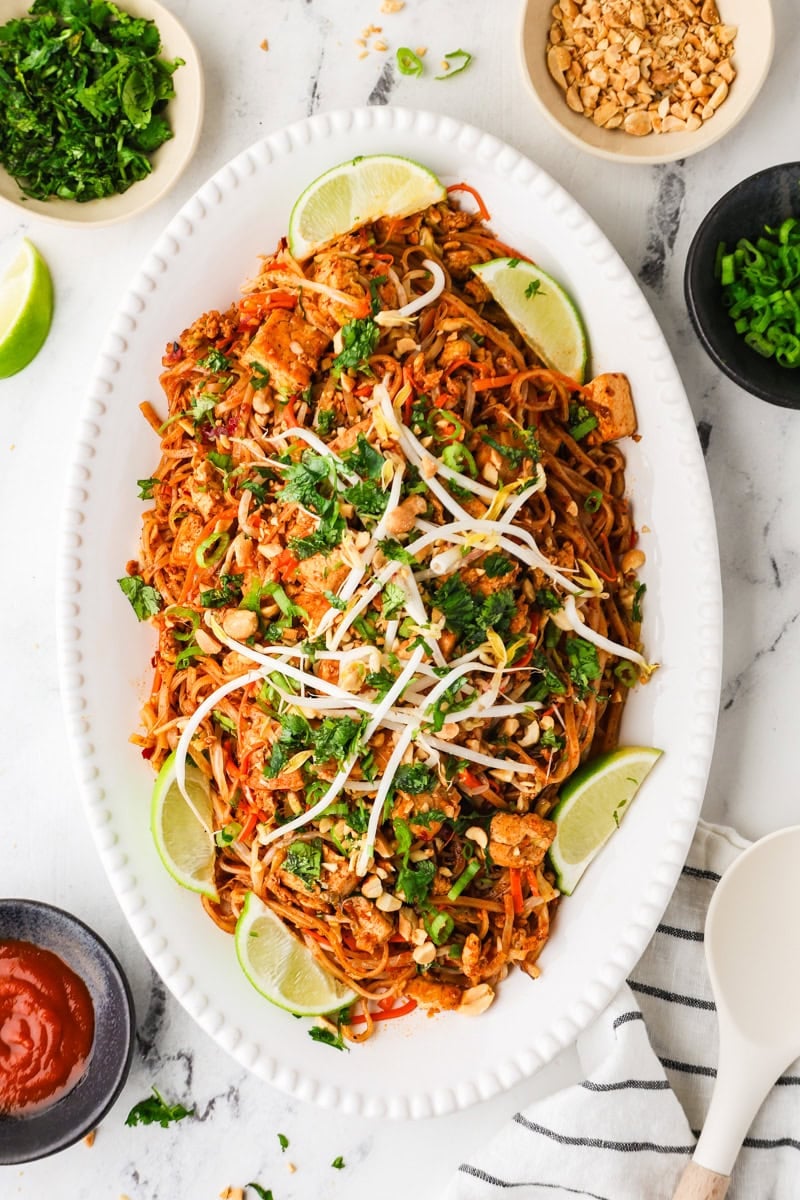
Why this pad thai sauce skips the tamarind

Look, tamarind is the classic approach and genuinely delicious. I get it, but this is just a different school of pad thai. Both versions are served throughout Thailand.
Ketchup is in this sauce. I know, but don’t exit yet. The first time I heard it I had the same reaction, and then I tasted the dish and the ketchup argument got a lot harder to make. It’s not the ketchup flavor you taste. It’s the body and roundness it adds alongside the caramelized onion.
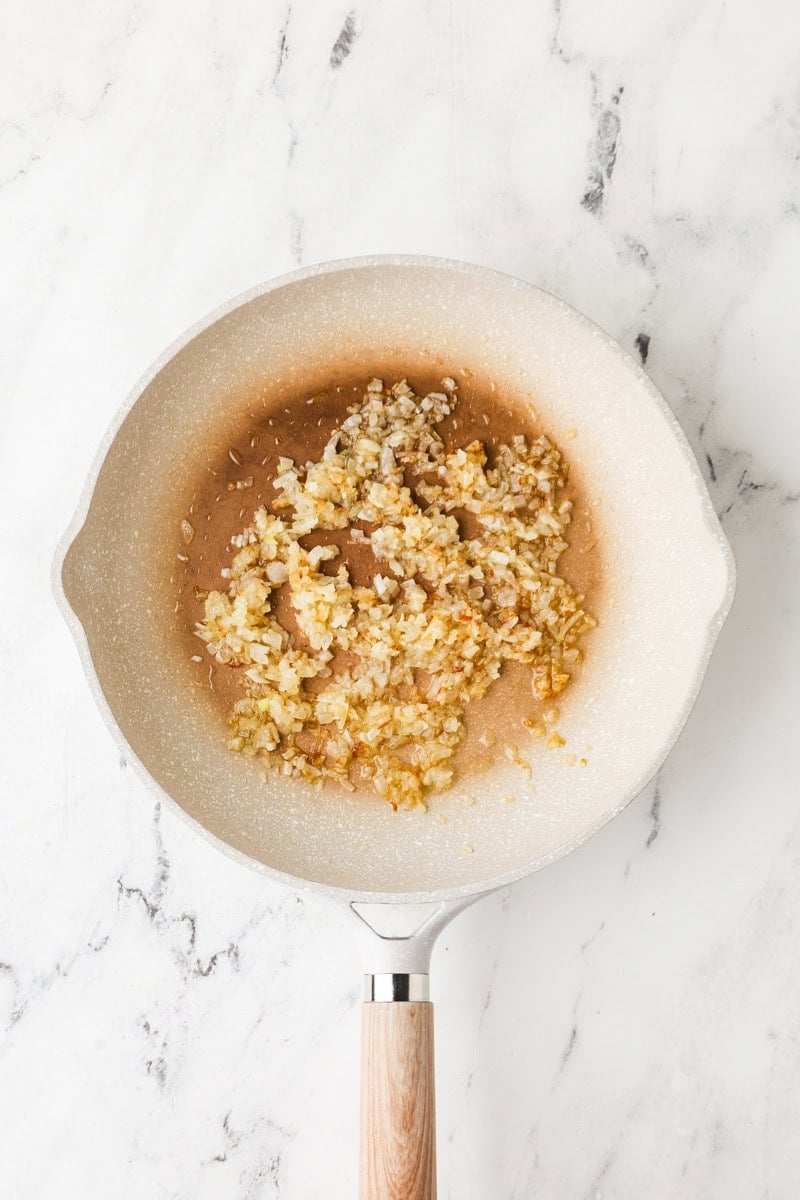
Speaking of which: don’t rush the onion. I did the first time and the sauce tasted thin. Ten minutes over low heat until it’s jammy and deeply brown. That’s the step doing the work tamarind would normally do.
The garlic-egg move really matters, btw. If you’ve ever cooked garlic at high heat, you know it burns in seconds. The moment it turns gold, pour in the beaten egg. The egg cools the pan, the garlic stops cooking, and the egg absorbs all that flavor. I use the same trick in my Thai fried rice.

Key ingredients and why they matter
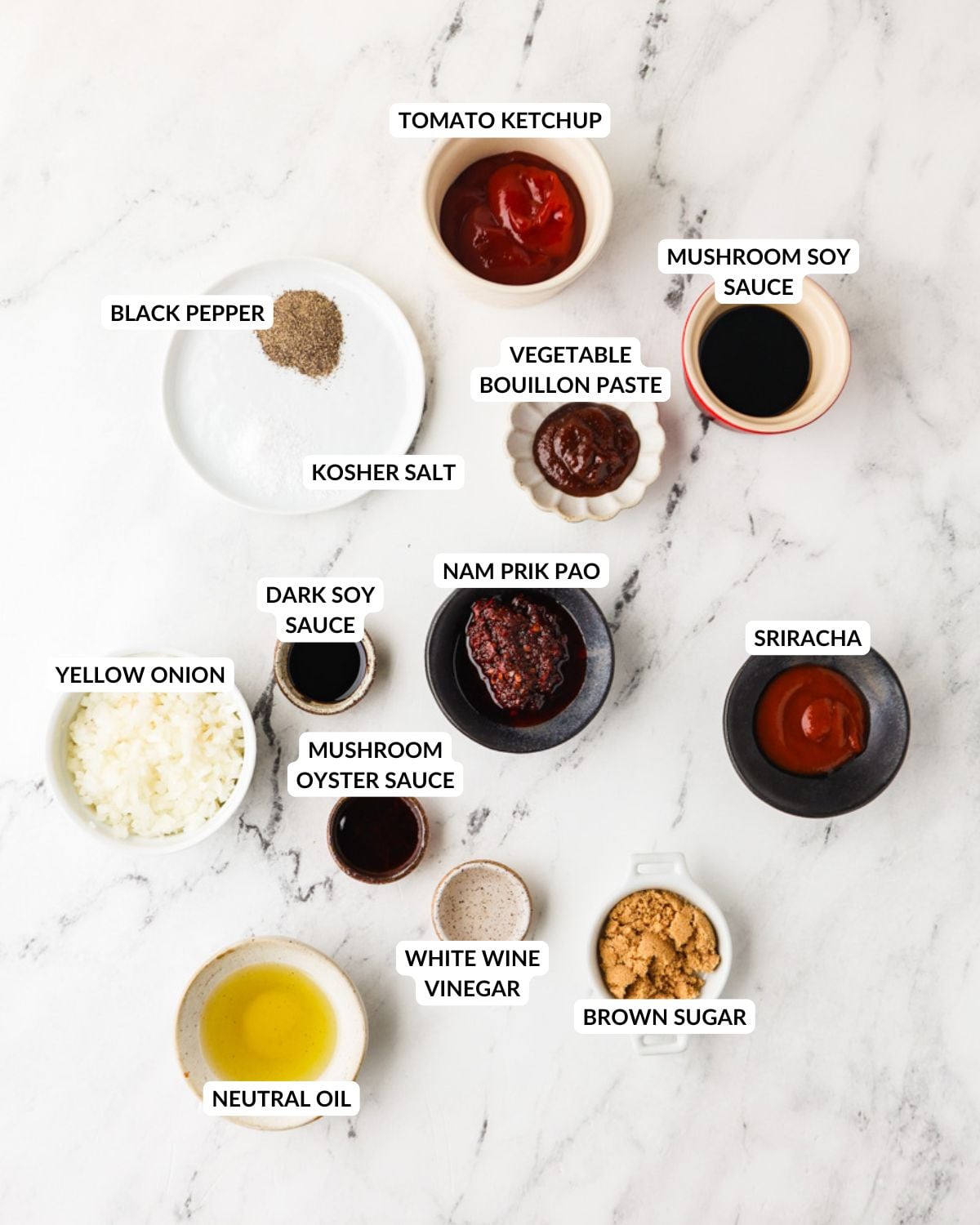
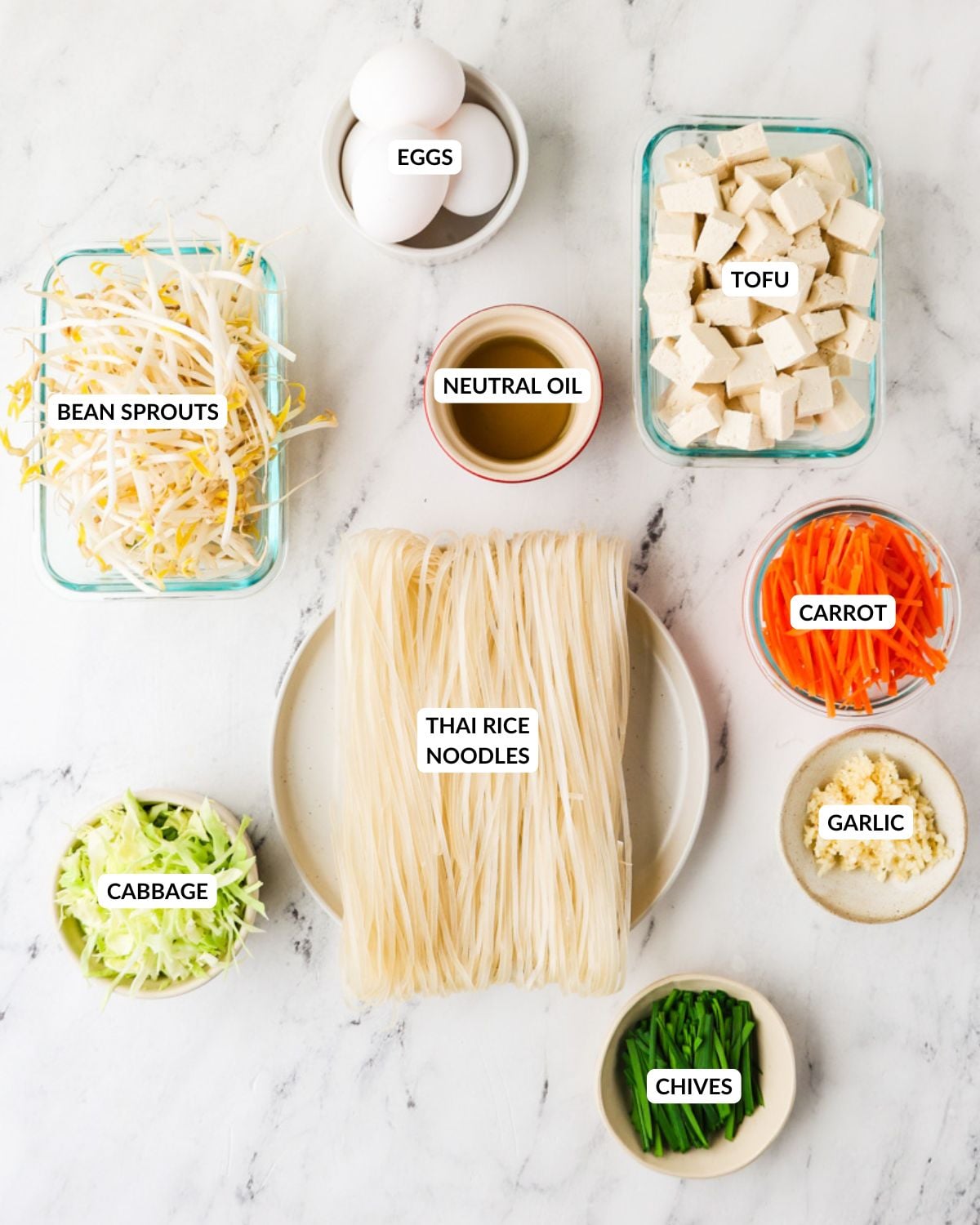
Full list in the recipe card. A few things to flag before you shop.
- Vegetarian nam prik pao (Thai roasted chili paste) generally contains dried shrimp, so you have to look for the vegetarian label specifically. Maesri is the brand I buy and usually order online. No great substitute, but if you’re stuck, add an extra tablespoon of sriracha and a teaspoon of brown sugar.
- Mushroom soy sauce and mushroom oyster sauce are two different things and this recipe uses both. Mushroom soy is dark and slightly sweet, used like regular soy. Mushroom oyster sauce (Lee Kum Kee Vegetarian Stir-Fry Sauce is the standard) is thicker and more savory. Both can be found at any Asian grocery.
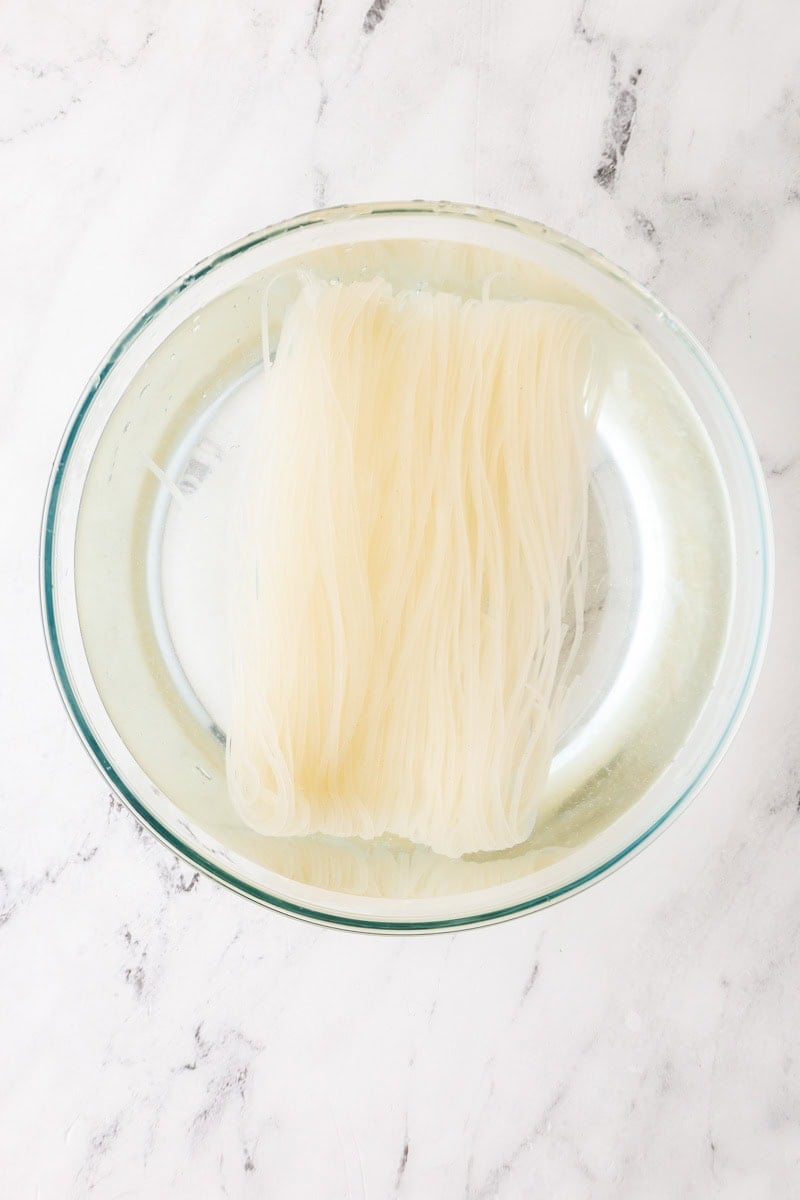
- Pad thai noodles soak in hot tap water, not boiling! Boiling cooks them too fast and they clump in the wok. Ten to fifteen minutes in water that’s hot to touch. If you bend a soaked noodle and it snaps cleanly, it’s too firm. If it goes completely limp and floppy, it’s already overcooked. You want bendable but slightly springy.
- Caramelized onions do the three things tamarind typically does in pad thai: sour, sweet, and deep. Ten minutes over low heat turns the onion’s natural sugars into something savory and rounded. Don’t rush it and don’t use the jarred stuff.
- Bouillon brand: Better Than Bouillon vegetable base is the easiest US brand to find. If you only have bouillon powder, double the amount (4 teaspoons instead of 2) since it’s less concentrated than the paste.
- Pickled garlic water upgrade. If you can find Thai pickled garlic at an Asian grocery, substitute ½ tablespoon of the pickling brine for the white vinegar in the sauce. It adds a more complex, rounded acidity. Not essential but a nice upgrade.
Shruthi’s Top Tips
Shruthi’s top tips
- Make the sauce ahead. It keeps refrigerated for up to 2 weeks. Pre-making it the night before turns this into a 15-minute weeknight dinner.
- Don’t crowd the wok. This recipe is designed for 4 servings in a 12-inch wok in one batch. If your wok is smaller, cook in two batches. Crowded noodles steam instead of fry, and they go gummy.
- The bean sprouts go in last for a reason. They should barely warm through and stay crisp. If they cook for more than 30 seconds, they wilt and lose their crunch — which is the textural contrast pad thai needs.
How to make tofu pad thai without tamarind
Prep: Press the tofu for at least 30 minutes before you start the recipe, if possible. Wrap in paper towels, heavy pan on top.
- Caramelize the onion first: medium-low heat, 10 minutes, until deeply brown and jammy. I rushed it the first time. The sauce tasted thin. Don’t.
- Soak the noodles while the onion cooks.
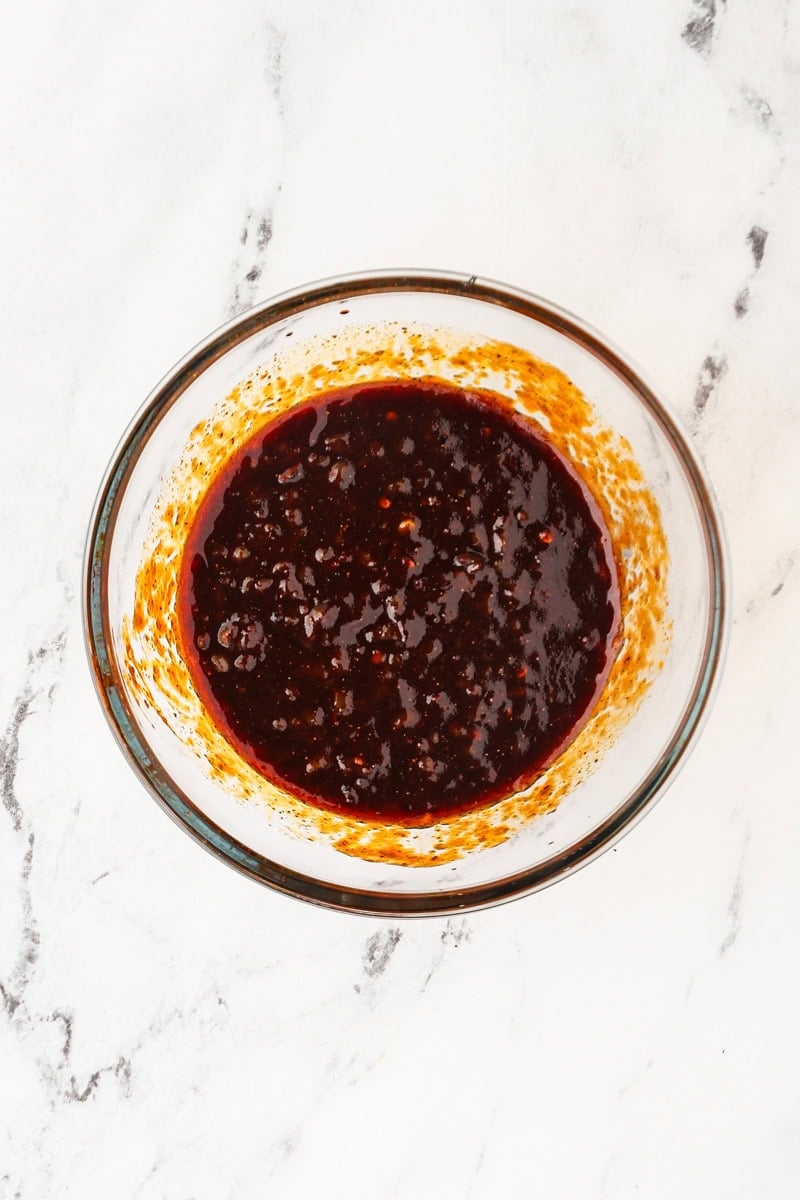
- Transfer the caramelized onions to a bowl and whisk in the rest of the sauce ingredients.
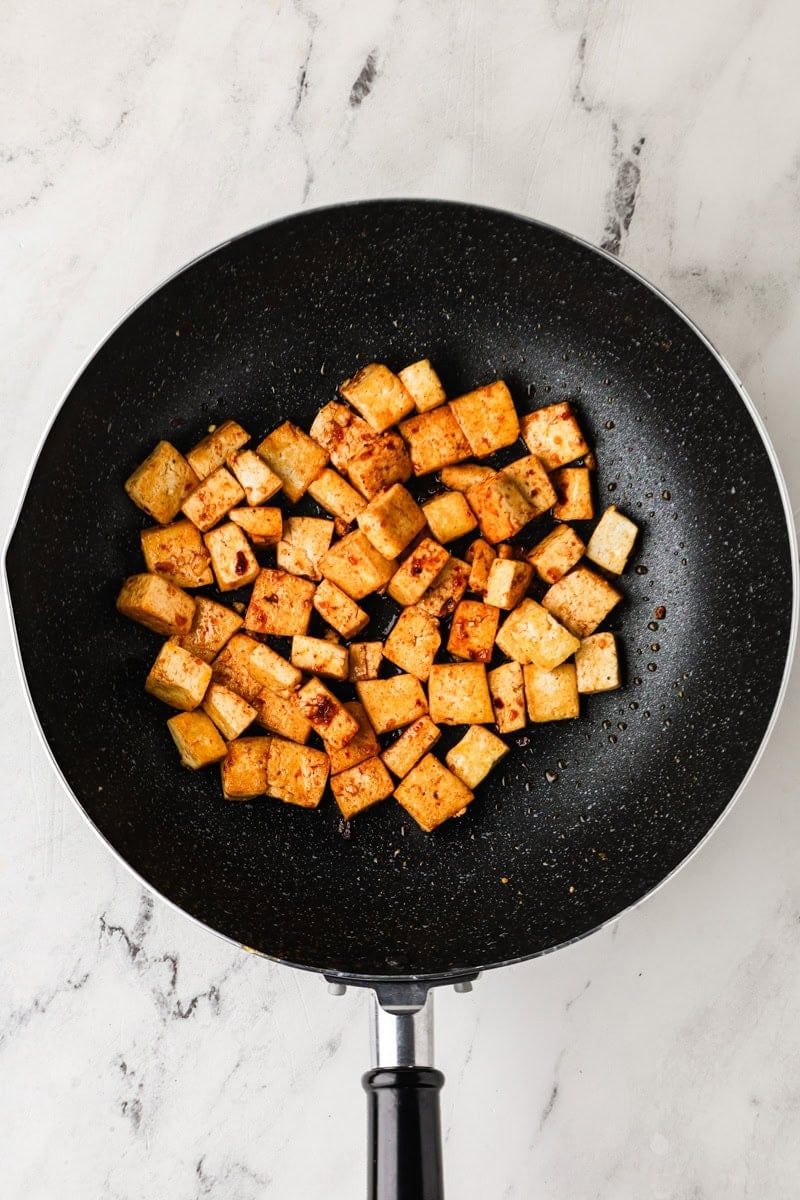
- Cook the tofu in a hot wok until deep brown on two sides, about 3-4 minutes total. A teaspoon of sauce to glaze, then set aside.
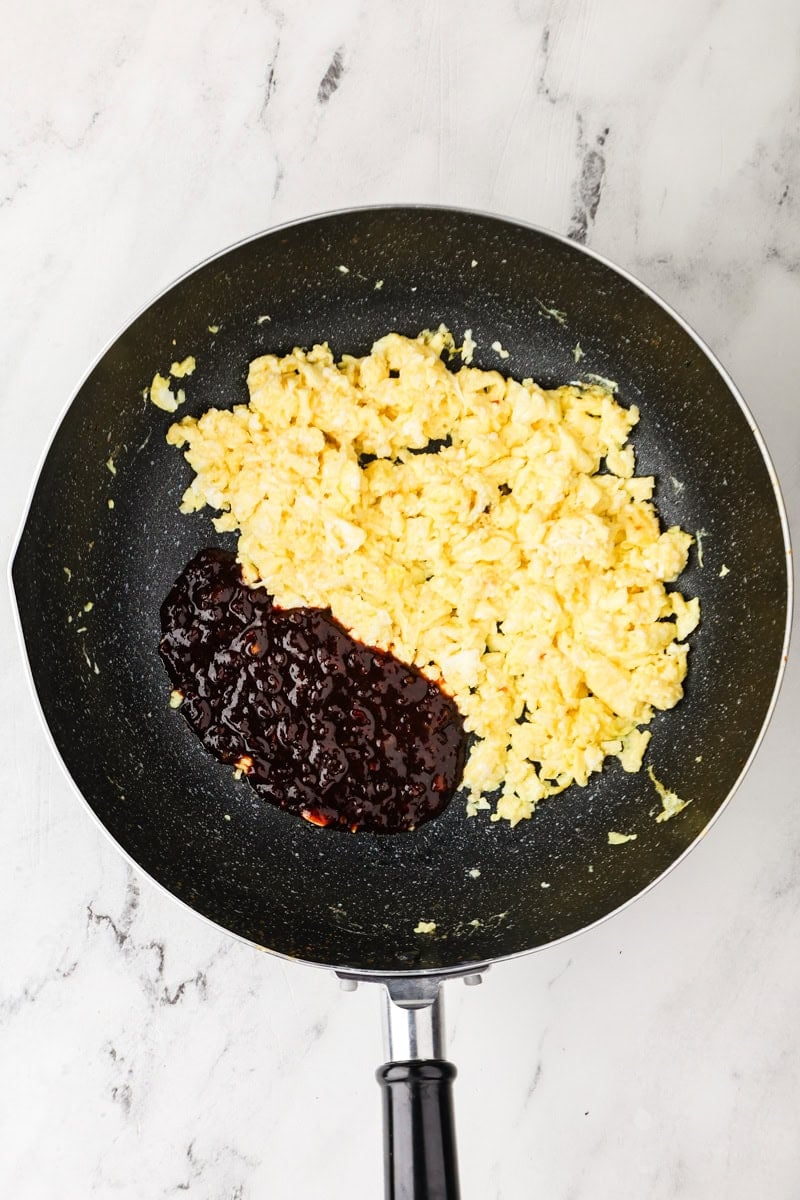
- For the garlic-egg move: add fresh oil in the wok, add garlic, stir constantly. The moment it starts turning gold, pour in the beaten eggs. Don’t wait! Scramble for about a minute.
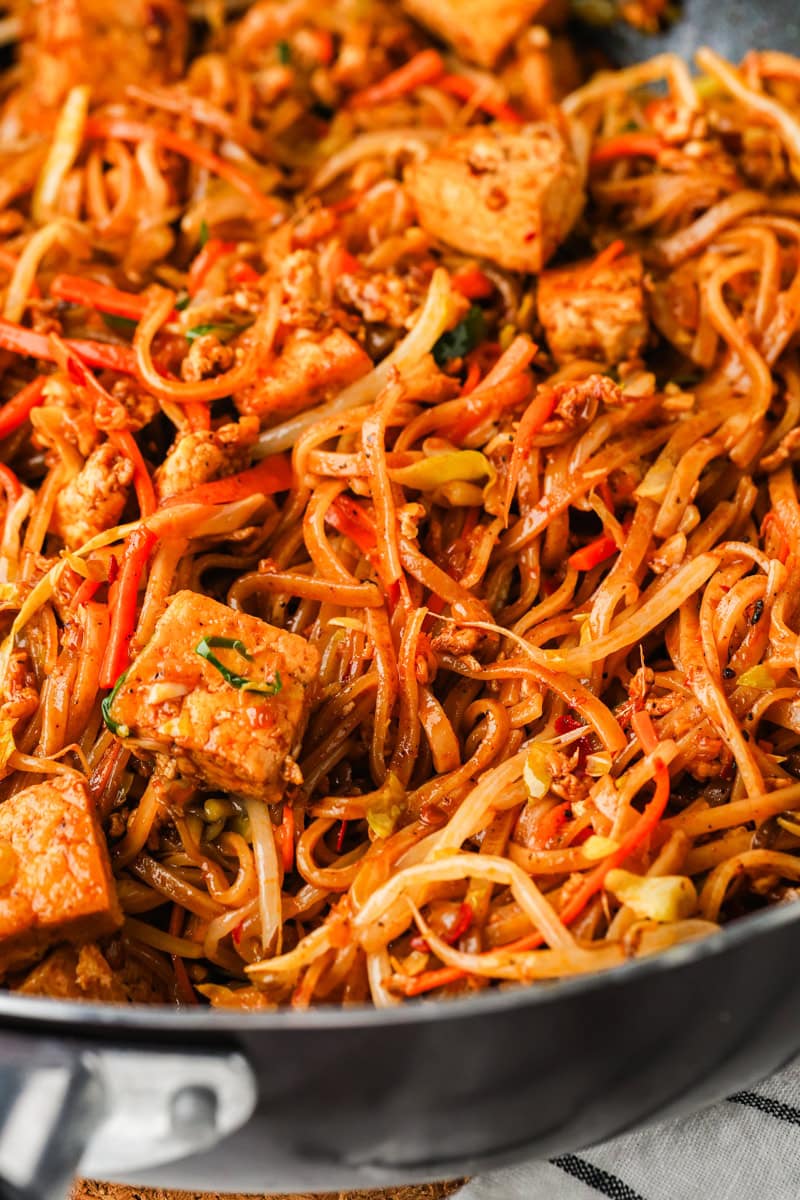
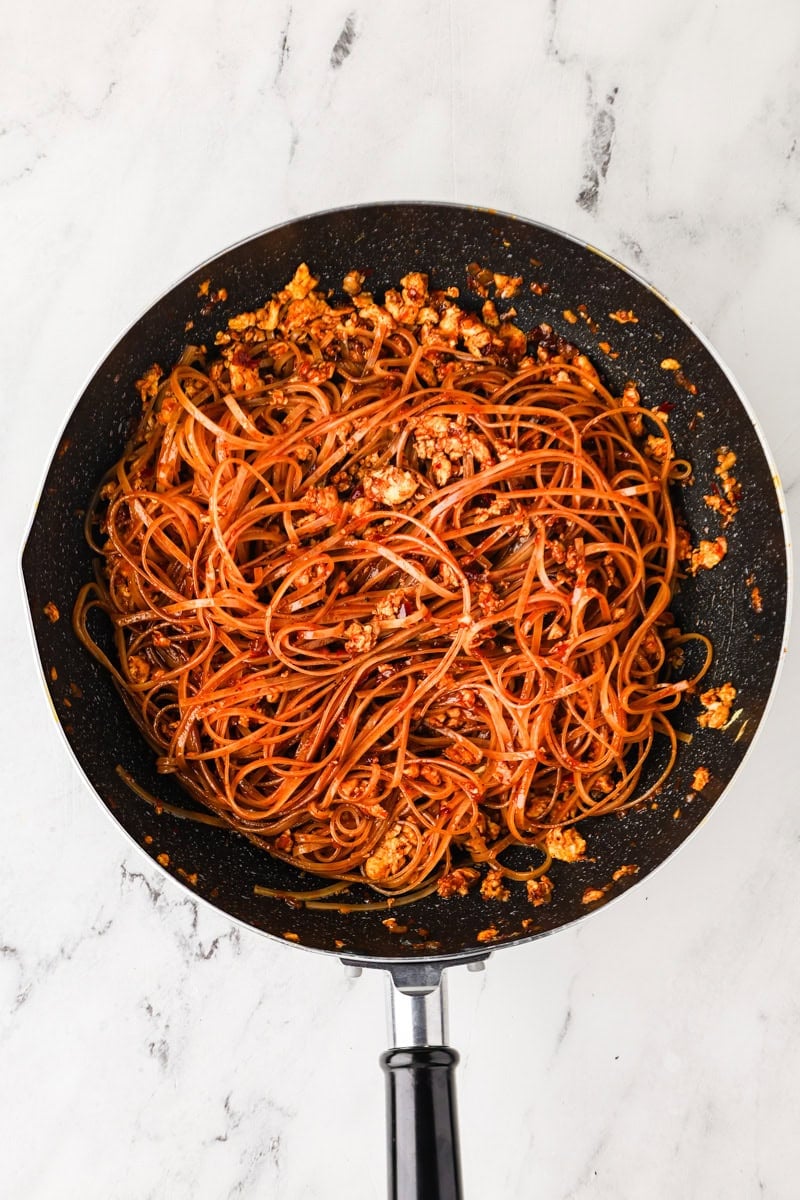
- Add noodles and all the sauce. Toss, but let the noodles sit against the pan 15-20 seconds between lifts. That’s where the char and absorption happen. Two to three minutes total.
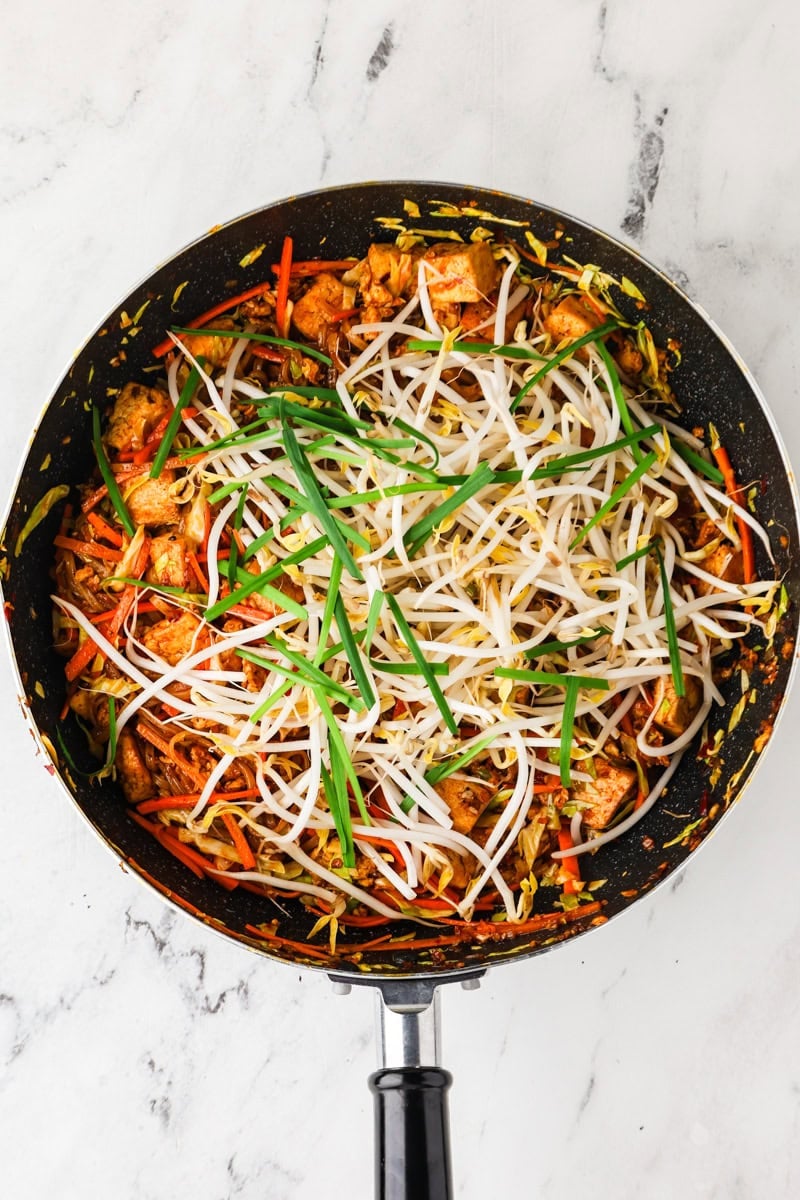
- Next, add tofu, carrot, and cabbage and cook for a minute. Bean sprouts and chives are added last, just for about 30 seconds, so it’s barely warm. Then move off heat immediately. Bean sprouts turn sad fast, we don’t want that.
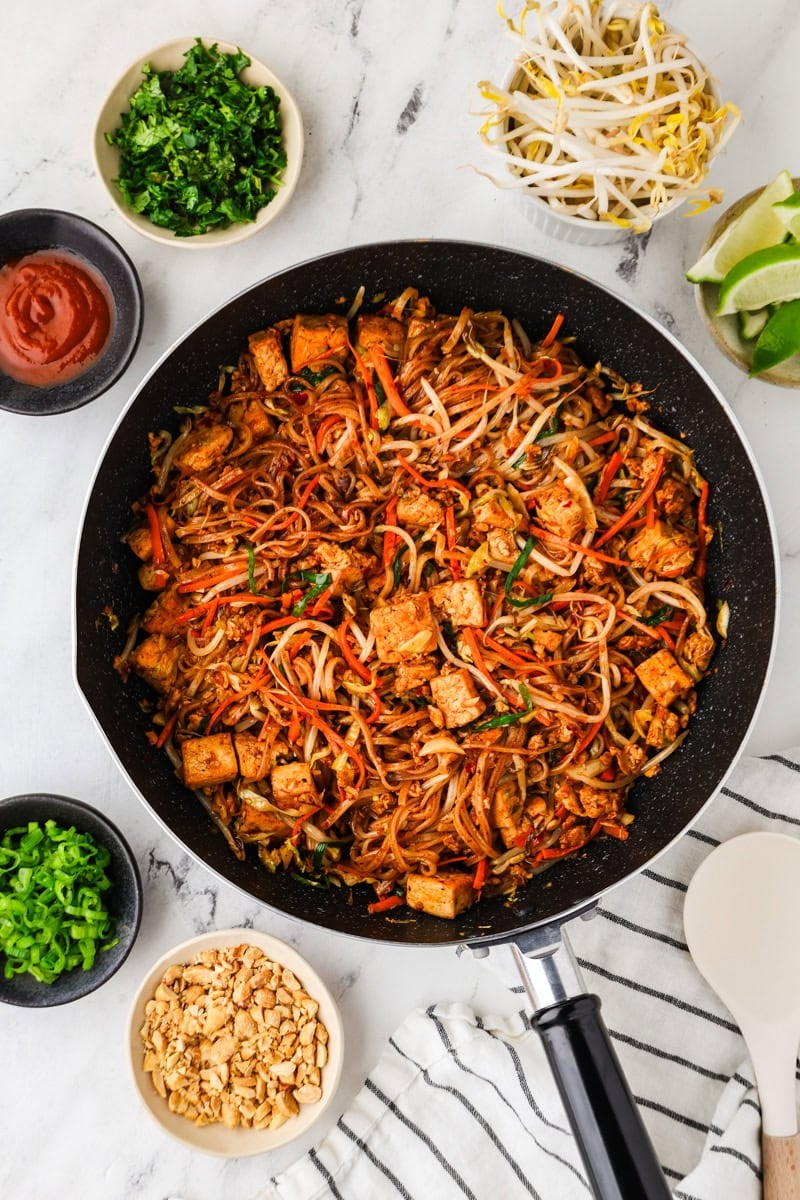
- Finally, garnish with peanuts, spring onions, cilantro, and lime to serve. Squeeze the lime before eating. Enjoy homemade pad thai and never order takeout again (lol) – no, seriously. You just might never order pad thai again.
What to serve with your pad thai
I usually just enjoy this on it’s own with some extra lime, peanuts and bean sprouts. But you can also serve it with a tofu satay (for more tofu, because who doesn’t want that, amirite?) and a tom yum style hot and sour soup or browse all my Thai recipes to round out the meal.
Variations
- With tamarind: If you’re like, “Shruthi, I already have tamarind” – well, that’s great, just add 1 tablespoon tamarind paste and reduce ketchup to 3 tablespoons.
- Vegan: Skip the eggs, add an extra half block of tofu. Same method.
- With kai-lan: Swap Chinese broccoli for the cabbage, stems sliced and leaves chopped. Slightly more bitter, slightly more authentic.
Storage and reheating suggestions
Best eaten fresh. Noodles lose their texture overnight. Leftovers keep 2 days; reheat in a hot skillet with a splash of water and a teaspoon of oil.
The sauce, however, keeps for up to 2 weeks in the fridge. Making it ahead turns this into a 20-minute dinner. Win-win-win.
Vegetarian Tofu Pad Thai Without Tamarind
Equipment
- Wok or large nonstick skillet (12-inch or larger)
- Large bowl for noodle soaking
- Fine mesh strainer
Ingredients
For the sauce:
- 4 tablespoons tomato ketchup
- 2 tablespoons sriracha
- 2 tablespoons vegetarian nam prik pao, Thai roasted chili paste
- 2 teaspoons mushroom soy sauce
- 2 teaspoons vegetable bouillon paste
- 2 teaspoons packed brown sugar
- 1 teaspoon vegetarian mushroom oyster sauce
- 1 teaspoon dark soy sauce
- 1 teaspoon white vinegar
- 1 teaspoon black pepper, freshly ground
- ¼ teaspoon kosher salt
- 1 tablespoon neutral oil
- ½ medium yellow onion, finely diced
For the pad thai:
- 8 oz dried pad thai rice noodles, about 3mm wide
- ¼ cup neutral oil, such as avocado or vegetable, divided
- 1 14-oz block extra-firm tofu, pressed and cut into ½-inch cubes
- 8 cloves garlic, finely minced
- 4 large eggs, lightly beaten
- 1 medium carrot, julienned or grated
- 1 cup green cabbage, finely shredded
- 2 cups fresh bean sprouts
- 8 stalks fresh chives, cut into 2-inch lengths (or substitute 4 spring onions, green parts only)
For serving:
- ⅓ cup roasted unsalted peanuts, roughly crushed
- 4 spring onions, thinly sliced
- ¼ cup fresh cilantro, roughly chopped
- 1 medium lime, cut into wedges
- fresh bean sprouts, extra, optional
- sriracha , extra, optional
Instructions
- Heat 1 tablespoon of oil in a small nonstick skillet over medium-low heat. Add the diced onion and cook, stirring occasionally, until deeply golden brown and jammy, 8–10 minutes. Don’t rush this — the slow caramelization is what builds the sauce’s depth.
- Transfer the caramelized onion (and any oil from the pan) to a small bowl. Add the ketchup, sriracha, nam prik pao, mushroom soy sauce, bouillon paste, brown sugar, mushroom oyster sauce, dark soy sauce, white vinegar, black pepper, and salt. Whisk until the bouillon paste dissolves and everything is well combined. Set aside.
- Place the dried noodles in a large heatproof bowl. Cover with hot tap water (around 140°F — hot to the touch but not boiling) and let soak for 10–15 minutes, until pliable but still firm. Test by bending a noodle — it should bend without snapping but still feel slightly stiff. They will finish cooking in the wok.
- Drain the noodles in a colander, rinse briefly under cold water, drain well, and set aside. If the noodles will sit longer than 5 minutes, toss them with a drizzle of neutral oil to prevent sticking.
- While the noodles soak, heat 2 tablespoons of oil in the wok over medium-high heat until shimmering.
- Add the tofu cubes in a single layer and cook, undisturbed, for 2–3 minutes until the bottoms are golden. Flip and cook another 1–2 minutes until golden on multiple sides. Drizzle 1 teaspoon of the sauce over the tofu and toss to coat. Transfer to a plate and set aside.
- Have all your ingredients prepped, measured, and within arm’s reach of the stove. Pad thai cooks fast — once you start, there’s no time to chop. The order matters.
- Add the remaining 2 tablespoons of oil to the same wok over medium-high heat. Add the minced garlic and cook, stirring constantly, until just starting to turn golden, about 30 seconds.
- Immediately pour in the beaten eggs — adding them now stops the garlic from burning while the eggs cook around it. Scramble gently with a spatula, scraping the bottom of the pan, until the eggs are just set, about 1 minute.
- Push the egg-garlic mixture to one side of the wok. Add about 2 tablespoons of the sauce to the empty side and let it sizzle for 5 seconds, then quickly fold everything together.
- Add the soaked noodles and the rest of the sauce. Using two spatulas (or a spatula and tongs), gently toss and lift the noodles to coat them evenly with the sauce. Let the noodles sit against the bottom of the pan for 15–20 seconds between tosses to absorb the sauce and develop a slight char. Continue for 2–3 minutes until the noodles are tender but still chewy and the sauce is mostly absorbed.
- Add the cooked tofu, carrot, and shredded cabbage. Toss to distribute and cook for 1 minute, just to warm the vegetables through while keeping them crunchy.
- Add the bean sprouts and chives. Toss for 30 seconds — you want the bean sprouts and chives to barely warm through and stay crisp. Remove from heat immediately.
- Divide the pad thai among 4 plates. Top each plate with crushed peanuts, sliced spring onions, and cilantro. Serve immediately with lime wedges, extra bean sprouts, and sriracha on the side. Squeeze the lime over the noodles right before eating.
Notes
- Vegetarian nam prik pao: most commercial versions contain dried shrimp. Look for the vegetarian label specifically. Maesri is the brand I buy and usually order online.
- Don’t crowd the wok. This recipe is designed for 4 servings in one batch in a 12-inch wok. If yours is smaller, cook in two batches or the noodles will steam instead of fry.
- The sauce keeps refrigerated for up to 2 weeks. Make it the night before and this becomes a 15-minute dinner.
- Best eaten fresh. Leftovers keep 2 days in the fridge. Reheat in a hot skillet with a splash of water and a teaspoon of oil.
Nutrition
Nutrition information is automatically calculated, so should only be used as an approximation.


