
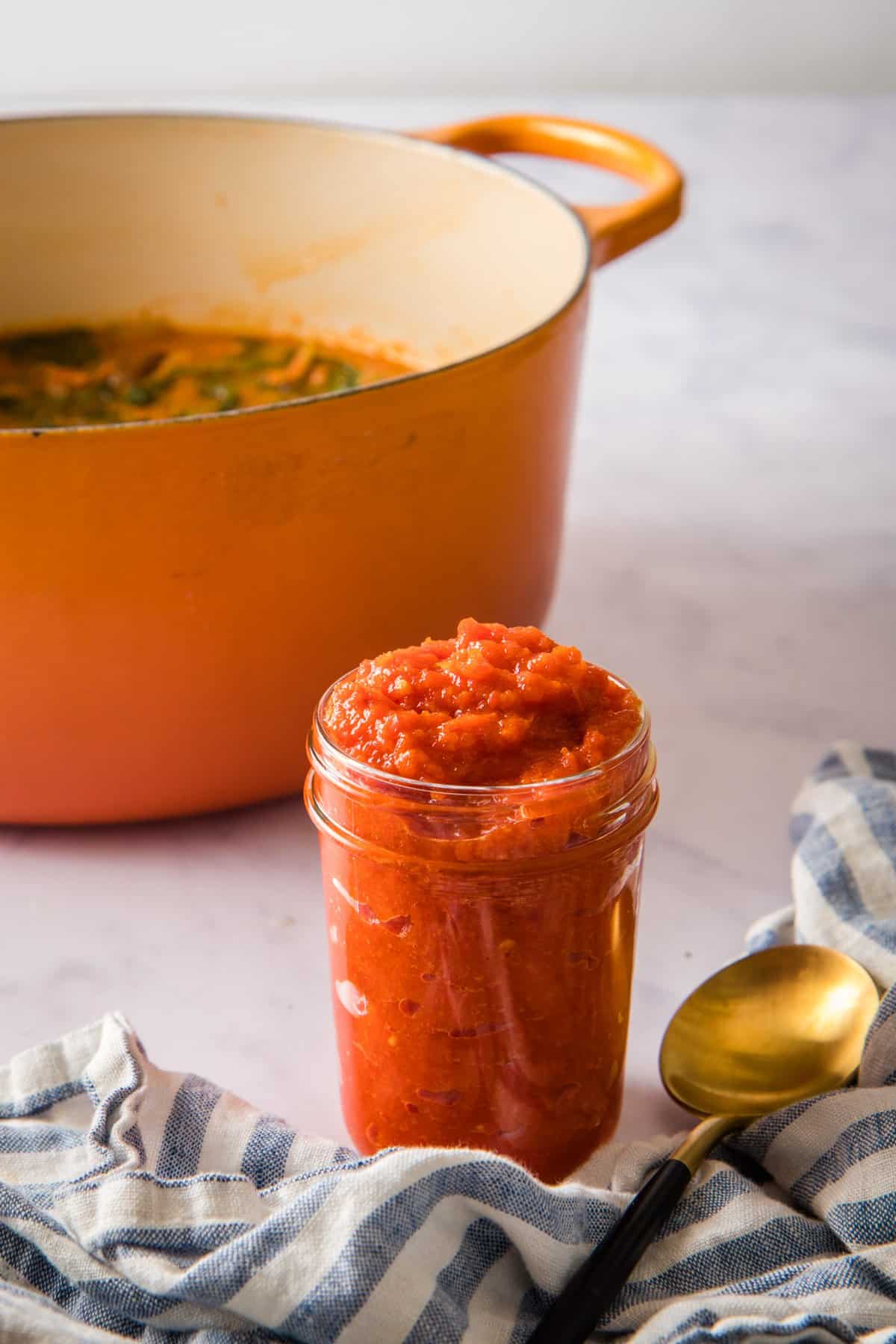
This West African pepper sauce was one of the first things I learned to make for my fiancé. Called Ata Bi Bo or Ata Din Din in Nigeria, this pepper sauce forms the base of almost all their spicy dishes!
This is super versatile, uses just four ingredients, and comes together in under 30 minutes! Make Jollof rice, Efo Riro, use as pasta sauce, or even a salsa-style dip: the possibilities are endless!
This post contains helpful tips and tricks! If you’re in a rush, please use the “Jump to Recipe” above!
💭 Why you’ll love this recipe
- Four ingredients and 30 minutes: This recipe uses easily available ingredients and comes together in no time! Great to make in large batches and freeze as well.
- Super versatile: I love using this as a base for pasta (e.g. my spicy alfredo sauce) or for my favorite Nigerian Jollof rice, or as fiery salsa replacement!
- Authentic Nigerian recipe: This recipe comes from my husband’s family, and I make a batch of it every week for him! Hot peppers are a common ingredient in many Nigerian dishes, and this is no exception. However, I do use habanero peppers (versus Scotch Bonnet) since it’s more easily available here.
📋 Ingredients and notes
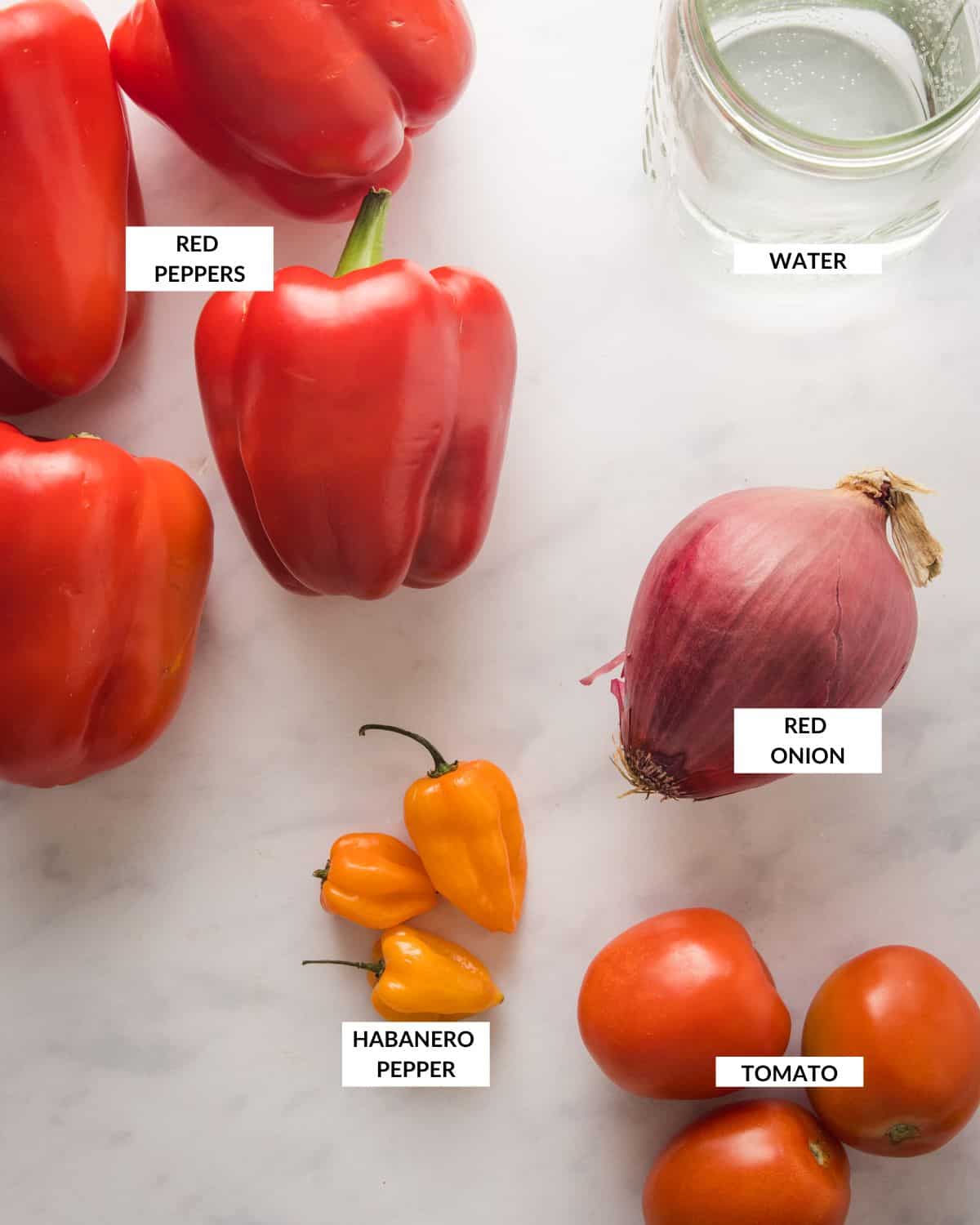
You’ll need red bell peppers, onions, tomatoes, and habanero peppers (or their more traditional counterpart – Scotch Bonnet pepper). If you’re making a larger batch or want to store for longer times, you need to also use a high-heat cooking oil (vegetable oil, red palm oil or avocado oil).
Notes and Variations
- Adjusting spice levels. Most West African pepper sauces are FIERY! This is due to habanero peppers. You can easily adjust this down by taking seeds out of the habanero, reducing the number of habanero peppers or leaving them out entirely!
- Additional seasoning. This sauce is super versatile because it doesn’t have any additional seasoning (so for instance, I can add bouillon or stock cubes to make this work for Jollof rice or add basil to make a pasta sauce). You can add other seasoning for extra flavor if you wish.
- Oil versus no oil. This is a point of difference with my fiancé’s family. I like to simply parboil the sauce, but his mother fries the sauce in oil after it’s parboiled. Ata Bi Bo is the boiled version (this recipe) and Ata Din Din is when you fry it in oil.
📖 Make African pepper sauce
It’s super simple and comes together in under 30 minutes.
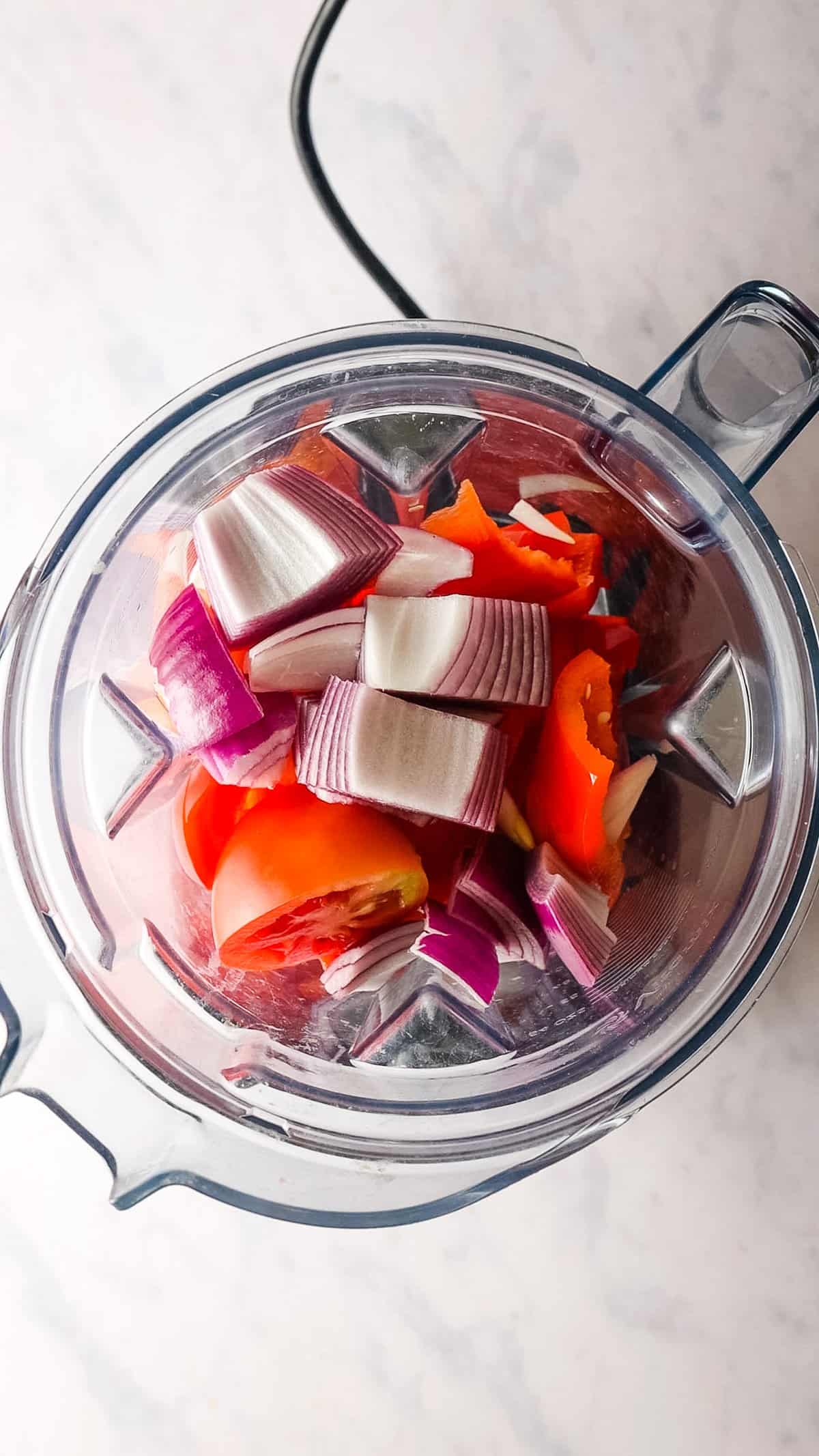
- Remove the stem and seeds of red bell peppers and habanero peppers, and chop them up roughly (depending on your spice tolerance)
- Add a couple of tomatoes and half a onion. Add water just to help the blender.
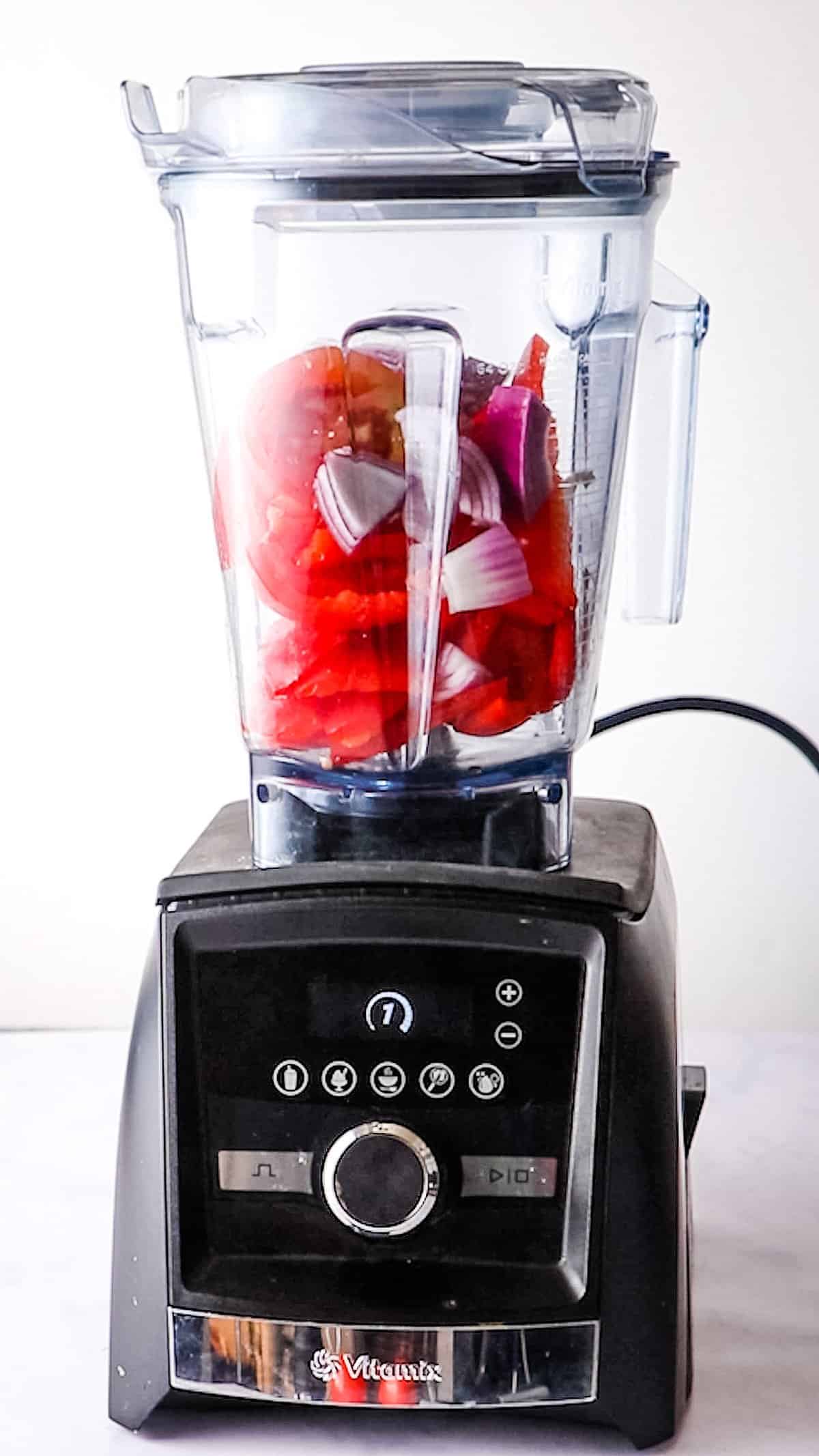
Grind the ingredients at a high power level until you get a ground mixture.
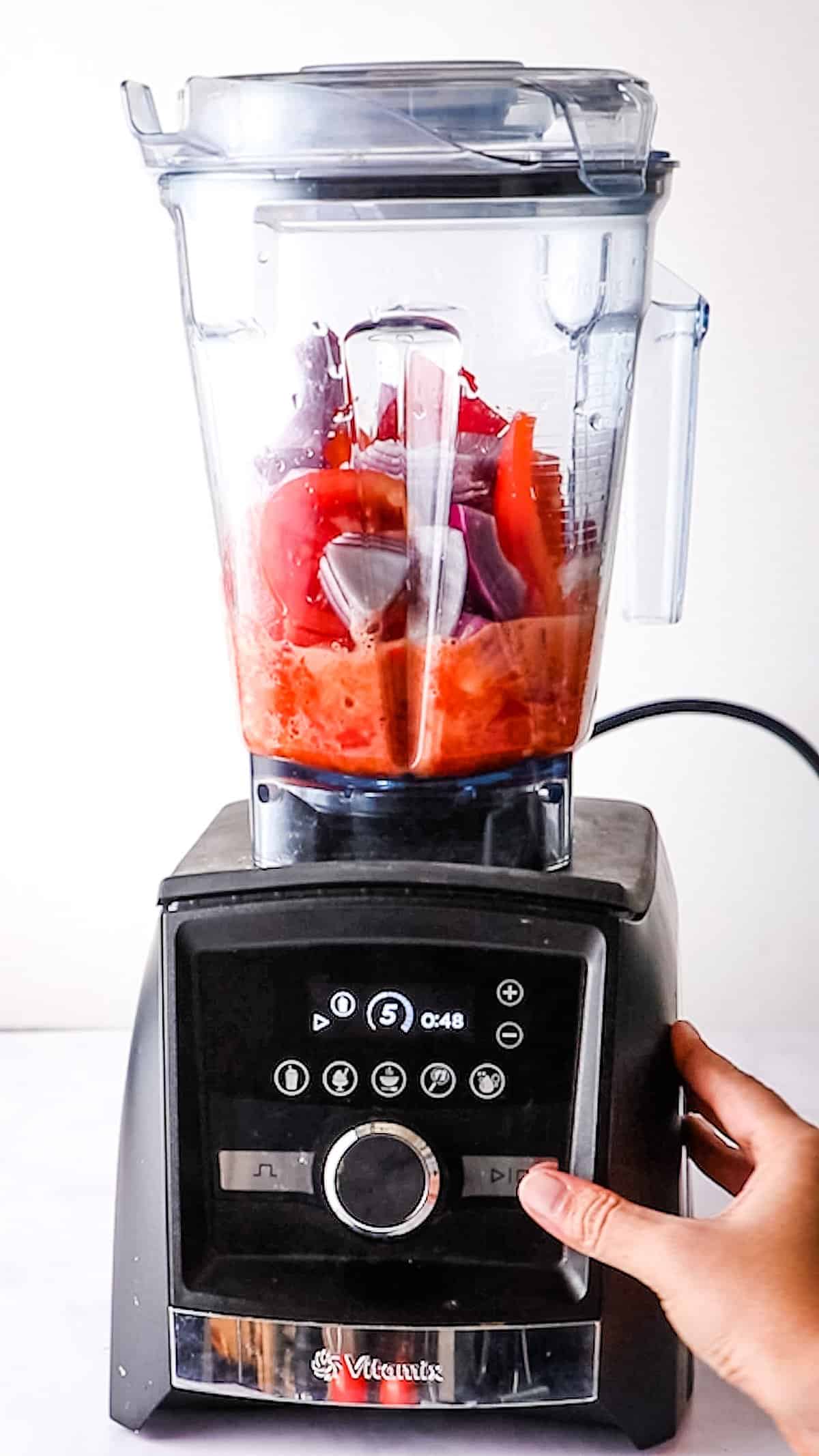
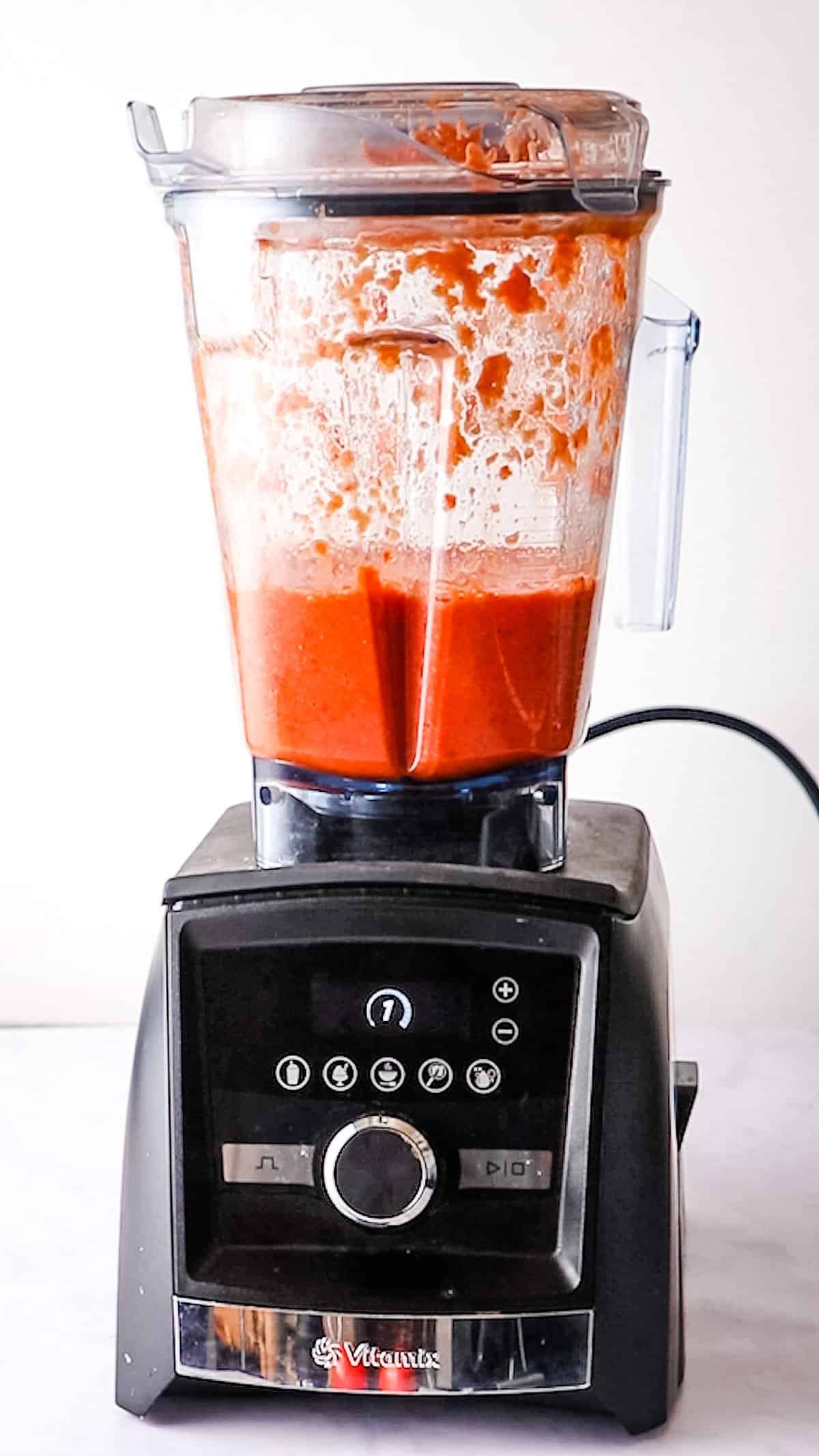
You can have this as smooth or as coarse as you want! Transfer the blended mixture to a large saucepan or a pot.
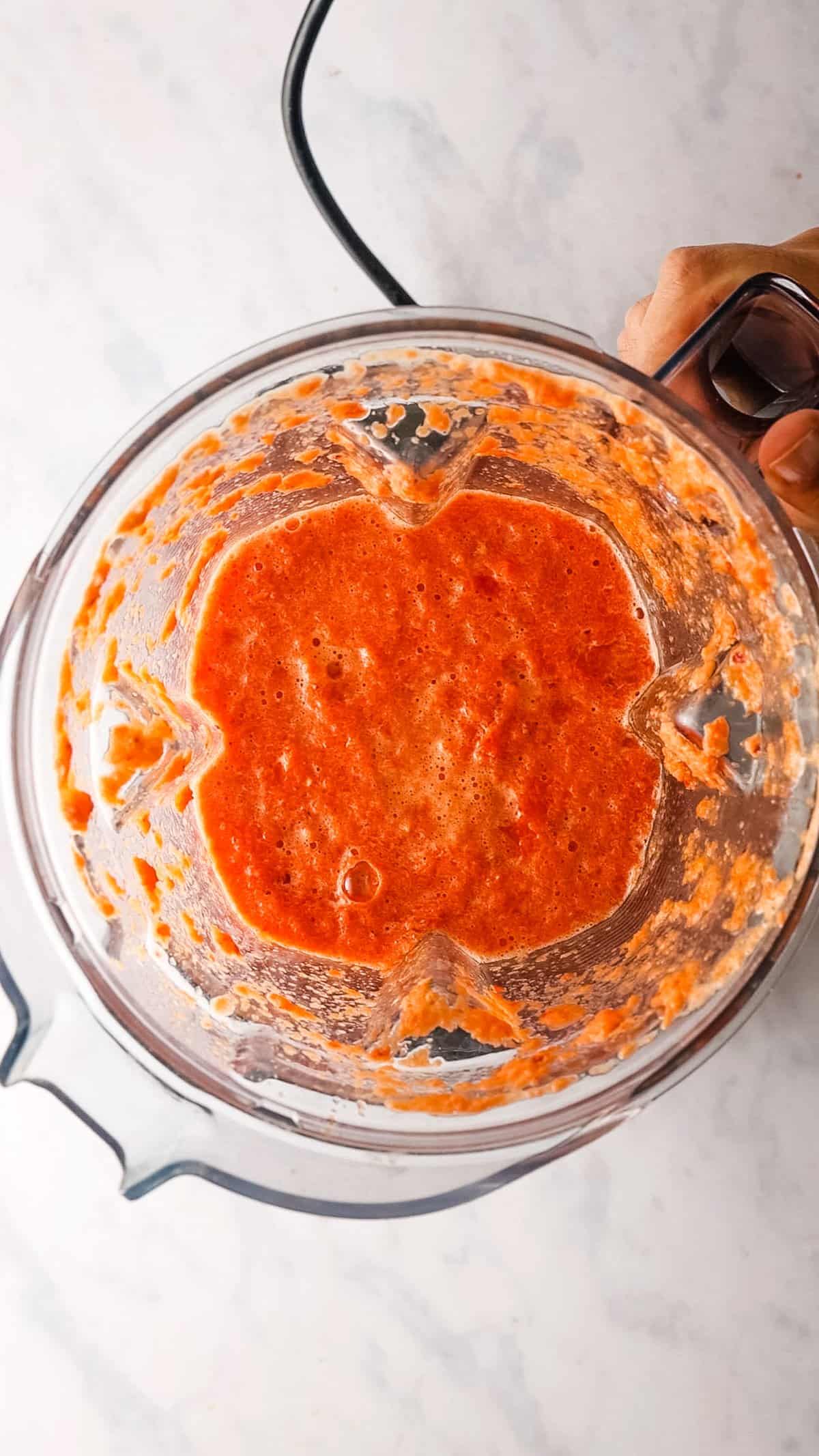
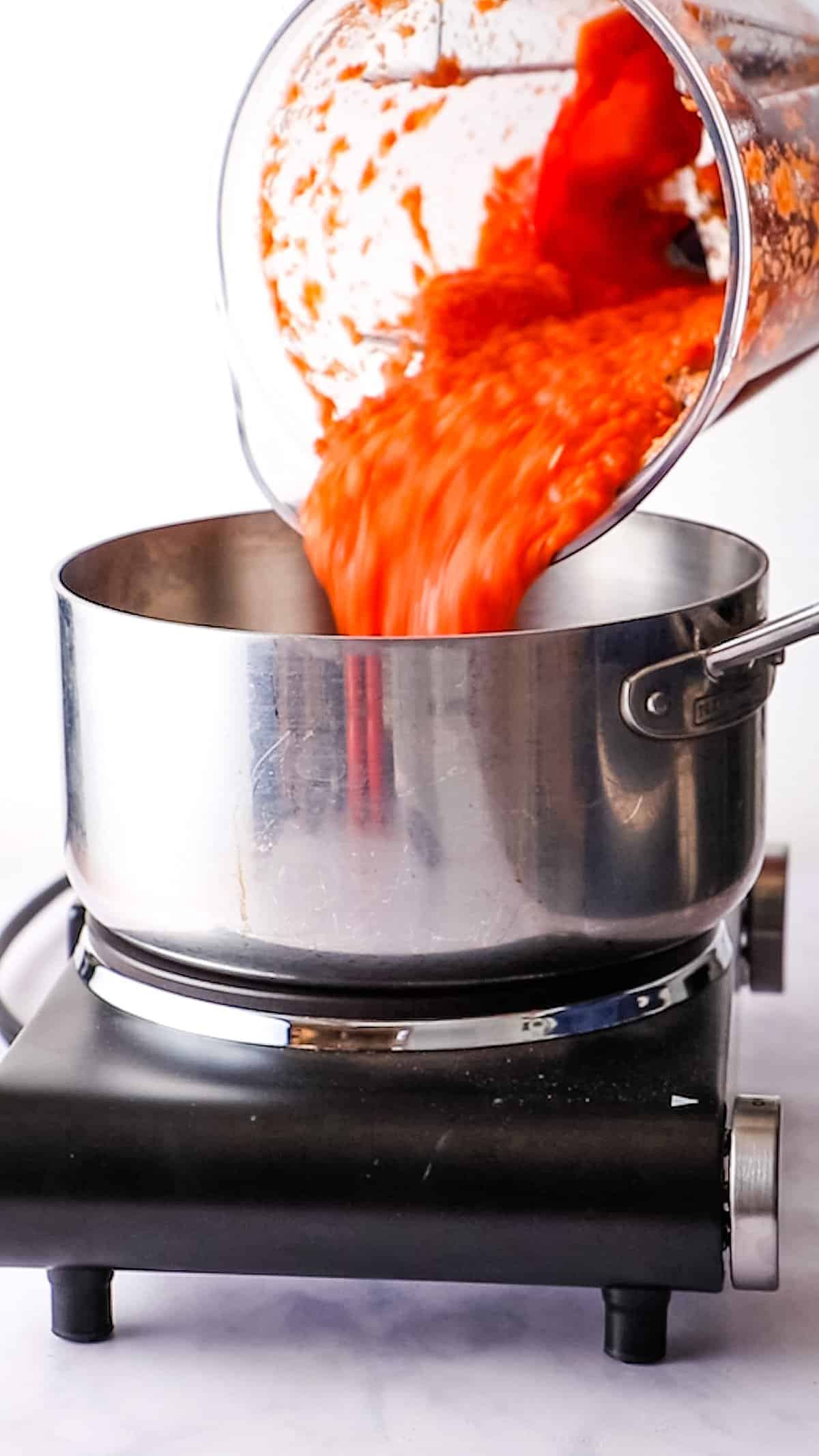
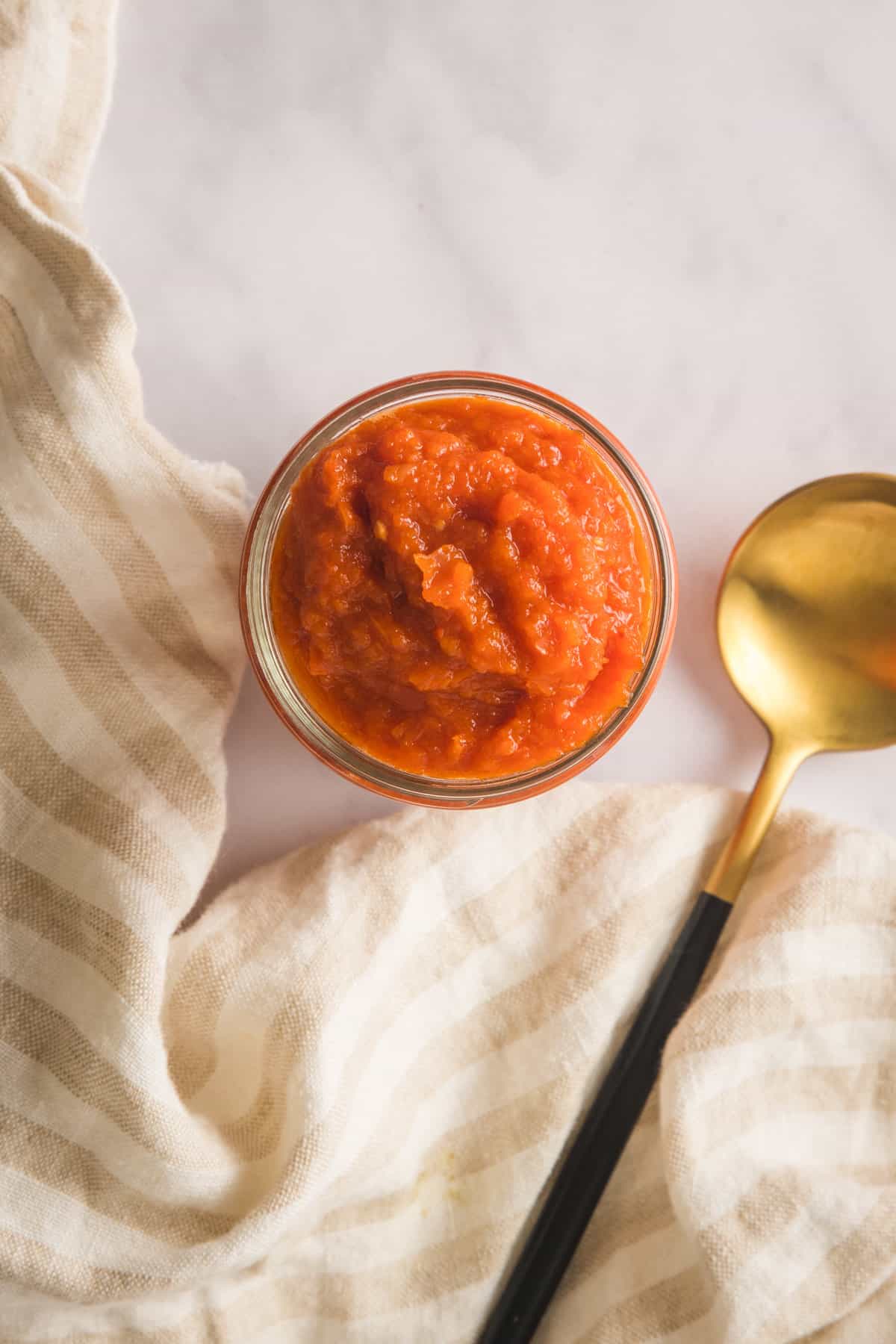
Start off on a medium heat or medium-low heat until the liquid is heated. Then, turn the heat down to low, and parboil it for 20-30 minutes until the sauce becomes more dense. You’re done when you start seeing bubbles appear on the top, and the water has mostly evaporated.
👩🏽🍳Top tips and FAQs
Despite it’s name, this West African pepper sauce is super versatile. My recipe, as written, is medium-hot. If you want to make a milder but still have a kick, just add one habanero, or if you love the taste, but don’t want it to be spicy, just use bell peppers!
Ata Bin Bo is when you just use water and parboil the sauce. Ata Din Din is when you fry the sauce with oil. Both taste great!
The ideal consistency is actually a bit coarse and not super smooth! I often use a food processor instead of a blender (and traditionally, they’d blend this on a stone mill).
🍴 Serving and storage suggestions
The possibilities are endless! I wrote a long post about making Nigerian jollof rice a while ago. I used the Nigerian version of the pepper sauce (with an extra habanero) as the base for that recipe.
I’ve also made a terrific alfredo with this sauce, but you can also just use this as a great replacement for your favorite hot sauce or as a dipping sauce. Though it’s tangy, it’s super versatile.
You can store the sauce in the fridge for up to a week regardless of whether you use water or oil in the base.
If you want to store it for longer, I suggest using oil, and topping off the container with a thin layer of oil to make sure it avoids all contact with air. This way, it’ll last 2-3 weeks.
You can also freeze this sauce for up to 4 to 6 months! Just make sure to portion and place in a freezer-safe container.
If you like this recipe, check out my other African recipes:
[fsri image_class=”feast-image-round” id=”1977,2508,3458,5846″]
If you tried this recipe, don’t forget to comment and rate! ⭐⭐⭐⭐⭐

African Pepper Sauce
Equipment
- 1 Blender
Ingredients
- 4 red bell peppers
- 3 habanero peppers
- 3 Roma tomatoes
- ½ onion
- ½ cup water
Instructions
- Remove the stems and remove the seeds of the bell peppers. Chop into quarters. Remove the stem of the habanero peppers. Add to a blender or food processor with 3 tomatoes, half a yellow onion, and either ½ cup of water or oil (depending on the type of sauce you want).
- Blend or pulse to your desired consistency. Traditionally, the sauce is a bit coarse, so I pulse for a minute. If you want it smoother, you can also just blend it.
- Transfer to a medium pot, and simmer on a low-medium flame for about 20-30 minutes. If you used oil, it will float to the top when its done cooking. If you just used water, the sauce will reduce by half to the desired consistency.
- Turn off the stove when all the water has evaporated – store in an air tight container in a fridge and use for up to a week! If you want to store for longer, make sure to top off the sauce with oil so it avoids all contact with air.
Notes
- If you’re just using water, the sauce is done when the top starts forming large bubbles that pop – this means that most of the water has evaporated.
- I keep my sauce seasoning free so it can take on flavors best suited to the dish I make with the sauce (e.g. more bold curry-type flavors for jollof rice, or more Italian flavors for pasta) – you’re welcome to add seasoning to the sauce after it parboils!
- You can store the sauce in the fridge for up to a week regardless of whether you use water or oil in the base. If you want to store it for longer, I suggest using oil, and topping off the container with a thin layer of oil to make sure it avoids all contact with air. This way, it’ll last 2-3 weeks. You can also freeze this sauce for up to 4 to 6 months!
Nutrition
Nutrition information is automatically calculated, so should only be used as an approximation.
Note: This recipe was originally published on February 22, 2020 and updated on July 2, 2022 with pictures, notes and helpful tips.


This recipe was so easy to make,and very versatile, popped in the freezer in little containers for later.Thankyou !!
You’re so welcome!
Definitely going to making this one, sound so good and very similar to a sambal.
Okay, hear me out: I used this sauce as the base for homemade pizza and it took it to the next level! Such a delicious one to have on hand.
This sauce is SO simple to make and I love it on everything. Lately I’ve been putting it on my open face sandwiches. Yum!
To be a bit more authentic you should use red Bombay onions (not the mild red kind) if you can get them, and “tatase” or pimiento peppers instead of sweet red bell peppers. (Have lived in Nigeria for 16 years)
Hey Meredith! Agree on both 🙂 Hard to find tatase outside Nigeria unfortunately (I’ve only seen it in the US in one African store in NY, much to my husband’s chagrin) but agree that it tastes WAY better if you use the combination you shared!
Sounds like the right versatile sauce
I love this kind of sauce and will definitely make it!