
My chickpea tikka masala uses the same technique British Indian restaurants use — tomato paste cooked in ghee until the fat splits — and it’s the reason every other homemade version tastes close but not quite right. Vegetarian, gluten-free, 45 minutes.
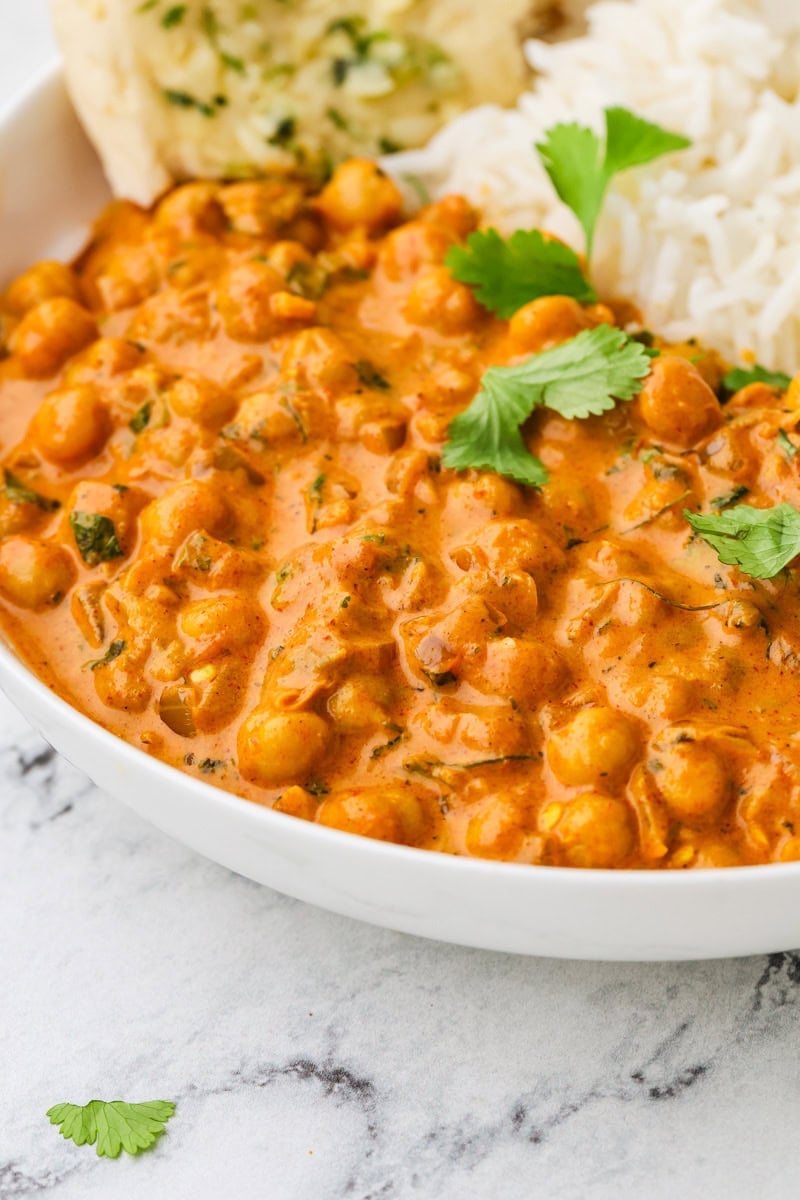
Why this chickpea tikka masala finally tastes like the restaurant

Every chickpea tikka masala ranking on the first page of Google is vegan — coconut milk, neutral oil, canned tomatoes. That’s not what restaurant tikka masala tastes like. Restaurant versions use dairy cream and ghee, and the difference is not subtle. Coconut sweetness competes with the spices; cream amplifies them. I grew up knowing what real tikka masala should taste like, and this is it.
The technique that makes it work: tomato paste cooked in ghee until the fat visibly separates and pools at the edges. That step — a BIR restaurant method most home recipes skip entirely — transforms the paste from sharp and raw to concentrated and caramelized in about 4 minutes. Canned tomatoes need 30+ minutes to get anywhere close. Once you see the ghee separate, the hard part is done.
The finish is kasuri methi, crushed between your palms directly over the pot in the last two minutes. That gesture releases the oils. It’s earthy and faintly bitter-sweet in a way nothing else replicates — and it’s the detail that makes people ask what you did differently. If you want to understand the Indian pantry basics that make recipes like this work, my guide to essential Indian spices covers everything.

Key ingredients and why they matter
This chickpea tikka masala uses pantry spices, aromatics, and a few key ingredients to build a rich, creamy sauce. Think ghee, onion, garlic, ginger, tomato paste, chickpeas, and warm spices like cumin, coriander, and garam masala. Finish with cream, kasuri methi, and cilantro.
Full ingredient list and detailed instructions in the recipe card.
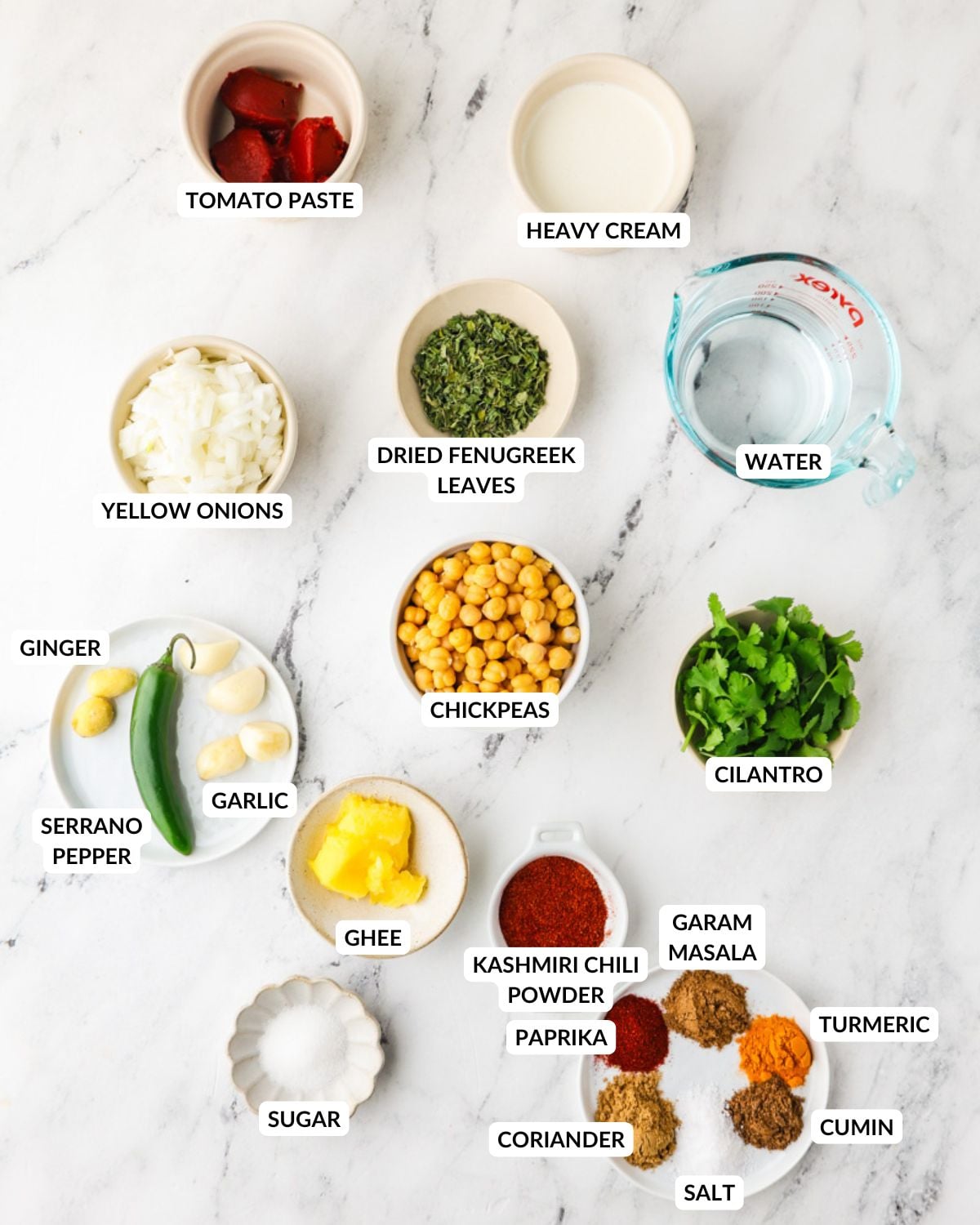
- Ghee is non-negotiable — it has a nutty richness neutral oil can’t replicate, and it’s the traditional fat that makes the tomato paste technique work. Don’t substitute.
- Tomato paste rather than canned tomatoes is what the BIR technique requires. Concentrated paste can transform in the pan in minutes; canned tomatoes have too much water to achieve the same depth quickly.
- Kashmiri chili powder gives the sauce its signature deep orange color without serious heat. If you can’t find it, ½ teaspoon paprika plus ¼ teaspoon cayenne is a reasonable approximation — slightly less vibrant but close.
- Garam masala goes in with the cream, not with the other dry spices. It’s a finishing spice; high heat early dulls its complexity.
- Heavy cream is what turns the sauce from rust-red to that rich, uniform orange. Keep the heat gentle after it goes in — boiling breaks the emulsion and the sauce looks grainy.
- Two full cans of chickpeas for four servings. They need the full 10-minute simmer to absorb the sauce rather than just sitting in it.
- Kasuri methi (dried fenugreek leaves) is worth tracking down. Any Indian grocery store carries it; it keeps for months. Crush between your palms directly over the pot right before serving.
- Sugar balances the acidity of the tomato paste. One teaspoon is all it takes — without it the sauce reads sharp and one-dimensional.
TIPS & TRICKS
Shruthi’s top tips
- Watch for the ghee to separate from the tomato paste before moving on. Orange fat pooling at the edges is your visual cue — not the timer. If you don’t see it, keep cooking.
- Don’t boil after the cream goes in. Gentle simmer only. If the sauce looks broken, a vigorous stir usually brings it back.
- The sauce thickens considerably as it cools. Add 2–3 tablespoons of water before turning on the heat when reheating — not after.
- This is genuinely better on day 2. Make it ahead if you have the option.
How to make chickpea tikka masala
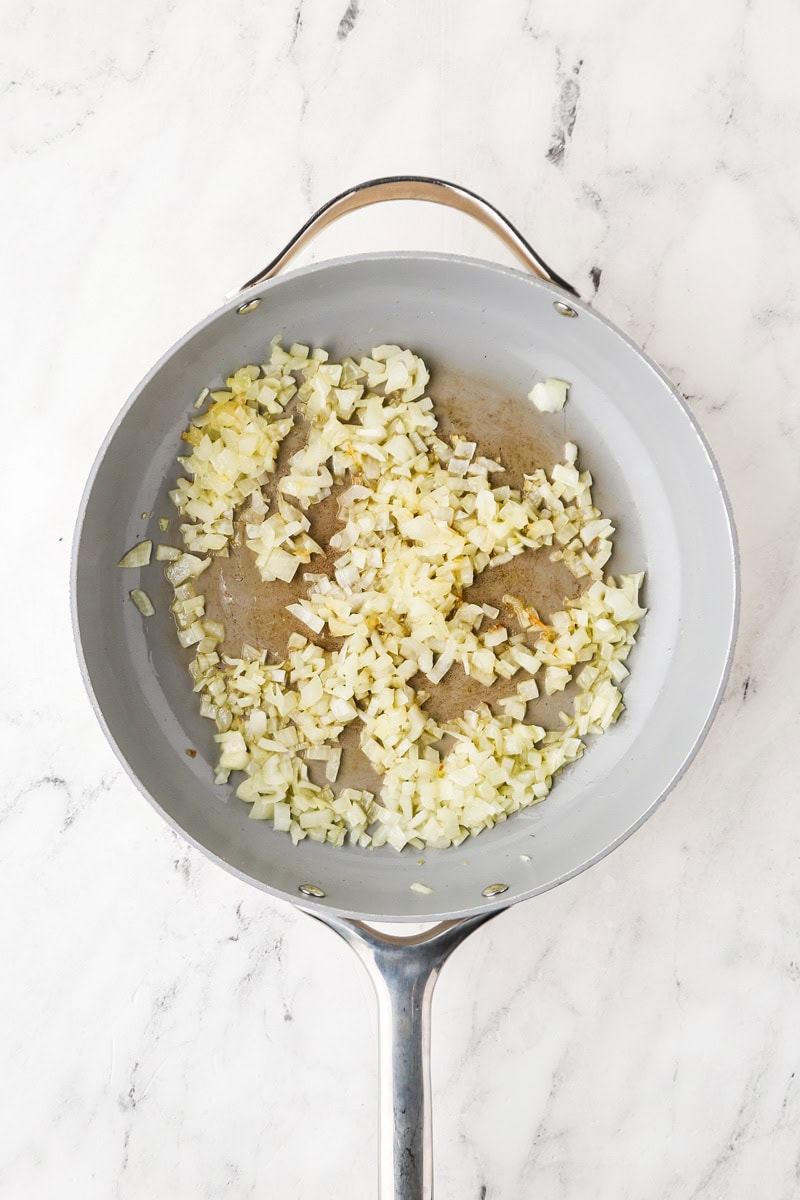
- Heat ghee in a large skillet or Dutch oven over medium heat. Add onion and cook until soft and lightly golden. Add garlic, ginger, and green chili; cook until fragrant.
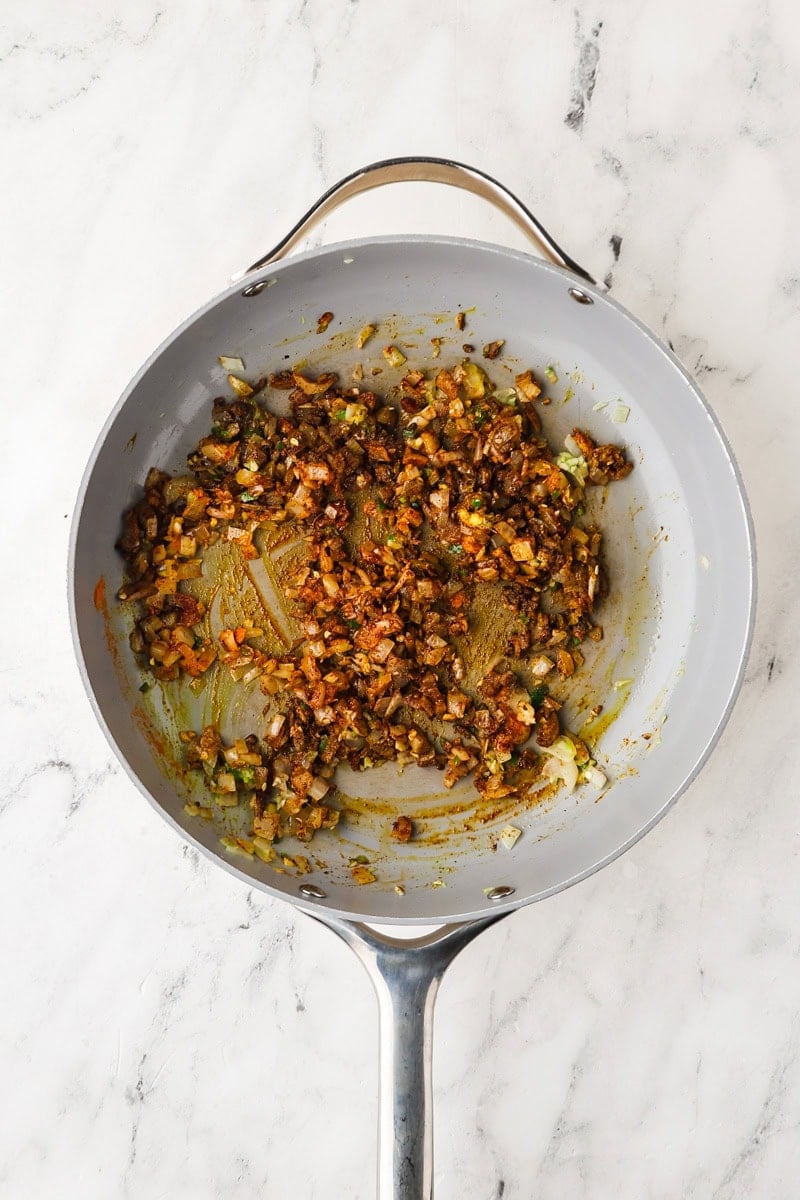
- Add Kashmiri chili powder, cumin, coriander, turmeric, and paprika. Stir to coat and cook until fragrant. Add a splash of water if needed.
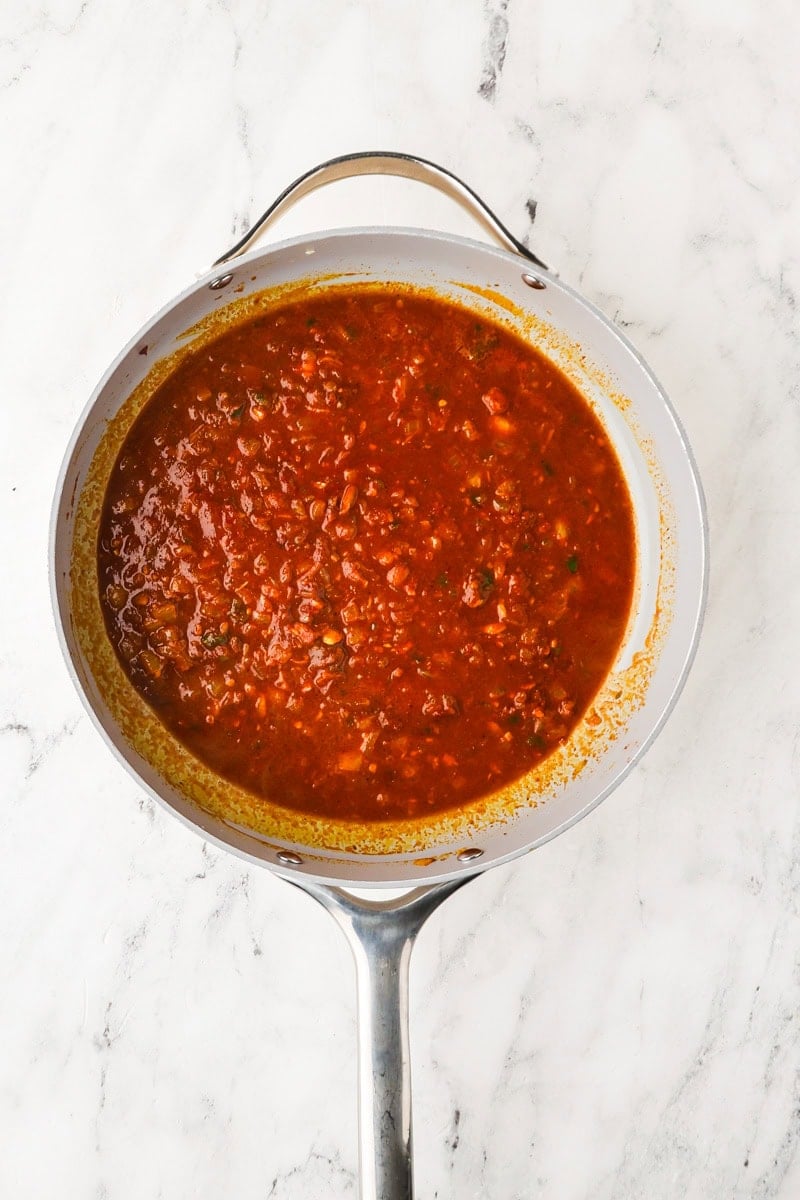
- Add tomato paste and cook, stirring and pressing into the pan, until it turns brick red and the ghee starts to separate.
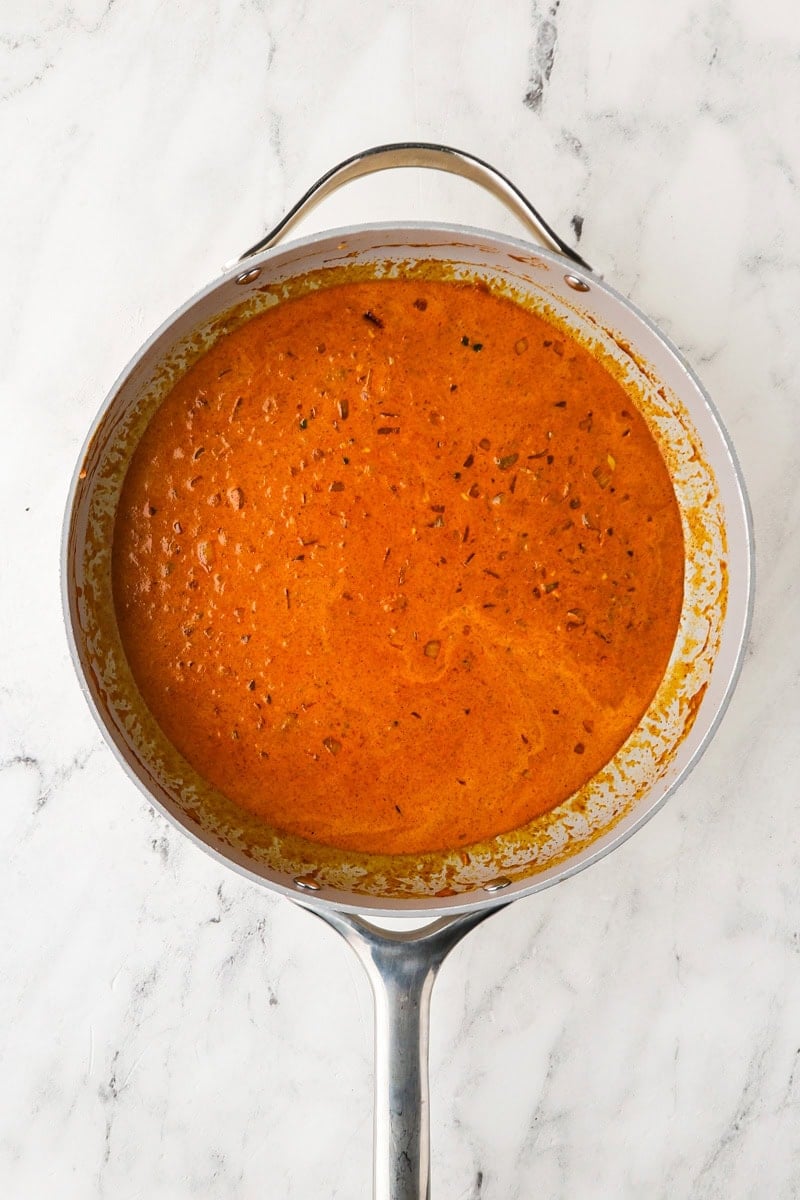
- Add salt, sugar, and water. Stir and bring to a simmer until slightly thickened and the onions are very soft. Stir in garam masala and cream; keep at a gentle simmer.
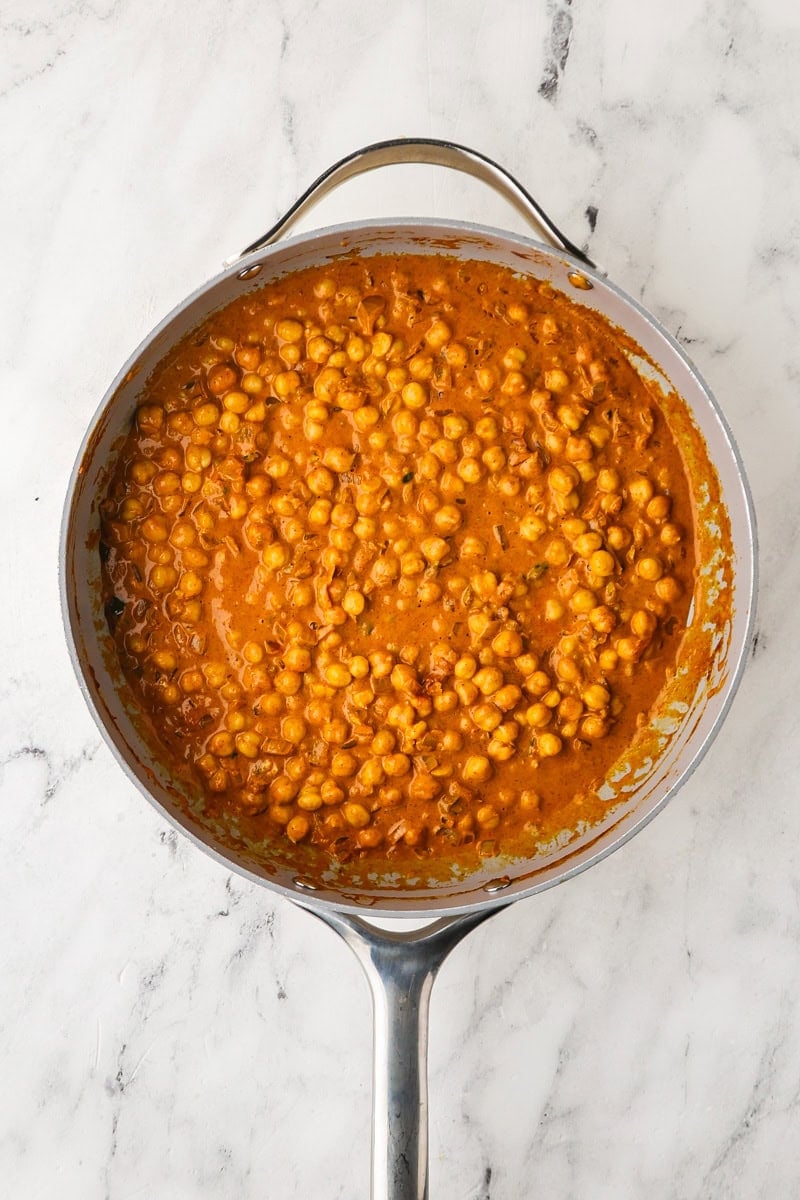
- Add chickpeas and stir to coat. Simmer until the sauce thickens and coats a spoon. Adjust with water if needed.
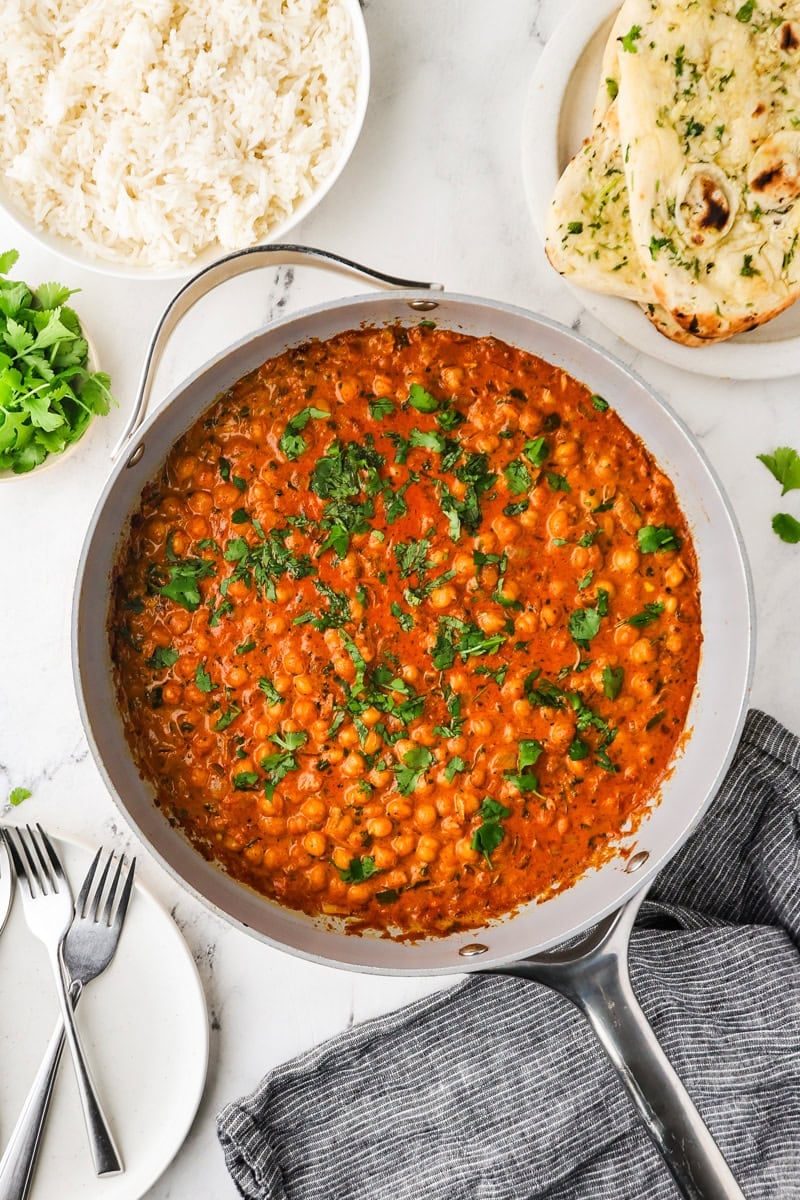
- Crush kasuri methi over the pot and stir in. Let it simmer briefly, then taste and adjust salt. Serve over basmati rice with cilantro and a drizzle of cream if desired.
How to serve restaurant-style tikka masala
Serve with soft homemade naan for scooping—the sauce is thick enough to cling. Pair with steamed basmati rice, or add my palak paneer for a simple two-curry spread.
Variations
- Vegan: Swap ghee for vegan butter (Miyoko’s works well) and heavy cream for full-fat coconut cream from a 5.4-oz can. The sauce will have a slight coconut note but still works.
- Add vegetables: Stir in 1 lb roasted cauliflower florets or 5 oz baby spinach along with the chickpeas.
- Paneer version: Add 8 oz paneer, cubed and pan-fried in ghee until golden, alongside or instead of the chickpeas.
- Spicier: Add ¼–½ teaspoon cayenne with the dry spices in Step 3.
- Instant Pot: Use Sauté mode for Steps 1–5, add chickpeas, pressure cook 5 minutes, quick release, then stir in cream and kasuri methi.
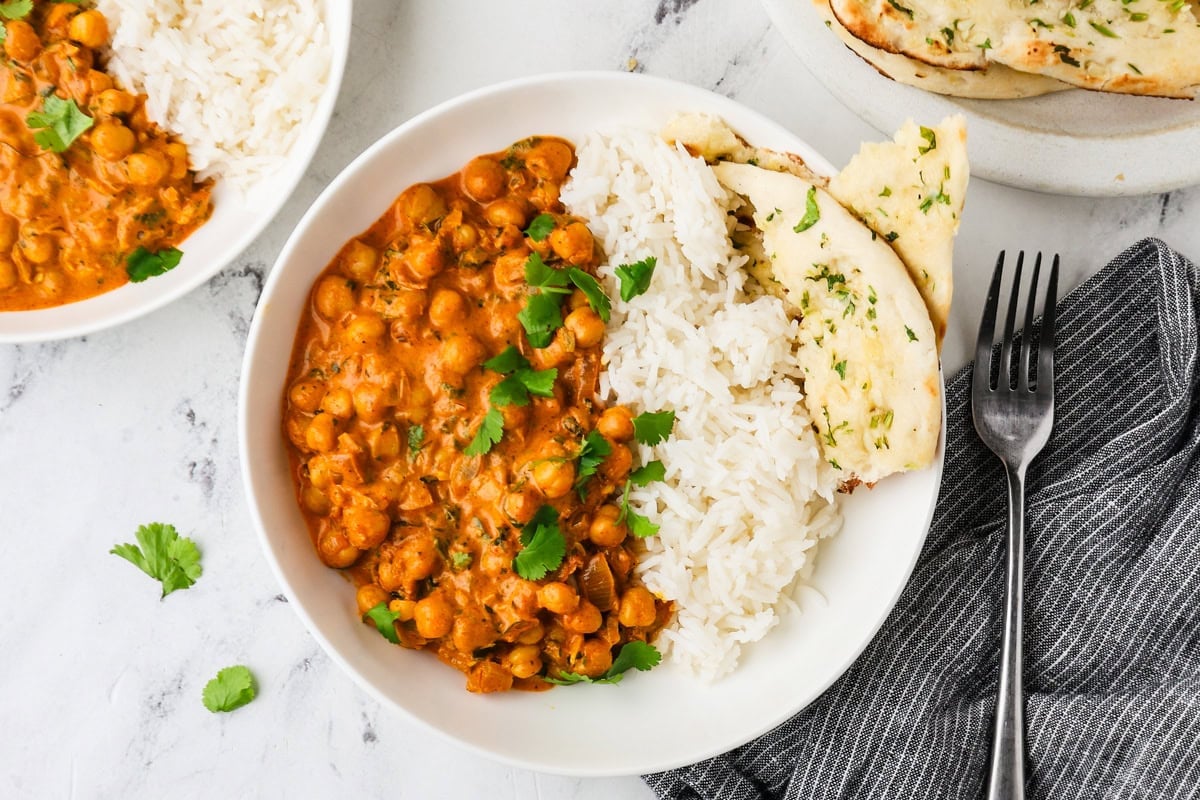
Storage and reheating suggestions
Refrigerate in an airtight container for up to 4 days—the flavor deepens by day 2. Freeze for up to 2 months; the chickpeas may soften slightly, but the sauce holds well. Thaw overnight in the fridge.
Reheat on the stovetop over medium-low with a splash of water until warmed through. Microwave at 70% power for 2 minutes, stir, then 1 more minute—add a splash of water first.
More vegetarian dinner recipes
Love recipes like this? Try these next:
Marry Me Chickpeas

Chickpea Peanut Butter Curry with Coconut Milk

Slow Cooker Tofu Tikka Masala

Spinach Dal
Chickpea Tikka Masala
Ingredients
For the tikka masala:
- 3 tablespoons ghee
- 1 medium yellow onion, diced
- 4 cloves garlic, minced
- 1 tablespoon fresh ginger, minced
- 1 green chili, such as serrano, minced (seeds removed for less heat)
- 1 teaspoon Kashmiri chili powder, or sub ½ teaspoon paprika + ¼ teaspoon cayenne
- 1 teaspoon ground cumin
- 1 teaspoon ground coriander
- ½ teaspoon ground turmeric
- ½ teaspoon paprika
- 3 tablespoons tomato paste
- 1 teaspoon kosher salt
- 1 teaspoon granulated sugar, don’t skip — balances the tomatoes
- ¾ cup water
- 1 teaspoon garam masala
- ½ cup heavy cream
- 2 15-oz cans chickpeas, drained and rinsed
For finishing:
- 2 teaspoons dried fenugreek leaves, kasuri methi, crushed between palms
- 2 tablespoons fresh cilantro, chopped (for garnish)
Instructions
Make the sauce:
- Heat ghee in a large skillet or Dutch oven over medium heat until shimmering. Add onion and cook, stirring occasionally, until edges are golden and onion is soft, 7–8 minutes.
- Add garlic, ginger, and green chili. Cook, stirring, until fragrant, about 1 minute. Don’t let the garlic brown.
- Add Kashmiri chili powder, ground cumin, ground coriander, ground turmeric, and paprika. Stir to coat the onions and cook until the spices smell toasty and darken slightly, about 30 seconds. If the spices start to stick, add a splash of water.
- Add tomato paste and stir constantly, pressing the paste into the pan. Cook until the tomato paste darkens from bright red to a deeper brick red and the ghee begins to separate and pool at the edges, 3–4 minutes. This is the key step — it removes the raw tomato taste and builds deep flavor.
- Add kosher salt, sugar, and water. Stir well, scraping up any bits from the bottom of the pan. Bring to a simmer and cook for 5 minutes, stirring occasionally, until the sauce thickens slightly and the onion pieces are very soft.
Finish the dish:
- Stir in garam masala and heavy cream until the sauce turns a rich, uniform orange. Bring to a gentle simmer — don’t boil.
- Add chickpeas and stir to coat. Simmer on medium-low for 10 minutes, stirring occasionally, so the chickpeas absorb some of the sauce flavor. The sauce should coat the back of a spoon — if it’s too thick, add a splash of water; if too thin, simmer uncovered a few more minutes.
- Crush kasuri methi between your palms directly over the pot and stir in. Simmer for 2 more minutes to let the fenugreek bloom. Taste and adjust salt.
- Serve hot over basmati rice, garnished with cilantro. Drizzle with a little extra cream if desired.
Notes
- The tomato paste + ghee step is everything. If the ghee hasn’t separated from the paste, you haven’t cooked it long enough. This is what makes it taste like the restaurant, not like a can of tomatoes.
- Don’t boil the sauce after adding cream — keep it at a gentle simmer or the cream can break and the sauce will look grainy.
- Kasuri methi (dried fenugreek leaves) is non-negotiable for authentic tikka masala flavor. It’s available at any Indian grocery store and keeps for months. If you truly can’t find it, the recipe will still taste good — but it won’t taste right.
- For more heat, add ¼ teaspoon cayenne with the spices, or serve with hot sauce on the side.
- The sauce thickens as it sits. When reheating, add a splash of water to loosen.
- Refrigerate in an airtight container up to 4 days. Freeze up to 2 months.
- Reheat in stovetop over medium-low with a splash of water, stirring occasionally. Microwave works but stovetop is better for sauce consistency.
Nutrition
Nutrition information is automatically calculated, so should only be used as an approximation.


