
My palak paneer gets its restaurant-style texture from a rough puree instead of a smooth paste — some left chunky, which is exactly how good North Indian restaurants serve it. Frozen spinach outperformed fresh in every test, and the kasuri methi finish is what makes it taste like it came from somewhere real.
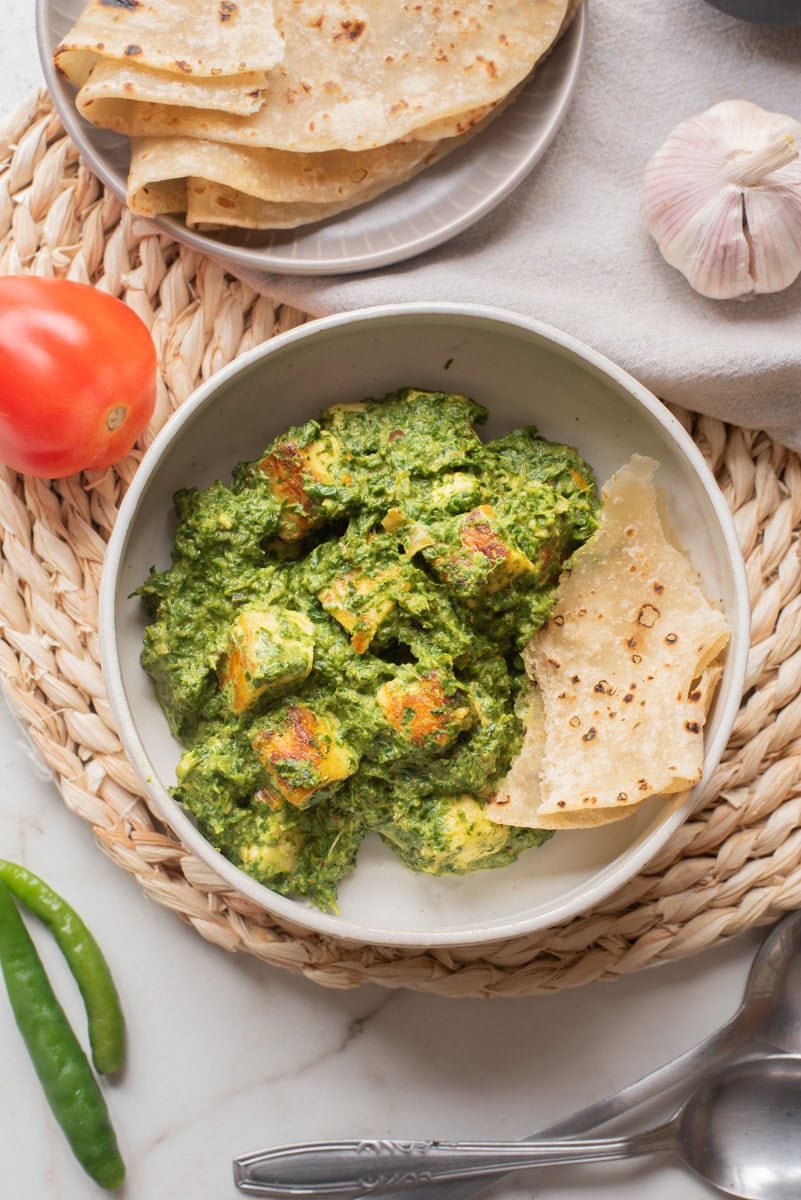
Why this palak paneer tastes like the restaurant version

The texture is where homemade palak paneer can go wrong. Blend it smooth and you lose the body. Leave it too chunky and it feels unfinished. The middle ground is a rough puree, and that’s the version I landed on after testing this multiple times.
The other decision that made a real difference: frozen spinach over fresh. I tested both repeatedly, and frozen wins every time. Fresh spinach has variable moisture, wilts unevenly, and makes the puree harder to control. Frozen is already blanched, squeezed dry, and behaves predictably. I use it year-round for this and don’t feel even a little bad about it.
The finishing move is kasuri methi — dried fenugreek leaves crushed between your palms right before they go in. That gesture releases the volatile oils and is the detail that separates restaurant palak paneer from the version that tastes close but not quite. Pair it with my spinach dal or dal tadka and cumin rice, and you have a great Indian spread.

Key ingredients and why they matter
My palak paneer recipe uses paneer, frozen spinach, ghee, cumin seeds, cardamom, onion, garlic, ginger, green chilies, tomato, warm Indian spices, heavy cream, and kasuri methi to create a rich, restaurant-style spinach paneer curry.
Full ingredient list and detailed instructions in the recipe card.
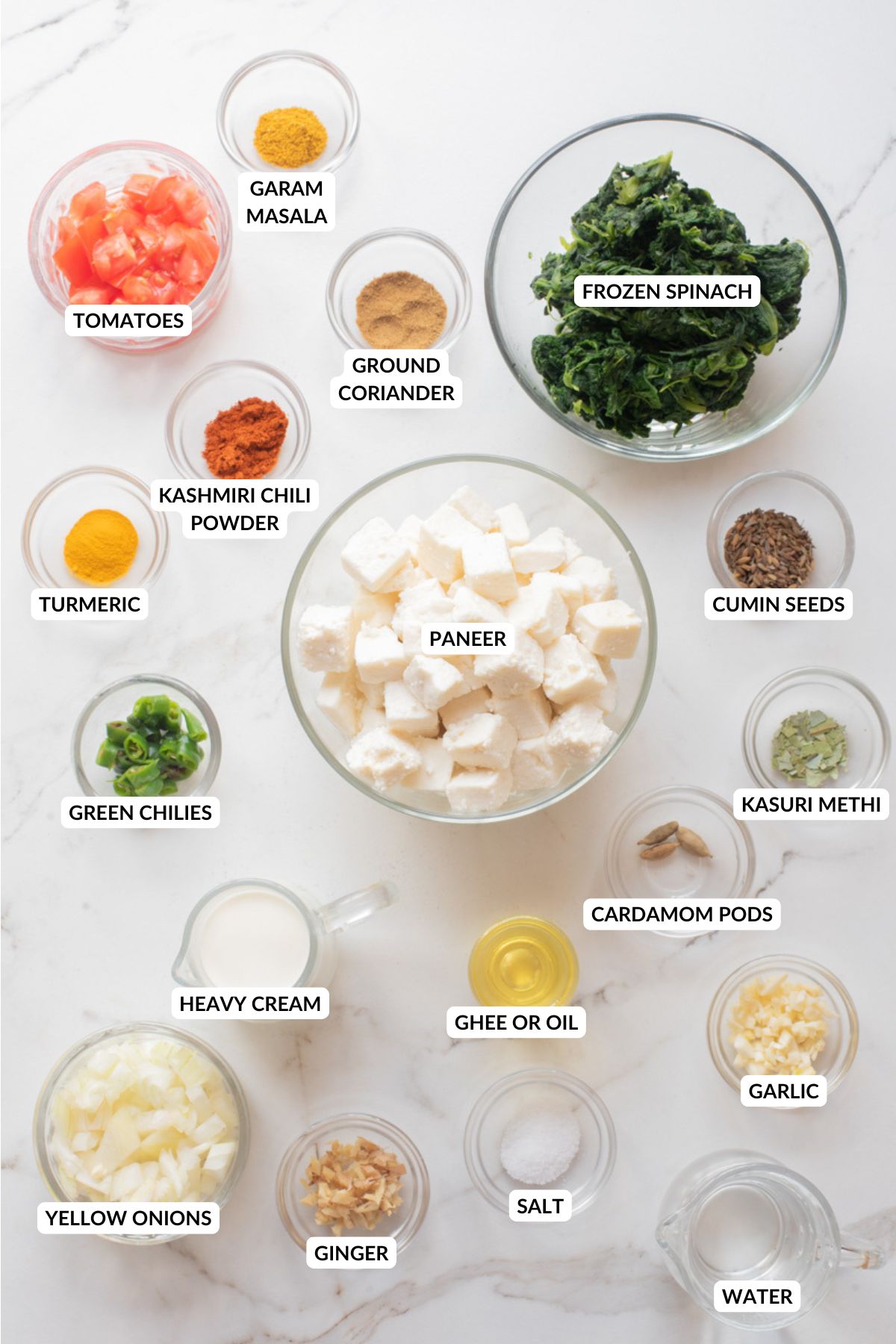
- Frozen spinach consistently outperforms fresh here. Squeeze it after thawing until it feels genuinely dry — more than you think is necessary. Wet spinach thins the sauce and dulls the color.
- Paneer — I use a full 14 oz block for four servings. Pan-fry the cubes first until golden so they hold their shape in the sauce instead of dissolving. A cast iron skillet gives the best sear on paneer.
- Kasuri methi is the restaurant secret. Crush the dried fenugreek leaves between your palms right before adding them to release their aroma.
TIPS & TRICKS
Shruthi’s top tips
- Bloom the whole spices in hot ghee first. Cumin seeds and cardamom pods should sizzle within 30 seconds — that’s how the base flavor builds. Neutral oil works if you don’t have ghee, but the flavor is lighter.
- Stir the cream in off the heat. Too much heat after the cream goes in can make the sauce look grainy. It’s still fine to eat, just less appealing. A small amount is all you need — too much dulls the green.
- Crush the kasuri methi between your palms, don’t just sprinkle it. Crushing releases the oils. Add it in the last minute of cooking — any earlier and the aroma cooks off.
- One green chili is mild, family-friendly heat. Two with seeds in is genuinely spicy. Remove seeds for something in between.
- This is better on day 2. The spices meld overnight and the sauce deepens. Worth making a day ahead if you’re serving it for dinner guests.
- Reheat over low heat with a splash of water. Don’t boil after the cream is in.
How to make homemade palak paneer
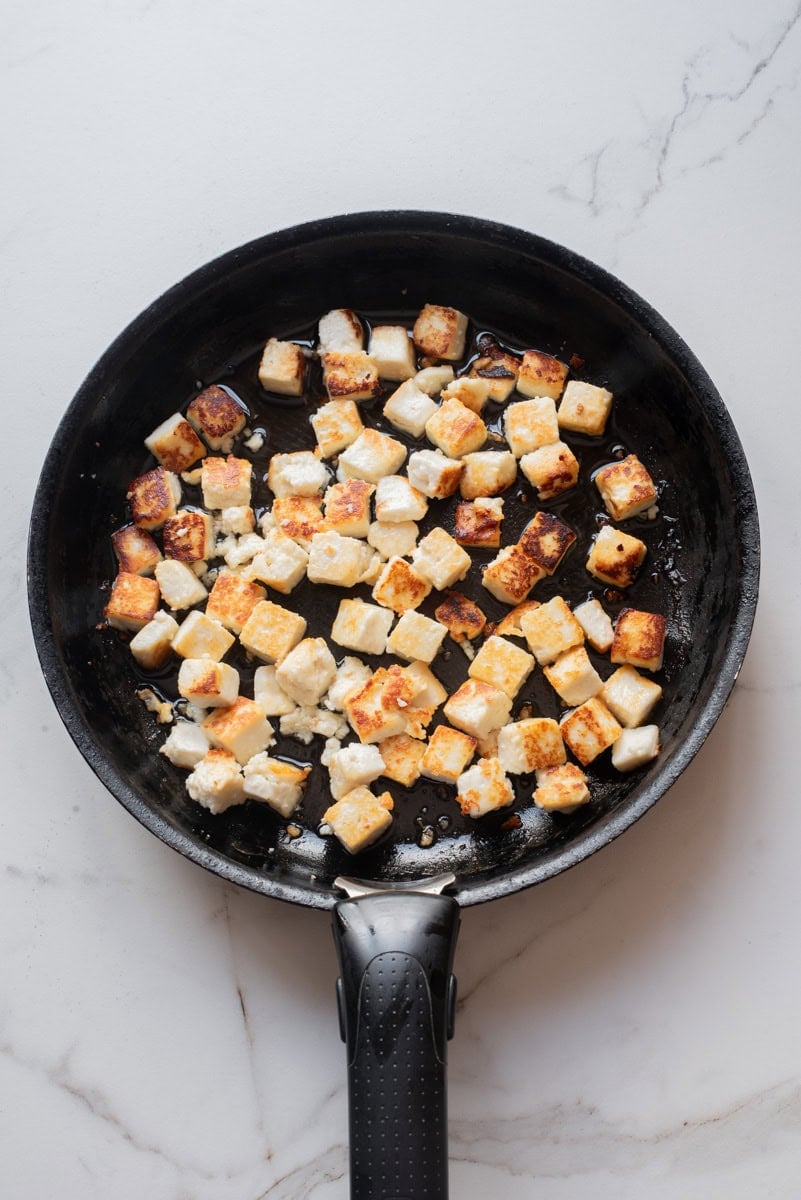
- Thaw frozen spinach completely and squeeze out as much liquid as possible. Heat ghee in a large skillet over medium heat. Pan-fry paneer cubes per side until golden brown, season with a pinch of salt, then transfer to a plate and set aside.
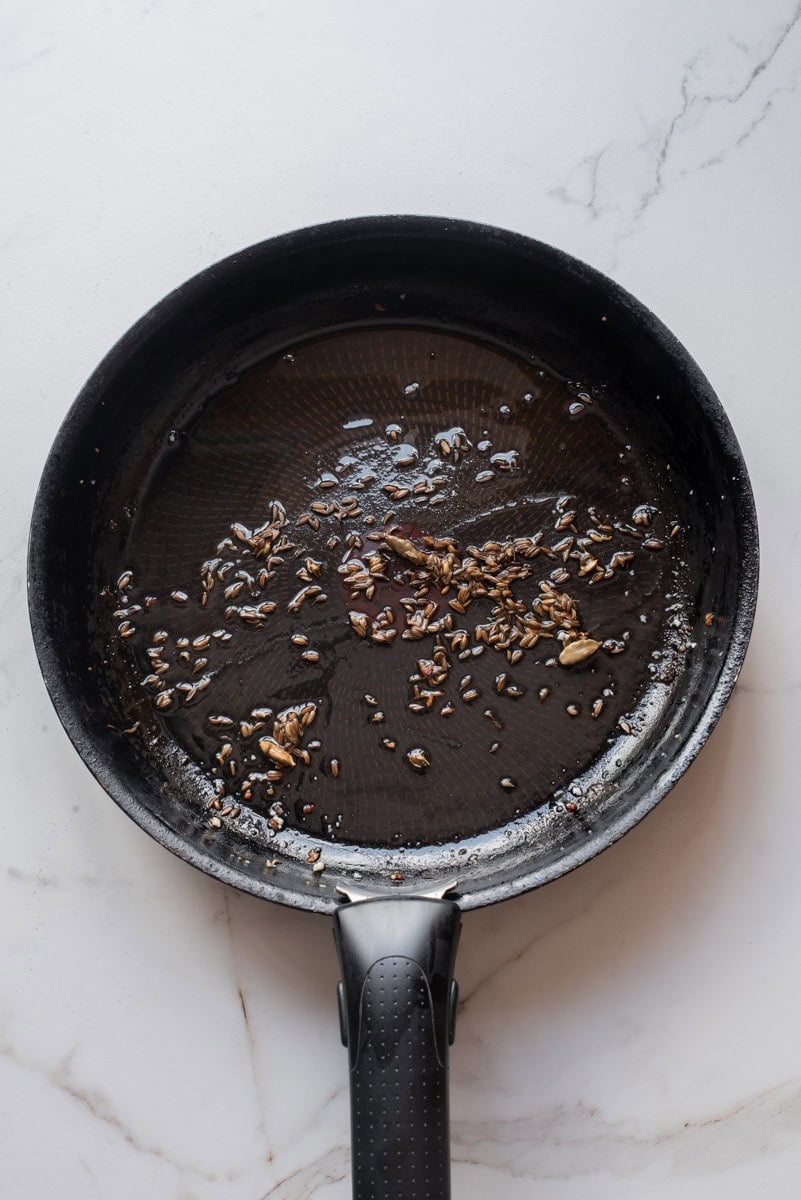
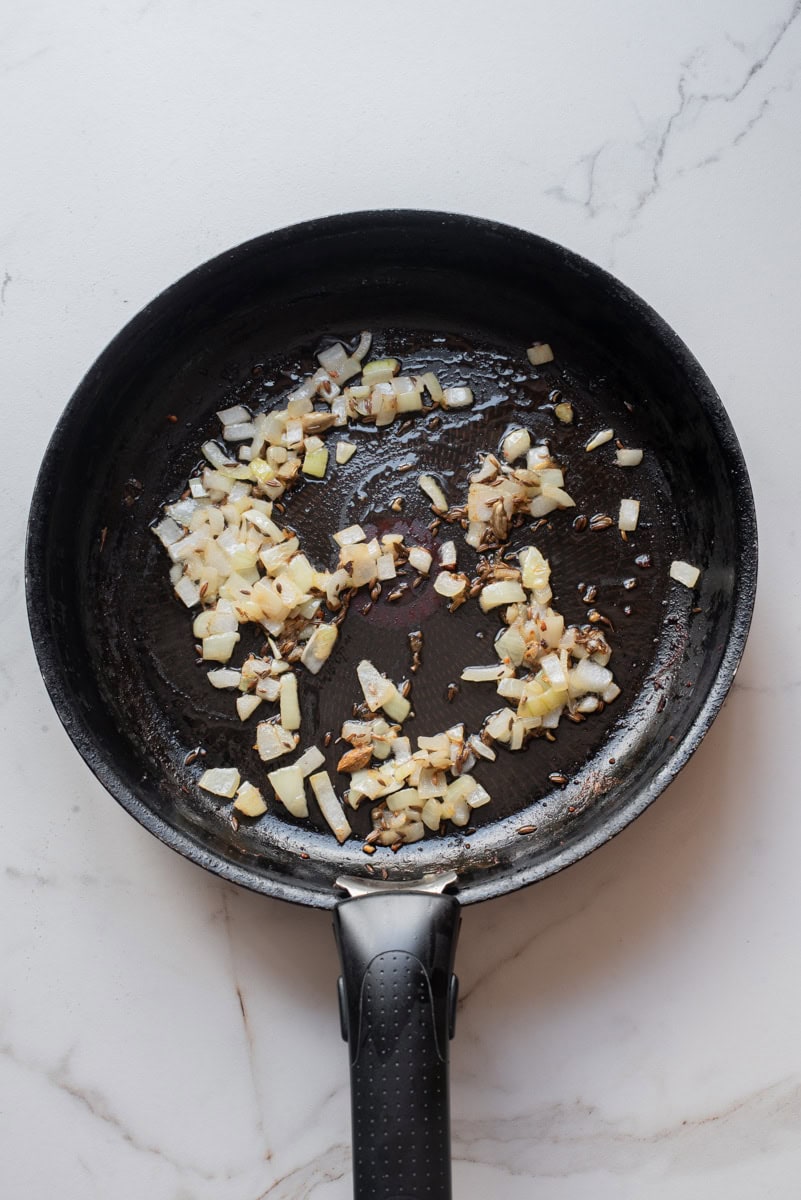
- In the same skillet, add ghee over medium-high heat. Add cumin seeds and cardamom pods. Let them sizzle until fragrant and cumin seeds darken slightly.
- Add onion and cook, stirring occasionally, until softened and starting to turn golden. Add garlic, ginger, and green chilies. Cook until fragrant.
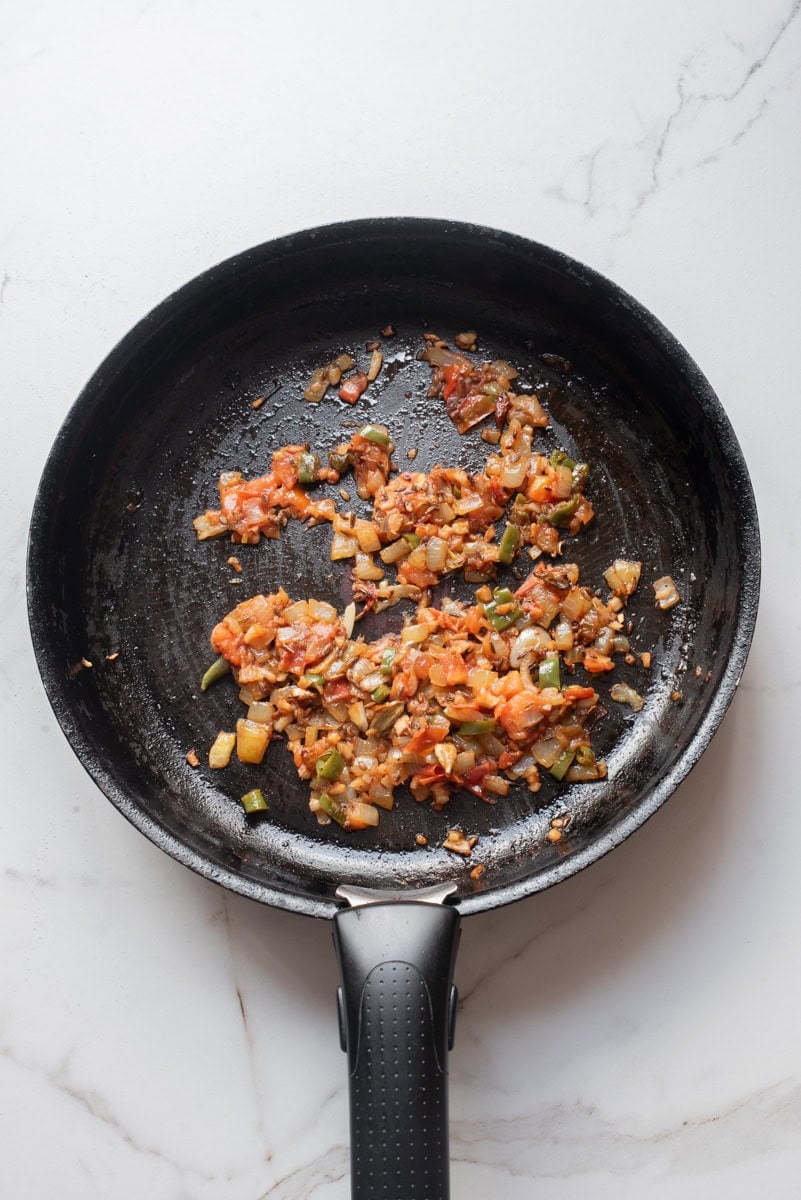
- Add chopped tomato and cook until softened and melded with the onions. Add coriander, turmeric, Kashmiri chili powder, and salt, and cook until fragrant.
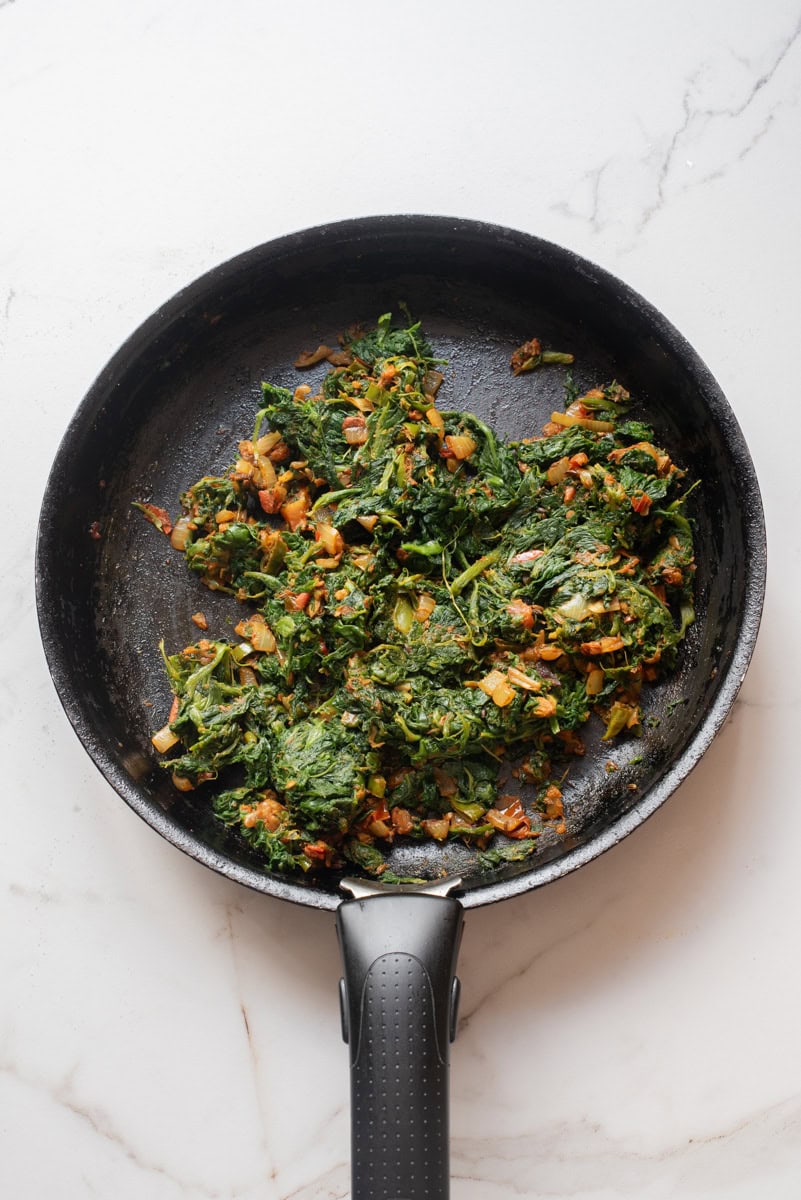
- Add the squeezed spinach to the skillet. Stir to combine with the onion-tomato mixture. Cook for 3-4 minutes, stirring occasionally, until the spinach is heated through and any remaining moisture has cooked off.
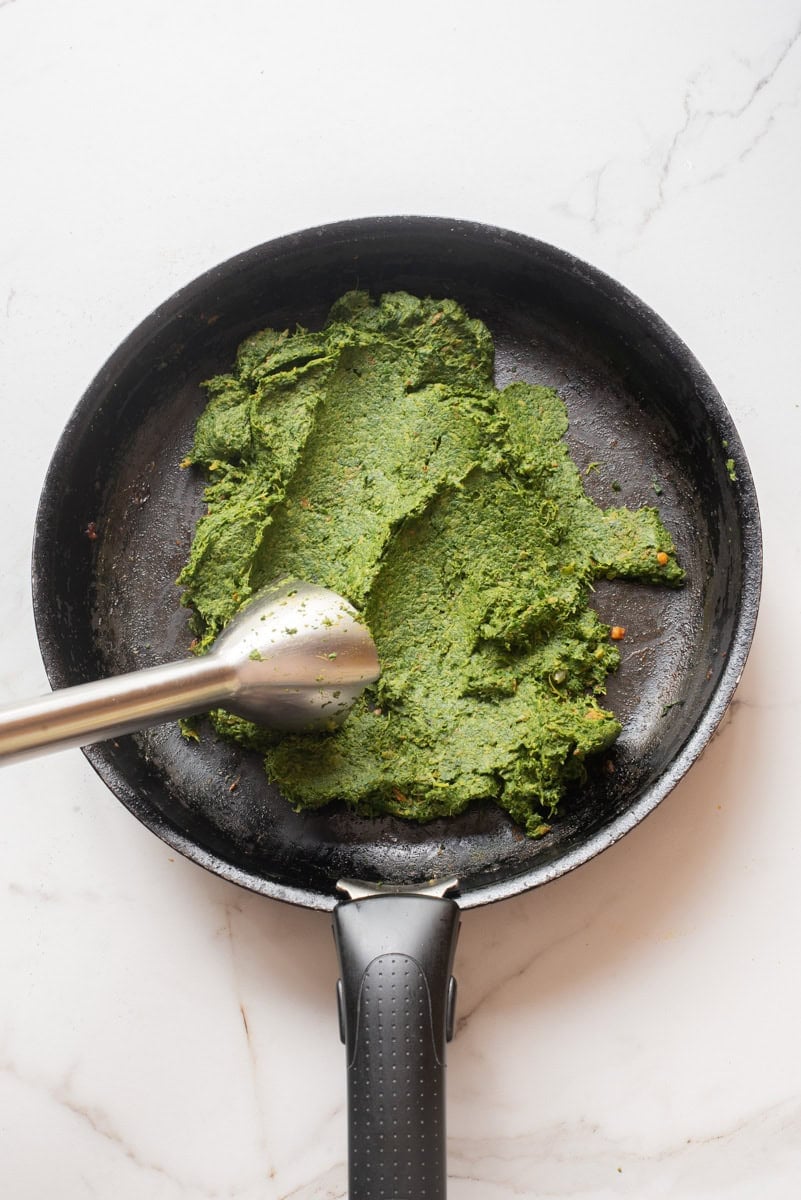
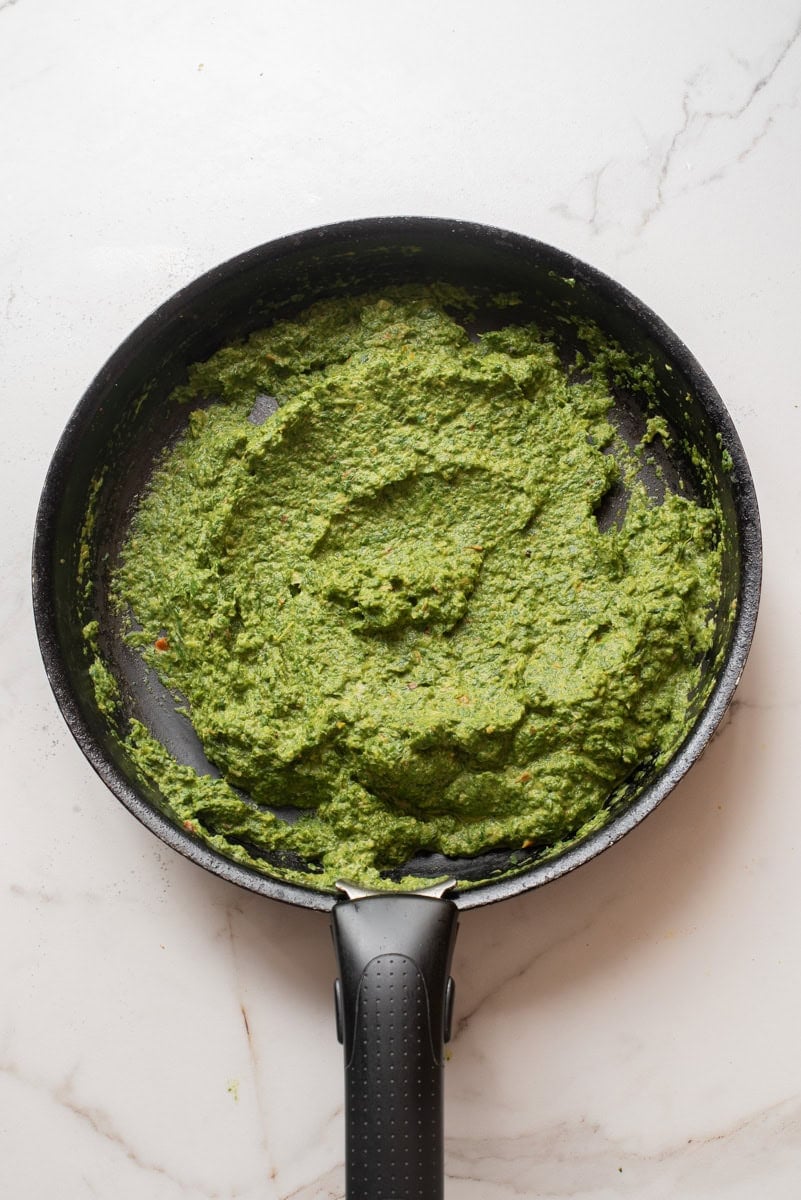
- Remove from heat, let cool 2-3 minutes, then pulse in a blender until roughly pureed with some texture. Return to the skillet, add water, and bring to a gentle simmer.
- Stir in heavy cream and garam masala. Let simmer until the sauce thickens slightly and the flavors meld. Crush the kasuri methi between your palms and add to the sauce. Stir to combine—this adds the distinctive restaurant flavor.
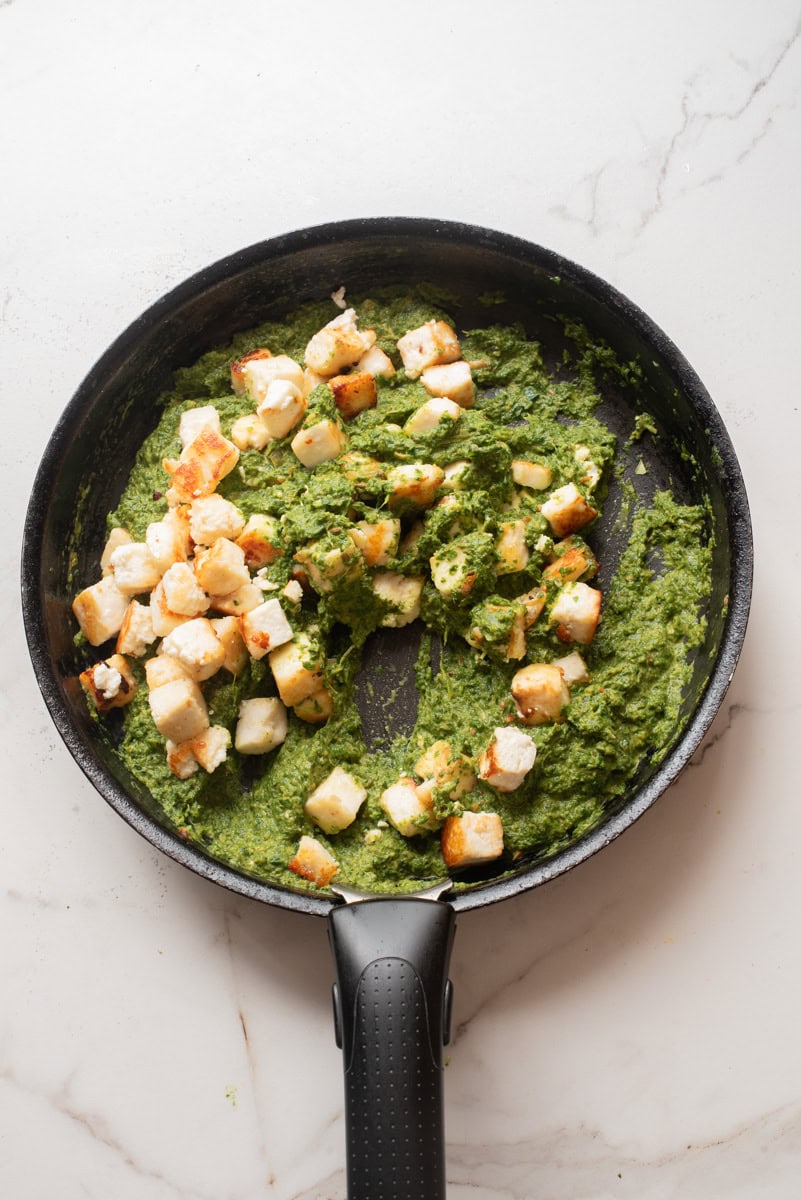
- Add the golden paneer to the sauce. Gently fold to coat. Reduce heat to low, cover, and simmer to let the paneer absorb the flavors.
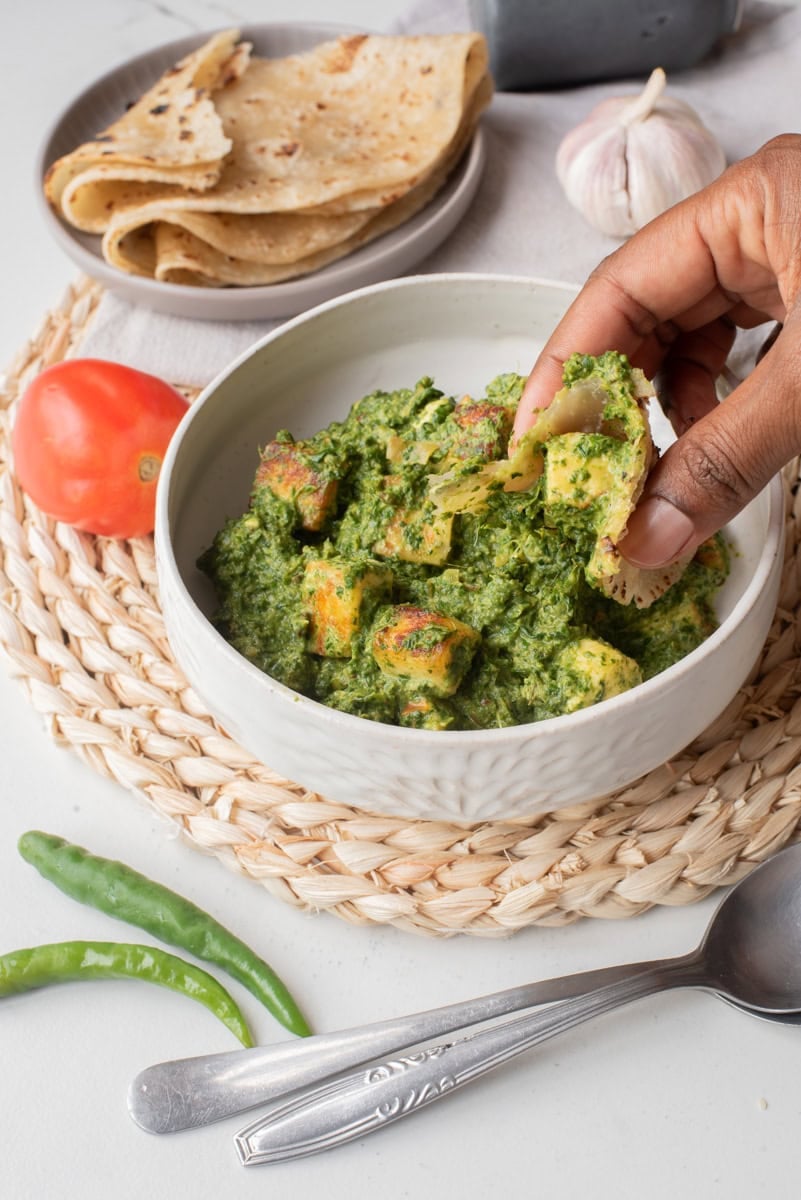
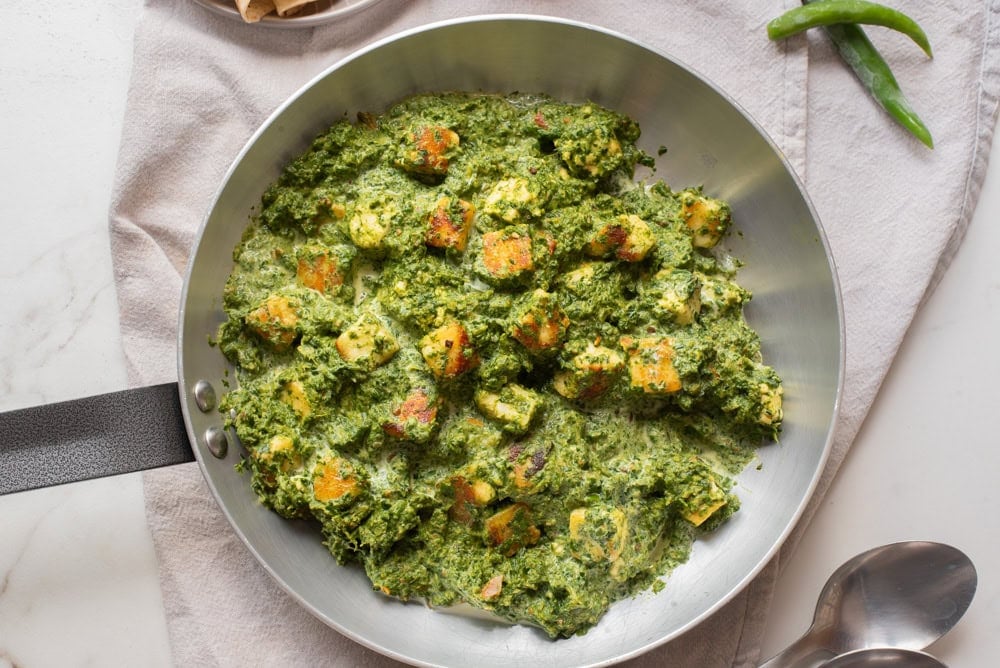
- Taste and adjust salt if needed. Remove cardamom pods before serving if desired. Serve hot with basmati rice, naan, or roti.
How to serve spinach paneer curry
Serve this with soft, homemade naan for scooping, the classic pairing, or steamed basmati rice or jeera rice if you’re after something a little more substantial. For a complete North Indian meal, pair it with my dal tadka; together, they bring 20g+ of protein to the table and cover all the bases.
Variations:
- Saag paneer: Swap half the spinach for mustard greens. Earthier, more bitter, more complex — genuinely a different dish.
- Lighter version: Plain whole milk yogurt off the heat instead of cream. Tangier, lower fat, works well.
- Vegan: Extra-firm tofu pressed and pan-fried the same way as the paneer, neutral oil for ghee, full-fat coconut milk for cream. Slightly sweeter but it works.
Storage and reheating suggestions
Fridge: Up to 4 days — flavor genuinely deepens by day 2.
Freezer: Freeze sauce only, without paneer (paneer goes grainy when frozen). Add fresh pan-fried paneer after thawing and reheating.
Reheating: Stovetop over low heat with a splash of water, stirring gently. Microwave works (2 minutes covered, stir halfway) but stovetop keeps the texture better.
More Indian Curry recipes
Craving more Indian flavors? Here are a few recipes to try.

Indian Chili Paneer

Spinach Dal

Baingan Bharta

Kitchari (Authentic, One Pot)
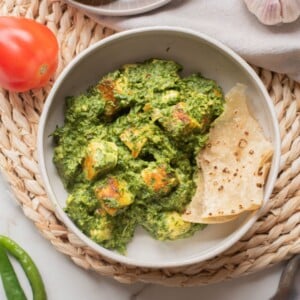
High Protein Palak Paneer
Equipment
- 1 large skillet or pan with lid
- 1 Blender or food processor
Ingredients
For the paneer:
- 2 tablespoons ghee, or neutral oil
- 14 oz paneer, cut into ½-inch cubes
- ¼ teaspoon kosher salt
For the spinach sauce:
- 16 oz frozen spinach, whole leaf or chopped, thawed
- 2 tablespoons ghee, or neutral oil
- 1 teaspoon cumin seeds
- 3 green cardamom pods
- 1 medium yellow onion, finely diced
- 4 garlic cloves, minced
- 1 tablespoon fresh ginger, finely grated
- 1 Indian green chili, minced, de-seeded for less heat, sub serrano
- 1 medium tomato, finely chopped, about ¾ cup
- 1 teaspoon ground coriander
- ½ teaspoon ground turmeric
- ½ teaspoon Kashmiri chili powder, sub ¼ teaspoon cayenne + ¼ teaspoon paprika
- 1 teaspoon kosher salt
- ½ cup water
- ¼ cup heavy cream
- ½ teaspoon garam masala
- ½ tablespoon kasuri methi, dried fenugreek leaves
Instructions
- Thaw the frozen spinach completely. Squeeze out as much liquid as possible using clean hands or a kitchen towel — you want it as dry as you can get it. Set aside.
- Heat 2 tablespoons ghee in a large skillet over medium heat until shimmering. Add paneer cubes in a single layer, sprinkle with a pinch of salt, and cook without stirring for 2–3 minutes until golden on the bottom. Flip and cook another 2 minutes. Transfer to a plate. The paneer will finish cooking in the sauce.
- In the same skillet, add 2 tablespoons ghee over medium-high heat. Add the cumin seeds and cardamom pods. Let them sizzle until fragrant, about 30 seconds.
- Add the onion and cook until softened and starting to turn golden, 5–7 minutes. Add the garlic, ginger, and green chili. Cook for 1 minute until fragrant.
- Add the tomato and cook until softened and broken down, 3–4 minutes. Add the coriander, turmeric, Kashmiri chili powder, and salt. Stir and cook for 1 minute until fragrant.
- Add the squeezed spinach. Stir to combine and cook for 3–4 minutes until heated through and any remaining moisture has cooked off.
- Remove from heat and let cool for 2–3 minutes. Transfer to a blender or food processor and pulse to a rough puree — some texture, not completely smooth. (Or use an immersion blender directly in the pan.)
- Return the puree to the skillet over medium heat. Add the water, stir, and bring to a gentle simmer. Stir in the heavy cream and garam masala. Simmer for 2–3 minutes until the sauce thickens slightly.
- Crush the kasuri methi between your palms and stir it into the sauce. Add the pan-fried paneer and fold gently to coat. Reduce heat to low, cover, and simmer for 5 minutes.
- Taste and adjust salt. Remove cardamom pods before serving if desired. Serve hot with basmati rice, naan, or roti.
Notes
- Squeeze the spinach dry — twice if needed. Wet spinach means watery sauce.
- Don’t skip the kasuri methi. It’s the finishing move that makes palak paneer taste like restaurant-style. Find it at Indian grocery stores.
- The cardamom pods add fragrance but aren’t meant to be eaten — remove before serving or eat around them.
- For smoother sauce, blend longer. For more texture, pulse just a few times.
- Storage: Refrigerate up to 4 days — flavor improves overnight. Reheat gently on the stovetop with a splash of water, stirring carefully to avoid breaking the paneer.
Nutrition
Nutrition information is automatically calculated, so should only be used as an approximation.


