
Roasted kabocha squash is all the rage these days. It’s a Japanese pumpkin that’s gaining popularity in the US, and has a sweet, nutty flavor. It can be used in both sweet and savory dishes. And honestly, it’s my secret weapon for the Fall — buttery, caramelized, and naturally sweet with just the right amount of umami. I make it when I want something hearty that doesn’t take over my evening. It’s the kind of recipe that feels luxurious but barely asks for your attention — chop, glaze, roast, done.
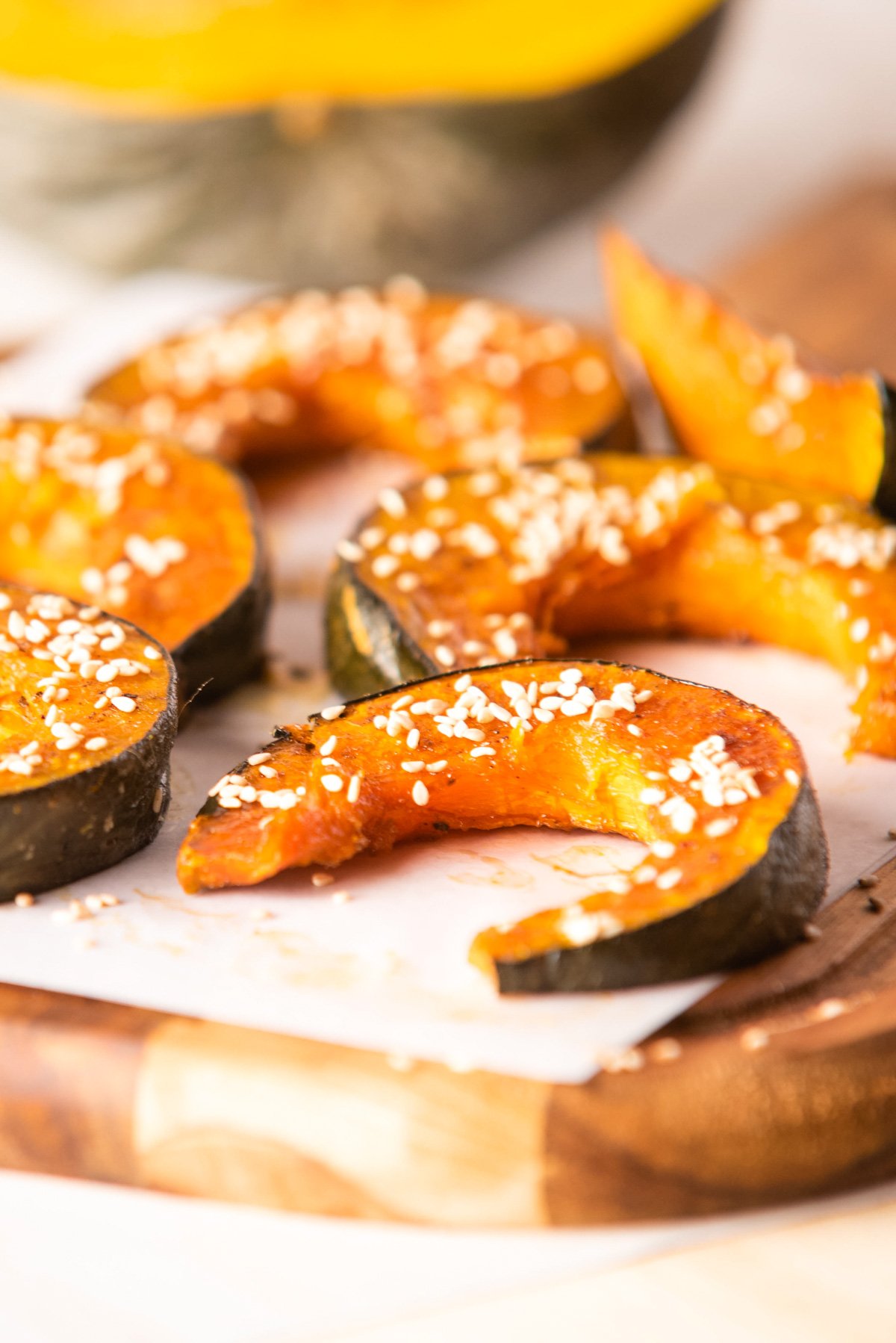
Roasted Kabocha Squash = Fall Perfection
I fell for kabocha squash when I had Japanese curry on a layover from Asia, long before it became a fall darling in the U.S. Locals there call it “Japanese pumpkin,” and it shows up everywhere — roasted with soy glaze, simmered in miso broth, even tempura-fried and tucked into bento boxes. Its dense, creamy texture and chestnut-like sweetness instantly hooked me. Back in my own kitchen, I wanted to capture that balance — earthy, caramelized squash with a glaze that’s salty, gingery, and just sweet enough.
The secret? A double roast. First, high heat to get color; then, a quick brush of tamari-maple-ginger glaze that turns glossy and irresistible in minutes.
If you love simple but delicious, umami-filled dishes, try my spicy soba noodles and my sesame tofu recipes. They follow the same principle: big flavor, small effort, and easy cleanup. Plus, make sure to check out these 25+ amazing kabocha squash recipes if you want to try different flavor combinations!

Key ingredients and why they matter
To roast kabocha squash, you’ll need: kabocha squash (approximately a pound) and olive oil. I’ve seasoned this recipe with maple syrup, tamari, ground ginger, sesame seeds (for garnish), and salt and black pepper.
Full ingredient list and detailed instructions in the recipe card.
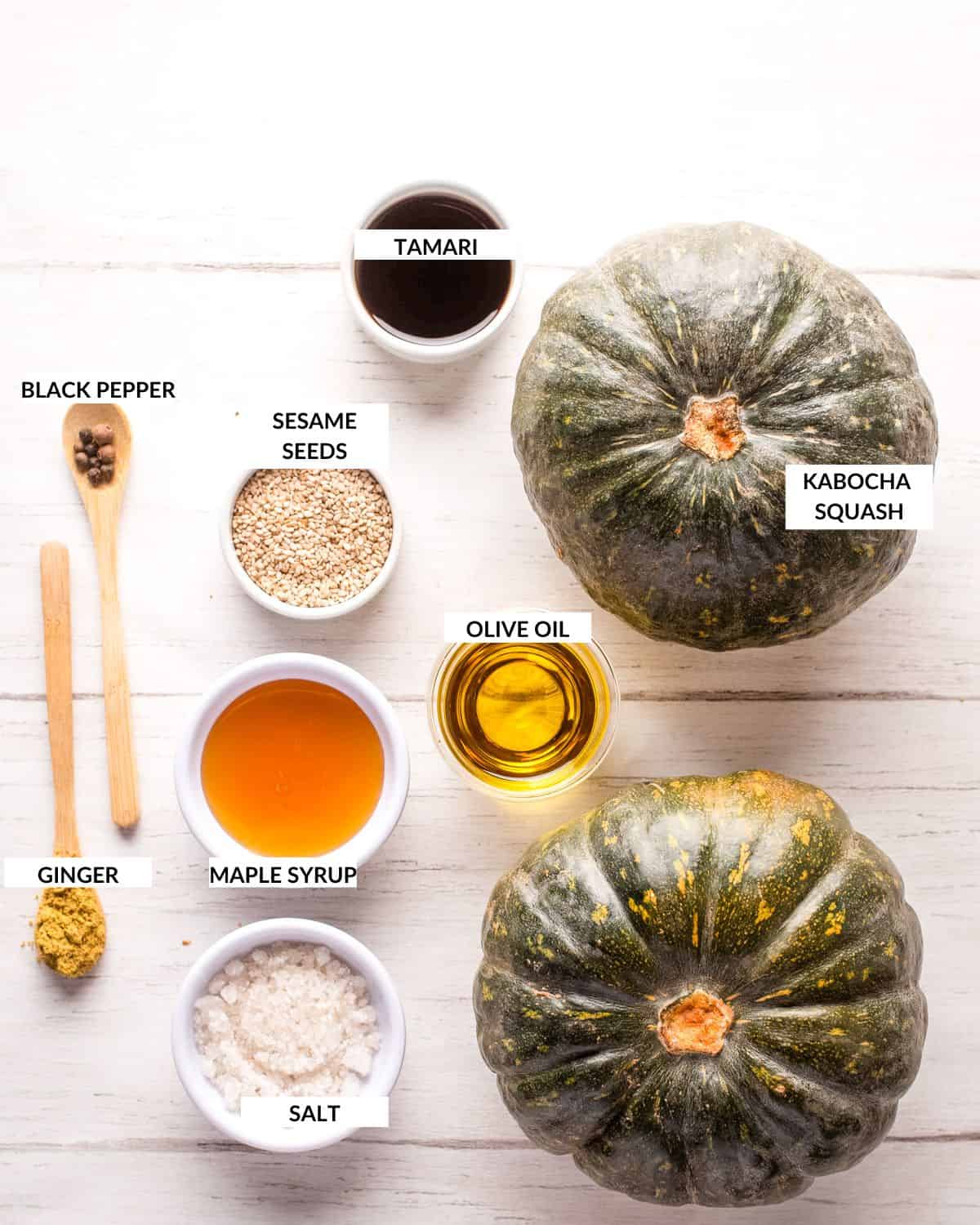
- Kabocha squash: The star — sweet, buttery, and a little nutty. Look for one that’s deep green and heavy for its size; that means it’s ripe and full of flavor.
- Olive oil: Helps caramelize the edges and carry the glaze’s flavor. You don’t need a fancy bottle, but avoid anything too bitter.
- Soy sauce: Adds savory depth and balances the squash’s natural sweetness. Use tamari to keep it gluten-free.
- Maple syrup: A touch of sweetness that amplifies the kabocha’s natural sugar and creates that golden, lacquered finish.
- Ginger: Fresh or ground, it cuts through the richness and adds warmth — don’t skip it.
- Sesame seeds: Toasted and scattered at the end for crunch and a hint of nuttiness.
- Variations:
- Japanese-inspired flavor profile with soy sauce, ginger, and sesame seeds (which is what this recipe uses). You can also try roasted kabocha squash with my Japanese sesame dressing! Absolutely delicious.
- Korean-inspired flavor profile with a gochujang + tahini marinade. Check out the marinade used in my roasted whole cauliflower recipe!
TIPS & TRICKS
Shruthi’s top tips
Picking the right kabocha squash
- Kabocha squash should be round with a hard, dark green outer skin and may have a yellow spot where it ripened.
- The inner flesh is a bright orange color with medium-sized seeds.
- Choose one that is free of soft spots and is heavy for its size.
- Inspect the stem for any mold. This is not the same as bumpy skin, because there may be some hard, bumpy spots on the peel but that’s normal and fine to buy!
How to cut kabocha squash
Kabocha squash is NOT.OH.RIOUS. for its hard outer shell. So, please be careful while you’re cutting it in half!
- Invest in a sharp cooking knife, and make sure to sharpen it often! I use this chef’s knife, and I’ve had it for almost 10 years. Investing in a good knife like this will save you a lot of stress down the line!
- If you’re planning to puree the squash or make soup with it, just put the squash in the oven cold. This can sometimes allow the heat to penetrate the squash more easily and prevent the flavors from getting lost in steam.
- Typically, slicing off the top and bottom of the squash so it has flat surfaces to sit on can help. You can then use a sharp knife to cut it in half, top to bottom.
- Another tip here is to poke a few holes in the outer surface, and then pop it in the microwave for a minute or two until it softens a bit. Then, you can cut it much easier.
How to roast kabocha squash
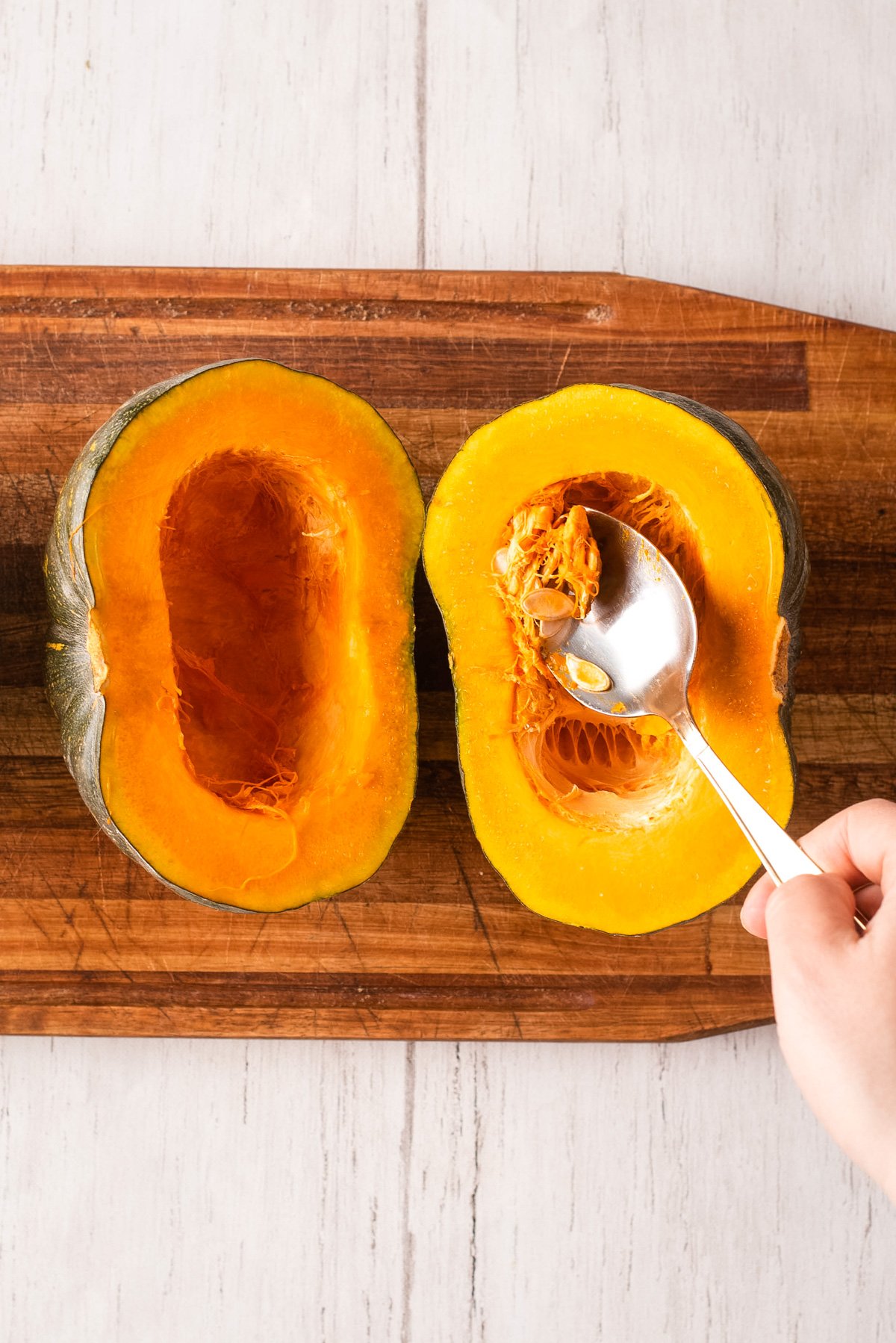
- Use a sharp knife to cut the squash in half down the middle carefully. Then use a spoon to take off the seeds inside each half.
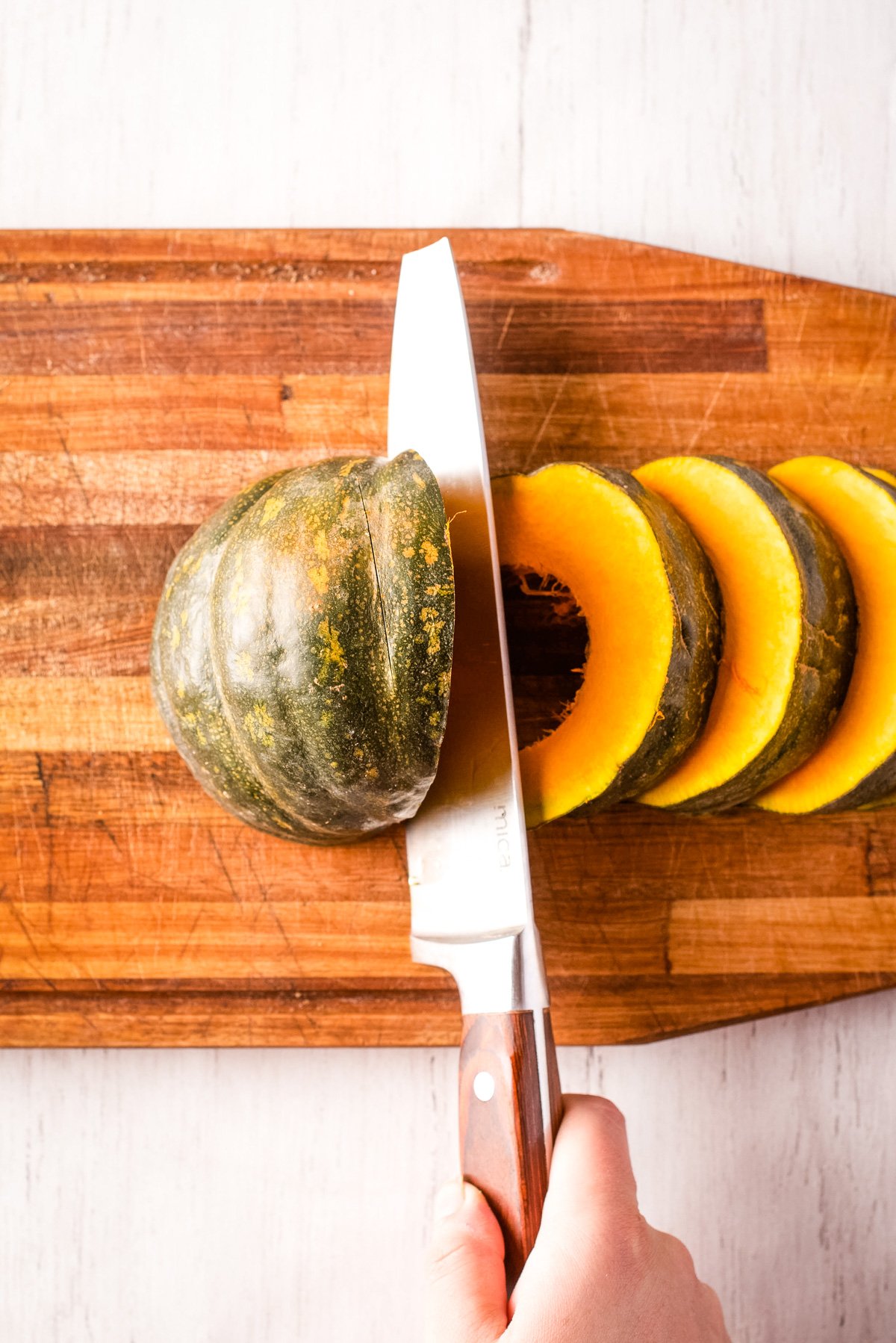
- Slice into thick slices (~1 ½ inch wedges).
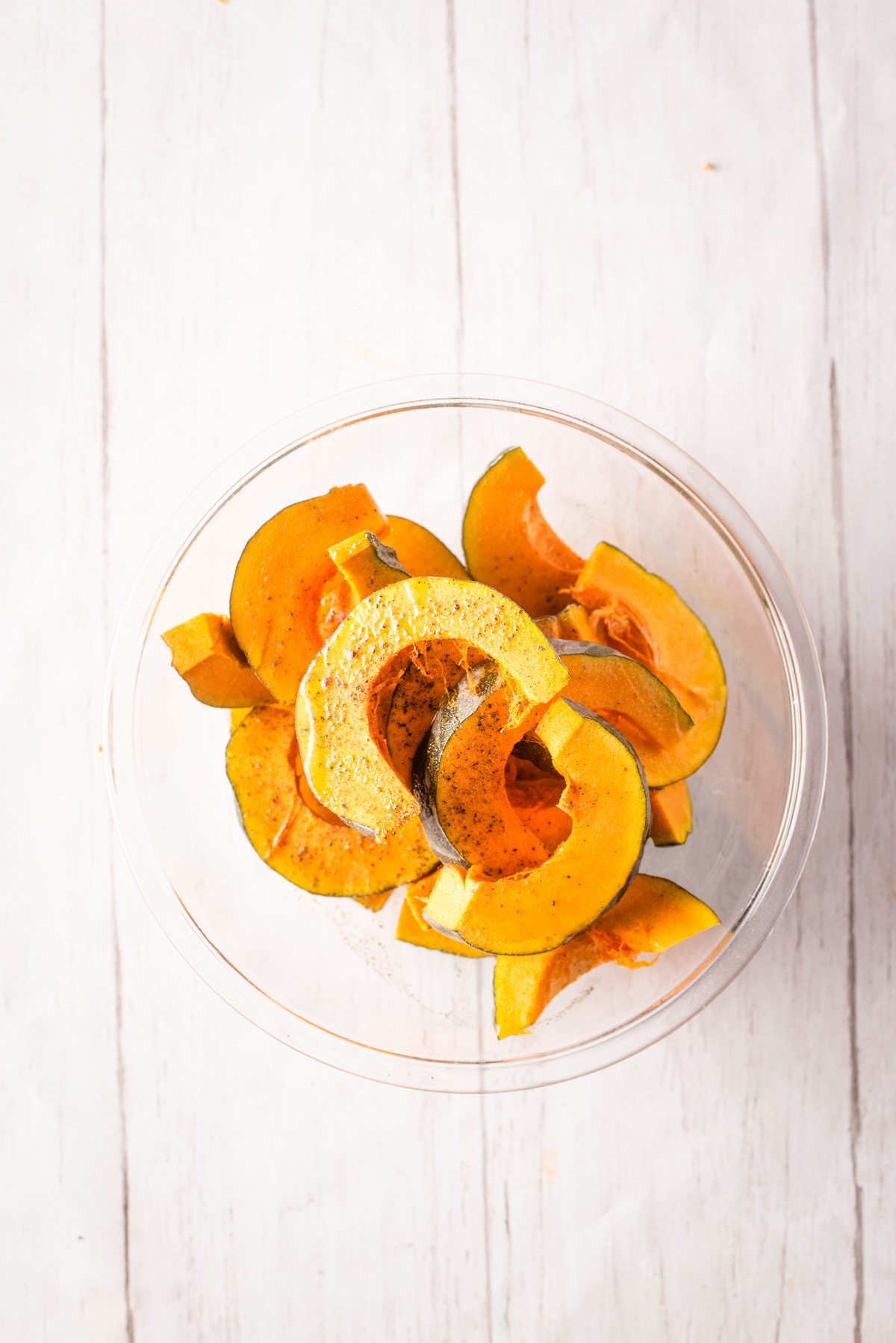
- Preheat the oven to 400°F. Use a medium to a large bowl to toss the squash, olive oil, salt, and pepper.
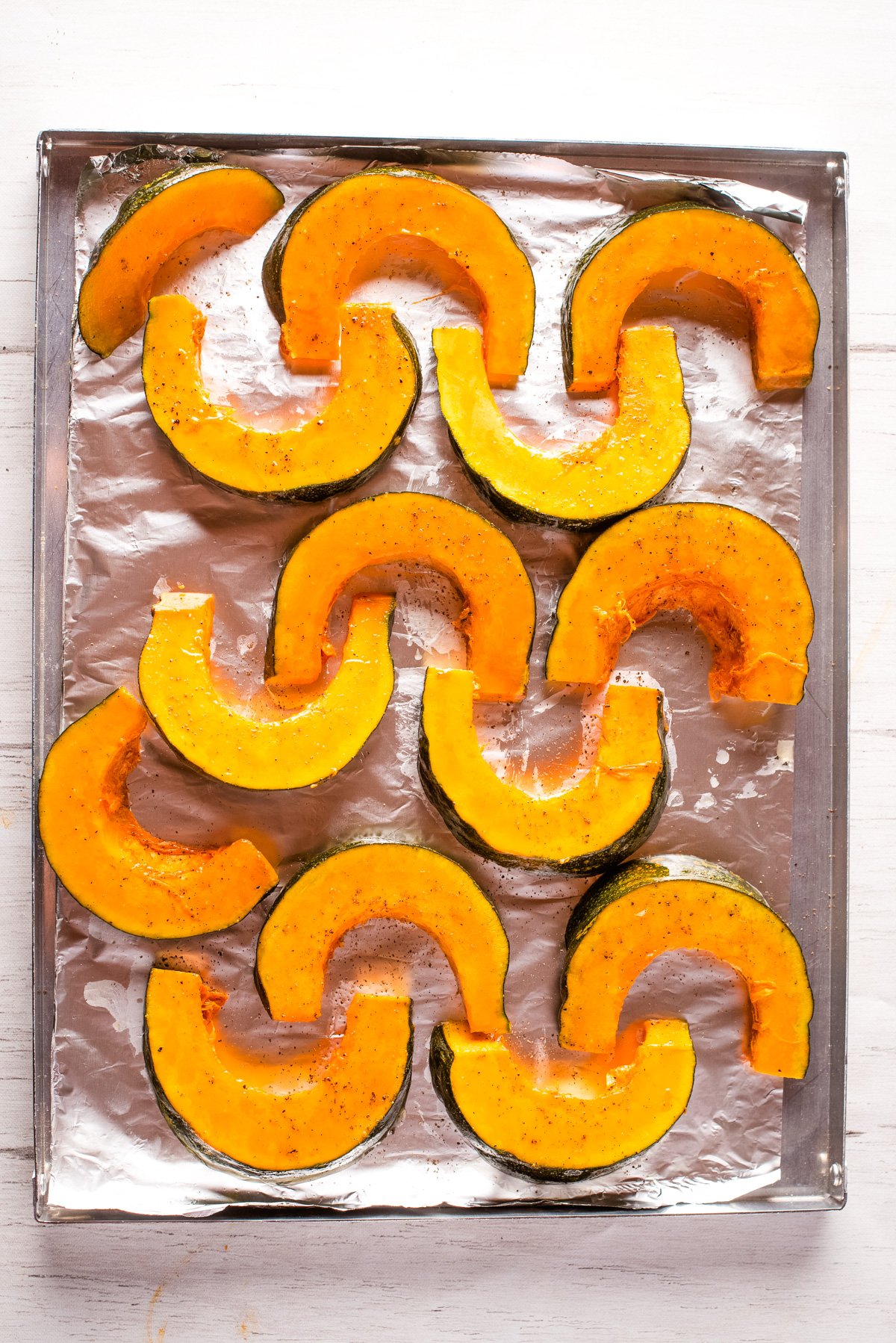
- Place the slices on the baking sheets and roast for about 10 minutes.
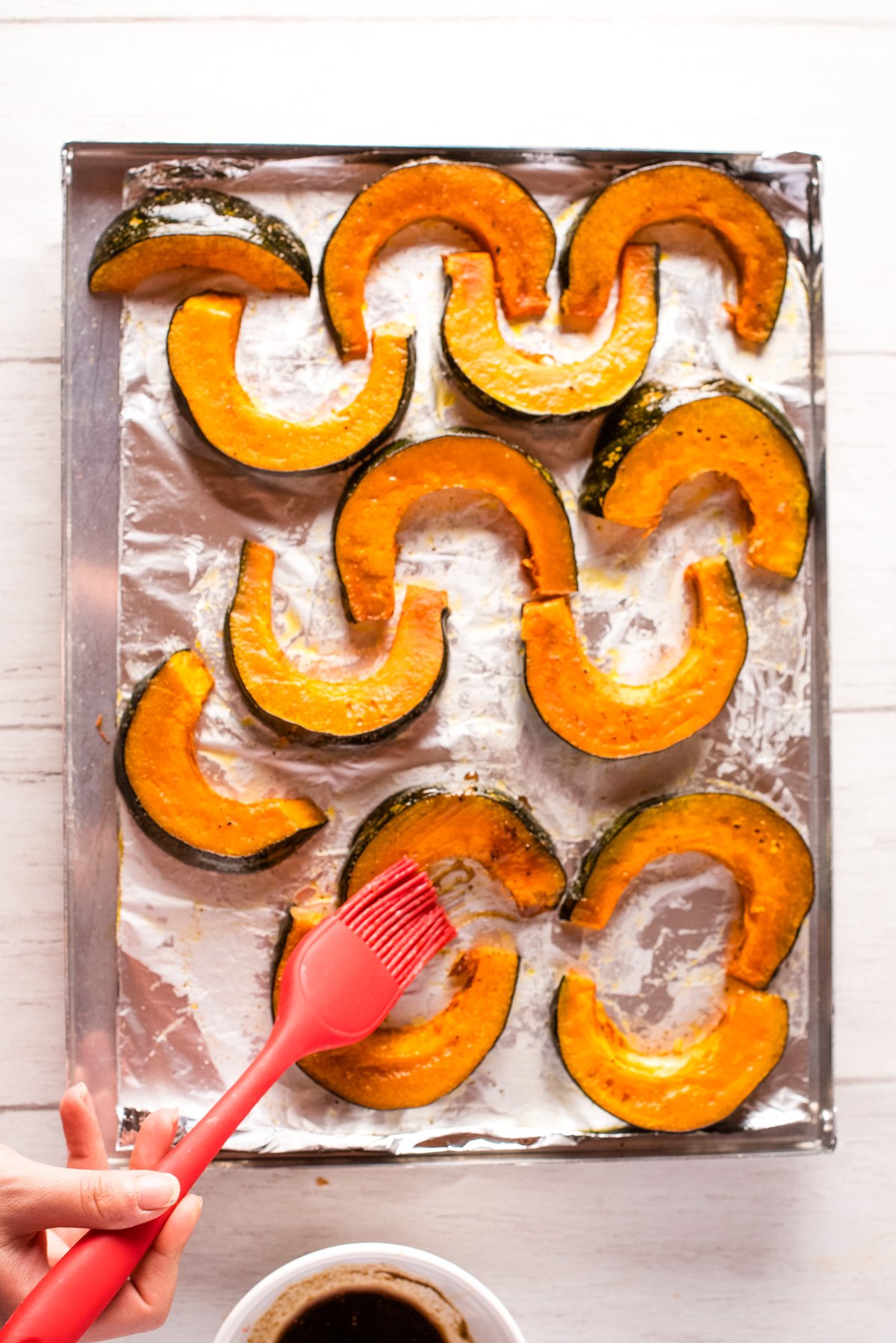
- Use a small to medium bowl to combine tamari, maple syrup, and ginger. Then use a kitchen brush to spread the glaze over the slices.
- Roast for about 10 minutes or until golden brown and fork-tender. Garnish with sesame seeds, serve, and enjoy!

How to serve roasted kabocha squash
You can serve roasted kabocha squash in so many ways! I love pairing it with simple grains, tossing it into salads, or blending it into soups for extra creaminess. It also makes a cozy side dish for any fall or winter meal.
If you’re craving more inspiration, check out this 25+ delicious kabocha squash recipes for even more creative ways to enjoy it!

Storage and reheating suggestions
Roasted kabocha squash will last 3-4 days in the fridge in an airtight container, or 2-3 months in the freezer. I love storing the squash in these food storage containers. I find that they tend to stay fresh longer this way, even in the fridge! Uncooked and uncut squash will stay fresh for up to 3-4 months in a cool, dry place (like a pantry!) But you should discard it if it becomes soft, squishy, or moldy!
More squash recipes
If you like this recipe, check out my other amazing squash recipes:

Stuffed Acorn Squash

Squash Casserole with Stuffing

Acorn Squash Soup

Stuffed Spaghetti Squash

Roasted Kabocha Squash
Ingredients
- 1 lb kabocha squash
- 3 tablespoons olive oil
- pinch of salt
- ¼ teaspoons black pepper
- 1½ teaspoons tamari, substitute soy sauce if not gluten-free
- 3 tablespoons maple syrup, substitute honey if not vegan
- 1 teaspoon ground ginger
- 2 teaspoons sesame seeds
Instructions
- Use a sharp knife to carefully cut the squash in half down the middle. Then use a spoon to take off the seeds inside each half. Then slice into 1½ inch slices.
- Preheat the oven to 400°F.
- Use a medium to a large bowl to toss the squash, olive oil, salt, and pepper.
- Place the slices on the baking sheets and roast for about 10 minutes.
- Use a small to medium bowl to combinetamari (or soy sauce), maple syrup (or honey), and ginger. Then use a kitchen brush to spread the glaze ver the slices.
- Roast for about 10 minutes or until golden brown.
- Drizzle with sesame seeds, serve and enjoy!
Notes
- Make sure to select a ripe squash. You can tell a kabocha squash is ripe when it’s deep green in color and feels heavy for its size. Avoid squash with any blemishes or soft spots.
- Cut your squash into even pieces. This will help it cook evenly and prevent burning.
Nutrition
Nutrition information is automatically calculated, so should only be used as an approximation.


What a great idea to add tamari to the recipe! It really makes the dish taste special. Delicious.
One of my favorite recipes to cook kabocha squash is roasted, With this recipe the result was perfect! Thanks for all the tips.