
This delicious, creamy, vegan Thai butternut squash soup topped with scallions and roasted squash seeds doesn’t even require peeled squash!
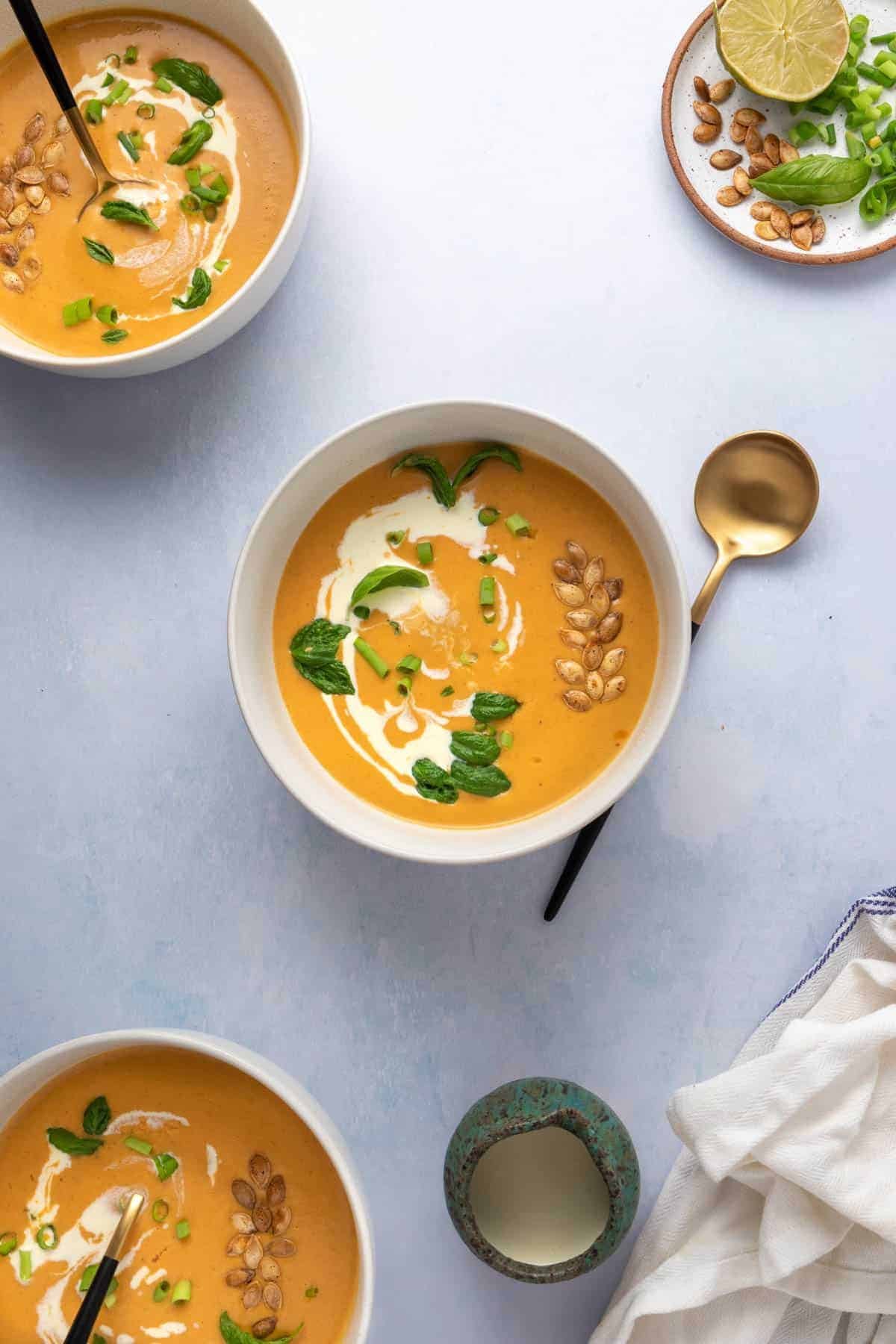
It only rains in Seattle twice a year – once from October to March, and once from March to June. And when it rains in Seattle, it’s always time for butternut squash soup. And this roasted, Thai curried butternut squash soup is one of my favorite combinations!
Why you’ll love this recipe
- Creamy, vegan and gluten-free – the recipe, as written, is deliciously creamy and still vegan thanks to the use of coconut milk
- Ultra convenient and limited hands-on cook time – I love soup, but I hate the work. This recipes uses whole-roasted squash, so there’s no need to peel (and let’s be honest, that’s the worst part of squash season). And there’s little hands-on cook time.
- Instructions with or without a blender: You don’t necessarily need a blender to make this soup (it’ll be chunkier version but just as delicious!)
- Prevents waste – if you are an aspirational zero waste warrior like I am, you’ll be delighted that we even use the squash seeds in this recipe
Ingredients & notes
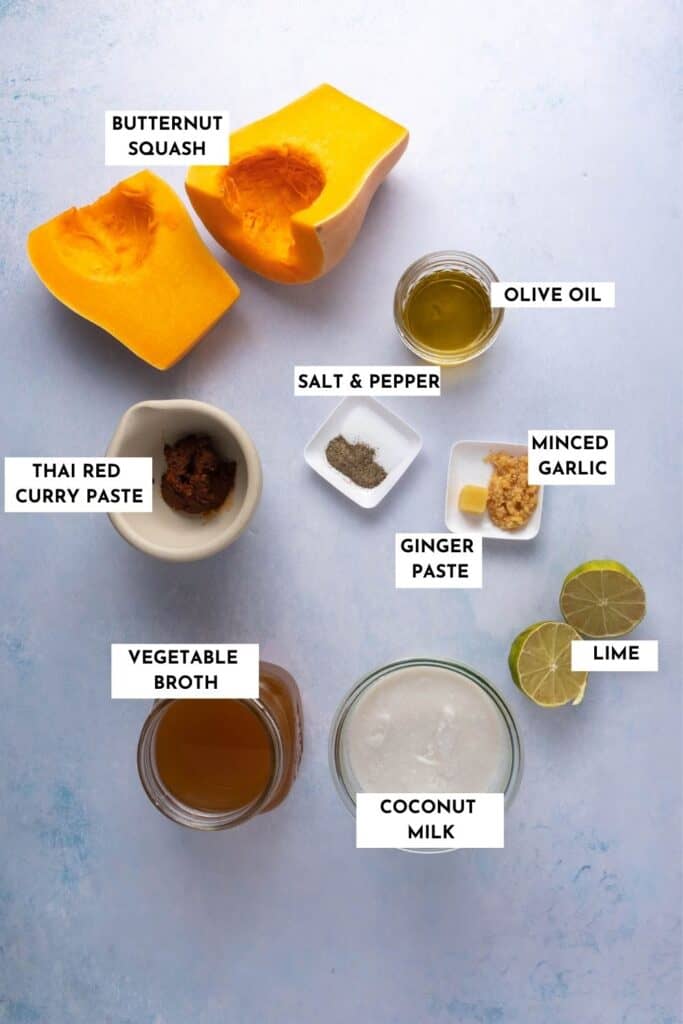
This recipe uses a super simple set of ingredients – butternut squash, olive oil, garlic and ginger, red curry paste, vegetable broth and coconut milk for the soup. You can add a wide variety of things as garnish. I typically use squash seeds, scallions, and basil but you can also add toasted peanuts, or a drizzle of hot sauce (and any fresh herbs of choice).
You can upgrade this recipe by using my homemade Thai red curry paste (which is vegan, as written).
Ingredient Notes
- How do you know when butternut squash is ripe? I use a few ‘rules of thumb’ when I pick butternut squash. I look for squash that feels heavier than expected, and looks clean on the outside (i.e. without frostbite or bruises). Avoid any squash that has green spots on the outside, and look for an even color across the rind.
- Do you need to peel the butternut squash for this recipe? I use roasted butternut squash as the base – so not only is the squash caramelized, you also don’t need to peel it. Easy peasy!
- Can you eat squash seeds? Yes, and not just because this butternut squash soup is on a zero waste journey. Squash seeds are delicious. Clean the excess flesh, add some olive oil and salt to roast in the oven until it pops.
Make butternut squash soup from scratch
Prep the butternut squash for roasting
Make sure to preheat the oven to 400F while you’re doing all of this. Thankfully, we don’t have to peel or slice the squash. So, put a damp towel underneath the squash to hold it in place and slice off stem end, cut vertically down in half.
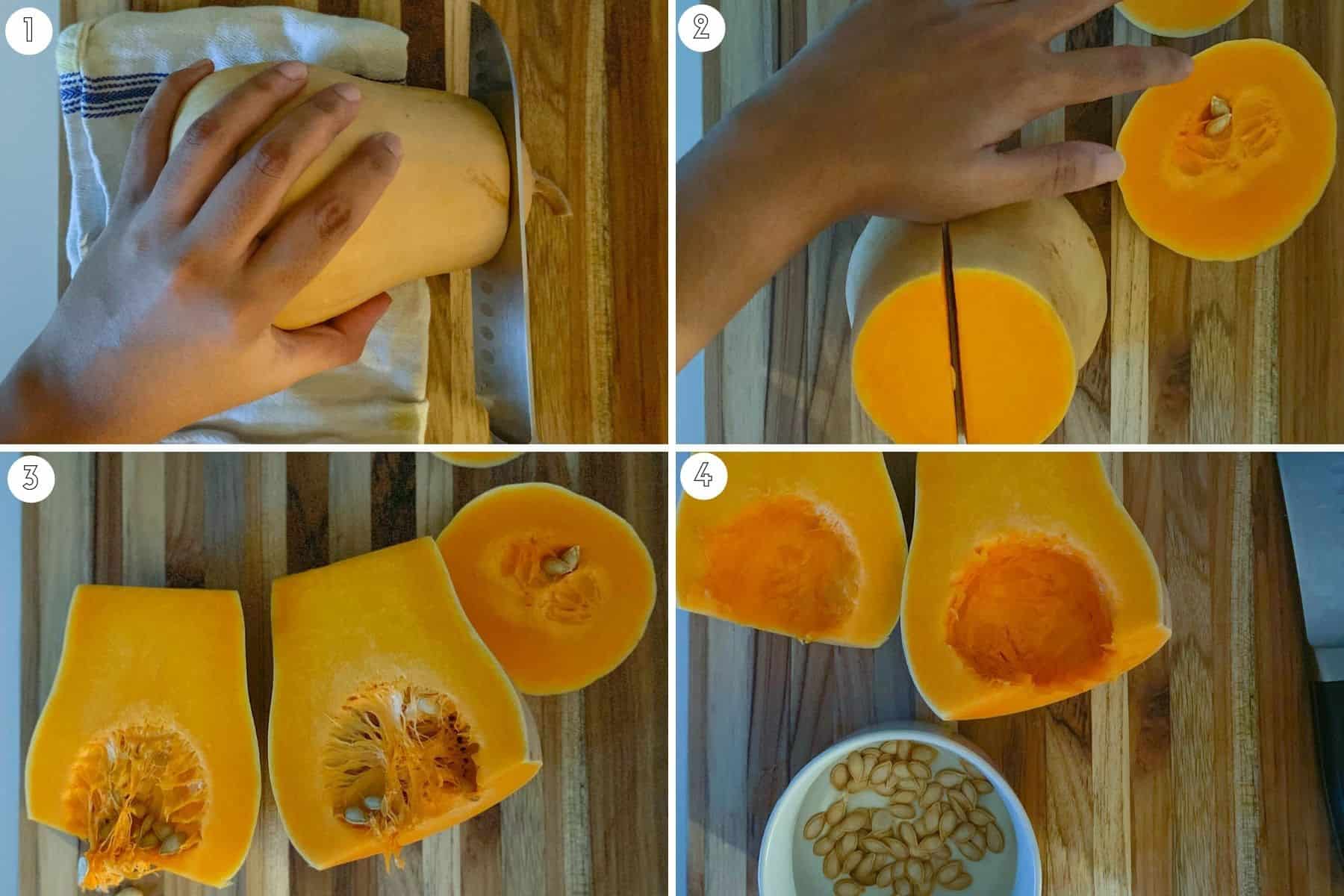
Scoop out the seeds and place them in a bowl. Do this until the flesh is clean. Line up a sheet pan with a silicon mat or parchment paper. Drizzle the fleshy side with olive oil, salt and pepper and place flesh side down on baking sheet.
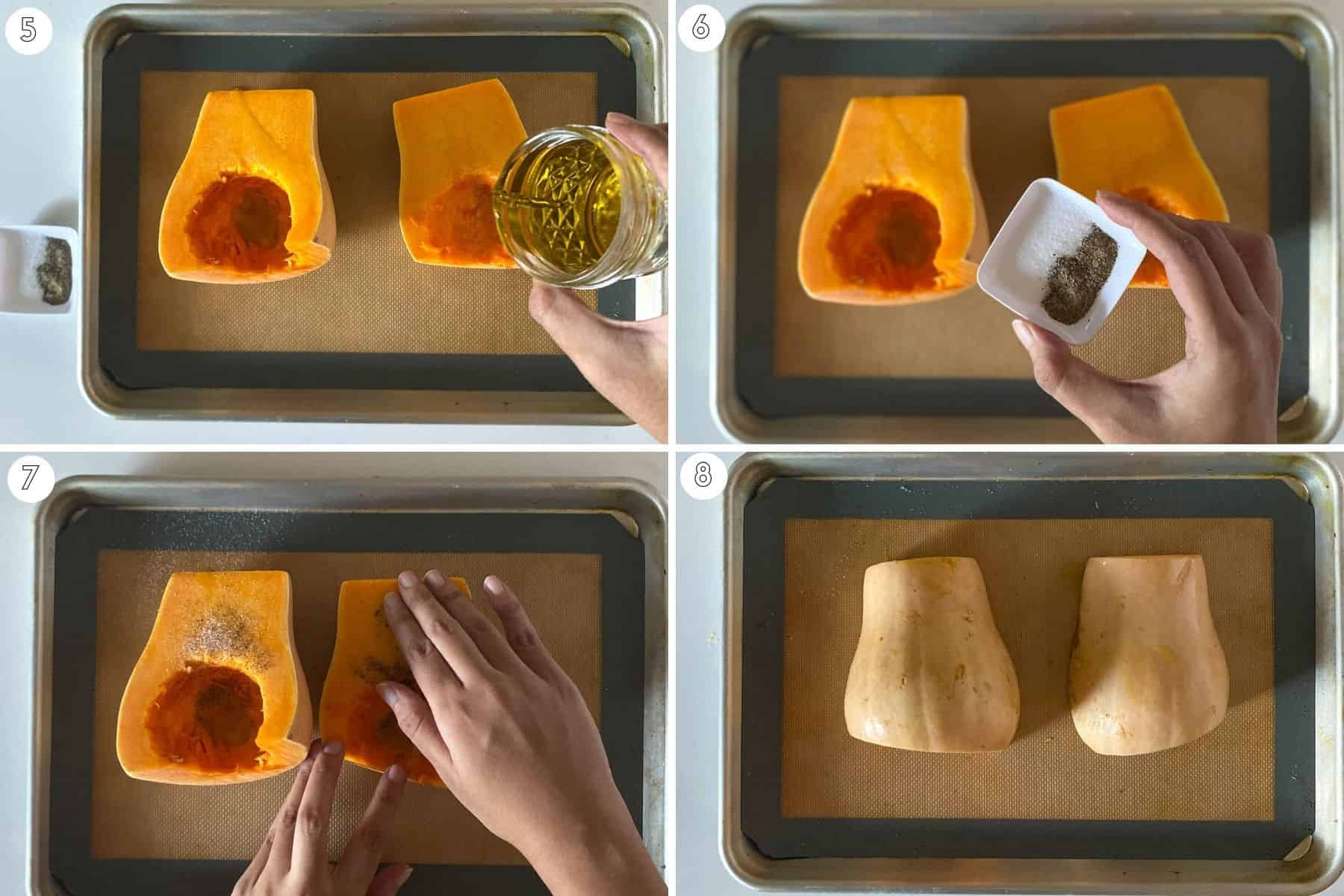
Roast the butternut squash to cook and caramelize the pulp
Roast the butternut squash for about 30 – 40 minutes until squash is cooked. The cook time on squash will depend on how big it is – my squash was roughly the size of my palm, so it took 35 minutes to caramelize. Check after 35 minutes, and roast in 3-5 minute increments afterwards to make sure it’s tender.
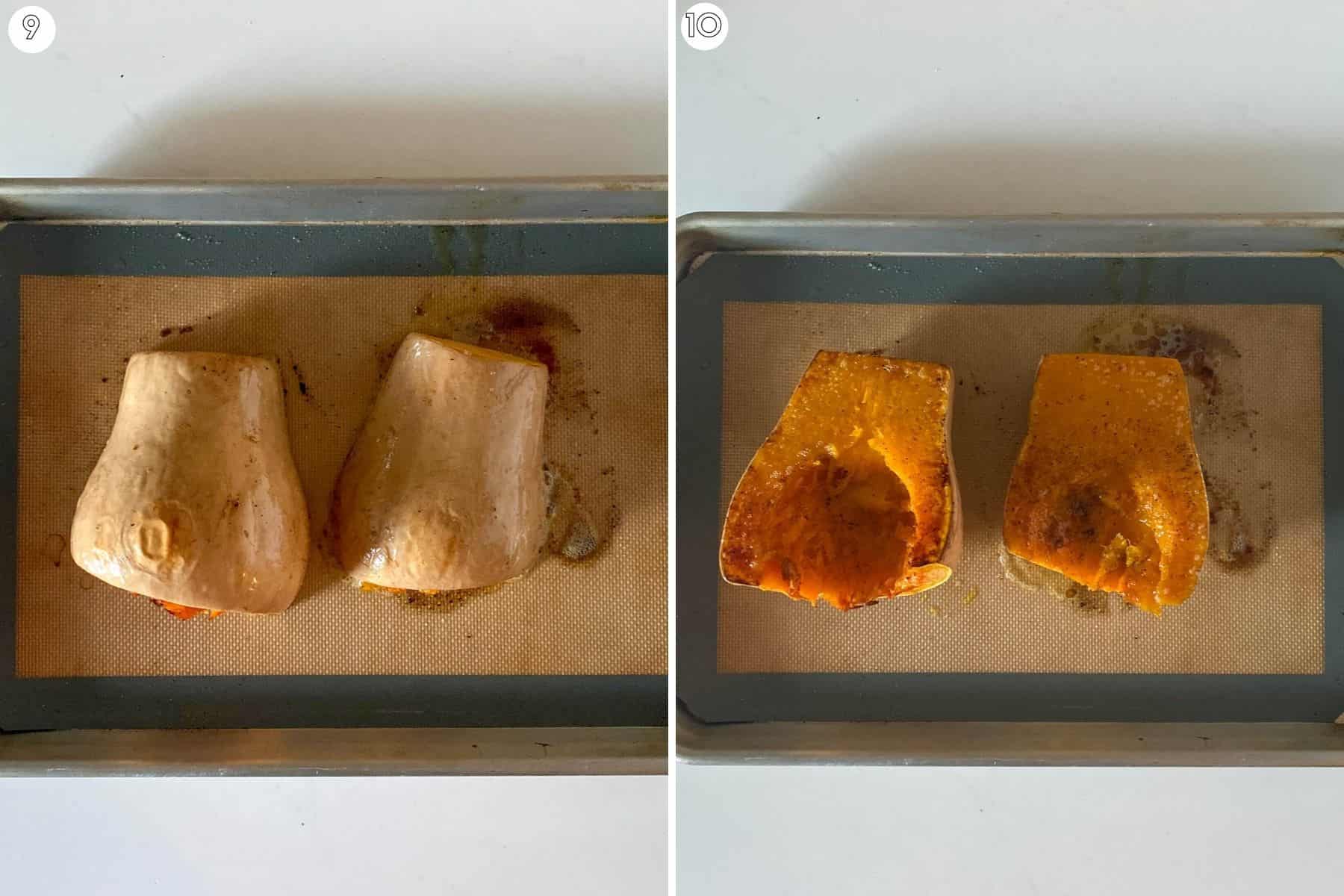
And hey, if you’re in a hurry, slice the tops off, and make several slits on the rind, and pop the squash in the microwave on high for 10 – 12 minutes.
Then, remove the squash and set it aside to cool down (roughly 5 minutes). Be careful while you handle the squash, it will be quite hot.
Optional: If using squash seeds, roast the seeds while the squash cools down
Turn down the oven to 350. Remove excess pulp from the seeds and add the them to the pan with about 1 tsp of olive oil. Toast for roughly 20 minutes (you’ll know when it’s done when you hear it pop). Turn off the oven and wait two minutes to take it out – set aside as garnish (zero waste!)
Prepare the soup and add flavors
Hey, I hear you. “What can I add to bland butternut squash soup? How can I spruce up butternut squash?” – I get these questions all the time. We’ll take care of that here.
While the squash is cooling, heat vegetable oil in a pan on medium flame. Add minced garlic and ginger, and cook until it’s fragrant. Then add butternut squash along with Thai red curry paste, coconut milk, vegetable broth, salt and pepper. Let it come to a boil.
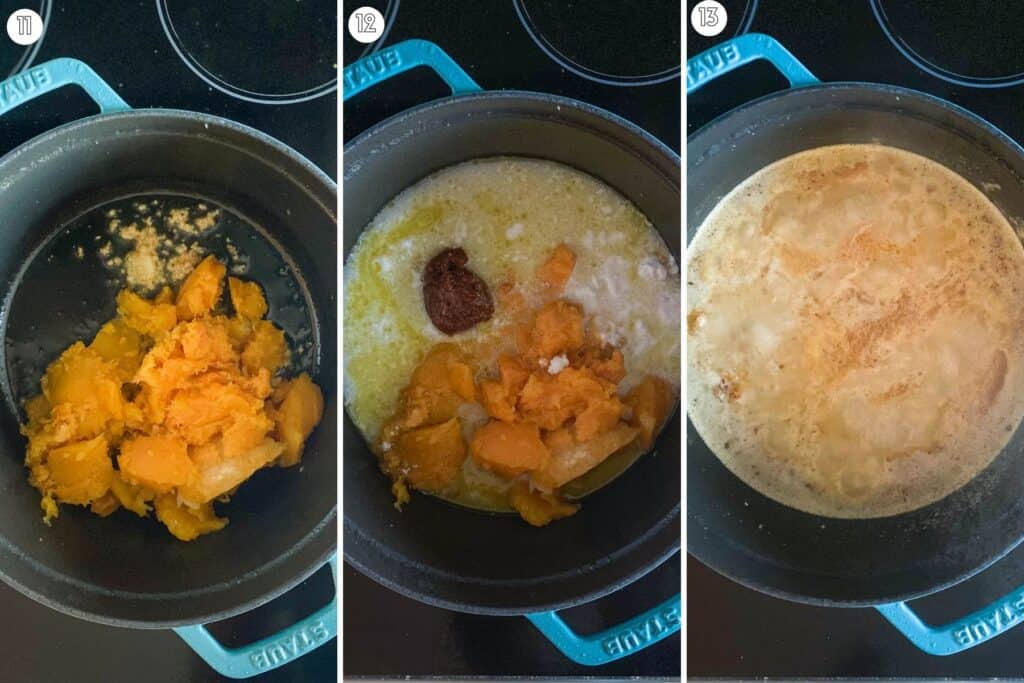
Blend the soup to make it smoother or use a masher for a more “chunky” soup
The great thing about roasting or steaming squash first is that the pulp becomes quite tender. So, if you don’t have a blender, don’t despair. Just use a wooden spatula or a masher and mash the soup to the best extent possible. You’ll end up with a chunkier version, but it’s still super delicious.
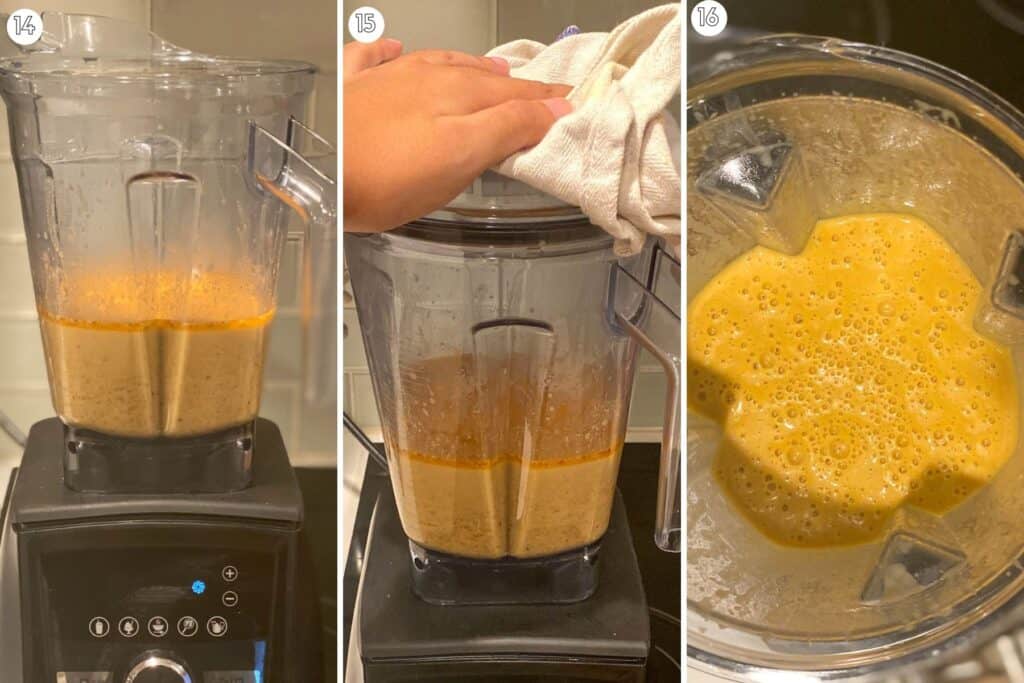
If you have a blender or an immersion blender, use that to puree the soup. If you’re using a blender, wait until the soup is cool enough (typically around 5 minutes). Only fill the blender halfway full, open the steam vent, hold a towel over it to absorb the steam, and puree it. Once pureed, pour it back into the pot, heat it up, before serving.
Garnish and serve a hearty bowl of delicious, roasted butternut squash soup
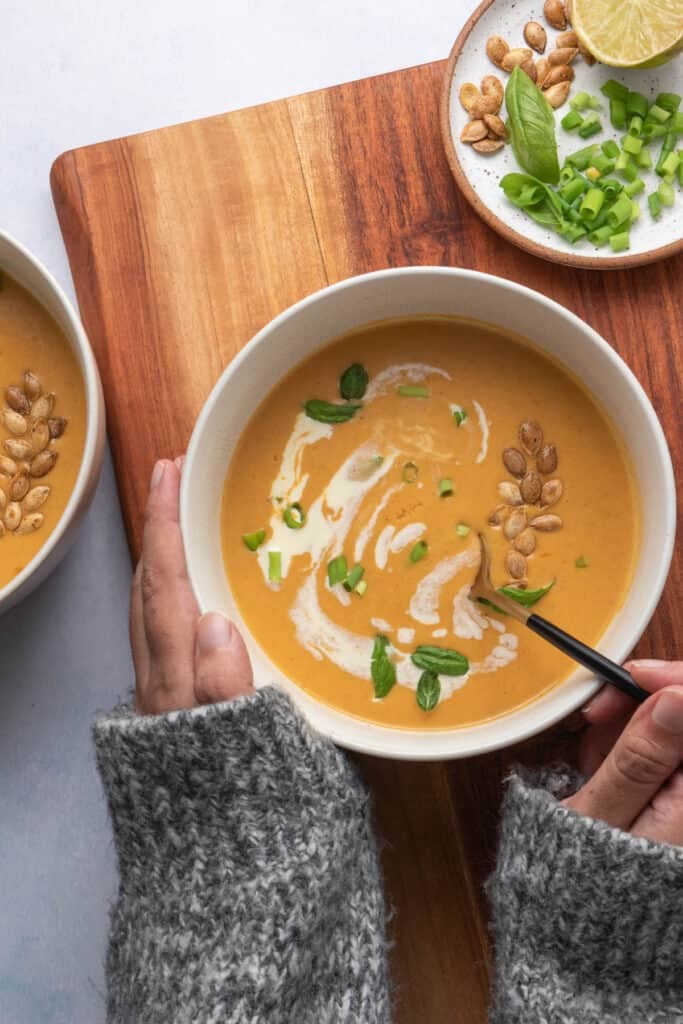
I tend to use the squash seeds as garnish on my soup – but make sure you garnish right before you eat. Otherwise, it can get very chaff-like. Other garnishes include any fresh herbs, a dash of full-fat coconut milk or coconut cream as well as scallions for a crunch.
👩🏽🍳 FAQs and Tips
I typically add roasted squash seeds, scallions and basil to my soup to bring out the fresh, herby flavors and finish with a squeeze of lime. Other alternatives you can consider include chives, toasted peanuts, or a dollop of vegan sour cream also works!
Since this is a curried butternut squash soup, I try to pair it with winter vegetable salads. For instance, this roasted Brussels Sprouts salad with a vegan Caesar dressing or my favorite kale salad, inspired by a former favorite restaurant in Seattle.
Yes, you can. I think the oven or microwave typically works quite well, but if you want to use your Instant Pot – pour 1 cup of water, place a trivet inside the Instant Pot. Remove stems, and quarter your butternut squash, and remove the seeds before placing them on the trivets. Lock the lid, seat the venting knob, and cook on high pressure for about 8 to 10 minutes. Quick release the steam and you’re good to go.

Thai Butternut Squash Soup with Coconut Milk
Equipment
- Wide heavy-bottomed pot
- Blender An immersion blender works but will not get it as smooth.
Ingredients
For the squash:
- 1 medium butternut squash, about 3 lbs, halved and seeded
- 2 tablespoons neutral oil, such as vegetable or canola
- 1 teaspoon kosher salt, Diamond Crystal
For the soup:
- 2 tablespoons coconut oil, or neutral oil
- 3 tablespoons Thai red curry paste
- 3 medium shallots, sliced
- 3 cloves garlic, sliced
- 2 tablespoons fresh galangal, sliced into coins
- 1 13.5-oz can full-fat coconut milk
- 2 cups vegetable broth, low-sodium preferred
- 2 stalks lemongrass, bruised and cut into 3-inch lengths
- 4 makrut lime leaves, fresh or frozen
- 1½ tablespoons tao jiao, fermented soybean paste
- 1 tablespoon palm sugar, chopped
- 2 tablespoons fresh lime juice
For serving:
- ½ cup Thai basil leaves
- 3 scallions, thinly sliced
- coconut milk, for swirling
Instructions
- Heat the oven to 400°F. Rub the cut sides of the squash with the neutral oil and salt, place cut side down on a lined sheet pan, and roast 45 minutes, until a knife slides into the thickest part with no resistance.
- Cool the squash until you can handle it, then scoop the flesh away from the skin. There is no need to peel it.
- Heat the coconut oil in a wide heavy pot over medium. Add the curry paste and fry 3 to 4 minutes, pressing it against the pan, until the oil runs red and the paste smells cooked rather than sharp.
- Add the shallots, garlic and galangal and fry 2 minutes, until fragrant.
- Pour in the coconut milk and broth, add the lemongrass and makrut lime leaves, and simmer 10 minutes to infuse.
- Fish out and discard the lemongrass, lime leaves and galangal coins.
- Add the roasted squash and blend until smooth, working in batches with the blender lid vented and a towel over the top. Never fill past the maximum line.
- Return the soup to the pot and stir in the tao jiao and palm sugar. Taste and add salt.
- Take the pot off the heat and stir in the lime juice. Serve topped with Thai basil, scallions and a swirl of coconut milk.
Notes
- Curry paste heat varies widely by brand. Thai Kitchen at 3 tablespoons is mild enough for kids; start at 2 tablespoons with Mae Ploy. Check the curry paste label for shrimp paste, since most commercial brands contain it.
- Salt amounts are for Diamond Crystal kosher salt. Use about half as much Morton.
- Add the lime off the heat. Sustained heat turns it bitter and flat.
- Use fresh or frozen makrut lime leaves. Dried ones contribute almost nothing here.
- Swap kabocha for the butternut for a fuller, drier soup. It is the squash Thai cooks actually use.
- For a deeper version, skip the oil and crack the coconut cream instead. Spoon the thick cream off the top of an unshaken can, simmer it 5 to 8 minutes until clear oil pools and the cream turns grainy, then fry the paste in that. Use a brand without gums or emulsifiers, such as Aroy-D or Chaokoh, since stabilized brands will not split.
- Store leftovers airtight in the fridge up to 4 days, or freeze up to 3 months.
- Reheat gently over low heat, stirring, to keep the coconut milk from separating.
Nutrition
Nutrition information is automatically calculated, so should only be used as an approximation.
Note: This post was originally published on January 26, 2020. It was updated and republished on 20 September, 2020 with additional information and tips.


So good, love the spiciness.
Excellent recipe. I will make again and again.
Just made this over the weekend for a group of 9 international friends and it was a HIT!! Everyone loved the dish and it was very easy to make. I used a blender and was very grateful for the tip to leave the vent open and cover with a towel due to the hot contents. Probably saved me from a last minute dinner party disaster 🙂
Does red curry paste not contain shrimp paste. This could mean the recipe is not vegan friendly. Having said that, the butternut soup was delicious.
Hey David – thanks for the comment! I use vegan red curry paste – the Thai Kitchen brand if you’re interested! The ingredients are – spices, garlic, lemongrass, salt, shallots, coriander roots, and kaffir lime peel. It’s also labeled as dairy-free, gluten-free and vegan! However, you’re right that red curry paste could contain shrimp! I’ll add an ingredient note in the recipe card to highlight the brand I use – thanks for the catch!!
this butternut squash soup seriously calling me. made puree today, I have a can of coconut milk. Surely making it tomorrow. such a gorgeous soup for comforting meal.
Thank you so much Bhawana!
Hi Shruthi-
I hope you are doing great! Love this recipe and the rest of the blog for that matter! I’m looking forward to trying more of your recipes.
Stay safe & well.
Your ELDM classmate,
Meg
Hey Meg! Long time – thank you so much for stopping and checking out the blog, and super glad that you loved the recipe. 🙂