
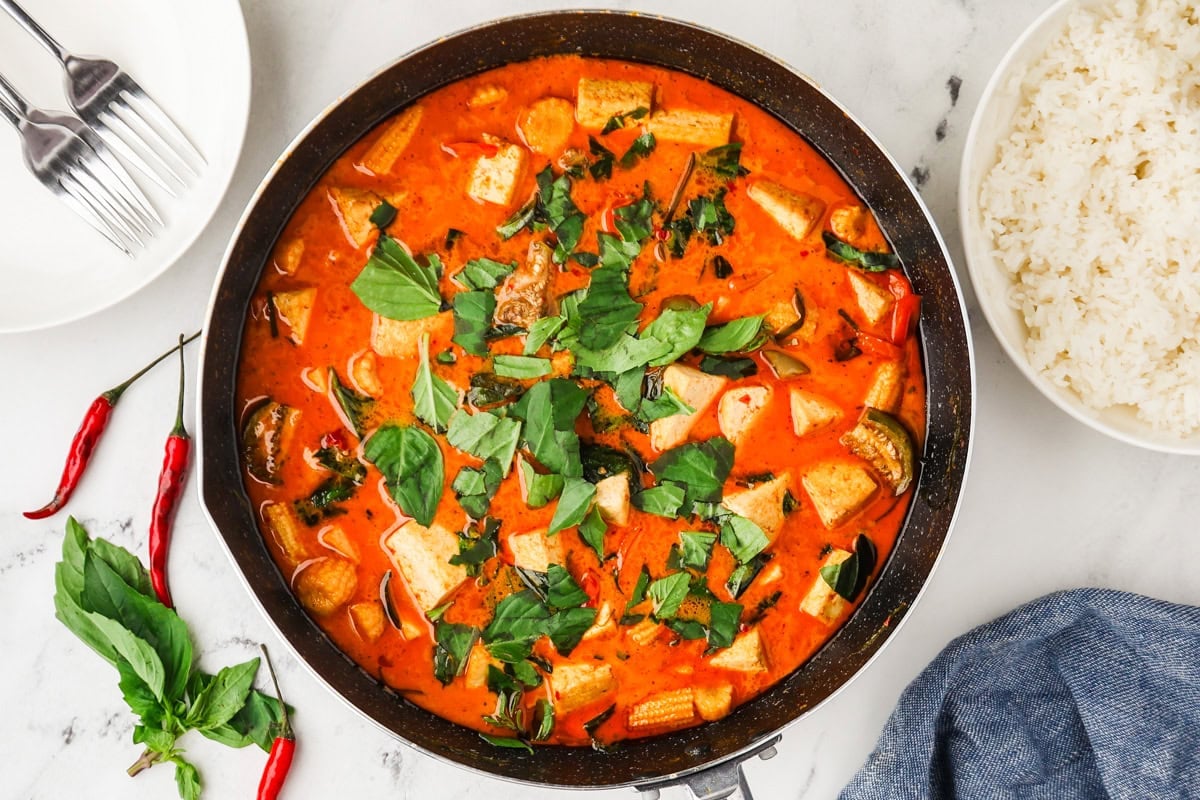
My vegetarian Thai red curry gets its depth from frying the paste in separated coconut cream until the oil pools at the edges. This dish has two protein anchors (pan-fried tofu and Thai eggplant that drinks up the sauce), and is vegan and gluten-free. Takes about an hour with store-bought paste, slightly longer if you make your own!
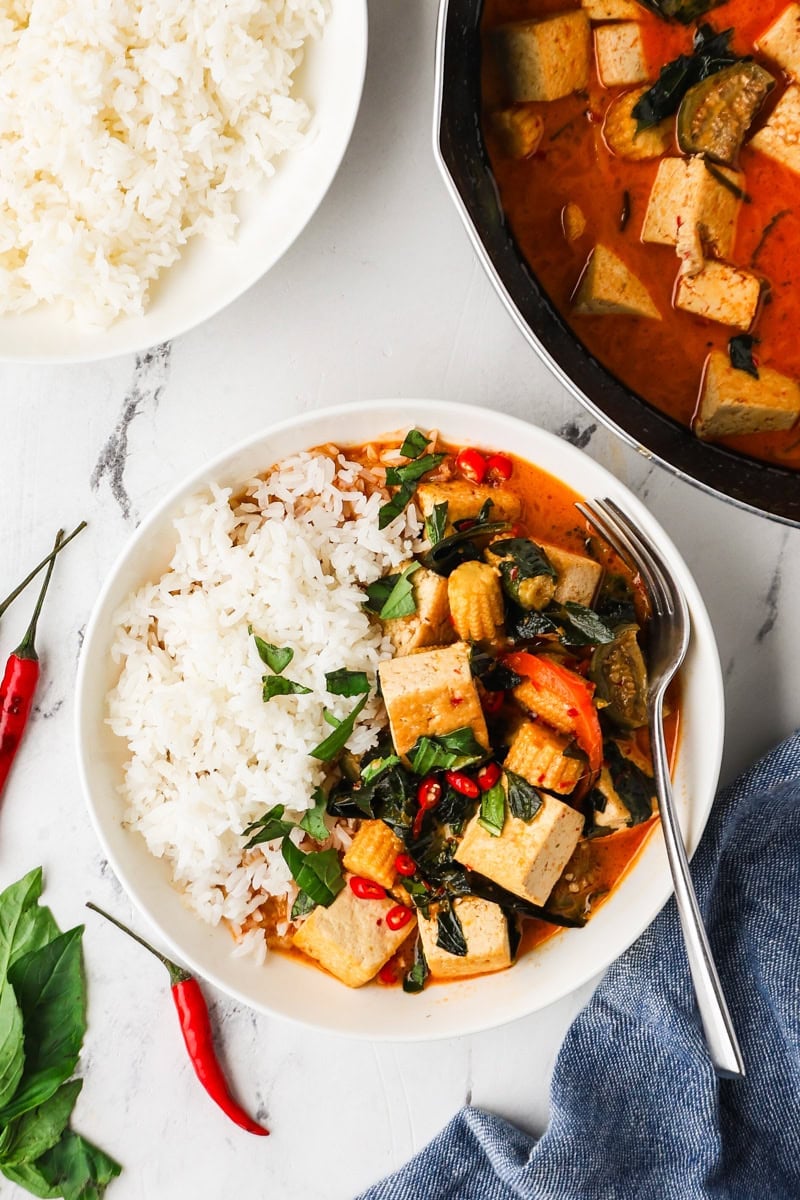
I learned this red curry recipe at a cooking class in Thailand

I took a cooking class in Koh Samui where I learned to separate the coconut cream from the thin milk before cooking. So I scoop the thick cream off the top of an unshaken can, and fry the paste in it until the coconut oil visibly separates and pools at the edges. Life changing.
The separation is the signal that the paste is properly cooked. When I skipped it (or more often, rushed it) the curry tasted flat no matter how long it simmered. I use this technique in my Thai green curry with tofu and my tofu satay.
This recipe works well with store-bought paste. Mekhala red curry paste is vegan but if you want a really authentic take, I recommend making my homemade red curry paste that uses white miso in place of shrimp paste for the fermented depth. This is a weekend project, but the difference is noticeable. I make and freeze the extra (makes enough for two batches).
One Asian grocery trip covers everything else: galangal, makrut lime leaves, Thai eggplant, Thai basil, vegetarian fish sauce. Whole Foods often carries makrut lime leaves, Thai basil, and lemongrass too.

Key ingredients and why they matter
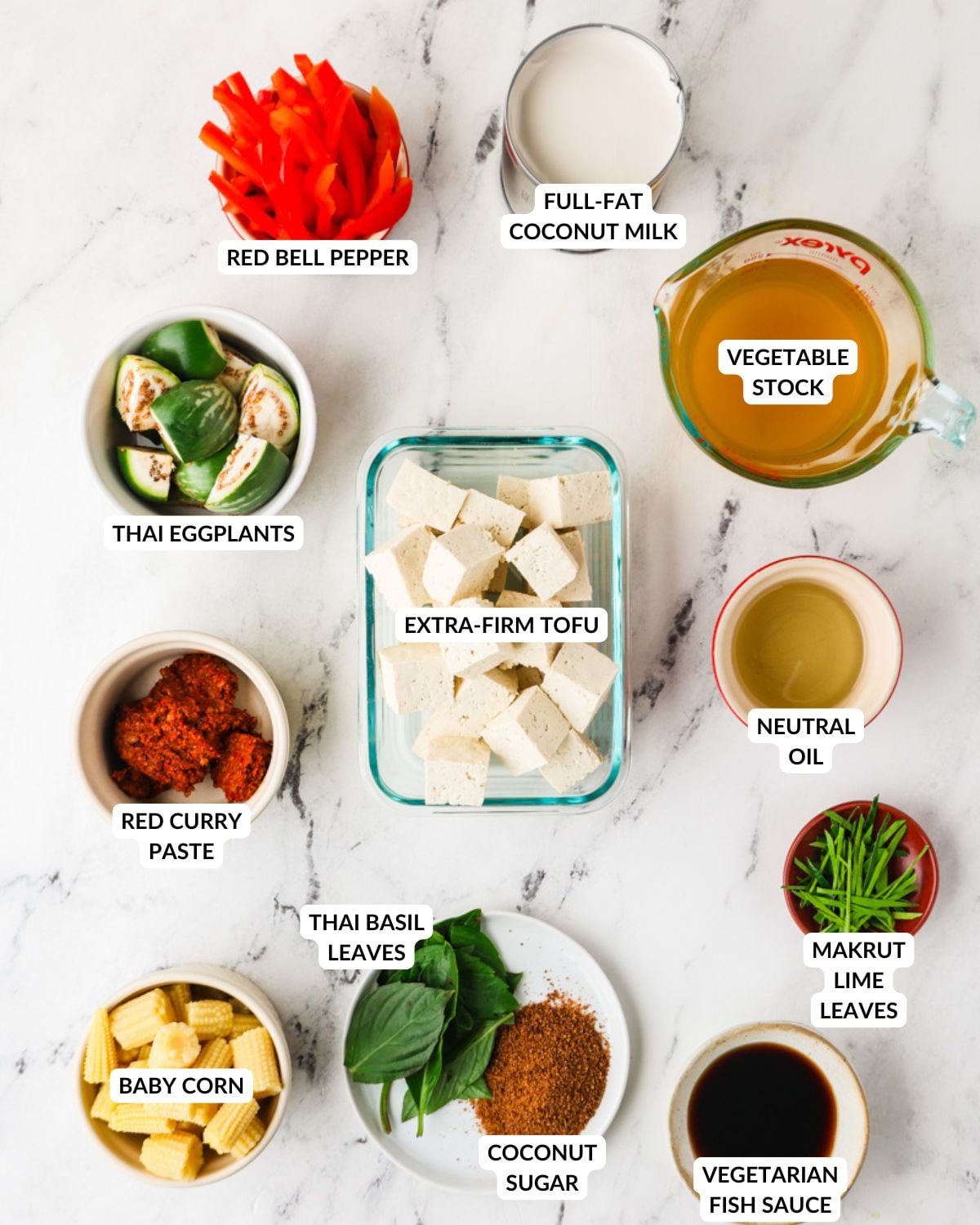
Full ingredient list and detailed instructions in the recipe card.
- Red curry paste. Mekhala is what I recommend. It’s vegan and gluten-free. For a deeper, more aromatic version, my homemade red curry paste.
- Full-fat coconut milk, unshaken. You’ll need two cans. The thick cream on top fries with the paste; the thin milk goes in later.
- Extra-firm tofu, pressed. Two blocks, cut into 1-inch cubes and pan-fried until golden before going in. The crust holds the tofu together through the simmer.
- Thai eggplant. The golf-ball-sized green-striped variety. Quarter right before cooking; they brown fast once cut. Japanese eggplant in 1-inch pieces is a good substitute, silkier and softer.
- Makrut lime leaves. Thinly sliced, center rib removed. Fresh or frozen from Asian grocery stores but frozen keeps for months! (Also called kaffir lime leaves)
- Vegetarian fish sauce is really the umami anchor. If unavailable, you can substitute 1 tablespoon low-sodium soy sauce plus ½ tablespoon fresh lime juice.
- Thai basil goes in off the heat only. Even thirty seconds of boiling turns it black and bitter. Italian basil works but is milder on the anise notes.
Shruthi’s top tips
How to make sure your red curry doesn’t taste flat
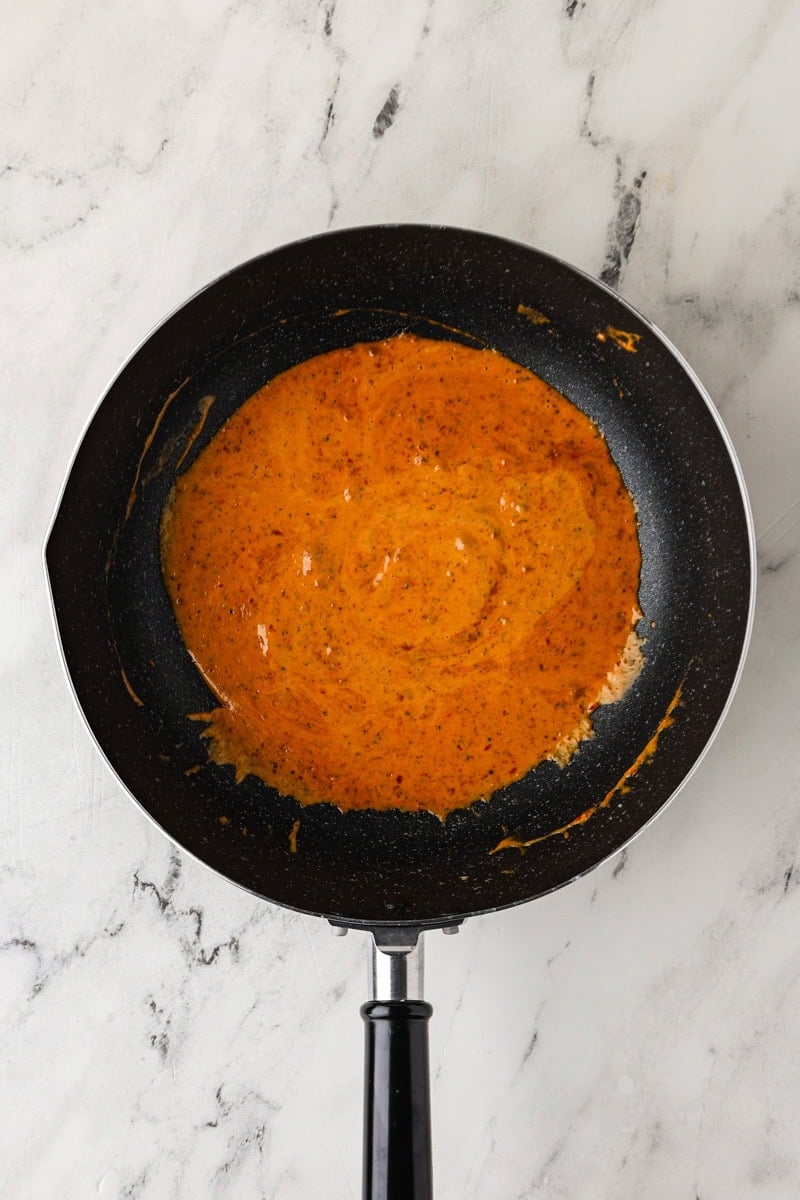
- I really couldn’t emphasize this more but the bloom is the most important step. When the coconut oil visibly separates and pools at the edges (it should look orange-red and glossy), the paste is ready. Three to five minutes of active stirring. Pull back too early and the curry tastes raw no matter how long it simmers.
- Don’t shake the coconut milk cans. The cream and the thin milk are used at different stages. Shaking collapses the separation and the bloom won’t happen the same way.
- Work in two batches when frying tofu. Two blocks won’t fit in a single layer. Crowding steams instead of crisps.
- Thai eggplant goes in first. It needs more time than the bell pepper and baby corn.
- Thai red curry can be spicy but is usually mild to medium with most store-bought pastes (Mekhala, Maesri). The heat comes from dried chilies in the paste. Use less paste for less heat, or top with sliced fresh red chili for more.
Make vegetarian Thai red curry
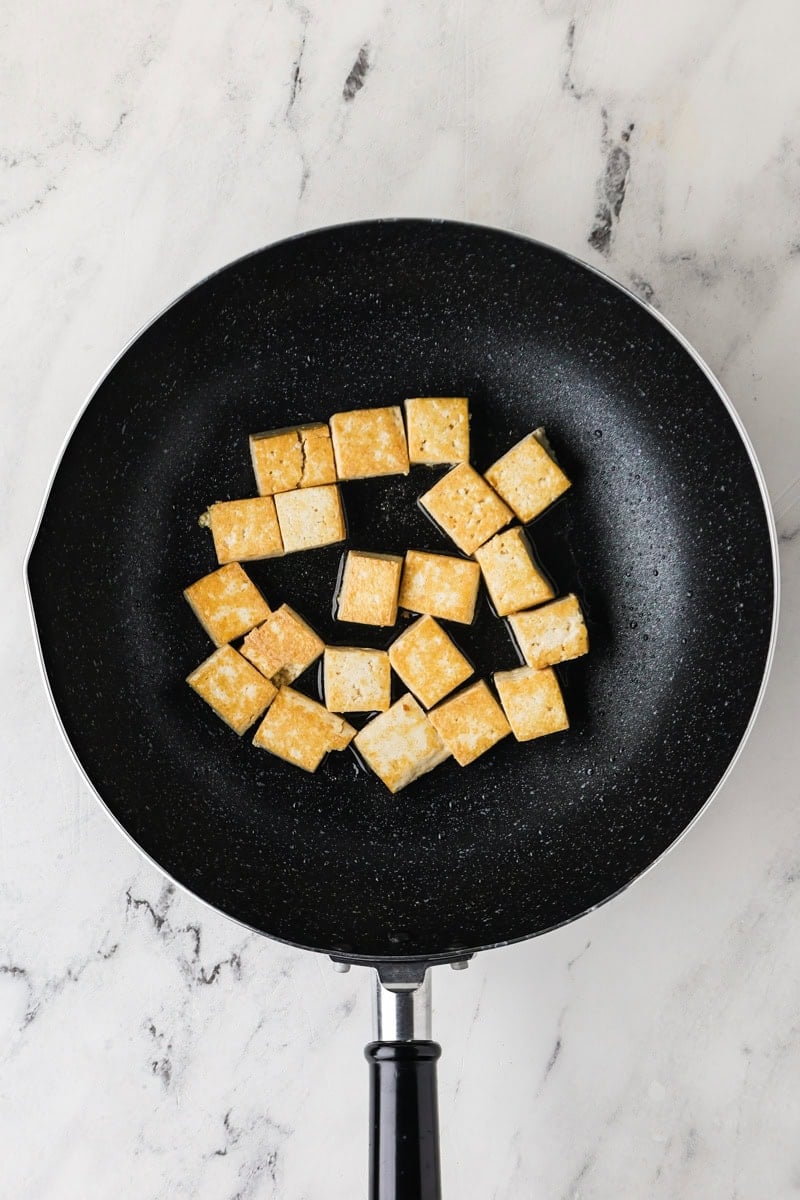
- Heat oil in a wok over medium-high heat. Working in batches, cook tofu in a single layer until golden on all sides. Remove and set aside.
- Spoon thick coconut cream (about ¾ cup) from the unshaken cans into the wok. Bring to a bubble, add the curry paste, and stir constantly until fragrant and the oil separates at the edges. This is the bloom.
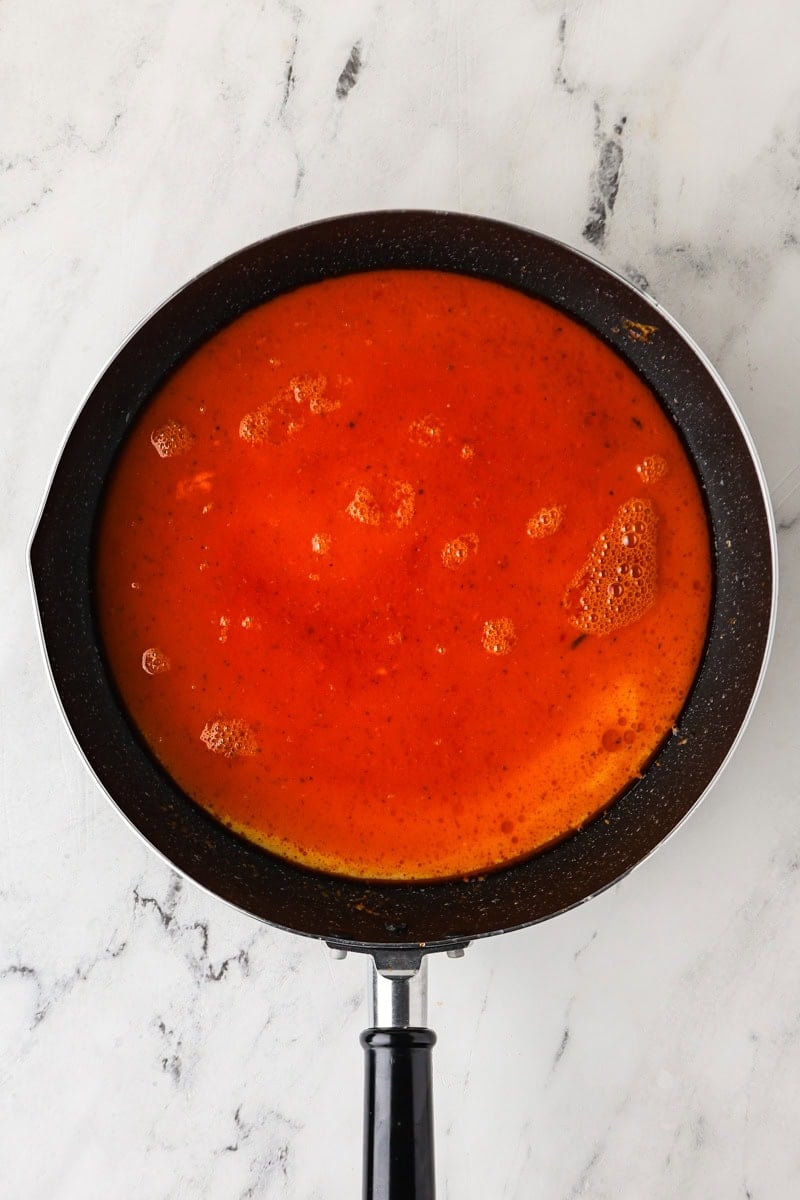
- Pour in the reserved thin coconut milk and vegetable stock. Bring to a gentle boil.
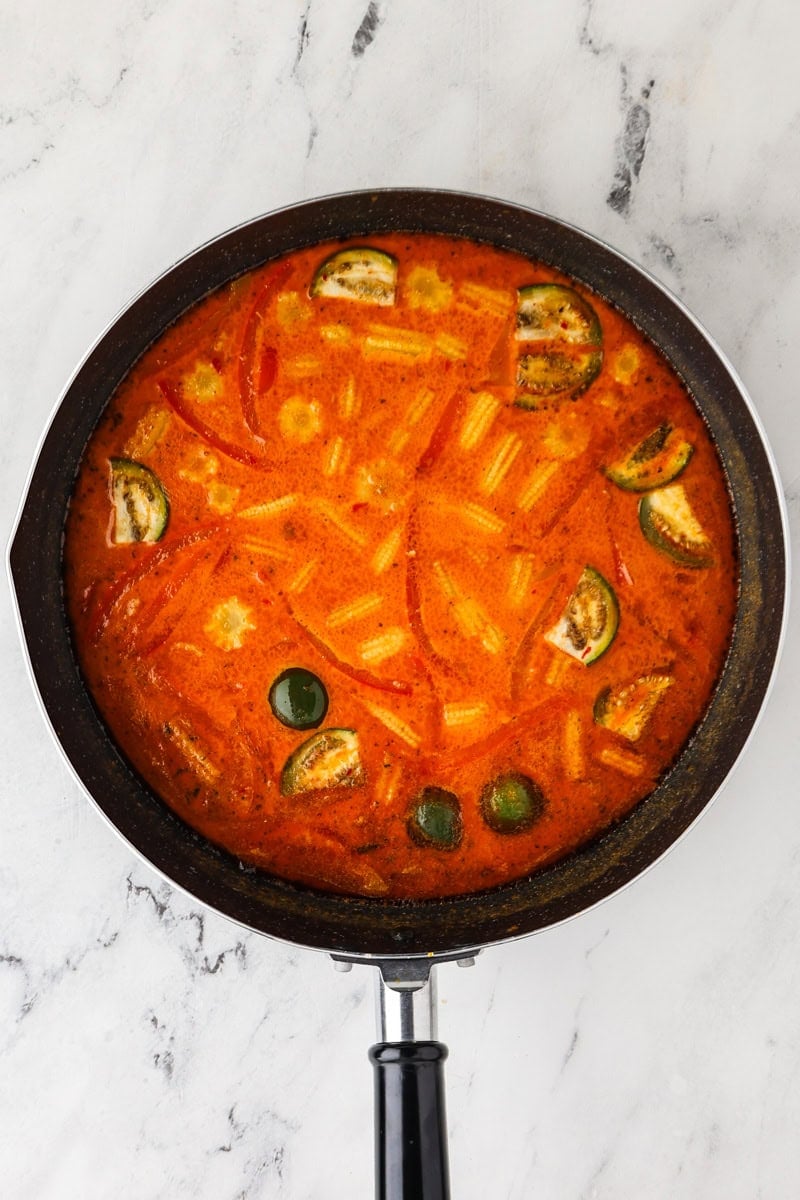
- Add vegetables in stages. Thai eggplant first, 5 minutes. Then red bell pepper and baby corn, another 3–4 minutes. Everything should be just tender with some bite.
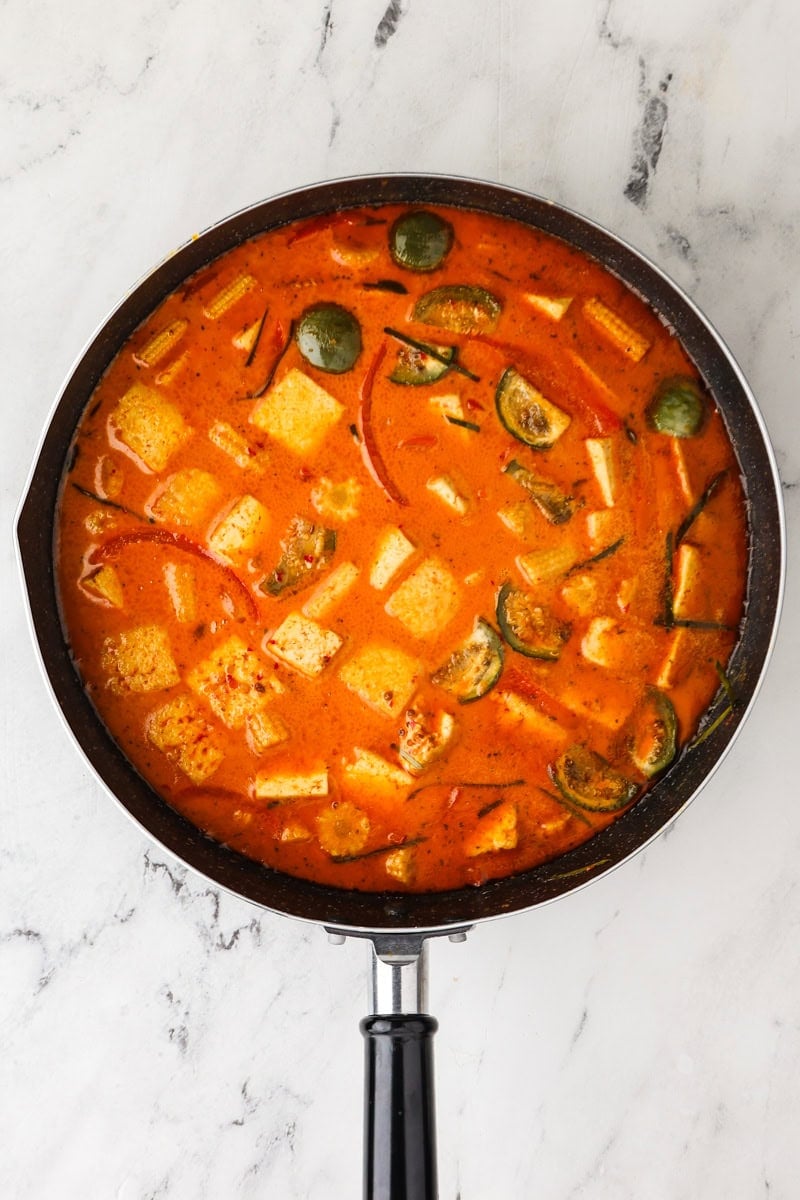
- Add fried tofu, makrut lime leaves, fish sauce, and coconut sugar. Stir gently. Simmer 2–3 minutes.
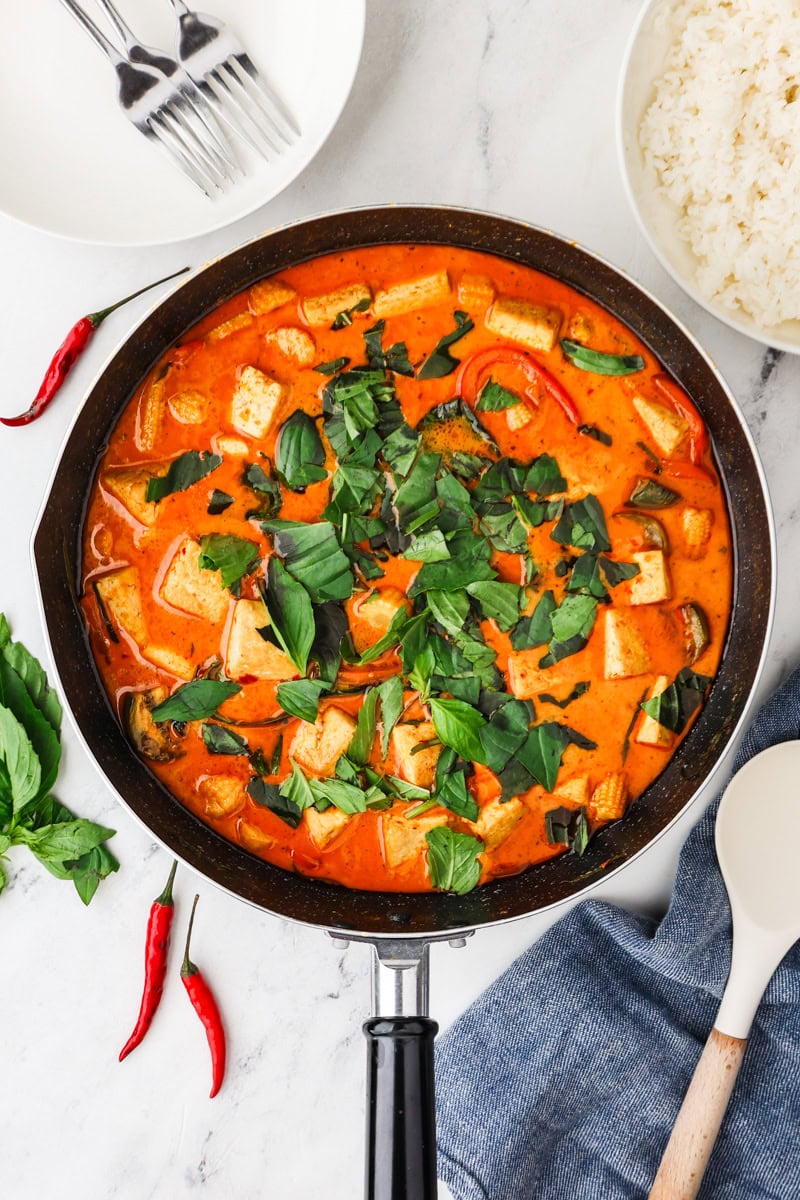
- Remove from heat, fold in Thai basil. Taste and adjust — more fish sauce for salt, more coconut sugar for balance, lime for brightness.
How to serve Thai red curry with tofu
Serve over fluffy jasmine rice to soak up the rich coconut broth. For a full Thai-inspired spread, pair it with my tofu satay. Finish each bowl at the table with fresh Thai basil, sliced red chili, and a squeeze of lime juice for brightness.
Variations
- Richer sauce: Stir in 2 tablespoons natural peanut butter with the thin coconut milk for a Panang-adjacent finish.
- Soup version: Add an extra cup of vegetable stock and serve over rice noodles instead of jasmine rice.
- Different protein: Pressed and fried tempeh in place of tofu, same method; chickpeas as a no-fry option, added with the thin coconut milk.
Storage and reheating suggestions
Refrigerate leftovers up to 4 days. The flavor deepens overnight. Reheat gently over medium-low with a splash of coconut milk or vegetable stock to loosen. Don’t bring to a boil or the coconut milk can break.
More authentic Thai recipes
If you liked this red curry, you might want to check these other authentic (but accessible) Thai recipes I learned when I visited Thailand.
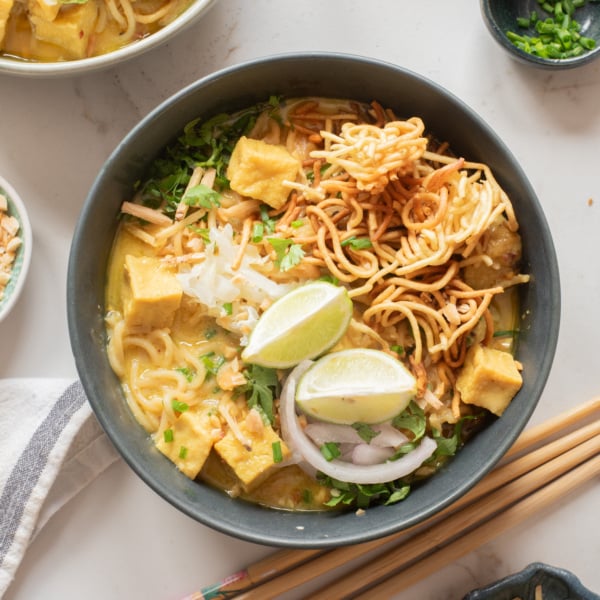
Vegetarian Khao Soi (Northern Thai Curry Noodle Soup)
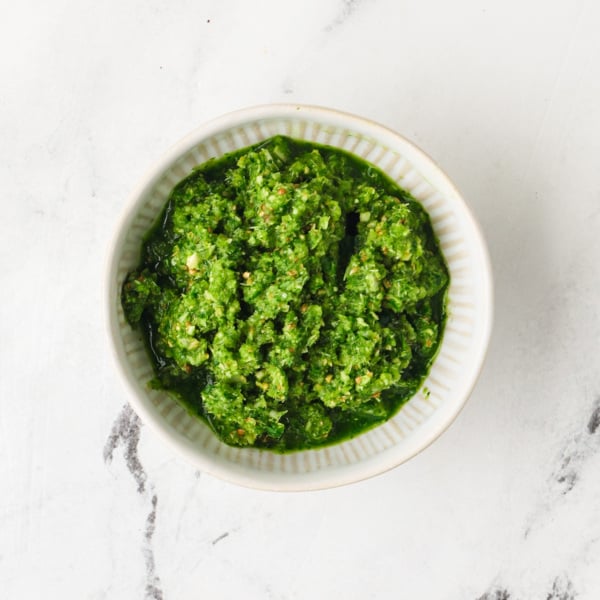
Thai Green Curry Paste without Shrimp Paste
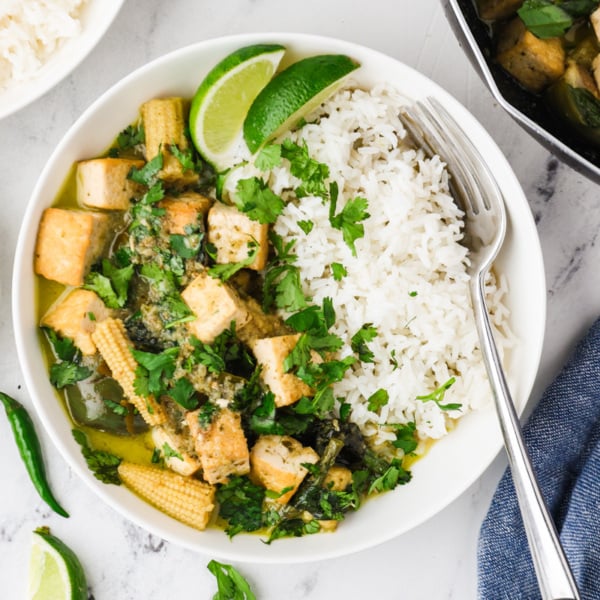
Thai Green Curry with Tofu
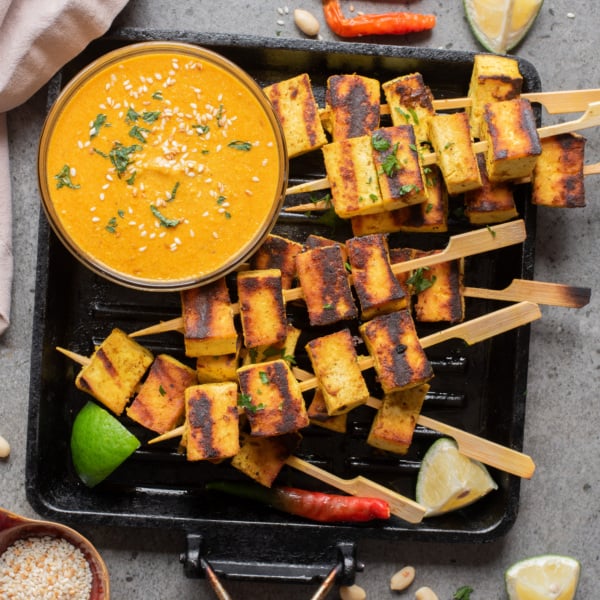
Authentic Tofu Satay with Peanut Sauce
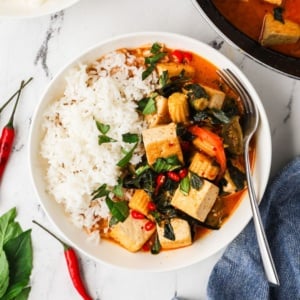
Thai Red Curry
Equipment
- 1 Wok or large heavy-bottomed pan
Ingredients
- 3 tablespoons neutral oil, divided
- 2 14-oz blocks extra-firm tofu, pressed and cut into 1-inch cubes
- 2 13.5-oz cans full-fat coconut milk, unshaken
- ¼ cup red curry paste, Mekhala brand or homemade
- 2 cups vegetable stock
- 3 Thai eggplants, quartered (sub: 1 medium Japanese eggplant, cut into 1-inch pieces)
- 1 medium red bell pepper, sliced into strips
- 1 15-oz can baby corn, drained and halved crosswise
- 6 makrut lime leaves, center rib removed, thinly sliced
- 1½ tablespoons vegetarian fish sauce, sub: 1 tbsp low-sodium soy sauce + ½ tbsp fresh lime juice
- 1 tablespoon coconut sugar, or palm sugar if available
- 1 cup Thai basil leaves, loosely packed, sub: Italian basil
Instructions
Fry the tofu
- Heat 2 tablespoons of neutral oil in a wok or large heavy-bottomed pan over medium-high heat until shimmering.
- Add tofu in a single layer without crowding — work in two batches if needed. Cook for 3–4 minutes per side, turning occasionally, until golden and crispy on all sides. Remove and set aside.
Build the curry
- Open the coconut milk cans without shaking. Spoon the thick coconut cream from the top of both cans into the same wok over medium heat — you should get about ¾ cup. Reserve the remaining thin coconut milk.
- Heat the cream until it begins to bubble and simmer, about 2–3 minutes.
- Add the curry paste and stir constantly, pressing and folding the paste into the cream for 3–5 minutes until the mixture is very fragrant, has deepened in color, and the oil begins to pool and separate around the edges of the paste. This is the bloom — don't rush it.
- Pour in the reserved thin coconut milk and vegetable stock. Stir to combine and bring to a gentle boil.
- Add the Thai eggplant and cook for 5 minutes. Add the red bell pepper and baby corn and cook for another 3–4 minutes, until the eggplant is just tender and the pepper has softened but still has some bite.
- Add the fried tofu, makrut lime leaves, vegetarian fish sauce, and coconut sugar. Stir gently to coat without breaking the tofu. Simmer for 2–3 minutes to let everything come together.
- Taste and adjust — more fish sauce for salt, more coconut sugar for balance, a squeeze of lime if it needs brightness.
- Remove from heat. Fold in Thai basil leaves off the heat only, so they stay bright green and fragrant.
- Serve immediately over jasmine rice.
Notes
- The bloom is everything! When the coconut cream separates and oil pools around the paste, that’s the signal. 3–5 minutes here transforms the finished dish. Don’t skip ahead.
- Freeze extra curry paste in tablespoon portions for up to 3 months. Mekhala is gluten-free, I believe, and my homemade red curry paste uses white miso that is rice-based and also gluten-free, but if you use another brand, double check if you are gluten intolerant.
- Store leftovers in the fridge for up to 4 days. Flavor improves overnight.
- Reheat gently with a splash of coconut milk.
Nutrition
Nutrition information is automatically calculated, so should only be used as an approximation.


