

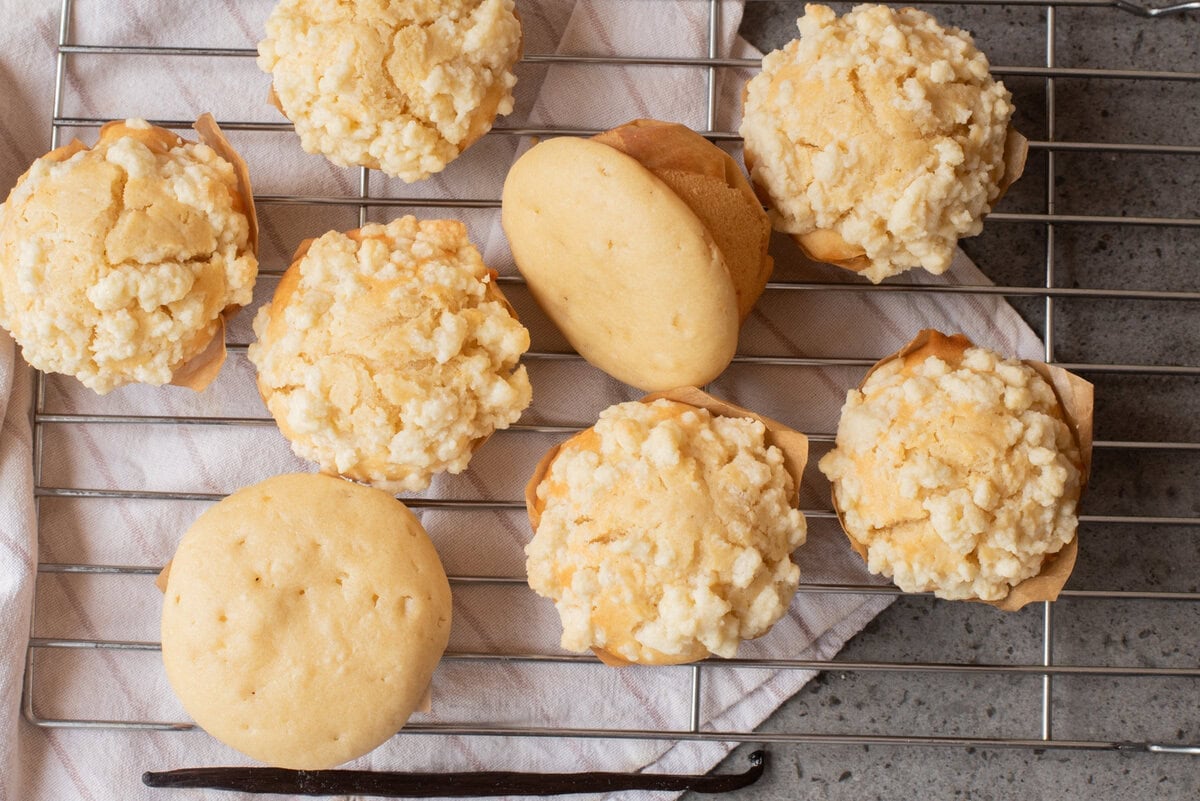
My vanilla muffins are tender with that bakery-style look that’s hard to get at home. Greek yogurt keeps them moist without making them heavy, and the optional streusel adds buttery crunch on top. I make these for weekend breakfasts and freeze extras for busy mornings — they reheat in 20 seconds.
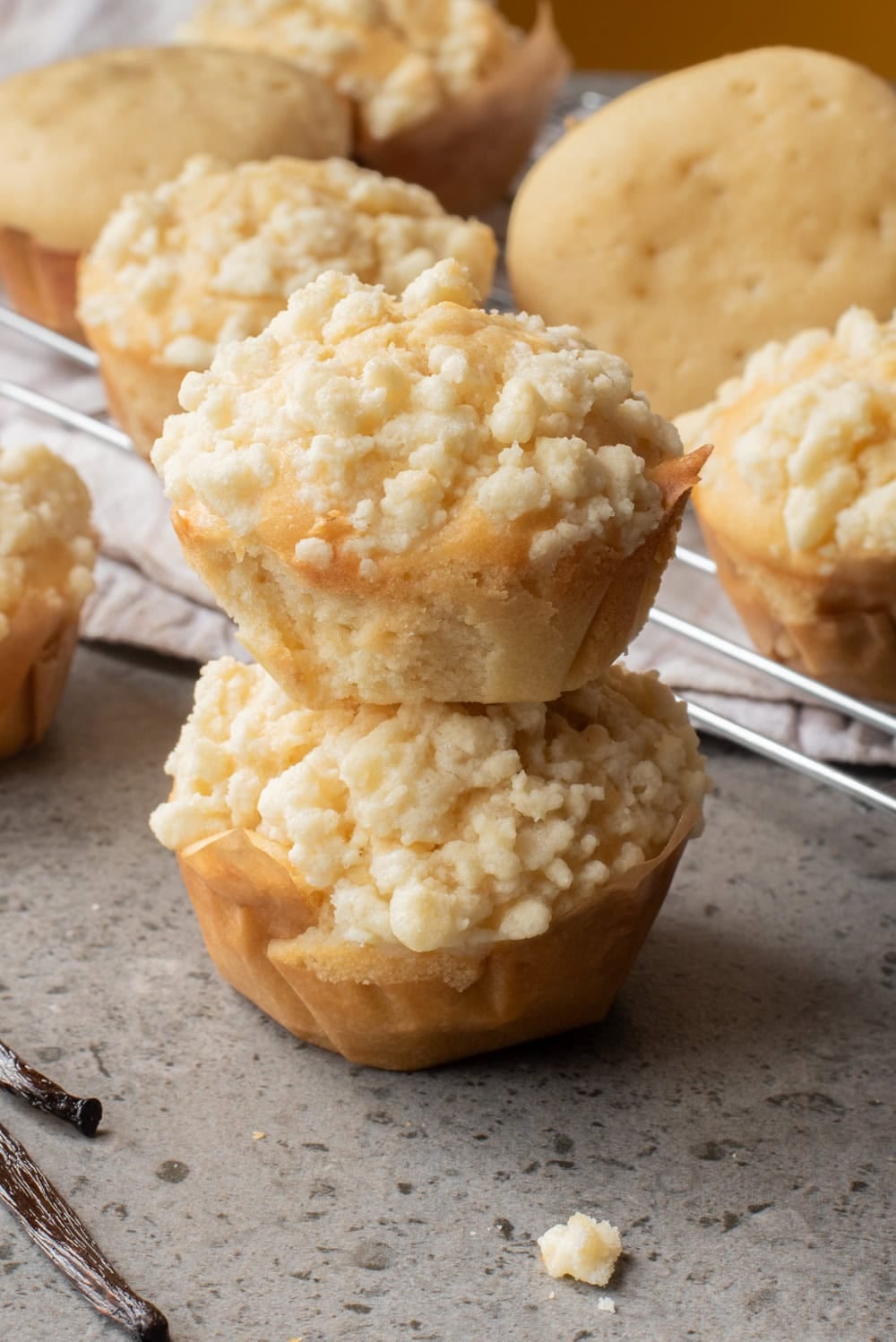
Two-temperature trick gives these muffins their domed tops!

The secret is starting at 425°F for 5 minutes, then dropping to 350°F for the rest of the bake. That initial blast of heat creates steam inside the batter, pushing the tops up before the structure sets.
I tested this side by side — muffins baked at a steady 350°F came out dense. The two-temperature method produced noticeably lighter crumbs. It’s one extra step that makes a visible difference.
Greek yogurt pulls double duty here. It keeps the muffins moist for days (no dry, crumbly texture by day two) and adds protein — about 5g per muffin, which is high for baked goods. The tang is subtle but balances the sweetness.
Room temperature ingredients matter more in muffins than most recipes. Cold eggs and dairy don’t incorporate evenly, leaving dense pockets in the crumb. If you’re short on time, warm the buttermilk for 10 seconds in the microwave and crack the eggs into the measuring cup with the yogurt to take the chill off.

Key ingredients and why they matter
To make a batch of my vanilla muffin recipe, you’ll need all-purpose flour, baking powder, baking soda, melted butter, Greek yogurt, sugar, eggs, buttermilk, vanilla extract, and a streusel topping.
Full ingredient list and detailed instructions in the recipe card.
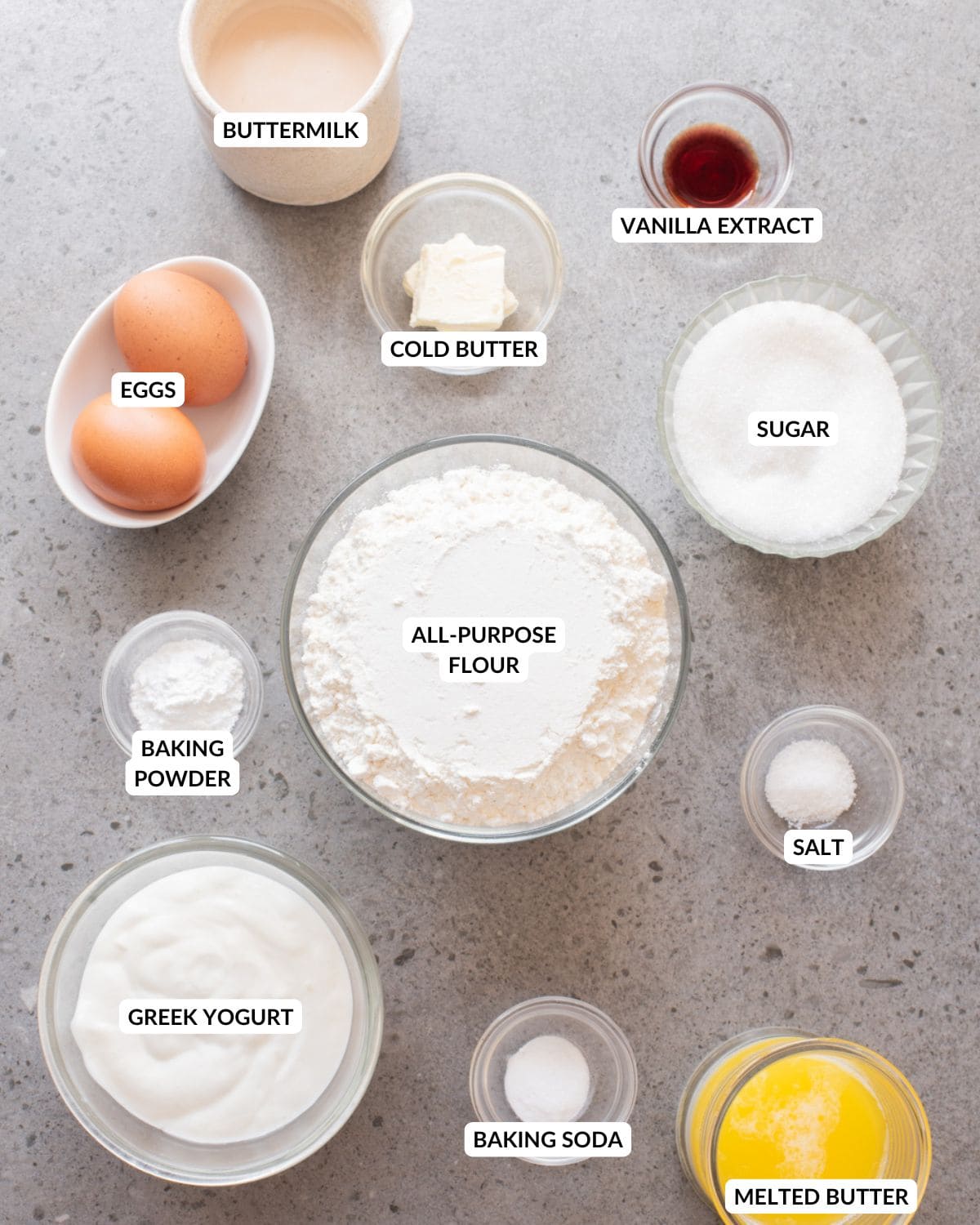
- All-purpose flour gives structure. Measure by weight (280g) for consistent results — too much flour makes dense, dry muffins.
- Greek yogurt keeps the crumb moist and tender while adding protein. Full-fat works best; nonfat can make muffins gummy. It should be plain, not flavored.
- Buttermilk reacts with baking soda to create lift and tenderness. No buttermilk? Add 1 teaspoon lemon juice or vinegar to regular milk and let it sit 5 minutes.
- Melted butter adds richness. Cool it slightly before mixing — hot butter can start cooking the eggs.
- The streusel is optional but worth it. Cold butter pinched into flour and sugar creates those craggy, buttery clusters. Keep it refrigerated until you’re ready to top the muffins.
TIPS & TRICKS
Shruthi’s top tips
- Don’t over mix the batter, lumpy is actually better here! It means you haven’t developed too much gluten. Overmixed muffins turn out tough with flat tops.
- Don’t skip the high-heat start. The 425°F blast is what creates domed tops. Skipping it produces flat muffins.
- Rest the batter if you have time. 20-30 minutes in the fridge lets the flour hydrate and gluten relax. Side-by-side testing showed noticeably better domes with rested batter.
- Fill cups generously. About ¾ full (3 tablespoons per cup). Skimpy batter = flat muffins.
- For dark pans, reduce temperature by 25°F to prevent over-browning on the bottoms.
How to make bakery style vanilla muffins
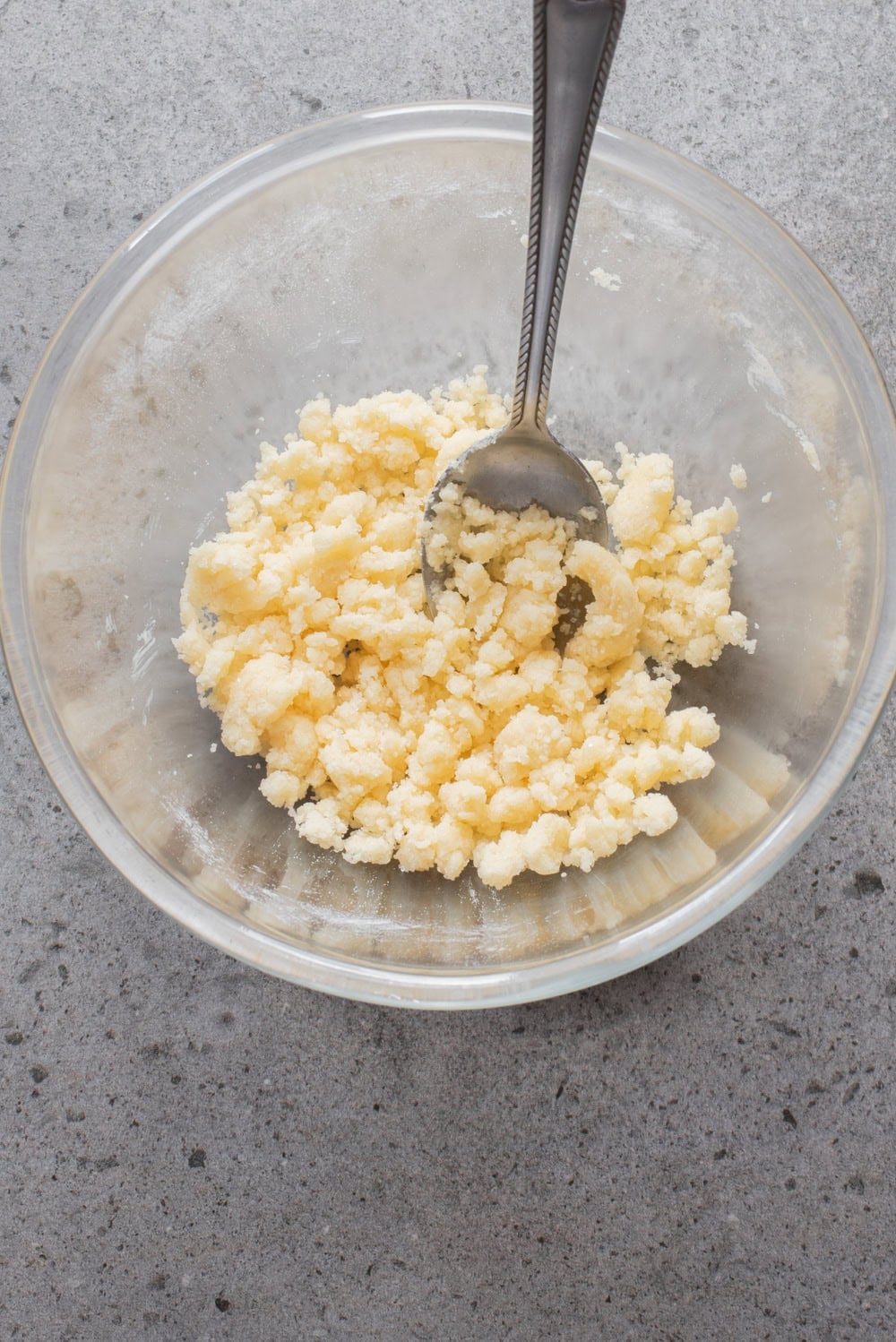
- In a small bowl, combine flour, sugar, and salt. Add cold butter (cut into small pieces) and use your fingers to pinch and rub the mixture together until it resembles coarse crumbs with some pea-sized pieces. Refrigerate streusel topping until ready to use.
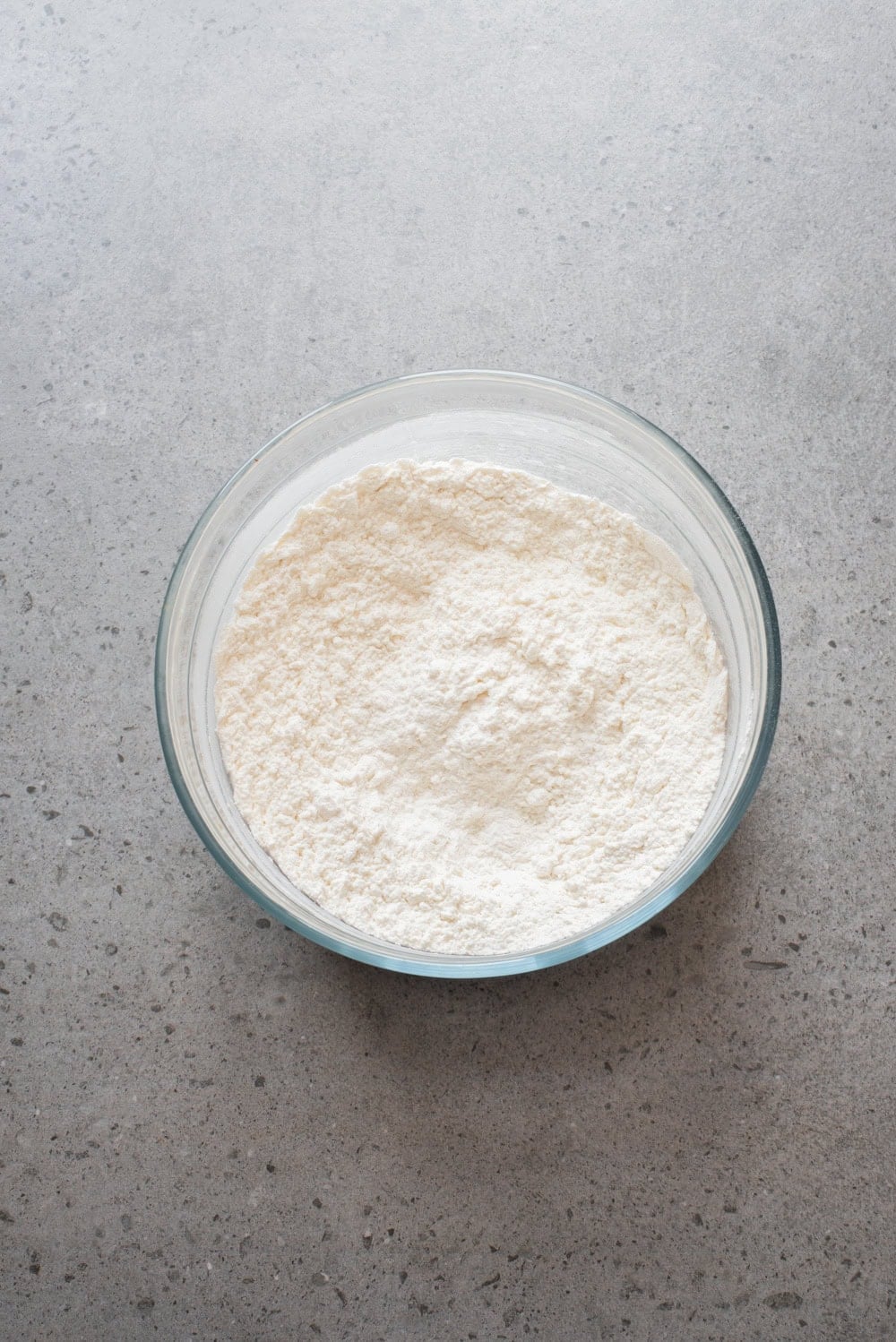
- In a large bowl, whisk together flour, baking powder, baking soda, and salt.
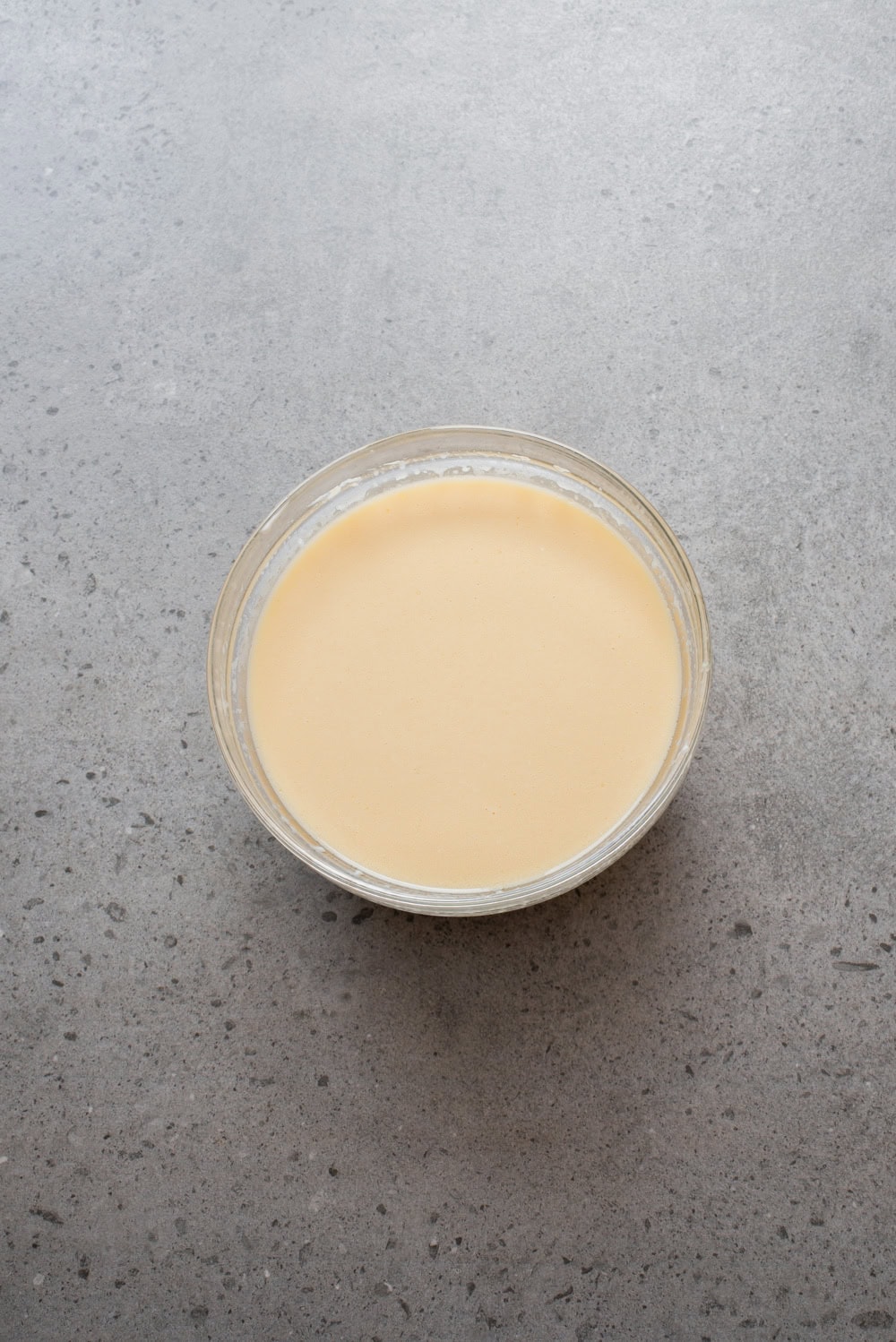
- In a medium bowl, whisk together sugar, melted butter, eggs, Greek yogurt, buttermilk, and vanilla until smooth.
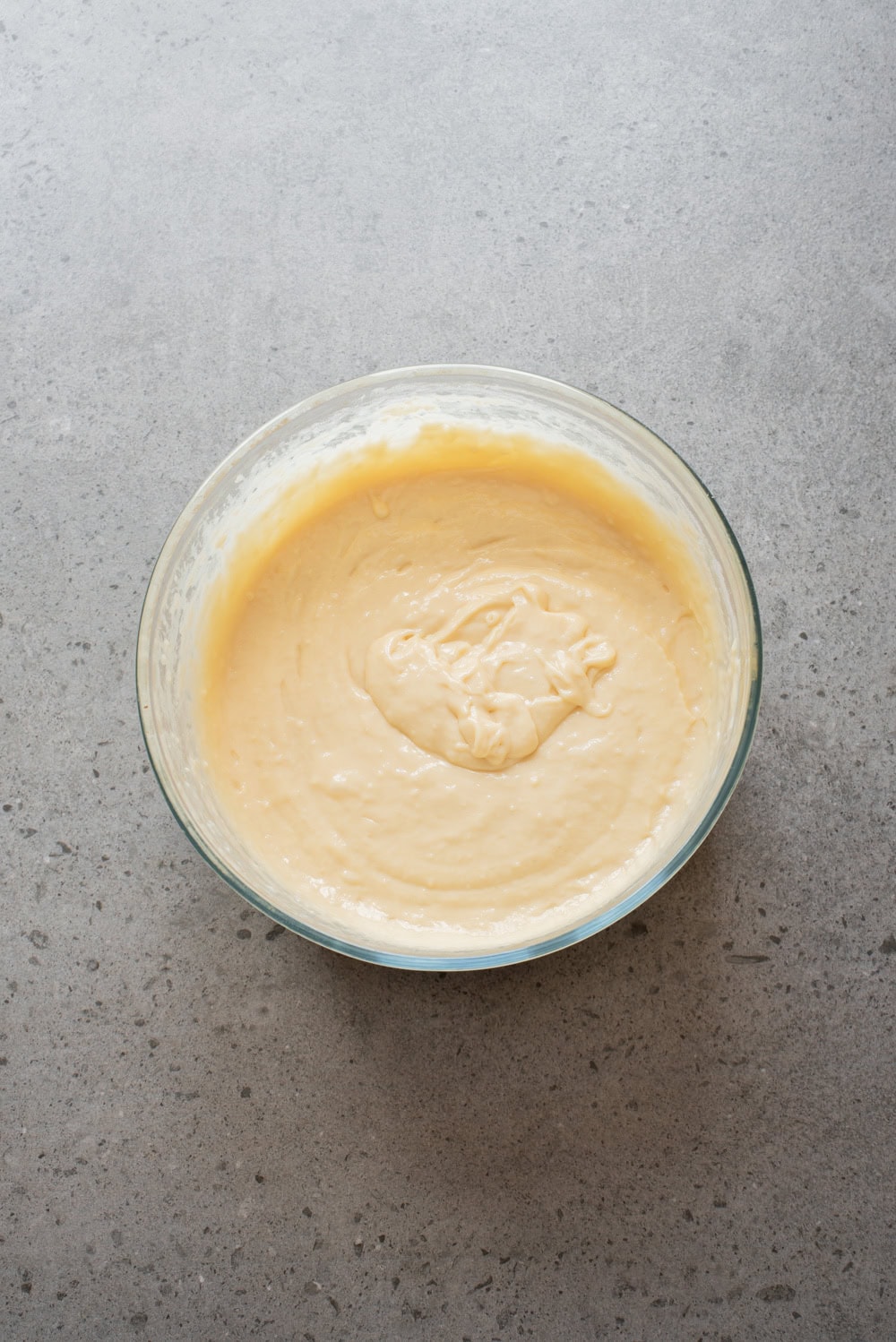
- Pour wet ingredients into dry ingredients and fold with a spatula until just combined. The batter should be lumpy—do not overmix. A few streaks of flour are okay.
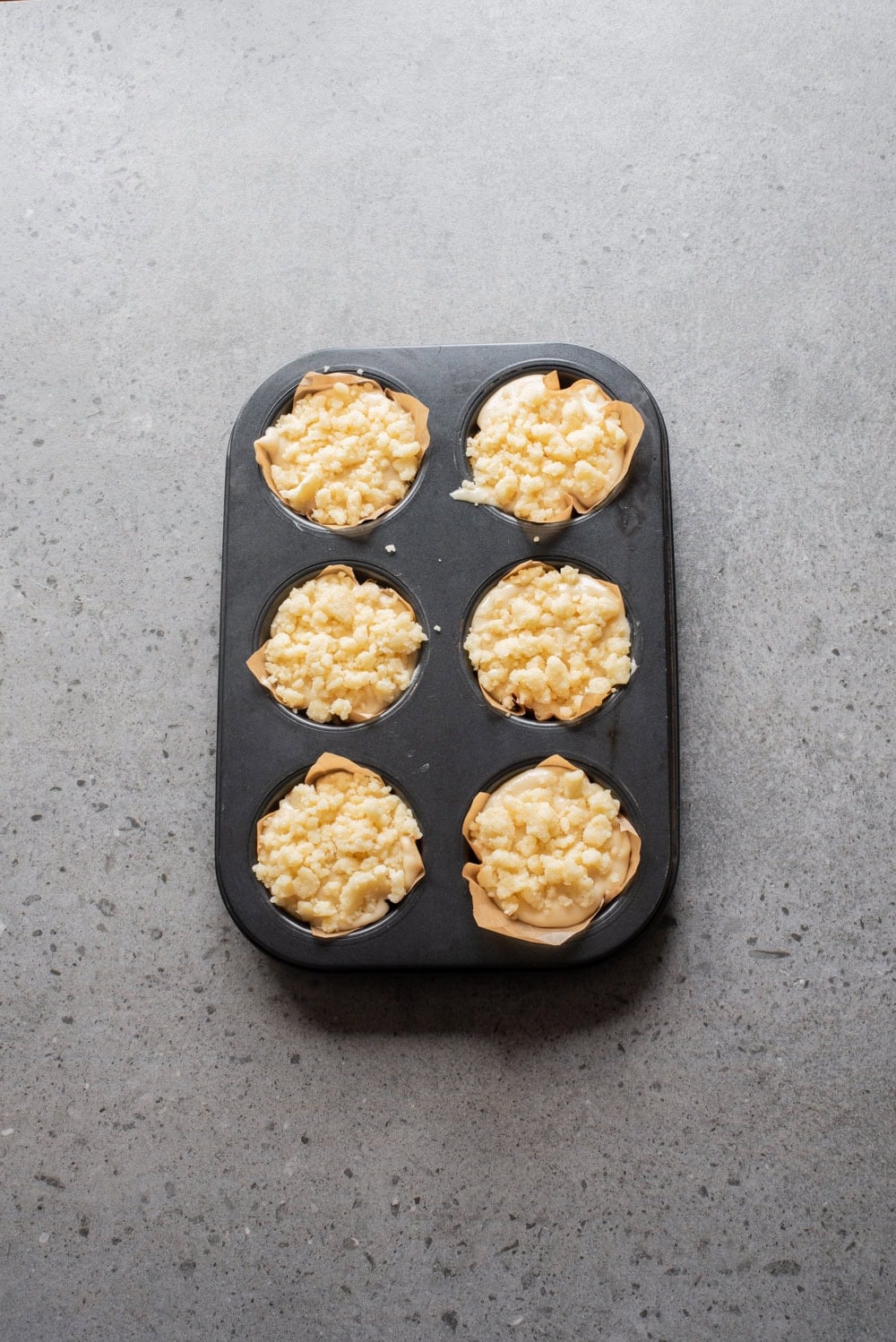
- Divide batter evenly among prepared muffin cups, filling each about ¾ full. If using streusel, sprinkle on top of each muffin and press lightly to adhere.
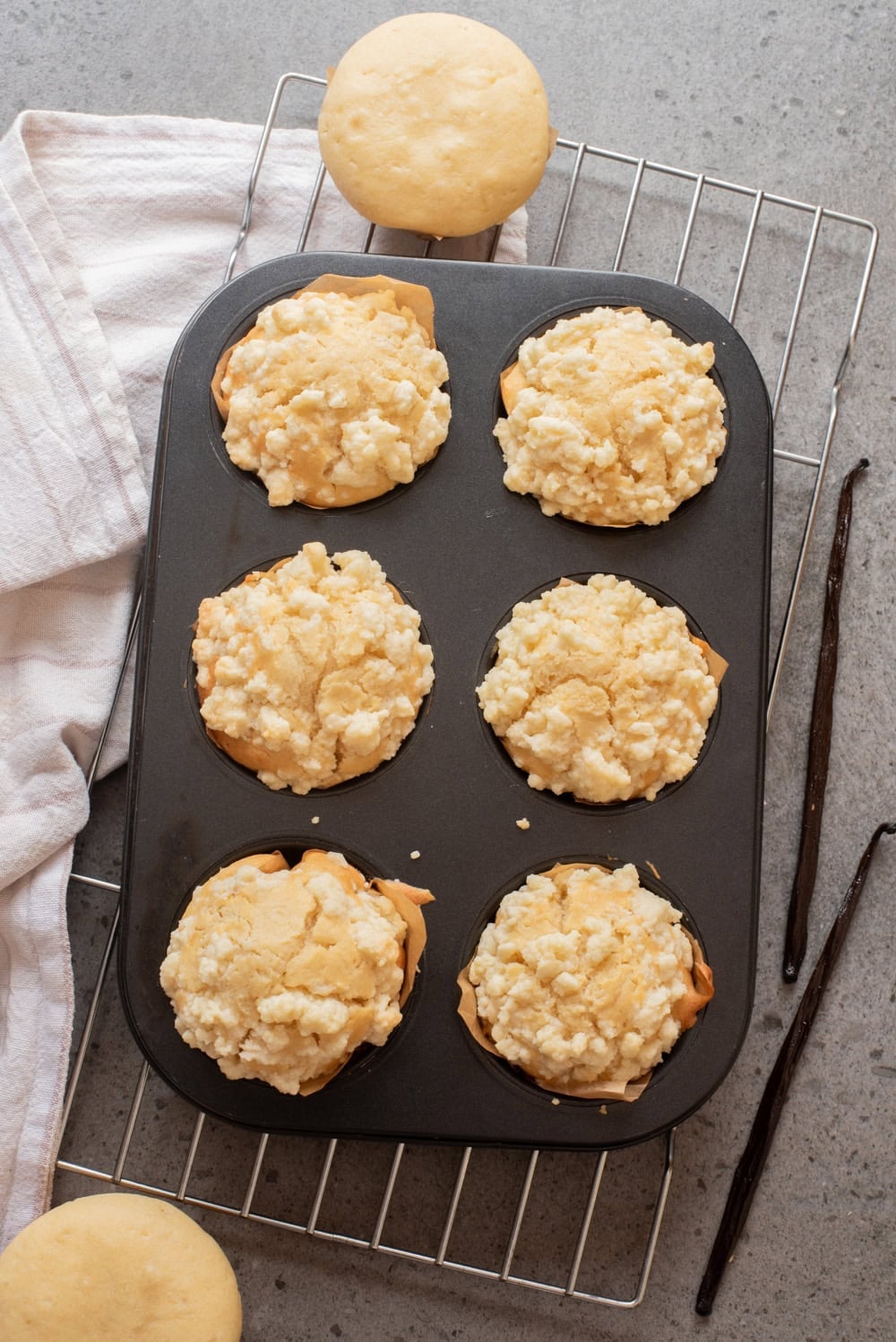
- Bake at 425°F for 5 minutes, then reduce oven temperature to 350°F without opening the door. Continue baking for 13-16 minutes more, until tops are golden and a toothpick inserted in the center comes out clean or with a few moist crumbs. Let muffins cool in the pan for 5 minutes, then transfer to a wire rack.
How to serve these vanilla muffins
Serve warm with butter and jam, or alongside cottage cheese scrambled eggs and fresh fruit for a complete breakfast. Pair with a nice pumpkin spice latte for afternoon snacking. For brunch spreads, set out with Mexican fruit salad and a savory slow cooker breakfast casserole.
Variations:
- Blueberry muffins: Fold in 1 cup fresh or frozen blueberries (don’t thaw) at the end of mixing.
- Lemon poppy seed: Add 1 tablespoon lemon zest and 2 tablespoons poppy seeds to the dry ingredients.
- Chocolate chip: Fold in ¾ cup chocolate chips at the end.
- Brown butter: Brown the butter before adding for nutty, caramelized flavor.
- Skip the streusel: Brush warm muffin tops with melted butter and dip in cinnamon sugar instead.
Storage and reheating suggestions
Keep the muffins in an airtight container at room temperature for up to 3 days. For longer storage, wrap the muffins individually and freeze them for up to 2 months—perfect for easy, grab-and-go mornings.
Reheat the muffins in the microwave for 15–20 seconds to warm and soften, or place them in a 300°F oven for about 5 minutes to crisp up the streusel again.
More breakfast recipes
Need fresh breakfast inspo? These tasty recipes will start your day on the right note.

Pistachio Muffins (No Pudding Mix)

Strawberry White Chocolate Muffins

Pumpkin Muffins (with Crumb Topping!)

Bakery-Style Cranberry Orange Muffins (Fresh or Frozen)
Vanilla Muffins
Ingredients
For the muffins:
- 2¼ cups all-purpose flour
- 2 teaspoons baking powder
- ½ teaspoon baking soda
- ½ teaspoon kosher salt
- ½ cup granulated sugar
- ½ cup unsalted butter, melted and slightly cooled
- 2 large eggs
- ¾ cup plain Greek yogurt
- ½ cup buttermilk
- 2 teaspoons pure vanilla extract
For the streusel topping (optional):
- ¼ cup all-purpose flour
- 3 tablespoons granulated sugar
- ⅛ teaspoon kosher salt
- 2 tablespoons unsalted butter, cold
Instructions
Make the streusel (if using):
- In a small bowl, combine flour, sugar, and salt. Add cold butter (cut into small pieces) and use your fingers to pinch and rub the mixture together until it resembles coarse crumbs with some pea-sized pieces. Refrigerate until ready to use.
Make the muffin batter:
- Preheat oven to 425°F. Line a 12-cup muffin tin with paper liners or grease well.
- Set out eggs, Greek yogurt, and buttermilk 30 minutes before baking to bring to room temperature. (Or warm buttermilk gently in the microwave for 10 seconds.)
- In a large bowl, whisk together flour, baking powder, baking soda, and salt.
- In a medium bowl, whisk together sugar, melted butter, eggs, Greek yogurt, buttermilk, and vanilla until smooth.
- Pour wet ingredients into dry ingredients and fold with a spatula until just combined. The batter should be lumpy—do not overmix. A few streaks of flour are okay.
- For best domed tops (optional): Cover the bowl and refrigerate batter for 20-30 minutes. This allows the flour to hydrate and the gluten to relax.
- Divide batter evenly among prepared muffin cups, filling each about ¾ full (about 3 tablespoons per cup). If using streusel, sprinkle about 1 tablespoon on top of each muffin and press lightly to adhere.
Bake:
- Bake at 425°F for 5 minutes, then reduce oven temperature to 350°F without opening the door. Continue baking for 13-16 minutes more, until tops are golden and a toothpick inserted in the center comes out clean or with a few moist crumbs.
- Let muffins cool in the pan for 5 minutes, then transfer to a wire rack.
Notes
- Don’t overmix—lumpy batter is good. Overmixing develops gluten, making muffins tough and flat-topped.
- Rest the batter if you have time—20-30 minutes in the fridge makes a noticeable difference in dome height and crumb texture. But if you’re short on time, bake immediately.
- For dark muffin pans, reduce both temperatures by 25°F to prevent over-browning.
- Store muffins in an airtight container at room temperature up to 3 days.
- Reheat in the microwave 15-20 seconds for soft muffins, or in a 300°F oven for 5 minutes to crisp streusel.
Nutrition
Nutrition information is automatically calculated, so should only be used as an approximation.


