
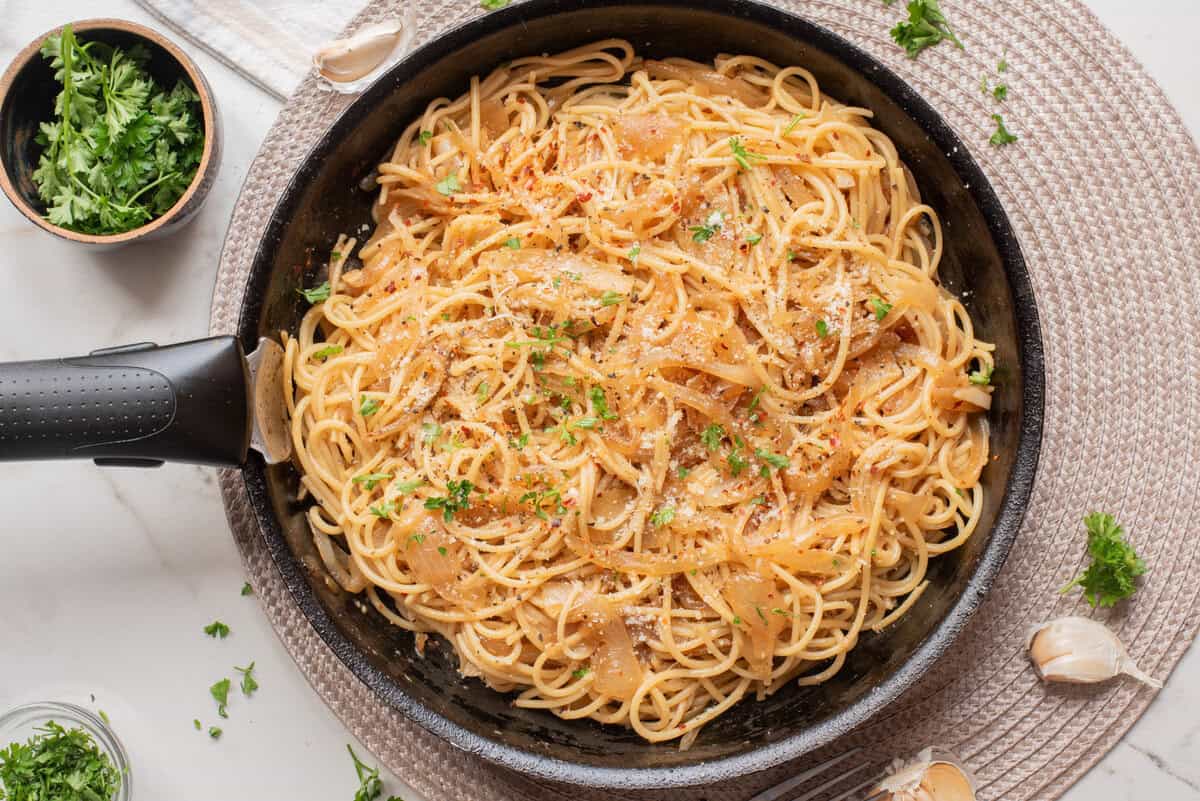
Caramelized onion pasta is what happens when you give onions 30 minutes and some patience. The onions turn sweet, jammy, and dark gold, then coat every strand of pasta in a sauce that tastes like you worked much harder than you did.
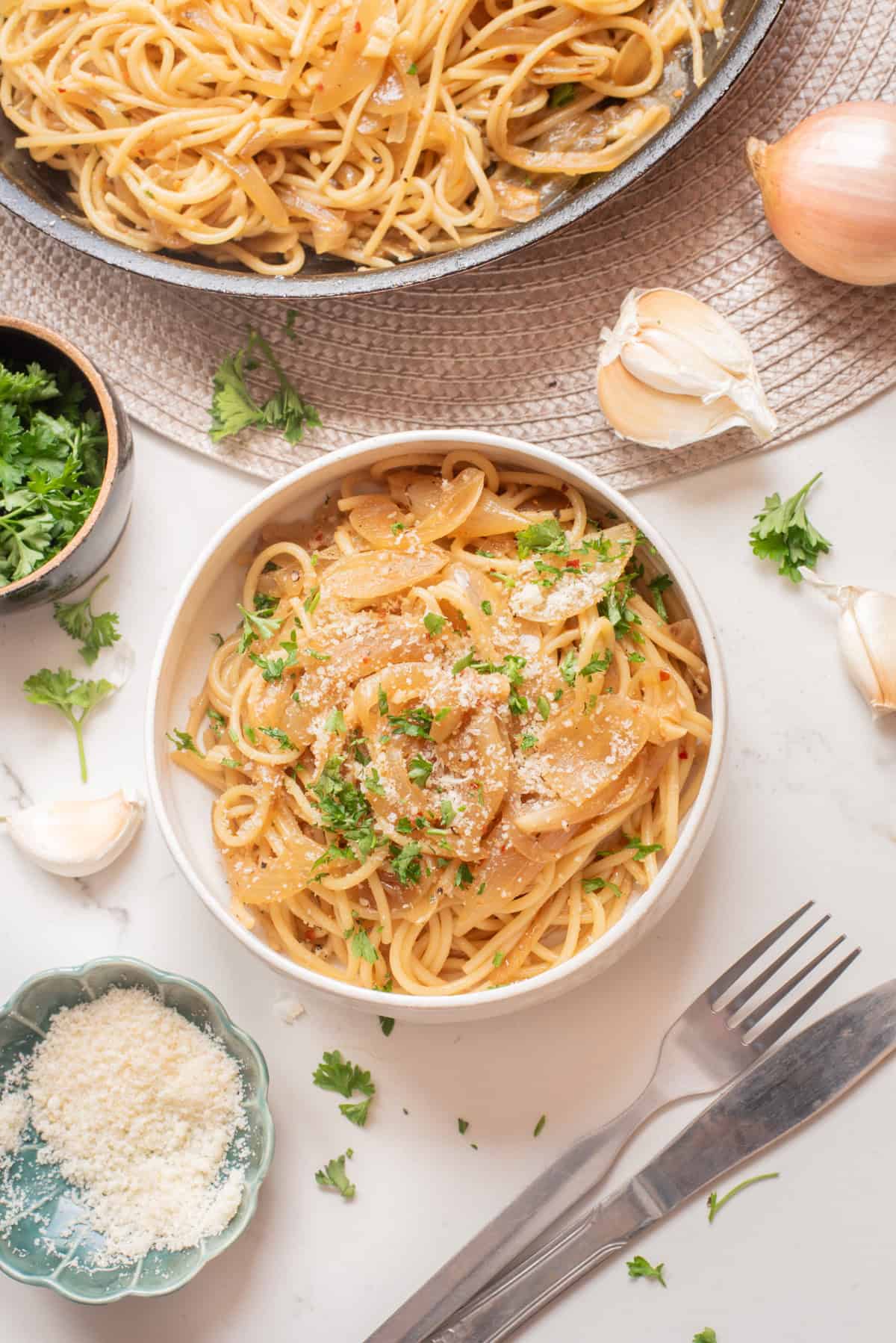
Turn three onions into a jammy, creamy pasta without any cream
My obsession with caramelized onions started years ago in Lyon, where I ate a simple tart topped with onions cooked so slowly they practically collapsed into themselves. Most people rush caramelized onions and end up with limp, pale, half-cooked disappointment.
This version works because you keep the heat low, stir just enough, and let chemistry do its thing for the full 25–30 minutes. The butter and olive oil together give richness without grease. The wine (or broth) deglazes all the browned bits stuck to the pan and turns them into flavor. The pasta water and Parmesan create a glossy sauce that clings instead of pooling at the bottom of the bowl.
If you love this kind of deeply savory comfort, try my authentic cacio e pepe or my one pot tomato basil pasta next—they both rely on simple ingredients, no cream, and solid technique to deliver big payoff.

Key ingredients and why they matter
To make my creamy onion pasta, you’ll need long pasta like spaghetti, linguine, or fettuccine; plenty of sweet or yellow onions; garlic; butter and olive oil; Parmesan cheese; a splash of dry white wine; a pinch of sugar and salt; and a dash of red chili flakes for a hint of spice.
Full ingredient list and detailed instructions in the recipe card.
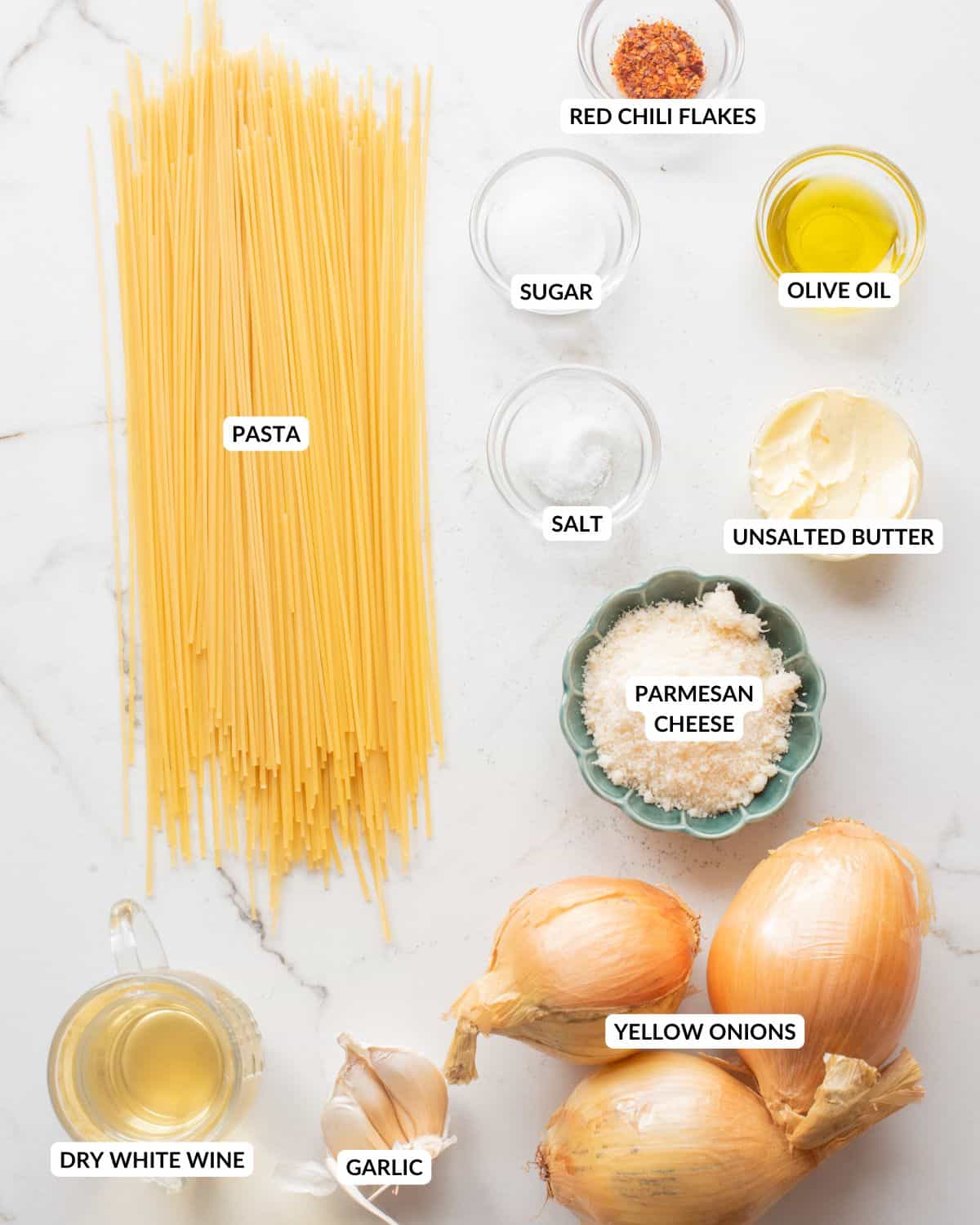
- Onions: Yellow, Vidalia or Walla Walla onions caramelize best— they have enough sugar to turn golden and enough structure to hold up. Three large onions (~6 cups of thin slices) seem like a lot but they cook down to about 1 cup.
- Fat: Olive oil has a higher smoke point. Butter adds nutty flavor as it browns. Together they’re better than either alone.
- Salt and sugar: Salt draws out moisture so onions cook faster. Sugar is optional but helps browning if your onions are older or less sweet.
- Garlic and chili flakes: Garlic goes in at the end so it doesn’t burn. Chili flakes add heat without competing with the sweetness.
- Wine: Dry white wine adds acidity and deglazes the pan. Vegetable broth works if you don’t have (or don’t want to use) wine.
- Pasta: Long noodles like spaghetti or fettuccine hold the sauce better than short shapes.
- Parmesan adds salt and umami. My regular PSA to use freshly grated if at all possible — pre-shredded has potato starch and doesn’t melt as smoothly. Use a rotary grater to make life easier on yourself!
- Pasta water: The starch makes the sauce creamy without cream.
TIPS & TRICKS
Shruthi’s top tips
- Don’t rush the onions. True caramelization takes 25–30 minutes. Pale onions taste raw and sharp. Golden-brown onions taste sweet and complex.
- Keep heat low enough that onions sizzle gently. If they’re browning too fast or starting to burn, reduce heat and add a tablespoon of water.
- Use a wooden spoon to scrape browned bits. Those stuck-on pieces are concentrated flavor. Scrape them up as you stir.
- Reserve pasta water before draining. The starch helps create a silky sauce that coats the noodles instead of sliding off.
- Add pasta water gradually. Start with 1–2 tablespoons, toss, then add more if needed. Too much makes the sauce watery.
- Toss off heat if sauce breaks. If the Parmesan clumps or looks greasy, remove from heat and toss vigorously with a splash of pasta water.
- Slice onions evenly. Uneven slices cook at different rates. Use a sharp knife (or this nifty mandoline that protects your fingers) for consistency.
- Double the onions if you want leftovers. Caramelized onions keep for a week and work in sandwiches, on pizza, or stirred into soups.
How to make caramelized onion pasta
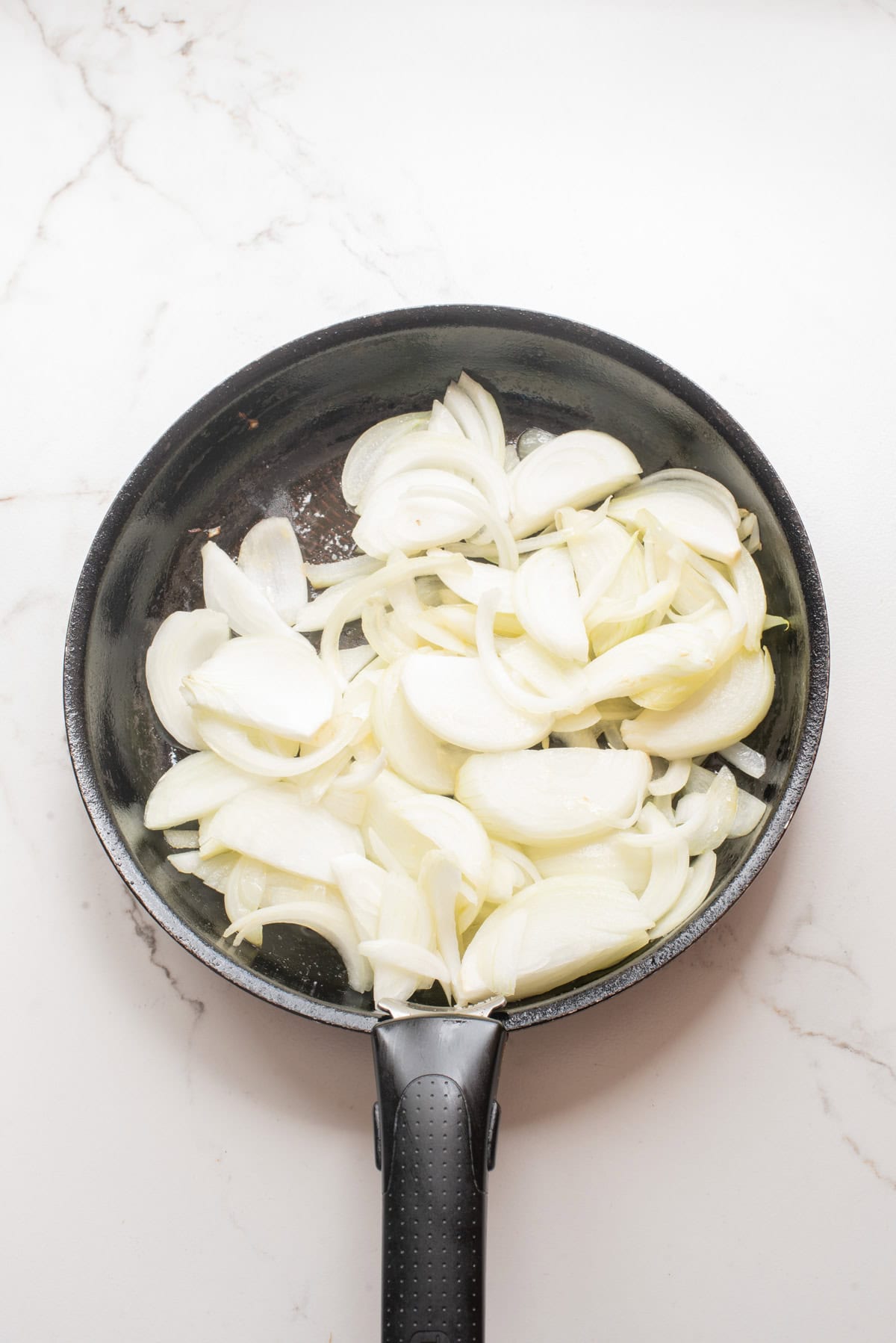
- Heat olive oil and butter in a large skillet over medium heat until butter foams. Add sliced onions and salt, stirring to coat. Cook, stirring frequently, until onions begin to soften and release liquid, about 10 minutes.
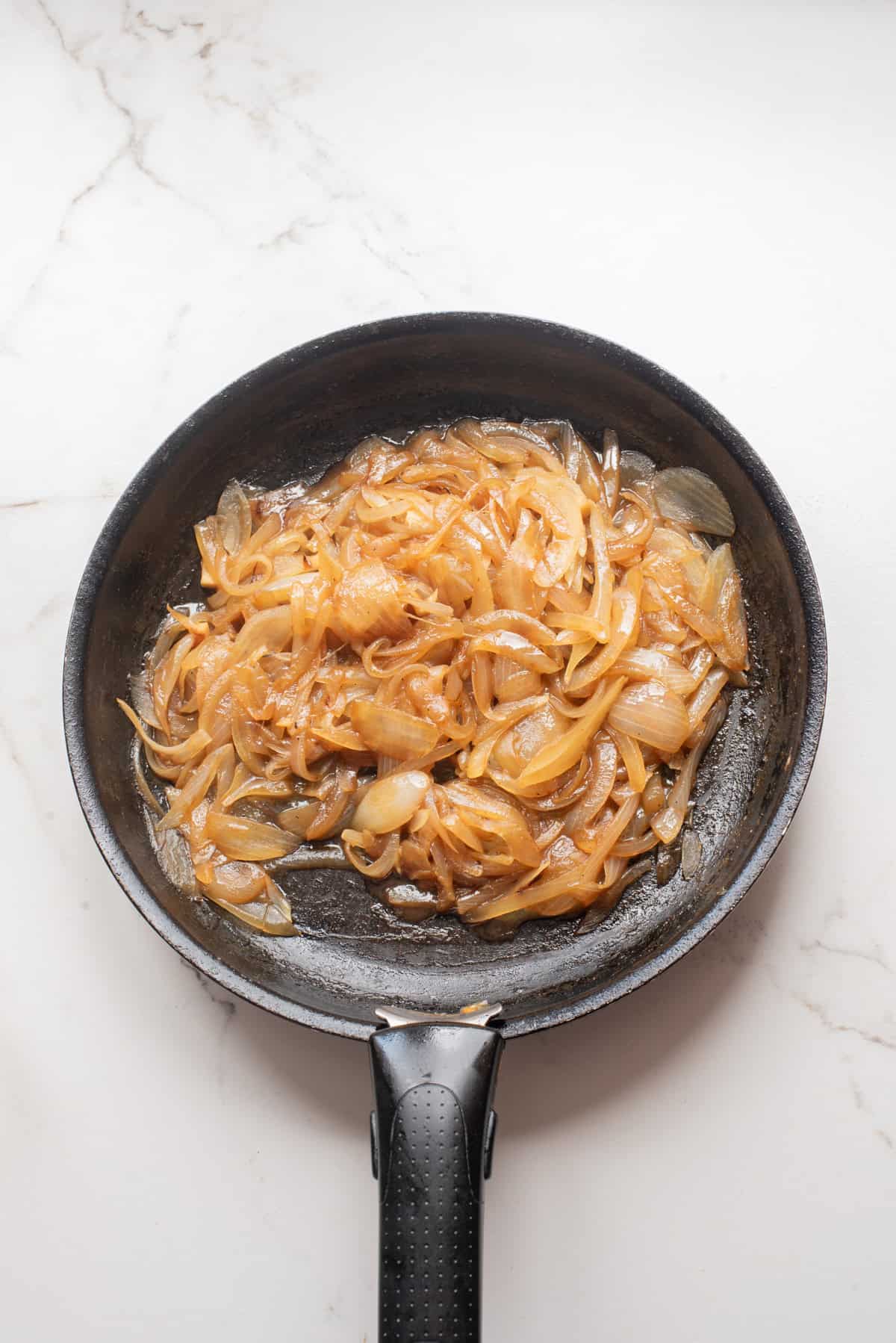
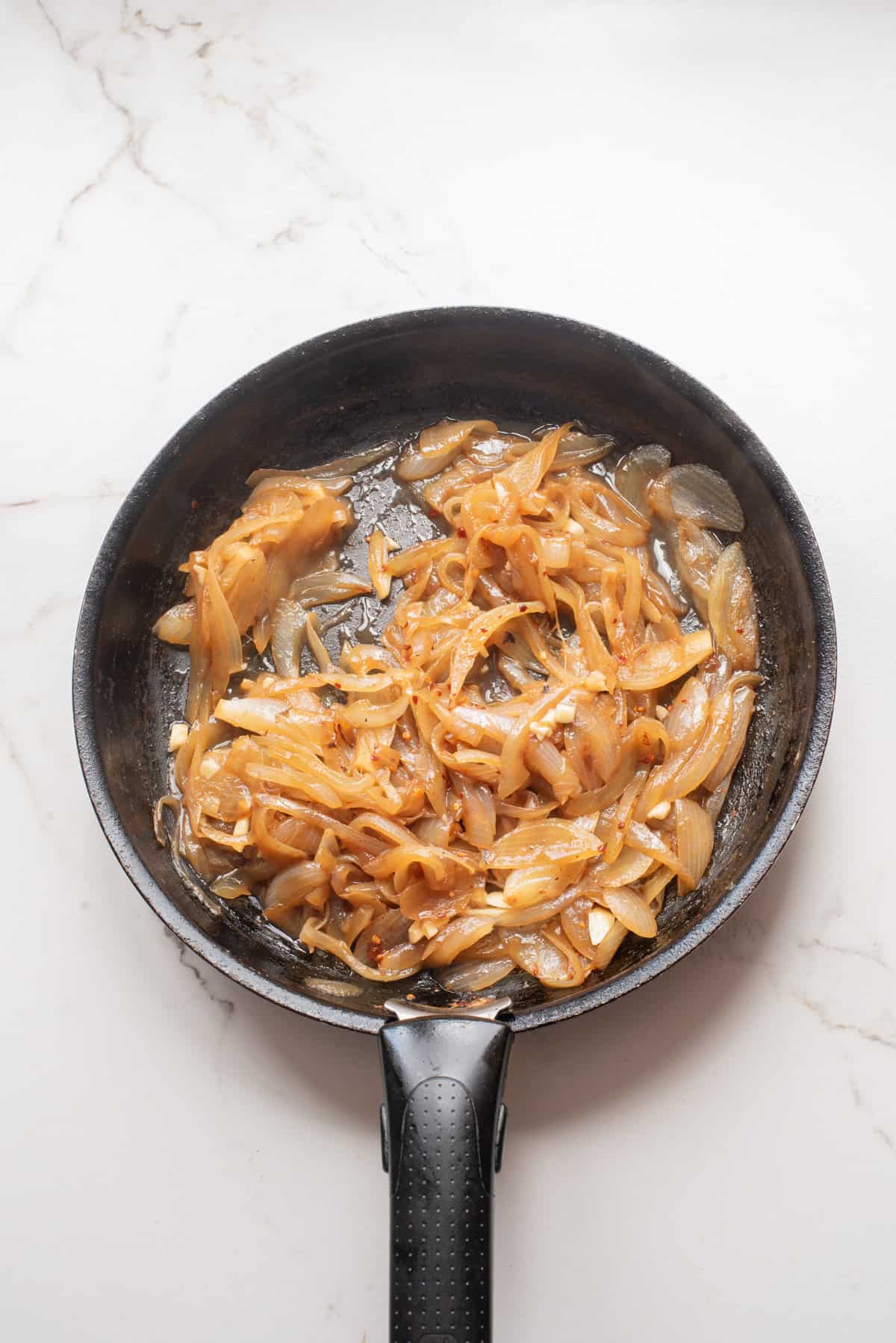
- Reduce heat to medium-low and continue cooking, stirring occasionally, until onions are deep golden brown and jammy, 25–30 minutes total. If onions start to scorch, reduce heat slightly. Stir in sugar halfway through if desired.
- Stir in garlic and red chili flakes; cook for another minute until fragrant, about 30-60 seconds.
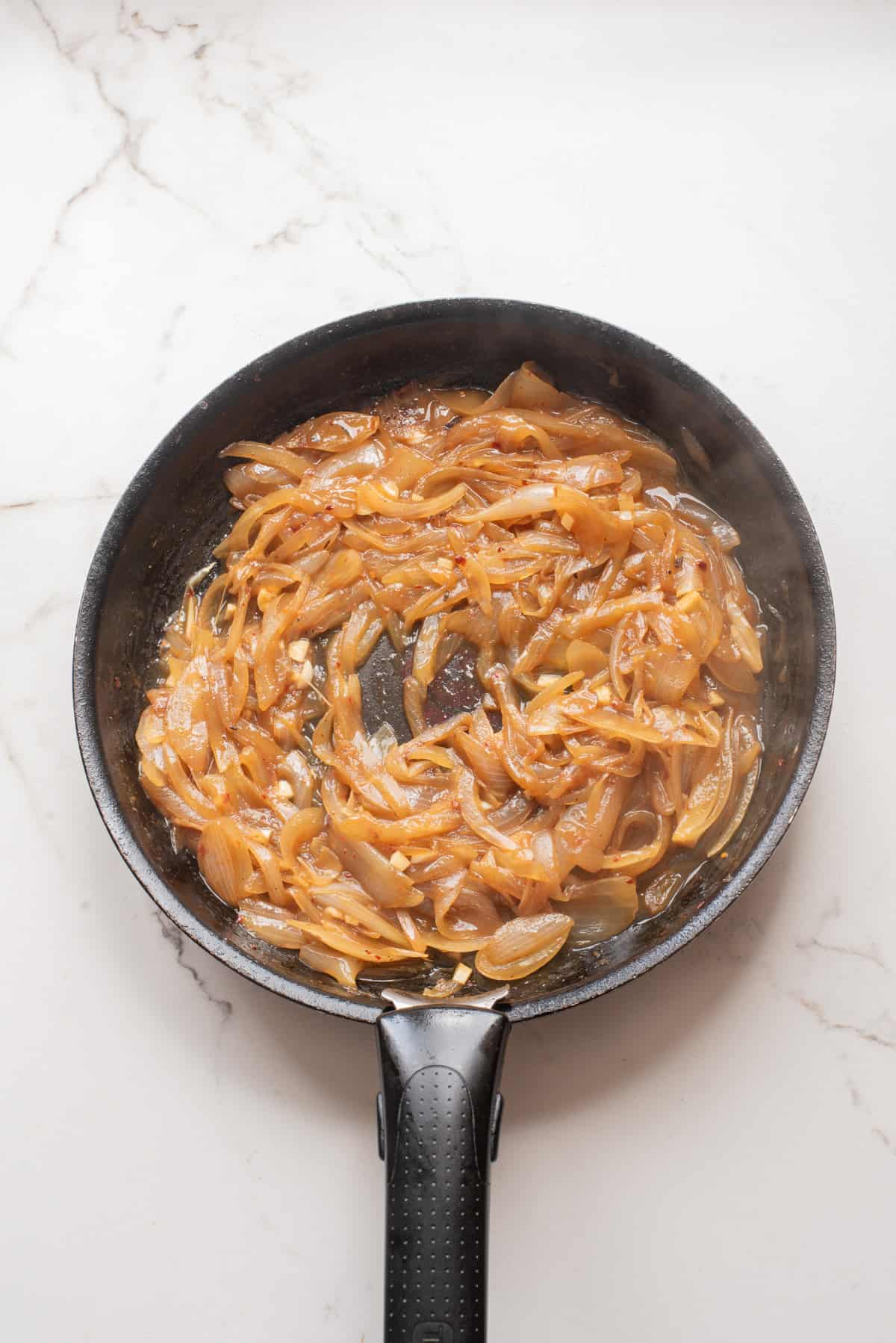
- Add wine (or broth) and scrape up any browned bits from the pan. Simmer until liquid reduces to a glaze, 2–3 minutes.
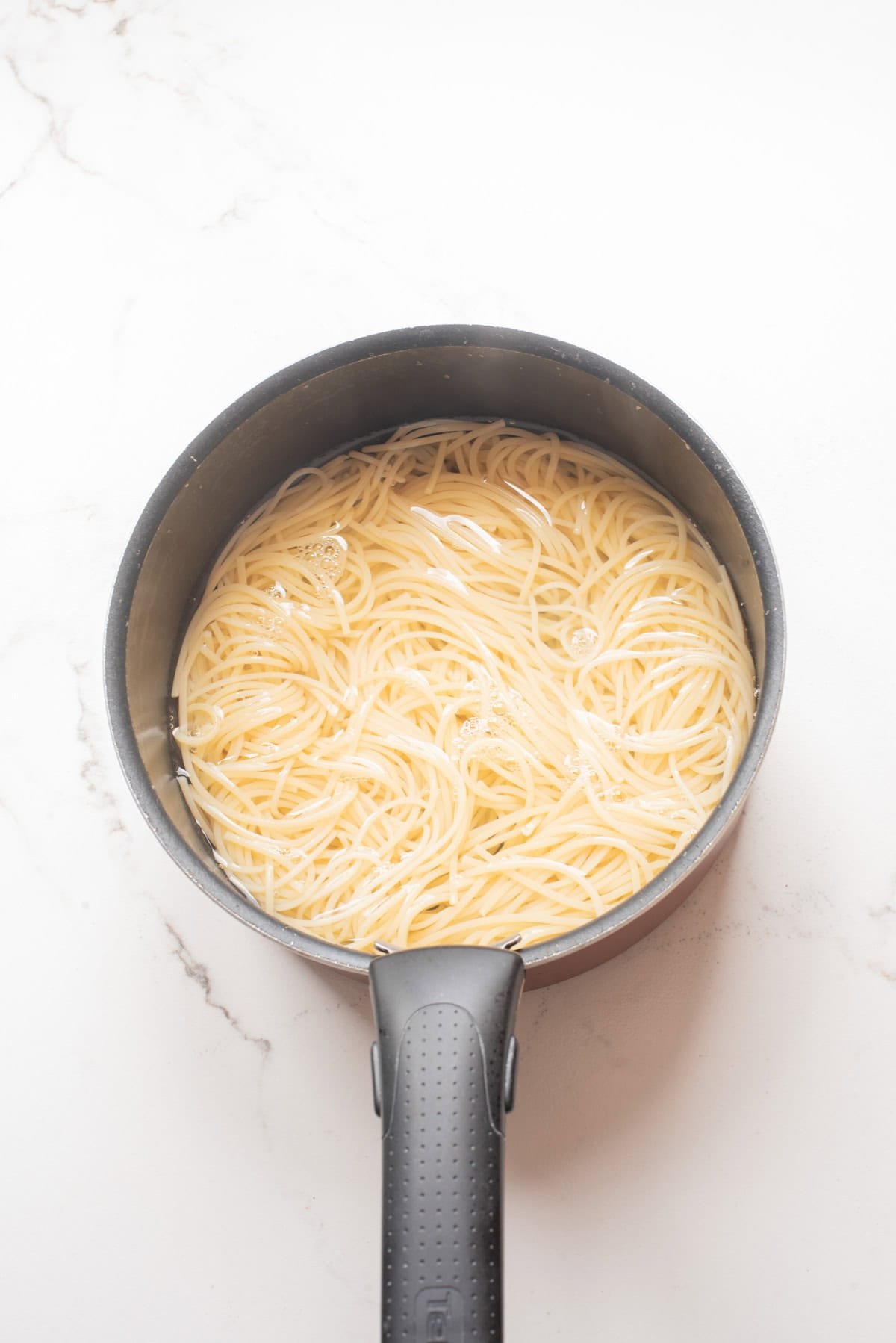
- In a large pot, cook pasta in salted water until al dente, following package instructions. Reserve ½ cup of pasta water, then drain.
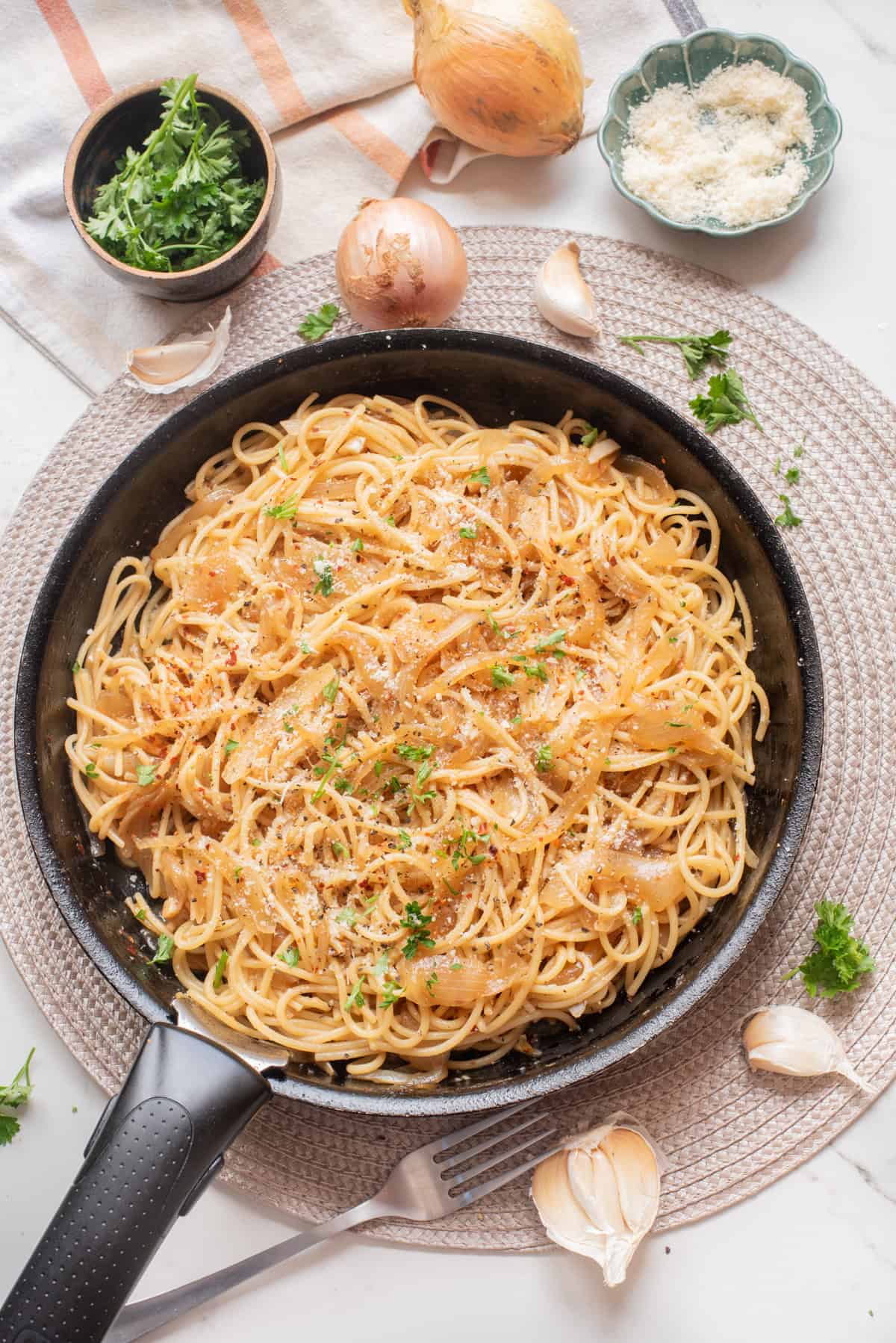
- Add the cooked pasta directly into the skillet with caramelized onions. Toss well to coat. Add a splash of pasta water, 1 tablespoon at a time, and Parmesan cheese, tossing until glossy and creamy. Season with black pepper and garnish with parsley before serving.
How to serve onion pasta
This pasta is easy enough to make on weekdays, but it’s also a great comforting weeknight meal. Serve it with garlic rolls or an easy green salad.
Variations:
- Vegetables: Toss in sautéed mushrooms, baby spinach, or arugula just before serving.
- Cheese: Pecorino Romano is sharper and saltier than Parmesan. Gruyère melts beautifully and adds nuttiness.
- Make it vegan: Skip butter and Parmesan. Use all olive oil. Stir in 1 tablespoon white miso paste or 2 tablespoons nutritional yeast for umami.
- Add protein: Cooked white beans, crispy chickpeas, or crumbled tempeh are all great ways to add protein to this dish.
Storage and reheating suggestions
Store leftover pasta in an airtight container in the fridge for up to 3 days. If you won’t eat it right away, keep the sauce and pasta separate. Reheat on the stovetop or in the microwave until fully heated, stirring occasionally.
More creamy pasta recipes
Love creamy pasta? Here are some of my favorite pasta recipes in weekly rotation!

One Pot Lemon Ricotta Pasta

Creamy Mushroom Pasta

Authentic Cacio e Pepe

Vegan Sun-Dried Tomato Pasta
Caramelized Onion Pasta
Ingredients
Caramelize onions
- 2 tablespoons olive oil
- 2 tablespoons unsalted butter
- 3 large yellow onions, thinly sliced (~ 6 cups)
- ½ teaspoon salt, adjust to taste
- ½ teaspoon sugar, optional, helps caramelization
- 3 cloves garlic, minced
- ½ teaspoon red chili flakes, optional
- ½ cup dry white wine, or vegetable broth
Make pasta
- 12 ounces pasta, spaghetti, linguine, or fettuccine
- ½ cup reserved pasta cooking water
- ½ cup grated Parmesan cheese
- ½ teaspoon black pepper, freshly ground, to taste
- 2 tablespoons chopped parsley, for garnish
Instructions
- Heat olive oil and butter in a large skillet (12") over medium heat until butter foams. Add onions and salt, stirring to coat.
- Cook, stirring frequently, until onions soften and release liquid, about 10 minutes.
- Reduce heat to medium-low. Continue cooking, stirring every 3–5 minutes, until onions are deep golden brown and jammy, 25–30 minutes total. If onions start to stick or scorch, add 1–2 tablespoons water and reduce heat. Stir in sugar halfway through if using.
- Add garlic and red chili flakes. Cook until fragrant, 30–60 seconds.
- Add wine (or broth) and scrape up any browned bits from the pan. Simmer until liquid reduces to a glaze, 2–3 minutes.
- Meanwhile, bring a large pot of salted water to a boil. Cook pasta according to package directions until al dente. Reserve ½ cup pasta water, then drain.
- Meanwhile, cook pasta in salted water according to package instructions. Reserve ½ cup of pasta water, then drain.
- Add drained pasta directly to skillet with caramelized onions. Toss well to coat.
- Add pasta water 1–2 tablespoons at a time and toss. Add Parmesan and continue tossing until sauce is glossy and creamy.
- Season with black pepper to taste. Garnish with parsley and serve immediately.
Notes
- Don’t rush the onions—true caramelization takes 25–30 minutes. Sweet onions (e.g., Vidalia, Walla Walla) caramelize even better. Also, caramelized onions can be made 3 days ahead and stored separately.
- Keep heat low enough that onions sizzle gently, not aggressively
- Use a wooden spoon to scrape browned bits as you stir
- Pasta water’s starch helps create a silky sauce—don’t skip it
- Finish with a splash of balsamic vinegar for extra depth
- Add sautéed mushrooms, baby spinach, or arugula.
- Make it vegan: skip butter and Parmesan, use all olive oil, add miso paste or nutritional yeast
Nutrition
Nutrition information is automatically calculated, so should only be used as an approximation.


