
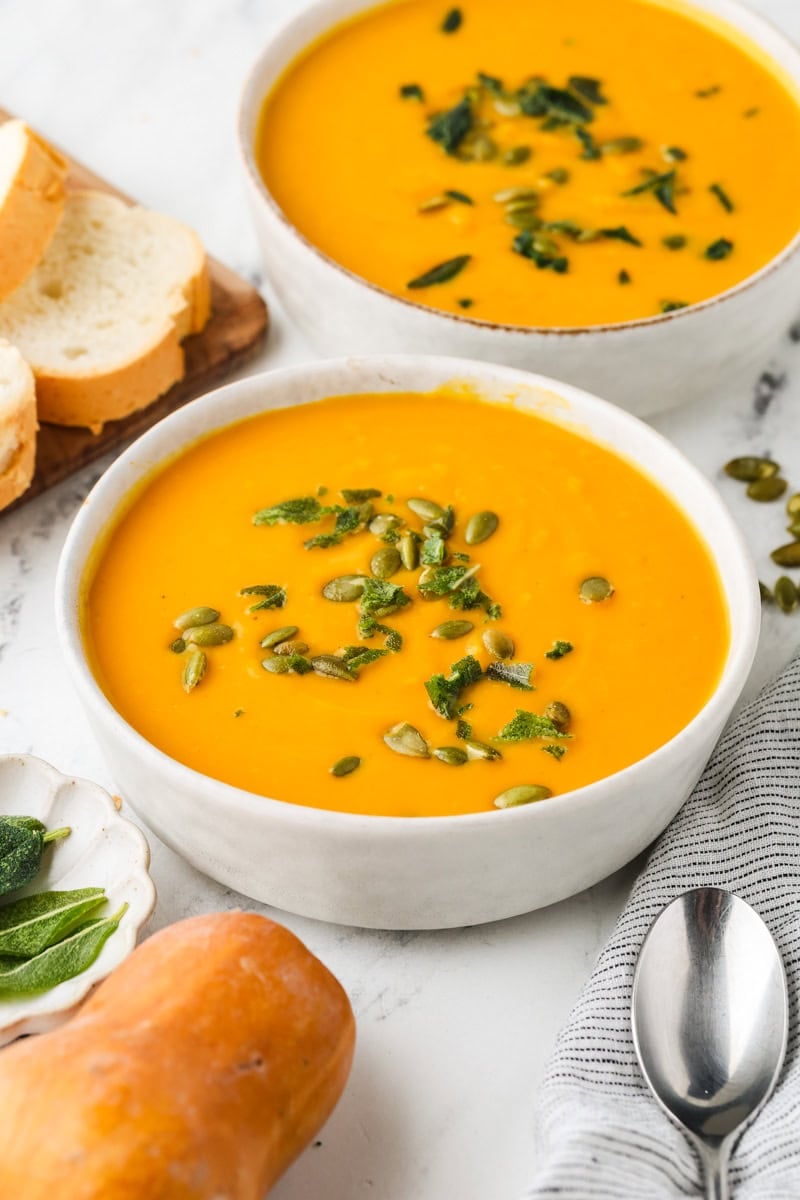
My honeynut squash soup starts with the squash roasted cut-side down until the cut faces caramelize, then scooped straight out of its thin skin, so there’s nothing to peel. It stays savory with onion, garlic, and a pinch of nutmeg, gets blended silky with a splash of cream, and finishes under crispy fried sage and toasted pepitas. About an hour, most of it oven time.
Why I roast honeynut squash instead of peeling it

Honeynut squash was a farmers market find for me. It looks like a butternut that shrank in the wash. It’s about the size of a large pear, with deeper orange flesh, a sweeter taste, and skin so thin it goes soft in the oven.
That thin skin is the reason this soup is easy. I halve the squash, roast it cut-side down at 400°F so the cut faces brown against the pan, and scoop the flesh out with a spoon. Roasting does the flavor work, so the pot only needs onion, garlic, broth, and a pinch of nutmeg. No maple, no brown sugar. Honeynut is sweet enough on its own, and the salty pepitas and crispy sage on top keep the bowl savory.
When honeynut disappears from the market for the year, my kabocha squash soup is the next pot I make.

How to pick honeynut squash, and when to swap it
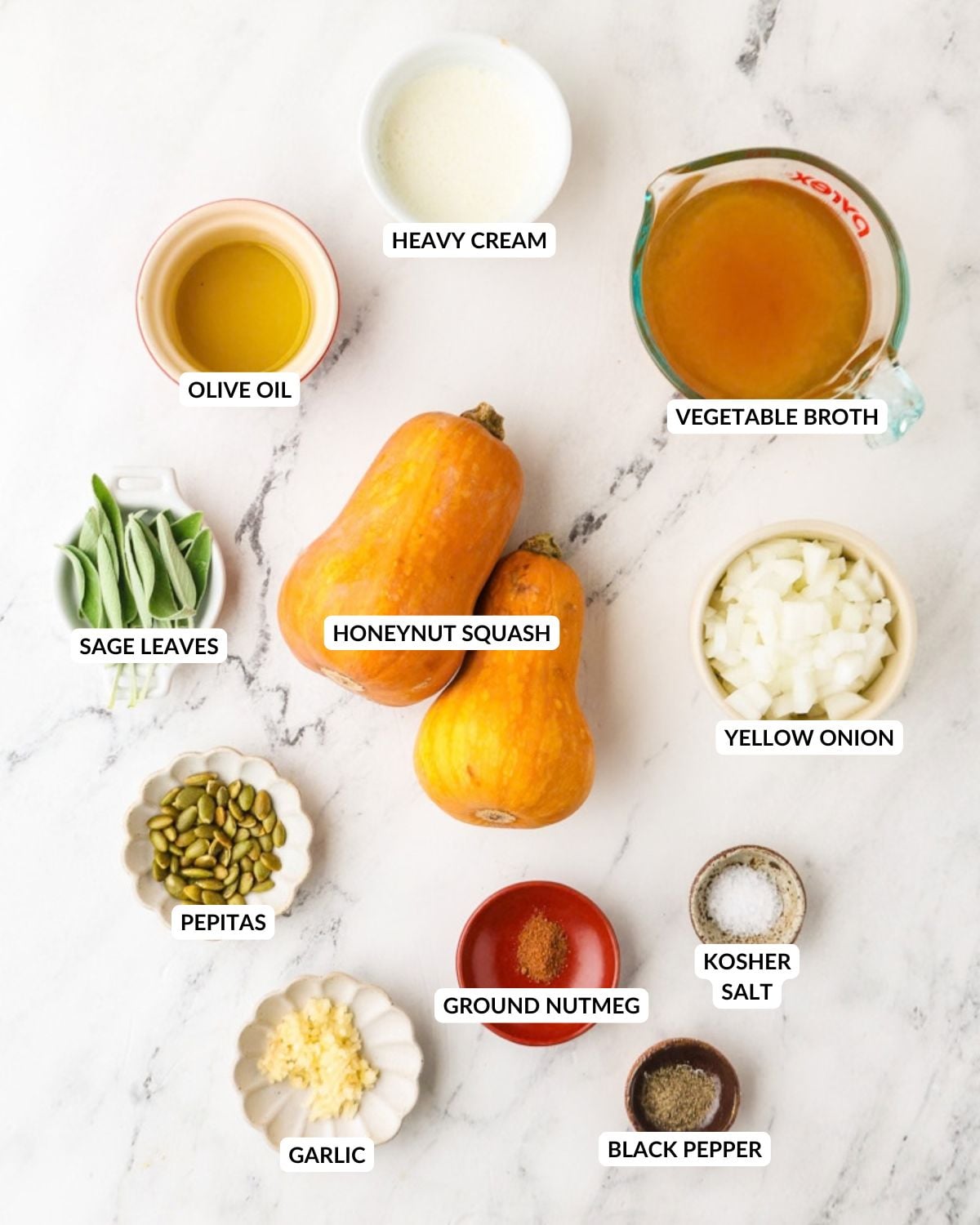
Full ingredient list and detailed instructions in the recipe card.
- Honeynut squash should be deep tan-orange all over with no green streaks. Green means it was picked early, and it tastes flat. Four or five small ones make about 3 pounds.
- Butternut squash works if you can’t find honeynut, with two tradeoffs. The thicker skin has to come off, and the soup tastes milder. The browning matters just as much as it does in my savory roasted butternut squash with garlic and sage.
- Heavy cream goes in at the end for body and a rounder finish. A quarter cup is enough because the roasted squash is already thick. Full-fat coconut milk is the dairy-free swap.
- Ground nutmeg stays at ⅛ teaspoon. Any more and the soup starts tasting like pie.
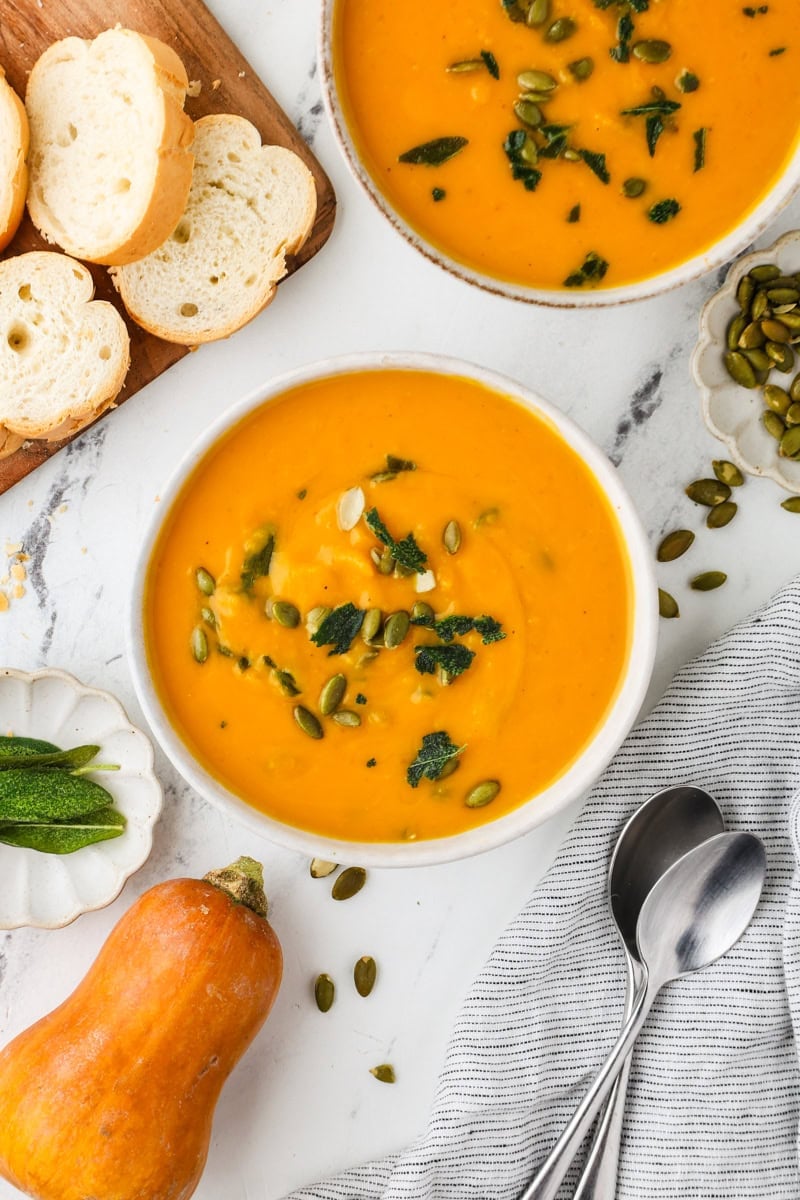
- Fresh sage fried crisp is the topping I won’t skip. It shatters, and its savory edge cuts the sweetness, while toasted pepitas bring the crunch and salt.
Shruthi’s Top Tips
Roasting honeynut squash for soup, start to finish
The oven does most of this. But watch for the following things that can still go wrong.
- Roast the full 30 to 35 minutes, until a knife slides through with no resistance and the cut sides are browned. Underdone squash blends grainy.
- Don’t fuss over bits of skin that end up in the pot! Seriously. Honeynut skin is edible and blends right in.
- Add extra broth a splash at a time after blending. How thick the soup turns out depends on the size of your squash, and it’s easy to overshoot.
- Fry the sage in hot oil just until it stops bubbling, 10 to 15 seconds, then drain it on a paper towel. A few seconds too long and it turns bitter and brown.
- Vent the blender lid and hold a towel over it when blending hot soup, or use an immersion blender in the pot.
How to make honeynut squash soup
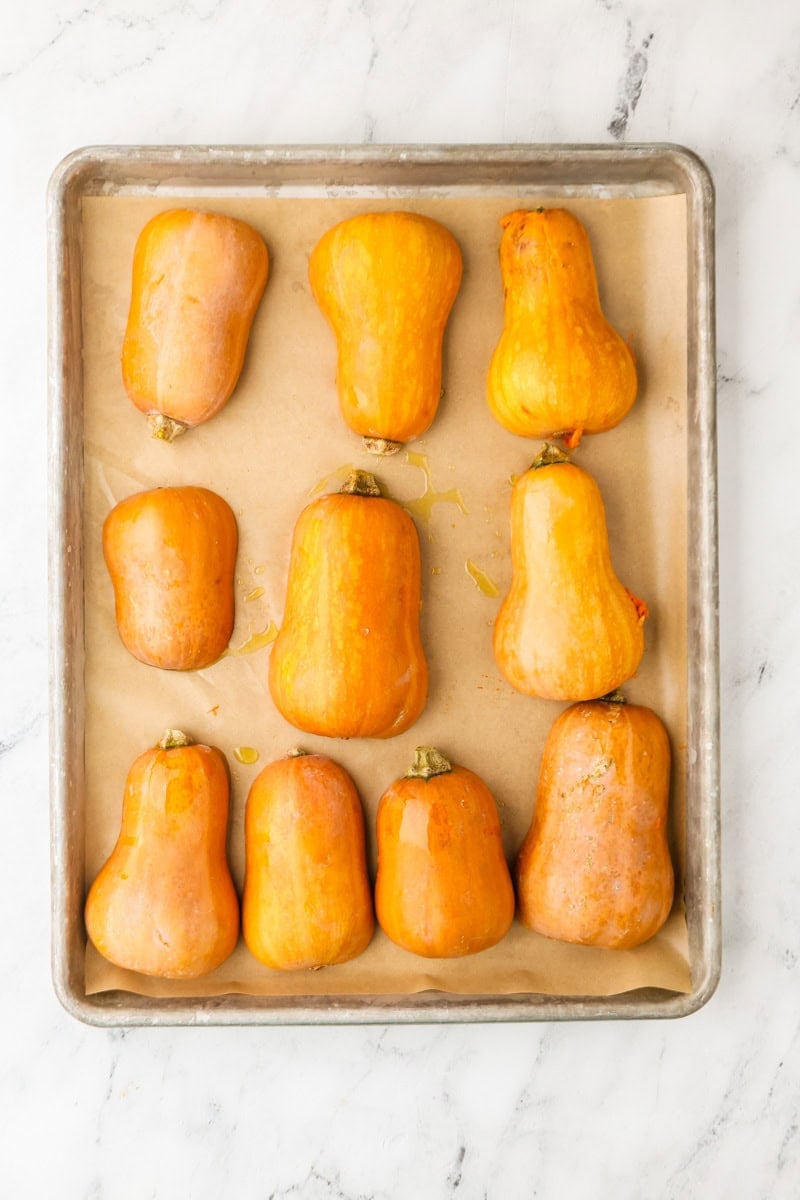
- Roast the halved squash cut-side down at 400°F until very tender and browned on the cut sides, 30 to 35 minutes.
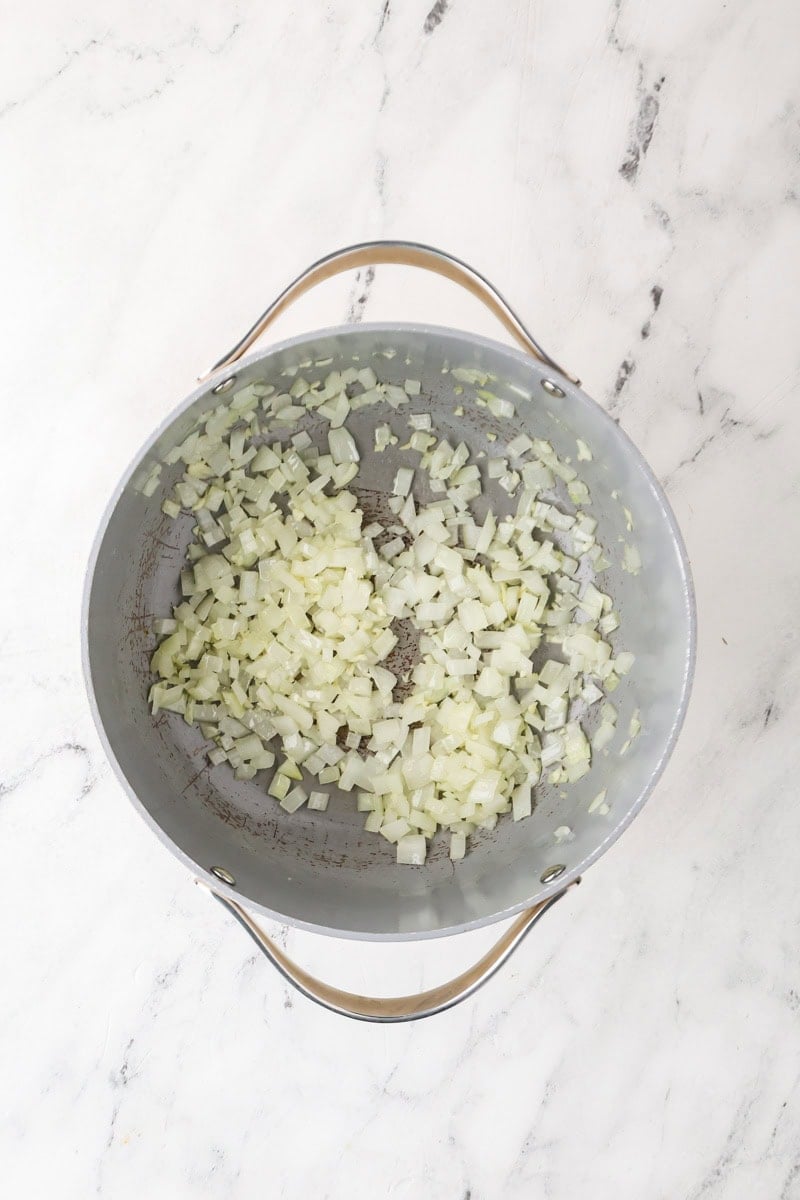
- Soften the onion in oil for about 5 minutes, then add the garlic for 1 minute.
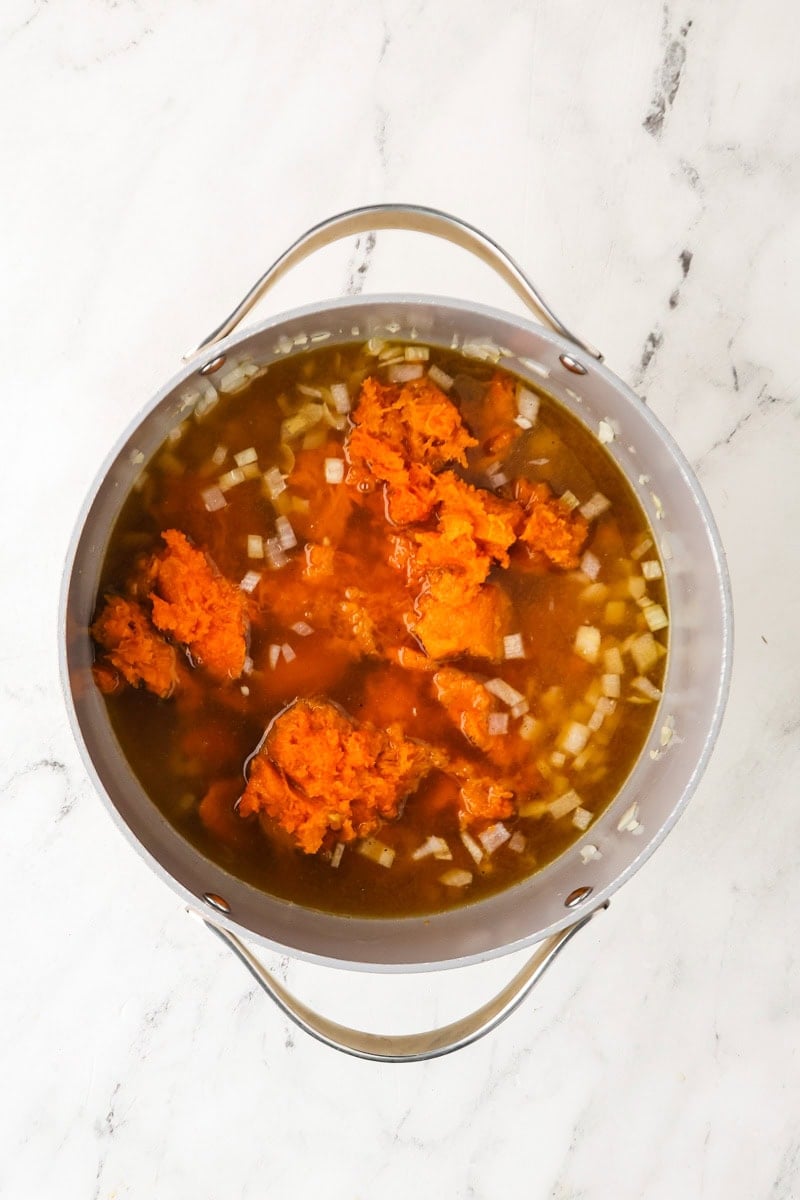
- Scoop the roasted squash into the pot, add the broth, salt, pepper, and nutmeg, and simmer for 10 minutes.
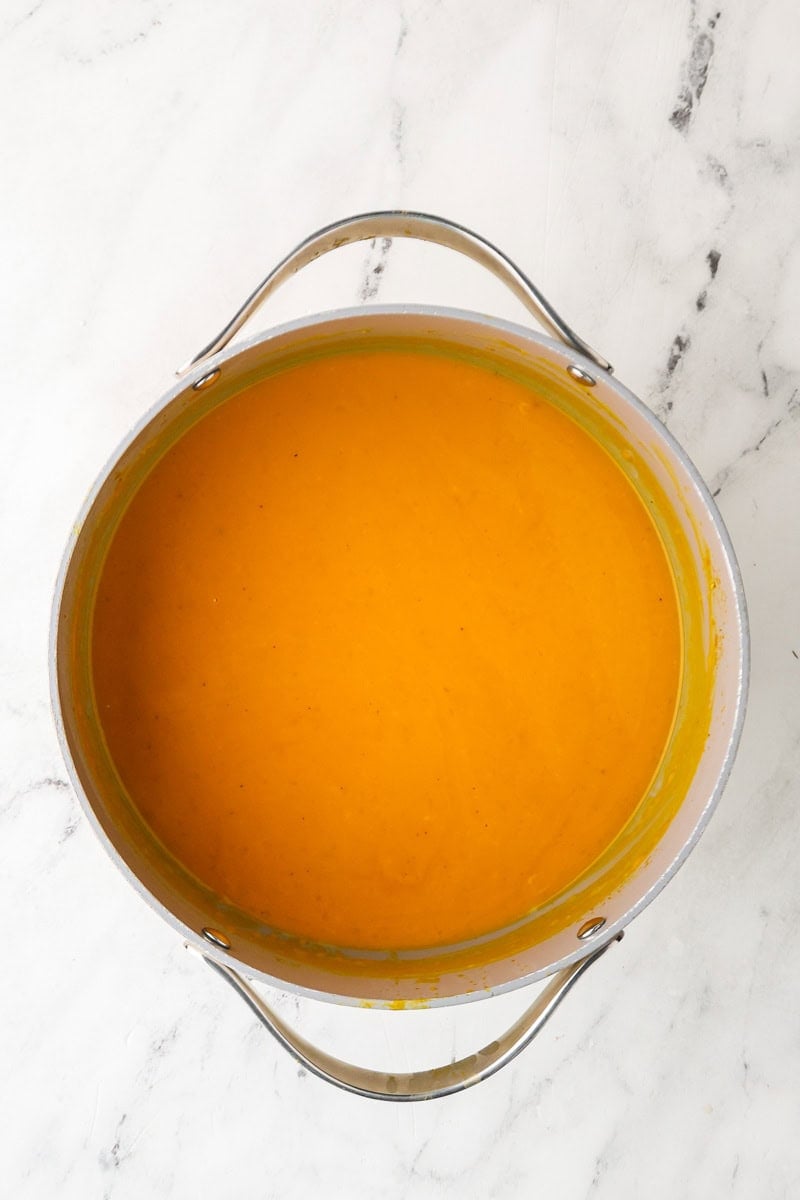
- Blend until silky, stir in the cream, and thin with more broth until it pours the way you like.
- Fry the sage until crisp, then ladle the soup into bowls and top with the sage and toasted pepitas.
How to serve honeynut squash soup
To make it dinner, put a harvest kale salad on the side and a couple of flaky cheddar biscuits next to the bowl for dunking. An extra spoonful of pepitas on top adds more crunch.
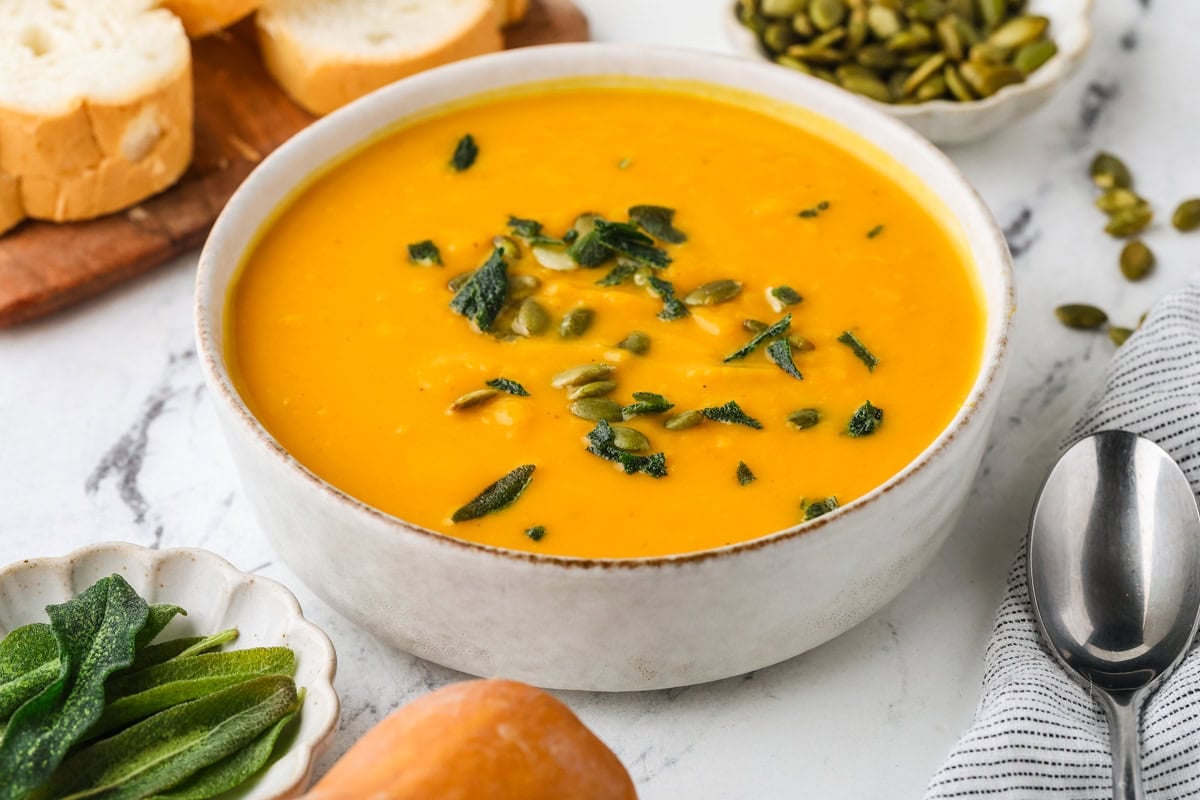
At Thanksgiving it works as a starter in small cups before the main, and it fits a make-ahead plan with the rest of your vegetarian Thanksgiving recipes. Blend the soup a day or two early, then fry the sage right before serving so it stays crisp.
Variations
- Make it vegan with full-fat coconut milk in place of the cream.
- For a curry-spiced squash soup, my Thai butternut squash soup with coconut milk is the one to make.
Roasted Honeynut Squash Soup with Crispy Sage
Equipment
- 1 Immersion blender or countertop blender
Ingredients
For the soup
- 4 medium honeynut squash, ~3 pounds, halved lengthwise and seeded
- 2 tablespoons olive oil, divided
- 1 medium yellow onion, diced
- 2 cloves garlic, minced
- 3 cups vegetable broth, plus more to thin
- ½ teaspoon kosher salt, plus more as needed
- ¼ teaspoon black pepper
- ⅛ teaspoon ground nutmeg
- ¼ cup heavy cream, or full-fat coconut milk for vegan
For the topping
- 2 tablespoons olive oil, for frying
- 8 fresh sage leaves
- 2 tablespoons pepitas, toasted
Instructions
- Heat the oven to 400°F. Rub the cut sides of the squash with 1 tablespoon of the oil and place cut-side down on a rimmed sheet pan. Roast 30 to 35 minutes, until very tender and browned on the cut sides.
- While the squash roasts, heat the remaining 1 tablespoon oil in a large pot over medium heat. Cook the onion for 5 minutes until soft, then add the garlic and cook for 1 minute.
- Scoop the squash flesh into the pot and leave the skins behind. Add the broth, salt, pepper, and nutmeg. Simmer for 10 minutes.
- Blend until smooth with an immersion blender, or in batches in a countertop blender with the lid vented. Stir in the cream, thin with more broth to the consistency you like, and taste for salt.
- Heat the 2 tablespoons oil for frying in a small skillet over medium-high heat. Fry the sage leaves for 10 to 15 seconds, until they stop bubbling and turn crisp. Drain on a paper towel.
- Ladle the soup into bowls and top with the crispy sage and toasted pepitas.
Notes
- Roast cut-side down for browned squash that scoops out easily. There’s no need to peel honeynut.
- For a vegan soup, use full-fat coconut milk in place of the cream. Use the rest of the can in a curry like my Thai red curry with tofu.
- Make the soup up to 4 days ahead and fry the sage the day you serve it.
- Refrigerate for up to 4 days. The soup thins slightly in the fridge, so reheat it on the stove and adjust with broth.
Nutrition
Nutrition information is automatically calculated, so should only be used as an approximation.


