

My homemade massaman curry paste is built around warm spices, cardamom, cloves, and cinnamon, ground straight into the blend so they bloom when you fry the paste. White miso stands in for the shrimp paste, so it stays fully vegan and gluten free, and it comes together in about 25 minutes.

Massaman curry paste is different from other Thai curry pastes

The warm spices in Massaman curry (i.e., cardamom, cloves, cinnamon, nutmeg) come from centuries of Persian and Indian influence in Southern Thailand. They go into the paste itself, which makes the spice integration so deep when you cook it.
The other thing that sets this apart: I grind the whole spices fresh and add them at the blending stage. The kitchen smells remarkable at this point, with toasted cardamom and cloves hitting the blender alongside the soaked chilies and lemongrass. It’s one of those cooking moments that makes the from-scratch version worth it.
I developed this through the same four rounds of testing as my chickpea massaman curry. The paste came from a recipe my Koh Samui instructor gave me, and most of the testing was about spice ratios (specifically, how much cardamom before it starts to taste medicinal, and whether the warm spices belonged in the paste or added separately to the curry). Can say definitively now that they do belong in the paste! The difference is noticeable.

Key ingredients and why they matter

Full ingredient list and detailed instructions in the recipe card.
Dried red chilies, guajillo or California, are the base. Soak them in hot water for 15 minutes and save 2 tablespoons of the soaking liquid for the blender; it loosens the paste without diluting the flavor.
Lemongrass and galangal are the Thai aromatics. Use just the bottom 4 inches of the lemongrass stalk, since the upper green parts are woody and won’t blend smooth. If you can’t find galangal, fresh ginger works as a substitute.
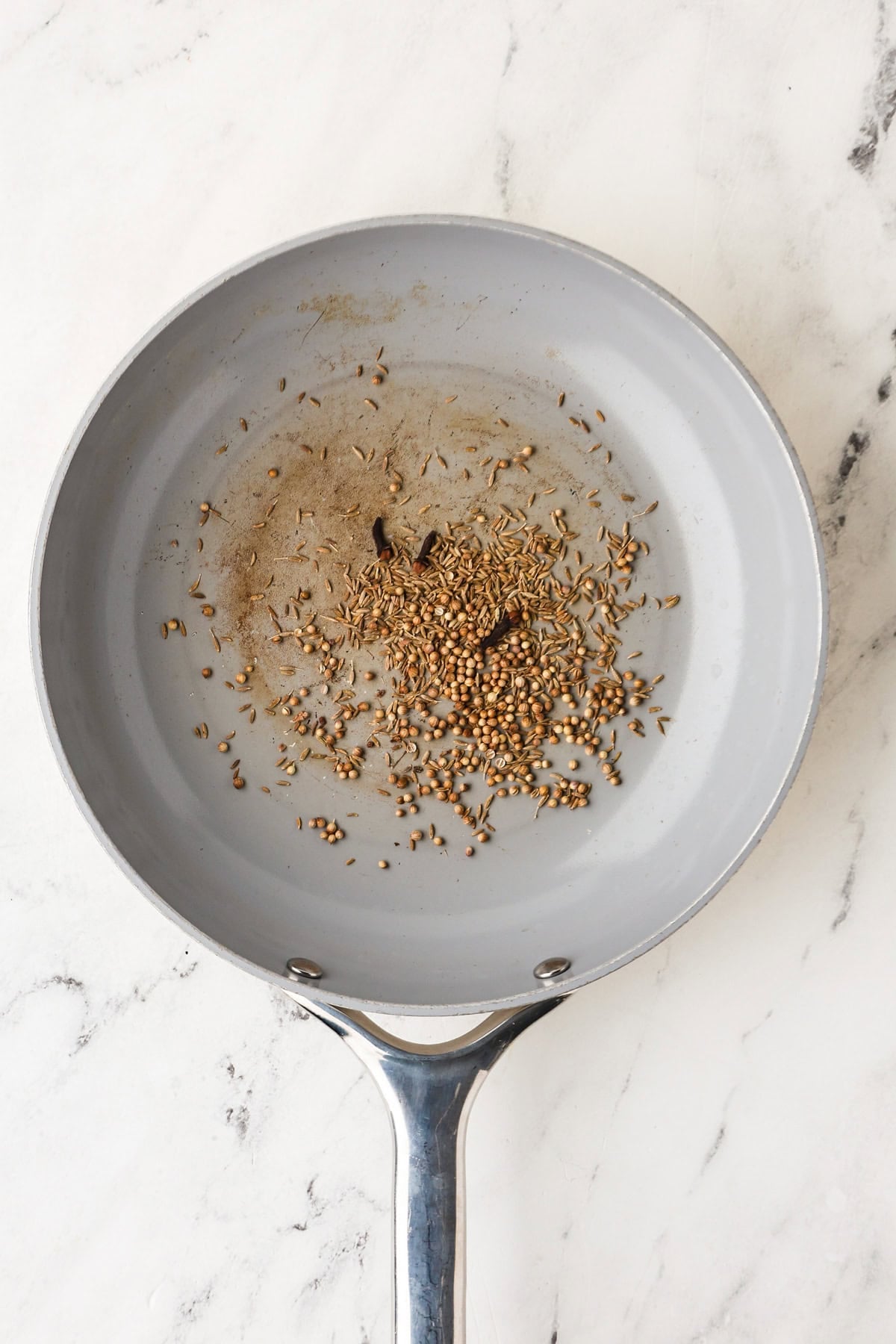
The warm spice blend of coriander, cumin, cardamom, cloves, cinnamon, and nutmeg is what makes this a massaman paste rather than a generic curry paste. Toast the whole seeds in a dry skillet until fragrant, grind them, then add to the blender with everything else. Pre-ground spices work, but toasting whole seeds takes 3 minutes and the difference is real.
White miso replaces the shrimp paste that traditional massaman paste relies on. It’s salty and fermented, so it does the same job of adding savory depth with no animal products, which is the whole reason this version works.
How to make massaman curry paste
- Soak the dried chilies in hot water until softened. While they soak, toast the whole spices in a dry skillet until fragrant, then set aside to cool.
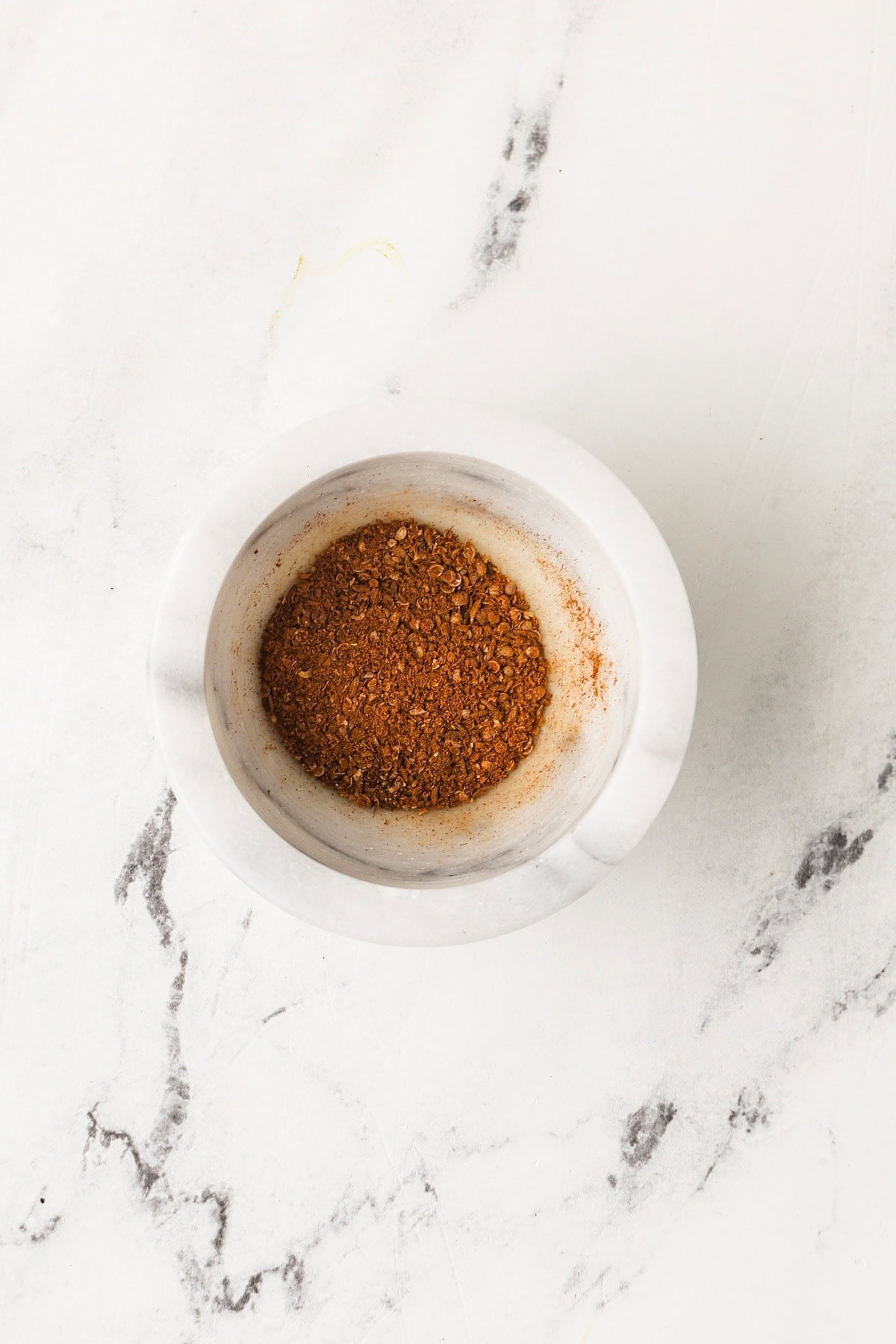
- Once cooled, grind the toasted spices into a fine powder and mix in the ground cinnamon and nutmeg.
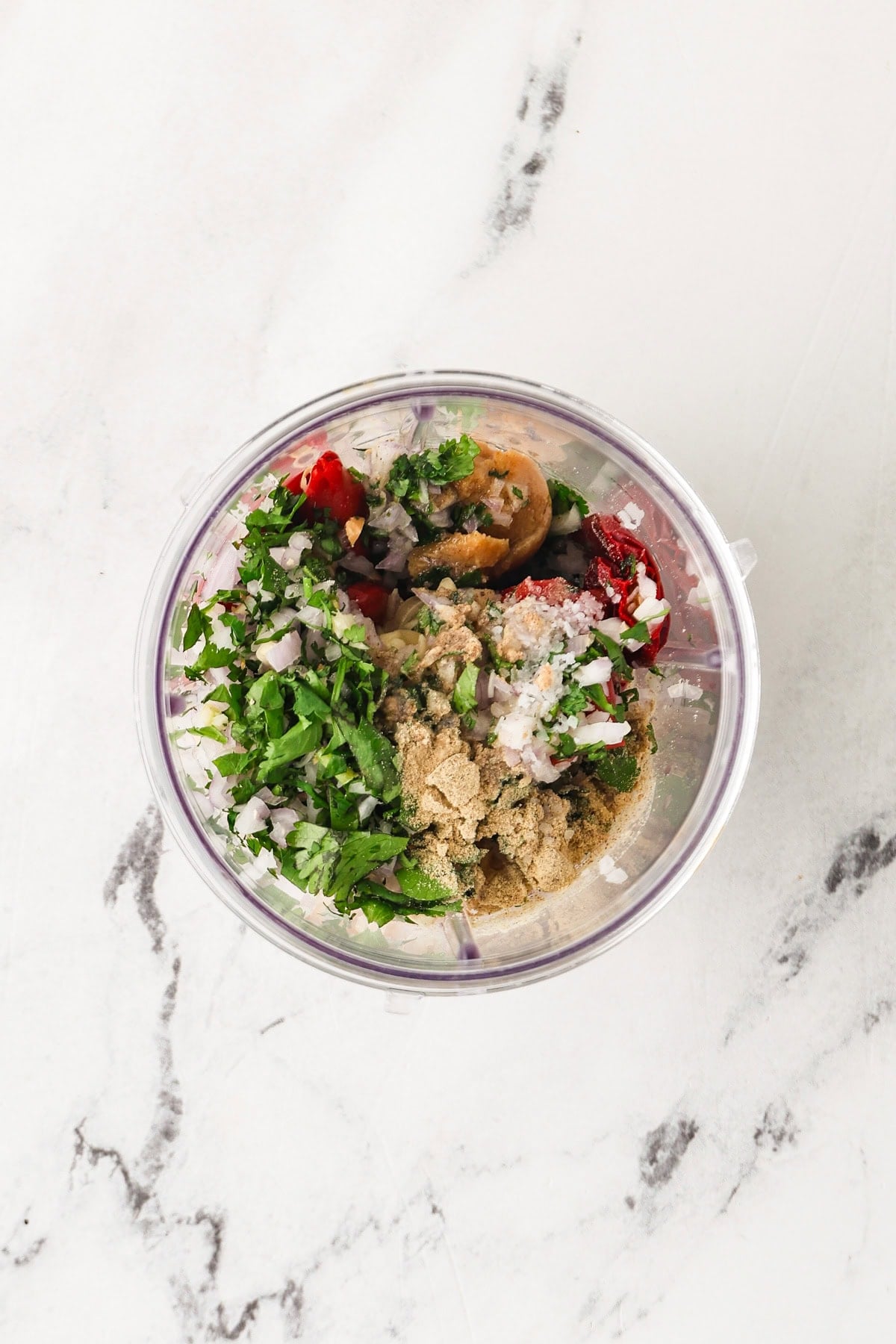
- Drain the chilies, reserving a little of the soaking liquid. Add them to a blender along with the lemongrass, galangal, shallots, garlic, cilantro stems, miso, and seasonings. Blend until mostly smooth.
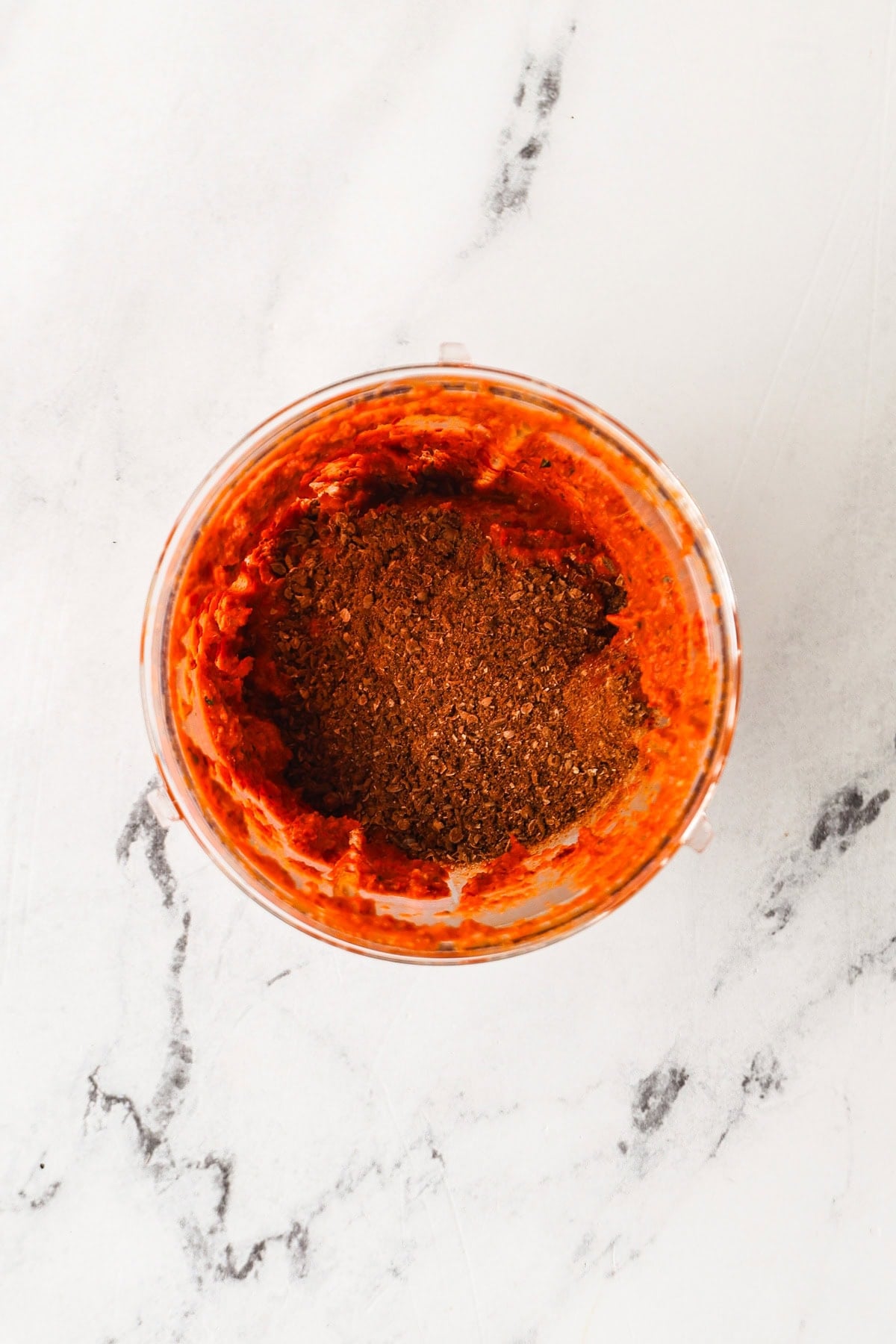
- Add the ground spice blend and blend again until fully incorporated. The paste should be thick, aromatic, and slightly textured.
How to serve massaman curry paste
Use about 4 tablespoons per batch of my chickpea massaman curry. The rest freezes well in tablespoon portions in a silicone ice cube tray, so you can pull out what you need straight from frozen.
If you want to work through the Thai curry paste lineup, this is the warmest and most mellow of the three I’ve made. Thai red curry paste has more heat. Thai green curry paste is the brightest and most aromatic.
Variations
- No galangal? Substitute an equal amount of fresh ginger. The flavor is slightly brighter and less earthy, but still works.
- Add 2 more dried red chilies before soaking if you want more heat.

Storage and reheating suggestions
Store the curry paste in an airtight container in the refrigerator for up to 5 days. For longer storage, freeze it in tablespoon portions for up to 3 months. Thaw in the fridge or add it straight to the pan from frozen when cooking.
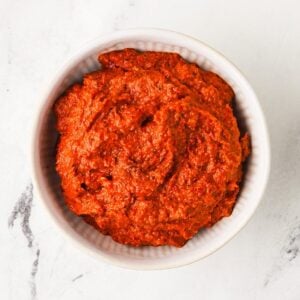
Massaman Curry Paste
Equipment
- Food Processor or high speed blender
Ingredients
For the spice blend
- 1 teaspoon coriander seeds
- 1 teaspoon cumin seeds
- 3 cardamom pods, seeds only
- 3 whole cloves
- ½ teaspoon ground cinnamon
- ¼ teaspoon ground nutmeg
For the paste
- 6 large dried red chilies, guajillo or California, stems and seeds removed
- 2 stalks lemongrass, tough outer layers removed, bottom 4 inches only, thinly sliced
- 1 tablespoon fresh galangal, roughly chopped (sub: fresh ginger)
- 4 medium shallots, roughly chopped
- 6 cloves garlic, roughly chopped
- 2 tablespoons cilantro stems, roughly chopped
- 1 teaspoon white miso, use Hiraki Organic brand for gluten-free
- ½ teaspoon ground white pepper
- ½ teaspoon kosher salt
- 2 tablespoons neutral oil, such as vegetable or canola
Instructions
- Soak the dried chilies in hot water for 15 minutes until softened. Reserve 2 tablespoons of the soaking liquid.
- In a dry skillet over medium heat, toast the coriander seeds, cumin seeds, cardamom seeds, and cloves, stirring constantly, until deeply fragrant and just beginning to darken, about 2 to 3 minutes. Transfer immediately to a plate to cool.
- Once cool, grind to a fine powder in a spice grinder or mortar and pestle. Stir in the ground cinnamon and nutmeg.
- Drain the soaked chilies.
- Add the drained chilies, lemongrass, galangal, shallots, garlic, cilantro stems, white miso, white pepper, salt, and neutral oil to a blender or food processor. Add the reserved soaking liquid. Blend until as smooth as possible, scraping down the sides several times, about 2 to 3 minutes.
- Add the ground spice blend and pulse until fully incorporated.
Notes
- Store in an airtight container for up to 5 days or freeze in tablespoon portions (ice cube tray works well) for up to 3 months.
Nutrition
Nutrition information is automatically calculated, so should only be used as an approximation.


