

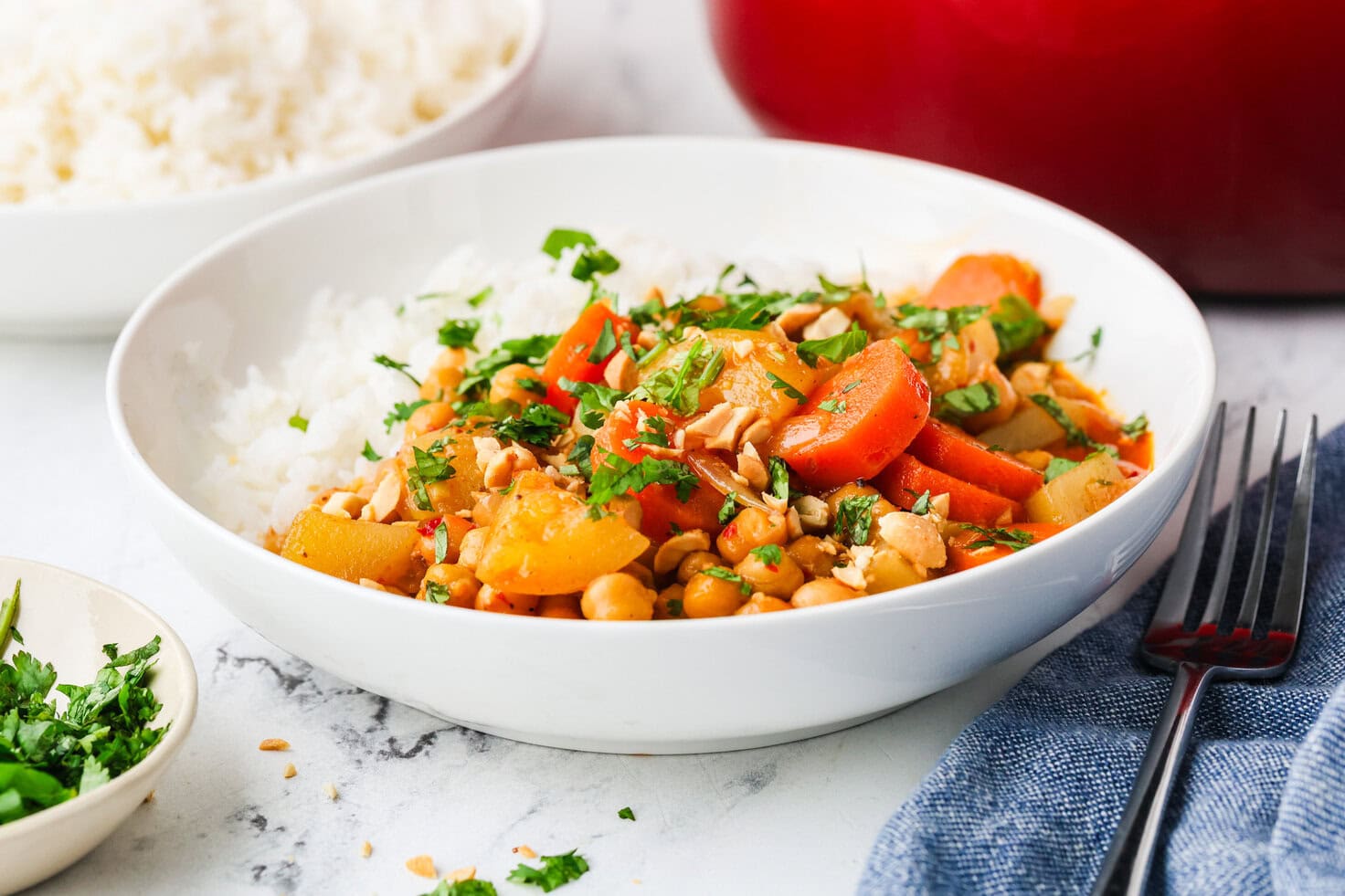
My vegan massaman curry is a thick coconut stew built with chickpeas, Yukon Gold potatoes, and a warmly spiced paste with cardamom, cloves, and cinnamon. It’s the coziest curry in the Thai repertoire, and I make it with homemade massaman curry paste or a store-bought shortcut — about 65 minutes either way.
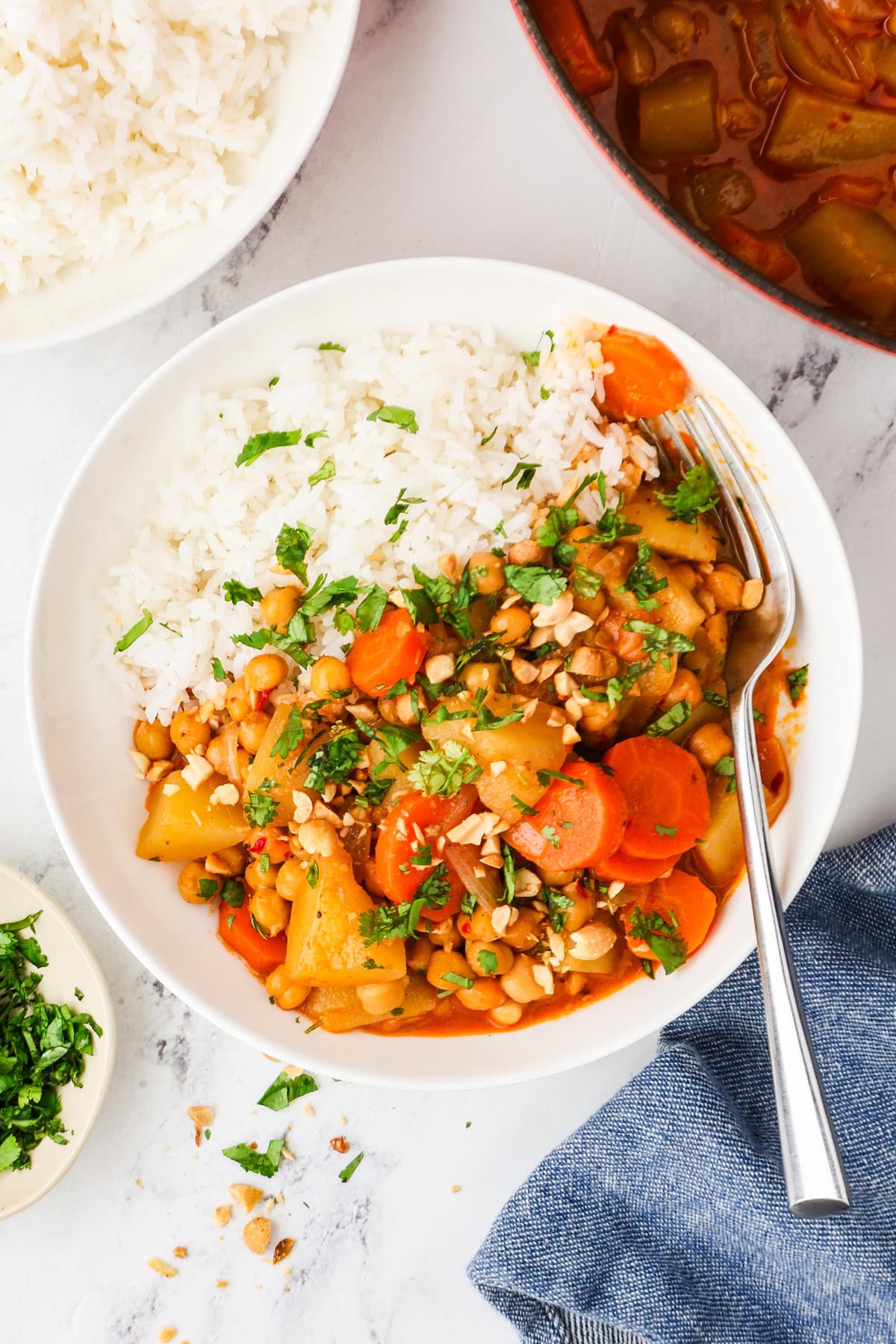
Why massaman curry tastes like no other Thai curry you’ve made

I first had massaman at a restaurant in Malaysia when I was 16, and it was the first Thai curry that reminded me of the food I grew up eating. The warm spices — cardamom, cloves, cinnamon — felt closer to Indian cooking than anything I’d associated with Thailand.
Massaman is Muslim-influenced Southern Thai cuisine, which is exactly why it doesn’t follow the same chili-forward logic as green or red curry. When it reminds you a little of a korma, that’s not a coincidence.
The recipe came from the same instructor who taught my cooking class in Koh Samui – the one where I learned Thai green curry with tofu and homemade Thai red curry. She gave me the massaman recipe separately, and then I spent four rounds testing it at home. Make the massaman curry paste at home as a weekend project if you want an upgrade that’s worth the extra 15 minutes.
The main thing I was working out was which vegetables could go into a long braise without turning to mush or making the curry bland. Tofu absorbed the paste too aggressively and disappeared into the sauce. Potatoes and chickpeas did exactly what massaman needs: they held their shape, didn’t compete with the spices, and made the curry genuinely filling.

Key ingredients, tips and testing notes
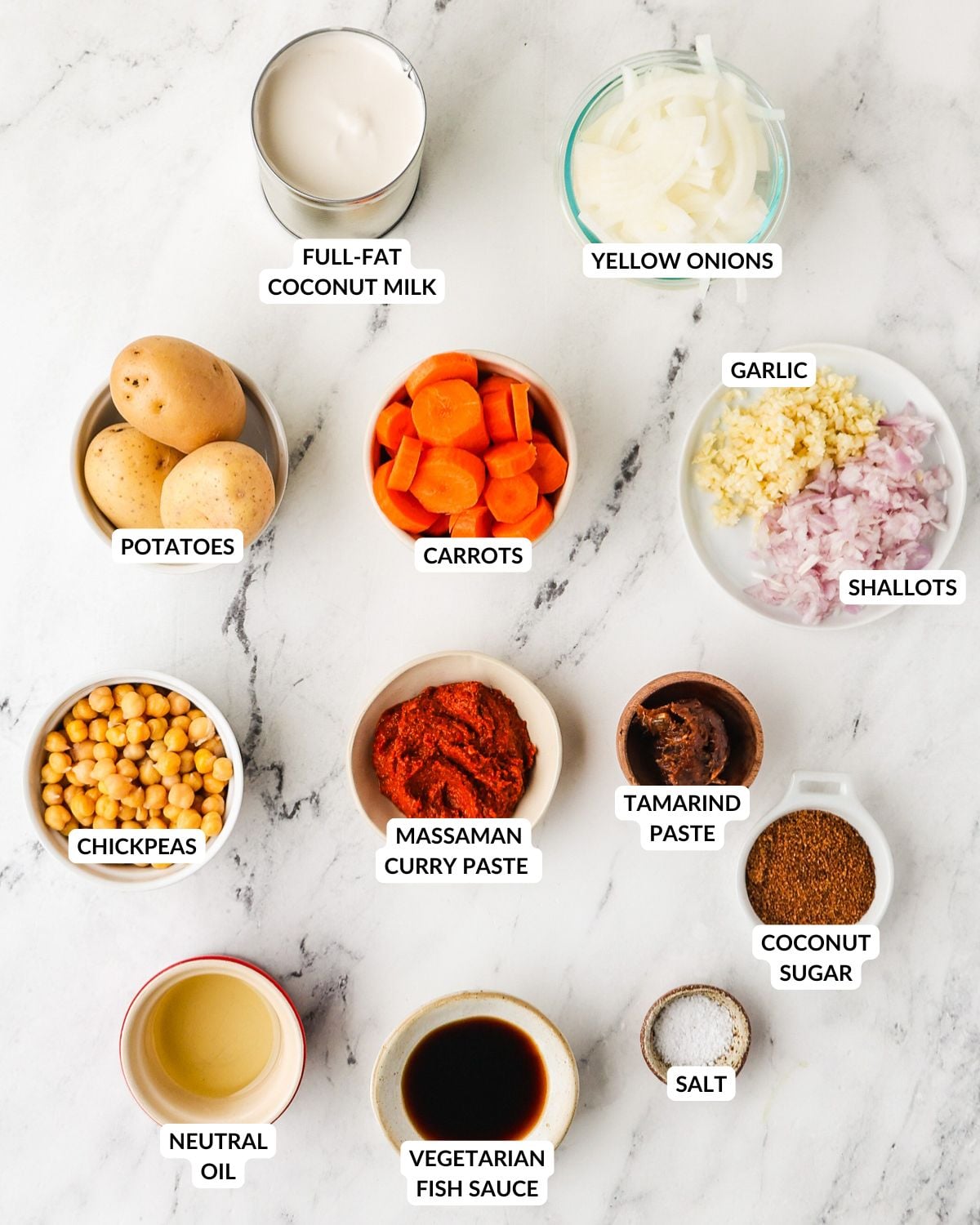
Full ingredient list and detailed instructions in the recipe card.
Curry paste is critical! You can make my homemade massaman curry paste and freeze the extras in a silicone mold, or use Maesri brand for a weeknight shortcut. If you use another brand, check that it’s vegetarian.
In my tests, I cut Yukon Gold potatoes into 1½-inch chunks and soak them in salted vinegar water while I prep everything else. This removes surface starch so they hold their shape through 25 minutes of simmering (vs. Russets). I skipped this once and the potatoes started breaking apart at the 15-minute mark, turning the sauce gummy. Use half sweet potato, half Yukon Gold for extra sweetness and color.
Two cans of chickpeas might feel like a lot, but it makes the curry genuinely filling and gives the chickpeas the presence of a main component rather than a garnish.
As with all my Thai curries, I use full-fat coconut milk, unshaken. Spoon off the thick cream, fry it until the oil separates, then build from there. Massaman has more body than green or red curry at this stage because the paste is drier and denser — it takes a full 3 to 4 minutes of frying before any liquid goes in.
Shruthi’s Tip
Don’t rush the coconut cream bloom. Five to six minutes until the oil visibly pools at the edges — this is where the curry’s depth starts, and cutting it short is the most common reason the sauce comes out flat.
Tamarind paste cuts through the coconut richness and gives massaman its distinctive brightness. Use smooth jarred paste; block tamarind needs dissolving and straining first. To substitute, use 1½ teaspoons lime juice plus ½ teaspoon brown sugar. Works in a pinch but definitely a different flavor profile (I also use this trick in my chana masala).
Vegetarian fish sauce (Ocean’s Halo or Tiparos) for depth. Check labels — regular fish sauce isn’t vegetarian.
How to make vegan massaman curry
- Scoop the thick coconut cream from the top of the cans into a pot and heat over medium-high until bubbling and the oil separates. Add the massaman curry paste and fry, stirring constantly, until darkened, fragrant, and slightly dry.
- Add the sliced onion, quartered shallots, and garlic. Stir to coat in the paste and cook until softened slightly.
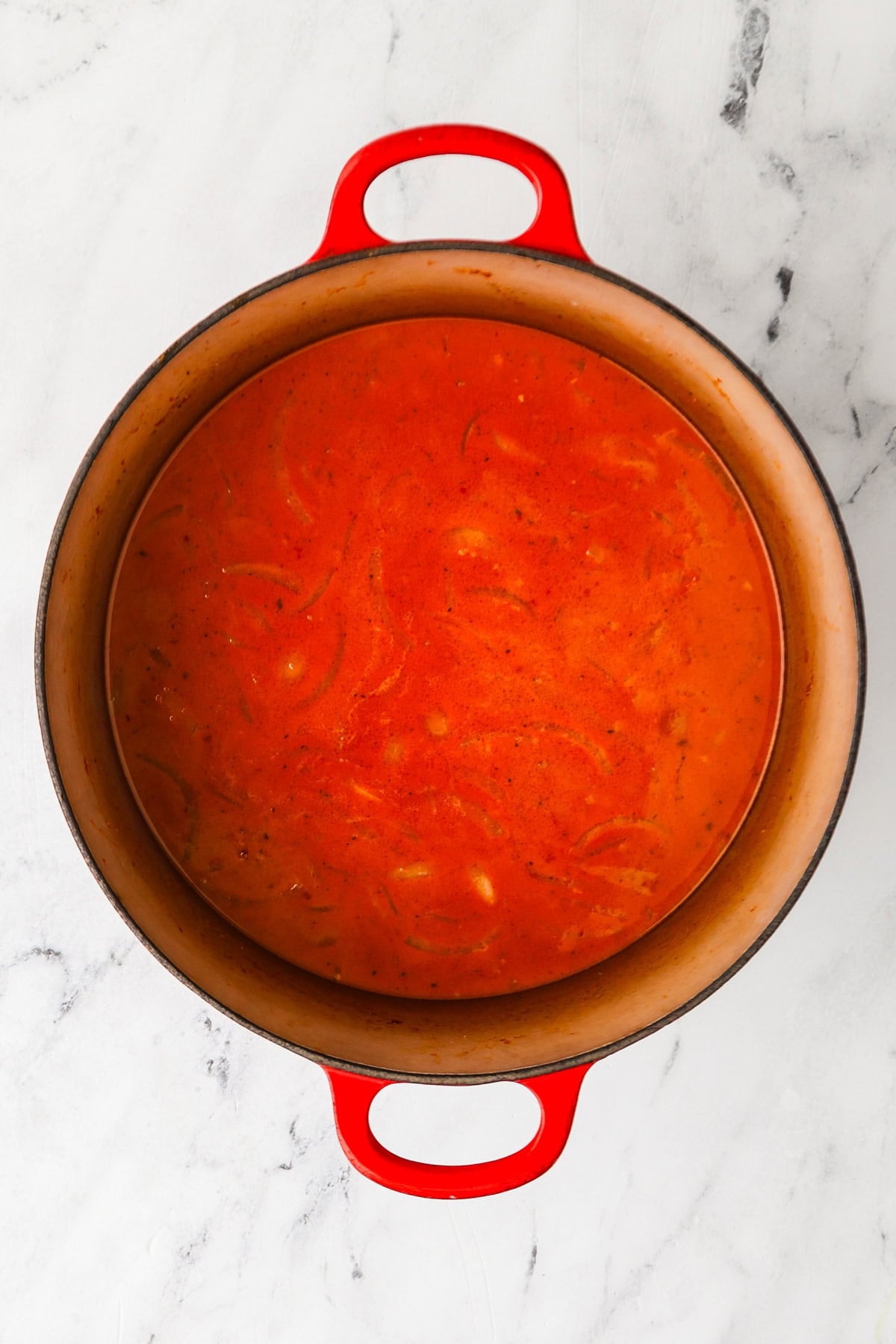
- Pour in the reserved coconut liquid and stir to combine. Add the vegetarian fish sauce, tamarind paste, coconut sugar, and salt. Stir well to combine.
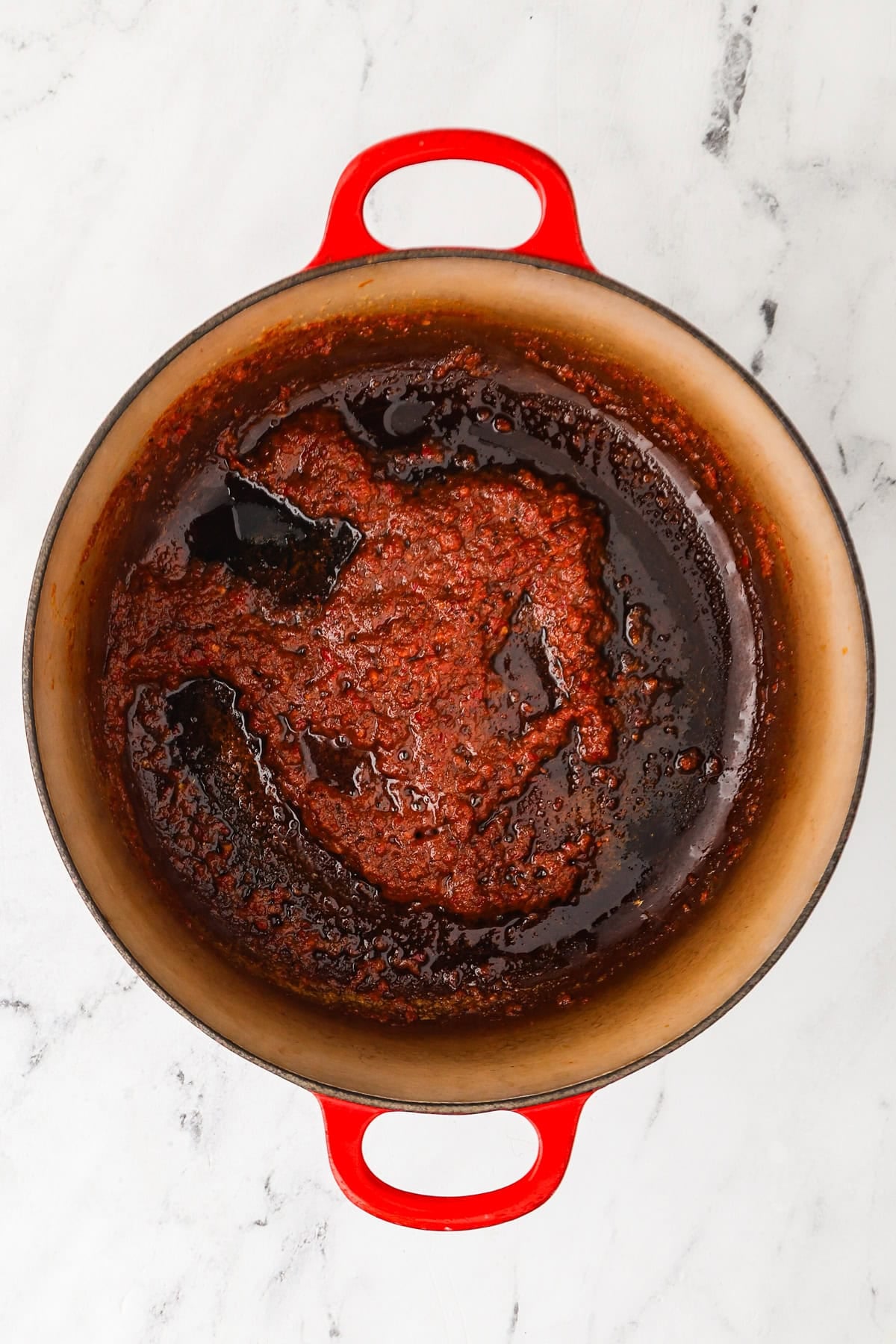
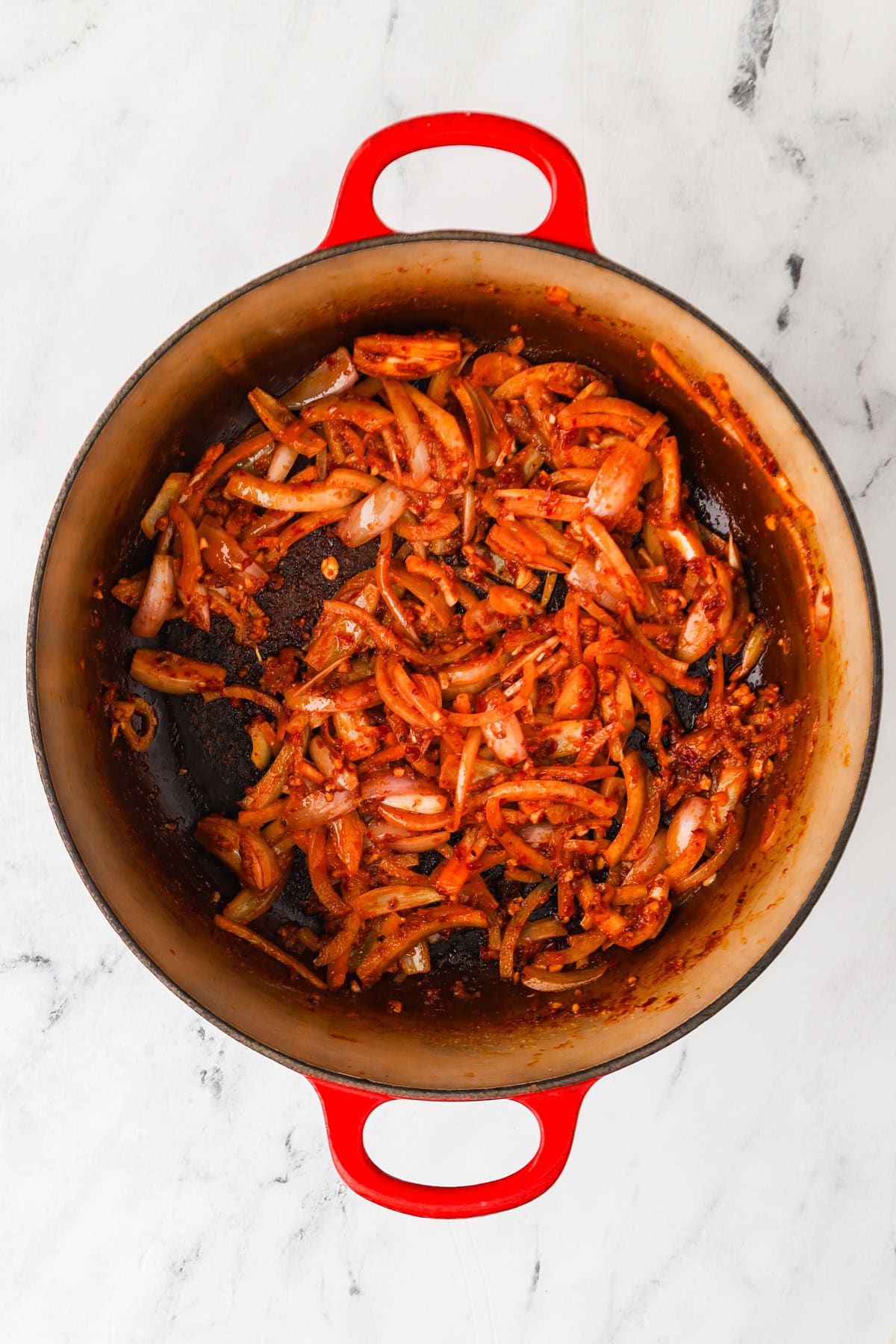
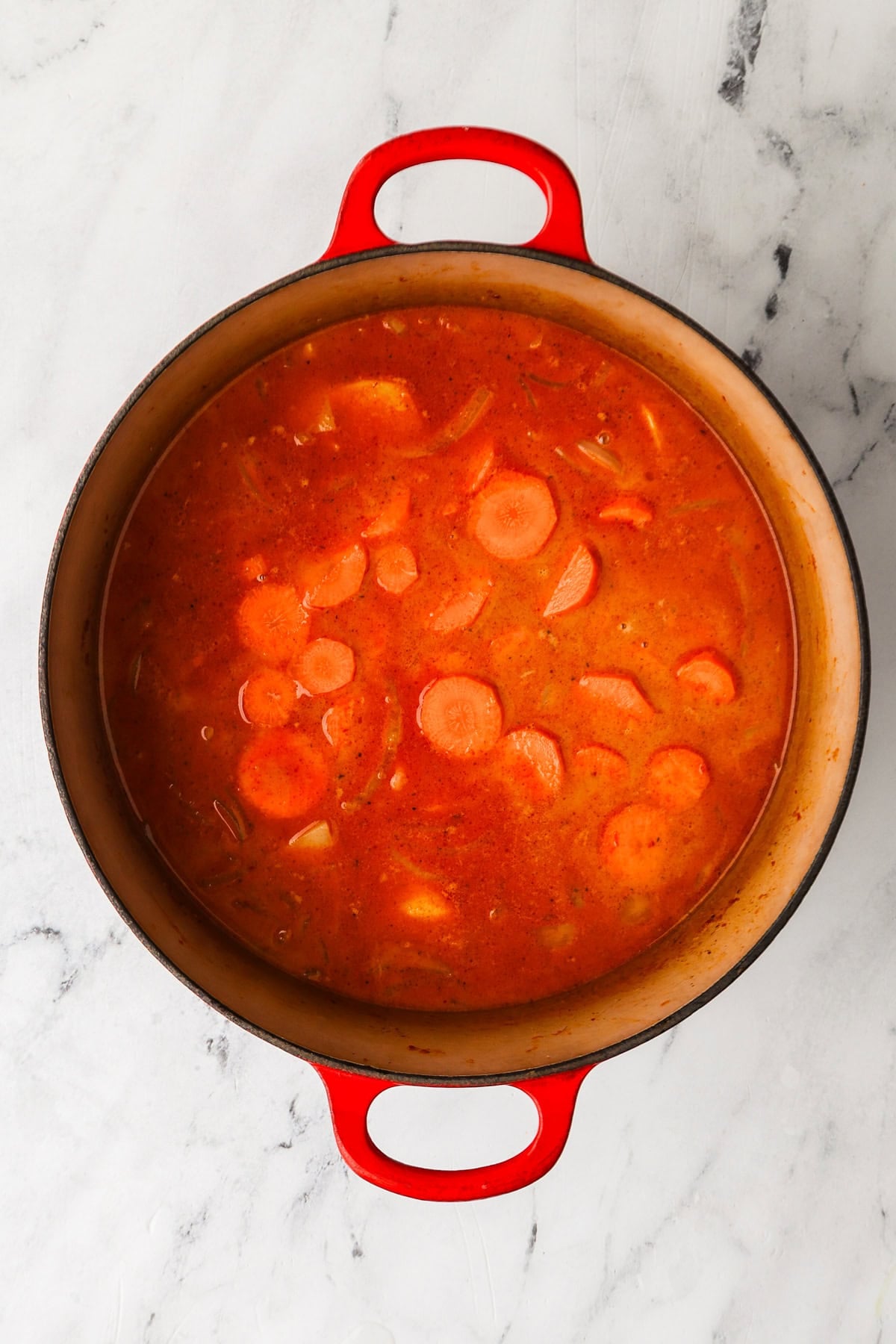
- Drain the potatoes and add to the pot along with the carrot. Bring to a gentle simmer, then reduce heat to medium-low. Cover and cook, stirring gently every 5 minutes, until the potatoes are nearly fork-tender but still hold their shape. The sauce will thicken gradually as the potatoes release their starch — this is the slow magic of massaman.
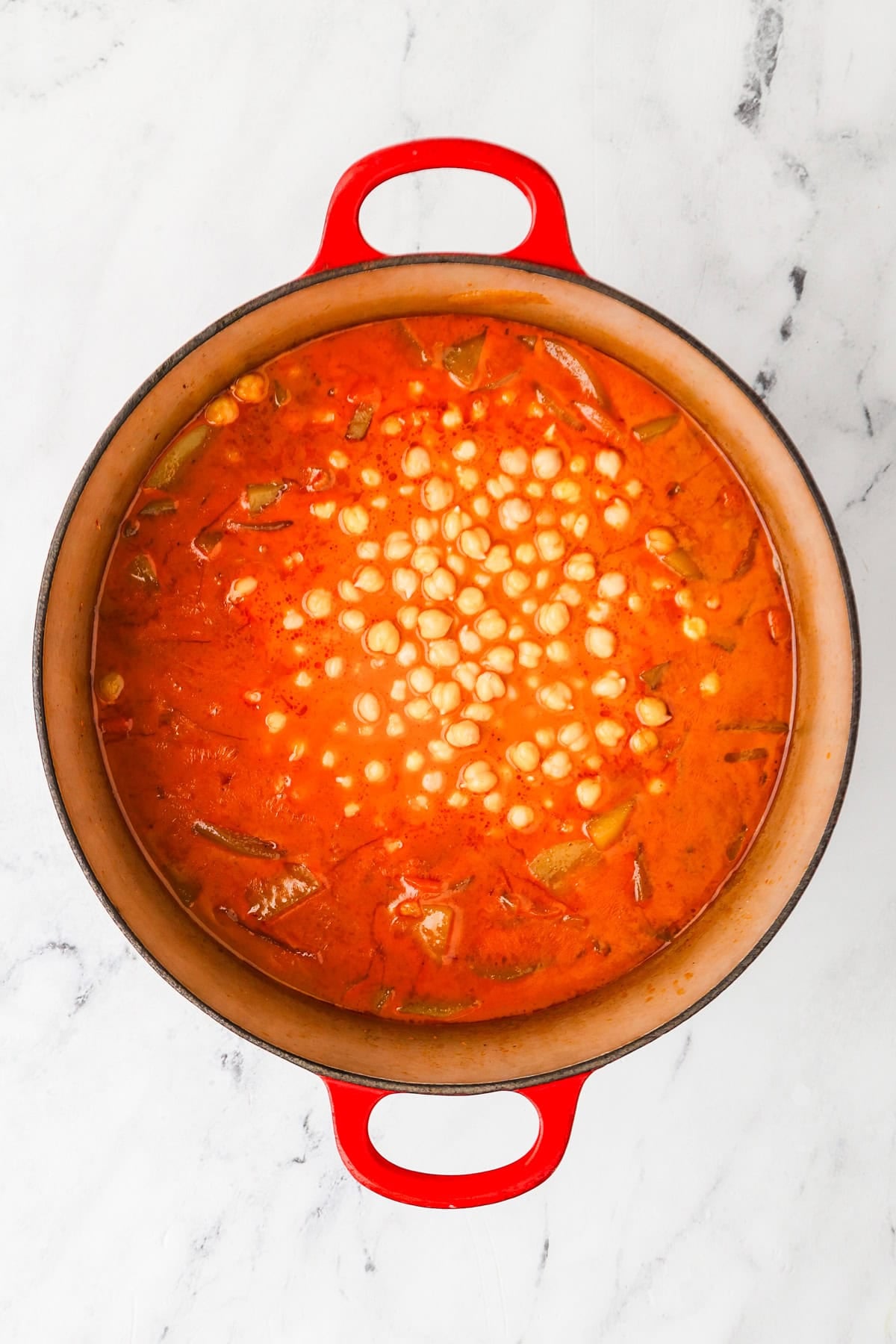
- Add the chickpeas and stir gently to combine. Simmer uncovered for 10 more minutes until the chickpeas are warmed through and the sauce is thick and glossy. Taste and adjust — more vegetarian fish sauce for salt, more tamarind if it needs brightness, more coconut sugar if it tastes sharp.
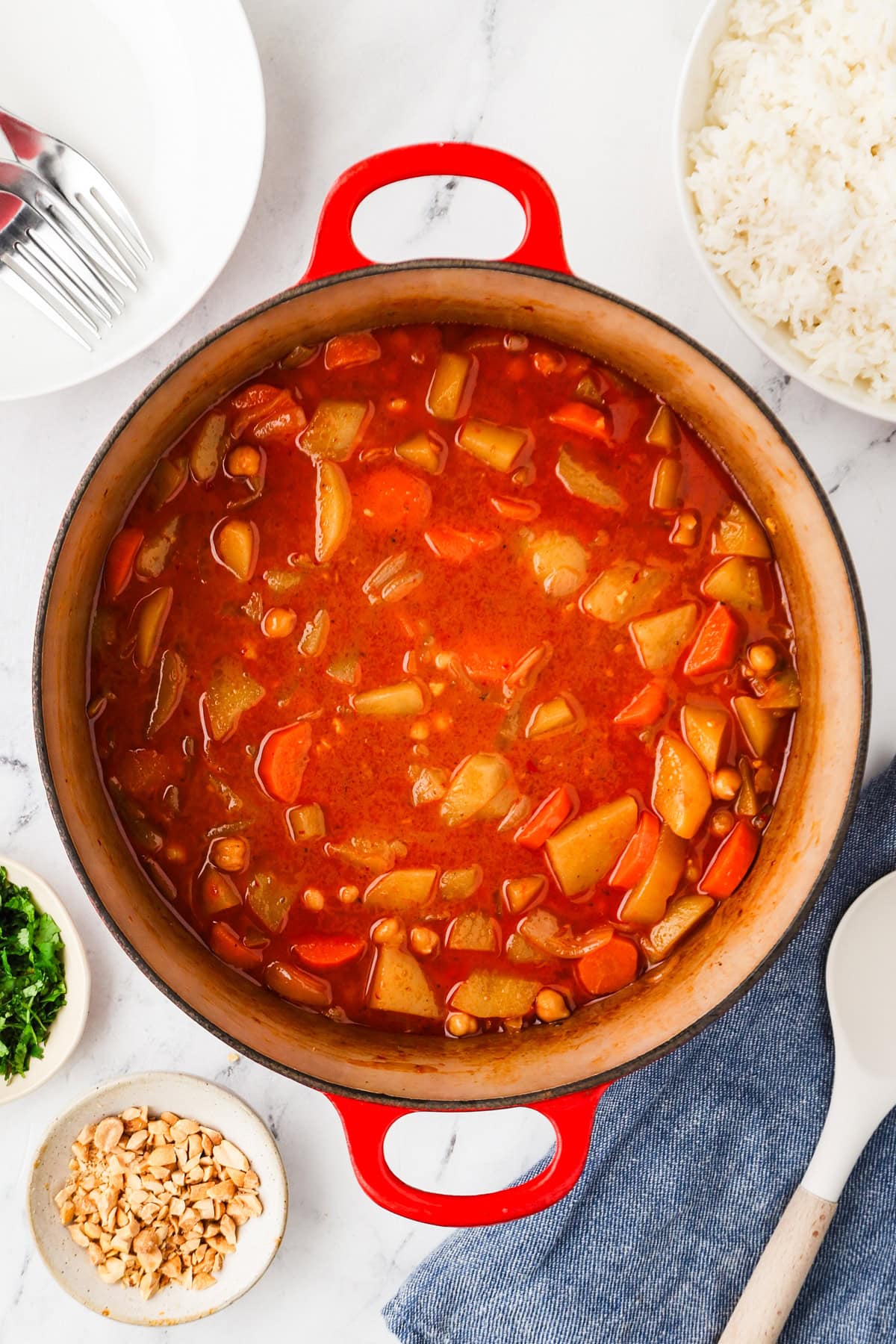
- Ladle over jasmine rice and top with chopped peanuts, fresh cilantro, and fried shallots if using. Serve immediately.
How to serve massaman curry
Serve over jasmine rice. Tofu satay works great alongside this if you want more protein, and the peanut dipping sauce echoes the garnish and the char contrasts the richness nicely.
If you want to work through the Thai curry lineup: massaman is the warmest and most mellow. Panang is richer with a stronger peanut flavor. Red curry has the most heat. Massaman is the one where the spices lead rather than the chilies.
Storage and reheating suggestions
Store leftovers in an airtight container for up to 5 days. It genuinely gets better overnight as the flavors meld and the sauce thickens.
Freeze up to 3 months. Potatoes soften slightly on thaw but hold better than most vegetables.
Reheat on the stovetop over medium-low with a splash of water or coconut milk to loosen. Microwave in 90-second intervals, stirring between.
Vegan Massaman Curry with Chickpeas
Equipment
- 1 Blender or food processor (for paste)
- 1 large Dutch oven or heavy-bottomed pot
Ingredients
For the potatoes
- 1½ lbs Yukon Gold potatoes, peeled and cut into 1½-inch chunks
- 1 teaspoon kosher salt, for soak
- 1 teaspoon white vinegar, for soak
For the curry
- 2 13.5-oz cans full-fat coconut milk, unshaken
- 4 tablespoons Massaman curry paste, homemade or Mekhala yellow curry paste
- 1 medium yellow onion, cut into ½-inch slices
- 4 medium shallots, peeled and quartered
- 6 cloves garlic, thinly sliced
- 2 tablespoons vegetarian fish sauce, Ocean's Halo, or sub low-sodium soy sauce
- 1 tablespoon tamarind paste, smooth jarred
- 1 tablespoon coconut sugar
- ½ teaspoon kosher salt
- 1 large carrot, peeled and cut into 1-inch pieces
- 2 15-oz cans chickpeas, drained and rinsed
For garnish
- ¼ cup roasted peanuts, roughly chopped
- 3 tablespoons fresh cilantro, chopped
- 1 tablespoon fried shallots, optional
Instructions
- Place potato chunks in a bowl of cold water with 1 teaspoon salt and 1 teaspoon white vinegar. Set aside while you prep everything else – this removes surface starch and keeps the chunks from falling apart during the long simmer.
- Open the coconut milk cans without shaking. Spoon the thick coconut cream from the top of both cans into a large Dutch oven, about ¾ to 1 cup. Reserve the remaining coconut liquid.
- Heat the coconut cream over medium-high heat, stirring occasionally, until bubbling and the oil visibly separates at the edges, about 5 to 6 minutes.
- Add the massaman curry paste and fry in the bloomed cream, stirring constantly, until the paste darkens slightly and smells intensely fragrant, about 3 to 4 minutes. It should look dry and clumpy before liquid goes in.
- Add the sliced onion, quartered shallots, and garlic. Stir to coat in the paste and cook until softened slightly, about 3 minutes.
- Pour in the reserved coconut liquid and stir to combine. Add the vegetarian fish sauce, tamarind paste, coconut sugar, and salt. Stir well.
- Drain the potatoes and add to the pot along with the carrot. Bring to a gentle simmer, then reduce heat to medium-low.
- Cover and cook, stirring gently every 5 minutes, until the potatoes are nearly fork-tender but still hold their shape, about 20 to 25 minutes.
- Add the chickpeas and stir gently to combine. Simmer uncovered for 10 more minutes until the chickpeas are warmed through and the sauce is thick and glossy.
- Ladle over jasmine rice and top with chopped peanuts, fresh cilantro, and fried shallots if using. Serve immediately.
Notes
- Maesri massaman paste is vegan-friendly, but if you want an upgrade, you can also easily make an amazing Massaman curry paste at home and freeze it for later use.
- Salt and vinegar water keeps the potatoes from falling apart during the long simmer. You want intact chunks, not stew.
- Tamarind gives massaman its distinctive brightness and cuts through the richness of the coconut milk. Use smooth jarred paste (not the block). If you only have block tamarind, dissolve 1 tablespoon in 2 tablespoons warm water and strain first.
- Store leftovers in an airtight container for up to 5 days. Flavor improves overnight.
- Reheat on the stovetop over medium-low with a splash of water or coconut milk to loosen. Microwave works in 90-second intervals, stirring between.
- Freeze up to 3 months. Potatoes soften slightly on thaw but hold better than most vegetables.
Nutrition
Nutrition information is automatically calculated, so should only be used as an approximation.


