
My vegan Thai red curry paste uses white miso for umami instead of shrimp paste, the way I learned to make it in Koh Samui. Dried red chilies, lemongrass, galangal, makrut lime leaves, and shallots go into an immersion blender and come out as a fragrant brick-red paste. Thirty minutes start to finish, half of which is just soaking the chilies.
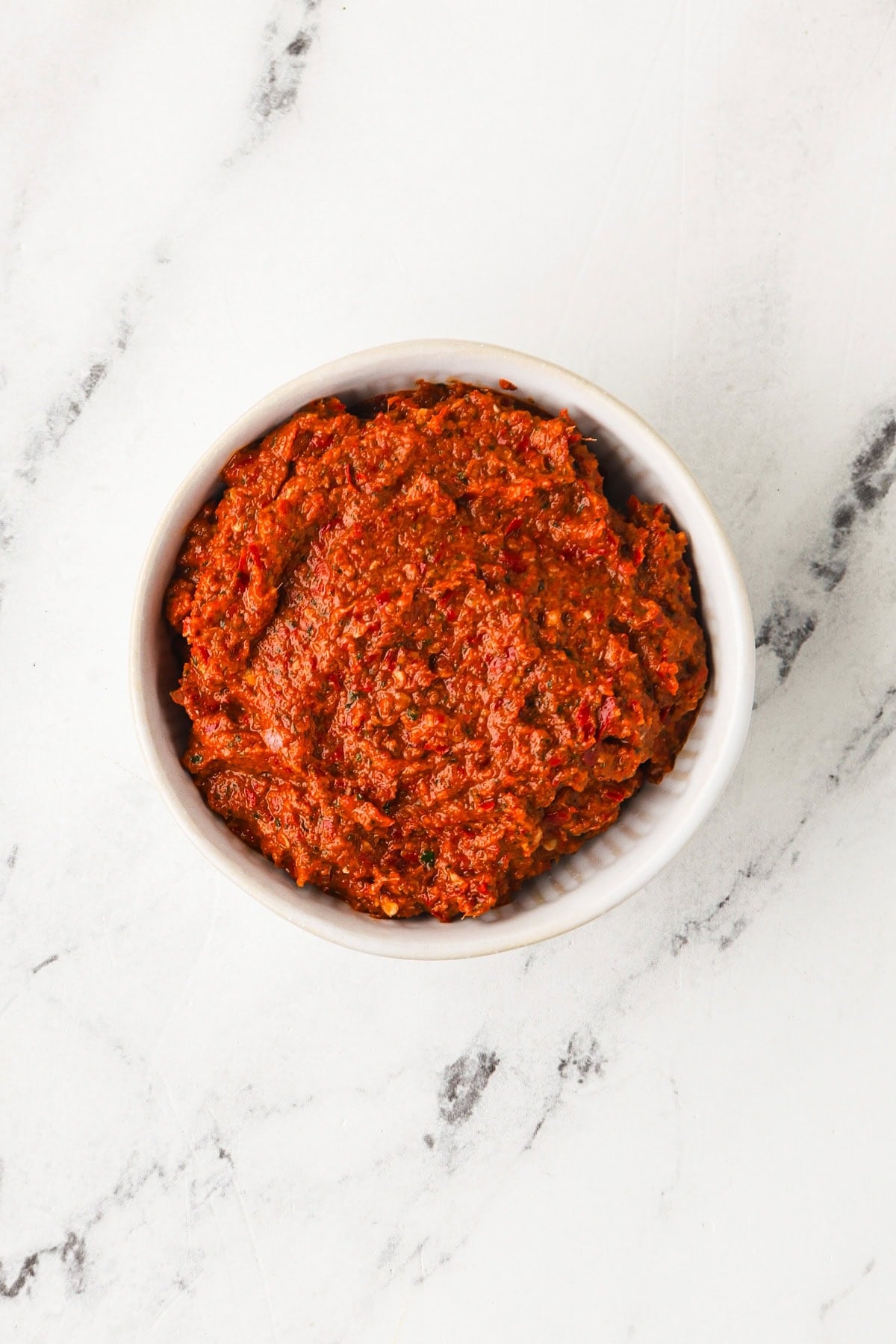
Why miso instead of shrimp paste

My vegan Thai red curry paste uses dried red chilies, lemongrass, galangal, makrut lime leaves, shallots, garlic, and white miso blended into a fragrant brick-red paste. I use miso instead of traditional shrimp paste. Soak chilies, blend in a narrow container, and refrigerate up to 3 days or freeze up to 3 months.
Look, traditional Thai red curry paste gets its umami backbone from gapi, fermented shrimp paste. It’s pungent, funky, and irreplaceable in a strictly traditional paste. But, white miso does something close: salty fermented depth without the fishiness, and it blends in seamlessly without changing the color or texture of the finished paste.
I learned this miso-for-shrimp swap from an instructor from Isan during a cooking class in Koh Samui. She made the case that the goal of the paste is layered fermented umami, and miso delivers that in the same way fish sauce, soy sauce, and other fermented salt-savory ingredients do. She was right.
The paste tastes complete. I’ve since used it as the base for the vegetarian Thai red curry I make almost weekly, and it works beautifully in tofu satay too. If you want to see the same technique applied to a different curry, my Thai green curry paste uses the same swap.
White (shiro) miso specifically. Red and barley miso are too assertive and shift the color toward brown.

Ingredients worth discussing
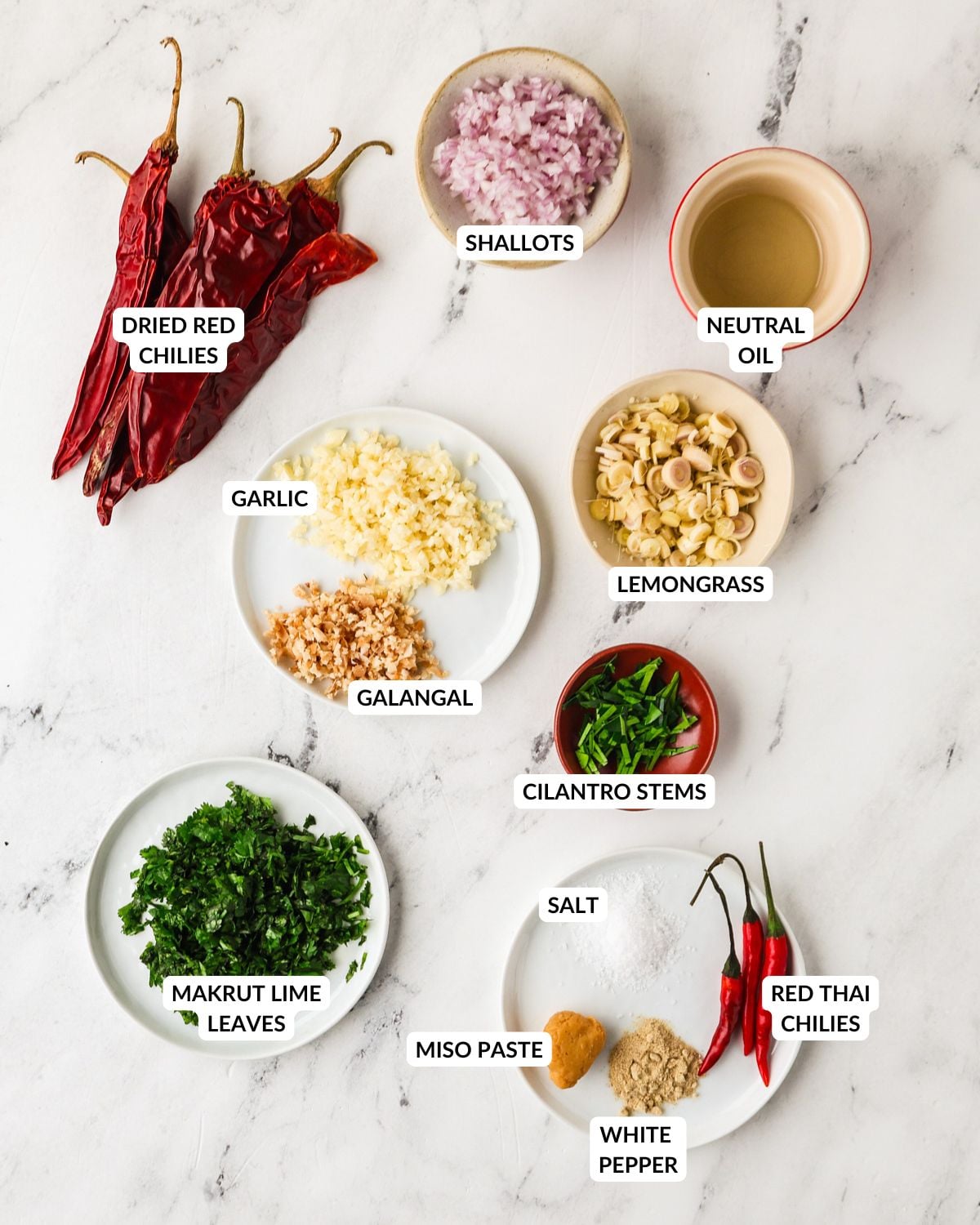
Full ingredient list and detailed instructions in the recipe card.
- Dried red chilies (guajillo or dried California). Traditional Thai red curry paste uses Thai spur chilies (prik haeng), which are deeply fragrant but hard to find outside Asian grocery stores. Guajillo or dried California are the most accessible American substitute. Mild heat, sweet-earthy flavor, and the right brick-red color. Seed them to control heat.
- Galangal, not ginger. Galangal is pinier and more citrusy, and it’s a different ingredient. Check the freezer section at Asian grocery stores if you can’t find it fresh. Ginger works in a pinch but the flavor shifts noticeably.
- Makrut lime leaves. Fresh or frozen both work. Remove the tough center rib before tearing, because it won’t break down in the blender. You might know this as “kaffir” leaves as well.
- White miso paste provides the umami that traditional recipes get from shrimp paste. Use white (shiro) miso specifically, mild enough to disappear into the paste. Red or barley miso is too assertive.
- Lemongrass, bottom 4 inches only. Peel off the dry outer layers until you reach the pale, slightly purple inner core. Slice thin before blending. The top portions are too woody and fibrous.
Shruthi’s Top Tips
Tips and Testing Notes
- An immersion blender in a narrow container works better than a food processor for this quantity. The narrow container forces everything down into the blade. A food processor leaves chunks stuck on the sides.
- Freeze in ice cube trays for easy portioning. Pop the frozen cubes into a freezer bag once solid. Each cube is roughly 1 tablespoon, and most curry recipes need 2–3 tablespoons.
- Taste the paste raw and expect it to taste sharp. Curry paste isn’t meant to be eaten straight. It blooms in hot coconut oil or cream and transforms completely. Don’t add more salt or sweetness at this stage.
- Make a double batch. The paste is also used in the tofu satay and panang curry. If you’re investing 30 minutes, make enough to freeze for future use.
How to make vegan Thai red curry paste
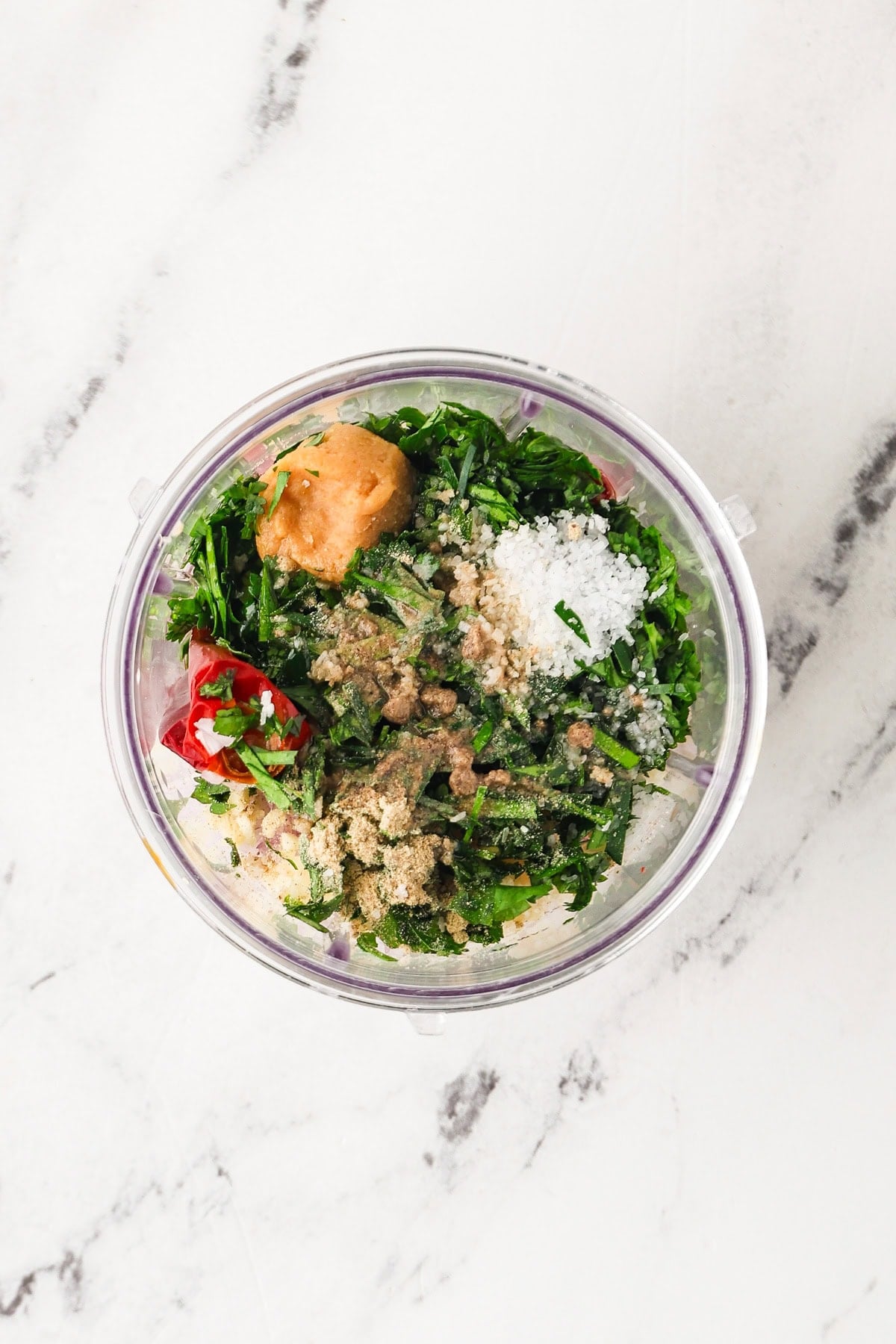
- oak the dried chilies in boiling water until softened. Drain, then add to a narrow container with the remaining ingredients and blend until smooth. Add a little water if needed to get it moving.
- Use immediately, refrigerate in an airtight jar up to 3 days, or freeze in tablespoon-sized portions for up to 3 months.
Serve homemade thai red curry paste
Use this paste as the base for Thai curries. Cook it in coconut milk or oil to bring out the flavor, then add tofu, vegetables, or your protein of choice. It also works as a marinade base for tofu and vegetables, and as the seasoning for noodle stir-fries. I also use it as a shortcut to make my panang curry paste.
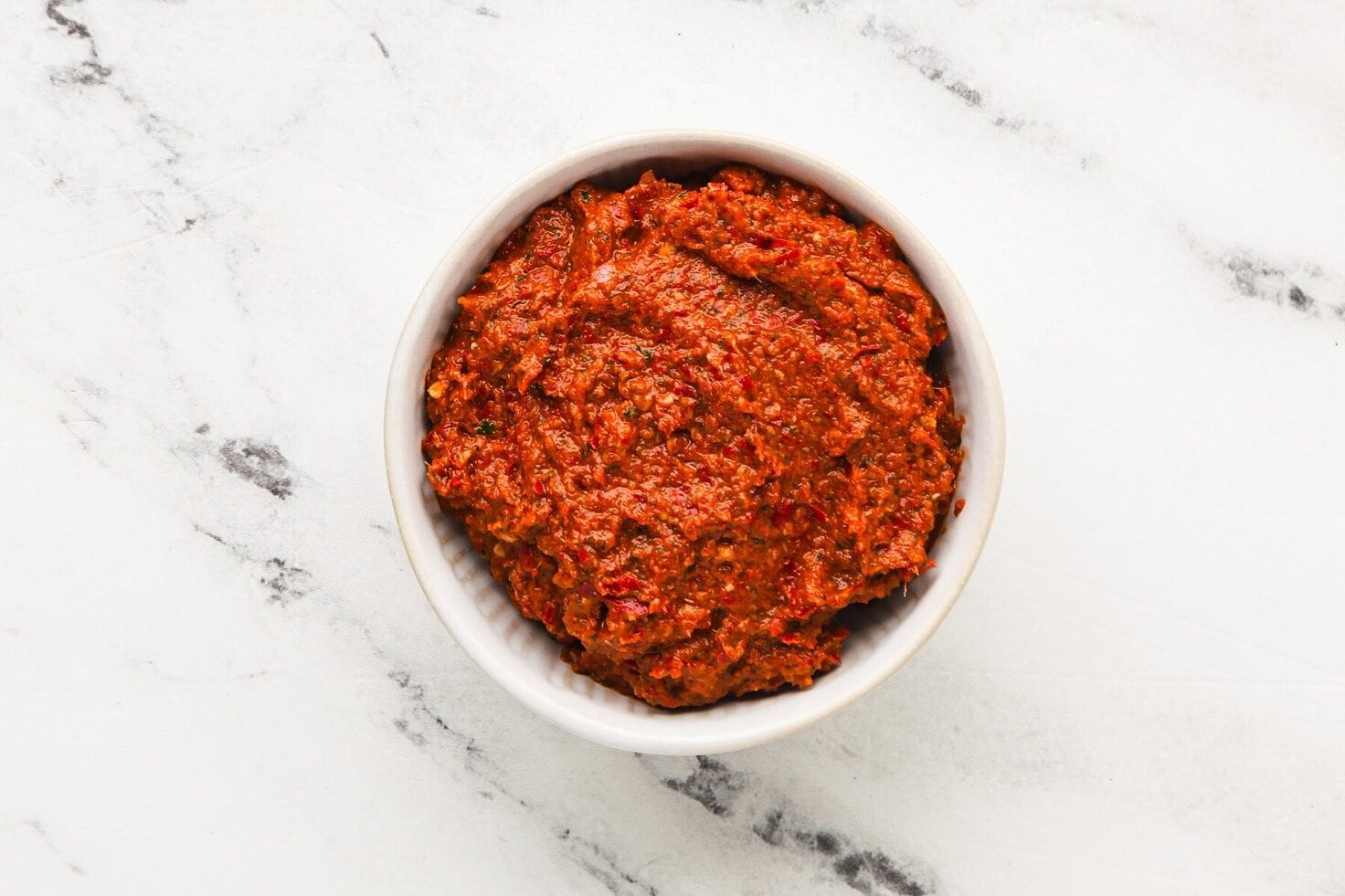
Store in an airtight jar in the fridge for up to 3 days, or freeze in tablespoon-sized portions (ice cube trays work well) for up to 3 months.
More vegetarian Thai recipes
If you want to check out more Thai recipes from the same class, all authentic but accessible, then definitely give these a try.
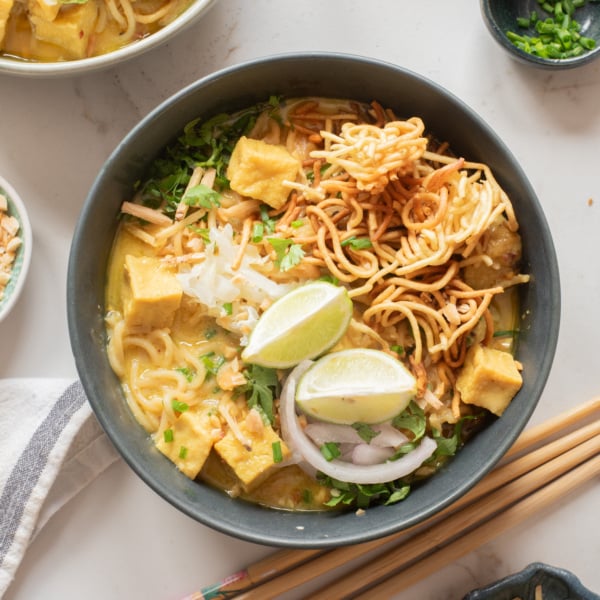
Vegetarian Khao Soi (Northern Thai Curry Noodle Soup)
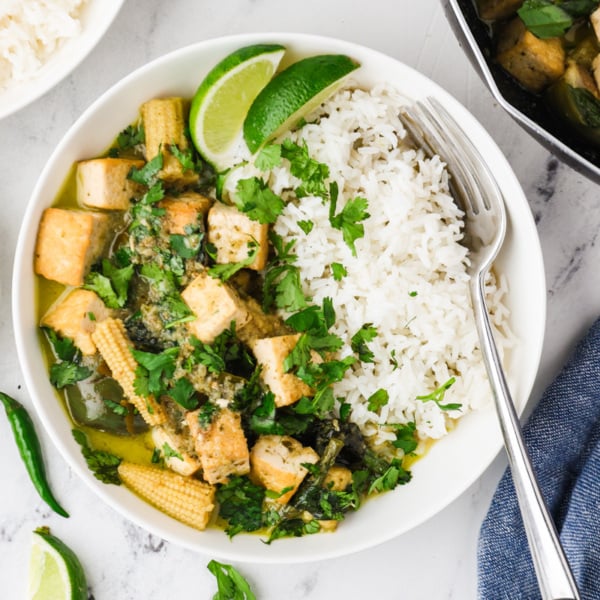
Thai Green Curry with Tofu
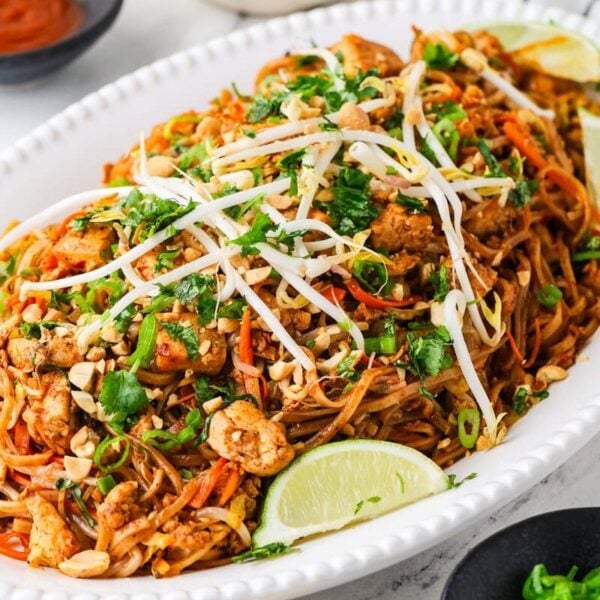
Tofu Pad Thai (without Tamarind)

Thai Curried Butternut Squash Soup
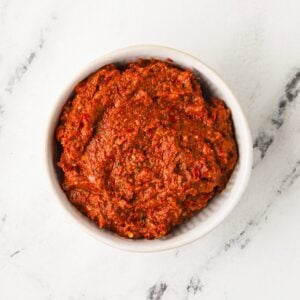
Homemade Thai Red Curry Paste
Equipment
- 1 Immersion Blender or high-speed blender
Ingredients
- 6 large dried red chilies, such as guajillo or dried California, stems removed, seeded
- 3 fresh Fresno , or red Thai chilies, roughly chopped
- 2 stalks lemongrass, outer layers removed, bottom 4 inches only, thinly sliced
- 1 tablespoon fresh galangal, peeled and finely chopped
- 4 medium shallots, roughly chopped
- 6 cloves garlic, roughly chopped
- 2 tablespoons cilantro stems, packed, roughly chopped
- 4 makrut lime leaves, center rib removed, roughly torn
- ½ tablespoon white miso paste
- ½ teaspoon white pepper
- ½ teaspoon kosher salt
- 2 tablespoons neutral oil, such as avocado or vegetable
Instructions
- Place the dried chilies in a heatproof bowl. Cover with boiling water and soak for 20–30 minutes until fully softened. Drain and squeeze out excess water.
- Add the soaked dried chilies, fresh chilies, lemongrass, galangal, shallots, garlic, cilantro stems, makrut lime leaves, miso paste, white pepper, salt, and oil to a narrow container or large measuring cup.
- Blend with an immersion blender until smooth, scraping down the sides as needed — about 2–3 minutes. If using a high-speed blender, add 1–2 tablespoons of water to help the blades move. The paste should be deeply fragrant and brick red with no large chunks remaining.
- Use immediately, refrigerate in an airtight jar for up to 3 days, or freeze in tablespoon-sized portions for up to 3 months.
Notes
- This paste is also used in the Tofu Satay and Panang Curry — make a double batch and freeze in ice cube trays for easy portioning.
- Galangal is not interchangeable with ginger — it’s pinier and more citrusy. Check the freezer section at Asian grocery stores. Ginger works in a pinch but the flavor shifts.
- Fresh or frozen makrut lime leaves both work. Remove the center rib before tearing — it’s tough and won’t break down.
- Store in the fridge for up to 3 days or freeze for up to 3 months.
Nutrition
Nutrition information is automatically calculated, so should only be used as an approximation.


