
I love basil, and use it in all kinds of ways during the summer, when it’s in season. My basil transplants are thriving indoors, and one of the most common ways to use basil is to chiffonade it. While that sounds complex, it’s super simple! Let’s get into it. Oh, and if you haven’t already, check out my pesto, basil aioli, basil cream sauce, and spinach tortellini salad with pesto vinaigrette!
This post contains helpful tips and tricks! If you’re in a rush, please use the “Jump to Recipe” above!
💭 What’s a chiffonade? Why use it?
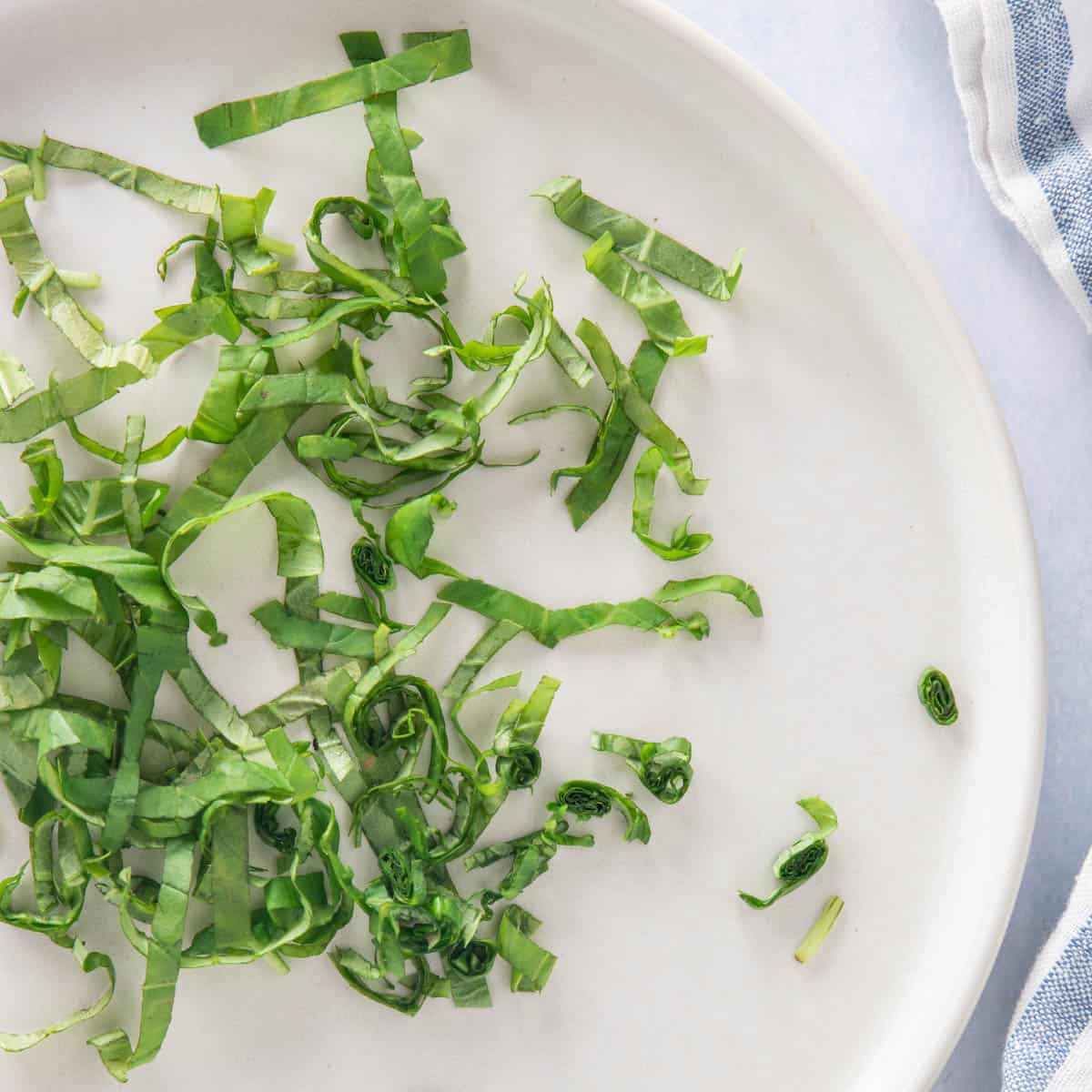
Chiffonade (pronounced shee-foh-naad) is a technique by which flat, leafy herbs and vegetables are cut so you can get curled strips that look great as garnish.
Not only do they look great, slicing herbs and greens this way helps tenderize them (since it breaks down tough fibers) – as a result, it helps to cook them quicker and more evenly. It works especially great for basil and other herbs due to two key reasons:
- Chopping up basil indeterminately can bruise the leaves, especially when you intend to use basil for a garnish. But if you did chop them up, you can always dry the basil and store for use later! . Chiffonade lets you treat the leaves gently and keep the color and integrity intact for garnishes!
- They’re the perfect size for carrying maximum flavor. Some dishes might call for a fine chop when you’re mixing the basil or other herbs into the dish, but usually for most dishes (like soups, garnishes, stews, grain dishes, and salads) I like using a chiffonade since they carry the perfect balance of flavor!
📖 How do you chiffonade basil?
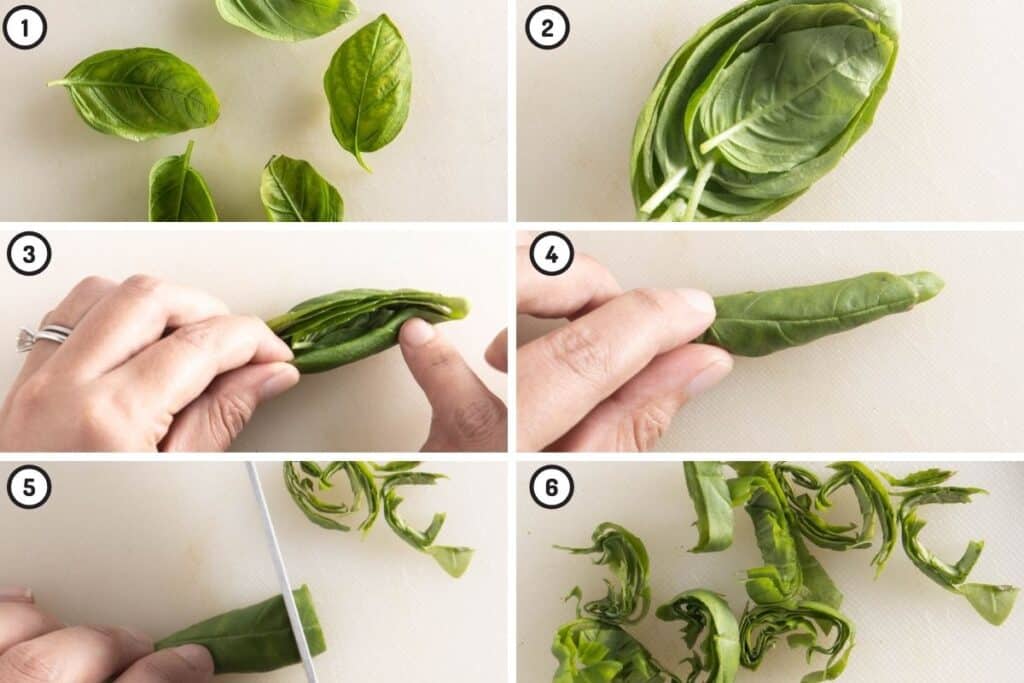
To chiffonade basil (or other leafy herbs and vegetables!) I use a simple formula: stack, roll, slice.
- Stack up the leaves, with the largest ones at the bottom and the smallest one on the top and roughly align the stems and tips.
- Roll the stacked leaves, into a tight cylinder, typically along their longest edge (so if you placed them horizontally in front of you like I did, you’ll roll them bottom to up) Doing it this way yields longer strips, while rolling side-to-side yields shorter, skinnier strips.
- Slice the rolled leaves, from right to left (or left to right!) into thin curls using a sharp knife! Using a dull knife will bruise the basil, so watch out.
The curls will slowly unfurl after a while, leaving you with the most delicious basil chiffonade!
👩🏽🍳Top tips and FAQs
Yes! You can basically use this technique on any leafy green herb or vegetable. Basil and mint are most common because they are large and flat. Smaller herbs are tougher to roll. In addition to basil, I’ve used this on lettuce, mint, spinach, French sorrel, etc.
In the case of basil, I love using them to garnish soups and stews, and also use Thai basil chiffonade in fried rice recipes. But you can literally use them anywhere you need chopped herbs (except where you need a fine chop). I use them on my avocado toasts, in my spring pasta dishes, in my Thai curried butternut squash soup, or even in my mango avocado salad. The possibilities are endless.
Glad you asked! Julienning means to cut vegetables into slim sticks, like matchsticks. This is used with solid vegetables like carrots, beets or squash (though I guess most vegetables are solid, okay). On the other hand, chiffonade means to cut into thin strips, so similar to a Julienne, but typically just for leafy things.
🍴 Serving and storage suggestions
Chiffonaded basil turns brown quite quickly, so I don’t recommend storing them. It only takes 5 minutes to get them ready, so just make them right as you need them, in order to preserve maximum flavor.
If you like this recipe, check out my other fun basil recipes:
[fsri image_class=”feast-image-round” id=”6812,6771,2266,4182″]
If you tried this recipe, don’t forget to comment and rate! ⭐⭐⭐⭐⭐

Basil Chiffonade
Ingredients
- 1 bunch fresh basil leaves
- 1 bunch other leafy green vegetables, optional
Instructions
- Wash the basil leaves thoroughly and lay them out on a soft towel.
- On a cutting board, stack the leaves with the largest one at the bottom, and the smallest one at the top – all the stem sides and the tip sides should be aligned. I typically do about 5 to 6 leaves at once.
- Then, roll the basil leaves into a tight cylinder. I typically do this along the longest side (so from bottom to top) so you'll get longer slices. You can also roll side to side.
- Using a sharp knife (typically the section closest to your handle) – slice them from right to left (or left to right) into tight curls. Loosen up the curls and your chiffonade is ready!
Notes
- This recipe also works with other green leafy vegetables and herbs – most commonly, mint, French sorrel, spinach, and arugula.
Nutrition
Nutrition information is automatically calculated, so should only be used as an approximation.


