
I make this Korean tofu soup when I want dinner to reset everything—my mood, my appetite, and honestly, the rest of the week. The broth is spicy and rich without being heavy, the tofu is impossibly silky, and the whole thing comes together in under 30 minutes. It’s a soup that doesn’t just sit there—it wakes you up, fills you up, and makes you feel like you actually took care of yourself.

This post contains helpful tips and tricks! If you’re in a rush, please use the “Jump to Recipe” above!
When in doubt, make this spicy Korean tofu soup!
I had my first bowl of sundubu jjigae in Seoul, at a tiny neighborhood spot recommended by a close friend. I was jet-lagged and starving, and this bubbling pot landed on the table with steam in the air and an unmistakable smell of garlic, gochugaru, and comfort. It reminded me of a winter dinner his mom once made for us back home—simple, thoughtful, and full of flavor.
That memory stuck with me. So I started making a version I could pull off on a weeknight, without anchovy broth or specialty ingredients. My recipe leans heavily on a quick mushroom and kombu stock, bloomed spices for deeper flavor, and a last-minute tofu drop so it stays soft and spoonable. It’s spicy, satisfying, and honest-to-goodness one of the easiest ways I know to eat well.
Want to make it a more fancy meal? Pair it with pickled daikon, kimchi pancakes, and spicy soba noodles to build your own banchan spread —aka the small, flavorful side dishes that turn Korean meals into a full experience.

Ingredients and why they matter
To make Korean soft tofu stew, you’ll need a few key ingredients to build deep, savory flavor: mushrooms (enoki and shiitake), dried kelp for a rich broth, and sundubu (extra-soft tofu) for that silky texture. Aromatics like garlic and onion layer in depth, while soy sauce, gochujang, and gochugaru bring the signature heat and umami. A splash of toasted sesame oil adds a nutty warmth, while a garnish of scallions and sesame seeds add just the perfect finishing touch.
Full ingredient list and detailed instructions in the recipe card.

- Dried shiitake mushrooms & kombu build a fast, umami-rich base that tastes slow-cooked without actually being slow. If you only have one, keep the mushrooms.
- Gochugaru, Korean red chili flakes, brings heat and depth. Blooming it in oil takes the flavor from raw spice to round and toasty.
- Gochujang adds body and a hint of sweetness. You can skip it if you want something lighter, but I like the complexity it brings. If you bought a new jar of gochujang to make this recipe, make sure to also try out my gochujang tofu and gochujang cauliflower!
- Sundubu (extra-soft tofu) is the star. It soaks up flavor without falling apart—just don’t over-stir.
- Enoki mushrooms are delicate and lightly crunchy. Optional, but fun. You can also use napa cabbage, spinach, or whatever leafy green is in your fridge.
TIPS & TRICKS
Shruthi’s top tips
- Don’t let kombu boil—simmer gently, then remove it. Boiling makes the broth slimy and bitter.
- Bloom the gochugaru in oil with garlic and onion. This opens up its flavor and gives you way more depth.
- Use rehydrated shiitakes from the broth—they’ve already soaked up flavor and work beautifully in the final soup.
- Add tofu last and stir gently. It’s soft and fragile—treat it like burrata in a pasta salad.
- A small pinch of sugar rounds out the spice without making it sweet. I add it almost every time.
- Don’t overcrowd with too many extras—this soup shines because it’s simple. Add-ins are fine, but keep it balanced.
- Toasted sesame oil goes in at the end. Heating it too long dulls the nutty flavor.
- Make a double batch of the broth and freeze it—future you will thank you.
How to make Korean tofu soup
Step 1:
In a medium pot, combine water, dried kelp, and dried shiitake mushrooms. Bring to a gentle simmer over medium heat and cook for 10 minutes. Remove the kelp and continue simmering for an additional 5 minutes.


Step 2:
Strain the broth, discarding the solids or slicing the rehydrated mushrooms for later use. Set aside.
Step 3:
In the same pot, heat vegetable oil over medium heat. Add garlic and onion, sauté for 2 minutes until fragrant and translucent. Stir in gochugaru and gochujang, cooking for 1 minute to bloom the spices and release their flavors.


Step 4:
Add soy sauce and sesame oil, stirring to combine.


Step 5:
Pour the prepared broth into the pot, stirring to incorporate the flavors. Bring to a gentle simmer. Add sliced fresh shiitake mushrooms and simmer for 5-7 minutes until tender.


Step 6:
Gently add sundubu (soft tofu) in large chunks, stirring lightly to keep its texture intact. Add enoki mushrooms during the last 2 minutes of cooking. Taste and adjust seasoning with salt and a pinch of sugar, if needed.


Step 7:
Garnish with chopped green onions and toasted sesame seeds. Serve hot with a side of steamed rice and kimchi.

How to serve sundubu jjigae
This Korean tofu soup is a lifesaver on chilly nights—hearty, comforting, and packed with flavor. It’s typically served with steamed white rice and a variety of banchan (Korean side dishes) like kimchi, pickled radish, soybean sprouts, and seasoned spinach. For something extra, add a fried egg or a soft rolled omelet on the side!

Storage and reheating suggestions
Store leftover Korean tofu soup in an airtight container in the fridge for up to 3 days. The flavors deepen as it sits, but the soft tofu may break down a bit—still delicious! Reheat gently on the stove over low heat until warmed through.
More tofu recipes
Love this tofu stew? Try these other cozy, flavor-packed tofu recipes next!
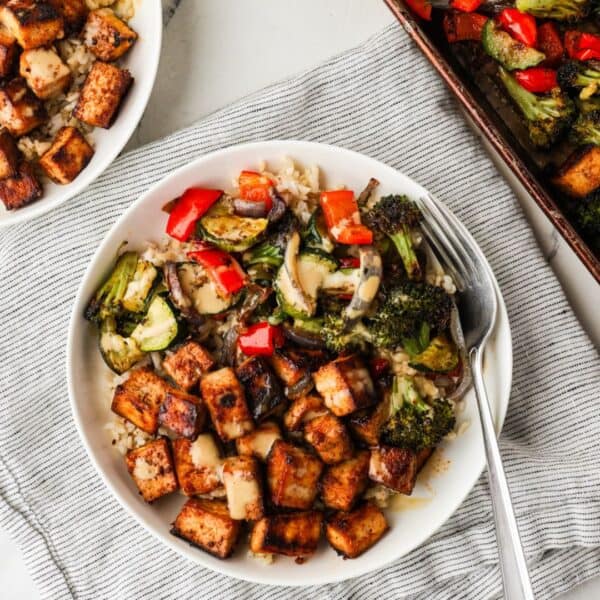
Sheet Pan Tofu + Veggies

Vegan Fajitas

Marinated Tofu (+6 Marinades)

Spicy Soba Noodles
If you tried this recipe, don’t forget to comment and rate! ⭐⭐⭐⭐⭐

Korean Tofu Soup
Ingredients
For the broth:
- 6 cups water
- 2 4-inch pieces dried kombu (dashima), dashima
- 8 dried shiitake mushrooms
- ½ teaspoon kosher salt
For the soup base:
- 2 tablespoons vegetable oil
- 4 cloves garlic, minced
- 1 small yellow onion, diced
- 2 tablespoons gochugaru, Korean red pepper flakes
- 1 teaspoon gochujang, Korean red pepper paste
- 2 teaspoons low-sodium soy sauce
- 2 teaspoons toasted sesame oil
For the soup:
- 8 fresh shiitake mushrooms, sliced (or rehydrated mushrooms from broth)
- 14 oz enoki mushrooms, 2 small bundles, trimmed
- 2 16-oz block extra-soft silken tofu , sundubu
- ½ teaspoon kosher salt, adjust to taste
- ½ teaspoon granulated sugar, optional, balances the spice
- 2 green onions, chopped, for garnish
- 2 teaspoons toasted sesame seeds, for garnish (optional)
Instructions
Make the broth:
- In a medium pot, combine water, dried kombu, and dried shiitake mushrooms. Bring to a gentle simmer over medium heat and cook for 10 minutes.
- Remove the kombu and continue simmering for an additional 5 minutes.
- Strain the broth, reserving the rehydrated mushrooms if desired (slice and use in the soup). Set broth aside.
Prepare the soup base:
- In the same pot, heat vegetable oil over medium heat. Add garlic and onion, sauté for 2 minutes until fragrant and translucent.
- Stir in gochugaru and gochujang, cooking for 1 minute to bloom the spices and release their flavors.
- Add soy sauce and sesame oil, stirring to combine.
Assemble the soup:
- Pour the prepared broth into the pot, stirring to incorporate the flavors. Bring to a gentle simmer.
- Add sliced shiitake mushrooms and simmer for 5-7 minutes until tender.
- Gently add silken tofu in large chunks, stirring lightly to keep its texture intact.
- Add enoki mushrooms during the last 2 minutes of cooking.
- Taste and adjust seasoning with salt and a pinch of sugar if needed.
- Ladle into bowls and garnish with chopped green onions and toasted sesame seeds. Serve hot with steamed rice and kimchi.
Notes
- Keep broth at a gentle simmer — boiling kombu vigorously releases bitter compounds
- Add silken tofu at the end and stir minimally to prevent it from breaking apart
- Variations:
- Substitute shiitake mushrooms with king oyster, button, or maitake mushrooms
- Add bok choy, napa cabbage, or spinach for extra greens
- For a heartier soup, top each bowl with a fried egg (adds ~90 calories and 6g protein per serving!)
Nutrition
Nutrition information is automatically calculated, so should only be used as an approximation.


