

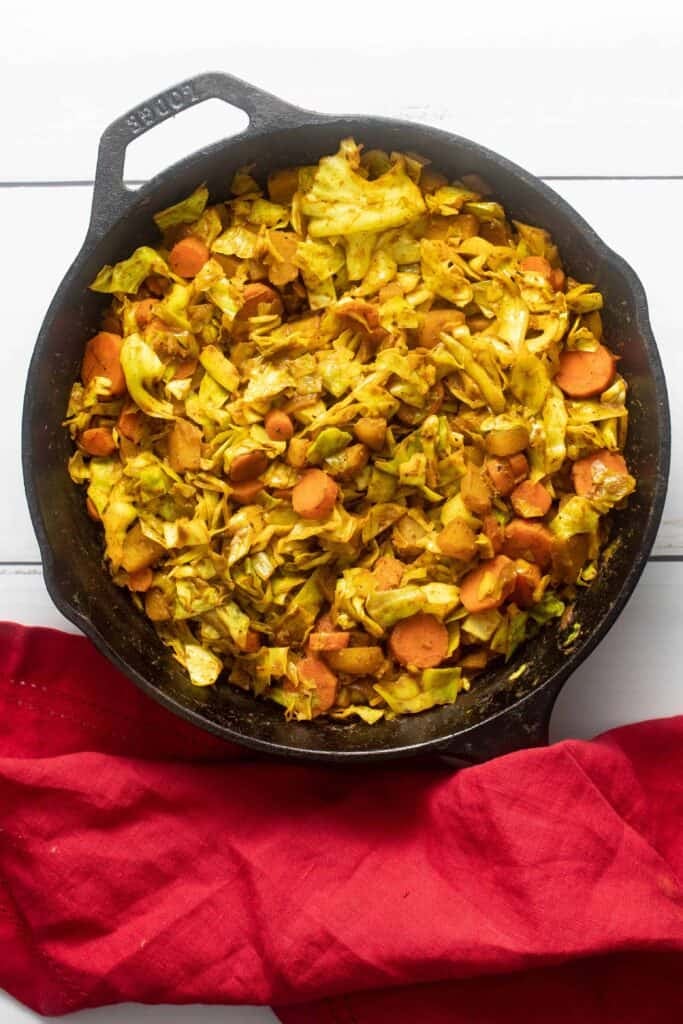
My Ethiopian cabbage recipe (Atakilt Wat) is an easy, vegan, and gluten-free dish that I fell in love with during my time working in Addis Ababa. Made with simple spices, it’s perfect for a quick 30-minute meal that’s both delicious and convenient. Plus, it’s great for making ahead and storing for later, making weeknight dinners a breeze.
This post contains helpful tips and tricks! If you’re in a rush, please use the “Jump to Recipe” above!
💭 Why this recipe works
- Vegan and gluten-free – this recipe is vegan and gluten-free and is a wholesome, hearty meal to share with your family
- No special spices – the key is all about infusing the oil with basic spices, and using a cast iron pan to spread the heat and spices through the dish
- Great for make-ahead – this recipe is great if you need to make a large batch ahead of time and freeze or keep in the fridge!
⭐ Origin Story
You might have seen vegetarian “combos” at Ethiopian restaurants referring to yetsom beyanetu, (i.e. “a fasting of every kind”). There is a high prevalence of Orthodox Christians in Ethiopia (and Eritrea). Therefore, a vast majority of the country fasts (without meat and animal products) for a good chunk of the year. Result? Delicious vegetarian dishes, rich in protein and legumes!
Interested in creating your own Ethiopian vegan platter at home? Check out my recipes for Misir Wot (Ethiopian red lentil stew), Shiro Wat (Ethiopian chickpea stew), and Gomen Wat (Ethiopian spiced greens).
📋 Traditional Atkilt Wot Ingredients
You’ll need green cabbage, potatoes, carrots, onions, olive oil, garlic, cumin and turmeric to make this recipe. If you want to make it a bit spicier, you can add in a habanero pepper and/or jalapeno pepper, but this is not traditionally done.

♨️ How to make Atkilt Wot (Ethiopian Cabbage)
Step 1:
Add the fat and once it’s hot, add spices to infuse oil.
The traditional recipe uses something called Nit’ir Qibe (pronounced Nitter Kibbeh) – which is essentially spiced, clarified butter. However, this can be time consuming. So, in the interest of making this a quick recipe, I’ve used a shortcut instead by infusing olive oil. You can also use a fattier one like avocado oil!
Using olive oil instead of clarified butter makes this recipe vegan!

Step 2:
Sauté the vegetables and bring them together, one step at a time.
First, add the onions to the fat and sauté until it turns translucent (or brown, depending on the type of onion you use). Then, add potatoes and carrots, cover and cook for 10 minutes until they’re fork tender. Finally, add the cabbage at the very end and cook for 3-5 minutes until it’s cooked but not mushy.


Shruthi’s Top Tip
While it’s tempting to add all the vegetables at once, you’ll want to add the potatoes and carrots first, because it takes a while for them to cook down. Adding cabbage at the same time will result in a mushy texture.
Step 3:
Take off the heat and serve with your favorite flatbread, rice or injera.

👩🏽🍳 Troubleshooting FAQ
This is not inherently spicy. If you want it to be spicier, you can add a habanero or jalapeno while sauteing the onions, or a pinch of berbere powder along with the turmeric.
You could, but it’s usually easier stovetop. If using an Instant Pot, use the sauté function to infuse the oil, followed by onions. Then, add potatoes and carrots with broth and pressure cook on high for 2 minutes. Release pressure, add cabbage and sauté for another minute.
No! Cast iron tends to distribute the heat more evenly, and works great for cooking hearty vegetables like carrots and potatoes. I’ve found it also helps infuse the broth better without burning the spices.
🍴 Serving & Storage Suggestions
Traditionally, Atakilt Wat is eaten with injera (a sour crepe made of a grain called teff). Working on a recipe for that – coming soon!
However, in the meantime, you can eat this Ethiopian cabbage recipe with any flatbread (like a solid homemade naan) or even a nice cumin-infused rice (I know, I’m Indian, can you tell?) But my favorite way of eating it? Just ladle it in a bowl and dig in. No carbs needed!

You can store leftovers in an airtight container in the fridge for about 4 to 5 days. You can also freeze by portioning into smaller freezer-safe containers for up to 3 months. However, the potatoes can get quite mealy if you freeze. To reheat, simply pop it in the microwave for about a minute and you’re good to go.
More cabbage recipes
Have a lot of cabbage? Check out these other delicious cabbage recipes:
If you tried this recipe, don’t forget to comment and rate! ⭐⭐⭐⭐⭐

Ethiopian Cabbage
Ingredients
For Infused Oil
- 2 tablespoons olive oil, substitute avocado oil
- 1 teaspoon garlic paste, substitute minced garlic
- 1 teaspoon ginger paste
- 2 teaspoons turmeric powder, divided
- 1 teaspoon cumin powder
For Ethiopian Cabbage Stew:
- ½ red onion, diced (medium size)
- 3 carrots, diced (medium size)
- 1 potato, diced (medium size)
- 1 cup water, substitute vegetable broth – see note for color differences
- ½ cabbage, medium head (chopped finely)
- 1 teaspoon salt
- 1 teaspoon black pepper, freshly ground
Instructions
- In a cast iron skillet or Dutch oven, heat olive oil on medium flame
- After about 30 seconds, add garlic paste (or minced garlic), ginger paste, half the turmeric, and cumin powder – be careful to add before the oil gets too hot, otherwise it will splatter!
- Saute for 30 seconds to infuse the oil – when done, it should look dark throughout
- Now, add the chopped onion and saute for about 1 minute until the onion gets brown
- Then, add carrots, potatoes, water and turmeric and mix well to infuse with spices
- Cover and cook for 10 minutes on medium flame. Then, open and check if the carrots and potatoes are cooked by piercing them with a fork. If not, cook for a few more minutes until they're soft.
- Then, stir in the cabbage, add salt and pepper (to taste) and cook covered again until the cabbage is properly cooked, but not too long that it becomes mushy (I've found this takes roughly 5 minutes)
- Serve hot with rice or flatbread!
Video
Notes
- Cabbage tastes delicious even when it’s cooked minimally – cooking for 5 minutes softens the cabbage but still leaves a bit of the crunch
- Using vegetable stock or broth instead of water will result in a deeper color than a bright yellow (than if you just use water and turmeric) – both are totally okay
- If going the more traditional route, instead of olive oil, use a clarified butter like ghee, and add spices to it. Then, use 2-3 tbsp of infused clarified fat instead. This is a vegan recipe, so I’ve used olive oil – using a clarified fat like ghee will make the recipe vegetarian but not vegan.
Nutrition
Nutrition information is automatically calculated, so should only be used as an approximation.


Did a little improvising adding tomatoes paste to onion garlic and spices. Added another 3/4 teaspoon of cumin. Put fresh grated ginger at the end with fresh parsley and cilantro
Delicious new way to enjoy cabbage!!!!
I look forward to trying this
Do I have to use cast iron?
No, not necessary!
This was delicious! I added a pinch of berbere for a spicy lift! Incredible flavors!
This is a fantastic recipe, its hard to find ethiopian recipes online. I’m going to try a lentil dish to go with it! Someday I’ll make injeera… thanks for the recipe!!!
So glad you enjoyed the recipe! I have a Misir Wot (Ethiopian red lentil stew) and Kik Alicha (split pea) recipe if you’d like to try those next time! Injera is definitely a labor of love haha.
Yummy. Not real spicy. I like spicy but some in my family don’t. Good to make for them and I can add peppers of whatever to mine. My kiddo loves tofu…so I topped his with that. YUM.
Thank you so much for sharing back!
Great and easy side dish, thank you!
This is a wonderful mix of ingredients. I enjoyed it, but if I were to make it again I would triple the ginger, tumeric and garlic. I thought it lacked flavor.
Great recipe
Tasted super good and very easy to make! Wasn’t spicy, but there was a ton of flavor, which is great since I’m pretty bad at eating spicy food.
So glad to hear this!
Delicious! Second time making it and will not be my last time! Soooooooo good. Also made your Misir wat which was equally good. Now if I could nail down the injera. First attempt tasted okay but no where near it needs to be and not very pretty. Any tips for nail injera?
I’ve finally gotten the hang of making homemade injera (but the batter takes almost 96 hours to ferment sigh!) So I’m trying to figure a one-day injera and will hopefully share on the site very soon!
Very good and balanced I would make this anytime for a general side or even as something to put a steak on top of. It was really good!
Thank you!
Very nice.
I found using more water/broth makes for a nicer stew. The 1 cup wasn’t enough for the amount of vegetables. Perhaps 1 cup of water + 1 cup of vegetable broth and reduce slightly? And double up on the seasonings.
I also tried it with a Lebanese 5-spice blend rather than just cumin, and it turned out wonderful. Although that takes away from the authenticity I’m sure.
Easy to prepare and absolutely delish. I added sweet peppers (as I had on hand) and hot pepper flakes as I prefer spicy. Excellent recipe!
This was very tasty. Thanks!
Glad you liked it!
I buy cabbage all the time but have never prepared it like this before. Loved all the spices and flavor! It was devoured.