

My tomato confit slow-roasts cherry tomatoes and whole garlic in olive oil at a low 275°F until the tomatoes blister and collapse and the garlic turns soft enough to spread. It takes about two and a half hours, almost all of it hands-off, and you end up with two things worth keeping: the jammy tomatoes and the infused oil they cook in. Vegan, gluten-free and absolutely spoonable on everything during the summer!
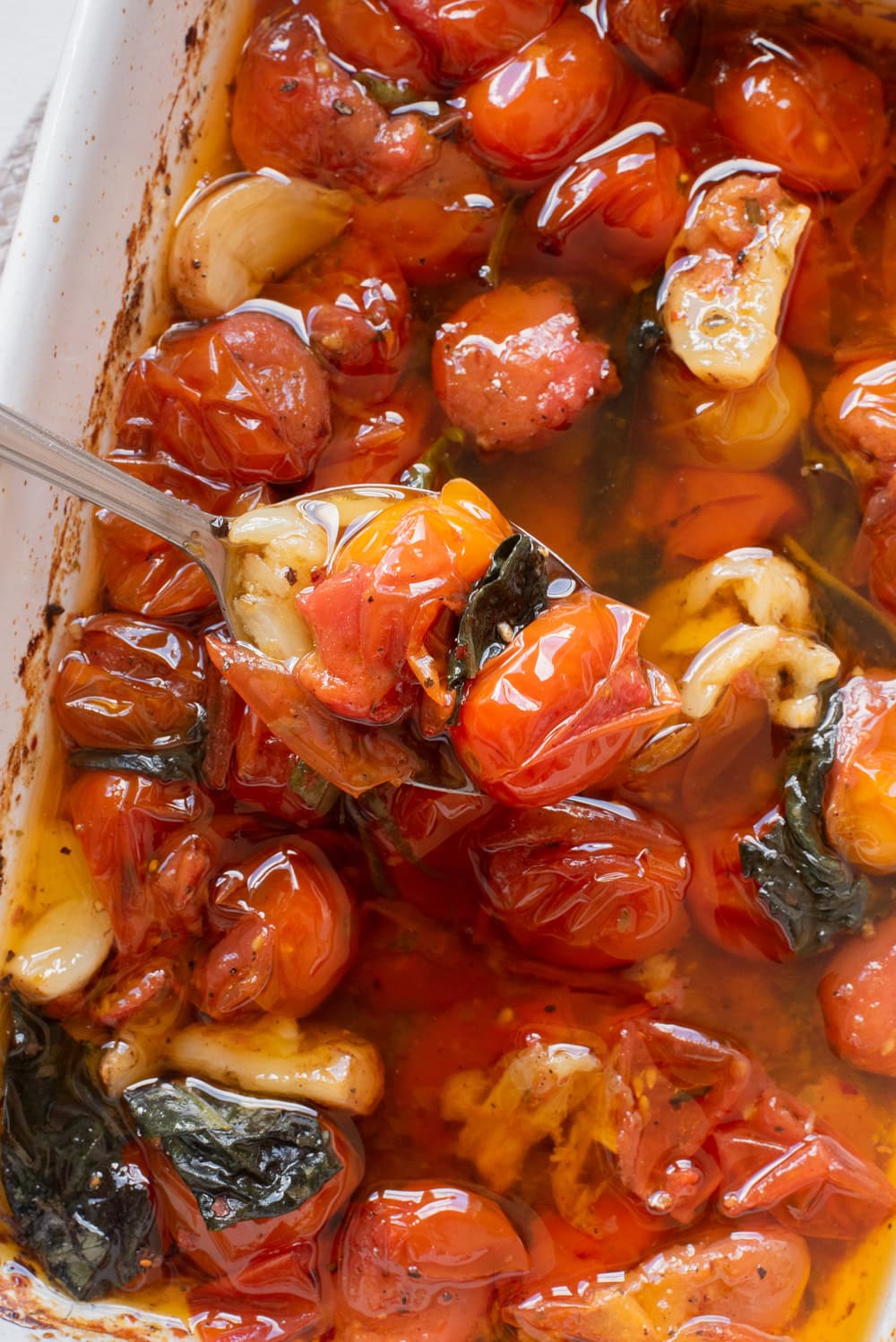
The confit I learned in Italy and have made every summer since

I had confit tomatoes for the first time when I lived in Italy, and I have made a batch every summer since. It is the thing I reach for when there are more cherry tomatoes in the kitchen than anyone is going to eat raw, which by August is most weeks.
The method is mostly patience. Low heat and time do the work, so there is nothing to stir and nothing to watch. The one rule I hold to is the oil level: the tomatoes should sit about halfway submerged, not drowned, because they release their own liquid as they go and you want that to concentrate rather than disappear into a deep bath of oil.
I tested the basil two ways and adding it during the roast was a mistake every time, it blackens and turns bitter over that long cook. Torn in off the heat at the end, it wilts into the warm oil in about thirty seconds and stays green.
The garlic is the other quiet payoff. Roasted whole and slow, the cloves come out sweet and spreadable, more like a condiment than an aromatic.

Key ingredients and why they matter
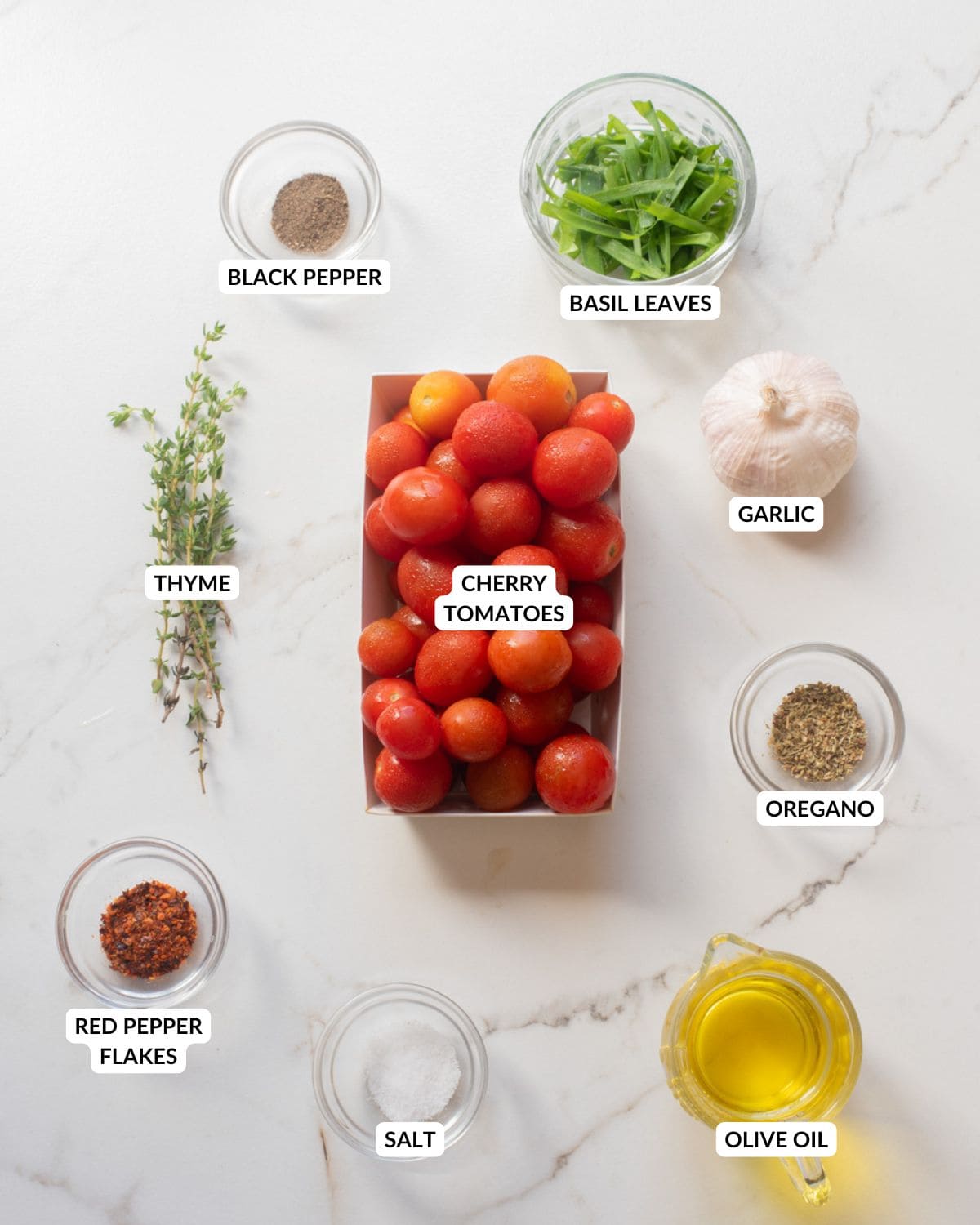
Full ingredient list and detailed instructions in the recipe card.
- Extra-virgin olive oil is most of the point here, since the tomatoes are half-submerged in it the whole time, so use one you actually like the taste of. The oil itself becomes a second ingredient you will use long after the tomatoes are gone.
- Basil, oregano, and thyme together bring the full Mediterranean range to the confit, though rosemary works too, or you can leave the soft herbs out. Fresh basil goes in only after roasting; the thyme and oregano can take the heat, but basil cannot. If you only have dried basil, stir it in near the end.
- Cherry or grape tomatoes hold their shape better than larger tomatoes over the long roast, collapsing into something jammy rather than watery. Roma tomatoes work too if you halve them, though they take a little longer to give up their liquid.
- Whole garlic cloves, peeled but left uncut, turn sweet and spreadable over the slow heat instead of sharp. Do not chop them or they will brown too fast and turn bitter.
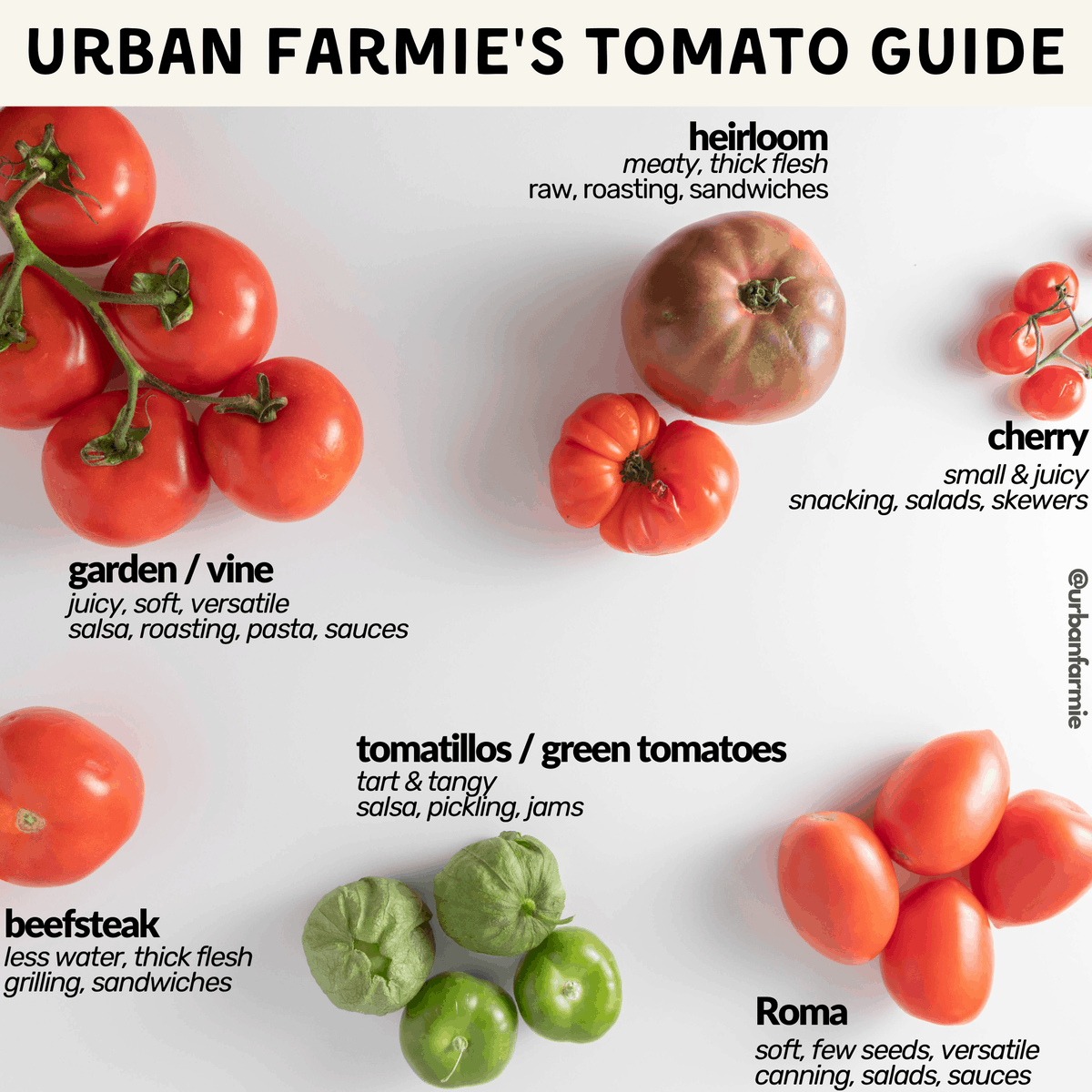
What type of tomatoes should I use?
I use whole cherry tomatoes here, but almost any fresh, ripe, juicy tomato works. I like cherry, vine, or Roma tomatoes for confit; heirloom, beefsteak, or grape tomatoes are all fine too. For a quick look at the different types of tomatoes and what they are best for, check out the infographic below.
Shruthi’s top tips
Shruthi’s Tip
What I learned from testing over the years
Keep the tomatoes about halfway submerged, not fully covered. They release liquid as they cook, and a deep bath of oil keeps them from concentrating.
The most common mistake is adding the basil before roasting. It blackens and turns bitter over two-plus hours. Stir it in off the heat at the very end instead.
Start checking at the two-hour mark. If the tomatoes are still firm, give them another 15 to 30 minutes; ovens vary and so does tomato size.
Save the oil. Spoon out the tomatoes and use the garlicky oil for pasta, bread, eggs, and dressings.
How to make tomato confit
- Preheat your oven to 275°F. Add the cherry tomatoes and whole garlic cloves to a deep baking dish. Tuck in the thyme and oregano sprigs, then season with kosher salt, black pepper, and red pepper flakes if using.
- Pour the olive oil over the tomatoes and garlic. The tomatoes should be about halfway submerged in the oil.
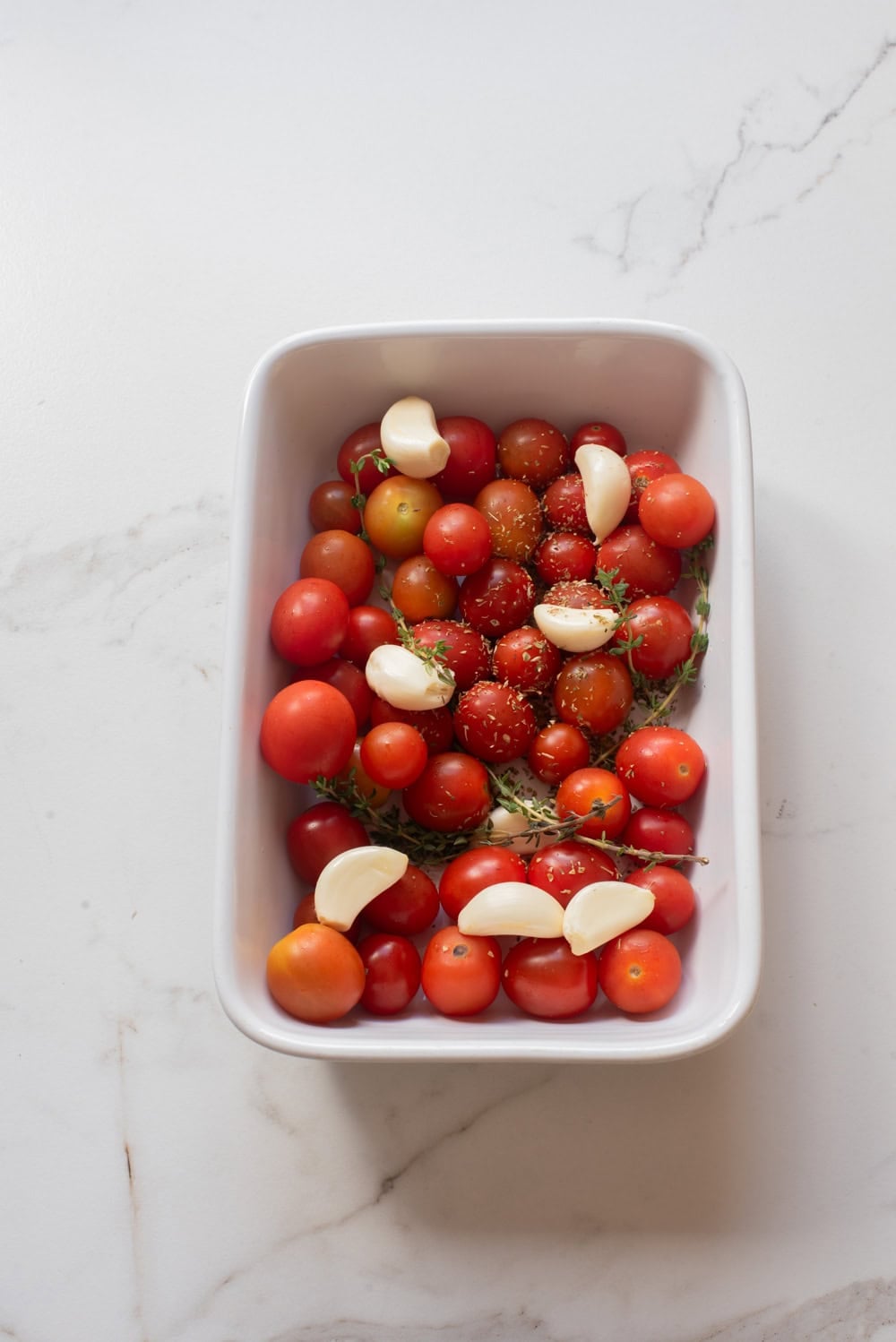
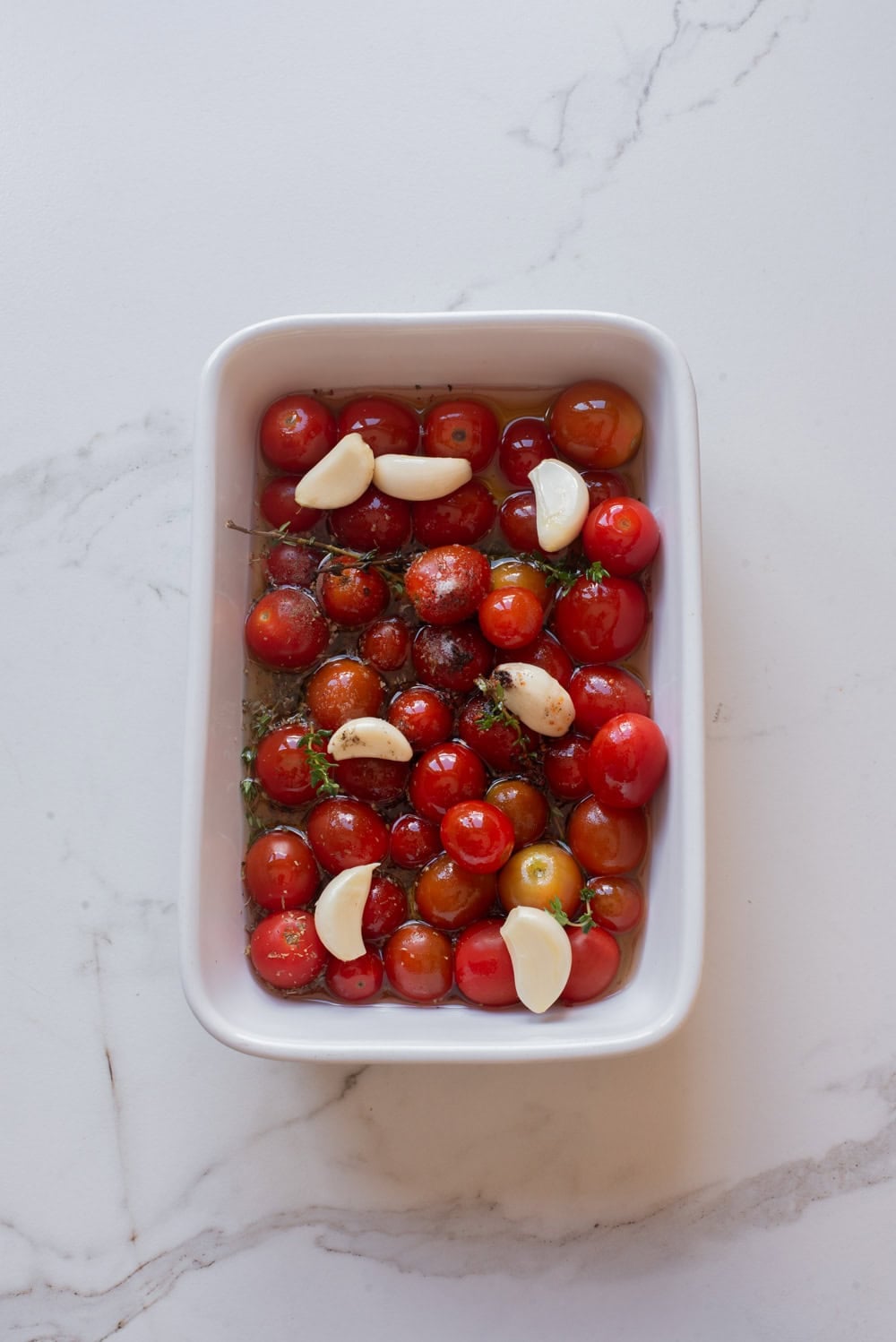
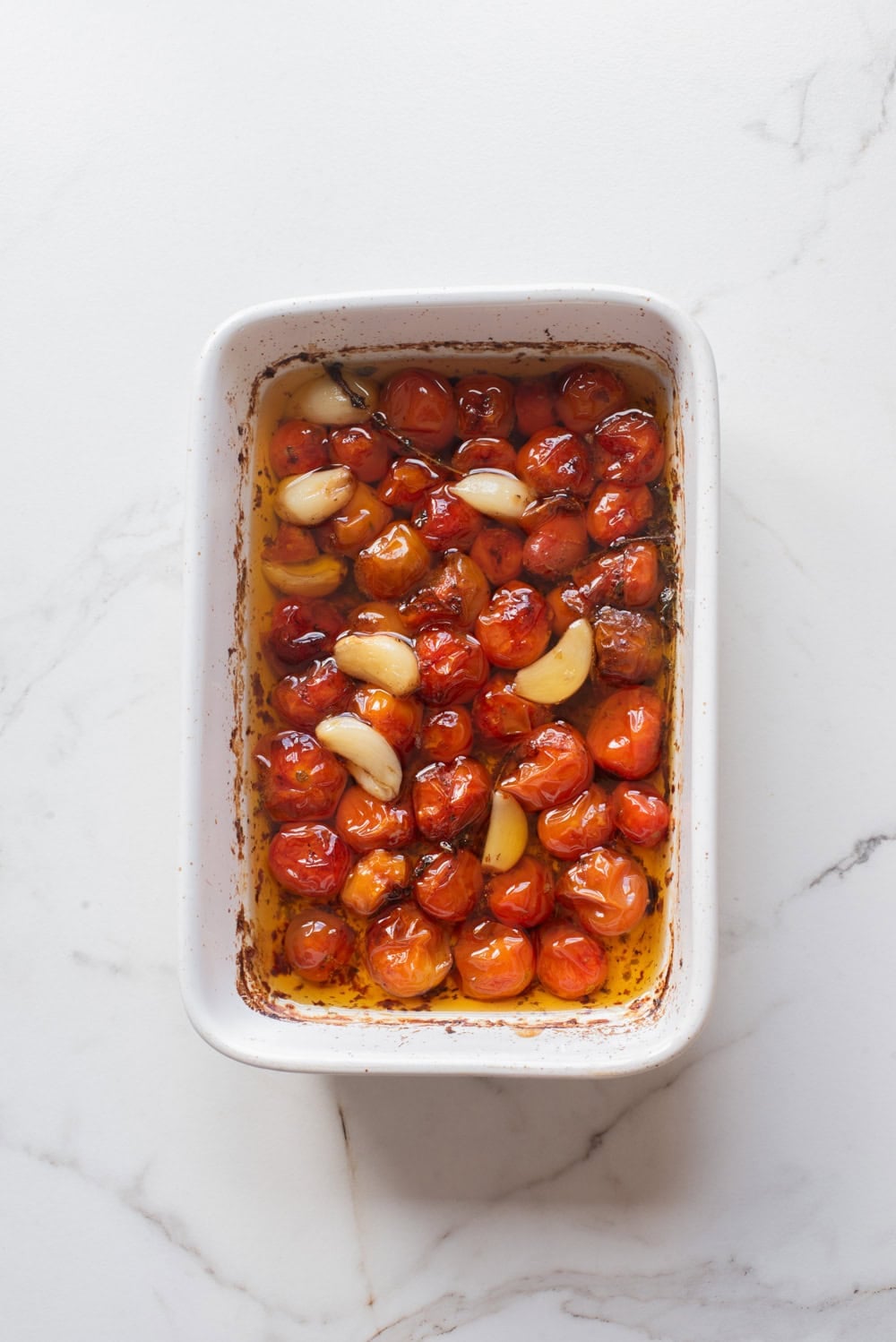
- Bake for about 2 to 2½ hours, until the tomatoes are blistered and collapsed but still holding their shape, and the garlic is soft and spreadable.
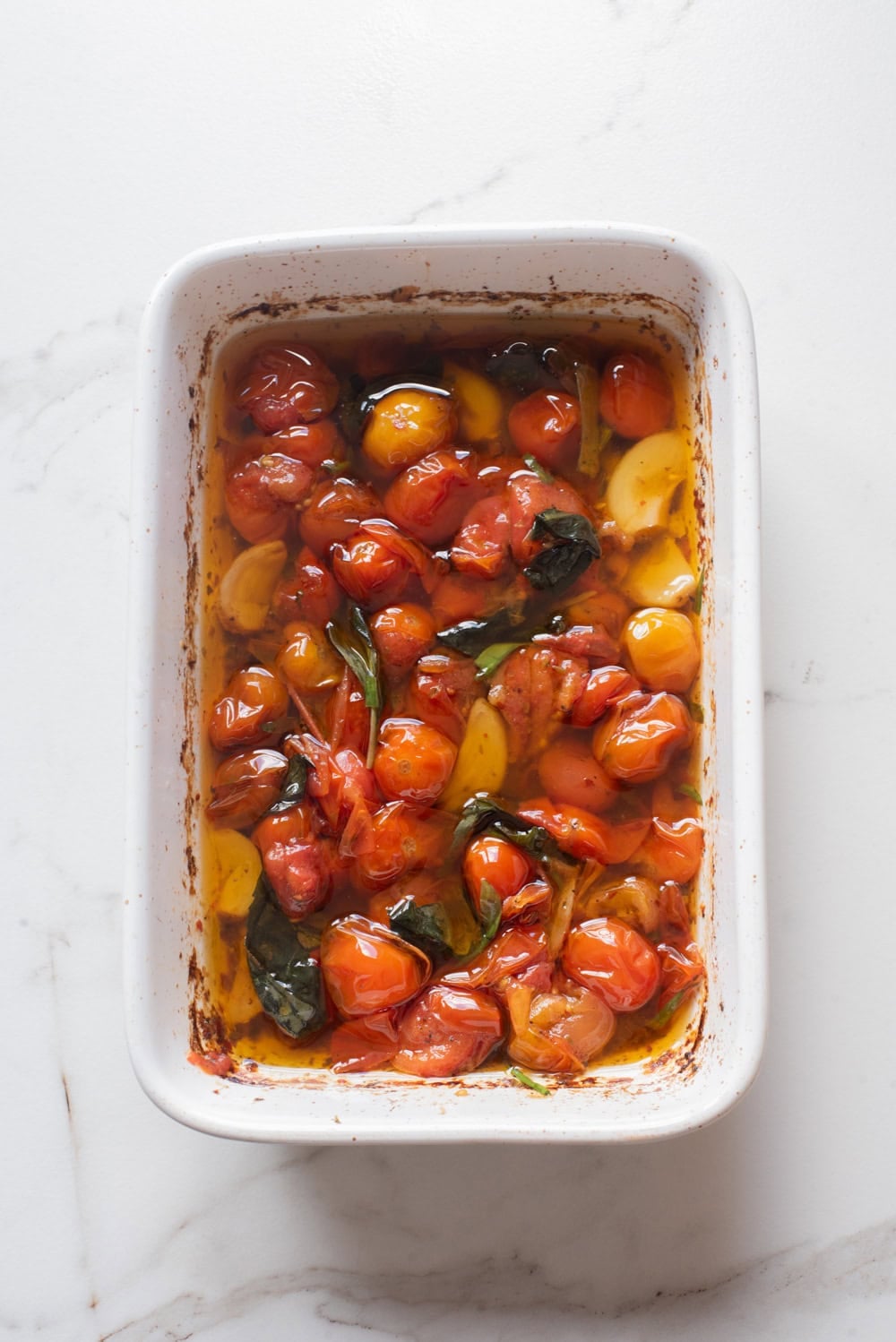
- Remove the thyme and oregano stems, then stir in the torn fresh basil while the confit is still hot. The basil will wilt into the oil from the residual heat.
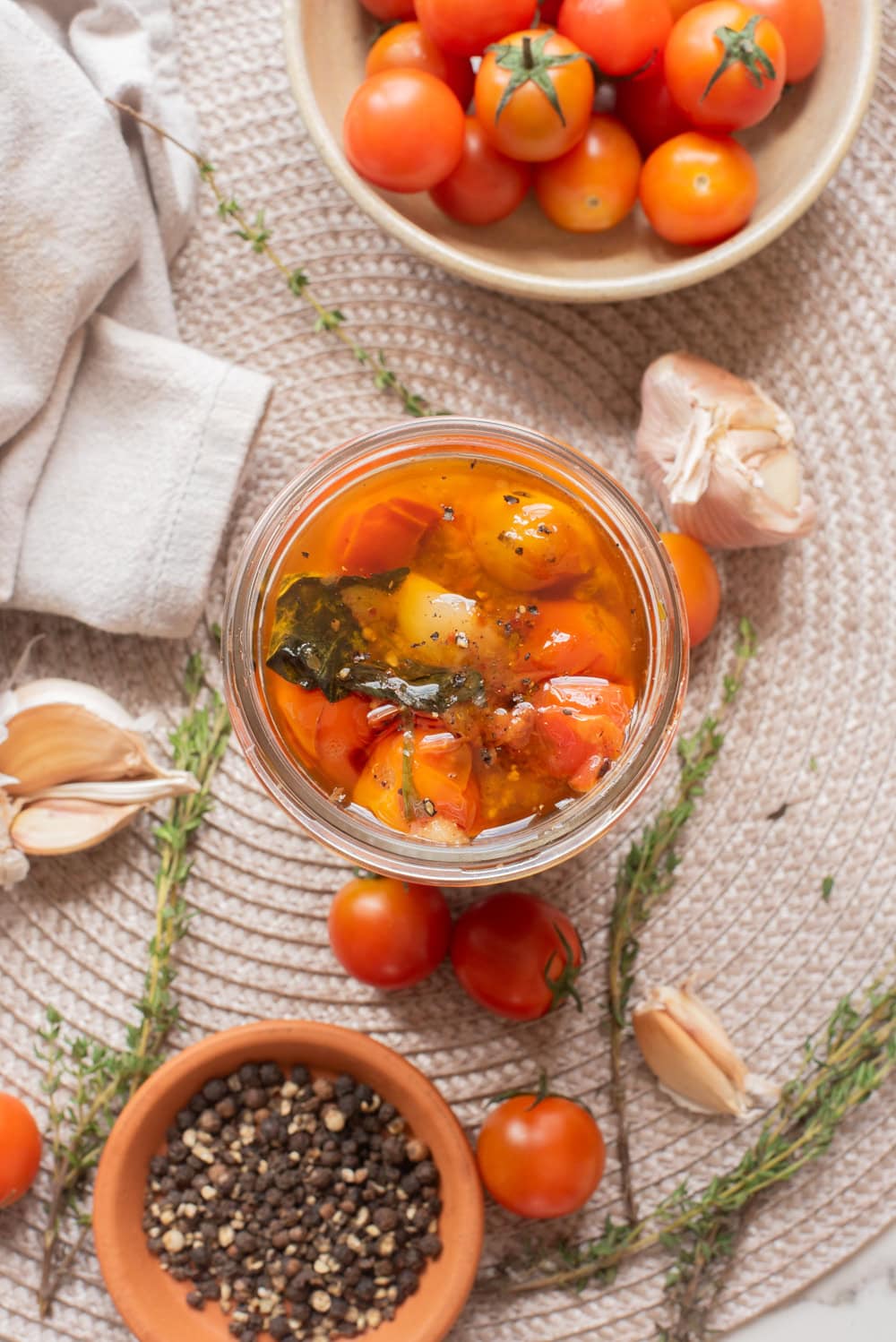
- Let the tomato confit cool to room temperature before transferring to a sterilized airtight jar. Make sure everything is fully submerged in the oil before refrigerating.
How to serve tomato confit
My favorite way to eat this is straight out of the jar, but here are a few other ways I use cherry tomato confit:
- Top your toasts. I love adding these preserved tomatoes to my avocado toasts, any type of crusty bread, or even some of my more elaborate sandwiches (like this Korean Gilgeori toast).
- Top your pasta. Tomato confit and basil pesto are a match made in heaven. I also love using this with other kinds of pesto pastas (like my broccoli pesto with whipped ricotta at the bottom).
- Top your salads. Tomato confit tastes great with almost any salad. I’ve thrown them on my Caprese salad and into my tortellini salad (even added it to my mango salsa once!)
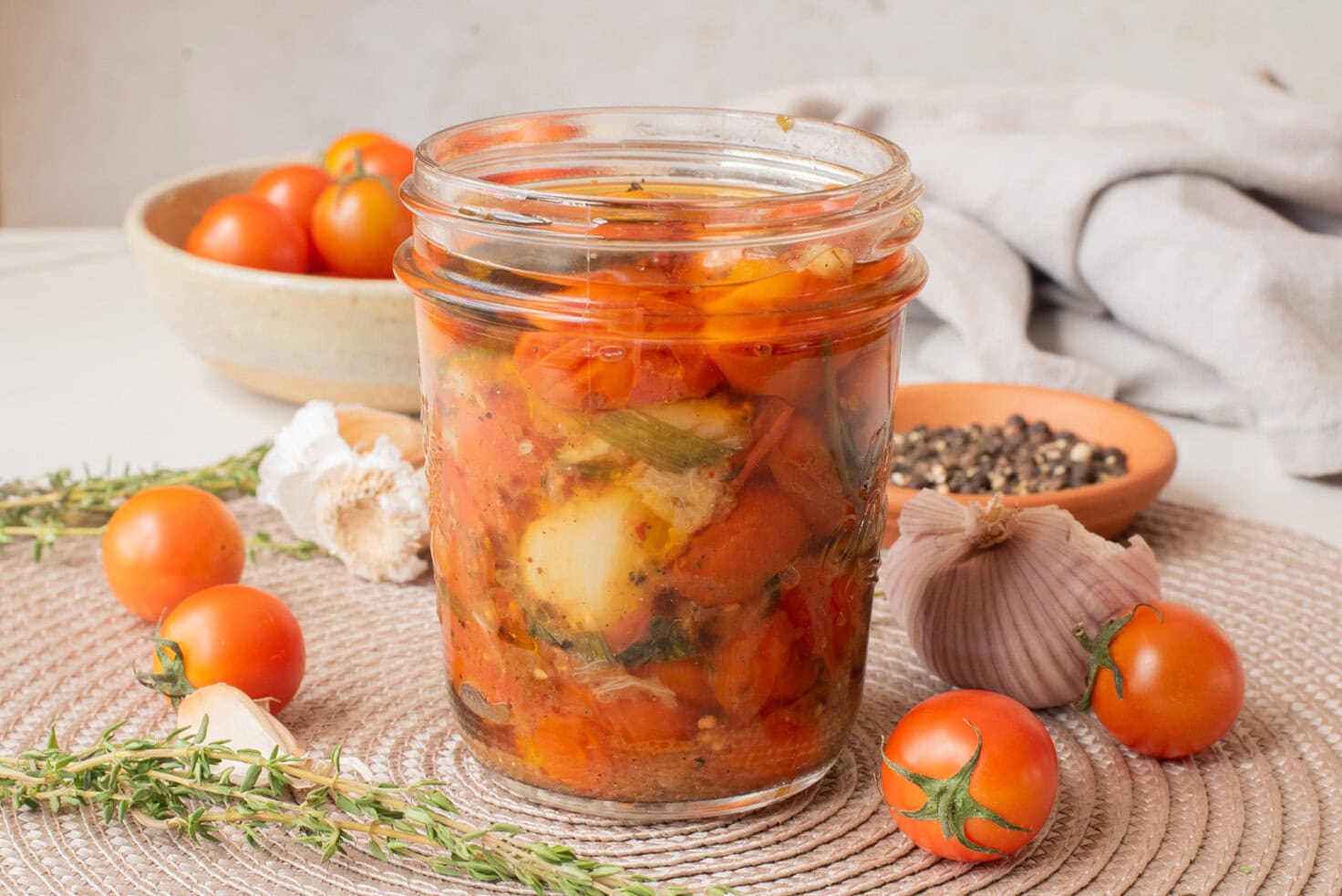
Storage and reheating suggestions
Store in the refrigerator for up to 2 weeks, with everything fully submerged in oil. The olive oil solidifies when chilled, so let the confit sit at room temperature for about 15 minutes before serving. For longer storage, freeze in ice cube trays or freezer-safe containers for up to 3 months and thaw before using.
Cherry Tomato & Garlic Confit
Equipment
- Deep baking dish or oven-safe skillet (9×13-inch or similar)
- Sterilized glass jar for storage
Ingredients
- 1 pound cherry tomatoes, or grape tomatoes
- 8 cloves garlic , peeled and left whole
- ¾ cup extra-virgin olive oil
- 4 sprigs fresh thyme
- 2 sprigs fresh oregano
- 1 teaspoon kosher salt
- ½ teaspoon freshly ground black pepper
- ¼ teaspoon red pepper flakes, optional
- 10 fresh basil leaves, torn (added after roasting)
Instructions
- Preheat the oven to 275°F.
- Spread the cherry tomatoes and peeled garlic cloves in a single layer in a deep baking dish. Tuck the thyme and oregano sprigs among the tomatoes. Sprinkle with kosher salt, black pepper, and red pepper flakes if using.
- Pour the olive oil over everything. The tomatoes should be about halfway submerged — add more oil if needed. Don’t worry about fully covering them; they’ll release their own liquid as they cook.
- Roast for 2–2½ hours, until the tomatoes are blistered and collapsed but still holding their shape, the garlic is golden and completely soft when pressed with a spoon, and the oil is fragrant and lightly tinted. Check at 2 hours — if the tomatoes are still firm, give them another 15–30 minutes.
- Remove from the oven. Discard the thyme and oregano stems (the leaves will have fallen off into the oil — that’s fine). Stir in the torn fresh basil while the confit is still hot — it will wilt in the residual heat within 30 seconds.
- Let cool to room temperature before transferring to a sterilized glass jar. Make sure the tomatoes and garlic are fully submerged in the oil — top up with more olive oil if needed. Refrigerate.
Notes
- Add basil after roasting; it burns and blackens during the long cook time.
- The infused olive oil is as valuable as the tomatoes—use it for pasta, bread, eggs, dressings, and marinades.
- Use a deep baking dish rather than a sheet pan so the tomatoes stay partially submerged in oil and confit properly.
- Whole garlic cloves become sweet, mild, and spreadable after roasting.
- Keep tomatoes and garlic fully submerged in oil during storage; top up with olive oil if needed.
- Refrigerate in a sealed jar for up to 2 weeks.
- The oil will solidify in the refrigerator; let it sit at room temperature for about 15 minutes before using.
- Freeze portions with the oil in ice cube trays for up to 3 months; thaw before using.
Nutrition
Nutrition information is automatically calculated, so should only be used as an approximation.


