VVegan RecipesGFGluten Free RecipesVEVegetarian Recipes
I took a Thai cooking class in Koh Samui last year, and most of what’s on this page traces back to it. I did the vegetarian class while my husband did the regular one at the next station, so I got to watch both versions of every dish come together at once, and I took a lot of notes on where they split.
That’s where I learned how to keep a curry or a pad thai authentic without the fish sauce and shrimp paste, and how to cook one base that works for a mixed table.
We went to the market first, and I spent most of it asking our teacher how to substitute things. That’s where the spicy ketchup in my pad thai comes from, and a handful of other swaps that show up across these recipes.
None of it waters the food down. The balance Thai food is built on, salt, sourness, heat, a little sweetness, the bitter edge of a charred chili, all of it survives the trade. This is the page I send people to when they ask where to start. I cook all of these in my own kitchen in Seattle, on weeknights, with a baby on my hip half the time.
Vegetarian Thai curries
This is where I’d start. A Thai curry gives you a lot back for not much skill: bloom the paste in coconut cream, add liquid and vegetables, balance at the end. Once you’ve made one you’ve made all of them.
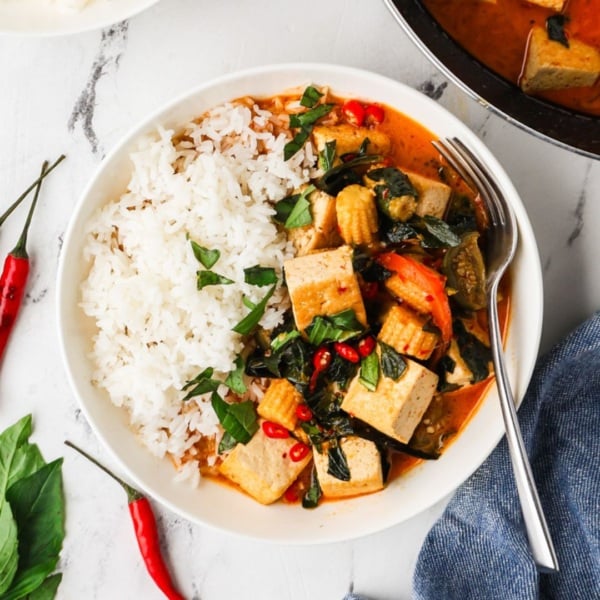
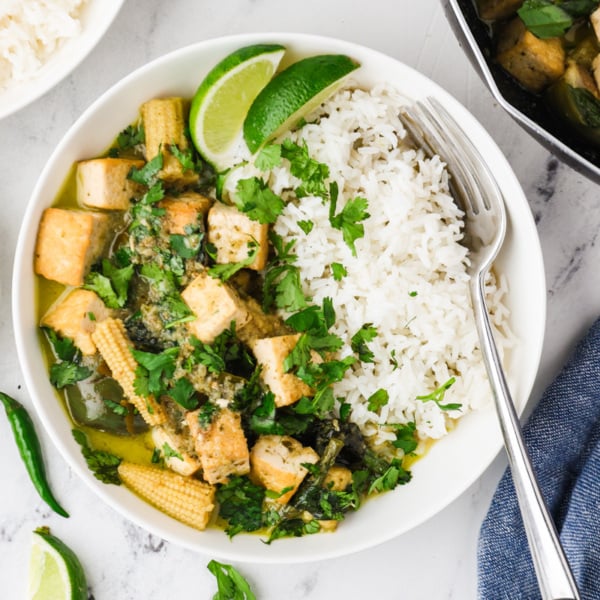
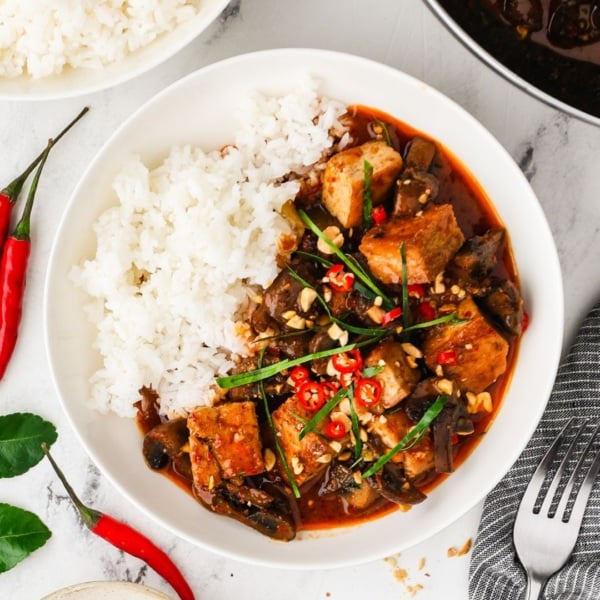
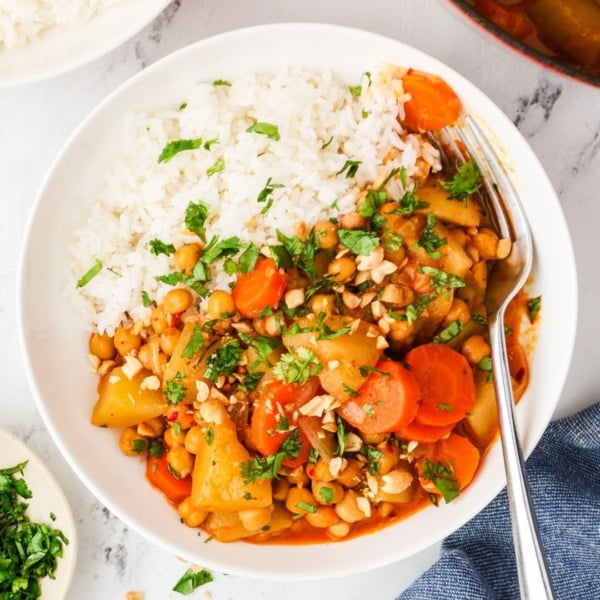
My Thai red curry with tofu is the weeknight default, deep and fast. The green curry is the brighter, hotter one, built on a homemade green paste. Panang is the rich, peanut-laced one that tastes like it took longer than it did. And massaman is the cozy potato-and-chickpea braise for when it’s cold and you want leftovers. Serve any of them over jasmine rice.
VVegan RecipesGFGluten Free RecipesVEVegetarian Recipes
Thai Green Curry with Tofu
VVegan RecipesGFGluten Free RecipesVEVegetarian Recipes
Vegetarian Panang Curry with Tofu and Mushrooms
VVegan RecipesGFGluten Free RecipesHPHigh Protein RecipesVEVegetarian Recipes
Massaman Curry (with Chickpeas)
How vegetarian Thai cooking actually works
Most Thai recipes are already almost vegetarian! The meat is often a small player. What makes the food taste Thai is the aromatics and the balance, not the protein.
Key ingredient swaps
- Fish sauce: It’s in nearly every curry, dressing, and stir-fry, and it’s there for salt and funk, not fish flavor specifically. Good vegetarian fish sauce (or a mix of soy and a pinch of seaweed) covers it. I use Ocean’s Halo vegan fish sauce in almost everything on this page and no one has ever guessed.
- Shrimp paste, which lives inside the curry pastes. This is why I grind my own. A jar of store paste almost always has shrimp in it, so making the paste yourself is the only way to know what’s in it. It takes ten minutes in a food processor and the flavor is much better than the jar. My red and green pastes use white miso for the savory depth shrimp paste would normally bring. If you need a shortcut, Mekhala brand is what I trust.
Key techniques
These are the four things that, in my opinion, separate a Thai dish that tastes flat from one that tastes like the restaurant, and none of them are hard once you know to look for them.
- Bloom the curry paste in coconut cream first. This is the one most people skip, and it’s the most important. Don’t shake the coconut can, and before you add any liquid, spoon the thick cream off the top of an unshaken can of coconut milk into a hot pan and fry your paste in it for a few minutes, until the oil starts to separate out and the kitchen smells like a Thai restaurant. You’re toasting the spices and aromatics in fat, not boiling them in liquid. Skip this and the curry tastes washed-out no matter how good your paste is.
- Keep the coconut milk from boiling. Once the rest of it goes in, hold the pan at a gentle simmer. A hard boil splits coconut milk and turns it grainy, and you can’t bring it back. Low and slow keeps it silky.
- The paste itself is worth building properly. Toast your coriander and cumin in a dry pan before they go in, and pound or blend the aromatics into a real paste rather than a rough chop. A proper paste coats everything evenly and blooms in the oil the way a chopped version never will. See below for my homemade curry pastes.
- Then balance at the very end, which is the habit that changes everything. Thai food lives on the tension between salty, sour, sweet, and hot, and you tune all four in the last minute off the heat, not at the start. Taste, then adjust: a little more vegetarian fish sauce for salt, lime for sour, coconut sugar for sweet, fresh chili for heat. The recipe gets you close, and your tongue gets you the rest of the way.
Get the swaps and those four moves down and the rest is just shopping. Keep makrut lime leaves (also called Kaffir lime, typically found frozen or fresh in an Asian store), lemongrass, galangal, and Thai basil findable (frozen is fine for the first three) and you can cook most of this on a Tuesday. Regular basil works in a pinch too but will be less aromatic.
Thai curry pastes from scratch
This is the part that separates a good Thai curry from a great one, and it’s the part most people skip. Homemade paste, with no shrimp, so it’s actually vegetarian and you control the heat. Make a batch, freeze it in tablespoon portions, and a curry becomes a fifteen-minute meal.
My red curry paste is the workhorse and the one I’m proudest of (and I use it to make a shortcut panang curry paste too). The green paste is fresher and fiercer. Massaman paste is the warm, spiced one with cardamom and cinnamon in the mix. All three freeze for months.
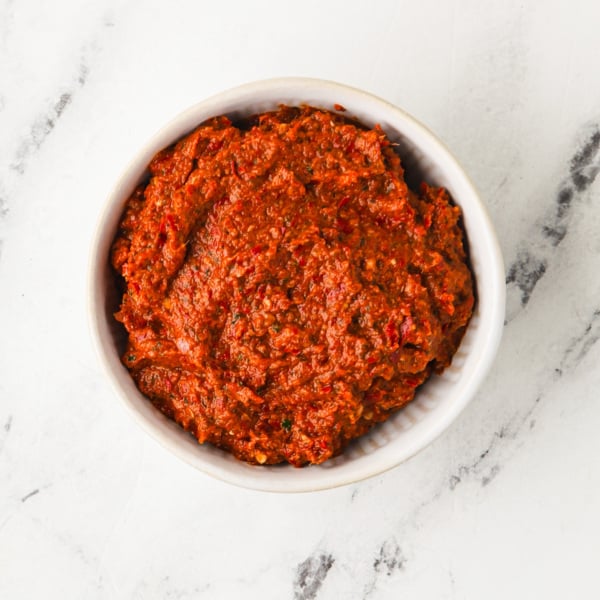
VVegan RecipesGFGluten Free RecipesNFNut Free RecipesVEVegetarian Recipes
Thai Red Curry Paste without Shrimp
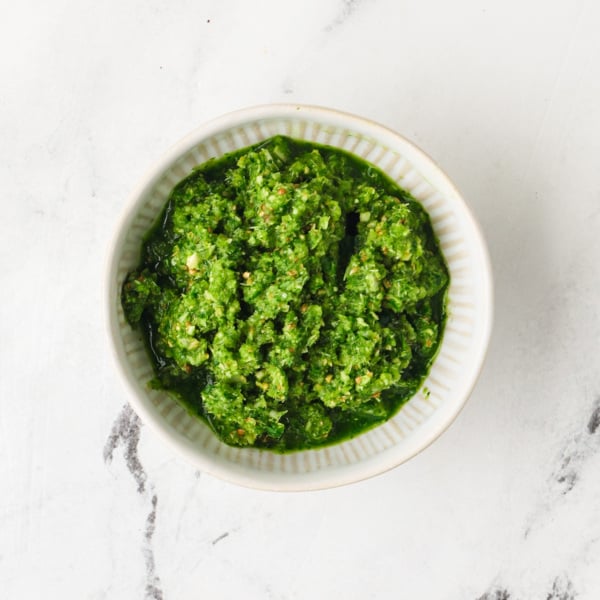
VVegan RecipesGFGluten Free RecipesVEVegetarian Recipes
Thai Green Curry Paste without Shrimp Paste
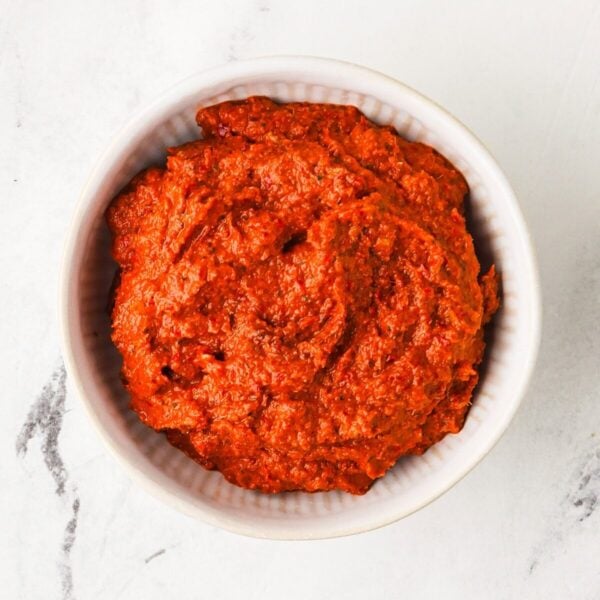
VVegan RecipesGFGluten Free RecipesVEVegetarian Recipes
Massaman Curry Paste
Thai noodles, rice and bowls
The fast end of the menu. These are the dishes I make when the curry energy isn’t there but the craving is.
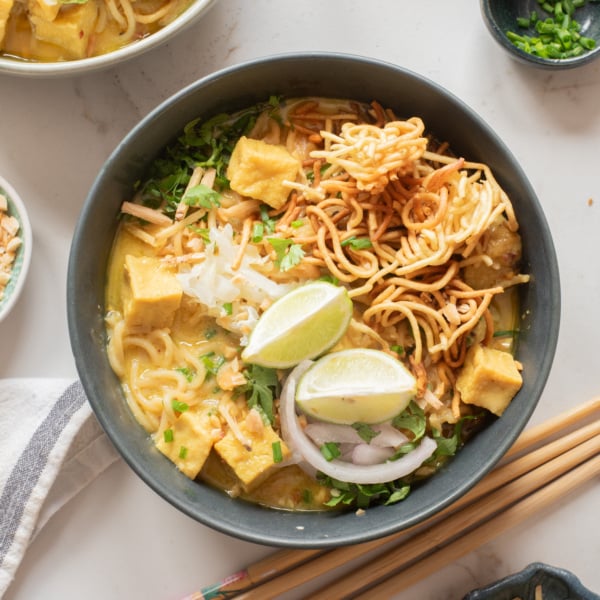
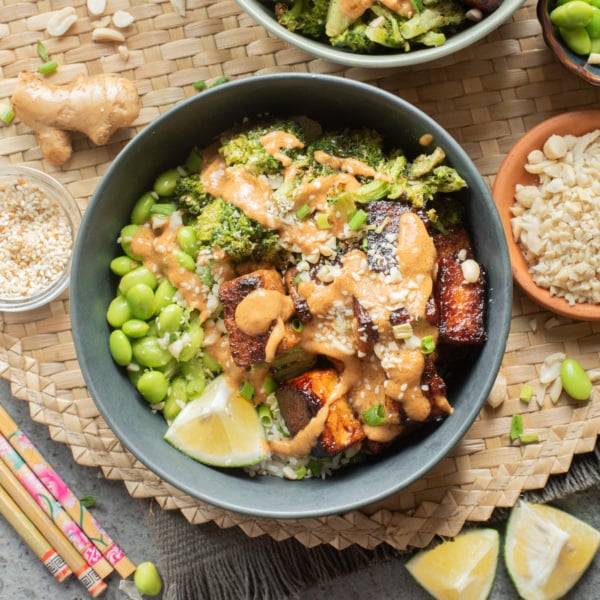
My tofu pad thai is built without tamarind, because I got tired of buying a whole block for one dish, and it works. The crispy peanut tofu bowls are the meal-prep one, 23 grams of protein and good cold. Khao soi is the splurge, a Northern Thai coconut curry noodle soup with crispy noodles on top, and the extra steps pay off.
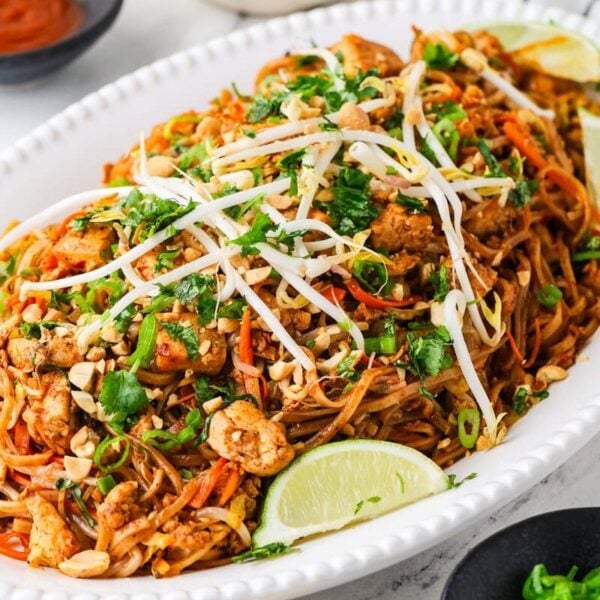
HPHigh Protein RecipesVEVegetarian Recipes
Tofu Pad Thai (without Tamarind)
VEVegetarian Recipes
Vegetarian Khao Soi (Northern Thai Curry Noodle Soup)
VVegan RecipesHPHigh Protein RecipesVEVegetarian Recipes
Crispy Thai Peanut Tofu Bowl
NFNut Free RecipesHPHigh Protein RecipesVEVegetarian Recipes
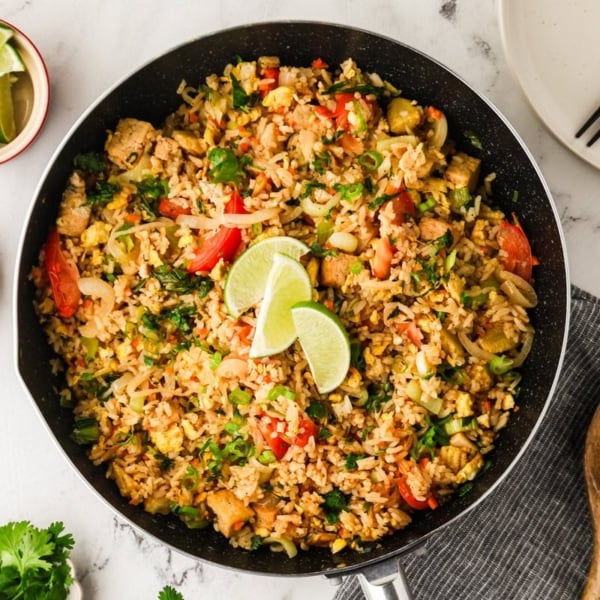
Vegetarian Thai Fried Rice (Khao Pad)
Thai starters, salads and something sweet
The supporting cast, and the dishes that make a Thai spread feel like an occasion.
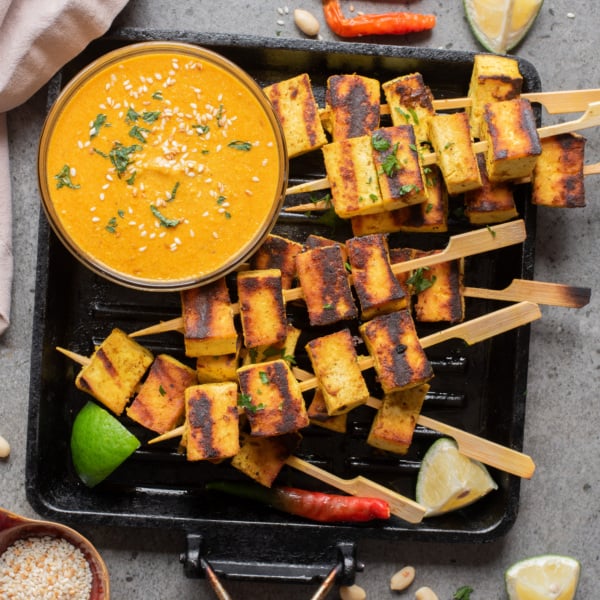
My tofu satay with peanut sauce is the thing people remember from a party. The green papaya salad (som tam) is the sharp, crunchy, fiery counterpoint to all that coconut. And mango sticky rice is the only way I want to end a Thai meal, warm coconut rice and cold ripe mango.
VVegan RecipesGFGluten Free RecipesHPHigh Protein RecipesVEVegetarian Recipes
Authentic Tofu Satay with Peanut Sauce
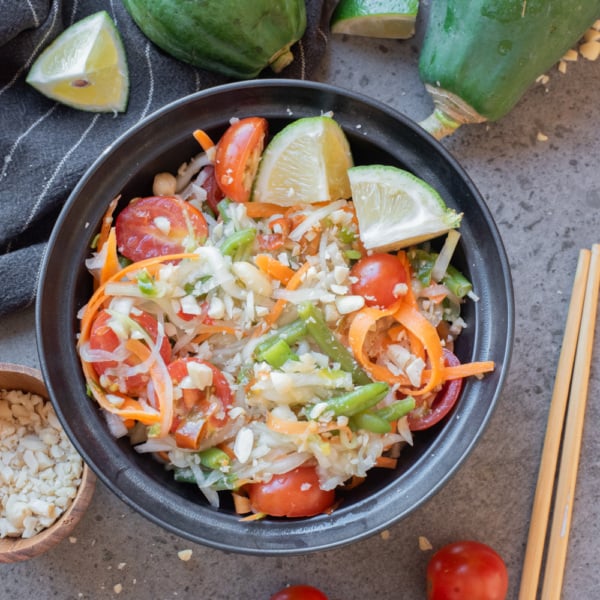
VVegan RecipesGFGluten Free RecipesVEVegetarian Recipes
Thai Green Papaya Salad (Som Tam)
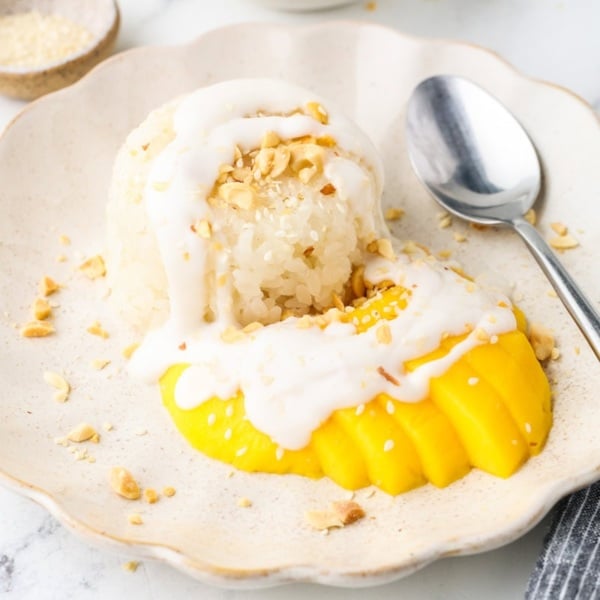
VVegan RecipesGFGluten Free RecipesVEVegetarian Recipes
Thai Mango Sticky Rice with Coconut Cream
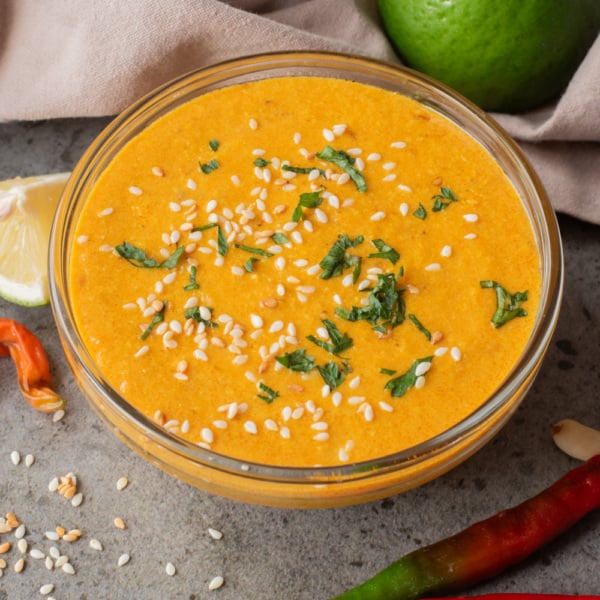
VVegan RecipesVEVegetarian Recipes
Thai Peanut Dipping Sauce
A few things people ask about vegetarian Thai food
The questions I get most about cooking Thai food vegetarian, from the fish sauce swap to what to serve alongside.
Is Thai food vegetarian?
Not by default, but it’s one of the easiest cuisines to make vegetarian. The two things to watch are fish sauce and shrimp paste, both of which have clean vegetarian swaps. Once those are handled, most Thai dishes are naturally plant-forward.
What can I use instead of fish sauce?
Vegetarian fish sauce, sold at most Asian groceries and online, is the closest one-to-one. In a pinch, soy sauce with a tiny piece of dried seaweed steeped in it gets you most of the way. You want salt and savory depth, not fish flavor.
Can I make Thai curry paste without shrimp paste?
Yes, and it’s the whole reason I grind my own. I use white miso to replace the savory, fermented note shrimp paste usually provides. My red, green, and massaman pastes are all shrimp-free.
What should I serve with Thai curry?
Jasmine rice, almost always. My jasmine rice method gets the texture right every time. For a fuller spread, add som tam for crunch and acid, or satay to start.
What’s a good substitute for Thai basil?
If you can’t find Thai basil, regular Italian basil with a few mint leaves comes closest. I broke down the options in my guide to basil substitutes.
All Thai Recipes
VVegan RecipesGFGluten Free RecipesHPHigh Protein RecipesVEVegetarian Recipes
Authentic Tofu Satay with Peanut Sauce
VVegan RecipesHPHigh Protein RecipesVEVegetarian Recipes
Crispy Thai Peanut Tofu Bowl
NFNut Free RecipesHPHigh Protein RecipesVEVegetarian Recipes
Vegetarian Thai Fried Rice (Khao Pad)
VVegan RecipesGFGluten Free RecipesVEVegetarian Recipes
Thai Green Papaya Salad (Som Tam)
VVegan RecipesGFGluten Free RecipesVEVegetarian Recipes
Thai Mango Sticky Rice with Coconut Cream
VVegan RecipesGFGluten Free RecipesVEVegetarian Recipes
Massaman Curry Paste
VVegan RecipesGFGluten Free RecipesHPHigh Protein RecipesVEVegetarian Recipes
Massaman Curry (with Chickpeas)
VVegan RecipesGFGluten Free RecipesVEVegetarian Recipes
Vegetarian Panang Curry with Tofu and Mushrooms
VVegan RecipesVEVegetarian Recipes
Thai Peanut Dipping Sauce
VVegan RecipesGFGluten Free RecipesNFNut Free RecipesVEVegetarian Recipes
Thai Red Curry Paste without Shrimp
VVegan RecipesGFGluten Free RecipesVEVegetarian Recipes
Thai Red Curry with Tofu
HPHigh Protein RecipesVEVegetarian Recipes
Tofu Pad Thai (without Tamarind)
VVegan RecipesGFGluten Free RecipesVEVegetarian Recipes
Thai Green Curry with Tofu
VVegan RecipesGFGluten Free RecipesVEVegetarian Recipes
Thai Green Curry Paste without Shrimp Paste

VVegan RecipesGFGluten Free RecipesVEVegetarian Recipes
Thai Curried Butternut Squash Soup
VEVegetarian Recipes


